This article contains AI generated content.
Achilles Tendinopathy: 6 Genes and 7 Biomarkers to Track
If you've been dealing with a stubborn, thickened, or painful Achilles tendon for months, you've probably already heard the standard advice: rest it, ice it, stretch it, do some eccentric heel drops, maybe try a heel lift. Some of that helps. Much of it is generic enough to apply to almost anyone with almost any tendon problem, which is exactly the issue — it doesn't explain why your tendon reacted this way in the first place, or why it's healing slower than your training partner's did.
Achilles tendinopathy isn't one uniform condition. It's the shared endpoint of several different underlying processes: a genetic predisposition toward less resilient collagen, a metabolic environment that's quietly stiffening your connective tissue, an inflammatory load your body hasn't cleared, or a hormonal shift that changed how your tendon rebuilds itself. Two people with identical VISA-A scores and identical ultrasound findings can have completely different reasons for being there, which means they may need different fixes.
This article takes a more granular approach. Instead of repeating generic loading protocols, it looks at the bloodwork markers that plausibly influence tendon collagen quality, inflammation, and repair capacity, and at the specific genes researchers have connected to Achilles tendon injury risk. Neither list is deterministic — a "bad" gene variant or an out-of-range biomarker doesn't guarantee tendinopathy, and fixing one number won't undo years of training load. But knowing where your particular vulnerabilities might sit lets you make more targeted decisions instead of guessing.
None of this replaces a diagnosis or a physical therapist who can actually watch you move. What it can do is give you a more precise map — of what to test, what to ask your doctor about, and which levers are worth pulling first — so that the next round of rehab is built around your biology rather than a one-size-fits-all protocol.
Summary
Tendons don't fail randomly. Underneath a diagnosis of Achilles tendinopathy sits a mix of collagen genetics, metabolic chemistry, and hormonal signaling that most standard treatment plans never look at. This article walks through seven bloodwork markers — from vitamin D and hs-CRP to uric acid and estradiol — that plausibly shape how well your Achilles tendon rebuilds itself, with realistic ranges, honest cost estimates, and both supplement-free and supplement-based ways to correct the ones that come back out of range. It then turns to six genes researchers have repeatedly linked to Achilles tendon injury risk — COL5A1, COL1A1, MMP3, TNC, COL27A1, and GDF5 — and explains, in plain terms, what a "risk" variant may mean for your tendon and how training and nutrition can partly work around it. A closer look at tendon researcher Keith Baar's collagen-loading research adds ten specific, occasionally counterintuitive findings that challenge how eccentric-only rehab is usually taught. The article closes with four complementary approaches — photobiomodulation, deep friction massage, gait-retraining biofeedback, and mindfulness — that have real, if mixed, human evidence behind them for tendon pain and loading tolerance. Read on before you start your next rehab cycle: which of these seven numbers is worth checking first will depend on which part of the story your Achilles tendon is actually telling.
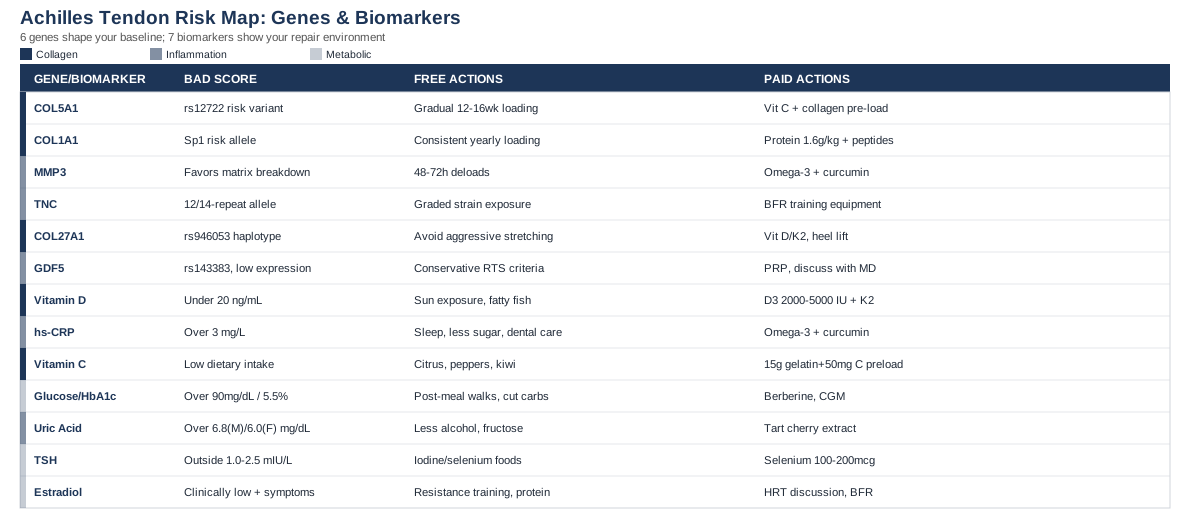
The 7 Biomarkers Worth Tracking for Achilles Tendinopathy
Tendon tissue turns over slowly — far more slowly than muscle — which means the chemical environment it sits in over months and years matters more than any single workout. Bloodwork won't show you a "tendinopathy score," but it can reveal whether your body is currently working with or against the tendon's ability to repair itself. The seven markers below were chosen because each has a documented, biologically plausible connection to tendon collagen quality, inflammation, or repair capacity, and because all of them are realistically testable through routine labs or direct-to-consumer panels. Clinicians in the metabolic-health space, including Peter Attia and Thomas Dayspring, regularly use several of these same markers — hs-CRP, fasting glucose, HbA1c — as part of a broader risk picture, even though their primary lens is cardiometabolic rather than orthopedic. The logic carries over reasonably well: a body that's inflamed or dysglycemic systemically is not an efficient place to rebuild collagen locally.
1. 25-Hydroxyvitamin D
Vitamin D receptors are present in tenocytes, and vitamin D plays a role well beyond bone metabolism — it modulates the inflammatory response and appears to protect tendon cells from damage. A large retrospective analysis of over 300,000 patients found that a diagnosis of vitamin D deficiency measurably raised the incidence of distal biceps tendinopathy, and researchers increasingly suspect the same relationship extends to other large tendons, including the Achilles, though direct Achilles-specific outcome trials are still limited (see the study on vitamin D deficiency and tendon injury risk).
How to measure it: a standard serum 25-hydroxyvitamin D blood test, roughly $30 to $50 out of pocket if not covered by insurance, or bundled into most comprehensive wellness panels. A reasonable target range for tendon and general health is 40 to 60 ng/mL; levels below 20 ng/mL are generally considered deficient.
If the score is bad, the plan without supplements: increase sensible, unprotected midday sun exposure for 15 to 20 minutes several times a week (adjusted for skin tone and latitude), add fatty fish, egg yolks, and fortified dairy to your diet, and address excess body fat if present, since vitamin D is sequestered in adipose tissue and less available to circulate.
If the score is bad, the plan with supplements or equipment: vitamin D3, typically 2,000 to 5,000 IU per day, paired with vitamin K2 (MK-7, 90 to 180 mcg) to support proper calcium handling. Retest after 8 to 12 weeks rather than adjusting the dose blindly — this is a "test, don't guess" nutrient because individual absorption varies widely. In low-sunlight climates or seasons, a UV-B light therapy device can be used cautiously as a substitute for sun exposure, keeping sessions short to limit skin risk. Side effects at appropriate doses are rare; sustained doses above 10,000 IU/day without monitoring can cause hypercalcemia, so this isn't a "more is better" nutrient.
2. High-Sensitivity C-Reactive Protein (hs-CRP)
Chronic low-grade inflammation doesn't just make joints achy — it competes with the localized, controlled inflammatory response a tendon needs to remodel after loading. Elevated hs-CRP has been linked to worse outcomes across several soft-tissue conditions, and while Achilles-specific data is still developing, hs-CRP remains one of the most validated general markers of systemic inflammatory burden (background here: C-reactive protein: clinical relevance and interpretation).
How to measure it: a standard hs-CRP blood draw, around $15 to $30, commonly included in cardiometabolic panels of the kind Peter Attia and Thomas Dayspring routinely order for risk stratification.
Optimal is generally under 1.0 mg/L; 1 to 3 mg/L is borderline; above 3 mg/L suggests meaningful systemic inflammation worth investigating further (dental infection, poor sleep, visceral fat, autoimmune activity, or overtraining are common contributors).
If the score is bad, the plan without supplements: prioritize 7 to 9 hours of sleep, cut ultra-processed food and added sugar, address any unmanaged training load spikes (a sudden increase in mileage or intensity raises inflammatory markers on its own), and get a dental check if you haven't had one recently, since gum disease is an underappreciated driver of elevated CRP.
If the score is bad, the plan with supplements or equipment: omega-3 fish oil, 2 to 3 grams combined EPA/DHA daily, and curcumin with piperine, 500 to 1,000 mg standardized curcuminoids daily, cycled for 8 to 12 weeks before retesting. No equipment is required here. Side effects: omega-3s at these doses can mildly increase bleeding risk, especially alongside anticoagulants; curcumin occasionally causes GI upset and can interact with blood thinners.
3. Vitamin C Status
This one is less often tested directly and more often inferred from diet, but it's arguably the single most tendon-specific nutrient on this list. Vitamin C is the essential cofactor for the enzymes that hydroxylate proline and lysine during collagen formation — without adequate vitamin C, the collagen triple helix simply can't fold properly. A systematic review found consistent evidence that vitamin C supplementation supports collagen synthesis after musculoskeletal injury (see vitamin C supplementation and collagen synthesis after injury).
How to measure it: plasma ascorbate testing exists through specialty labs ($40 to $80) but is rarely necessary for most people; a simpler and more practical approach is an honest dietary audit — most Western diets provide barely enough vitamin C to prevent scurvy, let alone to optimize collagen turnover during active rehab.
If the score is bad, the plan without supplements: add citrus fruit, bell peppers, kiwi, and broccoli to reach roughly 200 to 500 mg per day from food, spread across meals since vitamin C isn't stored well by the body.
If the score is bad, the plan with supplements or equipment: this is where timing matters more than dose. Research from tendon physiologist Keith Baar's lab found that 15 grams of vitamin C–enriched gelatin or hydrolyzed collagen, taken about 60 minutes before a loading session, roughly doubled markers of collagen synthesis compared with placebo (full study: vitamin C-enriched gelatin supplementation before intermittent activity augments collagen synthesis). Practically: 15 g gelatin or collagen peptides plus roughly 50 mg vitamin C, on training or rehab days only, about an hour before your loading exercises — not daily, since the mechanism depends on pairing the raw materials with the mechanical stimulus. Side effects: high-dose vitamin C above 2 grams can cause GI upset or diarrhea, and people with a history of kidney stones should be cautious with sustained high intake due to oxalate load.
4. Fasting Glucose and HbA1c
This pairing deserves more attention in tendinopathy circles than it usually gets. A recent systematic review and meta-analysis found diabetes carries an odds ratio of roughly 7.2 for Achilles tendinopathy — one of the strongest risk associations in the entire tendinopathy literature (see the interplay between metabolic disorders and tendinopathies). Chronically elevated glucose promotes advanced glycation end-products, which cross-link collagen fibers in a disorganized, stiff way that impairs the tendon's normal elastic function — this happens well before someone meets the clinical threshold for diabetes.
How to measure it: fasting glucose and HbA1c are part of virtually any standard metabolic panel, typically $20 to $40 if paid out of pocket. Peter Attia has been vocal about HbA1c being a lagging indicator, and increasingly recommends a continuous glucose monitor (CGM) for a more sensitive, real-time picture of glucose variability.
Optimal fasting glucose is generally under 90 mg/dL, and HbA1c under 5.5%.
If the score is bad, the plan without supplements: reduce refined carbohydrates and added sugar, take a 10-to-15-minute walk after meals (this alone meaningfully blunts post-meal glucose spikes), incorporate resistance training, and prioritize consistent sleep and wake times.
If the score is bad, the plan with supplements or equipment: berberine, 500 mg two to three times daily before meals, cycled for 8 to 12 weeks with a break, has reasonable evidence for improving insulin sensitivity. A CGM (worn in 2-to-4-week cycles rather than continuously) is a useful equipment-based option for identifying which specific foods spike your glucose the most. Side effects: berberine commonly causes GI upset initially, and can interact with other glucose-lowering medications, raising hypoglycemia risk if combined without medical supervision.
5. Uric Acid
Uric acid crystal deposition isn't limited to the big toe. A 2024 case-control study found hyperuricemia was significantly more common in patients who had suffered an Achilles tendon rupture than in matched controls, and mechanistically, urate crystals are thought to trigger local production of matrix-degrading enzymes including MMP-3 (see hyperuricemia and increased risk of Achilles tendon rupture).
How to measure it: serum uric acid, one of the cheapest tests on this list at $10 to $20, usually included in a standard chemistry panel.
A reasonable target is under 6.0 mg/dL for women and under 6.8 mg/dL for men.
If the score is bad, the plan without supplements: reduce alcohol (beer especially), limit sugar-sweetened beverages and high-fructose foods, moderate organ meat and shellfish intake, increase water intake, and address excess body weight, which independently raises uric acid.
If the score is bad, the plan with supplements or equipment: tart cherry extract, 480 to 960 mg per day, has modest evidence for lowering uric acid and inflammatory markers; it's reasonable to use on an ongoing basis with periodic rechecking rather than strict cycling. If levels are markedly elevated or you have a personal history of gout, this becomes a medical conversation about medications like allopurinol rather than a supplement decision. Side effects: tart cherry extract is generally well tolerated, with occasional mild GI upset.
6. Thyroid Panel (TSH and Free T4)
Hypothyroidism can present initially as diffuse tendon pain and stiffness, sometimes years before other classic symptoms become obvious — a connection well documented in case literature (see hypothyroidism presenting as tendinitis). Thyroid hormone influences the metabolic rate of virtually every tissue, tendon included, and an underactive thyroid slows the whole repair-and-remodel cycle down.
How to measure it: a TSH and free T4 blood test, roughly $30 to $60, often bundled into broader wellness panels.
A commonly used functional target for TSH is 1.0 to 2.5 mIU/L, with free T4 sitting in the middle of the reference range, though standard lab reference ranges are wider.
If the score is bad, the plan without supplements: ensure adequate but not excessive iodine and selenium intake through diet (seafood, dairy, a couple of Brazil nuts a few times a week), manage chronic stress, and prioritize sleep, since both cortisol dysregulation and sleep debt can suppress thyroid function.
If the score is bad, the plan with supplements or equipment: selenium, 100 to 200 mcg per day, has some evidence for supporting thyroid hormone conversion, particularly relevant if autoimmune thyroid disease is suspected; retest thyroid markers every 8 to 12 weeks rather than adjusting frequently. If TSH is clearly abnormal, this is a conversation for a physician about levothyroxine or further thyroid workup — not a self-directed supplement fix. Side effects: excess iodine supplementation can worsen autoimmune thyroid conditions, and selenium above 400 mcg/day risks toxicity.
7. Estradiol (for women navigating perimenopause or menopause)
This is a frequently overlooked piece of the Achilles puzzle for women. Estrogen receptors are distributed throughout tendon tissue, and a well-designed human study found that estrogen replacement in postmenopausal women measurably increased tendon collagen synthesis and improved structural characteristics compared with women not on hormone therapy (see effect of estrogen on tendon collagen synthesis in postmenopausal women). As estrogen declines, collagen turnover slows and existing fibers become more disorganized, which may partly explain why tendon injuries cluster around the perimenopausal transition.
How to measure it: serum estradiol and FSH, typically $40 to $80, usually ordered through a physician or gynecologist alongside a broader menopause workup rather than as a standalone self-test.
If the score is bad (clinically low with symptoms), the plan without supplements: maintain consistent resistance training with progressive tendon loading, ensure adequate daily protein intake (1.6 to 2.0 g/kg body weight), prioritize weight-bearing activity, and consider modest intake of phytoestrogen-containing foods such as soy and flaxseed.
If the score is bad, the plan with supplements or equipment: hormone replacement therapy is a prescription decision that belongs with a physician, not a self-directed supplement protocol — but it's worth raising explicitly given the tendon-specific evidence above, particularly transdermal formulations, which research suggests support collagen turnover. Blood-flow restriction training equipment can be a useful bridge during this period, allowing meaningful tendon loading stimulus at lower absolute loads. Side effects: HRT carries individualized risks around clotting and hormone-sensitive cancers that require a personal risk-benefit conversation with a qualified provider.
Taken together, these seven markers cover the main biological terrain relevant to tendon repair: structural raw materials (vitamin C, vitamin D), the inflammatory backdrop (hs-CRP), the metabolic environment (glucose, HbA1c, uric acid), and hormonal regulation (thyroid, estradiol). None of them will diagnose tendinopathy on their own, but an out-of-range result in two or three of these categories often explains why a standard eccentric-loading program alone hasn't been enough.
What Your Genes May Reveal About Achilles Tendon Resilience
Where bloodwork tells you about your current internal environment, genetics tells you about the structural cards you were dealt — the baseline quality of your collagen and how efficiently your body remodels it under load. Researchers like Malcolm Collins and colleagues at the University of Cape Town have spent nearly two decades mapping which gene variants show up more often in people with chronic Achilles tendon pathology versus healthy controls. This is the same broader field that popular voices like Ali Torkamani and Gary Brecka draw from when they talk about using genetic data to personalize training and recovery — though it's worth being direct that most of these associations come from case-control studies, not large randomized trials, so think of them as probability shifts, not verdicts.
COL5A1
COL5A1 encodes part of type V collagen, a minor but critical regulator of how thick and how densely packed the larger type I collagen fibrils become in your tendon. Certain COL5A1 variants (studied via a BstUI restriction site and the related rs12722 marker) are associated with a higher likelihood of chronic Achilles tendon pathology, plausibly because they produce thinner, more densely packed fibrils that are less tolerant of repetitive strain (source: the COL5A1 gene and Achilles tendon pathology).
If the gene is bad, the plan without supplements: this is a structural, not acute, disadvantage — the practical response is longer, more gradual loading progressions than generic protocols suggest. Extend tendon adaptation phases (isometric holds progressing to heavy slow resistance) over 12 to 16 weeks rather than compressing them into 6, and avoid abrupt spikes in running volume or intensity, since a less compliant fibril structure likely has a narrower margin for sudden load increases.
If the score is bad, the plan with supplements or equipment: the vitamin C plus collagen protocol described above (15 g collagen/gelatin with 50 mg vitamin C, 60 minutes pre-loading, on training days) is a reasonable, low-risk way to support type I collagen synthesis to partially offset a less favorable structural baseline. A decline board or eccentric heel-drop platform helps standardize load progression. Frequency: training-day use only, 3 to 4 times weekly during active rehab; side effects are minimal at these doses, mainly occasional GI upset from collagen peptides in sensitive individuals.
COL1A1
COL1A1 codes for the major structural collagen in tendon — type I. A well-studied Sp1-binding-site polymorphism in this gene has been associated with altered collagen fiber properties and injury susceptibility in tendon and ligament tissue (source: investigation of the Sp1-binding site polymorphism within the COL1A1 gene).
If the gene is bad, the plan without supplements: prioritize consistent, moderate mechanical loading over years rather than sporadic intense blocks — type I collagen remodels in response to regular mechanical signaling, and irregular "weekend warrior" loading patterns are a poor match for a less robust baseline structure.
If the score is bad, the plan with supplements or equipment: adequate total daily protein (1.6 g/kg body weight or more) is foundational here, since COL1A1's raw material is amino acids, particularly glycine and proline. Collagen peptide supplementation (10 to 15 g/day) can help close dietary gaps; cycling isn't strictly necessary since this functions as a dietary protein source rather than a pharmacological agent, though periodic reassessment of overall protein intake is reasonable. Side effects are minimal; those with phenylketonuria should check labels on flavored collagen products.
MMP3
MMP3 encodes matrix metalloproteinase-3, an enzyme responsible for breaking down and remodeling extracellular matrix components. Certain MMP3 variants are associated with a shifted balance toward matrix breakdown outpacing matrix synthesis, and this gene appears to interact with COL5A1 status to further raise Achilles tendinopathy risk (source: variants within the MMP3 gene are associated with Achilles tendinopathy).
If the gene is bad, the plan without supplements: avoid prolonged high-volume training blocks without deload periods — since remodeling capacity may already be tilted toward breakdown, extra recovery days between hard loading sessions (48 to 72 hours rather than 24) give the synthesis side of the equation more time to catch up.
If the score is bad, the plan with supplements or equipment: given MMP activity is influenced by systemic inflammation, the anti-inflammatory approach described under hs-CRP above (omega-3s, curcumin) is relevant here too. Some early research points to dietary copper as a cofactor for lysyl oxidase, the enzyme that cross-links collagen and partially counters excess MMP breakdown; this is early-stage evidence, so food sources (shellfish, nuts, seeds) are preferable to supplementation, and copper supplements should only be used short-term and paired with zinc to avoid mineral imbalance. Side effects: unsupervised long-term copper supplementation can cause toxicity and should generally be avoided without a documented deficiency.
TNC (Tenascin-C)
Tenascin-C is a structural glycoprotein that's upregulated at sites of high mechanical strain, including the Achilles enthesis, and plays a role in matrix remodeling after injury. A GT-dinucleotide repeat polymorphism in the TNC gene — specifically the 12- and 14-repeat alleles — has been associated with a notably higher risk of Achilles tendon injury (source: the guanine-thymine dinucleotide repeat polymorphism within the tenascin-C gene).
If the gene is bad, the plan without supplements: since tenascin-C expression itself is upregulated by mechanical strain, a graded exposure approach — starting with isometric loading and only progressing to plyometric or sprint-type loading after tendon tolerates heavy slow resistance without next-day pain — respects a matrix-remodeling system that may already be less efficient under sudden high-strain conditions.
If the score is bad, the plan with supplements or equipment: there's no supplement that directly targets tenascin-C expression with human evidence, so the practical lever remains training design rather than a pill. Blood-flow restriction training equipment can allow tendon-loading adaptation at reduced absolute loads, which may be a gentler on-ramp for higher-strain activities later. No specific supplement cycling applies here; the emphasis is mechanical, not nutritional.
COL27A1
COL27A1 encodes a collagen involved in the calcification zone at the tendon-bone junction and works closely alongside TNC in some of the same case-control studies. A specific haplotype (involving the rs946053 marker) occurred significantly more often in tendinopathy populations, and researchers suspect subtle effects on collagen fiber signaling or splicing (source: the association of COL27A1 and TNC variants with tendinopathies).
If the gene is bad, the plan without supplements: because COL27A1 is concentrated at the enthesis (the bone-tendon junction), pay particular attention to insertional-type Achilles pain patterns and avoid aggressive dorsiflexion stretching in the acute phase, which loads the insertion more than the midportion; favor exercises performed on flat ground rather than off a step edge if insertional symptoms are present.
If the score is bad, the plan with supplements or equipment: vitamin D and vitamin K2 (doses as above) support bone-tendon junction mineralization broadly, which is relevant given COL27A1's role at this interface. A heel lift or slightly elevated shoe can reduce mechanical strain at the insertion during the loading progression. Side effects: minimal at recommended doses; avoid excessive heel-lift use long-term, since it can lead to compensatory tightness if not phased out as symptoms improve.
GDF5
GDF5 (growth differentiation factor 5) is a signaling protein involved in joint and tendon development and, importantly, in the repair response after tendon injury — animal studies show GDF5-deficient models heal tendon injuries more slowly. In humans, a promoter-region variant (rs143383) reduces GDF5 gene expression, and this same variant has been associated with Achilles tendon pathology (source: components of the TGF-beta family and Achilles tendon pathology).
If the gene is bad, the plan without supplements: since lower GDF5 expression may mean a blunted natural repair signal, err on the side of a longer total rehab timeline and more conservative return-to-sport criteria (typically requiring pain-free hopping and single-leg heel raises matching the uninjured side) rather than symptom-based timelines alone.
If the score is bad, the plan with supplements or equipment: there's no supplement shown in humans to directly raise GDF5 expression, so the actionable path is mechanical — controlled, progressive mechanical loading is itself one of the few known stimuli for local growth factor signaling in tendon. Platelet-rich plasma (PRP) injections are sometimes discussed as a way to deliver growth factors directly to the area, but Achilles-specific trial results have been mixed, so this is worth discussing with a sports medicine physician rather than pursuing independently, and it isn't a supplement or over-the-counter option.
The Tendon Science Conversation Worth Your Time
If you want one deep dive that reframes how tendon rehab is typically taught, it's tendon researcher Keith Baar's appearance on The Tim Ferriss Show (episode #797), where he lays out the physiology behind why tendons respond so differently to treatment than muscle does — and why some standard advice, including full rest after injury, may actively work against recovery. Baar runs a tendon biology lab at UC Davis and has spent his career studying collagen synthesis at the molecular level. Here are ten of the most useful, occasionally counterintuitive points from his research and that conversation.
1. Tendons and muscle do not recover on the same clock
Muscle protein turns over in days; tendon collagen turns over far more slowly, on the order of weeks to months in adults. This means a tendon that "feels fine" after a hard session may not have actually finished remodeling, and stacking hard loading days too close together doesn't give the slower tissue enough time to catch up.
2. Collagen synthesis opens a narrow window after loading
Baar's lab demonstrated that mechanical loading briefly increases the tendon's capacity to take up and use collagen-building amino acids, and that this window is time-limited — roughly the hour surrounding a loading bout is when the raw materials matter most (study: vitamin C-enriched gelatin supplementation before intermittent activity augments collagen synthesis).
3. Dose and timing of vitamin C both matter, not just intake
The study above found 15 g of gelatin with vitamin C roughly doubled collagen synthesis markers compared to a smaller 5 g dose or placebo — meaning that getting "enough" vitamin C generally isn't the same as getting the specific amount, at the specific time, shown to move the needle.
4. Isometrics can shut off tendon pain almost immediately — but it's not a cure
A landmark study by Rio and colleagues found a single bout of isometric loading dropped patellar tendon pain scores dramatically within 45 minutes, far more than isotonic loading did. The effect is real and useful for training through a flare-up, but a systematic review found the analgesic effect isn't as consistent for Achilles tendinopathy as for patellar tendinopathy, with clear "responders" and "non-responders" (meta-analysis: effectiveness of isometric exercise in the management of tendinopathy).
5. Complete rest is often the wrong instinct
Baar's central argument, echoed across tendon research, is that tendons need mechanical signaling to remodel in an organized way — total rest allows collagen to lay down in a disorganized fashion, which can leave the tendon weaker and more pain-prone once activity resumes, not less.
6. Heavy, slow loading remains the most validated approach
Despite newer research on timing and isometrics, the original heavy-load eccentric protocol from Alfredson and colleagues — 12 weeks of progressive eccentric calf raises — remains one of the most replicated interventions in the Achilles tendinopathy literature, with a majority of patients returning to preinjury activity levels (source: heavy-load eccentric calf muscle training for chronic Achilles tendinosis).
7. There is no single "best" loading protocol for everyone
Comparisons between the classic Alfredson eccentric-only protocol and Silbernagel's combined concentric-eccentric approach have generally found no clear winner — both work reasonably well, which suggests consistency and appropriate progression matter more than the specific exercise variant chosen.
8. Caffeine timed before loading may modestly boost collagen synthesis
Baar has discussed early research suggesting caffeine, taken shortly before a loading session, may amplify the same collagen synthesis pathway that vitamin C and loading trigger together. This is a newer and less established finding than the vitamin C data, worth trying cautiously rather than treating as settled science.
9. Recovery spacing should be built around the tendon, not the muscle
Because tendon remodeling lags behind muscle recovery, Baar recommends structuring hard tendon-loading sessions with more days between them than a typical strength program would call for — often 48 to 72 hours minimum for a tendon still in active rehab, even if the surrounding muscle feels fully recovered.
10. Think in months and years, not weeks
The consistent thread across this research is patience: meaningful structural change in tendon collagen takes considerably longer than most rehab timelines assume, and the interventions that actually move the needle — consistent loading, adequate raw materials, sensible progression — are unglamorous and require sustained follow-through rather than a short aggressive push.
This kind of research doesn't replace in-person physical therapy, but it does explain why some patients plateau on generic protocols and start improving once loading, nutrition timing, and recovery spacing are adjusted to match tendon-specific physiology rather than muscle-based assumptions.
Complementary Approaches That May Support Recovery
Beyond bloodwork, genetics, and loading protocols, a handful of complementary modalities have real, condition-relevant human evidence for Achilles tendon pain and function — though none should replace progressive loading, which remains the evidence-based backbone of tendinopathy rehab.
Photobiomodulation (Low-Level Laser Therapy)
Photobiomodulation uses specific wavelengths of red or near-infrared light believed to stimulate cellular energy production and modestly reduce local inflammation, which is why it's been studied as an adjunct for tendon pain rather than a standalone fix.
A systematic review and meta-analysis of randomized controlled trials found that low-level laser therapy combined with eccentric exercise produced greater improvements in pain and function for Achilles tendinopathy than eccentric exercise alone, though effect sizes varied by dosing protocol and device (source: photobiomodulation for tendinopathy: a systematic review and meta-analysis).
To apply this realistically, treat it as an add-on to an existing eccentric or heavy-slow-resistance program rather than a replacement, delivered by a physical therapist or sports medicine clinic with a properly dosed device — home-use devices vary enormously in power output and are harder to standardize, so expectations should stay modest.
Massage Therapy (Deep Friction Massage)
Deep transverse friction massage is a manual technique applied across the fiber direction of the tendon, historically used to mobilize adhesions and mechanically stimulate localized blood flow and cellular response.
A Cochrane-style review found the evidence for deep friction massage specifically is limited and mixed — while it has plausible theoretical support given current understanding of tendon remodeling, isolated efficacy hasn't been firmly established in rigorous trials, and most positive results come from combining it with exercise rather than using it alone (source: deep transverse friction massage for treating tendinitis).
Realistically, this is best used as a short adjunct — a few minutes before a loading session, performed by a trained clinician — rather than a primary treatment, and it should never replace the progressive loading program that has the stronger evidence base.
Gait Retraining with Biofeedback
Real-time visual or auditory biofeedback during running can help a person consciously adjust cadence, footstrike pattern, or loading rate — factors directly relevant to cumulative Achilles tendon strain over thousands of running steps.
A study specifically examining a 12-week gait retraining program found measurable improvements in Achilles tendon morphological and mechanical adaptation among habitually shod runners, suggesting that gait-focused biofeedback can meaningfully change how load is distributed through the tendon over time (source: effects of a 12-week gait retraining program on Achilles tendon adaptation).
For runners with recurring Achilles issues, this is worth pursuing through a running-specific physical therapist with video or pressure-plate feedback tools, applied gradually over weeks rather than attempting to overhaul running form all at once, which itself can create new loading stress.
Mindfulness Meditation / MBSR
Chronic tendon pain, like other chronic musculoskeletal pain, involves a real central sensitization component over time — the nervous system's pain processing can amplify beyond what tissue damage alone would predict, which is where mind-body approaches become relevant.
Systematic reviews and meta-analyses of mindfulness-based stress reduction for chronic pain generally show meaningful improvements in pain-related distress, mood, and quality of life, though the evidence is general to chronic pain populations rather than specific to Achilles tendinopathy, and effect sizes on pain intensity itself are modest (source: mindfulness meditation for chronic pain: systematic review and meta-analysis).
Realistically, this is most useful for the psychological load of a long, frustrating rehab process — a structured 8-week MBSR course or a consistent 10-to-15-minute daily practice can reduce the anxiety and hypervigilance that often accompany chronic tendon pain, without any claim that it directly changes tendon tissue.
Key Takeaways
Achilles tendinopathy responds better to a targeted approach than a generic one. The seven biomarkers covered here — vitamin D, hs-CRP, vitamin C status, fasting glucose and HbA1c, uric acid, thyroid function, and estradiol — give a practical read on whether your body's current chemistry is helping or hindering tendon repair, and each has a clear, actionable path forward whether or not you want to use supplements. The six genes add a layer of context about your structural baseline, not a life sentence, and mostly point back toward the same lever: patient, well-timed, progressive mechanical loading, supported by adequate raw materials. The research from Keith Baar's lab and the complementary approaches above are exactly that — supportive, not primary — and work best layered onto a solid loading program rather than substituted for one.
The most useful next step is concrete: ask your physician for a panel covering vitamin D, hs-CRP, fasting glucose, HbA1c, uric acid, and thyroid function, track your Achilles symptoms alongside your training load for a few weeks, and bring both to a sports medicine physician or physical therapist who can turn this information into a rehab plan built around your actual biology rather than a generic protocol.
Women's Health Endocrine & Metabolic
Endocrine & Metabolic: Diabetes & Blood Sugar Thyroid Conditions