This article contains AI generated content.
Acute Extensor Mechanism Strain: 5 Genes And 7 Biomarkers To Track
You strained your quadriceps, your patellar tendon, or the whole extensor chain that straightens your knee, and the advice you got was some version of "rest a few weeks, ice it, do some physio, see how it feels." That advice isn't wrong. It's just built for an average person, and you are not an average person — you have a specific inflammatory baseline, a specific collagen turnover rate, a specific iron and vitamin D status, and possibly a genetic predisposition toward tendon that repairs more slowly or fails more easily under load.
Generic protocols exist because clinicians need something that works reasonably well for most people without ordering a dozen tests. The tradeoff is that "reasonably well for most people" can mean "slow and incomplete for you specifically." Two athletes with what looks like the identical partial patellar tendon strain can have very different healing trajectories, and a meaningful part of that difference is measurable — in blood, and to a lesser extent, in DNA.
This article takes the more specific route. It walks through the bloodwork that actually reflects how well your body is positioned to repair muscle and tendon tissue, what to do if a given marker comes back unfavorable, and then looks at what the tendon and ligament genetics literature says about variants like COL5A1 and MMP3 that show up repeatedly in athletic injury research. It also covers a loading-and-nutrition framework, popularized in physiology circles through researchers like Keith Baar, that is quietly changing how clinicians talk about tendon recovery.
None of this promises a faster recovery or a guaranteed prevention of reinjury — extensor mechanism tissue heals on its own biological timeline, and no supplement or gene panel overrides that. What better information does is narrow the guesswork. Knowing your vitamin D and ferritin numbers, understanding your inflammatory load, and knowing whether your genetic profile leans toward more collagen-fragile connective tissue gives you and your clinician something concrete to act on, rather than a generic six-week countdown.
Summary
An acute strain of the knee extensor mechanism — the quadriceps muscle, quadriceps tendon, patella, and patellar tendon working as one unit — doesn't heal in a vacuum. Underneath the same MRI finding, one person might have low vitamin D and elevated inflammatory markers slowing the repair window, while another carries a COL5A1 variant linked to more compliant, injury-prone tendon tissue. Below you'll find the seven blood markers worth checking before you commit to a generic rehab timeline, what each one with a target range and a fix-it plan (with and without supplements), the handful of genes with real evidence in tendon and ligament injury research, a science-backed loading-and-nutrition protocol that runs counter to "just rest it," and a short list of complementary approaches with actual clinical evidence behind them for this kind of injury. Keep reading to see where you might stand — and what specifically to do about it.
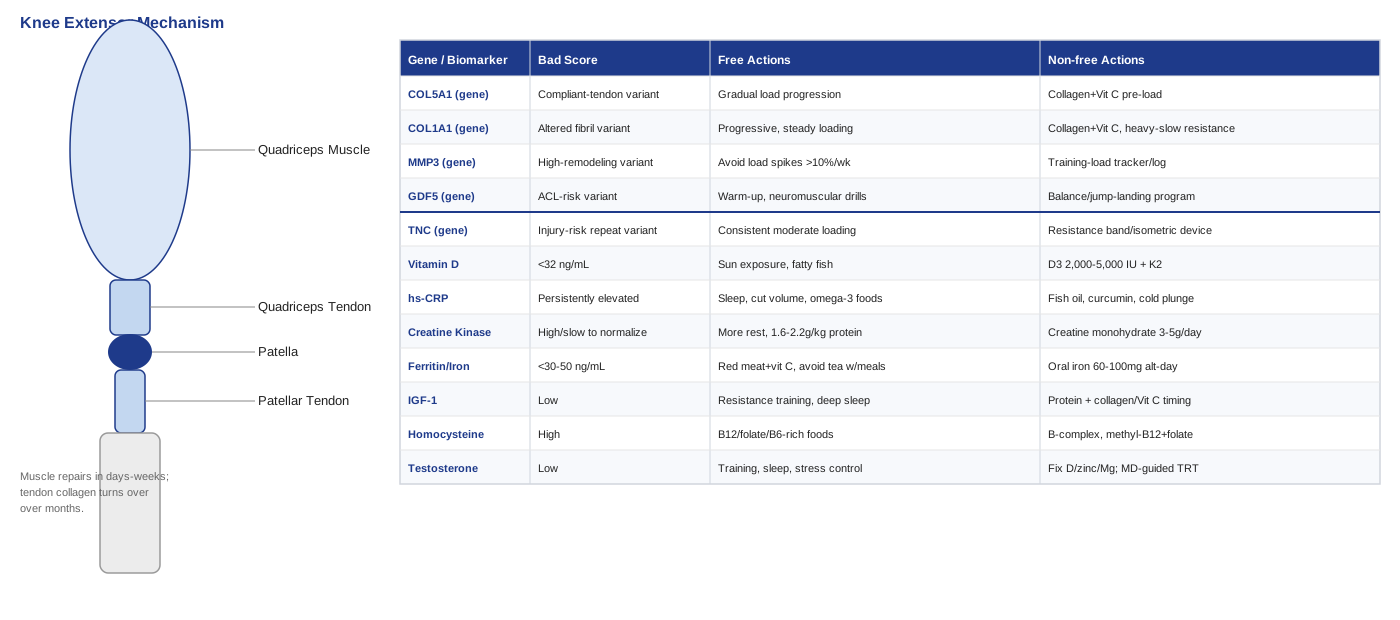
7 Biomarkers Worth Checking After an Extensor Mechanism Strain
The extensor mechanism — quadriceps muscle belly, quadriceps tendon, patella, and patellar tendon — is a mixed-tissue unit. Muscle fibers repair in days to weeks; tendon collagen turns over far more slowly, on the order of months. That means the biomarkers relevant to your recovery aren't a single number, but a small panel that reflects muscle damage, systemic inflammation, and the raw materials your body needs to rebuild collagen.
Why Bloodwork Tells You More Than Rest-Ice-Physio Advice
A standard rehab timeline assumes your inflammatory response, nutrient status, and hormonal environment are all "normal enough." Often they aren't. Low vitamin D has been directly linked to muscle strain injuries in professional athletes, chronically elevated inflammatory markers are associated with lower muscle strength and mass, and unaddressed iron deficiency blunts the oxygen delivery your tissue needs to rebuild. None of these show up on an X-ray or MRI. They show up in blood, and unlike your genes, most of them are modifiable within weeks to months.
Vitamin D (25-hydroxyvitamin D)
Vitamin D does more than support bone density — it's tied to muscle fiber contractility and to acute muscle injury risk. In professional athletes, low serum vitamin D has been associated with a higher rate of lower-extremity muscle strains and core muscle injuries, along with slower strength recovery after injury, as summarized in this review on vitamin D in athletes.
How to measure it: A basic 25(OH)D blood test, roughly 30 to 50 dollars out of pocket if not covered by insurance, or bundled into most annual panels. Target above 32 ng/mL, with 40 to 60 ng/mL generally considered a more optimal range for physically active people.
If the score is low, the plan without supplements: 15 to 20 minutes of midday sun exposure on bare skin several times a week (adjusted for skin tone and latitude), more fatty fish and egg yolks in the diet, and a retest after 2 to 3 months, since sunlight-driven changes are slow and seasonal.
If the score is low, the plan with supplements: Vitamin D3, 2,000 to 5,000 IU daily, taken with a meal containing fat for absorption, often paired with 100 mcg of vitamin K2 to support proper calcium utilization. Retest at 8 to 12 weeks and adjust the dose based on the new number rather than continuing to guess. Side effects are rare at these doses but hypercalcemia and nausea can occur with sustained megadosing above 10,000 IU/day without monitoring — this is not a marker where more is automatically better.
High-Sensitivity C-Reactive Protein (hs-CRP)
hs-CRP is a marker of low-grade systemic inflammation, and a meta-analysis found that elevated CRP is independently associated with lower muscle strength and lower muscle mass, as described in this systematic review and meta-analysis. After a strain, a persistently elevated hs-CRP (rather than the expected short-term post-injury bump) can be a sign that recovery is stalling or that you're returning to load before the tissue is ready.
How to measure it: A standard hs-CRP blood draw, around 15 to 30 dollars standalone, or included in more comprehensive inflammation/longevity panels (100 to 200 dollars) offered by services popularized in Peter Attia's and similar longevity-focused circles.
If the score is high, the plan without supplements: Prioritize 7 to 9 hours of sleep, temporarily reduce training volume rather than pushing through, increase fatty fish intake to two servings a week, and address excess body fat if present, since adipose tissue itself is a source of inflammatory signaling.
If the score is high, the plan with supplements or equipment: Fish oil supplying 2 to 3 g/day combined EPA/DHA, and/or curcumin with piperine at 500 to 1,000 mg/day, cycled for 8 to 12 weeks with a 2 to 4 week break before reassessing. Cold water immersion after training sessions (an ice bath or cold plunge) can blunt acute inflammation short-term, but using it after every single training session long-term may blunt the adaptive signal you actually want during the strength-building phase of rehab — reserve it for the early, more inflamed stage of recovery. Side effects: fish oil can thin the blood, so use caution if you're on anticoagulants; curcumin can cause GI upset in some people.
Creatine Kinase (CK)
CK is released from damaged muscle fibers and remains one of the most validated, low-cost markers of the extent of muscle tissue damage, typically peaking 2 to 6 days after the triggering event, per this review on creatine kinase and exercise-induced muscle damage. A very elevated or slowly-normalizing CK after your strain is a signal to extend the low-load phase rather than accelerate it.
How to measure it: A basic CK blood test, typically 10 to 25 dollars, often already included in standard metabolic panels.
If the score is high, the plan without supplements: Extend rest between loaded sessions, avoid stacking multiple eccentric-heavy exercises in the same week, keep protein intake at 1.6 to 2.2 g/kg/day to support repair, and prioritize sleep, which is when much of muscle repair happens.
If the score is high, the plan with supplements: Creatine monohydrate, 3 to 5 g/day, taken daily with no need to cycle — unlike most supplements here, continuous use is standard and meta-analyses suggest it may actually reduce markers of exercise-induced muscle damage rather than worsen them. Mild water retention is the most common side effect; it is not associated with kidney damage in people with normal kidney function.
Ferritin and Iron Panel
Iron status determines how well oxygen reaches healing tissue. A meaningful proportion of athletes, especially women and endurance-focused trainees, run iron-deficient without realizing it, which can blunt performance and slow recovery, as outlined in this review of iron status and physical performance in athletes.
How to measure it: Ferritin plus transferrin saturation, around 20 to 40 dollars, or a full iron panel for 50 to 100 dollars. General target above 30 to 50 ng/mL; athletes in heavy training blocks often aim higher, around 50 ng/mL or more.
If the score is low, the plan without supplements: Red meat, dark poultry, and legumes paired with vitamin C-rich foods to boost non-heme iron absorption; avoid drinking tea or coffee with iron-containing meals, since tannins block absorption; cooking in cast iron cookware modestly increases dietary iron.
If the score is low, the plan with supplements: Oral iron, 60 to 100 mg elemental iron, taken every other day rather than daily — alternate-day dosing has been shown to improve absorption compared with daily dosing — for 8 to 12 weeks, then retest. Do not supplement iron without a confirmed low ferritin/transferrin saturation first; excess iron is not simply excreted and can accumulate. Common side effects include constipation and GI upset; taking it with a small amount of vitamin C and away from calcium-rich foods improves tolerance and absorption.
IGF-1 (Insulin-like Growth Factor 1)
IGF-1 is a central driver of every phase of tendon repair — inflammation resolution, cell proliferation, and collagen matrix remodeling — as detailed in this review of IGF-1 delivery strategies in tendon healing. You cannot meaningfully "supplement" IGF-1 directly and safely, but you can support the conditions under which your body produces and uses it effectively.
How to measure it: A serum IGF-1 blood test, typically 60 to 120 dollars, usually available through specialty or longevity-focused lab panels rather than standard primary care bloodwork.
If the score is low, the plan without supplements: Resistance training with adequate total protein and calorie intake (IGF-1 production drops under chronic caloric restriction), and prioritizing deep sleep, since growth hormone — and downstream IGF-1 — pulses are concentrated in slow-wave sleep.
If the score is low, the plan with supplements or equipment: Ensure total daily protein is adequate (generally 1.6 g/kg or more during rehab) and consider hydrolyzed collagen peptides with vitamin C timed roughly an hour before loading sessions, which supports the collagen matrix that IGF-1 acts on. What to avoid entirely: unregulated growth hormone or IGF-1 injections marketed for recovery. These are banned in competitive sport, carry real risks including insulin resistance and joint or cardiac issues, and are not a substitute for addressing the more mundane sleep, protein, and training-load factors that actually move this number.
Homocysteine (with B12 and Folate)
Elevated homocysteine directly interferes with lysyl oxidase, the enzyme responsible for cross-linking collagen fibers into a strong matrix — weaker cross-linking means less resilient connective tissue, a mechanism described in this review of B vitamins, homocysteine, and connective tissue health. This is a marker most people never think to check after a soft-tissue injury, but it's directly upstream of tendon and ligament matrix quality.
How to measure it: A homocysteine blood test, 30 to 50 dollars, ideally paired with B12 and folate levels (20 to 40 dollars additional).
If the score is high, the plan without supplements: More animal products for B12, leafy greens and legumes for folate, and poultry or potatoes for B6 — the three cofactors your body uses to clear homocysteine.
If the score is high, the plan with supplements: A B-complex containing methylated B12 (methylcobalamin, 500 to 1,000 mcg) plus folate (400 to 800 mcg) and B6, for 8 to 12 weeks, then retest. This is generally well tolerated; the one caution is long-term B6 doses above 100 mg/day, which have been linked to peripheral neuropathy — stay within a standard B-complex dose rather than megadosing any single B vitamin.
Testosterone (Total and Free)
Androgens influence collagen synthesis, muscle protein synthesis, and tendon stiffness. Low testosterone — a marker Peter Attia and Thomas Dayspring both discuss in the context of overall tissue and metabolic health, not just libido — can mean a slower rebuilding phase after any soft-tissue injury.
How to measure it: Total and free testosterone with SHBG, drawn in the morning while fasted, typically 50 to 100 dollars.
If the score is low, the plan without supplements: Resistance training, adequate sleep, body fat management, and stress reduction — cortisol and testosterone have an inverse relationship, and chronic stress during a rehab period can work against you here.
If the score is low, the plan with supplements or equipment: First correct any underlying deficiencies in vitamin D, zinc, and magnesium, which are common and directly involved in testosterone production. If levels remain clinically low with symptoms after that, testosterone replacement therapy is a legitimate option — but it is a physician-directed medical decision, not a self-directed supplement protocol. It requires ongoing monitoring of hematocrit, PSA, and lipids, and carries real side effects including erythrocytosis and fertility suppression. This is one marker where "the plan" is a conversation with an endocrinologist or sports medicine physician, not a supplement stack.
Bloodwork tells you what's happening right now and what you can change in the next few months. Genetics tells you something slower-moving — the baseline your connective tissue was built with — which is where the next layer of the picture comes in.
What Your Genes May Reveal About Tendon and Muscle Resilience
Consumer genetic testing has made variants like these far more visible than they used to be, largely through researchers and communicators such as Ali Torkamani, whose work on genomic risk scores has pushed personal genetics into more mainstream use, and Gary Brecka, who has popularized panels covering methylation and connective-tissue-related genes on a broader audience. The tendon and ligament injury genetics literature itself is a genuinely active research area, summarized well in this narrative review of tendon and ligament genetics and this review of the genetics of sports injuries and athletic performance. The evidence quality varies gene by gene — some associations are well replicated, others are early and should be treated as such.
COL5A1
COL5A1 codes for type V collagen, a minor but structurally important component that regulates the diameter and organization of the type I collagen fibrils that make up most of your tendon. Certain COL5A1 variants are associated with more compliant, extensible tendon tissue, which some research links to a higher risk of tendon and ligament injury, while other variants appear protective — a meta-analysis found specific COL5A1 genotypes associated with reduced tendon-ligament injury risk in this meta-analysis on COL5A1 polymorphisms. This is the single most consistently replicated gene in this space, though effect sizes are modest and it doesn't function as a standalone predictor.
If the gene is unfavorable, the plan without supplements: Longer, more gradual tendon-loading progressions before increasing intensity or plyometric volume, and closer attention to warning signs like localized stiffness or morning pain rather than pushing through them.
If the gene is unfavorable, the plan with supplements or equipment: Hydrolyzed collagen peptides (15 g) with 50 mg vitamin C, taken about an hour before loading sessions, 3 to 5 times a week during active training blocks, cycling on during higher-load training phases and off during deload weeks. Side effects are minimal; collagen peptides are generally well tolerated, with occasional mild GI upset.
COL1A1
COL1A1 encodes type I collagen, the dominant structural protein in tendon (60 to 85 percent of tendon dry weight). Variants here have been associated with Achilles tendon pathology risk in the same review referenced above, likely by altering collagen fibril structure and mechanical stiffness.
If the gene is unfavorable, the plan without supplements: Consistent, progressive mechanical loading rather than intermittent high-intensity bursts — tendon adapts to load applied gradually and repeatedly far better than to sporadic maximal effort.
If the gene is unfavorable, the plan with supplements or equipment: Same collagen-plus-vitamin-C timing strategy as above, paired with a slow eccentric or isometric loading program (heavy slow resistance) 2 to 3 times per week with at least 48 hours between sessions to allow the remodeling window to complete. No specific cycling needed for the loading itself beyond standard periodization; watch for a return of localized tendon pain as the signal to reduce volume, not push through.
MMP3
MMP3 (matrix metalloproteinase-3) is an enzyme involved in breaking down and remodeling extracellular matrix, including collagen. Certain MMP3 variants combined with specific COL5A1 genotypes have been associated with differing Achilles tendinopathy risk, suggesting these genes interact rather than act independently.
If the gene is unfavorable, the plan without supplements: Because MMP3 affects how actively your tissue remodels and breaks down matrix, avoid rapid spikes in training load ("terrible too much, too soon" progressions), which is the single most modifiable risk factor regardless of genotype.
If the gene is unfavorable, the plan with supplements or equipment: There's no specific supplement shown to directly modulate MMP3 activity in humans with good evidence, so the more useful lever is equipment-based: load monitoring tools (a simple training log or a wearable tracking weekly training load) to keep week-over-week increases under roughly 10 percent, which indirectly protects against the matrix breakdown-rebuild imbalance this gene may predispose to.
GDF5
GDF5 (growth differentiation factor 5) plays a role in tendon and ligament development and repair signaling. The evidence here is genuinely mixed — some studies show an association with ACL injury risk, others don't replicate it, and the review cited above is explicit that larger studies are needed before this locus can be considered well established.
If the gene is unfavorable, the plan without supplements: Given the early-stage evidence, the most defensible response is general good practice rather than a gene-specific intervention: adequate warm-up before high-load or plyometric activity and neuromuscular control work (landing mechanics, single-leg stability).
If the gene is unfavorable, the plan with supplements or equipment: No supplement protocol is currently justified by human evidence for this specific variant. If you want an equipment-based approach, a structured neuromuscular training program (the kind used in ACL injury prevention research, involving balance boards and jump-landing drills 2 to 3 times weekly) is the better-supported investment than any supplement stack.
Tenascin-C (TNC)
Tenascin-C is a glycoprotein expressed in tendon during development and in response to mechanical stress; a specific repeat polymorphism in this gene has been associated with Achilles tendon injury risk in several of the studies referenced above.
If the gene is unfavorable, the plan without supplements: Since tenascin-C expression itself increases in response to mechanical loading, consistent, moderate tendon loading (rather than avoidance) is the more evidence-aligned approach — under-loading tendon does not protect it, it simply delays adaptation.
If the gene is unfavorable, the plan with supplements or equipment: As with GDF5, there's no tenascin-C-specific supplement protocol with human evidence behind it. The more useful tool is a resistance band or isometric loading device for structured, progressive tendon loading sessions, 3 times weekly, which is the mechanical stimulus this gene's protein responds to.
Genetics describes a tendency, not a sentence — and the loading-and-nutrition research below is precisely the kind of intervention that can work with or around a less favorable genetic starting point.
The Tendon-Loading Protocol Reshaping How Clinicians Think About Recovery
Much of the newer thinking on tendon injury recovery traces back to the work of Dr. Keith Baar, a physiologist whose lab research and case studies — widely discussed on physiology-focused podcasts including Andrew Huberman's — pushes back against the old "just rest it" model. The core argument: tendon tissue responds to specific mechanical and nutritional signals, and standard rest-based rehab often under-stimulates the very adaptation you're waiting for.
Tendon Remodels on a Much Slower Clock Than Muscle
Muscle protein turns over in days; tendon collagen turnover is measured in months. This is why extensor mechanism strains that involve the tendon (not just the muscle belly) frequently take far longer to feel resilient than the pain-free timeline would suggest, and why returning to full load based on "it doesn't hurt anymore" alone is a common cause of reinjury.
Mechanical Loading Drives Collagen Synthesis More Than Rest Does
Passive rest does very little to stimulate new, organized collagen deposition. Controlled mechanical loading — not violent loading, but appropriately dosed loading — is the actual signal that tells tenocytes to build matrix. This is the physiological rationale behind isometric and heavy-slow-resistance protocols now standard in tendinopathy rehab.
Timing Vitamin C and Collagen Before Loading Roughly Doubles Collagen Synthesis
In a controlled human trial, participants who consumed vitamin C-enriched gelatin about an hour before a short bout of intermittent activity showed roughly double the collagen synthesis markers compared with those who didn't, as shown in this study on vitamin C-enriched gelatin and collagen synthesis. The timing — before the loading stimulus, not after — appears to matter as much as the dose.
A Documented Case Applied This Directly to Patellar Tendon Recovery
Baar's team published a case report combining gelatin/vitamin C supplementation with heavy isometric loading designed to produce controlled "stress relaxation" in a chronically painful patellar tendon; follow-up imaging showed the tendon read as structurally normal, alongside reduced pain and improved function, detailed in this case report on stress relaxation and targeted nutrition for patellar tendinopathy. It's a single case, not a large trial, so it should be read as promising rather than proven — but it's a well-documented example of the mechanism in practice.
Isometric Holds Over Passive Stretching
For a healing extensor mechanism, sustained isometric contractions (holding a loaded position without joint movement) appear to stimulate tendon adaptation more effectively than passive stretching, while carrying lower re-injury risk than dynamic or plyometric loading in the early-to-mid recovery phase.
Sleep Is a Repair Window, Not Just Recovery Time Off
Growth hormone release, and the downstream IGF-1 signaling that drives tendon matrix repair, is concentrated in deep, slow-wave sleep. Cutting sleep short during a rehab period isn't a neutral choice — it directly reduces the hormonal signal your tissue needs to rebuild.
Dosing Matters — More Collagen Is Not Automatically Better
The human research supporting this approach generally uses around 15 g of hydrolyzed collagen with roughly 50 mg of vitamin C, not large megadoses. There's no strong evidence that higher amounts produce proportionally more benefit, and unnecessarily high protein-supplement intake without a matching training stimulus doesn't translate into better tendon outcomes.
Anti-Inflammatory Medication Use Around Loading Is a Genuinely Debated Question
Some researchers and clinicians are cautious about routine NSAID use immediately around loading sessions, on the theory that blunting the inflammatory signal may also blunt the adaptive signal. This is a debated area without a firm consensus, so it's worth a direct conversation with your physician or physical therapist rather than either avoiding or using NSAIDs reflexively.
Individualized Loading Beats a Fixed Return-to-Play Calendar
Rather than "six weeks and you're cleared," this framework treats tissue tolerance — how the area responds to a specific load in real time — as the actual signal for progression. Two people with the same diagnosis may need meaningfully different timelines, which is consistent with the biomarker and genetic variability discussed earlier in this article.
The Broader Point: Standard Rehab Advice Is a Floor, Not a Ceiling
None of this replaces physical therapy or a structured rehab program. It's a reason to ask your provider more specific questions — about loading type, nutrient timing, and sleep — rather than accepting a generic timeline without adjustment for your specific situation.
Loading and nutrition address the tissue directly; the modalities below are worth considering as supportive tools alongside — not instead of — that core rehab work.
Complementary Approaches Worth Considering
A handful of adjunctive therapies have real, condition-relevant human evidence behind them for muscle and tendon soft-tissue injuries. These are supportive additions to structured loading and rehab, not replacements for it.
Photobiomodulation (Low-Level Laser Therapy)
Photobiomodulation uses low-level red or near-infrared light applied directly to injured tissue, with a proposed mechanism of improving mitochondrial function and modestly reducing pain signaling in tendon tissue — relevant to extensor mechanism strains because pain reduction during the early phase can allow more consistent, better-tolerated loading sessions. A systematic review and meta-analysis of randomized controlled trials found that low-level red and near-infrared photobiomodulation produced meaningful short-term improvements in pain and function in tendinopathy, as reported in this meta-analysis on photobiomodulation for tendinopathy, though the review is also clear that treatment parameters (wavelength, dose, session count) strongly affect outcomes and that high-quality long-term evidence is still limited. In practice, this means using it as delivered by a clinic with a validated device and dosing protocol, typically 2 to 3 sessions weekly for several weeks, rather than an inexpensive consumer laser pen with unclear output — and treating it as an adjunct to loading exercise, not a substitute for it.
Massage Therapy
Massage applied to the quadriceps and surrounding musculature may help with the muscle-belly component of an extensor mechanism strain, primarily by reducing perceived soreness and improving short-term comfort rather than accelerating underlying tissue repair. A systematic review and meta-analysis found that massage significantly reduced muscle soreness ratings compared with no intervention at 24, 48, and 72 hours after strenuous exercise, detailed in this meta-analysis on massage for delayed-onset muscle soreness. This evidence is specifically about muscle soreness rather than tendon healing, so its realistic role here is as comfort and mobility support for the muscular portion of the injury — a session or two per week during the early-to-mid recovery phase, performed by a licensed therapist and avoided directly over an acutely inflamed tendon insertion point.
EMG Biofeedback
Electromyography (EMG) biofeedback gives real-time visual or auditory feedback on muscle activation, which is directly relevant to extensor mechanism injuries because quadriceps activation is frequently inhibited after knee injury or surgery — a phenomenon sometimes called arthrogenic muscle inhibition, where the muscle "forgets" how to fire fully even after pain resolves. A controlled study found that patients receiving EMG biofeedback during postoperative rehabilitation showed significantly greater quadriceps extensor torque and muscle fiber recruitment than those doing standard exercise alone, as shown in this study on EMG feedback-assisted postoperative knee rehabilitation. Realistically, this means working with a physical therapist who has surface EMG equipment during the mid-recovery phase, focused specifically on restoring full, symmetrical quadriceps activation before progressing to heavier loading — typically 2 sessions weekly for several weeks.
Tai Chi
Tai chi's slow, controlled, weight-shifting movements build lower-limb neuromuscular control, balance, and confidence in loading the leg — useful in the later stages of extensor mechanism rehab when the goal shifts from pain control to restoring trust in the joint under dynamic conditions. While the strongest trial evidence for tai chi is in knee osteoarthritis rather than acute soft-tissue strain specifically, a randomized controlled trial found it produced meaningful improvements in knee pain, physical function, and quality of life, described in this randomized controlled trial of tai chi for knee osteoarthritis — evidence that is adjacent to, rather than specific to, acute extensor mechanism strain, so it's best framed as a plausible but not injury-specific tool. In practice, this fits best as a late-stage rehab addition, 2 sessions weekly, once acute pain has settled and the goal is rebuilding confident, controlled movement rather than treating the injury itself.
Conclusion
An acute extensor mechanism strain heals on a biological timeline that no single fix can override — but that timeline is shaped by things you can actually see and act on: your vitamin D and iron status, your inflammatory load, whether your homocysteine is quietly working against collagen cross-linking, and, more slowly, the genetic tendency of your tendon tissue itself. Layer on a loading-and-nutrient-timing approach grounded in real physiology, and a small set of complementary tools with genuine evidence behind them, and you have something more useful than a generic six-week countdown.
The practical next step is a modest one: get the seven biomarkers checked, share the results with whoever is guiding your rehab, and treat your recovery timeline as something to be adjusted based on real data rather than assumed from a calendar. If a genetic panel is something you're already curious about, treat it as one more data point for that same conversation with a sports medicine physician or physical therapist — not a verdict to act on alone.
Musculoskeletal: Muscle Conditions Tendon & Ligament Conditions
Autoimmune: Inflammatory Conditions