This article contains AI generated content.
Adductor Canal Compression Syndrome: 5 Genes And 7 Biomarkers To Track
If you're reading this, you've probably already been told to "rest it," "stretch it," or "see how it goes." Adductor canal compression syndrome — a condition where the saphenous nerve, and sometimes the femoral artery, gets pinched as it passes through the fibrous tunnel in the mid-thigh formed by the adductor muscles — doesn't respond well to vague advice. The pain, numbness, or burning along the inner knee and shin can persist for months while imaging comes back "normal" and generic stretching routines do little.
Part of the problem is that most advice for nerve entrapment syndromes is written for the average case, not for your case. Two people with an identical anatomical pinch point can have very different outcomes depending on how their thyroid is functioning, how well their blood sugar is controlled, how much background inflammation they're carrying, or how their tendons and fascia are built at a genetic level. None of that shows up on an MRI of the thigh.
This article takes a more granular approach. Instead of repeating the standard "rest, ice, physical therapy" script, it looks at the internal biology that can make a nerve more vulnerable to compression in the first place — and the biology that can help it recover once compression is relieved. That means specific blood biomarkers worth tracking, the genetic variants with the best evidence behind them, a well-known longevity framework that touches on several of the same mechanisms, and a short list of complementary approaches with real clinical data behind them.
None of this replaces a proper diagnostic workup with a physician, and nothing here promises to dissolve a compressed nerve. But better information about your own metabolic and genetic terrain can sharpen the decisions you make with your care team — and that is a realistic, grounded kind of hope.
Summary
This article works from the inside out. It starts with seven blood biomarkers — including HbA1c, hs-CRP, TSH, vitamin B12, homocysteine, vitamin D, and creatine kinase — that shape how vulnerable a nerve is to compression and how well it recovers, with exact costs, testing methods, and step-by-step fixes for each one, with and without supplements. It then looks at five genes, from COL5A1 to MTHFR, that influence tendon stiffness, inflammation, muscle recovery, and nerve resilience, and what the current human evidence actually says about each. A dedicated section breaks down ten ideas from Peter Attia's Outlive that map directly onto this condition, from insulin resistance to the value of maintaining muscle mass. Finally, four complementary approaches — massage therapy, photobiomodulation, mindfulness-based stress reduction, and biofeedback — are reviewed against the actual clinical trial data for nerve entrapment and myofascial pain, not just general wellness claims. By the end, you'll have a concrete list of what to ask your doctor to test, what your genetic risk profile might mean, and which supporting therapies are worth your time.
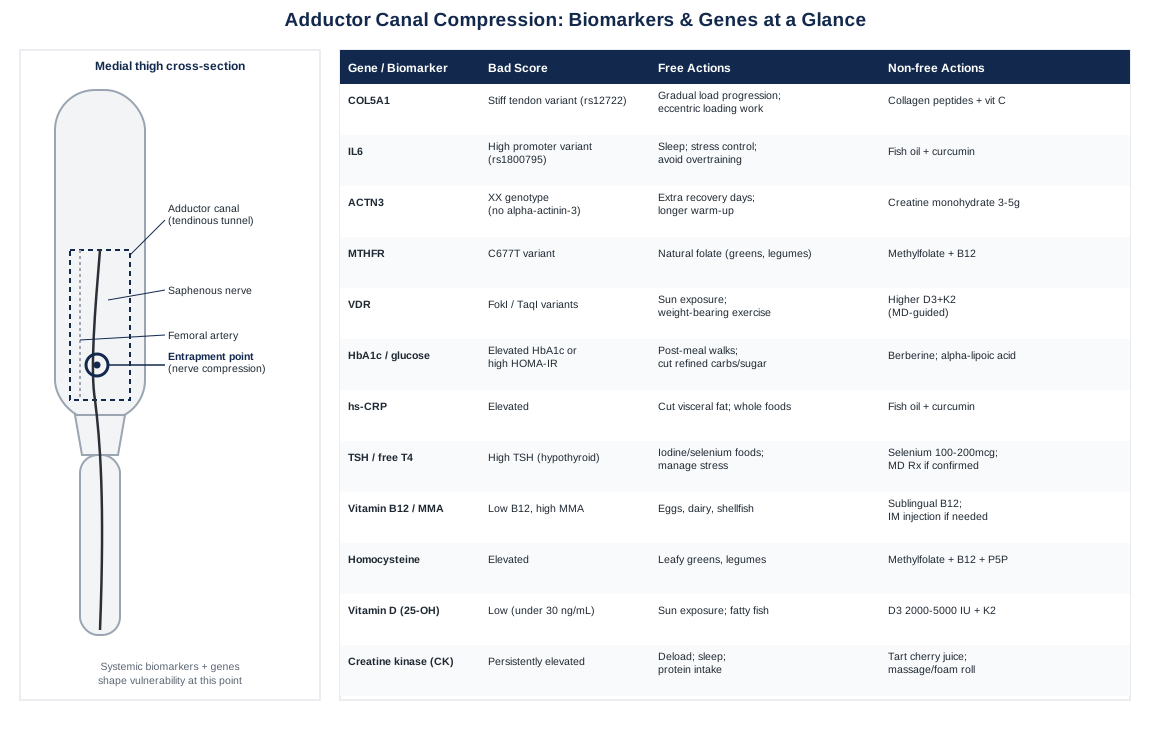
7 Biomarkers To Track For Adductor Canal Compression Syndrome
Adductor canal compression syndrome is fundamentally a mechanical problem — a band of adductor magnus tendon, or occasionally an aneurysm or hypertrophied vastoadductor membrane, narrows the space around the saphenous nerve. But mechanics alone rarely tell the whole story. The same degree of anatomical narrowing produces disabling symptoms in one person and none in another, and the difference often comes down to how healthy the nerve is at a cellular level before it ever gets squeezed. This is the same logic behind "double crush syndrome," a well-documented phenomenon in which a systemic condition like diabetes makes a nerve far more sensitive to a second, localized compression point along its path, as described in research on nerve susceptibility to compression in diabetes (Dellon, 2014) and in reviews of double crush syndrome itself (Schmid & Coppieters, 2011). The biomarkers below aren't specific tests for adductor canal syndrome — no such blood test exists — but they measure the metabolic and inflammatory background that determines how easily a nerve swells, how well it tolerates pressure, and how quickly it heals once that pressure is relieved.
HbA1c and fasting glucose
Chronically elevated blood sugar damages the small blood vessels that feed peripheral nerves (the vasa nervorum), leaving nerves more swollen, more fragile, and more prone to symptomatic compression at any narrow anatomical passage — including the adductor canal. This is the core mechanism behind diabetic peripheral neuropathy, and it's also the mechanism researchers point to when explaining why compression neuropathies show up earlier and more severely in people with poor glucose control.
How to measure it
HbA1c and fasting glucose are part of almost every routine metabolic panel, typically $15 to $40 out of pocket if ordered independently through a direct-to-consumer lab. A more sensitive option is a fasting insulin test combined with glucose to calculate HOMA-IR (roughly $50 to $100), which can flag insulin resistance years before HbA1c rises — a distinction longevity-focused physicians like Peter Attia emphasize repeatedly. For real-time tracking, a continuous glucose monitor (CGM) costs around $50 to $100 per month and shows how specific meals and activity affect your glucose curve.If the score is bad, the plan without supplements
Prioritize a 10-15 minute walk after meals (this alone meaningfully blunts post-meal glucose spikes), reduce refined carbohydrates and liquid sugar, add resistance training two to three times per week, and protect sleep — a single night of poor sleep measurably worsens insulin sensitivity the next day.If the score is bad, the plan with supplements or equipment
Berberine, 500 mg two to three times daily with meals, cycled 8-12 weeks on and 2-4 weeks off, has glucose-lowering effects comparable to some prescription agents in trials, though it can cause GI upset and should not be combined with metformin without medical supervision. Alpha-lipoic acid, 600 mg per day, has the added benefit of specific evidence in diabetic neuropathy symptom relief. A CGM is the most useful piece of equipment here, since it turns an abstract lab number into daily feedback you can act on.hs-CRP (high-sensitivity C-reactive protein)
hs-CRP is a general marker of systemic inflammation, and chronic low-grade inflammation contributes to fascial thickening and fibrosis around muscles, tendons, and nerve sheaths — exactly the tissue involved in the adductor canal. Elevated hs-CRP is also associated with lower pain thresholds and slower tissue recovery generally.
How to measure it
A standalone hs-CRP test runs about $15 to $25. More advanced cardiometabolic panels that pair it with ApoB and lipoprotein subfractions — the kind favored by physicians like Thomas Dayspring and Allan Sniderman — run $70 to $150 and give a fuller picture of vascular inflammation, which matters since the femoral artery runs alongside the saphenous nerve in the adductor canal.If the score is bad, the plan without supplements
Reduce visceral fat (a major driver of background inflammation), treat any underlying gum disease, avoid the kind of unaccustomed high-volume training that transiently spikes CRP, and shift toward a diet built around vegetables, fatty fish, and minimally processed food.If the score is bad, the plan with supplements or equipment
Fish oil supplying 2-3 g combined EPA/DHA daily, taken continuously, is one of the better-supported anti-inflammatory supplements, though it has a mild blood-thinning effect worth discussing with your doctor if you're on anticoagulants. Curcumin with piperine, 500-1000 mg once or twice daily, cycled 8 weeks on and 2 weeks off, can further lower inflammatory markers but may cause GI upset or interact with blood thinners and should be avoided with gallstones.TSH and free T4
Thyroid dysfunction, and hypothyroidism in particular, is one of the best-documented systemic contributors to entrapment neuropathies. The evidence is strongest for carpal tunnel syndrome, where a meta-analysis of over 64,000 subjects found a clear association between hypothyroidism and carpal tunnel syndrome, an effect that persisted (though attenuated) even after adjusting for confounders (Cakir et al., meta-analysis). The mechanism — myxedematous tissue swelling and connective tissue changes narrowing an already tight anatomical tunnel — plausibly extends to other canal-type nerve entrapments, including the adductor canal, though direct studies on this specific location are limited.
How to measure it
TSH alone costs $20 to $40. A fuller thyroid panel with free T4, free T3, reverse T3, and thyroid antibodies — the kind of workup favored in functional and precision medicine circles — runs $60 to $120 and can catch subclinical or autoimmune thyroid patterns a TSH-only test misses.If the score is bad, the plan without supplements
Ensure adequate dietary iodine and selenium from food (seafood, dairy, eggs), manage chronic stress and sleep debt (both suppress thyroid conversion), and avoid extremely large amounts of raw goitrogenic vegetables if levels are already low.If the score is bad, the plan with supplements or equipment
Selenium, 100-200 mcg per day, supports thyroid hormone conversion, but should not exceed 400 mcg daily due to toxicity risk (brittle nails, hair loss, GI upset), and levels should be rechecked at three months. Avoid self-prescribed high-dose iodine, which can worsen autoimmune thyroiditis. Confirmed hypothyroidism is typically a medication conversation (levothyroxine) with your physician, not a supplement one.Vitamin B12 and methylmalonic acid (MMA)
B12 is required to maintain the myelin sheath around peripheral nerves, and deficiency produces its own peripheral neuropathy — numbness, tingling, and weakness that can overlap with, mask, or worsen the symptoms of a mechanical nerve entrapment. Deficiency is common in people over 50, those on metformin or long-term acid-reducing medication, and anyone eating a largely plant-based diet.
How to measure it
Serum B12 costs roughly $20 to $30. Because serum B12 can look "normal" while tissue levels are functionally low, pairing it with methylmalonic acid (MMA) and homocysteine, together around $50 to $80, gives a more reliable read on true B12 status.If the score is bad, the plan without supplements
Increase intake of eggs, dairy, shellfish, and organ meats; if largely plant-based, prioritize B12-fortified foods such as nutritional yeast.If the score is bad, the plan with supplements or equipment
Sublingual methylcobalamin, 1000 mcg daily for 8-12 weeks, is well absorbed even with mild malabsorption issues and has essentially no toxicity ceiling since it's water-soluble. For confirmed malabsorption (pernicious anemia, gastric surgery), intramuscular B12 injections prescribed by a physician bypass the gut entirely. Retest at three months.Homocysteine
Elevated homocysteine — often driven by low B12 or folate status — has been linked to slowed nerve conduction velocity and impaired peripheral nerve function over time, independent of diabetes (Vitamin B12, homocysteine, and 6-year change in peripheral nerve function). It's a useful secondary marker precisely because it integrates B12, folate, and B6 status into a single number.
How to measure it
A standard blood draw costs $30 to $50 and is often bundled into advanced cardiovascular or methylation panels.If the score is bad, the plan without supplements
Increase folate-rich leafy greens and legumes, correct any B12 deficiency first (see above), and moderate very high animal-protein intake if homocysteine remains stubbornly elevated.If the score is bad, the plan with supplements or equipment
Methylfolate (not synthetic folic acid), 400-800 mcg daily, combined with B12 and active B6 (P5P) at 25-50 mg daily, for 8-12 weeks, then retest. Doses this size are low-risk, but avoid chronic high-dose B6 above 100 mg daily, which can itself cause peripheral neuropathy — an important caution given the topic at hand.Vitamin D (25-hydroxyvitamin D)
Vitamin D deficiency shows up in the majority of people with nonspecific musculoskeletal pain, with one study finding vitamin D deficiency in over 90% of patients presenting with such pain, and treatment relieving symptoms in the large majority who supplemented (Is vitamin D deficiency associated with non-specific musculoskeletal pain?). Deficiency has also been specifically linked to neuropathic pain presentations (Vitamin D deficiency-associated neuropathic pain), plausibly through altered nerve fiber density and heightened muscle nociceptor sensitivity.
How to measure it
A standalone 25(OH)D test costs $30 to $50 and is one of the more worthwhile individual tests to run given how common deficiency is and how directly it's tied to pain presentations.If the score is bad, the plan without supplements
Sensible midday sun exposure several times weekly (duration depends heavily on skin tone and latitude), and more fatty fish and egg yolks in the diet.If the score is bad, the plan with supplements or equipment
Vitamin D3, 2000-5000 IU daily with a meal containing fat (it's fat-soluble), paired with 100 mcg of vitamin K2 to support proper calcium handling, for 8-12 weeks, then retest with a target of roughly 40-60 ng/mL. Avoid unsupervised doses above 10,000 IU daily given the risk of hypercalcemia.Creatine kinase (CK)
Unlike the other markers here, CK isn't about nerve health directly — it's a muscle damage marker, and it matters because adductor canal compression syndrome often has a mechanical, overuse component involving the adductor magnus tendon and musculotendinous band that forms one wall of the canal. Persistently elevated CK can be a sign that training load is outpacing recovery capacity in exactly the muscle group implicated in the compression.
How to measure it
A basic CK blood test costs $20 to $30 and is best interpreted relative to your own baseline and recent training history rather than a single population reference range, since intense exercise alone can transiently elevate it many-fold.If the score is bad, the plan without supplements
Reduce adductor-specific training volume temporarily, insert deload weeks, prioritize sleep and protein intake for recovery, and reintroduce load gradually with attention to warm-up quality.If the score is bad, the plan with supplements or equipment
Tart cherry juice, roughly 8 oz twice daily around training days, has reasonable evidence for reducing exercise-induced muscle damage markers. A percussion massage device or foam roller applied to the adductor compartment (not directly over the area of nerve symptoms) can support recovery between sessions. Avoid routinely masking elevated CK and ongoing pain with NSAIDs, since this can encourage training through unresolved tissue damage.5 Genes That May Influence Adductor Canal Compression Syndrome
Genetic testing won't diagnose adductor canal compression syndrome, and no gene panel has been validated specifically for this condition. But several genes shape the raw materials involved — tendon and fascia stiffness, baseline inflammatory tone, muscle recovery capacity, and nerve resilience — and understanding your own variants can help explain why symptoms developed, and where compensation is most worthwhile. This is the kind of layered, systems-based thinking that researchers like Ali Torkamani (whose work on genomic risk prediction has shaped how clinicians think about polygenic risk) and Gary Brecka (known for popularizing accessible genetic and biomarker panels, including MTHFR testing) have pushed into mainstream health conversations. It's worth being clear-eyed about the evidence tier here: most of what follows comes from tendon and inflammation genetics research in adjacent conditions like carpal tunnel syndrome, Achilles tendinopathy, and ACL injury, not from studies of the adductor canal itself.
COL5A1
COL5A1 encodes a component of type V collagen that regulates how tendon and ligament fibers assemble. Certain variants (notably around the rs12722 marker) are associated with stiffer, less compliant tendon tissue, and have specifically been linked to increased risk of carpal tunnel syndrome (The COL5A1 gene is associated with increased risk of carpal tunnel syndrome) as well as Achilles and rotator cuff tendinopathy. Since the adductor canal's compressive structure is itself a tendinous band, a genetic tendency toward stiffer connective tissue is a plausible, though unproven, contributing factor.
If the gene is bad, the plan without supplements
Progress training load gradually rather than in sudden jumps, emphasize eccentric loading and mobility work for the adductors and surrounding fascia, and prioritize consistent, moderate tissue loading over sporadic high-intensity sessions.If the score is bad, the plan with supplements or equipment
Collagen peptides, 10-15 g daily with a source of vitamin C to support synthesis, taken around 30-60 minutes before connective-tissue loading exercise. This is low-risk and can reasonably be taken continuously, though there's no strong reason it must be cycled. A foam roller or vibration therapy device can support fascial mobility work.IL6 (rs1800795)
IL6 encodes a key inflammatory cytokine, and the higher-expressing promoter variant is associated with elevated baseline inflammation and greater risk of soft tissue injuries including tendinopathy and connective tissue conditions such as carpal tunnel syndrome (Polymorphism of inflammatory interleukin genes and soft tissue injury risk). Carrying this variant may mean your tissue runs a slightly higher inflammatory baseline, translating into slower recovery after any tissue irritation, including around a compressed nerve.
If the gene is bad, the plan without supplements
Prioritize sleep quality and consistency, manage psychological stress (which independently raises IL-6), and avoid chronic overtraining patterns that keep inflammatory markers persistently elevated rather than allowing them to normalize between sessions.If the score is bad, the plan with supplements or equipment
The same anti-inflammatory stack discussed under hs-CRP applies directly here — fish oil (2-3 g EPA/DHA daily, continuous) and curcumin with piperine (500-1000 mg, cycled 8 weeks on/2 off) — since IL-6 is one of the upstream drivers of the CRP signal.ACTN3 (R577X)
ACTN3 affects alpha-actinin-3, a structural protein in fast-twitch muscle fibers. People with the XX genotype (complete alpha-actinin-3 deficiency) show measurably greater exercise-induced muscle damage in endurance events compared to RR genotype carriers (ACTN3 X-allele carriers had greater muscle damage during a half-ironman). For a condition with a muscular overuse component like adductor canal syndrome, this genotype may mean slower recovery from adductor-specific training loads and a greater need for structured recovery.
If the gene is bad, the plan without supplements
Build in more recovery days between sessions that heavily load the adductors, extend warm-up duration, and favor gradual progression of eccentric loading rather than abrupt increases in volume or intensity.If the score is bad, the plan with supplements or equipment
Creatine monohydrate, 3-5 g daily, taken continuously with no need to cycle, has strong safety data and can support muscle recovery and power output. Tart cherry juice around training sessions, as noted above, is a reasonable adjunct.MTHFR (C677T)
MTHFR variants reduce the efficiency of an enzyme central to folate metabolism, which can raise homocysteine levels, particularly in people who rely heavily on synthetic folic acid rather than natural folate. This connects directly back to the homocysteine and B12 biomarkers discussed above, since elevated homocysteine is linked to reduced nerve conduction velocity over time.
If the gene is bad, the plan without supplements
Favor natural folate sources — leafy greens, legumes, liver — over fortified foods relying on synthetic folic acid, since MTHFR variant carriers process the synthetic form less efficiently.If the score is bad, the plan with supplements or equipment
Methylfolate (the already-active form), 400-800 mcg daily, alongside methylcobalamin B12, for 8-12 weeks, then recheck homocysteine. This bypasses the enzymatic bottleneck directly and carries minimal side-effect risk at these doses.VDR (vitamin D receptor variants)
Variants in the vitamin D receptor gene (such as FokI and TaqI) can reduce how effectively cells respond to circulating vitamin D, meaning two people with identical 25(OH)D blood levels may have meaningfully different tissue-level vitamin D activity. Given the documented link between vitamin D status and musculoskeletal and neuropathic pain, this is one of the more practically relevant variants on this list.
If the gene is bad, the plan without supplements
Maintain consistent sun exposure and weight-bearing activity, since mechanical loading supports calcium and vitamin D signaling synergy at the tissue level, independent of blood levels alone.If the score is bad, the plan with supplements or equipment
Discuss a slightly higher maintenance dose of vitamin D3 with K2 under physician supervision, since VDR variant carriers may need higher circulating 25(OH)D to achieve the same tissue effect as someone without the variant. Retest levels every three months rather than assuming a single "normal" result is sufficient.10 Ideas From Outlive That Apply Directly To This Condition
Peter Attia's book Outlive: The Science and Art of Longevity isn't written about nerve entrapment syndromes, but its central argument — that most people wait for a diagnosis before acting, when the metabolic dysfunction driving that diagnosis was measurable years earlier — maps almost perfectly onto everything discussed above. Several of its core ideas translate directly into practical guidance for someone dealing with a mechanical nerve compression complicated by systemic factors.
1. Medicine 2.0 waits for disease; medicine 3.0 tracks the trajectory
Attia's framing of reactive versus proactive medicine is exactly the gap this article tries to close — instead of waiting until nerve damage is severe enough to show up on an EMG, track the biomarkers that predict vulnerability years in advance.2. Insulin resistance predates HbA1c by years
Attia argues HbA1c is a lagging indicator and that fasting insulin or HOMA-IR reveals metabolic dysfunction far earlier — directly relevant given the double-crush relationship between glucose dysregulation and nerve compression vulnerability discussed in the biomarker section above.3. Muscle mass is a longevity organ, not a vanity metric
Attia treats skeletal muscle as a metabolic reservoir that improves glucose disposal and resilience to injury. For adductor canal syndrome specifically, well-conditioned adductor muscles are also less prone to the overuse strain that can aggravate the compressive band itself.4. Zone 2 training builds the mitochondrial base that supports everything else
Sustained, easy-paced aerobic training improves mitochondrial efficiency and microvascular health — the same small-vessel network (the vasa nervorum) that determines how resilient a nerve is to compression.5. VO2 max is one of the strongest predictors of long-term outcomes
While VO2 max isn't tested in a typical workup for a knee or thigh complaint, Attia's point is that overall cardiorespiratory fitness reflects and reinforces the same vascular and metabolic systems implicated in nerve health.6. Stability and eccentric strength prevent the injuries that "sideline" you
Attia emphasizes eccentric strength and stability training as injury-prevention tools, echoing the training recommendations tied to COL5A1 and ACTN3 above — gradual, controlled loading rather than abrupt intensity spikes.7. Chronic inflammation is a "silent" driver worth measuring directly
Attia treats hs-CRP and related inflammatory markers as worth tracking proactively rather than only when something already hurts, reinforcing the biomarker-first approach used throughout this article.8. Sleep is a performance-enhancing and recovery-enhancing intervention, not a luxury
Poor sleep worsens insulin sensitivity, raises inflammatory markers, and impairs tissue recovery — three mechanisms directly relevant to how well a compressed nerve and its surrounding tissue heal.9. The "marginal decade" argument: train now for the body you want at 80
Attia's core motivational argument is that current exercise capacity determines future functional independence — a useful reframe for someone tempted to avoid all lower-body training out of fear of aggravating thigh pain, when appropriately loaded training is usually part of the solution.10. Emotional health is a genuine pillar, not an afterthought
Attia devotes real space to the idea that chronic pain and health anxiety compound physical dysfunction, and that addressing the psychological load of a persistent, hard-to-diagnose condition is not separate from treating the condition itself.Complementary Approaches Worth Considering
None of the following approaches address the mechanical compression directly, and none should replace a proper diagnostic evaluation for suspected adductor canal compression syndrome. But each has meaningful clinical evidence in closely related nerve entrapment or myofascial pain conditions, and each is low-risk enough to reasonably add alongside standard care.
Massage therapy
Massage therapy targets the muscular and fascial tissue surrounding a compressed nerve, aiming to reduce local tension, improve tissue mobility, and modulate pain signaling rather than resolve the anatomical compression itself. For a condition where an adductor magnus musculotendinous band is often the compressive structure, targeted soft tissue work on the surrounding musculature is a reasonable, low-risk adjunct.
The clearest human evidence in an analogous entrapment neuropathy comes from carpal tunnel syndrome, where a randomized study found massage therapy produced measurable improvement in symptoms and function compared with standard care alone (Massage therapy as an effective treatment for carpal tunnel syndrome). Evidence specific to the adductor canal is limited to clinical case reports rather than trials.
In practice, this means periodic sessions (weekly to biweekly during a flare) focused on the adductor compartment and surrounding fascia, performed by a therapist familiar with nerve entrapment presentations, and avoiding direct deep pressure over the point of maximal nerve tenderness itself, which can aggravate symptoms.
Low-level laser therapy (photobiomodulation)
Photobiomodulation uses low-intensity laser or LED light aimed at reducing local inflammation and potentially supporting nerve tissue repair at the cellular level, and it has been studied specifically in compressive neuropathies.
The evidence here is genuinely mixed. Some randomized trials and meta-analyses in carpal tunnel syndrome show modest symptomatic benefit, while a widely cited meta-analysis of eight randomized trials covering 473 patients found no significant benefit over placebo for the primary outcome measures (Effectiveness of low-level laser on carpal tunnel syndrome: a meta-analysis). No trials exist specifically for adductor canal compression syndrome, so this should be considered a low-cost, low-risk experiment rather than an established treatment.
If pursued, it's typically delivered as a series of short in-clinic sessions (2-3 times weekly for several weeks) using a device applied directly over the affected area, with essentially no meaningful side effects reported, making it reasonable to trial for four to six weeks while tracking symptoms objectively before deciding whether to continue.
Mindfulness-based stress reduction (MBSR)
Chronic nerve-related pain reliably amplifies itself through central sensitization — the nervous system becomes increasingly reactive to pain signals over time, independent of how much tissue damage is actually present. MBSR targets this amplification loop directly rather than the original mechanical cause.
A randomized controlled trial in patients with nonspecific chronic pain found that an eight-week MBSR program produced significant improvements on standardized quality-of-life and vitality measures compared with a waitlist control (Effects of mindfulness meditation on chronic pain: a randomized controlled trial), and subsequent meta-analyses have shown consistent, if moderate, benefit across chronic pain conditions including low back pain.
A structured eight-week MBSR course (widely available in-person or via reputable apps) practiced daily for 20-30 minutes is a reasonable, evidence-supported addition for anyone whose symptoms have persisted long enough to generate the anxiety and hypervigilance that often accompany chronic nerve pain — not as a replacement for addressing the underlying compression, but as a way to prevent the pain experience from outpacing the actual tissue problem.
Biofeedback
Biofeedback, typically using surface electromyography (EMG), trains conscious control over muscle tension patterns that may be contributing to chronic compression or guarding around a painful area. For a condition involving an adductor muscle-tendon structure, learning to reduce unconscious overactivation in that muscle group is a plausible mechanism of benefit.
EMG biofeedback has decent supporting evidence in other chronic musculoskeletal pain conditions, including a qualitative cohort study on EMG-biofeedback for chronic low back pain that found participants reported meaningful symptom and function improvements (Electromyography-biofeedback for chronic low back pain: a qualitative cohort study), though direct trials in adductor canal syndrome don't yet exist.
Practically, this involves working with a physical therapist trained in EMG biofeedback, typically over 6-8 sessions, to identify and reduce excess tension in the adductor muscle group during both rest and functional movement, which can be a useful complement to a structured loading and rehabilitation program rather than a standalone fix.
Conclusion
Adductor canal compression syndrome is a mechanical problem, but it doesn't exist in isolation from the rest of your physiology. Blood sugar control, thyroid function, inflammatory tone, B-vitamin status, and vitamin D all shape how vulnerable a nerve is to compression and how well it recovers once pressure is relieved — and several genetic variants influence the same terrain, from tendon stiffness to muscle recovery capacity. None of this substitutes for a proper physical exam, imaging, or nerve conduction study when those are warranted, but it does give you a more complete list of questions to bring to that evaluation.
The most useful next step is usually the simplest one: get the seven biomarkers above drawn, discuss the results with a physician who takes the double-crush concept seriously, and track your symptoms alongside any changes you make. If genetic testing is something you're already curious about, the variants covered here are a reasonable, low-cost starting point for a conversation with a knowledgeable clinician — not a replacement for one.
Musculoskeletal: Tendon & Ligament Conditions
Endocrine & Metabolic: Diabetes & Blood Sugar Thyroid Conditions
Autoimmune: Inflammatory Conditions