This article contains AI generated content.
Adductor Tendinopathy: 5 Genes And 7 Biomarkers To Track
Introduction
Adductor tendinopathy has a way of outlasting the advice given for it. Rest a few weeks, stretch the groin, ease back into sport, and the ache returns the moment sprinting or cutting resumes. For anyone who has been through several rounds of this cycle, the frustration is not really about pain — it is about the sense that the standard protocol was built for an average case, and your case keeps refusing to behave like average.
That mismatch is not imaginary. Tendon healing depends on collagen turnover, inflammatory regulation, hormonal status, and connective tissue genetics that vary meaningfully between people. Two athletes with identical rehab programs and identical training loads can have very different outcomes because their underlying biology — vitamin D status, blood sugar control, collagen gene variants, inflammatory tone — is not identical. Generic rehab advice has to ignore these differences to stay generic.
This article takes a narrower, more mechanical approach. Instead of another list of stretches, it looks at the measurable biology behind tendon resilience: the blood biomarkers worth tracking, the genetic variants with real (if still developing) human evidence, the specific research reshaping how clinicians think about tendon loading, and a handful of complementary approaches with actual data behind them for groin and tendon pain.
None of this replaces a proper diagnosis or a sports medicine physician who can put hands on the hip and groin. But better information changes the questions you ask and the decisions you make. Knowing which biomarker is off, which gene variant might be working against you, and which loading protocol has trial evidence behind it turns a vague "keep resting and hope" into something closer to a plan.
Summary
Adductor tendinopathy rarely comes down to one bad stretch or one missed rehab session — it is usually the visible endpoint of several quieter factors: how well your blood sugar is controlled, whether your vitamin D and iron status support collagen repair, whether your inflammatory markers are running hot, and whether the collagen-related genes you inherited make your tendons a little less forgiving of repetitive load. Below, seven blood biomarkers are broken down one by one — what each one reveals, how to test it affordably, and two concrete recovery plans for each (one with no supplements or equipment, one that uses them). A shorter genetics section follows, covering five tendon-relevant gene variants with real human study data behind them. After that comes a rundown of the research reshaping how sports medicine clinicians think about tendon loading — including a finding that intermittent, precisely timed loading may double collagen synthesis — and a short section on complementary approaches with actual evidence in groin and tendon pain, from pressure biofeedback devices to photobiomodulation.
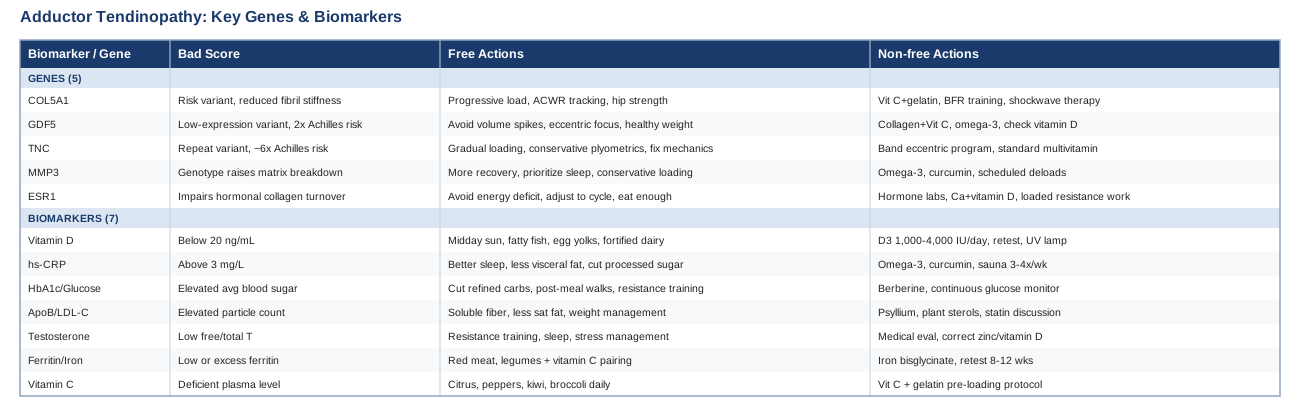
7 Biomarkers Worth Tracking For Stubborn Adductor Tendinopathy
Tendon tissue is metabolically quiet compared to muscle, but it is not metabolically indifferent. Collagen synthesis and breakdown are influenced by nutrient cofactors, hormones, glucose regulation, and systemic inflammation — all of which show up in ordinary blood work. The seven biomarkers below were chosen because each has a documented, biologically plausible connection to tendon health, each is realistically testable, and each comes with a specific way to intervene rather than just a vague "improve it."
Vitamin D (25-Hydroxyvitamin D)
Vitamin D does more for tendons than it gets credit for. Beyond its role in calcium regulation, it influences collagen remodeling and cell proliferation at the tendon-bone junction, which matters directly for an insertional problem like adductor tendinopathy. Deficiency has been associated with greater severity and chronicity of tendinopathy across multiple tendon sites, and with worse outcomes after tendon surgery, as summarized in a review on vitamin D in athletes and musculoskeletal injury risk.
How To Measure It
A standard 25-OH vitamin D blood test costs roughly 25 to 50 dollars out of pocket where not covered by insurance, and is one of the most widely available lab tests anywhere. Official deficiency is usually set below 20 ng/mL, but many longevity-focused clinicians target a higher range, often 40 to 60 ng/mL, for musculoskeletal and immune benefits.If The Score Is Bad: The Plan Without Supplements
Aim for 15 to 30 minutes of midday sun exposure on bare skin several times a week, adjusted for skin tone and latitude (darker skin and higher latitudes need more time). Add dietary sources such as fatty fish, egg yolks, and fortified dairy several times weekly.If The Score Is Bad: The Plan With Supplements Or Equipment
Vitamin D3 at 1,000 to 4,000 IU per day is a reasonable starting range for mild-to-moderate deficiency; more severe deficiency should be dosed with a physician's guidance. Take it with a fat-containing meal for absorption, and retest in 8 to 12 weeks rather than guessing. Chronic megadosing above 10,000 IU/day without monitoring risks hypercalcemia, so this is not a "more is better" nutrient. In low-sunlight climates, a UV lamp used a few times weekly per the manufacturer's guidance is a reasonable equipment-based alternative — watch for skin irritation and never exceed recommended exposure times.High-Sensitivity C-Reactive Protein (hs-CRP)
Tendinopathy is not classic inflammation the way an infection is, but low-grade systemic inflammation still shapes how well tendon tissue repairs itself, as discussed in reviews of the tendon pathology continuum, where inflammatory cytokines are consistently elevated in overuse tendon disease. hs-CRP is a simple, well-validated window into that background inflammatory tone, and its broader clinical relevance in chronic inflammatory conditions is well established, as outlined in this review of CRP's role in chronic inflammatory disease.
How To Measure It
hs-CRP is a blood test costing roughly 15 to 30 dollars, often bundled into cardiometabolic panels. Under 1 mg/L is considered low, 1 to 3 mg/L average, and above 3 mg/L elevated.If The Score Is Bad: The Plan Without Supplements
Improve sleep consistency, reduce visceral fat through diet and regular zone 2 cardio, cut back on ultra-processed food and added sugar, and address any untreated dental or gut issues, which are common silent drivers of chronically elevated CRP.If The Score Is Bad: The Plan With Supplements Or Equipment
Omega-3 EPA/DHA at 2 to 3 grams per day has modest evidence for lowering CRP over 8 to 12 weeks. Curcumin extract with piperine, 500 to 1,000 mg once or twice daily, cycled 8 weeks on and 2 weeks off, is a reasonable adjunct — expect possible GI upset, and use caution if on blood thinners or before any surgery. Regular sauna use, 3 to 4 sessions per week for 15 to 20 minutes, has some supporting data for lowering inflammatory markers; stay well hydrated and avoid it if you have uncontrolled cardiovascular disease.HbA1c And Fasting Glucose
This is one of the strongest and most underappreciated tendon biomarkers. Chronic hyperglycemia damages tenocytes through oxidative stress and the buildup of advanced glycation end-products, and diabetes is a well-documented independent risk factor for tendinopathy, with one review reporting an odds ratio above 7 for Achilles tendinopathy in diabetic patients — see this review of diabetes and tendon pathology. You do not need to be diabetic for this to matter; the same mechanism operates on a smaller scale anywhere blood sugar runs consistently high.
How To Measure It
HbA1c costs roughly 15 to 40 dollars and reflects average blood sugar over about three months. For more granular, real-time feedback, a continuous glucose monitor runs about 50 to 100 dollars a month.If The Score Is Bad: The Plan Without Supplements
Reduce refined carbohydrates and added sugar, take a short walk after meals, prioritize protein and fiber at each meal to blunt glucose spikes, and add resistance training, which improves insulin sensitivity independent of weight loss.If The Score Is Bad: The Plan With Supplements Or Equipment
Berberine, 500 mg two to three times daily before meals, has trial evidence for glycemic control comparable to some pharmaceutical options in certain populations; expect possible GI side effects, avoid in pregnancy, and cycle three months on with a one-month break if not otherwise directed by a physician, especially if you are already on glucose-lowering medication. A continuous glucose monitor is the most useful equipment here, since it turns abstract dietary advice into direct personal feedback.ApoB (With LDL-C As An Accessible Fallback)
The clearest structural evidence linking lipids to tendon tissue comes from familial hypercholesterolemia, where chronically elevated cholesterol produces visible Achilles tendon xanthomas and measurable increases in tendon thickness, documented in this study of non-cholesterol sterols and Achilles tendon thickness. Peter Attia, Thomas Dayspring, and Allan Sniderman have all argued that ApoB — which reflects the actual number of atherogenic particles rather than just their cholesterol content — is the more precise marker than LDL-C alone, a case laid out in this analysis of ApoB and LDL-C in cardiovascular and all-cause mortality risk. You do not need familial hypercholesterolemia for the underlying principle — chronically high lipoprotein burden affecting connective tissue quality — to be relevant.
How To Measure It
A standard lipid panel with LDL-C costs roughly 20 to 50 dollars and is usually insurance-covered. Direct ApoB measurement runs about 30 to 70 dollars and is increasingly available through direct-to-consumer lab services even where a physician has not ordered it.If The Score Is Bad: The Plan Without Supplements
Increase soluble fiber intake to at least 10 grams daily, reduce saturated fat, add daily movement, manage body weight, and moderate alcohol intake.If The Score Is Bad: The Plan With Supplements Or Equipment
Psyllium husk, 5 to 10 grams daily, and plant sterols/stanols at 2 grams daily both have decent evidence for modestly lowering LDL-C; expect bloating at first and increase water intake accordingly. If ApoB is markedly elevated alongside other cardiovascular risk factors, that is a conversation for a physician about statins or ezetimibe — this is a medical decision, not a self-directed supplement stack. No special equipment is required beyond periodic lab testing to track the trend over time.Testosterone (Total And Free)
Androgens influence collagen turnover, tendon stiffness, and the activity of matrix metalloproteinases that break collagen down. The relationship is not simply "more is better": exogenous testosterone use has been linked to a 2.9-fold increase in tendon rupture risk in retrospective analysis, per this study on testosterone therapy and tendon tear rates, likely because muscle strength outpaces tendon adaptation, an imbalance also discussed in this review of sex hormones and tendon biology. Very low testosterone, on the other hand, may limit the tendon's anabolic capacity. The goal is a healthy physiological range, not maximization.
How To Measure It
Total and free testosterone together cost roughly 40 to 90 dollars, ideally drawn fasted in the morning when levels peak. Adding SHBG helps interpret the free testosterone result correctly.If The Score Is Bad: The Plan Without Supplements
Resistance training, 7 to 9 hours of sleep, chronic stress management, maintaining a healthy body fat percentage, and avoiding excessive endurance training volume all support healthy endogenous testosterone.If The Score Is Bad: The Plan With Supplements Or Equipment
Any genuinely low result deserves medical evaluation for hypogonadism before anything else. Correcting concurrent zinc or vitamin D deficiency can support natural production. Given the tendon rupture data above, self-directed exogenous testosterone for performance is a real and specific risk in this context, not a generic caution. The most evidence-based "equipment" here is simply a structured, progressive resistance training program — it does more for tendon-supportive hormone balance than any supplement.Ferritin And Iron Studies
Iron is a required cofactor for prolyl and lysyl hydroxylase, the enzymes that stabilize the collagen triple helix during synthesis, a mechanism detailed in this study of collagen prolyl 4-hydroxylase and its iron center. Both deficiency and excess iron can interfere with tissue repair and general recovery capacity, so this is a biomarker where the target is a healthy middle, not simply "higher."
How To Measure It
A ferritin plus full iron panel — serum iron, TIBC, transferrin saturation — costs roughly 30 to 60 dollars and gives a fuller picture than ferritin alone.If The Score Is Bad: The Plan Without Supplements
Increase dietary iron through red meat and legumes, pairing plant-based iron sources with vitamin C to improve absorption, and investigate any unexplained blood loss with a physician.If The Score Is Bad: The Plan With Supplements Or Equipment
Iron bisglycinate, 25 to 65 mg every other day, has been shown to absorb better than daily dosing for many people. Pair it with vitamin C and avoid taking it alongside calcium-rich foods, coffee, or tea, which block absorption. Retest ferritin in 8 to 12 weeks. Expect possible constipation or GI upset. Elevated iron (hemochromatosis) is a separate medical issue requiring phlebotomy under medical supervision, never addressed with supplements.Vitamin C
Vitamin C is not just an immune nutrient — it is the essential cofactor that keeps the collagen-hydroxylating enzymes functional. Without it, collagen synthesis stalls regardless of how much loading or protein intake is going on, a mechanism confirmed in controlled human trials of collagen-supportive supplementation, including the vitamin C-enriched gelatin study showing roughly doubled markers of collagen synthesis after timed pre-exercise intake.
How To Measure It
Plasma vitamin C testing is less routinely ordered, running roughly 40 to 80 dollars through specialty labs. For most people eating regular fruits and vegetables, deficiency is uncommon; it becomes more relevant for smokers, restrictive dieters, or anyone with malabsorption.If The Score Is Bad: The Plan Without Supplements
Citrus fruit, bell peppers, kiwi, and broccoli in two to three servings daily comfortably cover typical needs.If The Score Is Bad: The Plan With Supplements Or Equipment
For the specific collagen-loading application, 50 to 100 mg of vitamin C combined with 15 grams of gelatin or hydrolyzed collagen, taken about 60 minutes before a tendon-loading session, on training days only (three to four times weekly), is the protocol with actual human data behind it. Side effects at this dose are minimal. High-dose vitamin C above 2 grams a day can cause GI upset and offers no additional benefit for this specific purpose.Blood work tells part of the story, but it is not the only biological layer worth understanding. The genes involved in collagen structure and remodeling help explain why two people with similar biomarkers can still respond differently to the same tendon load.
What Your Genes May Be Telling You About Tendon Resilience
Consumer genomics has made it easy to pull up raw genetic data, and researchers like Ali Torkamani, whose work focuses on translating genomic risk into practical, evidence-graded interpretation, along with practitioners like Gary Brecka, who has popularized genetic testing for general health optimization, are reasonable starting points if you want to explore your own raw data. That said, tendon genetics is a much younger, smaller field than cardiometabolic genetics, and most of the associations below come from moderate-sized case-control studies rather than large-scale genome-wide analyses — worth keeping in mind before treating any single variant as destiny.
COL5A1
COL5A1 helps regulate the diameter and organization of type I collagen fibrils, which affects overall tendon stiffness. A meta-analysis of 21 observational studies found specific COL5A1 variants associated with altered risk of musculoskeletal soft tissue injury, detailed in this COL5A1 gene polymorphism meta-analysis. The evidence is reasonably consistent across populations, though effect sizes vary by study.
If The Gene Is Bad: The Plan Without Supplements
Build load tolerance progressively through isometric, then isotonic, then heavy slow resistance work before reintroducing sprinting or cutting. Monitor training load spikes using an acute-to-chronic workload ratio rather than jumping volume week to week, and address hip and adductor strength imbalances directly.If The Gene Is Bad: The Plan With Supplements Or Equipment
The vitamin C plus gelatin protocol described above (15 g gelatin, 50 mg vitamin C, 60 minutes pre-loading, 3 to 4 times weekly on training days) is directly applicable here; cycle it for 8 to 12 weeks alongside a structured loading program, then reassess symptoms. Blood flow restriction training equipment can allow lower-load tendon conditioning when pain limits heavier work. Extracorporeal shockwave therapy, delivered in clinic once weekly for 3 to 6 weeks, has trial support for chronic tendinopathy; expect transient soreness and occasional bruising.GDF5
GDF5 supports tendon, ligament, and joint tissue development. A functional variant in its regulatory region reduces GDF5 expression and roughly doubles the risk of Achilles tendon pathology in carriers, per this genetic association study of the TGF-beta family and Achilles tendon pathology. The same variant is also linked to osteoarthritis and disc degeneration risk, suggesting a broader effect on connective tissue quality.
If The Gene Is Bad: The Plan Without Supplements
Avoid abrupt jumps in training volume, prioritize eccentric and isometric loading over high-impact plyometric work early in rehab, and maintain a healthy body composition to reduce cumulative joint and tendon load.If The Gene Is Bad: The Plan With Supplements Or Equipment
Collagen and vitamin C support as above; omega-3 fatty acids at 2 to 3 g daily for their modest anti-inflammatory effect, cycling continuously is fine at this dose but watch for fishy aftertaste and mild GI upset, and use caution alongside anticoagulants. Given GDF5's link to joint tissue broadly, confirming adequate vitamin D status with a physician is a reasonable adjunct rather than an isolated fix.TNC (Tenascin-C)
Tenascin-C is an extracellular matrix protein concentrated in tendon regions that transmit the highest mechanical force — exactly the profile of the adductor tendon insertion. A repeat-length polymorphism in the TNC gene has been linked to a roughly six-fold increase in Achilles tendon injury risk in one case-control study, described in this study of the tenascin-C gene polymorphism and Achilles tendon injuries.
If The Gene Is Bad: The Plan Without Supplements
Progress tensile loading gradually, be conservative when reintroducing plyometric and change-of-direction work, and address the movement mechanics — particularly cutting and hip rotation patterns — that overload the adductor insertion in the first place.If The Gene Is Bad: The Plan With Supplements Or Equipment
A physiotherapist-guided eccentric or isometric program using resistance bands or a cable column, performed 2 to 3 times weekly with a deload every fourth week, is the core of this plan. There is early, modest evidence for copper and zinc supporting the enzyme that cross-links collagen fibers; a standard multivitamin covering these at normal doses is sufficient — isolated high-dose trace mineral supplementation is not supported and carries its own toxicity risk if overdone.MMP3
MMP3 breaks down extracellular matrix as part of normal remodeling, but certain genotypes increase its activity, tipping the balance toward degradation faster than synthesis can keep up, particularly under repetitive load without adequate recovery — a relationship reviewed in this study of the MMP3 gene in musculoskeletal soft tissue injury risk.
If The Gene Is Bad: The Plan Without Supplements
This genotype may specifically need more recovery between sessions rather than more training — prioritize sleep, since collagen remodeling is heavily concentrated in rest periods, and track training load ratios more conservatively than a generic program would suggest.If The Gene Is Bad: The Plan With Supplements Or Equipment
Omega-3s for their modulating effect on inflammatory and enzymatic activity, and curcumin extract with piperine (500 to 1,000 mg, cycled 8 weeks on and 2 weeks off) as an adjunct — expect possible GI upset and use caution with blood thinners. Build in a structural deload every third training week, reducing volume by 40 to 50 percent rather than waiting for pain to force the issue.ESR1
The estrogen receptor alpha gene affects how tendon collagen turnover responds to hormonal signaling. Certain ESR1 variants have been linked to tendon dysfunction risk, documented specifically in postmenopausal women in this case-control study of ESR1 polymorphisms and posterior tibial tendon dysfunction. This is particularly relevant for female athletes, perimenopausal women, and anyone with a history of relative energy deficiency affecting estrogen levels.
If The Gene Is Bad: The Plan Without Supplements
Avoid chronic energy deficiency relative to training demands, adjust training load around menstrual cycle phases where symptoms fluctuate, and ensure adequate caloric intake surrounding training sessions.If The Gene Is Bad: The Plan With Supplements Or Equipment
Discuss hormone-related labs with a physician rather than self-treating. Adequate calcium and vitamin D support the bone-tendon interface. Progressive weight-bearing equipment — leg press, hip thrust machines, or free weights — used consistently provides the mechanical stimulus needed for adaptation; unsupervised hormone supplementation is not appropriate here and should stay a medical decision.The genetic and biomarker layers explain why tendons vary between people, but a separate body of research has been reshaping how loading itself should be programmed, regardless of genotype.
The Tendon Science That's Rewriting Rehab Advice
Dr. Keith Baar runs the Functional Molecular Biology Lab at UC Davis and has spent years studying how tendons and ligaments actually adapt at the cellular level. His extended conversation on The Tim Ferriss Show challenges a lot of standard rehab assumptions, and it is worth unpacking piece by piece.
1. Tendons Adapt Through Load, Not Despite It
Tendon cells respond to mechanical tension by increasing collagen production; without that stimulus, production drops. This mechanotransduction process is described in detail in this review of how tendons adapt to loading. Extended rest is not neutral for a tendon — it is a signal to produce less collagen, not just a pause.2. The 10-Minute, 6-Hour Rule
Baar's lab found that short bouts of loading — around 10 minutes — followed by 6 or more hours of rest before the next bout produced roughly double the collagen synthesis response compared to one long continuous session. Tendon cells appear to reach their maximum anabolic signal quickly and then need real recovery time before responding again.3. Vitamin C-Enriched Gelatin, Timed Right, Roughly Doubles Collagen Markers
The vitamin C-gelatin trial referenced earlier in the biomarker section is the direct human evidence behind this point: timing matters as much as the ingredients themselves, with supplementation roughly an hour before loading being key.4. Isometrics Can Reduce Tendon Pain Within Minutes
Heavy isometric holds at around 70 percent of maximum voluntary contraction have been shown to reduce tendon pain almost immediately, with effects lasting at least 45 minutes, per this systematic review and meta-analysis of isometric exercise in tendinopathy. This makes isometrics a useful in-season tool, not just an early rehab phase exercise.5. Rest Alone Doesn't Just Fail To Help — It Can Actively Weaken Tendon Tissue
Baar's argument against blanket rest (the "anti-RICE" position) is that immobilized tendon tissue loses collagen density over time. The tendon needs a controlled dose of load, not the absence of it, to remodel productively.6. Tendons Adapt Slower Than Muscle — Programming Has To Respect That Gap
Muscle strength can increase within weeks; tendon stiffness and collagen turnover change over a much longer timescale, often months. Programs that increase load as fast as muscle strength improves risk outrunning what the tendon itself can handle.7. Method Matters Less Than Consistency
Heavy slow resistance training and eccentric loading protocols produce broadly comparable outcomes in trial data; the deciding factor is adherence over months, not which specific protocol is chosen.8. Blood Sugar Quietly Shapes Tendon Quality
This connects directly back to the HbA1c biomarker discussed earlier — hyperglycemia's damage to tenocytes, documented in the diabetes and tendon pathology review, is a mechanism Baar's work reinforces from the cell-signaling side.9. Sleep Is A Tendon-Building Window, Not Just A Recovery Buzzword
Growth hormone and IGF-1 signaling, concentrated during deep sleep, contribute meaningfully to long-term tendon remodeling. Skimping on sleep during a loading program removes part of the biological mechanism the training is trying to trigger.10. Outcomes Are Decided Over Months, Not Single Sessions
The consistent theme across Baar's work is that tendon adaptation is a slow-accumulating process — the goal of any protocol should be sustainable weekly consistency over 3 to 6 months, not maximizing any individual week.Programming and nutrition address the mechanical and biochemical side of tendon repair, but pain itself — and the way the nervous system processes it — is its own variable worth managing directly.
Complementary Approaches Worth Considering
A handful of complementary approaches have real, condition-relevant evidence for groin and tendon pain specifically, rather than borrowed evidence from an unrelated condition. These are worth layering onto a structured loading program, not substituting for one.
Biofeedback (Pressure Biofeedback For Adductor Strength)
Pressure biofeedback devices — inflatable cuffs placed between the knees during an adductor squeeze — give real-time, objective feedback on hip adduction strength, which is directly relevant to adductor tendinopathy since strength deficits in this muscle group are a documented risk factor for groin pain.The clearest specific technique is the adductor squeeze test performed at 0, 45, and 90 degrees of hip flexion, validated in tools like the Smart Groin Trainer in this reliability study of adductor strength measurement, and a structured adductor strengthening program using this kind of squeeze-based feedback reduced groin problem prevalence by 41 percent in a cluster-randomized trial of semiprofessional football players, detailed in this adductor strengthening programme trial.
Realistically, this means using a pressure cuff or even a simple blood pressure cuff between the knees during rehab sessions, 2 to 3 times weekly, to track adduction strength objectively rather than relying on subjective effort — useful both for gauging readiness to return to sport and for confirming the strengthening program is actually working.
Low-Level Laser Therapy / Photobiomodulation
Photobiomodulation uses low-level red or near-infrared light to modulate cellular activity in tendon tissue, and it is among the more condition-specific complementary options here, having been studied directly in tendinopathy populations rather than adapted from another condition.A systematic review and meta-analysis of randomized trials found statistically significant benefits for pain and function in tendinopathy, though the certainty of evidence was rated low to moderate, per this meta-analysis of photobiomodulation for tendinopathy pain and function — worth noting honestly rather than overselling.
In practice, this means a course of clinic-administered sessions, typically 2 to 3 times weekly for 4 to 6 weeks, used alongside — not instead of — a structured loading program; side effects are minimal, though clinics with proper dosing protocols matter, since underdosing is a common reason for inconsistent results in the literature.
Massage Therapy
Massage therapy is a reasonable adjunct for the adductor and surrounding hip musculature, primarily for managing muscle tightness and soreness that often accompanies tendon overload rather than treating the tendon pathology itself directly.The strongest recent evidence is for muscle recovery rather than tendon healing specifically — a randomized controlled trial of percussion massage therapy for delayed-onset muscle soreness, detailed in this percussion massage recovery trial, showed measurable soreness reduction, though evidence directly on tendinopathy outcomes remains more limited.
Realistically, this fits best as a 10 to 15 minute session on the adductors and hip flexors after loading sessions, 2 to 3 times weekly, to manage muscle-level soreness and maintain tissue quality around the tendon — not as a stand-alone treatment for the tendinopathy itself.
Mindfulness Meditation / MBSR
Chronic tendinopathy that persists for months often develops a pain-sensitization component that outlasts the original tissue issue, and mindfulness-based approaches address that nervous system layer directly rather than the tendon tissue itself.A systematic review and meta-analysis of 30 randomized controlled trials found a small but statistically significant reduction in chronic pain with mindfulness meditation compared to passive controls, along with improvements in associated distress, per this meta-analysis of mindfulness meditation for chronic pain — the effect size is modest, and it should be framed as a support tool, not a primary treatment.
A realistic approach is a short 10 to 15 minute daily practice, using a structured MBSR program or app-based guidance, especially useful during the frustrating plateau phases of tendon rehab when pain persists despite objectively improving strength and load tolerance.
Conclusion
Adductor tendinopathy that keeps recurring is rarely explained by training alone. Vitamin D, blood sugar control, inflammatory tone, lipid burden, hormonal status, iron, and vitamin C status all shape how well tendon tissue can keep up with the demands placed on it — and a handful of collagen-related gene variants help explain why some people need a more conservative loading curve than others. None of these factors work in isolation, and none of them replace a properly programmed, progressively loaded rehab plan; they explain why that plan sometimes needs to be more conservative, or paired with a specific nutrient or recovery intervention, than a generic protocol assumes.
The practical next step is straightforward: get the seven biomarkers above tested if you have not already, track your symptoms and training load together rather than separately, and bring both sets of information to a sports medicine physician or physiotherapist who can interpret them alongside a hands-on assessment. Better data does not guarantee a faster recovery, but it consistently leads to better-informed decisions — and for a condition this stubborn, that is a meaningful advantage.
Endocrine & Metabolic: Diabetes & Blood Sugar
Women's Health: Hormonal Conditions