This article contains AI generated content.
Adiposis Dolorosa (Dercum's Disease): 3 Genes and 7 Biomarkers to Track
If you live with adiposis dolorosa, also known as Dercum's disease, you already know the frustration of standard medical advice. "Lose weight." "Exercise more." "Try an anti-inflammatory diet." None of it is wrong, exactly, but none of it explains why ordinary touch on certain fat deposits triggers burning pain, why fatigue and brain fog show up alongside the lipomas, or why so many blood panels come back "normal" despite how unwell you feel.
That gap exists because adiposis dolorosa is not simple obesity with sore lumps. It is increasingly understood as a distinct inflammatory disorder of adipose tissue, where fat itself becomes an active source of pain signaling rather than a passive energy store. Generic weight-loss or generic pain-management advice was never built with that mechanism in mind, which is why it so often falls short for the people who need help the most.
This article takes a narrower, more useful approach. Instead of repeating broad lifestyle slogans, it focuses on the specific biomarkers that current research links to Dercum's disease, the early genetic and epigenetic clues researchers are following, a chronic-pain framework that maps unusually well onto this condition, and a short list of complementary approaches with actual supporting evidence rather than wishful thinking.
None of this amounts to a cure, and no legitimate source claims otherwise. But adiposis dolorosa is a condition where precise information genuinely changes what you can do next — which labs are worth asking your doctor for, which findings deserve follow-up, and which self-directed steps are reasonable to try. That is a realistic kind of hope, and it is the kind this article is built around.
Summary
Adiposis dolorosa has no single diagnostic blood test, but it does have a pattern. Research over the past two decades — including a 2025 molecular review and a 2026 update in the International Journal of Molecular Sciences family of journals — points to a recurring cluster of findings: low-grade systemic inflammation, a specific adipokine imbalance, thyroid involvement in roughly a quarter of patients, and lipid-handling abnormalities inside the painful fat itself. Tracking the right seven biomarkers turns "I feel awful and no one can explain it" into a short list of concrete, checkable numbers.
Genetics adds a second layer, though a much earlier one. A small number of families show clear autosomal dominant inheritance, and a 2025 review flagged the HMGA2 gene region and obesity-driven epigenetic reprogramming as plausible contributors — without claiming either has been proven causal. Layered on top of that is a chronic-pain framework from a widely discussed Andrew Huberman podcast episode that reframes pain itself as something partly trainable, and a short set of complementary approaches — manual lymphatic massage, mindfulness, and clinical hypnosis — that have real, if still limited, human evidence behind them.
Read together, these four angles do not promise a fix. They give you a map: which numbers to ask your doctor to check, which family patterns are worth mentioning to a geneticist, which daily habits have plausible mechanisms behind them, and which add-on therapies are worth a genuine trial. That map is what the rest of this article lays out in detail.
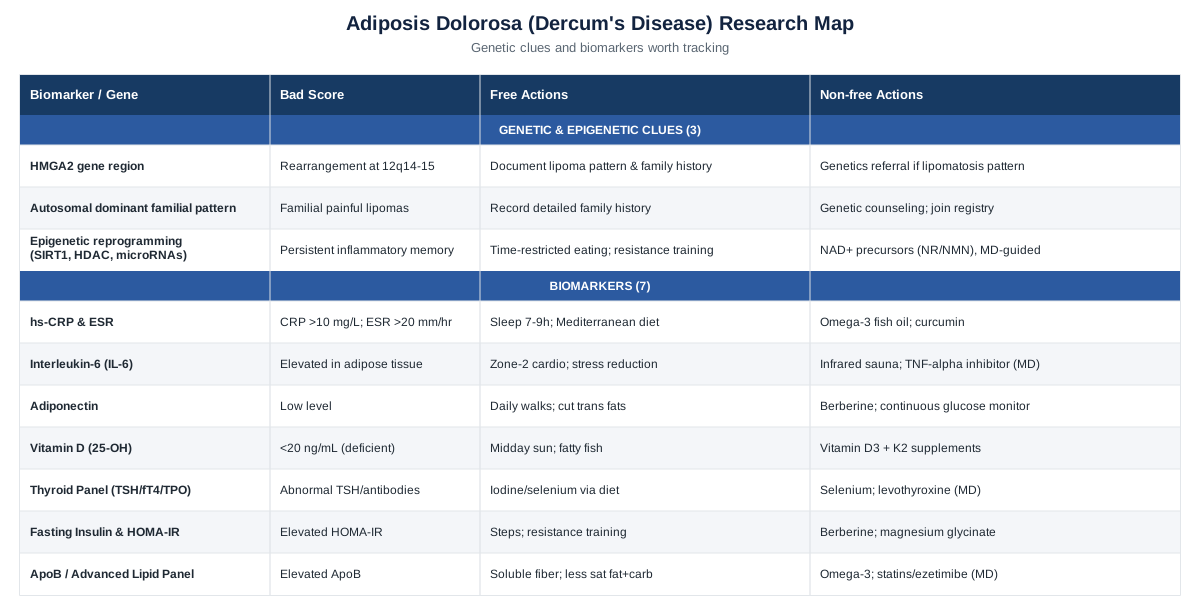
The 7 Biomarkers Worth Tracking in Adiposis Dolorosa
No blood test diagnoses adiposis dolorosa on its own. The StatPearls clinical review of the condition is explicit that laboratory testing exists mainly to exclude other causes of painful fat and diffuse pain — lupus, fibromyalgia, hypothyroidism, and lipedema among them. But "nonspecific" does not mean "useless." Across case reports and the two most recent mechanistic reviews, a consistent pattern of abnormal — or quietly informative — values keeps showing up. Tracking these seven numbers over time gives you and your clinician something concrete to act on, rather than a diagnosis based purely on symptoms.
1. High-Sensitivity CRP and ESR
These two markers are the oldest and cheapest way to ask "is there active inflammation right now?" In a detailed 2021 familial case report, a woman with a strong family history of Dercum's disease had a CRP of 17 and an ESR of 30 during a symptomatic period — both mildly to moderately elevated, as documented in this case report and literature review. They are not specific to Dercum's disease, but tracked over time they can flag flares and rule out overlapping autoimmune conditions.
How to measure it: a standard blood draw at any lab (LabCorp, Quest, or your clinic's in-house lab). Cost typically runs $15 to $30 for hs-CRP and $10 to $20 for ESR if paid out of pocket; both are usually covered when ordered by a physician working up unexplained pain.
If the score is elevated, the plan without supplements or equipment: tighten sleep to 7-9 hours consistently, shift toward a Mediterranean-style eating pattern low in refined sugar and ultra-processed food, and check for occult sources of inflammation such as gum disease or untreated sleep apnea. Recheck in 8-12 weeks rather than reacting to a single reading.
If the score is elevated, the plan with supplements or equipment: omega-3 fish oil (EPA plus DHA, roughly 2-3 grams daily with food) has the most consistent evidence for lowering CRP modestly; take it continuously rather than cycling, and flag it to your doctor if you're on blood thinners. Curcumin with piperine (500-1,000 mg once or twice daily) is a reasonable add-on but can cause GI upset and should be avoided with active gallstone disease. Avoid leaning on daily NSAIDs as a long-term inflammation-lowering strategy — beyond the usual GI and kidney risks, emerging evidence suggests they can blunt the body's own repair signaling when used continuously.
2. Interleukin-6 (IL-6)
IL-6 is one of the more consistent molecular findings in Dercum's disease specifically, not just in inflammation generally. The 2025 review of molecular mechanisms underlying Dercum's disease describes elevated IL-6 in adipose tissue biopsies from affected patients, alongside increased basophils, leukocytes, and plasma cells in the same tissue — a picture of localized immune activation inside the painful fat itself, which likely contributes to nociceptor sensitization (the fat tissue actively irritating nearby pain nerves).
How to measure it: this is not a routine primary-care test. It requires a send-out lab order (often through a functional-medicine practice, endocrinologist, or research study) and typically costs $50 to $90.
If the score is elevated, the plan without supplements or equipment: regular zone-2 cardio and resistance training two to three times per week is the best-documented way to lower circulating IL-6 over months, independent of weight change. Stress reduction matters too, since cortisol and IL-6 regulate each other; even brief daily breathing practice measurably lowers this feedback loop over weeks.
If the score is elevated, the plan with supplements or equipment: vitamin D repletion (see below) and omega-3s again apply here. Infrared sauna sessions, 15-20 minutes two to three times weekly, have modest supporting evidence for lowering inflammatory cytokines in general populations, though not specifically in Dercum's disease — treat this as a plausible adjunct, not a proven fix. The one therapy with a direct, if limited, evidence trail is TNF-alpha inhibition: a case report of infliximab treatment in Dercum's disease documented meaningful pain improvement and reduced lipoma size on ultrasound after repeated infusions, though benefit faded over time, likely due to antibody formation against the drug. This is a specialist-managed biologic with real infection and immune risks — worth discussing with a rheumatologist if inflammatory markers stay high despite lifestyle measures, not something to pursue independently.
3. Adiponectin
Adiponectin is the "protective" adipokine — it improves insulin sensitivity and dampens inflammation, and it normally rises as visceral fat drops. The same 2025 molecular review found adiponectin was reduced in Dercum's disease patients, consistent with a pro-inflammatory, M1-macrophage-dominant state inside the affected fat tissue, independent of overall body weight.
How to measure it: a specialty lab draw, $70-90 out of pocket, sometimes bundled into more comprehensive metabolic panels offered by direct-to-consumer testing services.
If the score is low, the plan without supplements or equipment: consistent aerobic activity is the single most reliable lever for raising adiponectin — even brisk walking most days has measurable effect over 8-12 weeks. Reducing trans fats and ultra-processed food, along with moderating alcohol intake, supports the same shift.
If the score is low, the plan with supplements or equipment: berberine (500 mg twice daily, cycled 8 weeks on and 4 weeks off) has evidence for improving insulin sensitivity and modestly raising adiponectin, but it can cause GI upset and interacts with metformin and other glucose-lowering drugs — check with your physician first. A continuous glucose monitor (roughly $60-100 per month) isn't a supplement, but using it to flatten post-meal glucose spikes is a practical, equipment-based way to support the same metabolic shift.
4. Vitamin D (25-hydroxyvitamin D)
Vitamin D deficiency shows up repeatedly in Dercum's disease case literature — the same familial case report noted above found a level of 14 ng/mL, clearly deficient. Vitamin D receptors are active throughout adipose and immune tissue, and low levels are independently associated with heightened pain sensitivity across many chronic pain conditions, not just this one.
How to measure it: a standard blood test, $40-50, often covered by insurance once a patient reports fatigue or diffuse pain; home fingerstick kits run about $60.
If the score is low, the plan without supplements or equipment: 15-20 minutes of midday sun exposure on bare skin, several times weekly, adjusted for season and latitude; fatty fish and fortified dairy as dietary sources.
If the score is low, the plan with supplements or equipment: vitamin D3, 2,000-4,000 IU daily, paired with vitamin K2 (90-120 mcg) to support proper calcium handling. Recheck levels at 8-12 weeks rather than guessing. There's no need to cycle vitamin D; once you've found a maintenance dose that keeps you in a healthy range, a recheck every 6 months is sufficient. Avoid doses above 10,000 IU/day without medical supervision, since sustained megadosing risks hypercalcemia.
5. Thyroid Panel (TSH, Free T4, and Thyroid Antibodies)
This is one of the more specific and actionable findings in the Dercum's literature. Historical autopsy studies and a survey of 100 Dercum's disease patients found endocrine abnormalities were common, with the Endotext chapter on subcutaneous adipose tissue diseases noting the thyroid was the most frequently affected gland, and roughly 27% of patients in that survey had a thyroid disorder — mostly hypothyroidism or subclinical hypothyroidism. Given how much thyroid dysfunction overlaps with fatigue, weight changes, and pain sensitivity, this is a test worth insisting on if it hasn't been done recently.
How to measure it: TSH alone runs about $30; a fuller panel with free T4, free T3, and TPO antibodies runs $60-120.
If the score is abnormal, the plan without supplements or equipment: make sure iodine and selenium intake is adequate through diet (seafood, dairy, one to two Brazil nuts daily — more than that risks selenium toxicity), prioritize sleep, and manage chronic stress, since the HPA axis and thyroid regulation influence each other directly.
If the score is abnormal, the plan with supplements or equipment: if you are iodine-replete already, don't self-supplement iodine — in autoimmune thyroiditis it can make things worse, not better. Selenium (100-200 mcg daily) has modest evidence for lowering thyroid antibody levels specifically in Hashimoto's-pattern disease, and should be used under physician guidance with a recheck at 6-8 weeks. True hypothyroidism requires levothyroxine prescribed and monitored by a physician; this is not a condition to manage with supplements alone.
6. Fasting Insulin, Glucose, and HOMA-IR
Dercum's disease is proposed to involve abnormal lipid processing within adipose tissue, and insulin resistance both worsens and is worsened by that kind of adipose inflammation. Metabolic syndrome overlaps commonly with Dercum's disease in clinical series, making this cluster worth tracking even when it isn't the primary diagnosis.
How to measure it: fasting glucose and insulin together cost roughly $30-50, with HOMA-IR calculated from the two values (glucose x insulin divided by 405). A continuous glucose monitor, $60-100 per month, adds real-world detail a single fasting draw can't.
If the score is elevated, the plan without supplements or equipment: daily movement (8,000-10,000 steps), resistance training two to three times weekly, reducing refined carbohydrate load, and an eating window of roughly 12 hours if it fits your schedule and eating pattern comfortably.
If the score is elevated, the plan with supplements or equipment: berberine, as described above, or magnesium glycinate (200-400 mg daily), which supports insulin sensitivity and is generally well tolerated aside from a mild laxative effect at higher doses. Recheck labs every 3 months while making changes, then space out testing once values stabilize.
7. ApoB or an Advanced Lipid Panel
The 2025 molecular review identified elevated long-chain monounsaturated fatty acids specifically in the painful fat deposits of Dercum's disease patients, distinct from surrounding tissue — a sign of abnormal lipid handling at the site of disease. This is exactly the kind of finding that lipidologists such as Peter Attia, Thomas Dayspring, and Allan Sniderman have spent years arguing standard cholesterol panels miss: LDL-C tells you the cholesterol content of your lipoprotein particles, but ApoB tells you the actual particle count, which is what drives risk and reflects how your body is packaging and moving fat. Given the lipid-handling abnormality documented directly in Dercum's tissue, ApoB is a more informative number than a basic lipid panel alone.
How to measure it: a standard lipid panel (triglycerides, HDL, calculated LDL) costs about $30 and is typically covered by insurance. ApoB as an add-on runs $30-50 at most major labs; an NMR LipoProfile, which adds particle size and number detail, runs $100-150 and is the more advanced option worth requesting if the basic panel looks borderline.
If the score is elevated, the plan without supplements or equipment: reduce the combination of saturated fat and refined carbohydrate (the combination matters more than either alone), add soluble fiber (5-10 g daily from psyllium, oats, or legumes), and keep up regular aerobic activity.
If the score is elevated, the plan with supplements or equipment: psyllium husk fiber as above, and omega-3s (already discussed) specifically for lowering triglycerides. If ApoB remains high despite consistent lifestyle changes over 3-6 months, that's a conversation with your physician about statins or ezetimibe — genuinely outside the scope of self-directed supplementation, and not something to delay indefinitely if the number stays elevated.
Taken together, these seven markers won't diagnose Dercum's disease by themselves, but they turn a vague, exhausting symptom picture into a short list of numbers you can actually track, discuss, and revisit every few months. That kind of concrete follow-up is exactly what's missing from generic "eat better, move more" advice.
What Genetics and Epigenetics May Be Telling Us
Biomarkers describe what's happening in your body right now. Genetics asks a different question: why some people develop this condition at all. Here the honest answer is that the field is early. No single "Dercum's gene" has been confirmed, and researchers such as Ali Torkamani, who studies how genomic data translates into individual risk prediction, would likely caution against overreading any early finding in a disease this rare — there simply aren't enough sequenced families yet to separate real signal from coincidence. Gary Brecka's general approach of pairing genetic variants with actionable biomarker follow-up is a reasonable framework to borrow here, even though Dercum's disease itself doesn't yet have a commercial genetic panel built around it.
That said, three specific threads are worth understanding, because each comes with something you can actually act on.
1. HMGA2 Gene Region Rearrangements
HMGA2, located on chromosome 12 at 12q14-15, is well known for chromosomal rearrangements in benign fatty tumors, including familial multiple lipomatosis, a condition that overlaps clinically with Dercum's disease. The 2025 molecular mechanisms review notes that HMGA2-related rearrangements have "not been directly linked" to Dercum's disease itself, but flags them as a plausible shared mechanism worth investigating given how closely the two conditions can resemble each other clinically, as described in the same 2025 review.
If this gene region turns out to be involved: the plan without supplements or equipment. There is nothing to self-treat here yet — this is a research finding, not a clinical test you can order and act on. The useful step is documenting your own lipoma pattern (number, location, growth rate, family occurrence) in enough detail that a geneticist or dermatologist could recognize a familial multiple lipomatosis overlap if one exists.
If this gene region turns out to be involved: the plan with supplements or equipment. There isn't one. No supplement or device targets HMGA2-related chromosomal rearrangements, and claiming otherwise would be dishonest. If your family has a strong pattern of multiple lipomas across generations, the appropriate next step is a referral to a clinical genetics program, not a supplement protocol.
2. The Autosomal Dominant Familial Pattern
Some families show a clear autosomal dominant inheritance pattern with variable penetrance — meaning a parent with the condition has roughly even odds of passing a predisposition to each child, though not everyone who inherits it develops full symptoms. This was documented as early as a 1973 report on autosomal dominant inheritance in adiposis dolorosa and reaffirmed in a 2021 familial case report, where the patient's father had similar pain flares and significant weight gain, and her mother's side carried a pattern of joint disease, as detailed in this case report and literature review. No single causal gene has been mapped for this inheritance pattern yet.
If this pattern shows up in your family: the plan without supplements or equipment. Build an actual family history — who had painful lipomas, at what age, and how severe — and bring it to your physician. An autosomal dominant pattern with unexplained pain and fat deposits is exactly the kind of history that justifies a referral to a geneticist or a rare-disease clinic, even without a named gene, because it changes how seriously early symptoms in other family members should be taken.
If this pattern shows up in your family: the plan with supplements or equipment. Again, there is no supplement that addresses an inheritance pattern. What genetic counseling can offer, once available, is earlier recognition in relatives and inclusion in research registries, which is how conditions this rare eventually get their causal gene identified.
3. Epigenetic Reprogramming: SIRT1, HDAC, and MicroRNAs
This is the most mechanistically interesting — and most actionable — of the three threads. The 2025 review describes obesity-driven epigenetic changes that may help sustain Dercum's disease inflammation: DNA methylation shifts in cytokine-regulating genes, dysregulated microRNAs that block the normal shift of macrophages toward their anti-inflammatory M2 state, and altered activity of HDAC enzymes and SIRT1 that together promote a persistently pro-inflammatory cellular environment. The review describes this as a kind of "epigenetic memory" that can keep inflammation elevated even after weight loss — which may partly explain why weight loss alone often disappoints patients with this condition.
If this mechanism is contributing to your symptoms: the plan without supplements or equipment. Time-restricted eating (a consistent 10-12 hour daily eating window) and regular resistance training are the two interventions with the best general evidence for favorably shifting SIRT1 activity and metabolic gene expression, though neither has been tested specifically in Dercum's disease. Consistency over months matters far more than intensity for this kind of slow epigenetic shift.
If this mechanism is contributing to your symptoms: the plan with supplements or equipment. NAD+ precursors such as nicotinamide riboside or NMN (250-500 mg daily, commonly cycled 5 days on and 2 days off to limit tolerance buildup) are proposed to support SIRT1 activity, but evidence for this specific effect in humans remains early and not disease-specific; mild nausea and flushing are the most commonly reported side effects. Treat this as a low-cost experiment to discuss with your doctor, not a proven treatment — the honest state of the science here is "plausible mechanism, no Dercum's-specific trial yet."
None of these three genetic threads gives you a fixable single gene the way some other conditions do. But each one gives you a legitimate next step — better family documentation, a genetics referral, or a specific, low-risk lifestyle lever — which is more than most people with this diagnosis are ever offered.
The Pain Podcast Episode Worth Your Full Attention
Adiposis dolorosa is, at its core, a chronic pain condition with an unusual source. That makes one particular resource unusually relevant: the Huberman Lab episode "Dr. Sean Mackey: Tools to Reduce & Manage Pain", featuring Stanford's chief of the Division of Pain Medicine. It isn't about Dercum's disease specifically, but it reframes chronic pain itself in a way that maps unusually well onto what patients with this condition experience — pain that doesn't track cleanly with tissue damage, that flares with stress, and that conventional pain medicine often manages poorly. Here are the ten most useful takeaways, translated for this specific condition.
1. Pain Is Not the Same as Nociception
Nociception is the raw electrical signal from tissue; pain is what your brain constructs from that signal, shaped by emotional state, memory, and expectation. In Dercum's disease, where the fat tissue itself is inflamed and actively signaling to nearby nerves, this distinction matters because it means the same degree of tissue inflammation can produce very different amounts of experienced pain depending on your mental state — not because the pain is "not real," but because the brain's volume knob is a real, physical part of the system.
2. Anxiety Directly Amplifies Pain Signals
Higher anxiety measurably increases how much pain a given signal produces, and early painful experiences recalibrate how the nervous system responds to future ones. For a condition with unpredictable flares, this suggests that anxiety about the next flare can itself worsen the next flare — a loop worth addressing directly, not dismissing as "just stress."
3. NSAIDs Are a Short-Term Tool, Not a Long-Term Strategy
Mackey's guidance is to use the lowest effective NSAID dose with food, reserved for when pain blocks sleep or daily function — not as a daily maintenance drug. Emerging evidence he cites suggests NSAIDs may blunt the body's natural inflammatory repair process when used continuously, which is worth weighing carefully given how central inflammation already is to this condition.
4. Sleep Comes Before Medication
Poor sleep both worsens pain perception and impairs the body's ability to regulate inflammation overnight. For Dercum's disease, where fatigue and pain already reinforce each other, prioritizing consistent sleep is a foundational step to take before adding any new treatment, not an afterthought.
5. Pain Can Inhibit Pain (Gate Control)
Activating touch or temperature fibers — through rubbing the area, applying cold, or using a TENS unit — can reduce the pain signal that actually reaches the brain. This is directly applicable to the localized lipoma pain in Dercum's disease and is low-risk enough to try immediately during a flare.
6. Stress Produces Real, Physical Pain
Chronic stress raises cortisol in ways that generate genuine physical pain, not imagined pain — old injury sites, for instance, can flare under stress without any new tissue damage. Given how strongly Dercum's disease flares are described as stress-linked in patient reports, this reframes stress management as a direct pain-reduction tool rather than a vague wellness suggestion.
7. Catastrophizing Predicts Worse Outcomes
Negative thought patterns about pain are one of the strongest predictors of poor treatment response across chronic pain conditions. Learning to distinguish "this hurts" from "this is damaging me" — a specific cognitive reframing technique — has measurable benefit and costs nothing to practice.
8. Food Sensitivities Can Amplify Pain Over Time
Gut infections and food sensitivities can heighten pain perception in ways that build gradually, making a detailed food-and-symptom log a genuinely useful diagnostic tool. This pairs naturally with the fasting insulin and inflammatory markers already discussed above.
9. Positive Emotional States Activate Real Analgesic Circuits
Viewing images of a loved one activates the same reward pathways involved in pain relief medication. This sounds soft, but it reflects a real neurological mechanism — deliberately building in moments of genuine positive connection is a legitimate, if modest, pain management tool, not a platitude.
10. Movement Is Usually Safer Than Fear Suggests
Fear of movement often does more harm than the movement itself would have, and addressing that fear through gradual, guided physical therapy tends to outperform immobilization. For Dercum's disease specifically, this needs sensible adaptation — painful lipomas may genuinely limit certain movements — but the general principle of avoiding total inactivity out of fear still applies.
The throughline across all ten points is that effective pain management is multifactorial: medication, physical therapy, sleep, stress regulation, and nutrition working together, with no single lever doing all the work. That combined approach fits a condition like Dercum's disease far better than any single intervention could.
Complementary Approaches With Real Supporting Evidence
Beyond biomarkers, genetics, and mainstream pain science, a small number of complementary approaches have actual human evidence behind them for this kind of condition — not universally strong evidence, but real enough to be worth an honest look rather than dismissal.
Massage Therapy and Manual Lymphatic Drainage
Manual lymphatic drainage is a gentle, structured massage technique designed to encourage fluid movement through soft tissue, and it is one of the few approaches with direct, disease-specific evidence in Dercum's disease rather than borrowed evidence from a related condition. A published case report documented successful symptom control in a Dercum's disease patient using manual lymphatic drainage combined with pregabalin, after standard analgesics and NSAIDs had failed — notable specifically because this condition is known for responding poorly to conventional pain medication alone.
In practice, this typically means sessions with a licensed lymphedema or massage therapist, often twice weekly to start, focused on light, rhythmic strokes rather than deep tissue pressure. Evidence here comes from case reports rather than randomized trials, and clinicians caution that in some patients, aggressive massage of lipomatous tissue can worsen symptoms rather than help — so this is worth trialing cautiously, with a therapist experienced in adipose tissue disorders, and stopping if pain increases rather than pushing through it.
Realistically, this is a reasonable first complementary therapy to try given its direct evidence base in this specific condition, low cost of a trial period (typically $60-120 per session), and minimal risk. Track pain levels before and after several sessions before deciding whether to continue.
Mindfulness Meditation and MBSR
Mindfulness-based stress reduction doesn't have a trial specific to Dercum's disease, but its evidence base for chronic pain broadly is strong enough to apply here with confidence, especially given how tightly mood, anxiety, and pain perception are linked in this condition. A systematic review and meta-analysis of mindfulness meditation for chronic pain found consistent, if modest, reductions in pain intensity alongside improvements in depression symptoms and quality of life across pain conditions.
The most studied protocol is the original 8-week MBSR course — weekly 2.5-hour group sessions plus daily home practice of 20-45 minutes, originally developed for chronic pain patients and still the format with the most supporting research. For a condition where anxiety about the next flare can itself amplify pain, as discussed above, this structured approach to building present-moment awareness has a clear mechanistic rationale beyond general relaxation.
A realistic starting point is an 8-week MBSR program, in person or via a well-reviewed app-based course, treated as a genuine trial rather than a quick fix — most of the benefit in the research accrues over the full 8 weeks, not the first week or two. It's low-risk and low-cost, and it pairs naturally with the stress-and-pain connection covered in the previous section.
Clinical Hypnosis
Clinical hypnosis has one of the stronger general evidence bases among complementary pain therapies, though again without a trial specific to Dercum's disease. A 2025 systematic review and meta-analysis on medical hypnosis for pain found a statistically significant, medium-sized reduction in pain compared to standard care, with benefits extending across multiple chronic pain populations and essentially no reported adverse effects.
Typical protocols involve a trained clinical hypnotherapist guiding sessions that combine relaxation induction with specific pain-focused suggestions — research indicates sessions including targeted pain suggestions outperform generic relaxation-only sessions. A course is usually 4-8 sessions, sometimes followed by self-hypnosis audio recordings for use between sessions or during flares.
Given the strong safety profile and reasonable evidence base, this is worth considering particularly for patients who haven't found relief from standard pharmacological approaches — the same population, notably, for whom the manual lymphatic drainage case report above showed benefit. Look for a hypnotherapist with specific chronic pain experience rather than general practice, and treat the first few sessions as an assessment period to see whether you respond well to the approach before committing to a longer course.
Conclusion
Adiposis dolorosa doesn't have a single test, a single gene, or a single fix, and any source claiming otherwise isn't being straight with you. What it does have is a growing, specific evidence base: seven biomarkers that turn vague symptoms into trackable numbers, three genetic and epigenetic threads that are early but real, a pain-science framework that applies unusually well to this condition, and a small set of complementary therapies with genuine — if limited — human evidence behind them.
The practical next step isn't to chase every option at once. Pick one or two biomarkers from this list that haven't been checked recently and ask your physician to order them, start documenting your family history if there's any pattern of similar symptoms, and choose one complementary approach to trial deliberately over several weeks while tracking your pain and energy. Better information, applied patiently and in partnership with a clinician who takes this condition seriously, is the most realistic path forward here — not a promise of resolution, but a genuinely better starting point than generic advice ever offered.
Endocrine & Metabolic: Thyroid Conditions Obesity