This article contains AI generated content.
Anterolateral Knee Impingement: 5 Genes And 7 Biomarkers To Track
Introduction
If you have anterolateral knee impingement, you already know the frustrating part isn't the pain itself — it's the vague advice that comes with it. "Rest it." "Strengthen the quad." "See how it feels in a few weeks." That advice isn't wrong, but it treats every knee as if it were the same knee, with the same tissue quality, the same inflammatory background, and the same healing capacity. It rarely is.
Anterolateral impingement is a mechanical problem — soft tissue, scar, or a hypertrophied fold getting pinched at the front-outer corner of the knee, often after an ACL reconstruction, a meniscus repair, or repetitive loading. But how well that tissue heals, how much scar it forms, how inflamed the joint stays, and how resilient the surrounding ligaments and cartilage are — that part is not purely mechanical. It's shaped by biology that a generic rehab handout doesn't touch: collagen quality, systemic inflammation, vitamin and mineral status, and in some cases the genetic variants that quietly influence how your connective tissue is built and repaired.
This article takes a more specific approach. Instead of repeating generic knee-pain advice, it looks at the underlying biomarkers that plausibly influence how anterolateral impingement develops, persists, or resolves, and at the genetic variants that may predispose some people to slower connective-tissue repair. None of this replaces an orthopedic evaluation or imaging — impingement is ultimately a structural diagnosis. But it gives you a way to understand what's happening underneath the mechanics, and a set of concrete levers to pull.
None of this is about miracle fixes. It's about narrowing the guesswork. The biomarker section that follows is the most actionable starting point for almost everyone, because these values can be measured, tracked, and moved. The genetics section adds useful context for anyone who wants to understand why their tissue seems to heal slower or faster than a training partner's. Together, they give you a clearer, more grounded way to think about a knee that keeps catching, pinching, or aching — and a more realistic path toward improving it.
Summary
Anterolateral knee impingement is usually described purely as a mechanical issue, but the biology behind tissue healing, inflammation, and collagen quality plays a much bigger role than most people realize. This article breaks down seven measurable biomarkers — from inflammatory markers to cartilage turnover proteins to vitamin D — that can reveal why a knee stays irritated, swells easily, or heals slower than expected, along with concrete, dosed plans (with and without supplements) for improving each one. It also covers five genes tied to collagen structure, cartilage remodeling, and connective tissue repair, explaining what current human evidence actually shows and what a sensible plan looks like when a variant works against you. Beyond the biology, you'll find a breakdown of a physical-therapy book that reframes how knee mechanics should be trained, plus a review of complementary approaches — from photobiomodulation to targeted biofeedback — that have real clinical evidence behind them for knee pain and function. The goal isn't a single fix; it's a fuller picture of what's actually driving your knee's behavior, and what you can realistically do about each piece of it.
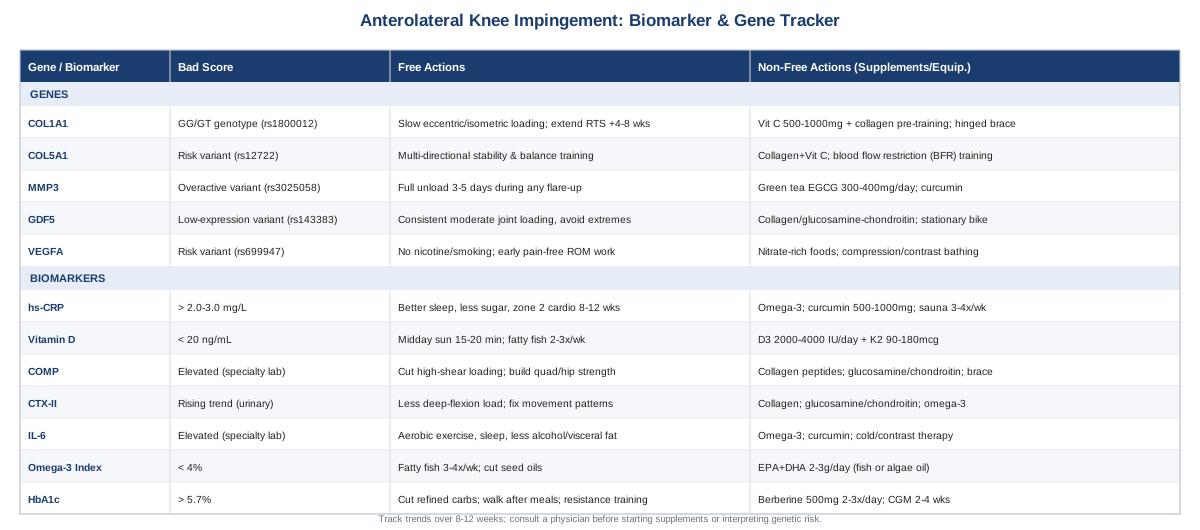
The 7 Biomarkers Worth Tracking If You Have Anterolateral Knee Impingement
Impingement itself will not show up in a blood test — it's a mechanical, imaging-confirmed diagnosis. But the biomarkers below shape the terrain the impingement happens on: how inflamed your joint runs, how well your cartilage and collagen are holding up, and how efficiently your tissue repairs itself after the arthroscopic debridement or rehab work that impingement often requires. Tracking them turns "my knee still feels off" into something you can actually measure and move.
hs-CRP (High-Sensitivity C-Reactive Protein)
hs-CRP is the most accessible marker of systemic, low-grade inflammation, and it correlates with the degree of synovial inflammation found inside an osteoarthritic or irritated knee joint. Research on knee osteoarthritis has shown that elevated hs-CRP tracks with more inflammatory cell infiltration in the joint lining, and with a higher-inflammation phenotype of joint disease, even though it isn't a perfect stand-alone diagnostic (hs-CRP and the inflammatory phenotype of knee osteoarthritis). For anterolateral impingement specifically, a persistently elevated hs-CRP is a signal that your knee isn't the only thing running hot — your whole system is, and that background inflammation can slow tissue healing and keep the impinged tissue irritated longer than the mechanics alone would predict.
How To Measure It
A hs-CRP blood draw costs roughly 15 to 30 dollars out of pocket in the US when ordered without insurance, and is included in most comprehensive metabolic panels ordered by a physician or through direct-to-consumer lab services. Values under 1.0 mg/L are considered low risk, 1.0 to 3.0 mg/L average, and above 3.0 mg/L high — though for joint-specific inflammation, many clinicians start paying closer attention above 2.0 mg/L.If The Score Is Bad, The Plan Without Supplements
Start with sleep and load management: poor sleep and unmanaged training volume are two of the most reliable drivers of elevated hs-CRP in otherwise healthy people. Reducing ultra-processed food intake, cutting added sugar, and adding two to three sessions per week of zone 2 cardio (easy enough to hold a conversation) for at least 8 to 12 weeks reliably lowers hs-CRP in most people who start elevated. Retest every 8 to 12 weeks — hs-CRP does not move meaningfully week to week.If The Score Is Bad, The Plan With Supplements Or Equipment
Omega-3 fatty acids (see below) and a well-dosed curcumin extract (500 to 1000 mg of a bioavailable formulation, once or twice daily with food) have the best human evidence for lowering CRP in people with joint-related inflammation. Cycle curcumin for 8 to 12 weeks, then reassess — it can mildly increase bleeding risk, so avoid combining it with anticoagulants or stopping it at least a week before any planned knee surgery. A sauna or hot-water-immersion habit, 3 to 4 sessions per week, has modest supporting evidence for lowering inflammatory markers as well, with essentially no side effects for healthy adults beyond standard heat-exposure precautions.25-Hydroxyvitamin D
Vitamin D status matters more for connective tissue than most people assume. A systematic review looking specifically at ACL injury rates and post-reconstruction function found that low vitamin D status was associated with weaker muscle and tendon structures and, in several cohorts, with worse post-operative recovery (vitamin D and ACL injury/post-reconstruction outcomes). Given that anterolateral impingement frequently shows up after ACL reconstruction, this is one of the more directly relevant biomarkers on this list — a knee healing from surgery with suboptimal vitamin D is working with a handicap.How To Measure It
A 25-OH vitamin D blood test costs 20 to 50 dollars out of pocket and is one of the most widely available lab tests. Aim for 30 to 50 ng/mL; below 20 ng/mL is generally considered deficient, and levels above 80 to 100 ng/mL should be avoided without medical supervision.If The Score Is Bad, The Plan Without Supplements
Fifteen to twenty minutes of midday sun exposure on bare arms and legs, several times a week, is the most reliable non-supplement lever, though it is seasonally and geographically limited for many people. Fatty fish (salmon, mackerel, sardines) two to three times a week adds a modest but real contribution.If The Score Is Bad, The Plan With Supplements Or Equipment
Vitamin D3, 2000 to 4000 IU daily with a meal containing fat, is a standard and well-tolerated correction dose for mild-to-moderate deficiency; more severe deficiency (under 15 ng/mL) is often better addressed under physician guidance with a short course of higher-dose D3. Retest after 8 to 12 weeks rather than adjusting the dose sooner — vitamin D storage and release is slow. Pairing D3 with vitamin K2 (90 to 180 mcg daily) is a common practice to support proper calcium utilization, though the evidence for this pairing is stronger for bone and vascular health than for tendon-ligament healing specifically. Side effects are rare at these doses but include mild GI upset; true toxicity is very uncommon and generally requires sustained intake far above 4000 IU/day for extended periods.Cartilage Oligomeric Matrix Protein (COMP)
COMP is a structural cartilage protein that leaks into the bloodstream when cartilage is being broken down faster than it's rebuilt. In knee osteoarthritis research, serum COMP correlates strongly with radiographic severity, pain, and disability, and shows real diagnostic separation between healthy and affected joints (COMP as a biomarker for knee osteoarthritis). For someone with anterolateral impingement, a chronically elevated COMP is a flag that repeated pinching and mechanical irritation may be accelerating cartilage turnover in that compartment of the knee, beyond what the impingement lesion alone would suggest.How To Measure It
COMP is not part of routine bloodwork — it requires a specialty or research-oriented lab (often ordered through a sports medicine or rheumatology-affiliated lab), typically costing 80 to 150 dollars. It is one of the more "advanced" markers on this list and not necessary for everyone, but useful if impingement symptoms are recurring or if imaging shows early cartilage wear.If The Score Is Bad, The Plan Without Supplements
Reducing high-impact, high-shear loading on the knee (deep pivoting, repeated deep squats under heavy load, running on hard cambered surfaces) while maintaining low-impact strength work is the most direct way to reduce ongoing cartilage stress. Building quadriceps and hip strength through controlled-range work reduces abnormal joint shear, which is a major driver of cartilage turnover in an impinged knee.If The Score Is Bad, The Plan With Supplements Or Equipment
Collagen peptides (10 to 15 grams daily, ideally with vitamin C, taken 30 to 60 minutes before loading exercise) have modest human trial support for cartilage and connective tissue metrics, and are essentially side-effect free. Glucosamine sulfate (1500 mg/day) and chondroitin sulfate (800 to 1200 mg/day) have mixed but non-trivial evidence in knee osteoarthritis populations; a reasonable approach is a 3-month trial with reassessment, since response is variable and not everyone benefits. Unloading equipment such as a knee brace during high-load activity is a practical, non-pharmacological way to reduce the mechanical stress that drives COMP elevation.Urinary CTX-II (C-Telopeptide of Type II Collagen)
CTX-II is a breakdown fragment of the type II collagen that makes up joint cartilage, and it's one of the most consistently validated urinary markers of cartilage degradation. Longitudinal research tracking both COMP and CTX-II over a decade found that rising CTX-II predicted subsequent radiographic knee osteoarthritis severity and stiffness (longitudinal COMP and CTX-II predicting knee osteoarthritis severity). Because CTX-II reflects ongoing cartilage matrix breakdown rather than a single snapshot, it pairs well with COMP: COMP shows current cartilage stress, CTX-II shows the trajectory.How To Measure It
A urinary CTX-II test is a specialty lab order, typically 60 to 120 dollars, and less widely available than blood-based markers — you may need to ask a sports medicine physician or a functional medicine practice to order it. It's most useful as a trend marker taken every 6 to 12 months rather than a single-point measurement.If The Score Is Bad, The Plan Without Supplements
The same load-management principles that help COMP apply here: reducing repetitive deep-flexion loading, addressing any residual mechanical impingement through targeted physical therapy, and correcting movement patterns (particularly valgus collapse or excessive internal rotation during landing and pivoting) that concentrate shear on the anterolateral joint compartment.If The Score Is Bad, The Plan With Supplements Or Equipment
The same cartilage-support stack — collagen peptides, and a trial of glucosamine/chondroitin — applies, alongside omega-3s for their anti-catabolic effect on cartilage matrix enzymes. None of these require cycling off, though it's reasonable to reassess supplementation need every 3 to 6 months based on retested CTX-II trends rather than continuing indefinitely without evidence of benefit.Interleukin-6 (IL-6)
IL-6 is a cytokine that drives much of the local synovitis seen in irritated or osteoarthritic knees, and research correlating systemic inflammatory markers with local synovial inflammation in knee osteoarthritis includes IL-6 as one of the more clinically relevant cytokines tracked alongside hs-CRP (systemic inflammatory markers and local synovitis in knee osteoarthritis). Where hs-CRP gives you a general inflammation read, IL-6 is more specific to the kind of joint-lining inflammation that keeps an impinged knee swollen and slow to settle after activity.How To Measure It
IL-6 is typically a specialty or research lab test, in the 50 to 100 dollar range, and is less standardized across labs than hs-CRP. It's a reasonable second-line marker if hs-CRP is elevated and you want more specificity, rather than a first test for most people.If The Score Is Bad, The Plan Without Supplements
Consistent aerobic exercise, adequate sleep (7 to 9 hours), and reducing visceral fat (which actively secretes IL-6) are the most evidence-backed non-supplement levers. Alcohol reduction also measurably lowers IL-6 in people who drink regularly above moderate levels.If The Score Is Bad, The Plan With Supplements Or Equipment
Omega-3s and curcumin again apply here, since both have documented effects on cytokine cascades including IL-6. A structured cold-exposure or contrast-therapy protocol (2 to 3 sessions per week) has emerging but still limited evidence for cytokine modulation — worth considering as an adjunct, not a primary strategy, and best avoided in the first 48 hours after any acute knee flare, since cold exposure immediately post-injury data is mixed.Omega-3 Index
The omega-3 index measures the percentage of EPA and DHA in red blood cell membranes and is a more stable, longer-term reflection of anti-inflammatory fatty acid status than a single dietary recall. Reviews of omega-3 supplementation in osteoarthritis populations describe consistent reductions in cartilage-degrading cytokine activity and modest benefit for joint-related inflammation, even though pain-scale results are mixed (omega-3 fatty acids for osteoarthritis, narrative review). For anterolateral impingement, a low omega-3 index suggests your baseline inflammatory tone is working against tissue calming, independent of the mechanical issue.How To Measure It
The omega-3 index is a finger-stick or blood draw test, typically 75 to 100 dollars through specialty testing services (it is the same test popularized in longevity and cardiology circles, and frequently referenced by Peter Attia). A target range above 8 percent is generally considered favorable; below 4 percent is considered low.If The Score Is Bad, The Plan Without Supplements
Fatty fish three to four times weekly (salmon, sardines, mackerel, anchovies) is the most direct food-based lever, and reducing omega-6-heavy seed oils in cooking shifts the overall ratio favorably over 2 to 3 months.If The Score Is Bad, The Plan With Supplements Or Equipment
A fish oil or algae-based EPA/DHA supplement providing 2 to 3 grams combined EPA+DHA daily, taken with a meal, reliably raises the omega-3 index over 8 to 12 weeks in most people; retesting at that interval is more useful than guessing at dose. Mild fish-burp or GI upset is the most common side effect and is reduced by taking it with food or choosing an enteric-coated formulation; doses above 3 grams/day should be discussed with a physician if you're on blood thinners, given a mild antiplatelet effect.HbA1c (Glycated Hemoglobin)
HbA1c is best known as a diabetes marker, but it also reflects how much glucose has been chemically binding to your collagen over the preceding 2 to 3 months, forming advanced glycation end-products (AGEs) that stiffen tendon and ligament tissue and reduce the normal fiber-sliding that gives connective tissue its resilience. Research on tendons exposed to elevated AGEs shows reduced collagen fiber sliding and altered failure mechanics, and even mild HbA1c elevation in non-diabetic people has been linked to measurable changes in tendon quality and walking capacity (advanced glycation end-products and tendon mechanics). For a knee already dealing with impingement, stiffer, less compliant connective tissue around the joint is one more variable working against smooth mechanics.How To Measure It
HbA1c is a standard, inexpensive blood test (10 to 25 dollars out of pocket) included in most metabolic panels. A result under 5.7 percent is considered normal, 5.7 to 6.4 percent prediabetic, and 6.5 percent or above diabetic — but for connective tissue purposes, staying comfortably under 5.5 percent is a reasonable target even for non-diabetic athletes.If The Score Is Bad, The Plan Without Supplements
Reducing refined carbohydrate and added sugar intake, walking after meals (even 10 minutes measurably blunts the glucose spike that drives glycation), and adding resistance training 2 to 3 times weekly are the most reliable levers, typically producing measurable HbA1c change over 8 to 12 weeks.If The Score Is Bad, The Plan With Supplements Or Equipment
Berberine (500 mg, two to three times daily with meals) has meaningful human trial evidence for improving glucose metabolism and modestly lowering HbA1c, and is a reasonable option for someone who wants a supplement-based lever before considering medication; it can cause GI upset and should be discussed with a physician if you're on other glucose-lowering medication, since the combined effect can be additive. A continuous glucose monitor, worn for 2 to 4 weeks periodically, is a practical piece of equipment that turns abstract "eat less sugar" advice into direct feedback on which foods and meal patterns spike your glucose the most.What Genes And Epigenetics May Be Adding To The Problem
Biomarkers tell you where your tissue stands today; genetics can help explain why. Researchers like Ali Torkamani, who has published extensively on using genomic data to inform individualized health decisions, and Gary Brecka, who has popularized practical interpretation of common genetic variants for health optimization, are useful starting points for thinking about this — not because any single gene determines your outcome, but because certain variants shift the odds on how your connective tissue is built, remodeled, and repaired. None of the genes below are unique to anterolateral impingement; they're broadly relevant to ligament, tendon, and cartilage biology, which is exactly the tissue context impingement lives in.
COL1A1 (Type I Collagen, Alpha 1 Chain)
The COL1A1 Sp1-binding-site variant (rs1800012) affects how much type I collagen — the main structural collagen in ligaments and the joint capsule — your body produces. Meta-analyses of athletes have found the TT genotype associated with a notably reduced risk of ACL and other ligament injuries, suggesting the more common GG/GT genotypes may correspond to somewhat more pliable, injury-prone connective tissue (COL1A1 rs1800012 and tendon/ligament injury risk). The evidence is consistent enough to take seriously, though effect sizes vary across populations and not every study agrees, so this should be read as a moderate risk-shifter, not a diagnosis.If The Gene Looks Unfavorable, The Plan Without Supplements
Prioritize progressive, tendon- and ligament-specific loading (slow eccentric work, isometric holds) rather than jumping straight into high-speed pivoting sports after any knee injury or surgery — collagen remodels in response to controlled mechanical stress, and this is the single most evidence-backed way to compensate for a less favorable collagen genotype. Extend "return to sport" timelines by an extra 4 to 8 weeks beyond generic protocols if you know you carry this variant.If The Gene Looks Unfavorable, The Plan With Supplements Or Equipment
Vitamin C (500 to 1000 mg) paired with collagen peptides (15 grams) about an hour before connective-tissue-focused training sessions supports collagen synthesis during the loading window, based on human collagen-synthesis-marker research; take this 2 to 3 times weekly around training rather than daily indefinitely. A hinged knee brace during high-risk activities (cutting sports, skiing) is a sensible mechanical compensation while tissue quality is being built up, with no meaningful side effects beyond the adjustment period.COL5A1 (Type V Collagen, Alpha 1 Chain)
Type V collagen makes up a small but structurally important fraction of ligament and tendon fibrils, regulating how thick and organized the collagen fibers become. A meta-analysis spanning 21 observational studies found several COL5A1 variants (including rs12722) associated with altered risk of musculoskeletal soft tissue injury, with the direction and strength of the effect varying by population (COL5A1 polymorphisms and musculoskeletal soft tissue injury risk). This is one of the more heavily replicated genes in sports-injury genetics, which gives the general association more weight even though individual-variant effects are still being refined.If The Gene Looks Unfavorable, The Plan Without Supplements
Focus on multi-directional stability training (single-leg balance work, lateral bounding with control) rather than pure straight-line strength, since COL5A1-related tissue differences seem to matter most under rotational and multi-planar load — exactly the kind of load that provokes anterolateral impingement symptoms.If The Gene Looks Unfavorable, The Plan With Supplements Or Equipment
The same collagen-plus-vitamin-C protocol described for COL1A1 applies here, since both genes converge on overall collagen fibril quality. Blood flow restriction training (using a BFR cuff at 40 to 60 percent limb occlusion pressure, 2 to 3 sessions weekly) is a reasonable equipment-based addition for building tendon and ligament resilience with lighter loads, which is useful if the knee still can't tolerate heavy mechanical stress — cycle in 6-week blocks with a deload week, and avoid it if you have any history of blood clots.MMP3 (Matrix Metalloproteinase-3)
MMP3 is an enzyme that breaks down and remodels collagen matrix — necessary for normal tissue turnover, but overactive variants can tip the balance toward degradation rather than repair. A meta-analysis of MMP3 gene polymorphisms found specific variants (including rs3025058) associated with increased tendon-ligament injury risk in Caucasian and Brazilian populations, consistent with MMP3's role as a susceptibility locus for soft tissue injury (MMP3 gene polymorphisms and tendon-ligament injury risk). For anterolateral impingement, an overactive MMP3 profile could plausibly mean the impinged, irritated tissue is being broken down faster than it's rebuilt, prolonging symptoms.If The Gene Looks Unfavorable, The Plan Without Supplements
Avoid stacking high mechanical stress on top of active inflammation — give any flare-up genuine unloaded recovery time (typically 3 to 5 days of reduced loading) rather than pushing through, since matrix breakdown accelerates under combined mechanical and inflammatory stress.If The Gene Looks Unfavorable, The Plan With Supplements Or Equipment
Green tea extract (standardized for EGCG, 300 to 400 mg daily) has preliminary evidence for modulating matrix metalloproteinase activity, and can be used in 8 to 12 week cycles with reassessment; avoid high-dose green tea extract on an empty stomach, as it has been linked to rare cases of liver stress at high doses. Curcumin, described above for its CRP effects, also has a documented MMP-modulating mechanism and can reasonably be used for the same cycle length.GDF5 (Growth Differentiation Factor 5)
GDF5 is involved in joint formation, cartilage maintenance, and tissue repair throughout life, not just in development. The well-studied rs143383 promoter variant reduces GDF5 expression across a wide range of joint and soft tissues, and a meta-analysis found it associated with increased risk of osteoarthritis and other musculoskeletal degenerative conditions (GDF5 rs143383 and musculoskeletal degenerative disease risk). Lower baseline GDF5 expression may mean a somewhat reduced natural capacity to remodel cartilage and repair minor joint damage, which is relevant to how well an impinged knee's cartilage tolerates ongoing mechanical irritation.If The Gene Looks Unfavorable, The Plan Without Supplements
Prioritize consistent, moderate joint loading over both extremes (neither prolonged immobilization nor high-impact overuse), since cartilage health depends on regular but non-excessive compressive loading to maintain nutrient exchange in the absence of a direct blood supply.If The Gene Looks Unfavorable, The Plan With Supplements Or Equipment
The cartilage-support combination described under COMP and CTX-II (collagen peptides, and a trial of glucosamine/chondroitin) is particularly relevant here, since it's directly targeting the matrix-support role that reduced GDF5 expression may be underperforming. A stationary bike or elliptical, used 3 to 4 times weekly for low-impact joint loading, is a practical equipment-based way to maintain cartilage nutrient exchange without the compressive spikes of running or jumping.VEGFA (Vascular Endothelial Growth Factor A)
VEGFA drives the formation of new blood vessels needed to deliver nutrients and repair cells to healing tendon and ligament tissue. A systematic review and meta-analysis found the VEGFA rs699947 variant associated with tendon and ligament injury risk, with one study noting close to double the risk of non-contact ACL rupture in carriers of a particular genotype (VEGFA polymorphisms and tendon/ligament injury risk). Because healing after impingement debridement or ACL reconstruction depends heavily on adequate vascularization of the surgical site, a less favorable VEGFA profile could plausibly translate into slower post-procedure recovery.If The Gene Looks Unfavorable, The Plan Without Supplements
Avoid smoking and nicotine products entirely during any healing phase — nicotine is one of the most well-documented direct inhibitors of the angiogenesis this gene supports, and its effect is large enough to override most other interventions on this list. Gentle, early, pain-free range-of-motion work (as guided by a physical therapist) supports local blood flow to healing tissue better than strict immobilization.If The Gene Looks Unfavorable, The Plan With Supplements Or Equipment
Nitrate-rich foods (beetroot juice, leafy greens) support nitric-oxide-mediated blood flow and have reasonable general cardiovascular evidence, though tendon-specific human data is limited — treat this as a low-risk, plausible adjunct rather than a proven fix. A pneumatic compression device or contrast bathing routine (alternating warm and cool water on the knee, 3 to 4 times weekly) is a low-cost equipment option some clinicians use to support local circulation during rehab, though it should complement, not replace, physical therapy.The Book That Reframes How You Should Think About Your Knees
Beyond bloodwork and genetics, one of the most practically useful resources for anyone dealing with recurring knee impingement is Rebuilding Milo by Dr. Aaron Horschig, a physical therapist and strength coach who has spent years treating knee pain in lifters and athletes. The book challenges the common assumption that knee pain is purely a strength problem, arguing instead that mobility restrictions, movement compensations, and mechanical inefficiencies — exactly the kind of thing that produces anterolateral impingement — are frequently the root cause that generic strengthening programs miss. Here are the ten most useful ideas from it.
Pain Is Often A Symptom Of A Mobility Restriction, Not Just Weakness
Horschig argues that knees compensate for restrictions elsewhere — commonly the ankle or hip — by moving in ways that concentrate stress on structures like the anterolateral joint capsule. Chasing quad strength alone, without checking ankle dorsiflexion and hip internal rotation, often leaves the actual mechanical driver untouched.Ankle Dorsiflexion Is The Most Overlooked Contributor To Knee Impingement
Limited ankle mobility forces the knee to travel further forward and rotate more during squatting and cutting movements, increasing anterolateral joint stress. He recommends a simple half-kneeling dorsiflexion test most people can do at home before assuming the knee itself is "the problem."The Squat Pattern Reveals More Than A Knee X-Ray
Watching how someone descends into a squat — where the knees track, whether one side collapses inward — often shows the mechanical fault line that eventually produces impingement symptoms, well before imaging shows structural damage.Hip Internal Rotation Deficits Redirect Force Into The Knee
When the hip can't internally rotate adequately during pivoting or deceleration, that rotational force has to go somewhere, and the knee — including the anterolateral structures — often absorbs it. He includes specific hip mobility drills targeted at restoring this range.Foam Rolling And Static Stretching Alone Rarely Fix Structural Restrictions
Horschig is direct about the limits of passive soft tissue work: it can temporarily reduce tone, but it doesn't restore joint mobility restrictions caused by capsular or bony limitations, which require targeted mobilization and loaded end-range work instead.Loaded Stretching Beats Passive Stretching For Lasting Change
A central technique in the book is using light external load (bands, plates) at end-range joint positions to drive genuine, lasting mobility improvements — a method with growing support in the sports physiotherapy literature for creating tissue adaptation rather than temporary relaxation.Single-Leg Work Exposes What Bilateral Training Hides
Bilateral squats and leg presses let a stronger, more mobile leg compensate for a weaker or stiffer one. Horschig emphasizes single-leg variations specifically because they force each knee to manage its own mechanics — often the first place asymmetric impingement risk becomes visible.Return-To-Activity Timelines Should Be Based On Movement Quality, Not The Calendar
Rather than a fixed 12-week return-to-sport timeline after injury, he argues for objective movement-quality checkpoints (symmetrical single-leg squat depth, pain-free range of motion) as the real gate for progression — directly relevant to avoiding a repeat impingement flare from returning too early.Bracing And Taping Are Bridges, Not Solutions
He's clear that external supports can manage symptoms during a transition period, but they shouldn't be relied on indefinitely as a substitute for actually restoring the underlying mobility and motor control deficits driving the mechanical problem.Consistency In Daily Mobility Work Beats Occasional Intensive Sessions
The book's overall philosophy favors short, frequent mobility and activation drills (5 to 10 minutes daily) over sporadic hour-long sessions, based on the principle that tissue and motor pattern adaptation respond better to frequent low-dose stimulus than to infrequent high-dose effort.Complementary Approaches Backed By Real Evidence
None of the following should replace an orthopedic evaluation, physical therapy, or surgical consult when imaging confirms a mechanical lesion causing impingement. But several complementary approaches have genuine clinical evidence for knee pain, function, and inflammation, and are reasonable additions alongside standard care.
Tai Chi
Tai chi combines slow, controlled weight shifting with deep knee flexion under body-weight load, which builds the kind of proprioceptive control and quadriceps endurance that a knee recovering from impingement-related irritation needs. It's particularly relevant because it trains balance and joint position sense without the ballistic, high-shear loading that provokes anterolateral impingement symptoms in the first place.A randomized trial published in Annals of Internal Medicine compared tai chi directly against standard physical therapy for knee osteoarthritis and found comparable improvements in pain and function over 52 weeks (tai chi versus physical therapy for knee osteoarthritis). While this trial studied osteoarthritis rather than impingement specifically, the mechanistic overlap — improved neuromuscular control and reduced joint stress — makes it a reasonable transferable approach.
In practice, a beginner-friendly tai chi class (Yang style is the most studied) two to three times weekly for at least 12 weeks is a realistic starting point. People with significant instability or an unrepaired mechanical lesion should get clearance from their treating physician first, since some tai chi postures involve sustained deep knee flexion.
Massage Therapy
Massage can reduce the muscular guarding and tightness — particularly in the IT band, vastus lateralis, and lateral retinaculum — that often accompanies chronic anterolateral knee irritation, and may improve local circulation to tissue that's been mechanically stressed.A randomized controlled trial published in the Archives of Internal Medicine found that twice-weekly Swedish massage over 8 weeks produced meaningful improvements in knee pain and stiffness compared to usual care, though benefits diminished once treatment frequency dropped to biweekly maintenance sessions (massage therapy for osteoarthritis of the knee, randomized controlled trial). This suggests massage works better as an active, regular input than an occasional treat.
A practical approach is a 30 to 45 minute session focused on the lateral thigh, IT band, and quadriceps, once or twice weekly during an active flare, tapering to as-needed maintenance once symptoms settle. Deep, aggressive pressure directly over an actively inflamed impingement site should be avoided; work the surrounding musculature instead.
Iyengar Yoga
Iyengar yoga's use of props (blocks, straps, bolsters) allows controlled, supported joint positioning, which makes it more adaptable for an irritated knee than more dynamic yoga styles, while still building the strength and flexibility around the joint that supports better mechanics.A pilot study on Iyengar yoga for knee osteoarthritis found significant improvements in pain, physical function, stiffness, and mood after once-weekly 90-minute classes over 8 weeks (Iyengar yoga for osteoarthritis of the knees, pilot study). It's a small study, and evidence specific to impingement rather than osteoarthritis doesn't yet exist, but the supported, controlled-range approach is a reasonable fit.
Look for an instructor experienced in modifying poses for knee injuries, avoid unsupported deep-knee-flexion poses (like unmodified hero pose) during an active flare, and expect any real benefit to take 8 or more weeks of consistent weekly practice to show up.
Photobiomodulation (Low-Level Laser Therapy)
Photobiomodulation uses specific wavelengths of red or near-infrared light believed to support mitochondrial function and reduce local inflammation in irritated joint tissue, making it a plausible adjunct for the localized inflammation that keeps an impinged knee sore after activity.A systematic review and network meta-analysis evaluated the optimal wavelength of low-level light therapy for knee osteoarthritis symptoms and found meaningful reductions in pain intensity, although the review also noted that the overall certainty of evidence remains low to moderate and effects on stiffness and function were less consistent (optimal wavelength of low-level light therapy for knee osteoarthritis).
A typical clinical protocol involves 2 to 3 sessions weekly for 4 to 6 weeks, applied directly over the anterolateral joint line by a physical therapist or chiropractor with a clinical-grade device. It's considered very low-risk, though people with photosensitivity conditions or those taking photosensitizing medications should check with their provider first.
EMG Biofeedback
Since anterolateral impingement frequently follows ACL reconstruction or other knee surgery, restoring proper quadriceps activation — which is commonly inhibited after surgery through a phenomenon called arthrogenic muscle inhibition — is directly relevant to reducing the abnormal joint mechanics that can perpetuate impingement symptoms.A randomized controlled trial found that EMG biofeedback therapy meaningfully improved knee extension recovery after ACL reconstruction compared to standard rehabilitation alone, describing it as a simple, inexpensive adjunct to conventional therapy (EMG biofeedback and knee extension after ACL reconstruction).
In practice, this involves a surface EMG sensor placed over the vastus medialis during rehab exercises (straight-leg raises, mini-squats, terminal knee extensions), giving real-time visual or audio feedback on muscle activation. Most physical therapy clinics have this equipment; 2 to 3 sessions weekly for 4 to 8 weeks during early post-operative rehab is a typical protocol, with no notable side effects.
Conclusion
Anterolateral knee impingement is a mechanical diagnosis, but how well your knee tolerates, heals from, and stays free of that mechanical irritation is shaped by biology you can actually measure and influence — inflammatory markers, cartilage turnover proteins, vitamin D status, and, to a lesser but real degree, the collagen and repair-related genes you were born with. Treating the mechanics without addressing the biology behind slow healing or chronic low-grade inflammation is why "generic knee advice" so often falls short.
The most useful next step is a practical one: get imaging and a clear structural diagnosis from an orthopedic specialist if you haven't already, then use a small, targeted panel of the biomarkers above — starting with hs-CRP, vitamin D, and HbA1c, since they're the cheapest and most actionable — to understand what's happening beneath the surface. Track those numbers alongside your symptoms and your rehab progress, review them with a physician or sports medicine provider, and let the trend, not a single result, guide what you adjust next.
Musculoskeletal: Joint Conditions Tendon & Ligament Conditions
Autoimmune: Inflammatory Conditions Connective Tissue Conditions