This article contains AI generated content.
Anti-Synthetase Syndrome Genes And Biomarkers: 4 Genes And 7 Biomarkers To Track
Introduction
A diagnosis of anti-synthetase syndrome rarely arrives cleanly. It often follows months of unexplained cough, cracked and peeling skin on the fingers, muscle weakness that gets dismissed as fatigue, and a slow rheumatology work-up before a specific antibody finally gives the condition a name. By the time most people read this, they already know the generic advice: take your medication, rest when tired, avoid infections, see your rheumatologist and pulmonologist regularly. All true, and all too vague to act on day to day.
The problem with generic guidance is that anti-synthetase syndrome is not one disease with one dial to turn. It is a cluster of overlapping problems — muscle inflammation, lung scarring risk, joint pain, skin changes, vascular symptoms — driven by an immune system that has mistakenly targeted a family of essential cellular enzymes. Two people with the same anti-Jo-1 antibody can have completely different disease courses, one with mild joint pain and normal lungs, another with rapidly progressive lung involvement. Broad advice cannot account for that variability. What can help is knowing which specific markers are moving, in which direction, and why.
This article takes a more granular approach. Instead of repeating what a rheumatologist has likely already told you, it looks at the actual biomarkers used in real clinical research to track anti-synthetase syndrome activity — what each one measures, how it is tested, what a concerning result usually means, and what realistically can and cannot be done about it. It also looks at what current genetic research says about why some people develop this syndrome at all, and what that means, and does not mean, for the way it is managed.
None of this replaces immunosuppressive treatment, and nothing here promises to reverse an autoimmune disease through diet or supplements alone. But better information changes decisions — which questions to ask at the next appointment, which labs to request, which lifestyle factors are worth the effort and which are not. The biomarker section below is the practical core of this article; the genetics section, the book-based section, and the complementary-approaches section each add a different layer of useful context around it.
Summary
Anti-synthetase syndrome is defined by antibodies against aminoacyl-tRNA synthetase enzymes, but the antibody itself is only the starting point. Disease behavior — whether the lungs stay stable or scar quickly, whether muscles hold strength or weaken, whether inflammation stays contained or flares — shows up first in a small set of blood markers and functional tests long before symptoms make it obvious. Below, this article walks through the seven biomarkers clinicians and researchers actually rely on: which antibodies matter beyond Jo-1, why a single ferritin number can predict lung outcomes months in advance, why creatine kinase can look deceptively normal, and what a rising KL-6 level is really telling you about the lungs. Each one comes with realistic ways to track it, what tends to move it, and what does not.
Beyond the biomarkers, the article also covers what human genetic studies — including large HLA and PTPN22 association studies — actually show about who develops this syndrome, and why "bad genes" here mean something very different from the fixable metabolic genes people often read about elsewhere. A summary of Dr. Terry Wahls' nutrition-based autoimmune research follows, along with a closer look at complementary approaches — from yoga to mindfulness-based stress reduction — that have real, if still limited, human evidence in inflammatory muscle and lung disease. Together, these sections aim to give a clearer, more usable map of a condition that is often explained only in the broadest terms.
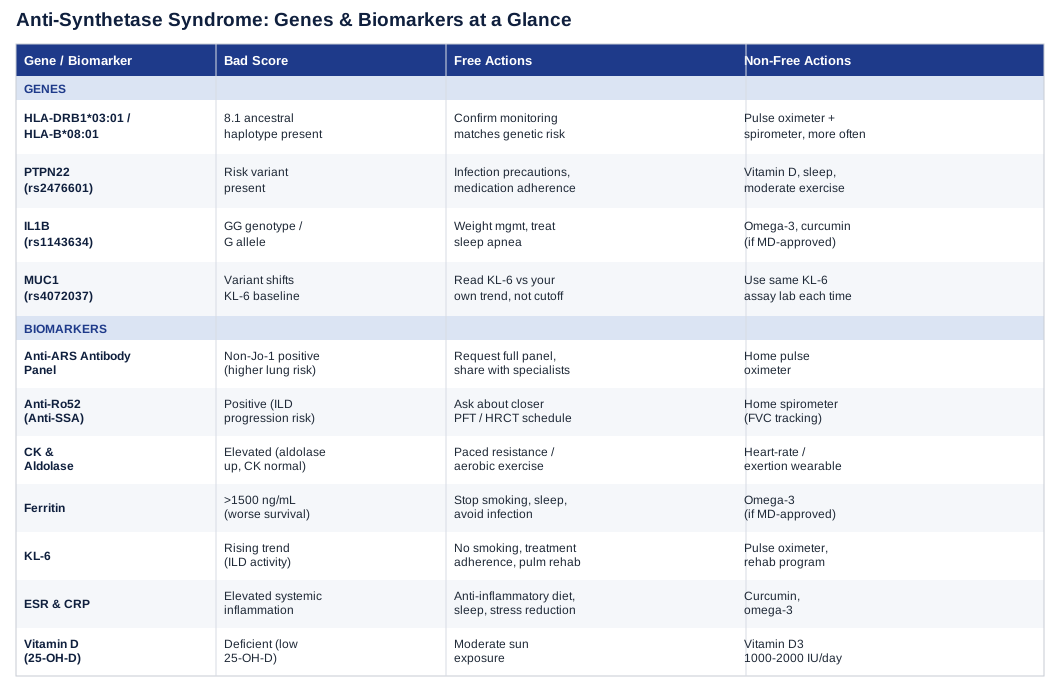
The 7 Biomarkers That Actually Matter In Anti-Synthetase Syndrome
Anti-synthetase syndrome (ASSD) is classically described as myositis plus interstitial lung disease (ILD) plus at least one of arthritis, Raynaud's phenomenon, fever, or mechanic's hands, occurring alongside an antibody against an aminoacyl-tRNA synthetase enzyme. Even that definition is debated: a 2022 systematic review found 85 different proposed diagnostic criteria across 82 studies, with no single agreed standard. That inconsistency is exactly why tracking your own biomarkers over time, rather than relying on a single diagnostic snapshot, matters so much in this condition.
The seven markers below are the ones with the strongest, most consistent human evidence for reflecting what is actually happening inside the muscles, lungs, and immune system at a given moment.
1. The Anti-Aminoacyl-tRNA Synthetase (Anti-ARS) Antibody Panel
Anti-Jo-1 (targeting histidyl-tRNA synthetase) is the most common and best studied of this antibody family, but it accounts for only about half of cases. The rest involve anti-PL-7, anti-PL-12, anti-EJ, anti-OJ, anti-KS, and a handful of rarer specificities, each targeting a different synthetase enzyme. According to NCBI's overview of autoimmune myopathies, the non-Jo-1 antibodies are, on average, associated with more severe and more lung-dominant disease, sometimes presenting with interstitial lung disease alone and minimal muscle involvement, which makes them easy to miss if only anti-Jo-1 is tested.
How To Measure It
Testing is done via a myositis-specific antibody panel, usually a line blot or immunoprecipitation assay run at a specialty reference lab. Cost typically runs from about 150 to 500 US dollars out of pocket when not covered by insurance, though it is usually included in the diagnostic work-up once ASSD is suspected. It is not a marker that needs frequent repeat testing — once positive, it is almost always positive going forward, so it is primarily a one-time diagnostic and phenotyping tool rather than an activity marker to re-check monthly.If The Score Is Bad, The Plan Without Supplements
There is no diet, supplement, or lifestyle change that lowers antibody status or reverses a positive anti-ARS result — it is not the kind of marker that responds to lifestyle. What is genuinely useful without any product involved is making sure the specific antibody subtype is known and shared with every specialist involved in your care, since it changes the expected lung risk and monitoring schedule. Requesting the full panel (not just anti-Jo-1) if only a partial test was run is a reasonable, no-cost step if it has not already been done.If The Score Is Bad, The Plan With Supplements Or Equipment
No supplement or device changes antibody titers, and no equipment purchase is relevant here. The only "equipment" worth having, if a non-Jo-1 antibody with higher lung risk is confirmed, is a home pulse oximeter (roughly 20 to 40 dollars) to spot-check oxygen saturation, particularly with exertion, between formal pulmonary visits. This is a monitoring aid, not a treatment.2. Anti-Ro52 (Anti-SSA) Antibody
Anti-Ro52 frequently overlaps with anti-ARS antibodies and changes the picture considerably when present. A large recent analysis found that anti-Ro52 seropositive interstitial lung disease carries a significantly higher risk of disease progression and worse transplant-free survival compared with anti-Ro52-negative ILD. In anti-synthetase syndrome specifically, co-positive anti-Ro52 is associated with more severe and more treatment-resistant lung involvement.
How To Measure It
Anti-Ro52 is usually tested as part of, or alongside, an extractable nuclear antigen (ENA) panel or the myositis antibody panel, at a cost similar to the anti-ARS panel above (often bundled into the same order). Like anti-ARS antibodies, it is largely a one-time risk-stratification test rather than something re-tested every few months.If The Score Is Bad, The Plan Without Supplements
A positive anti-Ro52 result, in the context of ASSD, is best treated as a signal to ask directly whether it changes the recommended frequency of pulmonary function tests and high-resolution CT scans — many centers monitor anti-Ro52-positive patients more closely given the progression risk. There is no lifestyle intervention that removes this antibody; the value of knowing it is in adjusting surveillance intensity, not in trying to "fix" the result.If The Score Is Bad, The Plan With Supplements Or Equipment
Again, no supplement addresses antibody status directly. Where equipment genuinely helps is a home spirometer (roughly 50 to 150 dollars) for patients with confirmed anti-Ro52-positive ILD, used to track forced vital capacity trends between clinic visits — a meaningful early-warning tool given how closely FVC trajectory tracks with the progression risk this antibody flags.3. Creatine Kinase (CK) And Aldolase
CK and aldolase are the classic muscle-damage enzymes, released into the blood when muscle fibers are actively inflamed or breaking down. The catch in anti-synthetase syndrome is that CK can be misleadingly normal. Research on myopathies with elevated aldolase and normal CK found that dermatomyositis and overlap myositis are among the most common causes of an isolated aldolase elevation with a completely normal CK, meaning CK alone can miss active muscle inflammation that aldolase would catch.
How To Measure It
Both are simple, inexpensive blood draws, usually 10 to 30 dollars each and often bundled into a basic metabolic or comprehensive panel. Because muscle activity in ASSD can flare and settle over weeks, these are typically rechecked every 4 to 12 weeks during active treatment adjustment, and less often once stable.If The Score Is Bad, The Plan Without Supplements
Paced, physician-approved resistance and aerobic exercise is the best-supported non-drug lever here, and it is genuinely counterintuitive to most patients who assume rest is always safer. A randomized controlled trial of resistive home exercise in recent-onset polymyositis and dermatomyositis found that a structured home resistance program improved muscle performance without increasing disease activity over a two-year follow-up, and a broader systematic review and meta-analysis concluded physical exercise is generally safe and improves strength and aerobic capacity in polymyositis and dermatomyositis. The practical rule: light, progressive, submaximal loading during stable or improving disease, never during an active flare, and always cleared with the treating rheumatologist first.If The Score Is Bad, The Plan With Supplements Or Equipment
No supplement lowers CK or aldolase in an autoimmune myopathy — creatine, for instance, is sometimes used in other muscle contexts but has no evidence here and is not recommended given the inflammatory (not metabolic) cause of the enzyme elevation. The useful equipment is a simple heart-rate or exertion-tracking wearable (30 to 100 dollars), used to keep exercise sessions in a conservative, submaximal zone so that activity supports muscle recovery rather than provoking another flare. There are no meaningful side effects to this approach beyond standard exercise precautions, and no cycling is needed — it is simply calibrated to disease activity at any given time.4. Ferritin
Ferritin is not just an iron-storage marker in this context — it behaves as an acute-phase inflammatory signal, and in myositis-associated lung disease its predictive power is unusually strong. One study found serum ferritin levels were markedly higher in dermatomyositis patients who went on to develop acute or subacute interstitial pneumonia compared with those who did not (median 790 versus 186 ng/ml), and that a ferritin level above 1500 ng/ml was associated with significantly lower six-month survival. A subsequent systematic review and meta-analysis confirmed ferritin is a significant biomarker for predicting the occurrence, progression, and mortality risk of interstitial lung disease in idiopathic inflammatory myopathy.
How To Measure It
A standard serum ferritin blood test, typically 20 to 50 dollars, widely available and often already included in an inflammatory work-up. During any period of concern for lung involvement, it is reasonable to recheck every few weeks; once stable, quarterly is usually sufficient.If The Score Is Bad, The Plan Without Supplements
Because ferritin elevation here reflects systemic autoimmune inflammation rather than iron overload, the most effective non-supplement lever is optimized disease control through medical treatment, alongside smoking cessation if applicable — smoking is a well-documented amplifier of interstitial lung damage, and a review of smoking-related interstitial lung disease describes a clear causal role for cigarette smoking in several forms of interstitial lung disease, with smoking cessation recommended as a core part of initial management. Prioritizing sleep and avoiding respiratory infections (both of which drive inflammatory markers up broadly) round out the no-cost side of this plan.If The Score Is Bad, The Plan With Supplements Or Equipment
There is no supplement shown to lower disease-driven ferritin elevation in myositis-ILD specifically. Omega-3 fatty acids (roughly 1 to 2 grams combined EPA/DHA daily) have general anti-inflammatory evidence in other autoimmune and cardiovascular contexts and are reasonable as an adjunct discussed with your physician, taken continuously rather than cycled, with mild fishy aftertaste or GI upset as the main side effect and a bleeding-risk caution at high doses or alongside anticoagulants. Iron supplementation should specifically be avoided unless a concurrent iron-deficiency has been separately confirmed, since supplementing iron on top of an already-elevated inflammatory ferritin makes no physiological sense and is not indicated.5. KL-6 (Krebs von den Lungen-6)
KL-6 is a mucin-like glycoprotein released by damaged alveolar type II cells, and it is one of the most specific blood markers available for interstitial lung disease activity. A retrospective cohort study found that serial KL-6 measurements were useful for monitoring disease activity and detecting recurrence in interstitial pneumonia associated with anti-aminoacyl-tRNA synthetase antibodies, and a systematic review and meta-analysis concluded KL-6 predicts the severity, progression, acute exacerbation, and poor outcomes of interstitial lung disease across multiple studies.
How To Measure It
A specialty blood test, generally 50 to 150 dollars, not run at every commercial lab and sometimes requiring a reference laboratory or a pulmonology referral. For patients with known ILD, rechecking every 3 to 6 months (or sooner if symptoms change) alongside pulmonary function testing and periodic HRCT imaging gives the most complete picture.If The Score Is Bad, The Plan Without Supplements
As with ferritin, KL-6 tracks lung-directed autoimmune activity, so the highest-leverage non-supplement actions are strict smoking avoidance, prompt treatment of respiratory infections, and consistent adherence to prescribed immunosuppressive therapy, since KL-6 trends are primarily a readout of how well the underlying disease is controlled. Pulmonary rehabilitation programs also have a role: a randomized controlled trial found pulmonary rehabilitation produced meaningful short- and longer-term improvements in exercise capacity and quality of life in people with interstitial lung disease, even though that trial was not restricted to anti-synthetase syndrome specifically.If The Score Is Bad, The Plan With Supplements Or Equipment
No supplement lowers KL-6. The most valuable equipment investment for anyone with ASSD-associated ILD is a home pulse oximeter used consistently, including brief walk tests, since desaturation on exertion often shows up before symptoms or blood markers change. There are no supplement protocols to cycle here; the emphasis is entirely on consistent medical monitoring and infection prevention (including staying current on pneumococcal and influenza vaccination, discussed with your treating physician given immunosuppressive therapy).6. ESR And CRP (Systemic Inflammatory Markers)
Erythrocyte sedimentation rate (ESR) and C-reactive protein (CRP) are non-specific but useful trend markers of overall systemic inflammation, and they are usually tracked alongside the more disease-specific markers above rather than in isolation, since either can be elevated by an unrelated infection or entirely normal during active myositis.
How To Measure It
Both are inexpensive, standard blood tests, typically 10 to 25 dollars each, run at essentially any lab, and commonly repeated every visit during active disease monitoring.If The Score Is Bad, The Plan Without Supplements
An anti-inflammatory whole-food dietary pattern (vegetables, oily fish, minimally processed foods, limited refined sugar and ultra-processed snack foods), regular moderate movement within tolerated limits, adequate sleep, and stress-reduction practices are the most evidence-consistent, no-cost levers for general inflammatory burden, discussed further in the mindfulness and yoga sections later in this article.If The Score Is Bad, The Plan With Supplements Or Equipment
Curcumin (500 to 1000 mg daily with piperine to aid absorption) has general anti-inflammatory evidence in other chronic inflammatory conditions and is sometimes used as an adjunct; a reasonable approach if a physician approves it is an 8 to 12 week cycle with a few weeks off, watching for mild GI upset and being cautious of interaction with blood thinners. Omega-3 supplementation, as above, is the better-supported option of the two. Neither should be framed as controlling ESR or CRP meaningfully on its own — these markers move primarily with disease activity and treatment response.7. Vitamin D (25-OH-D)
Vitamin D stands apart from the other biomarkers on this list because it is genuinely modifiable and consistently found low in this patient population. A study of idiopathic inflammatory myopathies found that patients had significantly lower serum 25(OH) vitamin D levels than healthy controls, with an odds ratio of 17.7 for vitamin D deficiency versus normal levels. A related study found decreased 25(OH)-D was associated with higher muscle enzyme levels and with the presence of myositis-specific autoantibodies including anti-Jo-1.
How To Measure It
A standard 25-hydroxyvitamin D blood test, typically 40 to 100 dollars without insurance, widely available. Checking every 3 months during correction and then twice yearly once stable is a reasonable rhythm.If The Score Is Bad, The Plan Without Supplements
Sensible, moderate sun exposure (10 to 20 minutes several times weekly, balanced against skin cancer and photosensitivity risk, which is relevant given ASSD's skin involvement) is the main no-cost lever, though it is often insufficient alone, especially with limited sun exposure or higher latitudes.If The Score Is Bad, The Plan With Supplements Or Equipment
Vitamin D3 supplementation is the most straightforward, well-supported intervention on this entire list. A typical maintenance dose is 1000 to 2000 IU daily, with higher correction doses (for example 5000 IU daily for 8 to 12 weeks) sometimes used under physician supervision for confirmed deficiency, followed by retesting. Ongoing daily dosing is standard rather than cycled. Side effects are rare at these doses but include risk of hypercalcemia at high, sustained doses without monitoring, so retesting rather than indefinite high-dose supplementation is the safer approach.Building A Practical Monitoring Rhythm
Taken together, these seven biomarkers fall into two groups that call for different rhythms. The anti-ARS panel and anti-Ro52 are largely one-time, phenotype-defining tests that shape how closely you should be monitored, not markers to chase month to month. CK, aldolase, ferritin, KL-6, ESR, CRP, and vitamin D are the ones worth tracking on a recurring basis, typically every 4 to 12 weeks during active treatment changes and every 3 to 6 months once stable, always alongside pulmonary function testing for anyone with confirmed or suspected lung involvement. Bringing a simple log of these values to each rheumatology and pulmonology visit turns abstract lab numbers into a trend line your care team can actually act on.
What Genetics And Epigenetics Add To The Picture
Genetic research into anti-synthetase syndrome is far earlier and less actionable than the biomarker work above, and it is worth being direct about that upfront. Unlike commonly discussed metabolic genes such as MTHFR, the genes associated with ASSD are immune-regulation genes: nothing supplements or lifestyle changes and no protocol "corrects" the gene itself. What this research is useful for is understanding why the disease happens and, in a few cases, why certain treatment pathways make biological sense.
HLA-DRB1*03:01 And HLA-B*08:01 (The 8.1 Ancestral Haplotype)
The strongest and most consistent genetic signal in myositis overall comes from the HLA region. A genome-wide association study of 1,710 myositis cases against 4,724 controls found that HLA-DRB1*03:01 was most strongly associated with dermatomyositis, while HLA-B*08:01 showed the strongest association with polymyositis and with anti-Jo-1 antibody-positive myositis, with multiple alleles of the 8.1 ancestral haplotype required for the full risk effect. This is strong, well-replicated human evidence, but it describes population-level risk, not an individually modifiable target.
If The Gene Is High-Risk, The Plan Without Supplements
Nothing changes HLA type, and nothing should be marketed as doing so. What is genuinely useful is knowing that carrying this haplotype, combined with a positive anti-Jo-1 result, places you in a well-studied risk category that most rheumatology centers already monitor more closely — so the practical step is confirming with your specialist that your monitoring schedule reflects that.If The Gene Is High-Risk, The Plan With Supplements Or Equipment
There is no supplement or device that offsets HLA-related risk. The only reasonable "equipment" response is the same home pulse oximeter and spirometer discussed in the biomarker section, used more diligently given the elevated baseline risk this haplotype confers.PTPN22 (rs2476601)
PTPN22 encodes a phosphatase that dampens T-cell receptor signaling; a dysfunctional variant tips the immune system toward reduced self-tolerance. A large ImmunoChip association study found PTPN22 is associated with idiopathic inflammatory myopathies at genome-wide significance, with the effect appearing specific to polymyositis rather than dermatomyositis. It is described as the archetypal non-HLA autoimmunity gene precisely because the same variant recurs across rheumatoid arthritis, type 1 diabetes, and lupus.
If The Gene Is High-Risk, The Plan Without Supplements
As with HLA, this variant cannot be reversed through lifestyle. The realistic value of knowing your PTPN22 status, if it has been tested as part of a research panel or broader autoimmune work-up, is contextual: it reinforces why standard autoimmune-disease precautions (infection avoidance, consistent medication adherence, prompt reporting of new symptoms) matter more for you than for someone without this shared autoimmune-risk background.If The Gene Is High-Risk, The Plan With Supplements Or Equipment
No supplement modifies PTPN22 function in a clinically meaningful way in humans. General immune-supportive habits (adequate vitamin D as above, consistent sleep, moderate exercise) remain reasonable but should be understood as broadly healthy practices, not as interventions targeting this specific gene.IL1B (rs1143634)
IL1B encodes interleukin-1 beta, a central inflammatory cytokine. A case-control genetic study found that the GG genotype and G allele of the IL1B rs1143634 variant were associated with increased risk of anti-synthetase syndrome, and that this variant was linked to measurable differences in IL-1β serum levels. This is an early, single-cohort finding rather than a large replicated result, so it should be read as a promising signal rather than settled evidence.
If The Gene Is High-Risk, The Plan Without Supplements
Because this variant affects a specific inflammatory cytokine pathway, general strategies that lower overall inflammatory tone — weight management, regular moderate activity, minimizing ultra-processed food intake, treating sleep apnea if present — are reasonable, low-cost measures, though none has been tested specifically against this variant.If The Gene Is High-Risk, The Plan With Supplements Or Equipment
IL-1 pathway biology is precisely why IL-1-targeted medications (such as anakinra) are of research interest in some inflammatory myopathies, but that is a prescription decision for a rheumatologist, not a supplement strategy. Omega-3 fatty acids and curcumin, at the same doses and precautions described in the ESR/CRP section above, are the only reasonable adjuncts here, framed honestly as general anti-inflammatory support rather than as targeting this gene.MUC1 (rs4072037)
MUC1 encodes the mucin protein that KL-6, discussed earlier, is derived from — a useful reminder that genes and biomarkers in this article are directly connected. A study in antisynthetase syndrome patients found that the MUC1 rs4072037 polymorphism was associated with differences in baseline serum KL-6 levels, meaning some of the variation in KL-6 readings between individuals reflects genetic background rather than disease activity alone.
If The Gene Is High-Risk, The Plan Without Supplements
The main practical takeaway is interpretive rather than a lifestyle plan: a single KL-6 value should always be read in the context of your own trend line over time rather than compared against a generic population cutoff, since genetic background shifts the baseline.If The Gene Is High-Risk, The Plan With Supplements Or Equipment
No supplement changes MUC1 genotype or its influence on KL-6. The only actionable step is procedural: ask whichever lab runs your KL-6 test to use the same assay consistently over time, since comparing values across different assay methods introduces its own noise on top of genetic baseline variation.The Wahls Protocol: Ten Lessons From A Doctor Who Challenged Her Own Diagnosis
Dr. Terry Wahls is a physician who developed secondary progressive multiple sclerosis, another antibody- and T-cell-driven autoimmune condition, and used a nutrient-dense, Paleo-derived diet alongside conventional care as she regained function. Her work has since moved from personal case report toward funded clinical trials, including a University of Iowa-led randomized study comparing her diet against the long-established low-saturated-fat Swank diet for MS-related fatigue. It is included here not because anti-synthetase syndrome and multiple sclerosis are the same disease, but because both are autoimmune conditions where mainstream care historically gave nutrition little formal attention, and because her framework is one of the more rigorously tested diet-based approaches in autoimmune disease generally. The ten points below distill what her research and public work emphasize.
1. Mitochondrial Support Deserves As Much Attention As Immune Suppression
Wahls' central argument is that autoimmune symptoms are not only about an overactive immune system but also about starved, poorly functioning cells, particularly in muscle and nerve tissue. Her protocol emphasizes micronutrient density (specifically B vitamins, sulfur-containing compounds, and omega-3s) as fuel for cellular repair processes running alongside, not instead of, standard treatment.2. Nine Cups Of Vegetables And Fruit A Day Is The Practical Anchor
Rather than counting nutrients directly, the protocol's simplest instruction is a volume target: three cups of leafy greens, three cups of sulfur-rich vegetables (like broccoli or onions), and three cups of deeply colored fruits and vegetables daily, chosen to maximize micronutrient variety without requiring supplement math.3. Elimination Diets Deserve A Structured Trial, Not A Permanent Default
The diet removes gluten, dairy, and eggs for a defined trial period rather than indefinitely, reflecting a broader autoimmune-nutrition principle: test an elimination, observe symptoms and objective markers, then reintroduce systematically rather than restricting foods forever without re-evaluation.4. The Randomized Trial Data So Far Is Modest But Real
The National Multiple Sclerosis Society-funded trial comparing the Wahls Elimination diet to the Swank diet found both approaches reduced fatigue and improved quality of life in relapsing-remitting MS over the study period, with no clear winner between the two, and researchers have been explicit that the trial's short duration and reliance on self-reported outcomes limit how far the findings can be generalized.5. Sleep And Stress Are Treated As Core Treatment Variables, Not Extras
The protocol frames consistent sleep timing and daily stress-reduction practice as equally important as diet, on the reasoning that both directly influence circulating inflammatory tone, an emphasis that aligns with the mindfulness-based evidence discussed in the next section of this article.6. Movement Is Prescribed In Small, Consistent Doses
Rather than pushing high-intensity training, the approach favors short, frequent movement sessions calibrated to current capacity, echoing the same paced-exercise principle already described for muscle biomarkers earlier in this article.7. Electrical Muscle Stimulation Is Used As An Adjunct, Not A Centerpiece
Wahls has used neuromuscular electrical stimulation for muscles too weak to exercise conventionally, an approach with some supporting evidence in other muscle-wasting neurological conditions, though it has not been tested specifically in anti-synthetase-related myopathy and should only be considered with physiotherapist guidance.8. Doctor Skepticism Was Part Of The Story, Not A Reason To Dismiss It
Wahls has been open that her own neurology colleagues were initially doubtful of a lifestyle-based approach; the lesson generalizes reasonably well: rigorous self-tracking and willingness to test an approach carefully, without abandoning conventional treatment, is a defensible stance even when a given intervention has not yet been proven in a specific disease.9. It Is Positioned As Additive To Immunosuppressive Care, Never A Replacement
Every published account of the protocol, including the trial materials, keeps participants on their prescribed disease-modifying therapy throughout; the diet is studied as a complement to medical treatment, and the same framing should apply to anyone with anti-synthetase syndrome considering elements of it.10. The Approach Continues To Be Tested, Not Finished
Ongoing NIH-supported research into diet's effect on inflammatory biomarkers in multiple sclerosis reflects a broader shift toward taking nutrition seriously as a research question in autoimmune disease rather than dismissing it, which is a reasonable, cautious frame for anyone with ASSD weighing dietary changes: worth structured testing, not worth abandoning medical monitoring for.Complementary Approaches Worth Considering
The following approaches are not treatments for anti-synthetase syndrome and none has been tested in large ASSD-specific trials. Each has genuine human evidence in myositis, connective-tissue-related lung disease, or closely related autoimmune conditions, and each can be layered onto standard rheumatology and pulmonology care with reasonable safety.
The Autoimmune Protocol
The Autoimmune Protocol (AIP), developed by Sarah Ballantyne, is a structured elimination diet removing grains, legumes, nightshades, dairy, eggs, nuts, seeds, and food additives for a defined period, followed by systematic reintroduction. It is relevant to anti-synthetase syndrome as an autoimmune condition because its underlying premise — that certain food components may aggravate intestinal permeability and downstream systemic inflammation in genetically susceptible people — is at least partially testable and has been formally studied in another autoimmune disease.
A clinical study at Scripps Health testing the AIP diet in inflammatory bowel disease found that 73 percent of participants reached clinical remission within six weeks, with improvements in patient-reported energy, digestion, and pain, and a follow-up study found the AIP diet was associated with measurable changes in intestinal gene expression patterns. Neither trial involved myositis or ILD patients, so the evidence is suggestive of a broader autoimmune-modulating mechanism rather than proof of effect in ASSD specifically.
Applied cautiously, a time-limited AIP trial (typically 3 to 6 weeks of elimination followed by structured reintroduction) alongside continued immunosuppressive therapy is a reasonable, low-risk experiment for someone motivated to test dietary triggers, ideally with a dietitian involved given how restrictive the elimination phase is and the importance of maintaining adequate protein and micronutrient intake during active myositis.
Yoga
Yoga combines gentle strengthening, controlled breathing, and flexibility work, which makes it a plausible fit for a condition involving both muscle weakness and, in many patients, restrictive lung changes. A dedicated review of yoga in myositis and related muscle disorders is refreshingly honest about where the evidence stands: it notes that evidence for yoga specifically in inflammatory myositis is still in its infancy, while related studies in muscular dystrophies show improvements in motor function, muscle strength, and in some cases lung function among patients with respiratory involvement.
The most defensible protocol is a gentle, restorative or Iyengar-style class (rather than a vigorous or hot-yoga style), practiced 2 to 3 times weekly, with poses modified to avoid excessive isometric loading during any period of active muscle inflammation, guided by an instructor experienced with chronic illness or myopathy.
Given the acknowledged early state of direct myositis evidence, yoga is best framed as a strength-maintenance and stress-reduction practice to run alongside physical therapy, not as a substitute for the paced resistance exercise programs with actual trial data in polymyositis and dermatomyositis described earlier in this article.
Breathing-Based Therapies
Structured breathing retraining is a core component of pulmonary rehabilitation, which has the strongest complementary-therapy evidence relevant to the interstitial lung disease that defines much of anti-synthetase syndrome's severity. The randomized controlled trial referenced earlier found pulmonary rehabilitation produced significant short-term improvements in exercise capacity, dyspnea, and quality of life in people with interstitial lung disease, with some benefits persisting longer-term, though that trial enrolled a broad ILD population rather than ASSD patients specifically.
A typical program runs 6 to 8 weeks, combining supervised breathing retraining (diaphragmatic and pursed-lip breathing techniques) with graded aerobic exercise, usually delivered through a hospital-affiliated pulmonary rehabilitation service rather than as a stand-alone purchase.
For anyone with confirmed ILD as part of ASSD, asking a pulmonologist for a referral to a formal pulmonary rehabilitation program is a more evidence-grounded step than attempting breathing exercises independently, since the trial benefit came from a supervised, structured program rather than unstructured practice.
Mindfulness Meditation / MBSR
Mindfulness-Based Stress Reduction (MBSR) has been tested directly in autoimmune rheumatic disease populations that share significant overlap with anti-synthetase syndrome's symptom burden — chronic pain, fatigue, and disease-related anxiety. A randomized controlled trial in rheumatoid arthritis found that an eight-week MBSR course reduced depressive symptoms and psychological distress compared with a waitlist control, and a pilot randomized trial in lupus found an adapted MBSR protocol improved quality of life and reduced disease-related shame and psychological inflexibility around pain compared with a waitlist group.
The standard protocol is an 8-week course, roughly 2.5 hours weekly plus daily home practice of 20 to 45 minutes, widely available through hospital-based programs or reputable app-based courses modeled on the original Kabat-Zinn curriculum.
There are no meaningful side effects and no cycling requirement — it is intended as an ongoing practice — and while neither trial cited above was conducted in ASSD patients specifically, the overlap in chronic autoimmune symptom burden makes it a reasonable, low-risk addition for managing the psychological weight of a chronic, unpredictable disease.
Conclusion
Anti-synthetase syndrome is easier to manage when it stops being an abstract diagnosis and becomes a set of specific, trackable numbers: which antibodies are present, how CK and aldolase are trending, whether ferritin and KL-6 are rising or holding steady, and whether vitamin D has actually been corrected. None of these markers, and nothing in the genetics, book-based, or complementary sections above, replaces immunosuppressive treatment or the judgment of the rheumatologist and pulmonologist managing your care — but together they turn vague advice into a concrete list of questions worth asking at the next appointment.
The most useful next step is rarely a new supplement. It is usually simpler: confirm which of the seven biomarkers above you have not yet had tested, ask whether your specific antibody profile changes your recommended monitoring schedule, and bring an honest log of symptoms and lab trends to your next visit. That is the kind of information that actually changes decisions.
Musculoskeletal Respiratory Skin
Musculoskeletal: Joint Conditions
Autoimmune: Connective Tissue Conditions