This article contains AI generated content.
Aspartylglucaminuria - 1 Gene and 7 Biomarkers to Track
If you are reading this, there is a good chance a doctor recently used the word "aspartylglucosaminuria" in a sentence about your child, or about you, and then moved on to the next appointment before you had time to write it down correctly. That gap between the five-minute explanation and the years of decisions that follow it is where most families end up. Generic advice about "rare disease support" or "healthy lifestyle for genetic conditions" does not help much when the condition in question is caused by one specific gene, has a well-documented but slow clinical course, and does not yet have an approved treatment that reverses it.
This article does not promise a cure, because none exists yet, and anyone who tells you otherwise is not being honest with you. What it does offer is something more useful: a clear picture of the single gene responsible for aspartylglucosaminuria (AGU), and a practical list of the biomarkers that clinicians actually use to monitor how the disease is progressing and where supportive care can make a real difference. Knowing which numbers matter, how often to check them, and what realistically moves them is not a small thing when you are managing a condition that unfolds over decades.
The tone here is deliberately calm. AGU is a serious, progressive, autosomal recessive lysosomal storage disorder, and the honest evidence base for it is much smaller than for common conditions like high cholesterol or insulin resistance, simply because so few people in the world have it. Where the evidence is thin, this article says so directly rather than filling the gap with confident-sounding filler.
What follows is organized in two connected parts: first, the seven biomarkers worth tracking over time and what each one can and cannot tell you, and second, a closer look at the AGA gene itself, what its mutations actually do at a molecular level, and where research into correcting or bypassing the deficiency currently stands. Together they give a more complete and more useful picture than either piece alone.
Summary
Aspartylglucosaminuria is caused by mutations in a single gene, AGA, which normally produces an enzyme that breaks down glycoasparagines inside lysosomes. When that enzyme is missing or too weak, undegraded material builds up gradually in cells throughout the body, producing a slow-moving pattern of developmental, skeletal, thyroid, cardiac, and behavioral changes that becomes more visible with age. There is no approved treatment that restores the missing enzyme yet, but there is an active gene therapy program in early clinical testing, and a growing natural history literature that tells families what to expect and when.
This article walks through the seven biomarkers that clinicians and researchers use to track AGU over time, from urinary glycoasparagine levels and enzyme activity assays to thyroid panels, bone density scans, cardiac imaging, and standardized developmental assessments, explaining what each one measures, roughly what it costs, how often to repeat it, and what supportive steps (with or without medication or equipment) can realistically help when a result comes back abnormal. It then looks closer at the AGA gene itself: how mutations differ in severity, what carrier testing means for families planning future children, and how the emerging gene therapy and pharmacological chaperone research actually works. A bonus section summarizes ten hard-earned lessons from The Cure, the true story of a father who helped build an enzyme replacement therapy for a different lysosomal disease from scratch, because the parallels to AGU families navigating research and advocacy are direct. A final section covers where mind-body and supportive therapies such as music therapy, massage, and caregiver mindfulness training have genuine (if modest) evidence for the kinds of behavioral and quality-of-life challenges that come with AGU.
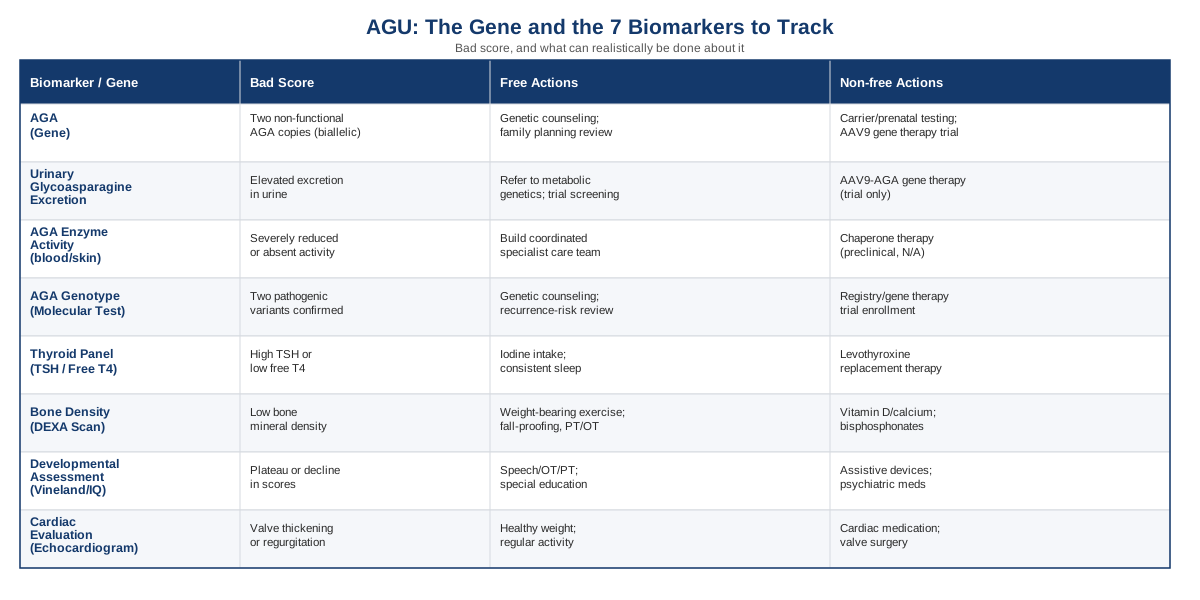
The 7 Biomarkers Worth Tracking in Aspartylglucosaminuria
AGU is diagnosed once, but it is managed for a lifetime. Because the underlying enzyme deficiency does not change, "tracking" here means something different than it does for a condition like insulin resistance: you are not trying to reverse a number back to normal, you are trying to catch complications early, time interventions correctly, and understand where the disease is in its known trajectory. The seven biomarkers below are the ones with the clearest clinical utility, drawn from the GeneReviews clinical summary and the published natural history literature on AGU.
1. Urinary Glycoasparagine (Oligosaccharide) Excretion
This is the biochemical signature of AGU. Because the AGA enzyme cannot break down glycoasparagines properly, these partially degraded compounds spill into the urine in elevated amounts. It was one of the original ways AGU was identified as a distinct disorder, and it remains useful for confirming a diagnosis and, in some research settings, for tracking substrate burden over time.
How to measure it
This is done through a quantitative urine oligosaccharide screen, usually run at a specialized metabolic or biochemical genetics laboratory rather than a standard hospital lab. Cost typically runs from roughly 150 to 400 US dollars depending on the country and whether it is billed as a stand-alone test or part of a broader metabolic panel, and insurance coverage varies widely for genetic-metabolic testing.
If the score is bad, the plan without supplements
There is no lifestyle intervention that lowers glycoasparagine excretion, because the excretion reflects the underlying enzyme deficiency itself rather than diet or activity. The practical non-supplement step is to use an elevated or rising level, alongside clinical symptoms, as a trigger for a referral to a metabolic genetics specialist and, where available, screening for eligibility in a natural history study or clinical trial, since these substrate levels are a common outcome measure researchers use to judge whether an experimental therapy is working.
If the score is bad, the plan with supplements or equipment
No supplement or over-the-counter compound has been shown to reduce glycoasparagine buildup in humans. The only intervention aimed at the root biochemistry is investigational: an adeno-associated virus (AAV9) gene therapy delivering a functional copy of AGA, which has shown substrate clearance and neurological benefit in animal models and is now entering early-phase human study under an open-label trial framework. This is not something to pursue outside of a formal clinical trial, and families interested should ask their metabolic genetics team about current trial eligibility rather than seeking it independently.
2. Leukocyte or Fibroblast AGA Enzyme Activity
This test measures how much of the aspartylglucosaminidase enzyme is actually working, directly, in white blood cells or skin fibroblasts. It is the most direct biochemical confirmation of AGU and is used both for diagnosis and, in carriers, to distinguish a carrier (roughly half-normal activity, no disease) from an affected individual (severely reduced or absent activity).
How to measure it
A blood draw (for leukocytes) or a small skin biopsy (for fibroblast culture) is sent to a specialized enzymology lab. Turnaround is typically two to four weeks, and cost usually falls between 200 and 500 US dollars, though it is frequently bundled with broader lysosomal enzyme panels when a storage disorder is suspected clinically.
If the score is bad, the plan without supplements
Confirmed low enzyme activity should trigger a full baseline work-up, not repeated retesting of the enzyme itself, since activity levels do not meaningfully fluctuate with lifestyle changes. The useful non-pharmacological step is establishing a care team early: pediatric or adult metabolic genetics, developmental pediatrics or neurology, endocrinology, and orthopedics, so that the other six biomarkers below are tracked on a coordinated schedule rather than reactively.
If the score is bad, the plan with supplements or equipment
Small-molecule pharmacological chaperone compounds designed to stabilize misfolded AGA protein and partially restore activity have been identified in laboratory screening studies, but these remain preclinical and are not available as treatments. There is no supplement that increases native enzyme activity. Families should be cautious of any product marketed as supporting "lysosomal enzyme function" for AGU specifically, since none has controlled human evidence behind it.
3. AGA Genotype (Molecular Testing)
Knowing exactly which two AGA variants a person carries (one from each parent) helps predict disease course to some degree, since some mutations are associated with a somewhat milder or more severe trajectory, and is essential for accurate carrier testing in siblings and future family planning.
How to measure it
This is a single blood or saliva sample sent for AGA gene sequencing, either as a stand-alone test or as part of a broader lysosomal storage disease or intellectual disability gene panel. Cost ranges from around 250 to 1,000 US dollars for targeted single-gene sequencing, though panel-based testing bundled with other genes is sometimes similarly priced.
If the score is bad, the plan without supplements
There is nothing to "fix" about a genotype, but there is a lot to do with the information. The practical step is genetic counseling for parents and adult siblings, to clarify carrier status, recurrence risk for future pregnancies (25 percent for two carrier parents), and whether prenatal or preimplantation testing is relevant for the family going forward.
If the score is bad, the plan with supplements or equipment
Not applicable in the traditional sense, since genotype is fixed at conception. The closest equivalent is enrolling in a patient registry or natural history study connected to a specific mutation, which is how eligibility for the current AAV9-AGA gene therapy trial and any future studies is typically determined.
4. Thyroid Panel (TSH and Free T4)
Hypothyroidism is reported at higher-than-background rates in individuals with AGU, and because early hypothyroidism can worsen fatigue, weight gain, and cognitive slowing, it is one of the more useful biomarkers to check regularly since, unlike the enzyme deficiency itself, it is fully and easily treatable.
How to measure it
A standard blood draw for thyroid-stimulating hormone and free T4, available at any primary care or endocrinology office, costs roughly 30 to 100 US dollars and is widely covered by insurance. Annual screening is a reasonable default, with more frequent checks if levels are borderline.
If the score is bad, the plan without supplements
Adequate iodine intake through diet, consistent sleep, and avoiding unnecessary goitrogenic supplement megadoses (very high-dose biotin, for instance, can also interfere with thyroid lab accuracy) are sensible general steps, but they will not correct clinical hypothyroidism if it is present.
If the score is bad, the plan with supplements or equipment
Confirmed hypothyroidism is treated with standard levothyroxine replacement, dosed and monitored by an endocrinologist, typically rechecked six to eight weeks after any dose change and then every six to twelve months once stable. This is a well-established, low-risk treatment; the main side effects to watch for are symptoms of over-replacement (palpitations, insomnia, anxiety) if the dose runs too high.
5. Bone Mineral Density (DEXA Scan)
Osteoporosis and progressive skeletal changes, including vertebral and rib cage abnormalities, joint contractures, and reduced bone density, are well documented in adolescents and adults with AGU, making fracture risk a real and manageable concern rather than a minor side note.
How to measure it
A DEXA (dual-energy X-ray absorptiometry) scan is a low-radiation imaging test available at most hospital radiology or endocrinology departments, costing roughly 100 to 300 US dollars out of pocket where not covered by insurance. Baseline scanning in later childhood or adolescence, then every one to two years, is a reasonable schedule to discuss with the care team.
If the score is bad, the plan without supplements
Regular weight-bearing physical activity adapted to the person's motor and cognitive abilities, fall-proofing the home environment, and physical or occupational therapy to maintain joint range of motion are all evidence-supported, low-risk steps for bone and musculoskeletal health in populations with mobility or developmental limitations.
If the score is bad, the plan with supplements or equipment
Vitamin D and calcium supplementation is commonly used when levels or intake are low, typically dosed per standard pediatric or adult guidelines and rechecked via a blood vitamin D level every six to twelve months; excess vitamin D supplementation carries a real risk of hypercalcemia, so dosing should be guided by lab values rather than fixed indefinitely. In more significant osteoporosis, a physician may consider bisphosphonate therapy, which requires monitoring by an endocrinologist or bone specialist given potential side effects on the jaw and long bones with prolonged use. Bracing or mobility equipment (orthotics, walkers) may also be recommended by physical therapy for joint or gait issues.
6. Standardized Developmental and Adaptive Functioning Assessment
Cognitive and adaptive function in AGU typically follow a distinctive pattern: relatively normal early development followed by a plateau and gradual decline, often with behavioral changes that shift from hyperactivity in early childhood to anxiety in adolescence and apathy in adulthood. Tracking this formally, rather than relying on subjective impressions, is one of the most clinically useful things a family can do.
How to measure it
Standardized tools such as the Vineland Adaptive Behavior Scales or an age-appropriate IQ or developmental battery are administered by a psychologist or developmental pediatrician, typically costing 300 to 1,500 US dollars per assessment depending on scope, though many are covered through early intervention or school-based services in some countries. Repeating this every one to two years creates a trend line that is far more informative than any single score.
If the score is bad, the plan without supplements
Early and consistent speech therapy, occupational therapy, physical therapy, and individualized special education support are the best-documented interventions for maximizing functional skills in AGU and other lysosomal storage disorders with developmental involvement. Structured routines and behavioral support strategies also help manage the hyperactivity and anxiety patterns commonly reported.
If the score is bad, the plan with supplements or equipment
There is no supplement shown to slow cognitive decline in AGU. Assistive communication devices, adaptive classroom equipment, and, where behavioral symptoms are significant, standard psychiatric medications (for anxiety, attention, or mood, prescribed and monitored by a psychiatrist familiar with intellectual disability) are the realistic tools available, used to manage symptoms and support functioning rather than to alter the disease course itself.
7. Cardiac Evaluation (Echocardiogram)
Mild cardiac valve thickening or regurgitation has been reported in some individuals with AGU, consistent with the broader pattern seen in lysosomal storage disorders where glycoconjugate accumulation can affect connective tissue in heart valves over time.
How to measure it
An echocardiogram is a non-invasive ultrasound of the heart, available through cardiology, costing roughly 200 to 800 US dollars depending on setting and country. A baseline study around the time of diagnosis, with follow-up every two to three years or sooner if a murmur or symptoms develop, is a reasonable approach to discuss with a cardiologist.
If the score is bad, the plan without supplements
Routine cardiovascular health measures, maintaining a healthy weight, staying active within the person's physical capacity, and avoiding smoking exposure, support general heart health but do not reverse valve changes already present. Regular follow-up imaging to watch for progression is the main non-pharmacological tool.
If the score is bad, the plan with supplements or equipment
Significant valve regurgitation may be managed with standard cardiology medications or, in more advanced cases, surgical valve repair, decisions made individually with a cardiologist based on severity. There is no supplement or device shown to reverse lysosomal valve involvement; the value of monitoring is catching progression early enough to plan intervention calmly rather than urgently.
What the AGA Gene Actually Does
Understanding the biomarkers above only goes so far without understanding the single gene behind all of them. AGU is caused by biallelic (two-copy) pathogenic variants in AGA, located on chromosome 4, which encodes the enzyme aspartylglucosaminidase. This enzyme normally works inside the lysosome, the cell's recycling center, to cleave the bond between asparagine and its attached sugar chain during the final steps of glycoprotein breakdown. When both copies of AGA are non-functional, that last step cannot happen, and partially degraded glycoasparagines accumulate progressively inside cells throughout the body, most consequentially in the brain.
It is worth being precise about what kind of genetics this is, because it is fundamentally different from the genetics most people encounter in consumer DNA testing. The polygenic risk scores popularized by researchers like Ali Torkamani, and the common, high-frequency variant panels popularized in podcasts and testing services associated with figures like Gary Brecka, are built around combining many small-effect, common variants (in genes tied to methylation, lipid metabolism, or inflammation, for example) to estimate risk for common adult-onset conditions. AGU is the opposite kind of genetic finding: a single, rare, high-impact, recessive variant pair that causes a defined disease rather than nudging a probability. There is no "supporting the AGA pathway" the way one might support MTHFR-related methylation with B vitamins; either the enzyme works or it does not, and no lifestyle or supplement input changes that arithmetic.
Genotype and Disease Severity
Over 30 different pathogenic AGA variants have been described. The specific mutation "AGU Fin major," a founder variant common in the Finnish population where AGU has its highest documented prevalence, has been studied extensively enough to have a reasonably well-characterized natural history. Some genotype-phenotype correlation exists, meaning certain variant combinations tend to track with somewhat earlier or later onset of specific features, but there is meaningful variability even among people with identical genotypes, which is why clinical monitoring through the biomarkers above matters more than genotype alone for day-to-day management decisions.
Carrier Testing and Family Planning
Because AGU is autosomal recessive, parents of an affected child are, by definition, both carriers, each with one normal and one non-functional AGA copy and no symptoms themselves. Full siblings of an affected individual have a 25 percent chance of being affected, a 50 percent chance of being a carrier, and a 25 percent chance of carrying two normal copies. Genetic counseling is the appropriate venue for discussing carrier testing for siblings, reproductive options for parents considering future pregnancies (including prenatal diagnosis or preimplantation genetic testing once the family's specific variants are known), and population screening relevance in communities with higher carrier frequency.
Where Correction Research Actually Stands
Two research directions are worth knowing about, both still early. The first is gene replacement therapy: an AAV9 vector carrying a functional AGA gene has shown substrate clearance, preserved cerebellar neurons, and improved motor function in the mouse model of AGU, and a first-in-human open-label Phase 1/2 study (registered as evaluating "DANAGALEX," scAAV9/AGA) is now moving toward recruitment. The second is pharmacological chaperone therapy, small molecules designed to bind and stabilize misfolded but partially functional AGA protein so more of it survives to reach the lysosome; candidate compounds have been identified in cell-based screens but have not yet reached human testing. Neither approach is available outside formal research studies today, and families should treat any product claiming to "support" or "boost" AGA function outside of these regulated trials with real skepticism.
GeneReviews: Aspartylglucosaminuria is the most complete, physician-oriented clinical reference on the condition and a good document to bring to specialist appointments. The original review of the condition's biochemistry and natural history is available as Arvio, "Aspartylglycosaminuria: a review," Orphanet Journal of Rare Diseases, and a more recent cross-sectional natural history study quantifying disease progression across the lifespan is available at "A cross-sectional natural history study of aspartylglucosaminuria".
Ten Lessons From The Story of Building a Cure From Scratch
There is no popular book written specifically about aspartylglucosaminuria, but there is one about a strikingly similar situation that many AGU families find genuinely useful: The Cure by journalist Geeta Anand, the true story of John and Aileen Crowley, whose two children were diagnosed with Pompe disease, another fatal lysosomal storage disorder with no treatment at the time. John Crowley left his job to help build a biotech company from nothing in order to develop an enzyme replacement therapy, work that eventually led to an approved treatment for Pompe disease. It later became the film Extraordinary Measures. The book is not a medical manual, but it is one of the more accurate portraits available of what it actually takes, scientifically, financially, and emotionally, to move a rare lysosomal disease from "no treatment exists" to "a treatment exists," and several of its lessons map directly onto where AGU research stands today.
1. A Diagnosis Without a Treatment Is Still Actionable Information
The Crowleys did not wait passively after diagnosis; they used the diagnosis to change what they monitored, who was on the care team, and which research programs they engaged with. For AGU families, this looks like establishing the biomarker monitoring schedule described earlier well before any new therapy is available.
2. Natural History Data Is the Foundation Everything Else Is Built On
Before any experimental therapy can be tested meaningfully, researchers need a clear picture of how the untreated disease normally progresses. The AGU natural history study referenced above exists for exactly this reason, and participating in registries or natural history studies, even without receiving an experimental treatment, directly supports the research pipeline.
3. Small Patient Populations Require Different Research Strategies
Because so few people have Pompe disease, or AGU, standard large-scale randomized trials are often impractical; researchers instead rely on smaller open-label studies, careful natural history comparisons, and international collaboration across the handful of centers with expertise.
4. Advocacy and Fundraising Genuinely Move Timelines
The book documents, in granular detail, how patient and family advocacy accelerated laboratory work that might otherwise have taken far longer. This does not mean every family needs to found a company, but connecting with existing AGU-specific patient organizations amplifies research funding and awareness disproportionately relative to the size of the community.
5. Enzyme Replacement Is Not the Only Path, and Not Always the Final One
Pompe disease's story moved from enzyme replacement therapy toward gene therapy research over time; AGU's research path is following a similar arc, moving directly toward gene replacement (the AAV9/AGA program) partly because of lessons learned from earlier lysosomal disease programs.
6. Clinical Trial Access Is Often the Real Bottleneck
Even once a therapy candidate exists, geography, trial site location, and eligibility criteria determine who can access it first. Families benefit from establishing a relationship with a metabolic genetics center connected to international AGU research networks well before a trial opens for enrollment.
7. The Emotional Toll on Caregivers Is a Clinical Variable, Not a Footnote
The book is candid about the marriage strain, financial stress, and burnout the Crowleys experienced, which is echoed in caregiver research across rare pediatric diseases. This is directly relevant to the mindfulness and relaxation approaches discussed in the next section.
8. Scientific Skepticism Toward Families Is Common and Should Be Anticipated
Crowley encountered repeated professional doubt about a father with no scientific background pushing research forward. AGU families navigating specialists unfamiliar with the condition can expect a similar initial skepticism and benefit from arriving prepared with the GeneReviews summary and natural history literature.
9. Regulatory Pathways for Rare Diseases Exist and Can Be Used
Orphan drug designations and related regulatory incentives, central to how Pompe disease's treatment was eventually approved, are the same mechanisms supporting the current AGU gene therapy program's path through early trials.
10. Hope and Realism Are Not Opposites
The most quoted lesson from the book is that the Crowleys never pretended a cure was guaranteed, but they also never treated the absence of one as a reason to stop pursuing better information and better care in the meantime. That balance is the same one this article has tried to hold throughout.
Supportive Approaches Worth Considering
None of the following changes the underlying enzyme deficiency, and none has been studied specifically in AGU populations, since the condition is too rare for dedicated trials of supportive therapies to exist. What they do have is real evidence in closely related contexts, developmental disability, caregiver burden in rare pediatric disease, and behavioral symptom management, that make them reasonable, low-risk additions to a care plan rather than replacements for medical monitoring.
Music Therapy
Music therapy is a structured, therapist-led use of musical interaction to support communication, emotional regulation, and behavior, and it is relevant to AGU because of the hyperactivity, anxiety, and communication difficulties commonly reported across the condition's course. It is one of the more evidence-supported non-pharmacological interventions in the broader intellectual and developmental disability population, rather than being AGU-specific.
A commonly used protocol involves structured, regular sessions (often weekly) combining active music-making and receptive listening tailored to the individual's developmental level; a Cochrane systematic review of music therapy for people with intellectual disabilities found evidence of benefit for communication skills and social behavior, though the review also notes study quality varies and effect sizes are modest.
In practice, this means seeking a board-certified music therapist experienced with intellectual and developmental disabilities, starting with a weekly session and adjusting frequency based on engagement, and treating it as a complement to speech and occupational therapy rather than a substitute. There are no meaningful side effects, though sessions should be paced to the individual's sensory tolerance.
Massage Therapy
Massage therapy is relevant here because of the joint stiffness, contractures, and general musculoskeletal discomfort that develop in AGU, particularly in adolescence and adulthood, alongside its general role in reducing muscle tension and anxiety in people with limited verbal ability to describe discomfort.
Evidence specific to lysosomal storage disorders is limited, but massage and manual therapy protocols used in cerebral palsy and other neurodevelopmental conditions with joint contractures, typically 20 to 30 minute sessions one to two times weekly, have shown modest improvements in range of motion and caregiver-reported comfort in small trials, and the general safety profile in non-acute musculoskeletal contexts is well established.
A reasonable approach is a trial period of weekly sessions with a licensed massage therapist or physical therapist familiar with joint contractures, reassessed after six to eight weeks for whether comfort or mobility improved, with caution around any area of recent fracture, acute inflammation, or unstable joints given the osteoporosis risk discussed earlier.
Mindfulness Meditation and MBSR for Caregivers
This one is aimed less at the person with AGU and more at parents and caregivers, whose sustained stress over years of managing a progressive rare disease is itself a well-documented health risk, echoing the caregiver burden theme raised in The Cure above.
Mindfulness-Based Stress Reduction (MBSR), an eight-week structured program combining meditation, gentle movement, and group support, has a substantial evidence base specifically in parents and caregivers of children with chronic and rare conditions, with multiple studies showing reductions in caregiver stress, anxiety, and burnout measures.
Realistically, this means looking for an MBSR program (many hospitals and rare disease centers now offer them, including virtually) rather than attempting unstructured meditation alone, committing to the full eight-week format since that is what the evidence is based on, and treating it as caregiver self-care infrastructure rather than an optional extra, since caregiver capacity directly affects the consistency of the monitoring and therapy schedule described throughout this article.
Relaxation Training and Progressive Muscle Relaxation
For the anxiety and restlessness reported in AGU, particularly the adolescent phase where anxiety and irritability commonly increase, structured relaxation training offers a low-risk, accessible behavioral tool that can be adapted to different cognitive levels.
Progressive muscle relaxation, systematically tensing and releasing muscle groups in sequence, has evidence in intellectual disability populations for reducing anxiety-related behaviors and improving sleep onset, typically taught by a psychologist or behavioral therapist and then practiced independently or with caregiver support.
A practical starting point is a few guided sessions with a therapist to adapt the technique to the individual's communication and cognitive level, then daily practice of 10 to 15 minutes, most useful in the evening if sleep difficulty is part of the picture. There are no meaningful side effects, though it works best as a consistent habit rather than an as-needed crisis tool.
Bringing It Together
Aspartylglucosaminuria is caused by one gene, but managing it well depends on tracking several different systems, thyroid, bone, heart, and cognitive and adaptive function, alongside the biochemical markers that confirm what is happening at the cellular level. None of the tools described here reverse the underlying enzyme deficiency, and being clear about that distinction matters more than sounding optimistic. What they do offer is earlier detection of treatable complications, a more informed conversation with specialists, and a realistic view of where gene therapy and chaperone research actually stand today rather than where marketing might place them.
The most useful next step is usually the simplest one: bring the list of seven biomarkers to the next specialist appointment, ask which ones have already been checked and which have not, and set a concrete schedule for the ones that are overdue. From there, connecting with an AGU-specific patient registry or natural history study, and discussing genetic counseling implications with the wider family, turns a diagnosis into an ongoing, manageable plan rather than an open-ended uncertainty.
Musculoskeletal: Bone Conditions
Neurological: Memory & Cognitive Conditions
Cardiovascular: Heart Conditions
Mental Health: Neurodevelopmental Conditions
Endocrine & Metabolic: Thyroid Conditions