This article contains AI generated content.
· UpdatedAutoimmune Hepatitis and Arthropathy: 5 Genes and 7 Biomarkers to Track
Introduction
If you're dealing with autoimmune hepatitis and joint pain at the same time, you've probably noticed that most advice treats these as two separate problems. Your hepatologist manages the liver panel. If a rheumatologist gets involved at all, they manage the joints. Neither one is entirely wrong, but neither one is looking at the whole picture: a single overactive immune system that happens to be attacking cartilage and synovium in addition to hepatocytes.
Generic advice — "reduce inflammation," "eat an anti-inflammatory diet," "manage stress" — isn't false, but it's too vague to act on. It doesn't tell you which lab values actually move the needle on your specific case, which genetic findings are meaningful versus incidental, or what a realistic, sequenced plan looks like when you already take immunosuppressive medication and can't just add supplements freely.
This article takes a narrower, more mechanical approach. It walks through the biomarkers that autoimmune hepatitis specialists and researchers actually use to track disease activity and joint involvement, what each one can and can't tell you, and how measurement and correction typically work in practice — including cost ranges, frequency, and the supplement or non-supplement paths available for each one. It also covers the genetic variants most consistently linked to autoimmune hepatitis, since understanding predisposition (even when you can't change your genes) helps you understand why monitoring matters more for some people than others.
None of this replaces your hepatologist or rheumatologist, and nothing here promises reversal or cure — autoimmune hepatitis is a lifelong condition managed, not eliminated. But better information changes the quality of the questions you bring to your next appointment, and that alone tends to produce better decisions. The sections ahead cover the biomarker panel in depth, then a shorter look at genetics, a summary of dietary research that challenges some conventional assumptions, and finally the complementary approaches with real clinical evidence behind them for autoimmune and joint-related disease.
Summary
Autoimmune hepatitis rarely stays confined to the liver. Roughly a third of patients develop extrahepatic immune activity, and joint pain — arthralgia, and sometimes frank inflammatory arthritis — is the most common of these. That overlap isn't coincidental: the same HLA and immune-regulatory genes that predispose to liver-directed autoimmunity also show up in rheumatoid arthritis and other joint-related autoimmune conditions, which is part of why the two so often travel together.
This article covers seven biomarkers worth tracking if you have autoimmune hepatitis with joint involvement — from the antibody panel that first flags the disease, to inflammatory markers that reveal how much of your joint pain is actively autoimmune versus something else, to a vitamin D pathway that turns out to be more clinically relevant here than most people realize. For each one, you'll find what it measures, what it costs, and two tracks for improving it — one using only sleep, movement, diet, and medication adherence, and one that adds supplements or equipment, with frequency, cycling, and side-effect notes.
You'll also find a concise look at the five genes most consistently tied to autoimmune hepatitis risk, a breakdown of what a well-known functional-medicine dietary protocol actually found in randomized trials, and the complementary approaches — from an elimination diet built specifically for autoimmune disease to yoga and tai chi — that have real human evidence behind them for joint symptoms. The goal throughout is specificity: not "manage inflammation," but which number, measured how, moved by what.
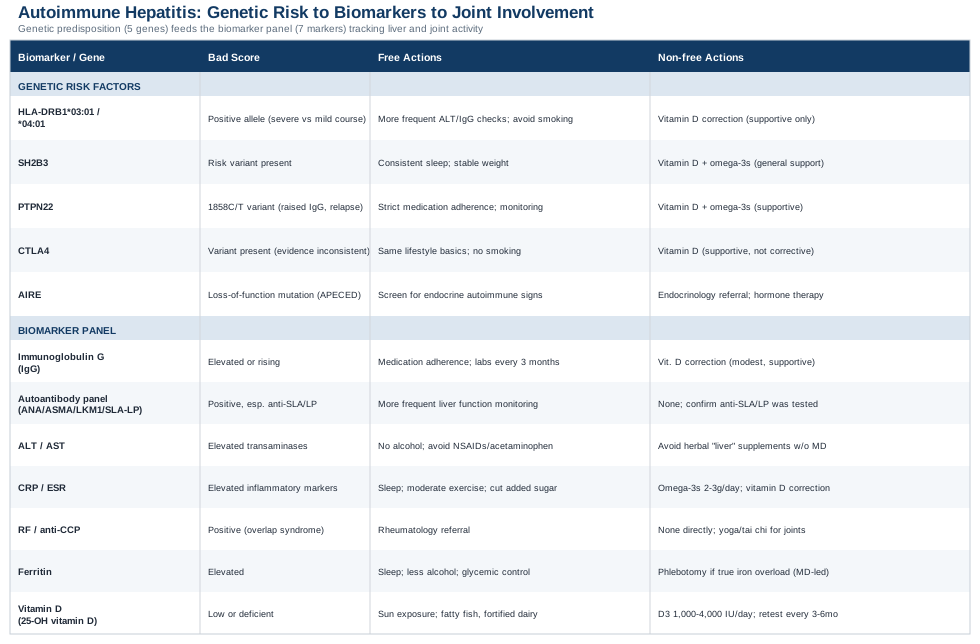
The Biomarker Panel Worth Tracking When Autoimmune Hepatitis Affects Your Joints
Autoimmune hepatitis (AIH) is typically diagnosed and monitored through a combination of autoantibodies, immunoglobulin levels, and liver enzymes. When arthropathy is part of the picture, that panel needs to expand to include markers that separate active systemic autoimmune inflammation from mechanical or unrelated joint pain. Below are the seven measurements that give the clearest, most actionable picture — ordered roughly by how central each one is to both diagnosis and day-to-day monitoring.
Two ground rules apply to every biomarker below. First, AIH is usually treated with immunosuppressants (prednisone, azathioprine, sometimes mycophenolate), and several of the "immune-boosting" supplements popular in general wellness content (echinacea, high-dose elderberry, some mushroom extracts) are inappropriate here because they can stimulate the same immune activity the medication is trying to dampen. Second, nothing below should be adjusted without your hepatologist knowing, since dose changes and supplement additions can interact with liver-metabolized drugs.
1. Immunoglobulin G (IgG)
Elevated total IgG (hypergammaglobulinemia) is one of the four pillars of the simplified diagnostic criteria for AIH, alongside autoantibodies, exclusion of viral hepatitis, and liver histology (Autoimmune hepatitis: diagnostic criteria and serological testing). Beyond diagnosis, serial IgG is one of the more useful tools for tracking treatment response — a falling IgG generally tracks with quieter disease, and failure to normalize is a signal of incomplete control.
How it's measured: a standard serum protein electrophoresis or quantitative immunoglobulin panel, drawn with routine bloodwork. Cost is low, typically $20–$60 out of pocket in the US if not covered by insurance, and it's already part of most hepatology follow-up panels.
If the score is bad — the plan without supplements: this marker moves almost entirely with disease control, not lifestyle. The realistic path is medication adherence (missed doses of azathioprine or prednisone are a common, under-reported cause of rising IgG), consistent follow-up labs every 3 months during active treatment, and addressing any concurrent infection or flare trigger, since acute immune activation elsewhere in the body can transiently raise IgG too.
If the score is bad — the plan with supplements or equipment: there isn't a supplement that meaningfully lowers IgG in AIH — this is a case where the honest answer is "this is a medication-response marker, not a lifestyle one." The one adjunct with modest supporting rationale is correcting vitamin D deficiency if present (see below), since vitamin D receptor signaling influences B-cell antibody production; the effect on IgG specifically is modest and should be viewed as supportive, not corrective.
2. The autoantibody panel (ANA, ASMA, anti-LKM1, anti-SLA/LP)
These antibodies are what distinguish AIH type 1 (ANA and/or anti-smooth muscle antibody, ASMA) from type 2 (anti-liver-kidney microsomal antibody, anti-LKM1) and identify a more specific but less common marker, anti-soluble liver antigen/liver pancreas (anti-SLA/LP), which is highly specific to AIH even when the others are negative and has been linked to more severe, relapsing disease (Meta-analysis: diagnostic accuracy of ANA, SMA, and SLA/LP antibodies in autoimmune hepatitis).
How it's measured: indirect immunofluorescence for ANA/ASMA/LKM1 and a specific immunoassay for anti-SLA/LP. Combined panel cost ranges from roughly $150–$400 depending on lab and how many antibodies are run; anti-SLA/LP testing is the more specialized and pricier component and isn't run everywhere, so it may require a reference lab.
If the score is bad — the plan without supplements: antibody titers don't reliably respond to lifestyle changes the way inflammatory markers do, so the practical value here is monitoring, not intervention. A positive anti-SLA/LP result specifically warrants more frequent liver function monitoring and a lower threshold for treatment escalation, since it's associated with a rockier disease course.
If the score is bad — the plan with supplements or equipment: none directly. The actionable step is asking whether anti-SLA/LP has ever been tested, since ANA/ASMA-negative AIH is sometimes under-diagnosed or under-treated when this antibody isn't checked.
3. Liver transaminases (ALT and AST)
ALT and AST reflect ongoing hepatocyte injury and are the most frequently repeated labs in AIH management. In the arthropathy context, they also serve a secondary purpose: distinguishing joint pain flares that coincide with a hepatitis flare (suggesting a shared systemic autoimmune surge) from joint pain that's independent of liver activity, which points toward a separate or overlapping rheumatologic process.
How it's measured: a basic metabolic or liver function panel, $10–$30, often bundled into routine bloodwork and covered by insurance as standard monitoring.
If the score is bad — the plan without supplements: strict alcohol avoidance, avoiding unnecessary acetaminophen and NSAIDs (relevant here because NSAIDs are a common reflex for joint pain but carry real hepatotoxicity risk in someone with active liver disease), maintaining a stable body weight to avoid superimposed fatty liver, and consistent medication timing.
If the score is bad — the plan with supplements or equipment: outside of physician-directed treatment adjustment, there's little a supplement can safely add here — several "liver support" supplements (high-dose milk thistle, kava, certain herbal detox blends) have documented case reports of hepatotoxicity and should generally be avoided in AIH without explicit hepatologist sign-off. Cycling is not applicable; this is a marker to trend continuously, typically every 4–12 weeks depending on disease stability.
4. C-reactive protein (CRP) and erythrocyte sedimentation rate (ESR)
CRP and ESR are non-specific inflammatory markers, but in someone with AIH and joint symptoms they're useful precisely because of that non-specificity: a rise in both alongside joint swelling suggests active systemic inflammation, while normal inflammatory markers with persistent joint pain point more toward non-inflammatory causes (steroid-related osteopenia, mechanical strain, fibromyalgia-type pain, which is common in chronic autoimmune disease). Rheumatologic manifestations, arthralgia foremost among them, are reported in a substantial share of AIH patients and can sometimes precede or mask the liver diagnosis entirely (Rheumatologic manifestations of hepatic diseases).
How it's measured: both are simple blood draws; CRP costs roughly $15–$40, ESR roughly $10–$25. High-sensitivity CRP (hs-CRP), the version used more in cardiovascular risk assessment, is a reasonable substitute if standard CRP is unavailable.
If the score is bad — the plan without supplements: prioritizing sleep (short sleep duration reliably raises CRP in observational studies), regular low-to-moderate intensity movement rather than high-intensity training during active flares, and reducing ultra-processed food and added sugar intake, which are consistently associated with higher CRP independent of weight.
If the score is bad — the plan with supplements or equipment: omega-3 fatty acids (EPA/DHA, roughly 2–3g/day combined) have the most consistent evidence for modestly lowering CRP and have been studied specifically in rheumatoid arthritis for joint symptom relief; a reasonable approach is 8–12 weeks on, reassessing CRP, with a brief pause if any GI upset or bruising develops, and caution around dose if already on any blood-thinning medication. Vitamin D correction (below) also modestly lowers CRP in deficient individuals. Avoid turmeric/curcumin at high doses without discussing it with your hepatologist first — it's generally well tolerated but has rare case reports of liver injury at high supplemental doses, which matters more here than in the general population.
5. Rheumatoid factor (RF) and anti-CCP antibodies
These are the standard markers used to identify rheumatoid arthritis, and they matter in AIH because the two conditions share genetic and immunologic overlap — autoimmune liver disease is more common in people with rheumatoid arthritis and vice versa, and some of that connection appears to be genetically mediated rather than coincidental (Autoimmune liver diseases and rheumatoid arthritis — is there an etiopathogenic link?). A positive RF or anti-CCP in someone with AIH and joint pain changes management, since it suggests a true overlap syndrome that may need rheumatology co-management rather than joint pain being treated as a simple AIH extrahepatic symptom.
How it's measured: RF is a standard blood test, $20–$50; anti-CCP is more specific for rheumatoid arthritis and somewhat pricier, $50–$100. Anti-CCP is the more decision-relevant of the two since it's more specific and less prone to false positives from AIH-related hypergammaglobulinemia alone.
If the score is bad — the plan without supplements: this is not a lifestyle-modifiable marker — a positive result is a referral trigger, not a target for diet or exercise correction. The practical action is getting a rheumatology evaluation rather than attempting to "fix" the number.
If the score is bad — the plan with supplements or equipment: none meaningfully change antibody positivity. Once a rheumatology diagnosis is confirmed or excluded, the joint-symptom-focused approaches in the complementary section below (yoga, tai chi) become relevant regardless of the antibody result.
6. Ferritin
Ferritin behaves as an acute-phase reactant in AIH, and elevated levels combined with high IgG have been used to build a treatment-response score that predicts biochemical remission (Hyperferritinemia and hypergammaglobulinemia predict treatment response in autoimmune hepatitis). Its relationship to liver fibrosis is less settled — one cohort linked higher ferritin to more advanced fibrosis, while a separate German cohort could not replicate that specific finding (No association of serum ferritin with advanced fibrosis in untreated autoimmune hepatitis), so it's best read as a general inflammation and treatment-response marker rather than a precise fibrosis predictor.
How it's measured: a standard serum ferritin blood test, $20–$45. It should always be interpreted alongside transferrin saturation, since isolated high ferritin can also reflect iron overload rather than inflammation, and the two require different responses.
If the score is bad — the plan without supplements: if elevated ferritin is inflammatory rather than iron-overload related, the same anti-inflammatory basics apply — sleep, reduced alcohol, and stable glycemic control, since insulin resistance also raises ferritin independent of iron status.
If the score is bad — the plan with supplements or equipment: if transferrin saturation confirms true iron overload rather than inflammatory elevation, therapeutic phlebotomy (not a supplement, but a procedure, typically done every 1–2 weeks until ferritin normalizes, then quarterly maintenance) is the standard intervention — this should be physician-supervised, since AIH patients can have coexisting anemia from disease or medication that makes phlebotomy inappropriate. Iron supplementation should obviously be avoided in this scenario. If ferritin is high due to inflammation rather than iron, omega-3s and vitamin D correction (above) are the same relevant levers.
7. Vitamin D (25-hydroxyvitamin D)
This is arguably the most actionable biomarker on this list. Vitamin D deficiency is disproportionately common in AIH, and severe deficiency has been specifically associated with treatment non-response and worse liver-related outcomes, likely through its role in regulatory T-cell function and glucocorticoid sensitivity (The role of vitamin D in autoimmune hepatitis). Given vitamin D's independent role in joint and bone health — especially relevant for anyone on long-term corticosteroids, which accelerate bone loss — this is a marker that serves both the liver and joint sides of this condition at once.
How it's measured: a 25-hydroxyvitamin D blood test, $40–$75, though many insurance plans cover it for patients on chronic steroids or with documented autoimmune disease.
If the score is bad — the plan without supplements: 15–20 minutes of midday sun exposure on bare skin several times a week where climate allows (though this is unreliable in winter or higher latitudes and shouldn't be the sole strategy), and increasing dietary sources like fatty fish and fortified dairy — though diet alone rarely corrects a true deficiency.
If the score is bad — the plan with supplements or equipment: vitamin D3 supplementation is the standard correction, typically 1,000–4,000 IU/day for maintenance or a physician-directed higher repletion dose (e.g., 50,000 IU weekly for 6–8 weeks) if levels are severely low, followed by retesting at 3 months. Vitamin D is fat-soluble and can accumulate, so it should not be taken indefinitely at high doses without retesting — this is one of the few supplements here where over-supplementation (hypercalcemia, kidney stones) is a real if uncommon risk, so annual or semi-annual level checks once stable are reasonable rather than continuous escalation. Since AIH patients are often on corticosteroids that already affect calcium metabolism and bone density, pairing vitamin D correction with a bone density (DEXA) conversation is worthwhile rather than treating it purely as an immune marker.
Putting the panel together
No single marker above tells the whole story, and that's the point of tracking several together. IgG and the autoantibody panel establish and confirm the diagnosis; ALT/AST track ongoing liver injury; CRP, ESR, RF, and anti-CCP separate autoimmune joint inflammation from other causes of joint pain; ferritin and vitamin D round out the picture with modifiable inflammatory and immune-regulatory context. A reasonable cadence for someone with stable, treated AIH and joint involvement is a full panel every 3 months, with ALT/AST checked more frequently if medication doses have recently changed. Bring the pattern, not just individual numbers, to your hepatology and rheumatology appointments — a rising CRP alongside stable IgG tells a different story than both rising together.
Genetics can add useful context to why this particular biomarker pattern shows up in the first place, even though the genes themselves aren't something you act on directly.
What the Genetics Say About Autoimmune Hepatitis Risk
Genetic research into AIH is far less mature than the genetics of, say, cardiovascular disease — researchers like Ali Torkamani, whose work on polygenic risk scoring has shaped how clinicians think about actionable genetic information, and clinicians like Gary Brecka, who popularized functional genetic panels in a wellness context, both emphasize the same caveat that applies here: a genetic finding is a probability shift, not a diagnosis, and it's most useful when paired with the biomarkers that reflect what's actually happening in your body right now. The five variants below are the ones with the most consistent human evidence in AIH specifically.
HLA-DRB1*03:01 and HLA-DRB1*04:01
These are the two strongest and most reproducible genetic risk factors for type 1 AIH, identified in a genome-wide association study of nearly 650 adult patients: DRB1*03:01 as the primary risk genotype and DRB1*04:01 as a secondary one, with carriers of *03:01 tending toward more severe, treatment-resistant disease and *04:01 carriers tending toward a milder, more treatment-responsive course (Genome-wide association study identifies variants associated with autoimmune hepatitis type 1). These are HLA class II genes, meaning they shape how your immune system presents self-antigens to T-cells — carrying one doesn't cause AIH on its own, but it does raise susceptibility and shift the expected disease course.
SH2B3
Identified in the same genome-wide study, SH2B3 (also known as LNK) is involved in regulating cytokine signaling in immune cells. Variants here are also linked to other autoimmune and inflammatory conditions, including celiac disease and type 1 diabetes, which fits the broader pattern of AIH sharing genetic architecture with other autoimmune diseases rather than having an entirely liver-specific genetic cause.
PTPN22
The PTPN22 1858C/T variant is one of the more widely replicated autoimmune susceptibility genes across multiple conditions, and it's been specifically associated with AIH susceptibility, higher IgG levels, cirrhosis, and treatment relapse in pediatric Chinese cohorts (Association of STAT4 and PTPN22 polymorphisms with type-1 autoimmune hepatitis susceptibility in Chinese Han children). Mechanistically, this variant reduces the efficiency of a phosphatase that normally dampens T-cell receptor signaling, tilting the immune system toward less effective self-tolerance.
CTLA4
CTLA4 is a T-cell checkpoint gene, and it's a good example of why single-study genetic findings need to be read cautiously: some studies have found an association between CTLA4 polymorphisms and AIH susceptibility, while others — including work looking at the same Venezuelan cohort where PTPN22 showed a strong signal — found no significant CTLA4 association at all. The honest summary is that CTLA4's role in AIH is plausible on biological grounds (it's a well-established autoimmune risk gene elsewhere) but inconsistent in AIH-specific data so far.
AIRE
AIRE mutations are the rare but mechanistically clearest entry on this list. Loss-of-function mutations in AIRE cause APECED (autoimmune polyendocrinopathy-candidiasis-ectodermal dystrophy), a monogenic syndrome in which autoimmune hepatitis is a recognized and sometimes severe complication, occurring alongside other autoimmune endocrine and non-endocrine manifestations (Analysis of a series of Italian APECED patients with autoimmune hepatitis and gastro-enteropathies). This is not a common cause of typical AIH, but it's clinically important in patients who develop AIH alongside other autoimmune endocrine conditions (adrenal insufficiency, hypoparathyroidism, chronic candidiasis) at a young age, where AIRE testing can explain an otherwise puzzling multi-system picture.
If the gene is "bad" — the plan without supplements
None of these variants can be edited, and there's no lifestyle intervention that reverses an HLA or PTPN22 genotype. What you can influence is the downstream environment those genes operate in: consistent sleep (poor sleep measurably impairs regulatory T-cell function), avoiding smoking (an established environmental trigger that interacts with autoimmune genetic risk broadly), maintaining a stable weight to avoid additive metabolic-inflammatory stress on the liver, and — most concretely — treating a "bad" genetic result as a reason for more frequent biomarker monitoring rather than a reason for alarm. Someone carrying HLA-DRB1*03:01, for instance, has a reasonable case for slightly more frequent ALT/AST and IgG checks given the association with a rockier disease course.
If the gene is "bad" — the plan with supplements or equipment
There is no supplement that compensates for an HLA or PTPN22 risk variant directly. The closest thing to an actionable lever is correcting vitamin D deficiency, since vitamin D receptor signaling intersects with several of these same immune-regulatory pathways (regulatory T-cell expansion, cytokine balance) — the dosing and monitoring approach is identical to the vitamin D biomarker plan above (1,000–4,000 IU/day maintenance, retesting every 3–6 months, avoiding indefinite high-dose use). Omega-3s carry the same modest, general anti-inflammatory rationale. Neither should be framed as "fixing" the gene — they support the general immune-regulatory terrain the gene operates in, which is a meaningfully smaller claim.
What genetics can't tell you
A negative result on all five variants doesn't rule out AIH, and a positive result doesn't guarantee it — these are population-level risk markers, not diagnostic tests, and none of them are part of standard AIH diagnostic criteria today. Their real value is contextual: explaining why AIH clusters with certain other autoimmune conditions in the same person or family, and occasionally explaining an atypical case (as with AIRE and APECED) that biomarkers alone wouldn't catch. For day-to-day management, the biomarker panel above will always tell you more about where you stand right now than any genetic report will.
Genetic predisposition and blood biomarkers describe the mechanism; the next section looks at what happens when a specific, heavily researched dietary framework is applied to autoimmune disease more broadly.
Ten Things Worth Knowing From The Wahls Protocol
Dr. Terry Wahls, a physician who developed secondary-progressive multiple sclerosis, built and later tested a nutrient-dense, elimination-style diet on herself before it became the subject of NIH-funded clinical trials. It's not written for autoimmune hepatitis specifically, but its core thesis — that mitochondrial and nutrient status meaningfully influence autoimmune disease severity, and that this can be tested rather than assumed — is directly relevant to anyone managing a chronic autoimmune condition with a diet-modifiable inflammatory component. The most rigorous test of her framework, the WAVES trial, randomized 87 people with relapsing-remitting MS to either the Wahls diet or the low-fat Swank diet and followed them for 24 weeks (Impact of the Swank and Wahls elimination dietary interventions on fatigue and quality of life in relapsing-remitting multiple sclerosis: the WAVES trial). Here are the ten most useful takeaways from that body of work.
1. Both tested diets improved fatigue meaningfully
Both the Wahls and Swank arms showed statistically significant, clinically meaningful reductions in fatigue scores by 12 weeks, despite being fairly different diets — one paleo-style and nutrient-dense, one low-fat. This is a useful challenge to the idea that there's one "correct" autoimmune diet; consistent structure and elimination of processed food may matter more than the specific macronutrient framework.2. Quality of life improved alongside fatigue
Physical quality-of-life scores rose in both groups, with a numerically larger improvement in the Wahls arm. Quality-of-life improvement tracking alongside, rather than independent of, fatigue reduction supports the idea that fatigue is a major driver of functional impairment in chronic autoimmune disease generally, not just MS.3. The effects held up over time, not just short-term
Improvements were sustained through the 24-week mark, not just the initial 12-week intervention-support period, suggesting the benefit isn't purely a placebo or novelty effect from close dietitian contact early on.4. Functional disability also improved, not just subjective fatigue
A secondary analysis found both diets reduced measurable functional disability, and that this reduction was statistically mediated by the drop in fatigue — meaning fatigue reduction wasn't just a feel-better side effect, it tracked with objectively measurable functional gains.5. Metabolic markers improved and correlated with symptom relief
A secondary analysis linked improvements in metabolic risk factors (relevant to systemic inflammation) with perceived fatigue reduction, reinforcing the idea that diet-driven metabolic change, not just subjective dietary satisfaction, underlies some of the benefit.6. Micronutrient intake shifted substantially on both diets
Weighed food record analysis showed real, sustained changes in micronutrient intake on both diets — this matters because it demonstrates people can actually adhere to a structured elimination diet over months, not just for a two-week trial period, which is often the bigger practical obstacle than the diet's theoretical merits.7. Neither diet was without nutritional trade-offs
Secondary analyses looking at homocysteine, folate, and B12 status found shifts that varied by diet type, underscoring that elimination diets aren't nutritionally "free" — they require some monitoring of what's being cut out, not just what's being added.8. The core mechanism Wahls proposes is mitochondrial support, not just anti-inflammation
Her broader framework argues chronic autoimmune disease involves impaired cellular energy production, not just immune dysregulation, and that nutrient density (specifically B vitamins, sulfur-containing vegetables, and omega-3s) supports mitochondrial function as a distinct lever from anti-inflammatory effects. This is a more mechanistically specific claim than most "anti-inflammatory diet" advice, though it remains less rigorously proven than the fatigue/quality-of-life outcomes above.9. This is fatigue and functional evidence in MS, not liver-outcome evidence in AIH
It's worth being direct about the limits here: none of this trial evidence was collected in autoimmune hepatitis patients, and no outcome measured liver enzymes, IgG, or hepatic fibrosis. The relevance to AIH is indirect — shared autoimmune mechanism and shared fatigue burden — not a validated AIH-specific dietary treatment.10. Structured dietary change appears more feasible, and more impactful, than commonly assumed
Perhaps the most transferable lesson isn't the specific food list — it's that a structured, dietitian-supported elimination approach produced adherence and measurable benefit over six months in a genuinely difficult chronic autoimmune population, which is a reasonable case for discussing structured dietary support (not necessarily this exact protocol) with your own care team rather than assuming diet is a minor factor.The dietary framework above overlaps meaningfully with an elimination approach designed specifically for autoimmune disease, which is where the next section picks up.
Complementary Approaches With Real Evidence Behind Them
The following approaches aren't substitutes for immunosuppressive treatment, and none of them will independently reverse liver damage or joint erosion. They're included because each has meaningful human evidence, either in autoimmune hepatitis directly or in the closely related autoimmune joint disease that so often overlaps with it, and because they're realistic to layer onto standard care.
The Autoimmune Protocol
The Autoimmune Protocol (AIP), developed by Sarah Ballantyne, is a structured elimination diet that removes grains, legumes, dairy, nightshades, eggs, nuts, seeds, refined sugar, and food additives, with the stated goal of reducing gut-driven immune activation in autoimmune disease before gradually reintroducing foods to identify individual triggers. It's relevant here because AIH is, by definition, an autoimmune condition with a joint-inflammation component, and the protocol's core premise — that certain foods provoke immune activity via gut permeability and microbiome disruption — is at least mechanistically plausible for the arthralgia that accompanies AIH, even without AIH-specific trial data.
The clearest human evidence comes from a prospective study in inflammatory bowel disease, another autoimmune condition, where patients following the AIP diet for 11 weeks showed significant improvement in symptoms and quality of life, with roughly 73% achieving clinical remission by the end of the study period (Efficacy of the Autoimmune Protocol Diet for Inflammatory Bowel Disease). This is IBD evidence, not AIH or joint-specific evidence, so it should be read as supportive rather than definitive for this condition.
Realistically applying this means treating AIP as a time-limited, supervised experiment rather than a permanent restrictive diet — typically 4–6 weeks of elimination followed by systematic reintroduction, ideally with a dietitian involved given the malnutrition risk of stacking AIP on top of an already complex chronic illness, and always with liver enzyme and nutritional status monitoring, since drastic dietary shifts can affect both.
Mindfulness-Based Stress Reduction
Mindfulness-Based Stress Reduction (MBSR) is a structured 8-week meditation and body-awareness program originally developed for chronic pain, and it's relevant here because psychological stress and disease activity appear bidirectionally linked in autoimmune conditions — stress doesn't cause autoimmune disease, but it plausibly influences flare timing and pain perception, and joint pain itself is a significant source of chronic stress.
A systematic review and meta-analysis of five randomized controlled trials in rheumatoid arthritis (399 participants total) found consistent improvements in depressive symptoms, psychological distress, and self-efficacy, with more modest and inconsistent effects on pain and objective disease activity (Systematic review and meta-analysis: mindfulness-based interventions for rheumatoid arthritis). The evidence is therefore genuinely mixed — real psychological benefit, less certain physical benefit — and that distinction is worth being honest about rather than overselling.
A realistic application is an 8-week structured MBSR course (widely available in-person or via reputable apps built directly on the original curriculum), practiced most days for 20–30 minutes, treated explicitly as a coping and quality-of-life tool for the psychological burden of chronic autoimmune illness rather than a treatment expected to lower ALT or antibody titers.
Yoga
Yoga combines gentle movement, breath regulation, and postural work, and it's relevant to AIH-related arthropathy specifically because it addresses joint mobility and stiffness without the impact load that can aggravate an already inflamed joint.
A 2020 systematic review and meta-analysis of ten randomized controlled trials in rheumatoid arthritis (840 patients) found that yoga significantly lowered disease activity scores and improved physical function compared to usual care (Yoga for treating rheumatoid arthritis: a systematic review and meta-analysis). Again, this is rheumatoid arthritis evidence rather than AIH-specific arthropathy evidence, but the joint mechanism overlap is close enough to be a reasonable extrapolation.
Applied realistically, this means a gentle or therapeutic yoga style (not power or hot yoga, which can be excessive during a flare), 2–3 sessions a week of 30–45 minutes, led initially by an instructor experienced with inflammatory arthritis so that poses can be modified around actively swollen joints rather than pushed through them.
Tai Chi
Tai chi is a slow, low-impact martial art practiced primarily for its meditative and balance-training qualities, and it has one of the more specific evidence bases among complementary approaches for inflammatory joint disease.
A pilot randomized controlled trial found that 50% of rheumatoid arthritis patients assigned to 12 weeks of tai chi achieved an ACR20 response (a standard 20% improvement in disease activity measures) compared with 0% in the control group, alongside improvements in disability index and depression scores; a larger subsequent systematic review and meta-analysis confirmed tai chi does not exacerbate rheumatoid arthritis symptoms and produces measurable benefits in physical function, particularly lower-extremity range of motion (The effects of tai chi on physical function and safety in patients with rheumatoid arthritis: a systematic review and meta-analysis).
A realistic starting point is a beginner tai chi class (Yang-style is the most studied and gentlest form) twice weekly, building to daily short practice sessions of 15–20 minutes; because it's low-impact and self-paced, it's one of the safer complementary options to try even during a mild flare, though joint swelling severe enough to limit range of motion still warrants checking with a physical therapist before starting.
These approaches work best as a layer added to consistent medical care and regular lab monitoring, not as a replacement for either — which brings the discussion back to the practical core of this article.
Conclusion
Autoimmune hepatitis with joint involvement is genuinely a two-front condition, but it's driven by one immune system, and the biomarkers that track it — IgG, the autoantibody panel, transaminases, CRP/ESR, RF/anti-CCP, ferritin, and vitamin D — give you a far more precise view of what's actually happening than "how do you feel today." Genetics can explain why some people carry more risk or a rockier expected course, but the panel above is what you can actually act on, retest, and discuss concretely with your care team. Dietary frameworks like the Wahls approach and the Autoimmune Protocol, along with movement-based practices like yoga and tai chi, add real, evidence-backed support around the edges of medical treatment, without pretending to replace it.
The next useful step is a practical one: if you haven't had a full panel run together — not just liver enzymes, but IgG, the specific autoantibodies, inflammatory markers, and vitamin D — ask for one at your next appointment, and bring a symptom log of joint pain timing alongside it. That combination of numbers and pattern is what turns a vague sense that "something's active" into a specific, discussable plan with the people managing your care.
Musculoskeletal: Joint Conditions
Digestive: Liver & Gallbladder Conditions
Autoimmune: Inflammatory Conditions