This article contains AI generated content.
Biceps Femoris Avulsion Fracture: 6 Genes And 7 Biomarkers To Track
Introduction
A biceps femoris avulsion fracture is not just "a pulled hamstring." It means a piece of bone, usually at or near the ischial tuberosity, has been torn away along with the tendon that should be anchoring it. If you're reading this, you've probably already heard the standard advice: rest, physiotherapy, gradual loading, patience. That advice isn't wrong, but it's built for an average person, and you are not an average person — you have a specific injury, a specific healing rate, and a specific set of biological factors that generic timelines don't account for.
The frustrating part of most recovery guidance is that it treats every hamstring origin injury the same way, whether you're 15 and still growing or 35 and dealing with a tendon that has less collagen turnover than it used to. Two people with an identical MRI can heal at very different speeds, tolerate loading differently, and face different re-injury risk — and the reasons for that difference are often measurable, not mysterious.
This article looks at two separate but complementary layers of information. One is your current biology as reflected in blood biomarkers — inflammation, bone formation, collagen synthesis, and hormonal status — all of which can be tracked over time and, in several cases, improved. The other is the genetic layer: inherited variants in collagen and connective tissue genes that help explain why some people are more prone to tendon and bony avulsion injuries in the first place, and why healing capacity varies.
Neither layer offers a shortcut, and nothing here promises to reverse an avulsion fracture faster than biology allows. But better information changes decisions — what to ask your surgeon or physiotherapist, what to get tested, and where marginal, evidence-based interventions are worth the effort. The biomarker section is the more actionable of the two and is where most of the practical value in this article sits; the genetic section adds useful context on top of it.
Summary
Before you dive in: this article walks through seven blood biomarkers — vitamin D, hs-CRP, P1NP, CTX-1, IGF-1, testosterone, and creatine kinase — that reflect how well your body is actually rebuilding bone and tendon after a biceps femoris avulsion, with realistic cost ranges and both supplement-free and supplement-based plans for each one when a number comes back off. It then covers six genes (COL5A1, COL1A1, GDF5, MMP3, TNC, and VDR) that influence collagen quality, tendon stiffness, and stress fracture risk, with honest notes on how strong — or early — the human evidence really is. After that, a research-backed nutrition protocol popularized on the Huberman Lab podcast explains a surprisingly simple, timing-based way to boost collagen synthesis around rehab sessions, and a final section reviews which complementary approaches (like guided imagery, biofeedback, and laser therapy) actually have supporting clinical data for tendon and post-surgical recovery. If you've ever wondered whether your slow recovery is "just you" or something you can actually measure and act on, the next sections answer that directly.
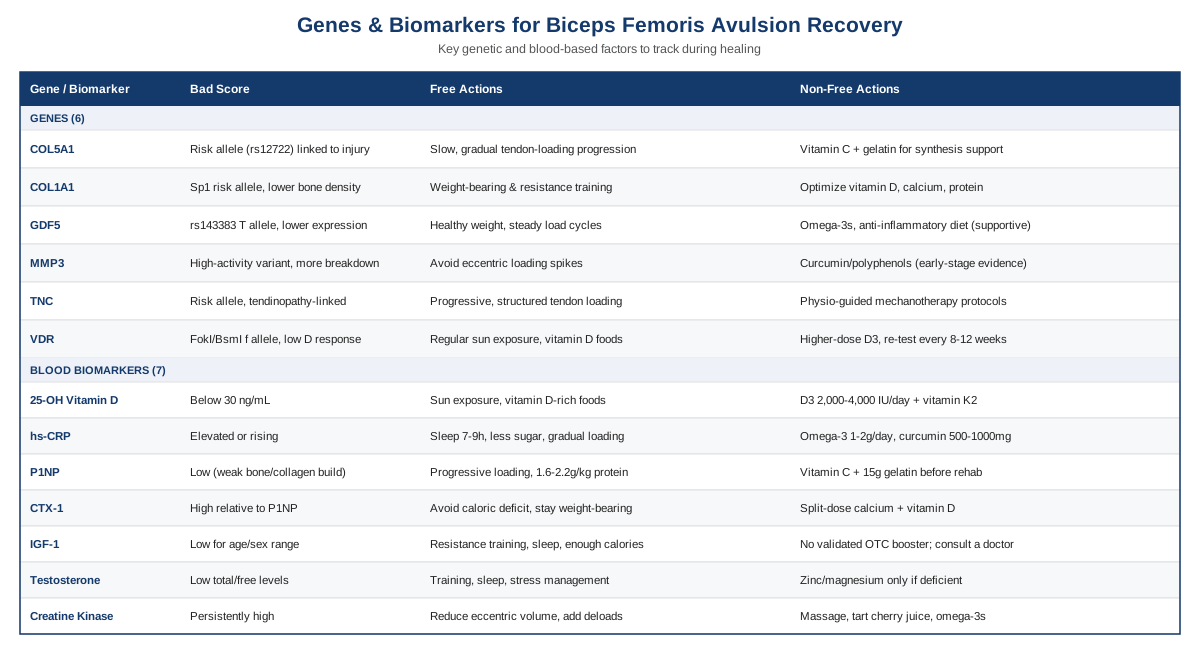
7 Biomarkers Worth Tracking for Biceps Femoris Avulsion Recovery
The idea behind tracking biomarkers instead of just waiting out a timeline is simple: healing is a biological process with measurable inputs and outputs. Peter Attia has built much of his approach to musculoskeletal longevity around this same principle — track objective numbers (bone density, muscle mass, hormonal markers) rather than relying purely on how you feel, because subjective recovery and tissue-level recovery don't always move together. Below are the seven markers that give the most useful picture during avulsion fracture healing, ranked roughly by how directly they apply to bone and tendon repair.
1. 25-Hydroxyvitamin D (25-OH D)
Vitamin D status is one of the strongest modifiable predictors of bone healing capacity. Low 25-OH D impairs calcium absorption and bone mineralization at exactly the site — the bony avulsion fragment and its healing interface — where you need mineralization to go well. Military and athletic cohort studies have repeatedly linked low serum 25-OH D to higher stress fracture risk, which is mechanistically the same tissue (cortical and cancellous bone) involved in an avulsion injury. A study of Royal Marine recruits found that low serum 25-hydroxyvitamin D was independently associated with increased stress fracture risk during training.
How to measure it
A standard 25-OH D blood test costs roughly $20 to $50 through a direct-to-consumer lab or as part of a broader panel, and is often bundled into annual bloodwork at no extra cost. Target range for bone healing purposes is generally 30 to 50 ng/mL, not just "in range," since many labs flag deficiency only below 20 ng/mL.If the score is low: the plan without supplements
Increase regular, moderate sun exposure (10 to 20 minutes of midday skin exposure several times a week, adjusted for skin tone and latitude), and add vitamin D-rich foods such as fatty fish, egg yolks, and fortified dairy. This approach is slower and less reliable in winter months or northern latitudes, and is often not sufficient alone if levels are significantly deficient.If the score is low: the plan with supplements or equipment
Vitamin D3 supplementation, typically 2,000 to 4,000 IU daily, taken with a meal containing fat for absorption. Re-test after 8 to 12 weeks rather than adjusting blindly. Pair with vitamin K2 (MK-7, around 100 mcg/day) to support proper calcium utilization. Side effects are rare at these doses but very high-dose protocols (over 10,000 IU/day sustained) can cause hypercalcemia, so avoid megadosing without monitoring. No cycling is required; this is a maintenance-style supplement, re-checked seasonally.2. High-Sensitivity C-Reactive Protein (hs-CRP)
hs-CRP is a general inflammation marker, not specific to muscle or bone, but it's useful for tracking whether your body is still in an acute inflammatory phase versus settling into steady remodeling. After surgical repair of an avulsion fracture, CRP typically peaks within the first few days and should decline steadily; a CRP that stays elevated or re-spikes can flag infection, overtraining during rehab, or a setback. Research on exercise-induced muscle damage shows CRP rises specifically in people who also show the largest creatine kinase response, meaning the two markers are worth reading together rather than in isolation.
How to measure it
An hs-CRP test costs about $15 to $30 and is widely available. It's most useful tracked serially (every few weeks during active rehab) rather than as a single snapshot, since trend direction matters more than any one value.If the score is high: the plan without supplements
Prioritize sleep (7 to 9 hours), reduce ultra-processed food and added sugar intake, and make sure rehab loading is progressing gradually rather than being pushed too hard, too soon — overreaching in rehab is a common, under-recognized cause of a stalled or rising CRP.If the score is high: the plan with supplements or equipment
Omega-3 fatty acids (1 to 2 g/day combined EPA/DHA) have reasonably consistent evidence for modestly lowering CRP over 8 to 12 weeks. Curcumin (500 to 1,000 mg/day, with piperine or a phospholipid formulation for absorption) is a common adjunct, though evidence specific to post-fracture recovery is limited. Cycle omega-3s continuously; curcumin is generally fine long-term but can interact with blood thinners, so check with a physician if you're on anticoagulants post-surgery.3. P1NP (Procollagen Type I N-Terminal Propeptide)
P1NP is a direct marker of new bone and collagen formation — it's released when type I collagen (the main structural protein in both bone and tendon) is being actively synthesized. This makes it one of the more specific markers for whether your body is in an active bone-building phase after an avulsion fracture. Bone turnover marker research shows P1NP and CTX rise and can track with radiological healing after fracture, peaking around six weeks post-injury in some fracture models.
How to measure it
P1NP is a specialty test, typically $50 to $90, and requires a lab that runs bone turnover marker panels — not every standard lab offers it. Morning, fasted sampling is recommended since P1NP has a daytime pattern.If the score is low: the plan without supplements
Progressive, tendon- and bone-loading exercise (within the limits your surgeon or physiotherapist sets) is the single strongest non-supplement driver of collagen synthesis. Adequate total protein intake (around 1.6 to 2.2 g/kg bodyweight/day) supports the raw materials for collagen production.If the score is low: the plan with supplements or equipment
This is where the vitamin C plus gelatin/collagen timing protocol (detailed in the Strategy 3 section below) is most directly relevant, since it was originally validated using P1NP as the outcome marker. Fifteen grams of gelatin or hydrolyzed collagen with 50 mg vitamin C, taken about an hour before rehab loading, is the studied protocol. No meaningful side effects at this dose; it can be used throughout the rehab period, not just short-term.4. CTX-1 (C-Terminal Telopeptide of Type I Collagen)
CTX-1 is the mirror image of P1NP — it reflects bone resorption (breakdown) rather than formation. Tracking both together gives a formation-to-resorption ratio that's more informative than either marker alone. A National Bone Health Alliance standardization paper on CTX-1 and P1NP notes both are recommended reference markers for monitoring bone turnover, with strict pre-analytical handling (fasted, morning draw) needed for reliable results.
How to measure it
CTX-1 typically costs $50 to $90 alone, or is bundled with P1NP as a bone turnover panel for $100 to $150. Same fasted, morning draw requirement applies.If the score is high relative to P1NP: the plan without supplements
Avoid excessive caloric restriction or crash dieting during the healing window, since being in a large energy deficit tends to push resorption markers up. Weight-bearing activity within cleared limits also helps shift the formation/resorption balance favorably.If the score is high relative to P1NP: the plan with supplements or equipment
Ensure calcium intake (1,000 to 1,200 mg/day from diet plus supplement if needed) and vitamin D are both adequate, since low levels of either can drive compensatory resorption. Calcium supplements should be split into doses of 500 mg or less for better absorption, and shouldn't be taken alongside iron supplements. No cycling needed; re-test alongside P1NP every 8 to 12 weeks.5. IGF-1 (Insulin-Like Growth Factor 1)
IGF-1 is a key driver of tendon repair biology, involved in every phase of the healing response — inflammation modulation, cell proliferation, and collagen I production, which is the dominant structural protein in tendon. A recent review describes IGF-1 as central to tendon regenerative healing across multiple stages of repair. Most of the strongest mechanistic evidence here comes from animal and cell models rather than large human trials, so treat IGF-1 as a useful status marker rather than a guaranteed lever.
How to measure it
IGF-1 testing costs roughly $60 to $100. Levels are strongly age- and sex-dependent, so results need to be interpreted against age-matched reference ranges, not a single universal number.If the score is low: the plan without supplements
Resistance training and adequate sleep are the two strongest natural drivers of IGF-1 production. Sufficient total caloric and protein intake also matters — chronic under-eating during rehab (common when activity drops and appetite follows) can suppress IGF-1.If the score is low: the plan with supplements or equipment
There's no well-validated over-the-counter supplement that reliably and safely raises IGF-1 in humans; claims around certain amino acid blends or growth-hormone secretagogues are not well supported by controlled human data. The most defensible approach is optimizing training load, protein, and sleep first, and discussing medical options only with a physician if levels are clinically low, not just low-normal.6. Total and Free Testosterone
Testosterone supports collagen synthesis and extracellular matrix remodeling in both muscle and tendon, and higher levels are associated with greater tendon collagen turnover and stiffness in men. A review on sex hormones and tendon biology outlines this relationship, though most controlled trials on testosterone and injury recovery (such as post-ACL reconstruction protocols) remain in progress or limited in size, so this should be read as a plausible, partially supported factor rather than settled science.
How to measure it
A total and free testosterone panel costs about $40 to $90. Morning testing (before 10am) is important since testosterone follows a strong daily rhythm.If the score is low: the plan without supplements
Resistance training, adequate sleep (poor sleep is one of the most reliable ways to suppress testosterone), stress management, and maintaining a healthy body composition are the foundational levers, each with a much larger evidence base than any supplement.If the score is low: the plan with supplements or equipment
Zinc and magnesium supplementation can modestly help if you're deficient in either (deficiency is the operative word; supplementing when not deficient shows little benefit). Vitamin D repletion, per the section above, can also support testosterone indirectly. Hormone therapy is a medical decision that should go through a physician, particularly during active fracture healing, and is not something to self-initiate.7. Creatine Kinase (CK)
CK is released from damaged skeletal muscle and is the classic marker of muscle fiber damage. In the context of a biceps femoris avulsion, tracking CK helps distinguish normal exercise-induced muscle adaptation during rehab from overload that's outpacing your tissue's ability to recover. Reference ranges for athletes are notably wider than general population ranges, so context matters when interpreting a result.
How to measure it
CK testing is inexpensive, around $15 to $25, and widely available. Avoid testing within 48 to 72 hours of an unusually hard training session, since a transient spike there is expected and not informative about baseline muscle status.If the score is persistently high: the plan without supplements
Reduce eccentric loading volume temporarily, prioritize sleep, and build in more structured deload periods within the rehab plan. Active recovery (light movement rather than complete rest) tends to clear CK faster than total inactivity.If the score is persistently high: the plan with supplements or equipment
Massage therapy has reasonable evidence for reducing muscle soreness markers after damaging exercise (see the complementary approaches section below). Tart cherry juice and omega-3s have modest supporting data for reducing exercise-induced muscle damage markers in athletic populations, though the specific-to-avulsion-fracture evidence doesn't exist; use them as general recovery support rather than a treatment for the injury itself.As a set, these seven markers turn "am I healing well?" into something you can actually track on a spreadsheet rather than guess at. None of them replace imaging or your surgeon's clinical assessment, but together they give an early warning system for the two things that matter most: is the bone/collagen building phase active (P1NP, IGF-1, testosterone), and is inflammation or muscle breakdown under control (CRP, CK, CTX-1 relative to P1NP).
What Genetic Research Suggests About Avulsion and Tendon Injury Risk
Biomarkers tell you what's happening right now. Genetics adds a layer underneath that — why some people are more prone to tendon and bony avulsion injuries in the first place, and why healing speed varies even when biomarker inputs look similar. Genomics researchers such as Ali Torkamani, who directs genomics research at Scripps Research, have repeatedly cautioned that single-gene associations for common musculoskeletal injuries usually explain only a small share of individual risk — polygenic effects, training history, and biomechanics still dominate. Popular figures like Gary Brecka have helped bring gene-informed health optimization into the mainstream, largely around methylation and nutrient-metabolism genes; the injury-risk genetics covered here is a much newer and smaller field of research by comparison, and that difference in evidence maturity is worth keeping in mind as you read.
1. COL5A1
COL5A1 encodes a component of type V collagen, which regulates how collagen fibrils assemble in tendons and ligaments. Certain COL5A1 variants have been linked across multiple studies to altered risk of tendon and ligament injuries, with a meta-analysis of 21 observational studies finding a consistent association between COL5A1 polymorphisms and musculoskeletal soft tissue injury risk, largely in Caucasian populations.
If the gene is unfavorable: the plan without supplements
Since COL5A1 affects fibril structure rather than collagen quantity, the most relevant compensations are mechanical: a longer, more gradual tendon-loading progression during rehab and return-to-sport, and avoiding rapid spikes in training load, which is already a well-established general injury-prevention principle regardless of genotype.If the gene is unfavorable: the plan with supplements or equipment
Collagen-supportive nutrition (the vitamin C plus gelatin protocol described in the next section) provides raw material for whatever collagen structure your genotype produces; it doesn't change fibril architecture, but it supports overall synthesis capacity. There's no supplement that corrects fibril assembly directly — this is a case where mechanical loading strategy matters more than any pill.2. COL1A1
COL1A1 encodes the main structural protein of both bone and tendon: type I collagen. A regulatory (Sp1 binding site) polymorphism in this gene has been studied in relation to Achilles tendon injury risk, with the variant allele associated with altered collagen I production and, separately, with lower bone mineral density in other research contexts — relevant given that an avulsion fracture involves both tendon and bone failing together.
If the gene is unfavorable: the plan without supplements
Weight-bearing and resistance exercise, once cleared by your care team, is the strongest non-supplement stimulus for both bone and collagen I production, and matters more for this gene than for most others on this list because it directly targets the tissue COL1A1 builds.If the gene is unfavorable: the plan with supplements or equipment
Adequate vitamin D, calcium, and protein intake (see the biomarker sections above) become more important, since they're the direct substrates and cofactors for type I collagen and bone matrix production. No specific supplement corrects the underlying genetic variant; this is about not being additionally limited by nutrient shortfalls on top of it.3. GDF5
GDF5 (growth differentiation factor 5) is involved in joint, cartilage, and connective tissue development. The rs143383 variant, located in the gene's regulatory region, reduces GDF5 expression and has been linked in a meta-analysis to increased risk of musculoskeletal degenerative conditions; most of this evidence centers on osteoarthritis rather than acute avulsion injury specifically, so its relevance here is more mechanistic than directly proven.
If the gene is unfavorable: the plan without supplements
Because GDF5 relates to joint and connective tissue maintenance broadly, maintaining healthy body weight (reducing joint load) and consistent, moderate loading (rather than boom-bust training cycles) are the most relevant non-supplement strategies.If the gene is unfavorable: the plan with supplements or equipment
No supplement has been shown to directly compensate for reduced GDF5 expression in humans. Omega-3s and a generally anti-inflammatory diet are reasonable general joint-health measures, but should be understood as supportive, not corrective, for this particular gene.4. MMP3
MMP3 encodes an enzyme (matrix metalloproteinase 3) involved in breaking down and remodeling extracellular matrix, including collagen. Variants in MMP3 have been found to interact with COL5A1 variants to further modify Achilles tendinopathy risk, suggesting these genes don't act in isolation — matrix breakdown and matrix assembly genes influence each other's effective risk contribution.
If the gene is unfavorable: the plan without supplements
Because MMP3 relates to matrix turnover rate, avoiding excessive high-intensity eccentric loading spikes (which increase matrix breakdown demand) during rehab and return-to-play is the most relevant behavioral adjustment.If the gene is unfavorable: the plan with supplements or equipment
There's no established supplement that safely modulates MMP3 activity in humans; some early laboratory research has looked at polyphenols and curcumin as MMP inhibitors, but this hasn't been validated in tendon injury populations, so it should be treated as speculative rather than a plan.5. TNC (Tenascin-C)
Tenascin-C is a matrix glycoprotein upregulated during tendon healing and mechanical loading. Variants in TNC have been associated with Achilles tendinopathy and tendon rupture risk in the broader genetic review of tendon and ligament injuries by September, Schwellnus, and Collins, one of the foundational papers in this field.
If the gene is unfavorable: the plan without supplements
TNC expression responds to mechanical load, so structured, progressive tendon loading during rehab (rather than avoidance of loading altogether) is the primary lever, consistent with modern tendinopathy rehabilitation protocols generally.If the gene is unfavorable: the plan with supplements or equipment
No supplement directly targets tenascin-C expression in humans with reliable evidence. This is a case where mechanotherapy (controlled loading, sometimes guided by a physiotherapist using eccentric or heavy-slow-resistance protocols) is the intervention, not a nutritional one.6. VDR (Vitamin D Receptor)
VDR variants affect how effectively your body responds to circulating vitamin D, independent of the vitamin D level itself. The FokI and BsmI polymorphisms have been associated with stress fracture risk, with the f allele linked to reduced transcription of VDR-responsive genes — meaning two people with identical vitamin D blood levels could still have different downstream bone effects depending on genotype.
If the gene is unfavorable: the plan without supplements
Regular sun exposure and dietary vitamin D sources still help, but if you carry a less responsive VDR variant, you may need to keep 25-OH D levels toward the higher end of the normal range (closer to 40 to 50 ng/mL) to get an equivalent biological effect.If the gene is unfavorable: the plan with supplements or equipment
This is one case where re-testing matters more than blind dosing: supplement with vitamin D3 as described in the biomarker section, but re-check 25-OH D levels every 8 to 12 weeks rather than assuming a standard dose is sufficient, since VDR variants can mean you need a higher sustained intake to reach the same functional effect.Genetic testing for these variants is available through several consumer genomics services, though results should be read as risk context, not a diagnosis, and are best discussed with a sports medicine physician or genetic counselor rather than acted on in isolation.
The biomarker and gene sections above focus on internal biology. Recovery is also shaped by daily behavior and timing — which is where a specific, well-studied nutrition protocol comes in.
The Collagen Timing Protocol from the Huberman Lab Podcast
One of the most practical, evidence-backed pieces of tendon and connective tissue recovery guidance to gain mainstream attention in recent years came through the Huberman Lab podcast's coverage of Dr. Keith Baar's research on collagen synthesis timing. It challenges a common assumption in sports medicine — that protein timing matters mainly for muscle, not connective tissue — and it's built on a real, published human trial rather than theory alone. Below are the ten most useful takeaways.
1. Collagen synthesis can be measured and manipulated
Baar's research uses P1NP (the same marker covered in the biomarker section above) as a direct readout of collagen synthesis, allowing supplementation and exercise timing strategies to be tested against an objective outcome rather than subjective tendon feel.2. Vitamin C is a required cofactor, not just an antioxidant
Vitamin C is essential for the hydroxylation step in collagen formation. Without adequate vitamin C, collagen precursor molecules can't fold and cross-link properly, regardless of how much gelatin or protein is consumed.3. Gelatin and hydrolyzed collagen supply the specific amino acids collagen needs
Unlike whey or standard protein sources, gelatin is rich in glycine and proline, the amino acids most specifically required for collagen — as opposed to muscle — protein synthesis.4. The combination beats either ingredient alone
The original study found that vitamin C-enriched gelatin, taken before intermittent exercise, produced meaningfully greater collagen synthesis than gelatin or vitamin C alone.5. Timing before loading matters
The protocol calls for consuming the vitamin C and gelatin roughly 45 to 60 minutes before the loading activity — in a rehab context, that would mean before a physiotherapy session involving tendon loading exercises, not after.6. The dose was specific: 15 grams of gelatin
The study found a dose-dependent effect, with 15 g producing roughly double the serum P1NP increase compared to 5 g, alongside about 50 mg of vitamin C.7. Mechanical loading is still required for the effect
Collagen synthesis increased specifically around the exercise bout — the supplement alone, without subsequent loading, does not replicate the same effect. This aligns with the broader principle that tendons adapt to load, not to nutrition in isolation.8. This directly challenges "rest until it doesn't hurt" thinking
Rather than treating nutrition and loading as separate levers, this research frames them as something to be synchronized — a departure from older advice that emphasized simply avoiding movement during healing.9. It's inexpensive and low-risk
Gelatin and vitamin C are both cheap, widely available, and have a strong safety record, which is part of why this protocol has spread quickly through strength and rehab communities even before larger trials exist.10. It's still early-stage for injury-specific application
The foundational study was done in healthy recreational exercisers, not specifically in avulsion fracture or post-surgical hamstring patients. It's a reasonable, low-risk addition to a rehab nutrition plan, but it should complement — not replace — the loading progression set by your physiotherapist or surgeon.Nutrition and loading timing address the biological building blocks of recovery. Alongside them, several non-drug therapies have accumulated real clinical evidence for the muscle, tendon, and post-surgical rehabilitation context relevant to this injury.
Complementary Approaches Worth Considering
Guided Imagery
Guided imagery involves mentally rehearsing movement and function, often used alongside physical rehabilitation rather than in place of it. For a biceps femoris avulsion, where fear of re-injury and pain-related movement avoidance often slow functional recovery more than tissue healing itself does, this approach targets the psychological and neuromuscular side of rehab.
A randomized controlled pilot trial on guided imagery after anterior cruciate ligament repair — a comparable lower-limb tendon/ligament surgical recovery context — found improvements in functional outcomes when guided imagery was added to standard rehabilitation. Evidence specific to hamstring or ischial avulsion repair doesn't yet exist, so this is drawn from an analogous injury model.
In practice, this means 10 to 15 minutes of structured mental rehearsal of pain-free, confident movement, ideally guided by a recorded script or a sports psychologist, done a few times a week alongside physical therapy sessions — not as a replacement for graded loading.
Electromyographic (EMG) Biofeedback
EMG biofeedback uses surface sensors to show real-time muscle activation, helping retrain a muscle that has become inhibited or under-activated after injury or surgery — a well-documented phenomenon around the knee and hip after ligament and tendon repair.
A systematic review and meta-analysis of EMG biofeedback after knee surgery found meaningful improvement in range of motion outcomes, though effects on pain and broader physical function scores were less consistent. The mechanism — restoring normal muscle firing patterns after surgical or traumatic disruption — is directly relevant to hamstring muscle group recovery after a proximal avulsion repair.
Realistically, this requires access to a physiotherapy clinic with EMG biofeedback equipment, typically used in structured sessions during early- to mid-stage rehab, a few times per week, tapering off as normal voluntary activation returns.
Massage Therapy
Massage therapy is widely used to manage muscle soreness and support recovery in athletic populations, and its mechanism — improved local circulation, reduced perceived soreness, and possibly some anti-inflammatory signaling — is relevant to the muscle component of a biceps femoris injury, separate from the bony avulsion itself.
A systematic review and meta-analysis found massage significantly reduced muscle soreness ratings at 24, 48, and 72 hours after strenuous exercise compared to no intervention, though effects on strength or functional performance markers were less consistent across studies.
For practical use, this means periodic sports massage sessions during the rehab and return-to-training phases, once tissue is cleared for manual therapy by your surgeon, rather than in the acute post-fracture window when direct pressure on the healing site should be avoided.
Low-Level Laser Therapy (Photobiomodulation)
Low-level laser therapy applies specific wavelengths of light to tissue, with proposed effects on mitochondrial activity and local inflammation that could plausibly support tendon healing, making it relevant to the tendon component of an avulsion injury.
A systematic review with meta-analysis on low-level laser treatment for tendinopathy found that outcomes were positive when studies used currently recommended dosage parameters, but inconsistent when dosing was outside those ranges — meaning device settings and protocol adherence matter substantially for whether this therapy shows any benefit at all.
Realistically, this is a clinic-based adjunct therapy, applied by a physiotherapist using validated dosing parameters over several sessions per week during the sub-acute healing phase, and should be viewed as a supportive addition rather than a primary treatment for a bony avulsion.
Conclusion
A biceps femoris avulsion fracture heals on a biological timeline, but how well it heals — and how much control you have over that process — depends on factors that are largely measurable. The seven biomarkers covered here give you a way to check, in real numbers, whether your body is actively rebuilding bone and collagen or still stuck in an inflammatory or catabolic phase. The six genes add context on why your baseline risk and healing tendencies may differ from someone else's, even with an identical injury and rehab plan. Layered on top, evidence-based nutrition timing and select complementary therapies offer low-risk ways to support the process without overstating what any single intervention can do.
None of this replaces your surgeon's or physiotherapist's clinical judgment, and none of it changes the need for a patient, progressive loading program. What it does is turn a passive waiting period into something more active: a short blood panel with your next follow-up, a conversation about genetic testing if you're prone to recurrent tendon injuries, and a simple, well-timed nutrition habit around your rehab sessions. Start with the biomarkers — they're the most immediately actionable step, and the most useful next conversation to have with whoever is managing your recovery.
Musculoskeletal: Bone Conditions Muscle Conditions