This article contains AI generated content.
Biceps Femoris Muscle Contusion: 5 Genes and 6 Biomarkers to Track
A dead-leg. A knee-to-thigh collision. A direct hit that leaves the back of your thigh swollen, stiff, and tender to the touch for weeks longer than you expected. A biceps femoris contusion — a bruise driven deep into the muscle belly rather than a surface scrape — is one of those injuries that looks simple on the outside and behaves unpredictably on the inside.
Most of the advice available online treats every thigh bruise the same way: rest it, ice it, wait. That advice isn't wrong, exactly, but it's built for an average case that may not be yours. Two people with what looks like an identical contusion can have very different healing timelines, different swelling patterns, and different risks of the injury turning into something more stubborn, like a hematoma that calcifies into myositis ossificans. Generic guidance can't account for that variation because it isn't designed to look at your biology — it's designed to be safe for everyone, which often means it's genuinely useful for no one in particular.
This article takes a closer look. It walks through the blood markers that can tell you, with actual numbers, how your body is handling the damage and inflammation from a contusion — and what to do when those numbers look off. It also looks at the genetic variants that shape how some people bruise, inflame, and rebuild muscle tissue differently than others, and at a body of research that's quietly challenged one of the most repeated pieces of injury advice in sports medicine: reach for ice.
None of this replaces a clinical exam, and nothing here promises a faster recovery guaranteed. What it offers is a more precise way to think about your own healing process — so the decisions you make about rest, loading, nutrition, and monitoring are based on what your body is actually doing, not just on what's generically recommended.
Summary
Here's the short version before the full detail. A biceps femoris contusion isn't just "a bruise" — it's a controlled injury and repair process that you can actually track with blood work, the same way athletic trainers and team physicians do behind the scenes. Six biomarkers in particular — creatine kinase, CRP, myoglobin, interleukin-6, vitamin D, and ferritin — give a surprisingly clear picture of how much damage occurred, how your inflammatory response is behaving, and whether your body has the raw materials to rebuild the tissue efficiently. Each one has a normal range, a "something's off" range, and a specific, practical way to respond to it, with and without supplements.
Underneath the biomarkers, genetics adds another layer. Variants in genes like ACTN3, COL5A1, COL1A1, IL6, and TNF have been linked in real human studies to how muscle tissue responds to mechanical stress and inflammation — though for a blunt-trauma injury like a contusion, this evidence is more about general injury susceptibility and recovery pace than a contusion-specific fingerprint, and it's worth reading with that caveat in mind.
There's also a less comfortable finding buried in the exercise physiology literature: the ice-and-NSAIDs approach that's been handed out as first-aid gospel for decades may actively slow down the very repair process it's supposed to protect. That research, and what to do with it practically, gets its own section below — along with a look at complementary approaches (massage, photobiomodulation, topical herbal treatment, and motor imagery) that have real, if still developing, human evidence behind them for exactly this kind of soft tissue injury.
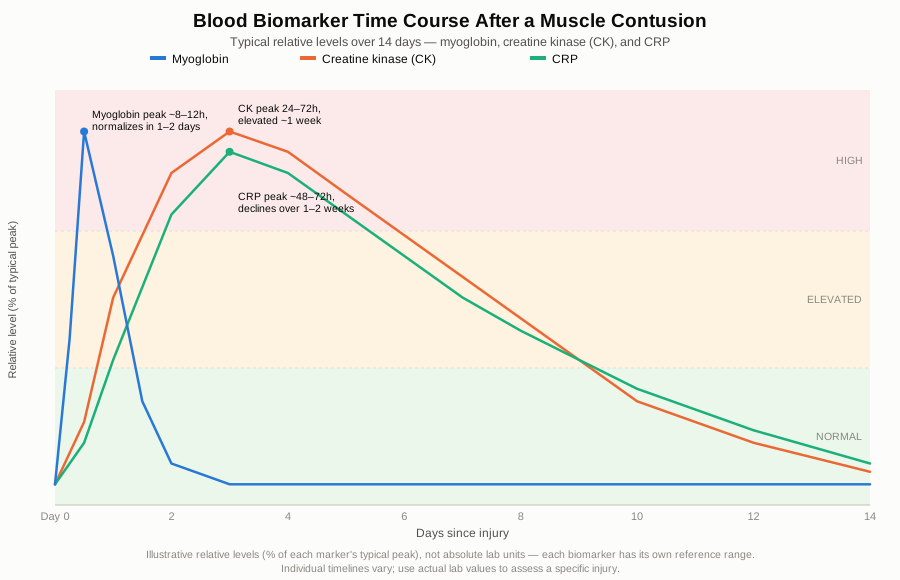
The 6 Biomarkers That Show How Your Hamstring Is Actually Healing
A contusion is really a two-phase event: the initial mechanical damage from the impact, and then the body's inflammatory and repair response that follows over the next one to three weeks. Blood biomarkers give you a window into both phases. Sports medicine reviews on muscle damage — like the widely cited work by Brancaccio and colleagues on biochemical markers of muscular damage — describe a fairly predictable pattern: fast-moving markers spike and clear quickly, while others rise more slowly and linger as the tissue rebuilds. Muscle injury classification frameworks, such as the one proposed by Hamilton and colleagues, also emphasize that severity and healing pace vary enormously between individuals with what looks like the same grade of injury — which is exactly why tracking your own numbers is more useful than following a one-size-fits-all timeline.
Creatine Kinase (CK)
CK is an enzyme that leaks out of damaged muscle fibers into the bloodstream, and it's the single most commonly used marker for gauging how much muscle tissue was actually disrupted by a contusion. A normal resting CK is roughly 30 to 200 U/L, though athletes with more muscle mass often run a bit higher at baseline. After a significant contusion, CK typically starts climbing within 6 to 12 hours, peaks somewhere between 24 and 72 hours, and can stay elevated for 5 to 7 days or longer depending on how much tissue was involved. As a rough guide, values in the 200 to 1,000 U/L range usually reflect a moderate soft-tissue injury, 1,000 to 5,000 U/L suggests more substantial muscle damage, and anything climbing toward 5,000 to 10,000 U/L or beyond warrants medical attention for possible rhabdomyolysis.
How to measure it
A CK blood draw is inexpensive and widely available — expect to pay roughly $15 to $50 out of pocket through a direct-to-consumer lab or as part of a basic metabolic workup ordered by a physician or urgent care after significant trauma.
If the score is bad, the plan without supplements
The single biggest lever is matching activity to the actual injury grade instead of full immobilization — modern muscle-injury frameworks favor early, pain-free range of motion over rigid rest, since prolonged immobilization slows tissue remodeling. Prioritize 7 to 9 hours of sleep, since much of the structural repair work happens during deep sleep; keep protein intake around 1.6 to 2.2 g/kg of bodyweight per day to supply the raw material for rebuilding; stay well hydrated to support clearance of muscle breakdown products through the kidneys; and avoid alcohol during the acute window, since it measurably slows muscle protein synthesis.
If the score is bad, the plan with supplements or equipment
Creatine monohydrate at 3 to 5 g daily is reasonable to continue or start, taken continuously without need for cycling, alongside adequate water intake; it does not meaningfully falsify CK readings beyond a small baseline shift and may support strength recovery. Omega-3 fish oil at 2 to 3 g of combined EPA/DHA daily can help modulate the inflammatory side of repair — expect mild fishy aftertaste or GI upset as the main side effect, and use caution if you're on blood thinners. Collagen peptides, roughly 15 g daily taken with a source of vitamin C, support connective tissue repair and are generally well tolerated. On the equipment side, blood-flow restriction (BFR) bands allow low-load, joint- and tissue-friendly strength work during the window when heavier loading isn't appropriate yet, and a photobiomodulation (low-level laser) device — covered in more detail later in this article — has real evidence for accelerating recovery of damage markers.
C-Reactive Protein (CRP)
CRP is a general marker of systemic inflammation, and while it isn't specific to muscle tissue the way CK is, it reflects the overall size of your inflammatory response to the injury. Standard CRP is considered normal under roughly 10 mg/L (the more sensitive hs-CRP assay uses a lower cutoff, under about 3 mg/L, though that test is more oriented toward cardiovascular risk than acute injury). After a muscle contusion, CRP typically rises over the first 24 to 48 hours, peaks around day 2 to 3, and gradually falls over the following one to two weeks as the inflammatory phase resolves.
How to measure it
A standard CRP or hs-CRP panel costs roughly $15 to $50 and is available through most labs or direct-to-consumer testing services without needing a specialist referral.
If the score is bad, the plan without supplements
Since CRP tracks whole-body inflammatory load rather than just the local injury, sleep quality and stress management matter more here than people expect — chronic sleep restriction and psychological stress both independently push CRP higher. An anti-inflammatory eating pattern (plenty of vegetables, fatty fish, olive oil, minimal ultra-processed food and added sugar) helps keep the systemic baseline down while the local injury resolves. Gentle, pain-free movement — walking, light range of motion — supports lymphatic drainage and can help swelling resolve faster than complete immobility.
If the score is bad, the plan with supplements or equipment
Omega-3s again apply here, dosed the same way, typically run for 8 to 12 weeks before reassessing. Curcumin (standardized turmeric extract with piperine for absorption), around 500 to 1,000 mg daily, is a reasonable add-on cycled for 8 to 12 weeks with a 2 to 4 week break — watch for GI upset and, again, caution around blood-thinning medication. On the equipment side, intermittent pneumatic compression sleeves or simple compression wraps can help manage local swelling and support lymphatic clearance, which indirectly takes pressure off the systemic inflammatory picture.
Myoglobin
Myoglobin is a small oxygen-carrying protein stored in muscle fibers, and it's released into the blood almost immediately after significant muscle trauma — often within 1 to 3 hours, peaking around 8 to 12 hours, well ahead of CK. Because it's cleared quickly by the kidneys, it also normalizes fast if the injury isn't ongoing. Normal levels sit roughly in the 25 to 75 ng/mL range. The reason myoglobin matters clinically is less about tracking day-to-day healing and more about catching a dangerous edge case early: very high levels, especially paired with dark, tea-colored urine, signal a risk of rhabdomyolysis, which can strain the kidneys.
How to measure it
A myoglobin blood test runs roughly $30 to $80. This is one marker worth checking promptly — not weeks later — if a contusion was severe enough to cause significant swelling, intense pain, or dark urine.
If the score is bad, the plan without supplements
Hydration is the actual first-line response here, since adequate fluid intake supports renal clearance of myoglobin and reduces kidney strain. Monitor urine color as a simple daily check. If myoglobin or CK are very high, avoid NSAIDs, since they can add additional stress to kidneys that are already working harder to clear muscle breakdown products — and seek medical evaluation rather than trying to manage a severe reading on your own.
If the score is bad, the plan with supplements or equipment
When myoglobin is markedly elevated, this is not the moment to stack supplements — electrolyte repletion (sodium, potassium, magnesium) to support renal perfusion is reasonable, but the priority is medical evaluation, not a supplement protocol. Equipment doesn't play much of a role at this stage either; the most useful "tool" is a follow-up blood draw to confirm the number is trending back down.
Interleukin-6 (IL-6)
IL-6 is a signaling protein — a cytokine — released early in the inflammatory response to muscle damage, and it plays a real role in activating the satellite cells responsible for regenerating muscle fibers. It isn't a routine clinical test for injury (it's ordered far more often in the context of sepsis or systemic inflammatory workups), but it comes up constantly in exercise physiology research, including studies looking at genetic variation and eccentric-exercise damage such as the one by Yamin and colleagues, discussed further in the genetics section below.
How to measure it
IL-6 testing is mostly available through specialty or research-oriented labs, typically costing $70 to $150 per draw, and isn't something most people need to routinely order for a straightforward contusion.
If the score is bad, the plan without supplements
Because IL-6 is part of the repair signal itself, the goal in the first 48 to 72 hours isn't to suppress it aggressively — a theme explored in depth in the icing section below. Instead, focus on sleep, stress reduction, and, once past the acute window, easy aerobic activity (zone 2-type effort), which has a track record of lowering chronic systemic inflammatory baseline over time without interfering with acute repair signaling.
If the score is bad, the plan with supplements or equipment
Omega-3s and vitamin D optimization (below) both have a plausible, if modest, effect on inflammatory signaling and are reasonable to use in the days following the acute window. The key nuance: avoid stacking strong anti-inflammatory supplements like high-dose curcumin in the first 48 to 72 hours after injury, since blunting the early inflammatory phase too aggressively may interfere with the repair signaling that phase is meant to trigger. Photobiomodulation, again, has evidence for favorably modulating this phase without shutting it down — more detail in the complementary approaches section.
Vitamin D (25-OH D)
Vitamin D receptors are present in skeletal muscle tissue, and vitamin D supports both protein synthesis and satellite cell function — the same cells responsible for regenerating muscle fibers after a contusion. A study of NFL Combine athletes by Rebolledo and colleagues found an association between low vitamin D status and a higher rate of lower-extremity muscle strains and core muscle injuries, which is a reasonable proxy for why status matters for muscle tissue resilience and repair more broadly. Standard "sufficient" ranges run from about 30 to 100 ng/mL, though many sports-medicine-oriented physicians favor a narrower optimal band, often cited around 40 to 60 ng/mL, for musculoskeletal health specifically — worth noting that this narrower range reflects clinical opinion rather than a universal lab cutoff.
How to measure it
A standard 25-OH vitamin D test costs roughly $40 to $80 and is one of the most widely available direct-to-consumer tests.
If the score is bad, the plan without supplements
Ten to thirty minutes of midday sun exposure on bare skin, adjusted for skin tone, season, and latitude, can meaningfully raise levels for many people. Dietary sources — fatty fish, egg yolks, fortified foods — contribute but usually aren't enough on their own to correct a true deficiency.
If the score is bad, the plan with supplements or equipment
Vitamin D3 repletion is typically dosed at 2,000 to 5,000 IU daily for someone in the insufficient range, with a retest at 8 to 12 weeks rather than assuming the dose is right indefinitely. Pairing with vitamin K2 (100 to 200 mcg daily) is a common practice to support calcium handling. Side effects are rare at these doses but toxicity (mainly hypercalcemia) becomes a real concern with sustained megadosing above roughly 10,000 IU/day without monitoring — this is a supplement worth retesting for, not guessing at. In genuinely sun-deprived climates or seasons, a UV lamp or light therapy device is a secondary option with modest supporting evidence.
Ferritin and Iron Studies
Iron is central to oxygen delivery via hemoglobin, and healing tissue has an elevated demand for oxygen and cellular energy production. Normal ferritin runs roughly 20 to 250 ng/mL in men and 10 to 120 ng/mL in women, though many sports clinicians prefer athletes sit above 30 to 50 ng/mL to support optimal recovery capacity rather than just avoiding frank deficiency.
How to measure it
Ferritin alone costs roughly $30 to $50; a fuller iron panel (iron, TIBC, transferrin saturation) runs about $50 to $100.
If the score is bad, the plan without supplements
Iron-rich whole foods — red meat, legumes, leafy greens — paired with a source of vitamin C to boost absorption is the foundational approach. Avoid drinking tea or coffee alongside iron-rich meals, since the polyphenols in both meaningfully blunt iron absorption.
If the score is bad, the plan with supplements or equipment
Iron supplementation should only follow a confirmed low ferritin or iron panel — never supplement iron blindly, since overload is a real risk, particularly for anyone with a genetic predisposition to hemochromatosis. When indicated, a typical approach is 25 to 65 mg of elemental iron on an alternate-day schedule rather than daily, which research suggests improves absorption and reduces GI side effects like constipation compared with daily dosing. Retest ferritin after 8 to 12 weeks rather than continuing indefinitely, and take iron away from calcium or dairy, which compete for absorption.
Blood markers tell you what's happening right now, in your body, in response to this specific injury. Genetics sits one layer underneath that — it doesn't change week to week, but it may help explain why some people bruise more easily, inflame more intensely, or take longer to rebuild collagen and muscle fiber than others.
What Your Genes May Say About Muscle Injury and Recovery
It's worth being direct about the limits of this evidence upfront: most of the genetic research below comes from studies of general muscle strain, soft-tissue injury susceptibility, or exercise-induced damage — not biceps femoris contusions specifically, since a contusion is caused by external blunt trauma rather than internal mechanical failure. The genetics still matters, because it likely shapes your inflammatory intensity and tissue-repair pace regardless of what caused the injury, but treat this section as informative background rather than a contusion-specific fingerprint.
ACTN3 (R577X)
ACTN3 codes for alpha-actinin-3, a structural protein found in fast-twitch muscle fibers. The "X" variant at position 577 results in a complete absence of this protein in people with two copies (XX genotype) — roughly one in five people worldwide. A study of professional football players by Massidda and colleagues found the XX genotype was associated with a higher incidence and severity of muscle injuries. The practical implication, if you carry this genotype, isn't that injury is inevitable — it's that fast-twitch-dominant, high-force activities may carry a slightly higher injury margin for you specifically, which argues for more conservative load progression during return-to-play rather than following a generic timeline.
COL5A1
COL5A1 codes for a component of type V collagen, which regulates the assembly and diameter of the type I collagen fibers that give muscle, tendon, and connective tissue its tensile strength. A review by Collins and Raleigh on genetic risk factors for musculoskeletal soft tissue injuries outlines associations between certain COL5A1 variants and higher soft-tissue injury risk, largely through effects on tissue stiffness and extensibility. If this applies to you, the compensating strategy isn't a supplement — it's structured, progressive loading (isometrics before eccentrics, gradual tissue conditioning) since collagen remodels in response to controlled mechanical stress, and adequate vitamin C and protein intake to support the collagen synthesis pathway itself.
COL1A1
COL1A1 codes for the major structural chain of type I collagen, the dominant collagen type in tendon, fascia, and the connective tissue scaffolding within muscle. The same soft-tissue-injury genetics literature that covers COL5A1 also implicates COL1A1 variants in connective tissue stiffness and injury susceptibility. As with COL5A1, this is a case where the practical "fix" is behavioral and nutritional rather than pharmacological: consistent connective-tissue loading over months (not days), sufficient collagen or protein intake, and vitamin C around training or rehab sessions to support the enzymatic steps in collagen crosslinking.
IL6
The IL6 gene's promoter region contains a variant that appears to influence how much interleukin-6 is released in response to muscle damage. The study by Yamin and colleagues found this variant, along with a related TNF variant below, was associated with the size of the CK response following eccentric exercise damage — meaning some people may mount a larger inflammatory and enzyme-release response to a comparable amount of tissue damage. If your CK and CRP readings run high relative to how significant an injury felt, this may be part of the explanation, and the practical response mirrors the CRP and IL-6 biomarker sections above: manage systemic inflammatory load through sleep, omega-3s, and appropriately timed anti-inflammatory support rather than assuming something is wrong beyond your baseline biology.
TNF (TNF-alpha)
TNF-alpha is another key early inflammatory cytokine, and the same Yamin study identified a TNF promoter variant associated with the magnitude of the CK response to muscle damage, working alongside the IL6 variant above. People carrying the higher-response variants may simply run a more intense, if not necessarily longer, inflammatory phase after an injury like a contusion. The offsetting approach is largely the same as for IL6 — this is a case where the genetic tendency argues for consistency (sleep, omega-3 intake, stress management) rather than any single dramatic intervention, since blunting the inflammatory response too hard, too early, has its own downsides, which brings us to the next section.
That last point — the risk of suppressing inflammation too aggressively, too early — deserves a much closer look, because it runs directly against one of the most repeated pieces of first-aid advice for exactly this kind of injury.
The Research That's Quietly Undoing "Ice It and Rest"
For decades, the default advice for a muscle contusion has been some version of RICE: rest, ice, compression, elevation. What's less well known is that the physician who coined that acronym in 1978, Dr. Gabe Mirkin, later publicly walked back his own recommendation on icing, after reviewing the accumulating research on how cold and anti-inflammatory suppression interact with muscle repair. Gary Reinl's book Iced! The Illusion of Feeling Better built on that reversal and pulled together much of the underlying exercise-science literature for a general audience, arguing that reflexive icing may be doing less for recovery than assumed. Here are the ten things from that body of research most worth understanding.
1. RICE was never built on contusion-specific evidence
The RICE protocol was popularized as general first-aid guidance, not derived from controlled trials on muscle contusions specifically. It made intuitive sense — cold reduces pain and swelling — but "reduces swelling" and "improves long-term healing" turned out to be two different questions.
2. Inflammation is a repair signal, not just a problem to suppress
The inflammatory cascade after muscle damage — including the IL-6 and TNF activity discussed above — isn't purely destructive. It's part of how satellite cells get recruited and activated to rebuild the damaged fibers. Suppress it too hard, too early, and you may be interfering with the signal that triggers repair in the first place.
3. Icing has been shown to delay muscle regeneration in animal models
A study by Takagi and colleagues, using a rat model of crush injury to skeletal muscle — mechanically similar to a contusion — found that icing the injured area actually delayed muscle regeneration compared with no icing.
4. Human research shows a similar pattern
In a human study of exercise-induced muscle damage, Tseng and colleagues found that topical cooling after damage delayed recovery compared with no cooling, contradicting the assumption that ice speeds healing.
5. NSAIDs carry a comparable tradeoff
Mikkelsen and colleagues found that local NSAID infusion inhibited satellite cell proliferation in human skeletal muscle after eccentric exercise damage — the same repair-cell activity that inflammation is meant to trigger. This is a big part of why routinely reaching for anti-inflammatory medication immediately after a contusion is being reconsidered by many sports medicine practitioners.
6. Ice still has a legitimate, narrower use: pain control
None of this means ice is useless. Short bursts of cold can meaningfully reduce acute pain, which matters for comfort and sleep in the first day or two. The nuance is treating ice as a pain-management tool with a time limit, not a healing accelerant to apply constantly for a week.
7. Compression and elevation hold up better than icing does
Unlike icing, compression and elevation work mechanically — they reduce fluid pooling and support venous and lymphatic return — without directly suppressing the cellular inflammatory signaling that icing and NSAIDs appear to blunt. These two pieces of the old RICE approach are reasonable to keep.
8. Controlled loading beats immobilization
The muscle-injury classification work by Hamilton and colleagues reflects a broader shift in sports medicine away from rigid rest and toward early, graded, pain-free loading, which appears to support better long-term tissue quality than strict immobilization.
9. Timing changes the calculus
The tradeoff isn't static. Aggressive anti-inflammatory suppression matters most in the first 48 to 72 hours, when the repair-signaling cascade is being established. After that window, supporting recovery with anti-inflammatory nutrition, sleep, and modalities like photobiomodulation becomes more reasonable, since you're no longer blunting the initial trigger.
10. The practical takeaway for the first two weeks
Use brief, occasional icing only for pain relief if needed, not as a default multiple-times-daily routine. Favor compression and elevation. Avoid routine NSAID use in the first 48 to 72 hours unless a clinician advises otherwise for a specific reason. Start gentle, pain-free range of motion early rather than fully immobilizing the leg. And track CK, CRP, and myoglobin if the injury is significant enough to warrant it, so you have an objective read on how the tissue is actually responding rather than relying on guesswork.
That evidence base focuses mainly on what to avoid doing during recovery. The next set of approaches looks at what else, beyond blood work and load management, has genuine human evidence behind it for this specific kind of injury.
Complementary Approaches Worth Considering
These aren't replacements for proper load management or medical evaluation of a significant contusion — they're additions with real, if sometimes early-stage, human evidence specifically relevant to muscle tissue damage and repair.
Massage Therapy
Massage is one of the oldest interventions applied to muscle soreness and damage, and it's also one of the better-studied ones, with plausible mechanisms including improved local blood flow, reduced muscle stiffness, and modulation of the perception of soreness. For a biceps femoris contusion specifically, gentle massage applied once the acute swelling phase has passed may help address the stiffness and tissue guarding that tend to linger well after the initial pain resolves.
A systematic review and meta-analysis by Guo and colleagues found that massage meaningfully reduced delayed-onset muscle soreness and markers of exercise-induced muscle damage compared with no treatment, supporting its use as a recovery-supportive intervention for damaged muscle tissue.
Realistically, this means waiting until acute swelling and sharp pain have settled — typically several days to a week after a significant contusion — before introducing light massage directly over the injured area, starting gentle and progressing pressure gradually based on comfort, ideally with a therapist experienced in sports injuries rather than deep-tissue work applied too aggressively too early.
Low-Level Laser Therapy (Photobiomodulation)
Photobiomodulation uses specific wavelengths of red or near-infrared light to influence cellular energy production and modulate inflammation at the site of application, without the tissue-cooling effect that appears to be the problem with ice. It's relevant here because it offers a way to support the injured area without running into the same "blunting the repair signal" tradeoff associated with icing and NSAIDs.
A study by Leal Junior and colleagues found that low-level laser therapy favorably affected biochemical markers related to post-exercise recovery, including reducing indicators of muscle fatigue and damage, when applied around exercise-induced muscle injury.
For a contusion, a reasonable and cautious approach is a short course of sessions (commonly a few minutes per session, several times over the first one to two weeks) using a device with published treatment parameters, ideally under guidance from a physical therapist or sports medicine provider rather than guessing at dosage with a consumer device, since laser parameters (wavelength, dose, duration) affect outcomes meaningfully.
Topical Chinese Herbal Medicine
Topical herbal preparations for bruising and soft tissue trauma have a long history in traditional Chinese medicine, typically combining herbs believed to promote local circulation and reduce swelling. What makes this relevant here is that, unlike many traditional applications, there's now a study using an actual muscle contusion model rather than a general soreness model.
A 2023 study by Siu and colleagues tested a topical herbal formula — containing Carthami Flos, Dipsaci Radix, and Rhei Rhizoma — in a rat model of skeletal muscle contusion, with findings supportive of a role in soft tissue injury recovery. It's worth being clear that this is animal-model evidence, not a human clinical trial, so it should be treated as promising and mechanistically plausible rather than proven for a human contusion.
If you want to try this, look for topical preparations from reputable manufacturers with ingredient transparency, patch-test for skin sensitivity first, and treat it as an adjunct to — not a replacement for — the load management and monitoring approaches described earlier, given the evidence is still early-stage in humans.
Guided Imagery and Motor Imagery
Motor imagery — mentally rehearsing movement without physically performing it — has been studied as a way to maintain neuromuscular engagement during periods when normal movement is limited, which is directly applicable to the early, protected phase after a significant contusion.
A study by Debarnot and colleagues found that motor imagery practice during limb immobilization produced measurable benefits for sensorimotor cortical activity, supporting a smoother transition back to active movement once immobilization ends — worth noting this study measured cortical and sleep-related outcomes rather than muscle strength directly, so it should be framed as supporting the neurological side of recovery rather than a direct strength-preservation guarantee.
In practice, this means spending a few minutes, a few times a day, vividly mentally rehearsing pain-free hamstring movement and normal gait during the period when you're limiting actual loading — a low-cost, low-risk addition with no meaningful downside, even if its measurable benefit is more modest than the physical interventions above.
Bringing It Together
A biceps femoris contusion responds better to specific information than to generic advice. The biomarkers above give you an objective read on damage and inflammation as it's actually happening in your body; the genetic variants offer context for why your inflammatory response or tissue repair pace might run differently from someone else's; and the research on icing and inflammation suggests that some of the most repeated first-aid advice deserves a second look, particularly in how it interacts with the body's own repair signaling.
None of this is about chasing perfect numbers or optimizing every variable. It's about noticing when something is genuinely off — a CK that isn't trending down, a CRP that stays stubbornly elevated, swelling that doesn't respond to the basics — and having a concrete next step rather than just waiting longer. If you're dealing with a significant contusion right now, a reasonable next move is simple: get a baseline CK and CRP if the injury felt significant, keep a short daily log of pain, swelling, and range of motion, hold off on routine ice and NSAID use beyond the first day or two, and loop in a sports medicine physician or physical therapist if healing stalls or the numbers aren't moving in the right direction. That combination of tracking and timely professional input is what turns "just wait and see" into an actual plan.
Musculoskeletal: Muscle Conditions Sports Injuries