This article contains AI generated content.
Biceps Femoris Tendinopathy: 6 Genes and 6 Biomarkers to Track
If the back of your thigh, right where it meets the sit bone, has been a source of low-grade pain that flares with sprinting, deep hip flexion, or just sitting too long on a hard chair, you've probably already tried the standard advice. Rest it. Stretch it. Foam roll it. Maybe add some eccentric exercises you found online. And maybe it helped a little, for a while, before the same ache crept back in during a run or a gym session.
That pattern is common with biceps femoris tendinopathy, and it's exactly why generic advice tends to underperform. Tendon injury isn't one uniform process — how well your body builds, maintains, and remodels collagen depends on genetic variation in the proteins that make up the tendon itself, on hormonal and metabolic factors that shift over a lifetime, and on how your specific hamstring muscle-tendon unit is loaded day to day. Two people with what looks like the same "hamstring tendinopathy" on an MRI can have meaningfully different underlying biology driving it.
This article goes past the usual checklist. It looks at what's actually known — and, just as importantly, what is only suspected — about the genes involved in collagen structure and tendon remodeling, and about the bloodwork markers that plausibly reflect whether your body is currently set up to repair tendon tissue or not. Neither of these is a diagnosis. Genetics shifts relative risk by a modest amount; biomarkers reflect a moment in time. But used together, they turn a vague, frustrating problem into something you can actually act on.
None of this promises a cure, and no single gene or lab value fixes a tendon on its own. What better information does is narrow down which of the many plausible contributors are actually relevant to you, so the changes you make — in training, nutrition, sleep, and when appropriate, targeted supplementation — are aimed at the right target instead of scattered across everything at once.
Summary
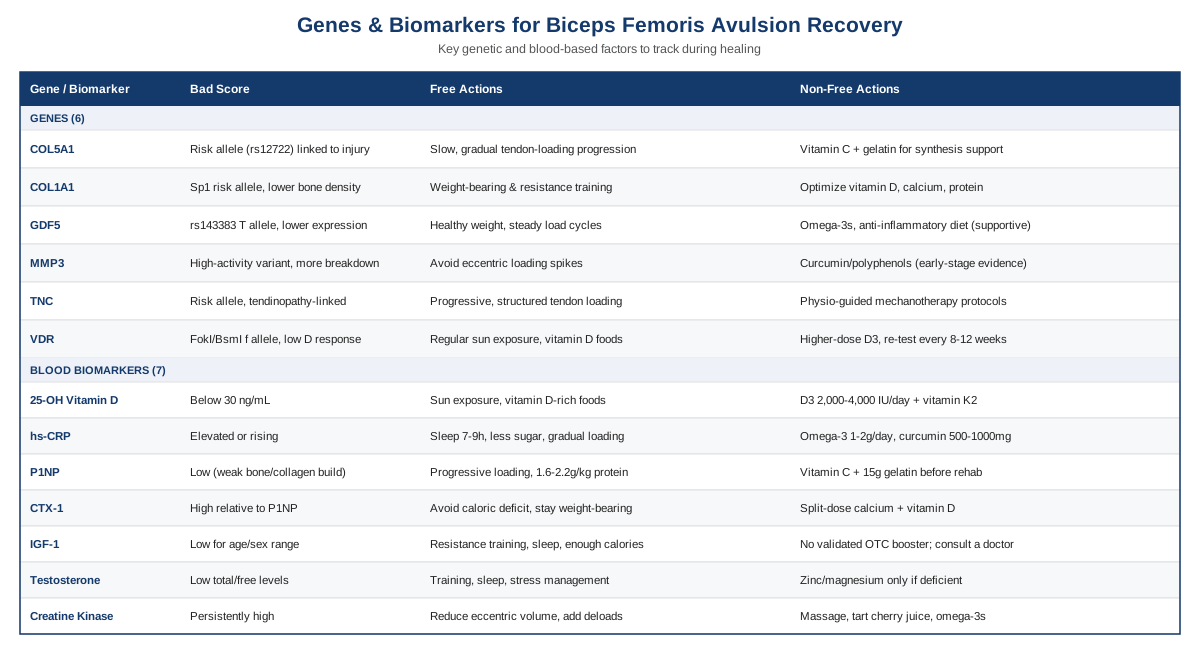
Biceps femoris tendinopathy sits at the intersection of mechanical overload and biological capacity to repair. The genetics section below walks through six genes with real human evidence — COL5A1, COL1A1, MMP3, TNC, GDF5, and ACTN3 — explaining what each one plausibly does to collagen structure, matrix turnover, or muscle-tendon mechanics, and what a realistic plan looks like whether or not you want to add supplements or equipment to the picture. After that, a shorter biomarker section covers six blood markers worth tracking that reflect your tendon's current repair environment rather than your fixed genetic risk. Further down, a research-backed look at a recent expert conversation challenges the instinct to simply rest an irritated tendon, and a final section reviews which complementary approaches — from photobiomodulation to biofeedback — actually have human evidence behind them for tendon pain. The diagram below maps how these six genes and six biomarkers cluster around the same underlying processes: collagen structure, matrix remodeling, and the metabolic/hormonal environment that determines whether your tendon is repairing faster than it's breaking down, or the reverse.
What Genetic Research Suggests About Hamstring Tendon Resilience
Sports genomics is a relatively young field, but tendon and ligament injury is one of the areas where it has produced the most consistent human data — mostly through case-control studies comparing injured athletes to healthy controls, and a handful of meta-analyses pooling those results. Researchers like Malcolm Collins and Alison September, working out of South Africa, have driven much of this work on Achilles tendinopathy, and the same genes they've studied show up repeatedly in hamstring and other lower-limb tendon research. On the popular-science side, geneticists such as Ali Torkamani (Scripps Research) have pushed the broader idea that whole-genome data can flag meaningful, actionable health risks beyond disease screening, while figures like Gary Brecka have popularized the practice of pairing genetic panels with blood biomarkers to build a personalized health plan. Neither of them has published specifically on hamstring tendon genetics, but the underlying philosophy — use your genotype to prioritize where to focus, not to predict your fate — applies directly here.
A practical note before the gene list: most direct-to-consumer panels (23andMe, AncestryDNA) don't report on COL5A1, MMP3, TNC, or GDF5 out of the box. Getting at this information usually means downloading your raw genetic data and running it through a third-party interpretation tool (such as Promethease) or using a whole-genome sequencing service that gives you full variant-level access. It's an extra step, but it's the only way to actually see where you land on these specific variants.
COL5A1 — Collagen V and Tendon Fiber Structure
COL5A1 codes for type V collagen, a minor but structurally important component that regulates how thick collagen fibrils grow during assembly. The most studied variant, rs12722, sits in a region that affects how stable the resulting mRNA is, which in turn affects how much type V collagen ends up in the tendon. A British case-control study found specific COL5A1 allele combinations were associated with increased risk of Achilles tendon pathology and rupture, and a meta-analysis pooling data from Caucasian populations across multiple studies found a consistent association between COL5A1 variants and tendon-ligament injury risk generally.
COL5A1 and Achilles tendon pathology (British case-control study)
COL5A1 and tendon-ligament injury risk meta-analysis
If the Gene Looks Unfavorable: The Plan Without Supplements
The practical implication of a less favorable COL5A1 profile is that fibril packing may run slightly less organized, so the tendon may tolerate rapid loading spikes worse than it tolerates gradual load. The unglamorous fix is progressive tendon loading done consistently: isometric holds early, moving to heavy slow resistance work, then eccentric-biased loading as symptoms allow, over roughly 12 weeks. Keep weekly training load increases under about 10%, and treat sleep (7 to 9 hours) as part of the program rather than an afterthought, since tendon collagen remodeling happens largely during rest.
If the Gene Looks Unfavorable: The Plan With Supplements or Equipment
Fifteen grams of vitamin C-enriched gelatin or hydrolyzed collagen, taken about an hour before a loading session, has been shown to roughly double the collagen synthesis response compared to placebo in a controlled human trial — but only on training days, since the effect depends on mechanical loading happening afterward. This is not a daily supplement; it's cycled around workouts, typically 2 to 4 times per week alongside your tendon-loading sessions. A slant board or flywheel/inertial trainer can help standardize eccentric and heavy-slow-resistance loading. Side effects are minimal: collagen peptides are generally well tolerated, with occasional mild GI upset; vitamin C at these low pre-training doses (well under 500 mg) carries essentially no risk.
COL1A1 — The Main Structural Collagen
COL1A1 codes for type I collagen, the dominant structural protein in tendon. The Sp1-binding-site variant rs1800012 has produced genuinely mixed results: a meta-analysis found the rarer TT genotype associated with reduced risk of sports-related tendon and ligament injury, particularly ACL rupture, while a separate investigation found no significant association specifically with Achilles tendinopathy. This is a case where the evidence is real but not settled — worth knowing, not worth over-interpreting.
COL1A1 rs1800012 meta-analysis on tendon and ligament injury
COL1A1 Sp1 polymorphism and Achilles tendon injury (no association found)
If the Gene Looks Unfavorable: The Plan Without Supplements
Since COL1A1 variation affects the ratio of collagen chains that make up the bulk structural matrix, the most direct lever you control is making sure there's enough raw material and mechanical stimulus to build it correctly. That means adequate total protein intake (roughly 1.6 to 2.2 g per kg of bodyweight daily) and resistance training that takes the hamstring through a full, controlled range of motion rather than only training it in the mid-range.
If the Gene Looks Unfavorable: The Plan With Supplements or Equipment
The same vitamin C plus collagen peptide timing described above applies here. If the tendon is currently too irritable for full-load training, blood flow restriction (BFR) equipment allows a lower absolute load (around 20 to 30% of your one-rep max) to still generate a meaningful training stimulus, typically 2 to 3 sessions per week with rest days in between — BFR is not meant to be used daily. Side effects include temporary bruising or numbness under the cuff; it's contraindicated with clotting disorders and should be learned under supervision the first few times.
MMP3 — The Matrix-Remodeling Enzyme
MMP3 encodes an enzyme that breaks down and remodels collagen matrix as part of normal tendon turnover. A functional promoter variant carries the 5A allele, which drives roughly twice the promoter activity of the 6A allele in lab assays — more matrix breakdown activity, which is fine if synthesis keeps pace, and a problem if it doesn't. A study assessing MMP3 in two independent sample groups found it meaningfully contributed to musculoskeletal soft tissue injury risk profiling, often interacting with COL5A1 status.
MMP3 gene and musculoskeletal soft tissue injury risk profiling
If the Gene Looks Unfavorable: The Plan Without Supplements
If your matrix is being broken down faster than the genetic average, the priority is avoiding load spikes that outpace synthesis — build in a deload week roughly every 4 to 6 weeks of a hamstring training block, rather than pushing continuous progressive overload indefinitely. Be cautious with regular NSAID use around training sessions specifically for this reason; there's a plausible mechanism by which frequent anti-inflammatory use blunts the adaptive collagen synthesis response you're trying to build.
If the Gene Looks Unfavorable: The Plan With Supplements or Equipment
Omega-3 fatty acids (roughly 2 to 3 g combined EPA/DHA daily) have a plausible role in moderating excess inflammatory and matrix-degrading signaling, and can be used continuously with a recheck of relevant bloodwork every 3 to 6 months rather than cycled on and off. Side effects to know: increased bleeding risk at higher doses, and a real interaction risk if you're on blood thinners — check with a physician first if that applies to you.
TNC (Tenascin-C) — Healing and Blood Vessel Growth
Tenascin-C is a matrix glycoprotein involved in tendon healing and in binding growth factors that drive local blood vessel growth after exercise. Research on the rs2104772 variant found that people who are homozygous for the T allele show a blunted angiogenic (blood vessel growth) response to exercise, and separate work identified multiple TNC variants associated with rotator cuff tear risk, underscoring the gene's broader relevance across tendon types.
TNC rs2104772 and blunted exercise-induced angiogenesis
TNC gene variants and rotator cuff tear risk
If the Gene Looks Unfavorable: The Plan Without Supplements
If your genotype suggests a slower vascular adaptation response, the sensible move is simply to program in more time — extend typical rehab timelines by an extra two to four weeks rather than assuming you should be back to full sprinting on a standard schedule. Zone 2 aerobic conditioning (roughly 150 to 180 minutes per week) supports general microvascular health as a foundation, and avoiding nicotine matters more here than for most of the other genes on this list, since it directly impairs microvascular response.
If the Gene Looks Unfavorable: The Plan With Supplements or Equipment
Blood flow restriction training may partially compensate for a blunted angiogenic response by amplifying local growth-factor signaling at lower absolute loads — typically 2 sessions per week, cycled in 4 to 6 week blocks with a short break in between. Beetroot juice or other nitrate-rich foods before training are low-risk and plausible for supporting blood flow, though tendon-specific evidence is thin; avoid concentrated nitrate supplements if you're on blood pressure medication.
GDF5 — Growth Differentiation Factor 5
GDF5 plays a role in tendon, ligament, and joint development. A genetic association study found the functional variant rs143383 in the 5' untranslated region carries roughly double the risk of Achilles tendon pathology in people with the TT genotype, and separate research shows GDF5 expression itself can be modulated epigenetically through DNA methylation — meaning environmental and lifestyle factors may turn this gene's activity up or down independent of the underlying DNA sequence.
GDF5 and TGF-beta family genes in Achilles tendon pathology
GDF5 expression modulated epigenetically by DNA methylation
If the Gene Looks Unfavorable: The Plan Without Supplements
Because GDF5-related risk points toward a structurally more fragile starting tendon rather than an inflammatory problem, the plan leans conservative: longer loading progressions, avoiding aggressive early eccentric overload, and consistent low-grade isometric holds (5 repetitions of 45 seconds at roughly 70% of maximum effort, 2 to 3 times weekly) as a foundation before progressing intensity. Progress by symptom response, not by a fixed calendar.
If the Gene Looks Unfavorable: The Plan With Supplements or Equipment
There's no supplement that directly restores GDF5 expression in humans, so the honest answer here is mostly nutritional adequacy rather than megadosing: enough protein, vitamin C, and the enzymatic cofactors (copper, zinc) involved in collagen crosslinking, covered by a standard multivitamin rather than high-dose isolated supplements. A resistance band or adjustable leg-curl machine helps deliver controlled, progressive eccentric dosing three times weekly. The main risk to flag: overloading a genuinely more fragile tendon too quickly can set back recovery, so err toward under-dosing early rather than over-dosing.
ACTN3 — Alpha-Actinin-3 and Muscle-Tendon Mechanics
ACTN3 codes for a structural protein found in fast-twitch muscle fibers. About 18% of people worldwide carry the XX genotype, meaning they produce no alpha-actinin-3 at all. Research has linked this genotype to greater passive stiffness in the semitendinosus and semimembranosus (two of the three hamstring muscles) and to differences in eccentric muscle damage susceptibility; a study in professional football players found the R577X genotype associated with injury incidence and severity, though the specific relationship with hamstring strain and tendinopathy has produced mixed results across studies and should be read as suggestive rather than settled.
ACTN3 R577X and passive hamstring muscle stiffness
ACTN3 R577X and injury incidence/severity in professional footballers
If the Gene Looks Unfavorable: The Plan Without Supplements
Nordic hamstring curls, progressed slowly in volume over 6 to 8 weeks and performed 2 to 3 times weekly, are the best-supported eccentric conditioning tool for reducing hamstring strain risk broadly, and are a sensible anchor exercise here. Because XX carriers appear more susceptible to eccentric muscle damage, build in genuinely adequate recovery between hard sessions (48 to 72 hours) rather than training the same pattern on consecutive days.
If the Gene Looks Unfavorable: The Plan With Supplements or Equipment
Creatine monohydrate (3 to 5 g daily, taken continuously — no cycling needed) has modest support for aiding recovery from eccentric muscle damage. A Nordic curl bench, partner-assisted setup, or flywheel inertial trainer helps standardize the eccentric overload dose. Creatine is generally very safe; expect mild water retention initially, ensure adequate hydration, and avoid it if you have undiagnosed kidney disease.
Biomarkers Worth Tracking Alongside Your Genetic Profile
Genes describe your starting architecture; biomarkers describe your current repair environment, and that environment changes month to month based on sleep, diet, training load, and hormonal status. Clinicians like Peter Attia, Thomas Dayspring, and Allan Sniderman built their reputations mostly around cardiometabolic biomarkers — ApoB, Lp(a), insulin resistance — rather than tendon health specifically. Their real contribution to borrow here is a mindset: track objective numbers on a schedule, act on trends rather than single readings, and don't wait for a symptom to justify checking a value that's cheap and informative to know in advance.
25-Hydroxyvitamin D
Vitamin D receptors are present on tenocytes, and vitamin D plays a role in regulating collagen synthesis and inflammation within tendon tissue. A large retrospective analysis found that patients with vitamin D deficiency had a significantly higher one-year incidence of distal biceps tendinopathy compared with matched controls — a different tendon than the biceps femoris, but a useful illustration of the same underlying biology.
How to measure it: a standard serum blood draw, roughly $40 to $80 out of pocket, often covered by insurance when ordered by a physician. A reasonable target range is 30 to 50 ng/mL.
If the score is bad, the plan without supplements: sensible midday sun exposure several times a week (duration depends heavily on skin tone and latitude), and dietary sources like fatty fish, egg yolks, and fortified foods.
If the score is bad, the plan with supplements or equipment: vitamin D3 at 2,000 to 4,000 IU daily for most adults, retesting after 3 months; more aggressive loading protocols (for example, higher weekly doses for a limited period) should be physician-supervised if you're significantly deficient. Pairing with vitamin K2 (around 100 mcg) is common practice for calcium metabolism. Side effects are rare below 10,000 IU/day sustained, but sustained high-dose use without monitoring risks hypercalcemia.
Vitamin D deficiency and distal biceps tendon injury risk
High-Sensitivity C-Reactive Protein (hs-CRP)
hs-CRP is a nonspecific marker of systemic inflammation. It's worth an important caveat here: histological studies of tendon pathology, including biceps tendon tissue removed during surgery, consistently show degenerative changes rather than active inflammatory cell infiltration. That means an elevated hs-CRP is unlikely to be a direct marker of tendinopathy itself — it more likely reflects a systemic inflammatory burden (poor sleep, visceral fat, chronic low-grade stress) that indirectly slows down your capacity to repair tendon tissue.
How to measure it: a simple blood draw, $15 to $30 standalone or bundled into broader metabolic panels for $100 to $200.
If the score is bad, the plan without supplements: consistent sleep timing, reducing ultra-processed food and added sugar, addressing visceral fat through caloric awareness and regular zone 2 cardio (about 150 minutes weekly), and stopping smoking.
If the score is bad, the plan with supplements or equipment: omega-3s (2 g combined EPA/DHA daily, continuous use, recheck at 3 months) and curcumin with piperine (500 to 1,000 mg daily, cycled 8 to 12 weeks on with 2 to 4 weeks off given limited long-term safety data). Side effects: fish oil increases bleeding risk at higher doses; curcumin can cause GI upset and may interact with blood thinners.
C-reactive protein: clinical relevance and interpretation
Biceps tendon histopathology showing degenerative, not inflammatory, changes
HbA1c and Fasting Insulin
Chronic hyperglycemia promotes advanced glycation end-products (AGEs) that form abnormal, non-enzymatic crosslinks in tendon collagen, stiffening and weakening the tissue over time. Type 2 diabetes is consistently associated with increased tendinopathy risk, worse tendon pain, and worse outcomes after tendon repair.
How to measure it: HbA1c costs roughly $20 to $50; fasting insulin is often not included in standard panels and costs an extra $30 to $60, though Attia and Dayspring both tend to favor fasting insulin because it flags insulin resistance earlier than HbA1c does.
If the score is bad, the plan without supplements: resistance training combined with zone 2 cardio to improve insulin sensitivity, reducing refined carbohydrate load, and prioritizing 7 to 9 hours of sleep, since poor sleep independently worsens insulin resistance.
If the score is bad, the plan with supplements or equipment: berberine (500 mg, 2 to 3 times daily with meals, cycled 8 to 12 weeks with monitoring) or a continuous glucose monitor (roughly $50 to $100 per month) for real-time dietary feedback. Side effects: berberine can cause GI upset and shouldn't be combined with diabetes medications without physician oversight due to hypoglycemia risk.
Impact of type 2 diabetes on tendinopathy development
IGF-1
Insulin-like growth factor 1 supports tenocyte proliferation and collagen synthesis, and its local signaling within tendon tissue is strongly driven by mechanical loading itself.
How to measure it: a serum blood draw, roughly $80 to $150, more commonly ordered in specialty or longevity-focused clinics than standard primary care.
If the score is bad, the plan without supplements: adequate total protein (1.6 to 2.2 g/kg daily), consistent resistance training as the primary driver of local IGF-1 signaling, and sufficient sleep, since most pulsatile growth hormone and IGF-1 release happens during deep sleep.
If the score is bad, the plan with supplements or equipment: creatine (3 to 5 g daily, continuous) and the vitamin C plus collagen peptide pre-training protocol described earlier can support the downstream collagen synthesis response even without directly raising serum IGF-1. Avoid injectable IGF-1 or growth hormone secretagogues for this purpose specifically — they're not indicated for tendon repair, carry real risks (edema, joint pain, and theoretical concerns around unchecked growth signaling), and should only be used under direct endocrinology supervision for a diagnosed deficiency.
From mechanical loading to collagen synthesis and structural change in human tendon
Estradiol and Testosterone
Research comparing men and women's tendon collagen synthesis found that women respond less than men to an increase in collagen formation after exercise, and a study in postmenopausal women found estrogen replacement therapy influenced tendon collagen synthesis, structural characteristics, and biomechanical properties. Low testosterone in men is separately associated with reduced collagen turnover more generally.
How to measure it: a blood draw, $50 to $100 per hormone or $150 to $250 for a combined panel; timing matters — cycle day for menstruating women, morning draw for testosterone.
If the score is suboptimal, the plan without supplements or equipment: for women, being mindful of training load relative to energy availability (chronic caloric deficit suppresses sex hormones) and discussing hormonal contraceptive or menopause-related tendon symptoms with a physician if they seem to track with hormonal status; for men, sleep, resistance training, and body composition management.
If the score is suboptimal, the plan with supplements or equipment: this is genuinely an area where the honest answer is "without." Hormone replacement or testosterone therapy is a medical decision made with a physician for reasons unrelated to tendon health, and should never be pursued specifically to treat a tendon problem.
Effect of estrogen on tendon collagen synthesis in postmenopausal women
Tendon collagen synthesis at rest and after exercise in women
Ferritin and Iron Studies
Iron is a required cofactor for prolyl and lysyl hydroxylase, the enzymes that stabilize and crosslink collagen. Direct human research on ferritin and tendon-specific outcomes is limited, but the underlying biochemical dependency is well established, which makes this a reasonable marker to know even without tendon-specific trial data.
How to measure it: a blood draw for ferritin, serum iron, and total iron-binding capacity, roughly $30 to $60.
If the score is low, the plan without supplements: iron-rich foods (red meat, legumes paired with vitamin C to improve absorption), and — importantly — investigating the underlying cause (heavy menstrual bleeding, GI blood loss) rather than assuming supplementation alone is the fix.
If the score is low, the plan with supplements or equipment: oral iron (ferrous bisglycinate, roughly 25 to 65 mg elemental iron), dosed every other day rather than daily, since that pattern has been shown to improve absorption; retest every 3 months and stop supplementing once ferritin normalizes. Side effects: constipation and GI upset are common; iron overload is a real risk for anyone with hemochromatosis, so test before you supplement, never the other way around.
The Podcast Conversation That Reframes Tendon Recovery
Much of the standard advice for tendon pain still leans on the old RICE model — rest, ice, compression, elevation — treating an irritated tendon the way you'd treat a fresh sprain. A recent episode of The Tim Ferriss Show (episode #797) featuring Dr. Keith Baar, a tendon and connective tissue physiologist at UC Davis, makes a research-grounded case for why that instinct is often counterproductive for tendinopathy specifically. His underlying published research — including the vitamin C and gelatin study referenced earlier in this article — backs up much of what he argues in the conversation. Here are the ten most useful points from it.
Tendons Adapt on a Much Slower Timescale Than Muscle
Muscle can meaningfully adapt in days; tendon collagen turnover operates on a timescale of weeks to months. Expecting tendon symptoms to resolve as quickly as muscle soreness sets you up for frustration and premature reloading.
Why Rest Alone Can Quietly Weaken a Tendon
Complete rest removes the mechanical signal that tendon cells need to maintain and build collagen. Baar frames appropriate load as functioning like an anti-inflammatory — it's the stimulus that actually drives the tissue toward repair, not just something to be tolerated once pain allows it.
The One-Hour Vitamin C and Collagen Window
In the underlying human trial, subjects who consumed vitamin C-enriched gelatin about an hour before intermittent exercise showed roughly double the collagen synthesis response compared to those who didn't. The timing before loading — not just taking collagen at some point in the day — is the specific detail worth applying.
Vitamin C-enriched gelatin supplementation before intermittent activity augments collagen synthesis
Isometrics as a Low-Risk Starting Point
Baar discusses the concept of a minimal effective dose — around 10 minutes of targeted isometric holds can meaningfully stimulate tendon adaptation without the higher irritation risk of dynamic loading, making it a sensible entry point for an irritable biceps femoris tendon.
Isometrics vs. Eccentrics Are Different Tools for Different Stages
Isometrics are positioned as useful for calming an acutely irritable tendon while still loading it; eccentric work is positioned as the tool for building long-term tendon capacity once the acute irritability has settled. Using only one of the two, indefinitely, misses what each is actually good for.
Growth Hormone and IGF-1 Aren't the Same Story for Tendon
The conversation draws a distinction between systemic growth hormone and local IGF-1 signaling within the tendon itself — the local, exercise-driven signal appears to matter more for collagen synthesis than circulating growth hormone levels, which is a useful corrective against assuming a hormone panel alone tells the whole story.
Collagen Supplementation Won't Work Without Mechanical Loading
This is arguably the single most important point: collagen peptides and vitamin C provide raw material, but without a loading stimulus afterward, that material isn't preferentially directed toward tendon repair. Supplementing without training the tendon is largely wasted effort.
Why Load Should Be Framed as Anti-Inflammatory, Not Just Pain-Provoking
Rather than treating any pain during exercise as a sign to stop, Baar argues for reframing appropriately dosed load as part of the anti-inflammatory response itself — a perspective that lines up with the broader "acceptable pain" guidance many physiotherapists already use in tendon rehab.
JAK Inhibitors and Where Pharmacology Might Cautiously Fit In
The discussion touches on JAK inhibitors as an emerging area of interest for connective tissue conditions. This is early-stage and not something to self-direct — it's included here as a marker of where research attention is heading, not as a current treatment recommendation for hamstring tendinopathy.
Patience Is a Legitimate Clinical Strategy, Not a Failure of Treatment
Given how slowly tendon collagen turns over, a multi-month timeline for meaningful improvement isn't a sign that treatment is failing — it's consistent with the tissue's actual biology. Judging progress week to week against a muscle-injury timeline is the wrong yardstick.
Complementary Approaches Worth Considering
Alongside genetics, biomarkers, and a solid loading program, a handful of complementary modalities have real human evidence specifically in tendinopathy, rather than just general musculoskeletal pain. The four below are the ones with the clearest and most directly relevant support; several other commonly marketed options were left out because the evidence doesn't specifically apply to tendon pathology.
Photobiomodulation (Low-Level Laser Therapy)
Photobiomodulation uses red or near-infrared light at specific wavelengths to influence mitochondrial activity in cells, particularly through cytochrome c oxidase, with the theoretical goal of supporting the cellular energy needed for tissue repair. Because chronic tendinopathy is fundamentally a slow-healing, low-vascularity tissue problem, this mechanism is at least plausible for a structure like the biceus femoris tendon, and it has been studied directly in tendinopathy populations rather than just inferred from other tissue types.
A systematic review and meta-analysis of randomized controlled trials found that low-level red and near-infrared photobiomodulation improved pain and function in tendinopathy overall, and a separate randomized trial combining photobiomodulation with eccentric exercise for Achilles tendinopathy found an added benefit over eccentric exercise alone.
Photobiomodulation for pain and function in tendinopathy: meta-analysis
For biceps femoris tendinopathy specifically, the realistic approach is to use clinician-delivered photobiomodulation as an adjunct — typically 2 to 3 sessions weekly for 4 to 6 weeks — layered on top of, not instead of, a progressive loading program. The evidence base is stronger for Achilles and patellar tendinopathy than for proximal hamstring tendinopathy specifically, and consumer-grade devices vary widely in wavelength and dosing, which makes their real-world effect considerably less certain than clinic-grade equipment used in the trials above.
Massage Therapy
Manual techniques like deep transverse friction massage and pressure massage aim to modulate local pain perception and blood flow, and have specifically been studied as an adjunct to exercise-based tendon rehabilitation rather than as a standalone fix.
A trial on deep transverse friction massage combined with eccentric exercise found it more effective than combining eccentric exercise with ultrasound therapy for improving pain and range of motion, and separate research found pressure massage produced results broadly comparable to eccentric exercise alone for Achilles tendinopathy. That said, the evidence base is limited by consistently small sample sizes across these trials, and a systematic review of deep friction massage specifically noted that firm conclusions are still not possible.
Deep transverse friction massage for treating tendinitis
For the biceps femoris tendon, massage is best used as a short adjunct before or after a loading session (5 to 10 minutes) delivered by a physiotherapist or massage therapist familiar with tendon pathology, since the insertion near the ischial tuberosity sits close to the sciatic nerve and hamstring origin bursa — not a region for aggressive, self-administered pressure without some guidance first.
Biofeedback-Guided Loading
Biofeedback provides real-time information — visual, auditory, or app-based — about force, pain response, or movement quality during exercise. Tendon rehab is notoriously hard to self-dose correctly, since both too little load and too much load can slow progress, and biofeedback tools exist specifically to help keep patients inside the right zone.
A precision exercise-dosing smartphone app system with built-in biofeedback, developed and studied for Achilles tendinopathy, was designed to keep patients within an acceptable pain and load range during home-based rehab, with the goal of improving both outcomes and confidence that the pain experienced during exercise was within a safe range.
Precision exercise-dosing app with biofeedback for Achilles tendinopathy
For biceps femoris tendinopathy, this doesn't require expensive equipment to be useful: a simple pain diary using the well-established rule of thumb — pain up to about 3 to 4 out of 10 during exercise is generally acceptable, provided it settles back to baseline by the next morning — functions as a low-cost version of the same principle. Wearable load sensors or velocity-based training devices during hamstring curls and Nordic curls are a more advanced option if you want objective load data rather than relying on perceived effort alone.
Mindfulness Meditation and MBSR
A subset of persistent tendinopathy cases develop a central sensitization component, where pain becomes disproportionate to actual tissue findings on imaging. Mindfulness-based approaches target attention and pain appraisal rather than the tendon tissue directly, which makes them a reasonable adjunct specifically for that subset of cases rather than a treatment for the tendon itself.
A systematic review and meta-analysis of mindfulness meditation across chronic pain conditions found a small but statistically significant reduction in pain compared to controls, along with benefits for depression symptoms and quality of life. It's worth being direct about the limits here: this evidence is general chronic-pain evidence rather than tendinopathy-specific, and the review itself characterized much of the underlying evidence as low quality, so expectations should be modest.
Mindfulness meditation for chronic pain: systematic review and meta-analysis
For biceps femoris tendinopathy, an 8-week MBSR-style course or a guided app practice of 10 to 20 minutes daily is most worth trying alongside — never instead of — a loading-based rehab program, and is most useful for people who notice fear-avoidance behavior or pain that seems out of proportion to what imaging and clinical testing show.
Where This Leaves You
Biceps femoris tendinopathy responds to the same fundamental input regardless of your genetics or bloodwork: progressive, well-dosed mechanical load, given enough time and enough raw material to actually rebuild. What genetics and biomarkers add is precision — a sense of whether your collagen structure, matrix turnover, or metabolic and hormonal environment is working with you or against you, so that decisions about training pace, supplement timing, and how conservative to be with return-to-sport timelines are based on your actual biology rather than a generic protocol built for an average that may not describe you at all.
None of the six genes or six biomarkers covered here determines your outcome on its own, and none of the complementary approaches replaces a structured loading program. Used together, though, they turn a frustrating, recurring injury into something more legible: a short list of the factors most likely to be slowing you down, and a concrete plan — with or without supplements — for addressing each one. The next reasonable step isn't a dramatic overhaul. It's picking one or two of the markers above to actually get tested, starting a simple pain and load diary if you don't have one already, and bringing both to a sports physiotherapist or physician who can fit them into a plan built around your specific tendon, not a generic one.