This article contains AI generated content.
· UpdatedCACP Syndrome: 1 Gene and 7 Biomarkers to Track
If you or your child has been told the joints are "just inflamed" or that the finger contractures are "probably juvenile arthritis," but the treatments never quite fit, you are not imagining the mismatch. Camptodactyly-arthropathy-coxa vara-pericarditis (CACP) syndrome is rare enough that most rheumatologists will see, at most, a handful of cases in an entire career — and rare disease care tends to arrive late, after other diagnoses have already been tried and failed.
Generic arthritis advice assumes an inflammatory process driving joint damage, which is why anti-inflammatory drugs, immunosuppressants, and standard blood panels often look unremarkable or only partially helpful in CACP syndrome. The underlying problem is mechanical and structural — a missing joint lubricant — not an overactive immune system. That distinction changes almost everything about what should be measured and what should be done about it.
This article takes a narrower, more mechanistic approach. Instead of repeating general joint-health advice, it walks through the specific gene involved, the biomarkers and imaging findings that actually track disease activity and complications in CACP syndrome, a longevity framework for protecting joint function over decades, and complementary approaches with real (if not CACP-specific) supporting evidence.
None of this replaces a geneticist, pediatric rheumatologist, or orthopedic surgeon experienced with lubricin-deficiency disorders. But better information about which numbers matter, how they're measured, and what realistically moves them tends to produce better conversations with those specialists — and better decisions in between appointments.
Summary
CACP syndrome traces back to a single gene, PRG4, which normally produces lubricin — the slippery glycoprotein that lets cartilage surfaces glide instead of grind. When both copies of PRG4 are faulty, joints thicken, hips deform, and fluid can build up around the heart or lungs, all while standard inflammation tests often look completely normal. That last part is the twist most families run into: the blood work says "nothing wrong" while the joints clearly say otherwise.
Below, you'll find the seven biomarkers and imaging findings worth tracking to catch this pattern early and monitor it over time, what the PRG4 gene result actually means for a family (including what genetic counseling can and can't tell you), a set of longevity-book lessons on protecting joint function for decades rather than years, and a short review of complementary therapies with genuine — though not CACP-specific — clinical evidence behind them. Read on before assuming "normal labs" means "nothing to track."
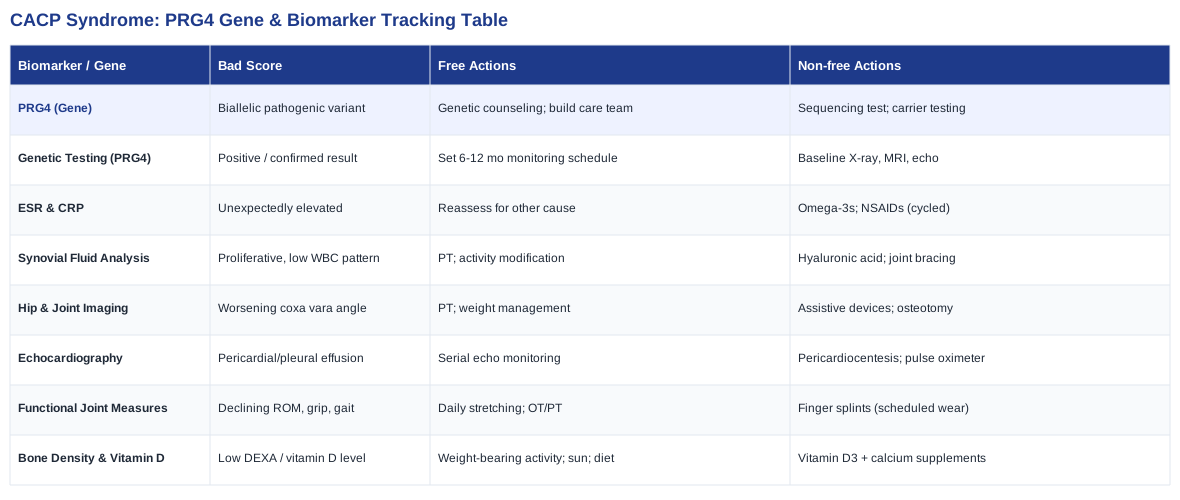
7 Biomarkers Worth Tracking If CACP Syndrome Is on the Table
Before getting into specifics, one honest caveat: CACP syndrome is caused by a structural protein deficiency, not a modifiable metabolic risk factor. None of the biomarkers below can be "optimized" into curing the condition, and no supplement rewrites a loss-of-function mutation in PRG4. What these markers do is something more useful in practice — they tell you and your medical team what's actually happening in the joints, heart, and bones right now, when a treatment is working, when a complication is emerging, and when a joint is closer to needing surgical intervention than it looks on the surface.
1. PRG4 Genetic Test Result
Why it matters: This is the anchor. CACP syndrome is diagnosed clinically but confirmed genetically, and PRG4 is, as far as current research shows, the only gene associated with the condition. A confirmed biallelic pathogenic variant ends the diagnostic odyssey many families go through — CACP is frequently mistaken for juvenile idiopathic arthritis (JIA) for months or years before genetic testing sets the record straight, according to a case review published through the NIH's PMC archive.
How to measure it
Sequencing of the PRG4 coding region, usually ordered as a single-gene test or as part of a skeletal dysplasia / arthropathy gene panel through a clinical genetics lab. Cost typically runs from roughly $250 to $2,000 depending on whether it's a targeted single-gene test, a panel, or exome sequencing, and whether insurance covers it. The NIH Genetic Testing Registry lists accredited labs offering PRG4 sequence analysis.If the result is positive: the plan without supplements or equipment
Genetic counseling for the family (carrier testing for siblings and future pregnancies), establishing care with a geneticist and pediatric rheumatologist or orthopedic specialist familiar with lubricin disorders, and setting a monitoring schedule (typically every 6–12 months while growth is ongoing). No frequency or cycling applies here — this is a one-time confirmatory test, occasionally repeated only if a new variant-detection method becomes available and the original test was inconclusive.If the result is positive: the plan with supplements or equipment
There is no supplement or device that changes a genetic result. The only "equipment" relevant at this stage is arranging access to imaging (X-ray, MRI, echocardiogram) for the baseline workup described below, so future changes have something to be compared against.2. ESR and CRP (Inflammatory Markers)
Why it matters: This is the marker that most often causes CACP syndrome to be misdiagnosed. Erythrocyte sedimentation rate (ESR) and C-reactive protein (CRP) are typically normal or only mildly elevated in CACP syndrome, even when the joints look swollen and restricted — unlike JIA, where both are usually raised. Persistently normal inflammatory markers alongside symmetric large-joint swelling is one of the strongest clues pointing away from classic inflammatory arthritis and toward CACP, as described in a diagnostic review in Journal of Clinical Imaging Science, archived on PMC.
How to measure it
A basic blood draw at any lab. ESR and CRP together typically cost $15–$50 out of pocket, less with insurance, and results are usually available within a day.If the score is bad (unexpectedly elevated): the plan without supplements
An elevated ESR/CRP in someone with confirmed CACP syndrome should prompt a search for a separate or superimposed process — infection, a second autoimmune condition, or a reaction to medication — rather than assuming it's "just the CACP." This means a clinical reassessment, not a home fix. Rechecking every few weeks during an active flare, then returning to routine 6–12 month monitoring once things settle, is a reasonable cadence.If the score is bad: the plan with supplements or equipment
If a clinician identifies a genuinely inflammatory component, omega-3 fatty acids (roughly 2–3 g/day of combined EPA/DHA) have modest, well-documented anti-inflammatory effects in joint disease generally, are low-risk, and can be taken continuously; the main side effects are mild GI upset and a theoretical bleeding risk at high doses, so they're worth flagging before any surgery. NSAIDs (e.g., ibuprofen or naproxen) are commonly trialed for pain even though CACP isn't classically inflammatory — they should be used at the lowest effective dose, cycled rather than taken indefinitely, and monitored for GI and kidney effects, especially with long-term use.3. Synovial Fluid Analysis
Why it matters: Lubricin is normally present in synovial fluid, where it acts as a boundary lubricant and helps keep synovial cells from over-proliferating. In CACP syndrome, synovial fluid shows this proliferative, non-inflammatory pattern — thickened synovium, relatively low white cell counts compared to true inflammatory arthritis — which research on PRG4's joint biology helps explain in a review published via PMC.
How to measure it
Arthrocentesis (joint fluid aspiration) performed by an orthopedic specialist or rheumatologist, usually reserved for cases where the diagnosis is unclear or a joint is unusually swollen. Cost ranges from about $200–$600 depending on the joint and whether imaging guidance is used; this is not a routine home or lab test.If findings are abnormal: the plan without supplements
Persistent synovial hyperplasia is managed with physical therapy focused on maintaining range of motion, activity modification to reduce joint loading, and close orthopedic follow-up rather than repeated aspirations, which don't address the underlying lubricant deficiency.If findings are abnormal: the plan with supplements or equipment
Hyaluronic acid injections are sometimes used in joint disease more broadly to supplement lubrication; evidence specific to CACP syndrome doesn't exist, so this remains an off-label, specialist-guided decision rather than a default. Bracing or offloading devices (e.g., unloader knee braces) can reduce mechanical stress on the most affected joints and are typically worn during activity, not continuously, to avoid muscle deconditioning.4. Hip and Joint Imaging (X-ray and MRI)
Why it matters: Coxa vara — a decrease in the angle between the femoral head and shaft — is progressive in CACP syndrome and is best tracked with sequential imaging rather than by symptoms alone, since joint damage can advance before pain becomes severe. The original description of CACP syndrome, mapping it to chromosome 1 and detailing its joint findings, was published in the American Journal of Human Genetics and is indexed on PubMed.
How to measure it
Plain X-ray of the hips (and other affected joints) costs roughly $100–$400 and is usually sufficient for tracking the coxa vara angle over time. MRI, at $500–$3,000 depending on region and contrast, adds detail on synovial thickening and cartilage status and is typically reserved for surgical planning or unclear cases.If imaging is worsening: the plan without supplements or equipment
Structured physical therapy to preserve range of motion and gait mechanics, weight management to reduce load on weight-bearing joints, and a defined re-imaging interval (commonly every 12 months, or sooner if function changes) so decisions about surgical timing are based on trend data rather than a single snapshot.If imaging is worsening: the plan with supplements or equipment
Assistive devices — canes, orthotics, or ambulation aids — reduce joint stress during daily activity and can be introduced gradually as needed. Calcium and vitamin D (per the bone-density section below) support the surrounding bone if surgery, such as a hip osteotomy or eventual joint replacement, becomes necessary. There is no supplement that reverses coxa vara once it has developed; equipment and surgical timing, not pills, are what change outcomes here.5. Echocardiography (Pericardial and Pleural Effusion)
Why it matters: The "pericarditis" in CACP syndrome's name refers to non-inflammatory fluid buildup around the heart, and sometimes the lungs or abdomen, caused by the same lubricin deficiency affecting serosal surfaces beyond the joints. This can be asymptomatic for long periods before becoming clinically significant, which is why proactive cardiac imaging — not just symptom-based referral — is part of comprehensive monitoring, as reflected in genotype-phenotype data from 35 patients published on PMC.
How to measure it
Transthoracic echocardiogram, typically $1,000–$3,000 without insurance, performed by a cardiologist. Frequency depends on baseline findings — annual screening is reasonable for most patients, more often if an effusion is already present.If an effusion is found: the plan without supplements or equipment
Small, stable effusions are often simply monitored with serial echocardiograms. Larger or symptomatic effusions require cardiology-directed management, which may include pericardiocentesis (drainage) or, in recurrent cases, pericardiectomy — decisions made by a cardiologist, not something to self-manage.If an effusion is found: the plan with supplements or equipment
There's no supplement protocol for a lubricin-related effusion. The only meaningful addition here is ensuring a home pulse oximeter or symptom log (tracking shortness of breath, exercise tolerance) is available between cardiology visits, so any change gets reported promptly rather than waiting for the next scheduled scan.6. Functional Joint Measures: Range of Motion, Grip Strength, and Gait
Why it matters: Camptodactyly (finger flexion contractures) and large-joint arthropathy progressively limit function in ways that lab values don't capture at all. Tracking actual range of motion and mobility gives a much more direct read on daily-life impact and on whether interventions like splinting or therapy are working, which is why functional assessment is a standard part of the clinical picture described in case-series literature on PRG4 truncating mutations, indexed on PubMed.
How to measure it
Goniometry (joint angle measurement) and grip strength testing (dynamometer) are typically done during a physical therapy or occupational therapy visit, often bundled into a standard clinic visit cost of $50–$150. Gait analysis is available at specialized motion-analysis labs for $200–$1,000 if surgical planning requires it.If function is declining: the plan without supplements or equipment
Regular occupational and physical therapy focused on maintaining finger and joint mobility, hand-stretching routines done daily (not just during flare-ups), and gait training if hip involvement affects walking pattern. Consistency matters more than intensity — short daily sessions tend to outperform infrequent long ones for contracture management.If function is declining: the plan with supplements or equipment
Static or dynamic finger splints, worn on a schedule set by an occupational therapist (often nightly, sometimes with daytime wear during flares), can help slow contracture progression; side effects are mostly skin irritation and reduced compliance if worn too aggressively. There's no oral supplement shown to reverse camptodactyly.7. Bone Density and Vitamin D Status
Why it matters: Reduced mobility from joint contractures and arthropathy, sometimes compounded by long-term NSAID or corticosteroid exposure from an earlier misdiagnosis as JIA, can lower bone density over time. This matters directly for CACP patients because many will eventually need joint surgery (osteotomy or replacement), and bone quality affects both surgical risk and recovery.
How to measure it
A serum 25-hydroxyvitamin D blood test costs about $40–$100. DEXA (bone density) scanning runs roughly $100–$300 and is generally recommended if mobility has been significantly reduced for an extended period, or before major orthopedic surgery.If levels are low: the plan without supplements or equipment
Weight-bearing activity to the extent joints tolerate it (even brief daily walking or standing sessions), sensible sun exposure, and dietary sources of calcium and vitamin D (dairy, fortified foods, fatty fish) as a first step before adding supplements.If levels are low: the plan with supplements or equipment
Vitamin D3 supplementation (commonly 1,000–2,000 IU/day for maintenance, higher short-term doses only under medical supervision for confirmed deficiency) paired with calcium (500–1,200 mg/day from diet plus supplements combined, not stacked on top of an already adequate diet) is standard, low-risk, and taken continuously rather than cycled. The main side effect to watch for is hypercalcemia at excessive doses, which is why periodic blood retesting (every 3–6 months during correction, annually once stable) matters more than the supplement itself.Taken together, these seven markers give a far more complete picture than "your bloodwork is normal" — which, in CACP syndrome, is often exactly what you'd expect even as joints and heart tissue are quietly changing underneath.
Understanding the PRG4 Gene Behind CACP Syndrome
The biomarkers above track consequences; this section covers the cause. CACP syndrome is caused by biallelic (inherited from both parents) loss-of-function mutations in PRG4, located on chromosome 1q31.1, which is — based on current research — the only gene definitively linked to this condition, confirmed by molecular studies indexed in the NIH Genetic Testing Registry.
What PRG4 Normally Does
PRG4 codes for lubricin, a large glycoprotein made by chondrocytes at the cartilage surface and by synovial lining cells. Lubricin acts as a boundary lubricant, reducing friction between cartilage surfaces, and it also appears to actively suppress excessive growth of synovial tissue. When both copies of PRG4 carry disabling mutations, joints lose that lubrication and the synovium overgrows — producing the thickened, swollen-but-non-inflamed joints characteristic of CACP syndrome, and the same lubricant deficiency affects the pericardium and pleura, explaining the effusions.
How Genotype Relates to Severity
Not all PRG4 mutations behave identically. Genotype-phenotype analysis of 35 patients from 11 families found meaningful variation in age of onset and joint involvement depending on the specific mutation, though truncating mutations (which eliminate most of the functional protein) are generally associated with earlier and more consistent disease expression than certain missense variants, per findings published in a genotype-phenotype study on PMC and a more recent case series on truncating PRG4 mutations. This is genuinely useful clinically — it can help set expectations for disease course, though it isn't precise enough yet to predict an individual's future with certainty.
Confirming and Understanding a PRG4 Result
Because inheritance is autosomal recessive, both parents of an affected child are typically unaffected carriers, each carrying one mutated copy. Genetic counseling after a positive result should cover carrier testing for siblings, recurrence risk for future pregnancies (25% for each subsequent child of two carrier parents), and — depending on family planning goals — prenatal or preimplantation testing options. This is standard genetic counseling practice for autosomal recessive conditions, not something specific to lubricin biology, but it's frequently the most emotionally loaded part of the diagnosis and worth requesting explicitly if it isn't offered.
If the Gene Is Compromised: The Plan Without Supplements or Equipment
Since PRG4 mutations can't currently be corrected in the clinic, "compensating" means managing the downstream effects rather than the gene itself. That starts with establishing a care team (genetics, pediatric rheumatology or adult rheumatology, orthopedics, and cardiology), setting the monitoring schedule outlined in the biomarker section above, and building a physical therapy routine aimed at preserving joint mobility for as long as possible. Activity modification — favoring low-impact movement (swimming, cycling) over high-impact loading (running, jumping sports) — reduces mechanical stress on joints that already lack their natural lubricant, without requiring any product or device.
If the Gene Is Compromised: The Plan With Supportive Devices and Targeted Compounds
Joint bracing, splinting for camptodactyly, and eventually surgical intervention (hip osteotomy for coxa vara, or joint replacement in more advanced cases) are the "equipment" side of management, timed according to the imaging and functional trends discussed earlier. On the research side, recombinant human PRG4 protein injected directly into joints has shown promising cartilage-protective effects in animal models — including a minipig study showing reduced cartilage damage after joint injury, published via PMC — and gene-therapy approaches using viral vectors to restore PRG4 expression are being tested in mice. These remain preclinical: promising, but not yet studied in humans with CACP syndrome, and not something to seek out or expect access to today. No oral supplement has been shown to compensate for a structural lubricin deficiency; omega-3s, vitamin D, and calcium (covered above) support general joint and bone health but don't substitute for the missing protein.
Where Consumer Genomics Fits — and Where It Doesn't
Researchers like Ali Torkamani, known for large-scale genomic risk research, and practitioners like Gary Brecka, known for popularizing functional biomarker panels, have built their approaches around common, polygenic conditions — cardiovascular risk, metabolic disease, longevity-related traits — where many small genetic effects combine and lifestyle changes can meaningfully shift outcomes. CACP syndrome doesn't fit that model: it's a single-gene, recessive, structural disorder, not a polygenic risk score problem. The consumer-genomics and biomarker-optimization approach isn't the right tool here; formal clinical genetic testing through an accredited lab, paired with genetic counseling, is the accurate analogue for this condition.
With the genetics and biomarkers covered, it's worth zooming out to a broader framework for protecting joint function over an entire lifetime — which is exactly the territory one widely discussed longevity book covers in detail.
10 Lessons from Peter Attia's Outlive That Apply to Long-Term Joint Health
Peter Attia's book Outlive: The Science and Art of Longevity isn't written about rare joint diseases specifically, but its central argument — that most people wait too long to act on preventable functional decline — applies directly to anyone managing a progressive joint condition like CACP syndrome, where the goal isn't just avoiding pain today but preserving mobility decades from now.
1. Medicine 3.0 Means Acting Before the Crisis
Attia contrasts reactive "Medicine 2.0" (treat disease once it appears) with proactive "Medicine 3.0" (identify risk and intervene early). For CACP syndrome, this means not waiting for a joint to fail before starting physical therapy, imaging surveillance, or surgical consultation — the biomarker schedule above is the practical expression of this idea.
2. Define Your Centenarian Decathlon
Attia recommends identifying the specific physical tasks you want to be able to do late in life — carrying groceries, getting up off the floor, playing with grandchildren — and training backward from there. For someone with progressive arthropathy, this reframes therapy goals around concrete function rather than abstract "less pain."
3. VO2 Max Is the Strongest Single Longevity Marker Attia Cites
Cardiorespiratory fitness predicts mortality risk more strongly than almost any other single marker in the longevity literature he reviews. Low-impact cardio (swimming, cycling) that's realistic for compromised joints can build this without adding joint load.
4. Stability Comes Before Strength
Attia argues that training joint stability and proprioception first prevents the injuries that derail strength progress later — directly relevant when joints already lack normal lubrication and are more vulnerable to injury from instability.
5. Preserve Muscle Mass to Offload the Joints
Strength training, done within a pain-free range and guided by a physical therapist, keeps supporting muscles strong enough to reduce direct load on damaged joints — a mechanical benefit that's especially relevant when the joint's natural shock absorption (lubricin) is missing.
6. The "Marginal Decade" Argument for Acting Early
Attia's concept of the "marginal decade" — the last ten years of life, often marked by functional loss — is a case for early, sustained intervention rather than late rescue. For a progressive condition like CACP syndrome, this argues for consistent, lifelong joint-preserving habits rather than sporadic effort during flares.
7. Zone 2 Training for Metabolic Health
Sustained, low-intensity aerobic exercise (roughly 180 minutes/week in Attia's framework) supports mitochondrial and metabolic health without the joint stress of high-intensity training — a good fit for someone managing joint limitations.
8. Sleep Is Foundational, Not Optional
Attia treats sleep quality as a pillar equal to exercise and nutrition, citing its role in tissue repair and pain modulation — relevant for anyone managing chronic joint discomfort, where poor sleep and pain sensitivity often reinforce each other.
9. Emotional Health Is Part of Healthspan
Attia is explicit that lifespan without emotional wellbeing isn't the goal — a point worth remembering for families navigating a rare pediatric diagnosis, where the emotional burden of a chronic, visible condition is real and worth addressing alongside physical management.
10. Personalize Rather Than Follow Generic Guidelines
The book's overarching argument is that generic population-level advice is a starting point, not an endpoint — individual biomarkers and response to intervention should guide the plan. That's the same philosophy behind tracking the seven CACP-specific markers earlier in this article rather than relying on generic arthritis advice.
These are general longevity principles adapted to a specific situation, not condition-specific findings — but they give structure to the "what do I do between doctor visits" question that a diagnosis alone doesn't answer. Alongside that structure, several complementary, non-drug approaches have real clinical evidence in joint and pain conditions worth considering.
Complementary Approaches Worth Considering
None of the following treat CACP syndrome directly — no clinical trials have been conducted in this specific population, since it's too rare for dedicated trials to exist. The evidence below comes from studies in more common joint and pain conditions (osteoarthritis, rheumatoid arthritis, chronic pain), and is offered as a reasonable, low-risk extrapolation rather than a proven CACP-specific treatment.
Tai Chi
Tai chi combines slow, controlled joint movement through available range of motion with balance training and breath control, which makes it relevant for a condition where joint stiffness and reduced mobility are central problems, without the impact loading of higher-intensity exercise.
A 52-week randomized trial funded by the NIH's National Center for Complementary and Integrative Health compared tai chi directly against standard physical therapy for knee osteoarthritis and found comparable benefit for pain and function, as reported in a study on PubMed, with a broader systematic review of six trials reaching similar conclusions on PMC.
For CACP syndrome, tai chi should be introduced under physical therapy guidance, adapted to whichever joints are most restricted (finger contractures may limit some hand postures), practiced 2–3 times weekly in short sessions, and stopped or modified if any movement causes sharp (rather than mild stretching) discomfort.
Yoga
Yoga's combination of gentle stretching, strengthening, and breath-based relaxation addresses both the mobility and the stress components of living with a chronic joint condition, and unlike higher-impact exercise, poses can typically be modified to accommodate limited joint range.
A randomized controlled trial in sedentary adults with arthritis found meaningful improvements in pain, energy, and physical function after a structured yoga program, published in The Journal of Rheumatology and indexed on PubMed, and a separate pilot RCT found yoga feasible and safe specifically for rheumatoid arthritis-related pain and sleep disruption, per this PubMed-indexed study.
A realistic approach for CACP syndrome is a restorative or chair-based yoga class taught by an instructor experienced with joint limitations, 1–3 sessions per week, avoiding deep flexion poses that stress already-contracted finger or hip joints.
Massage Therapy
Massage addresses muscle tension and guarding that commonly develops around chronically restricted or painful joints, and unlike active exercise, it requires no effort or range of motion from the patient, making it accessible even during flares.
A randomized controlled trial found that eight weeks of Swedish massage produced significant improvement in knee osteoarthritis symptoms compared to a delayed-treatment control, reported in PubMed, and a follow-up dose-finding trial identified 60-minute weekly sessions as an effective, well-tolerated regimen, per this study.
For CACP syndrome, a once-weekly 30–60 minute session focused on muscles surrounding affected joints (not deep pressure directly on swollen joints) is a reasonable starting point, with a licensed therapist informed of the diagnosis so pressure and positioning can be adjusted around fragile or deformed joints.
Mindfulness Meditation / MBSR
Chronic joint pain and visible physical difference (from contractures or gait changes) carry a psychological load that's easy to underestimate; mindfulness-based stress reduction (MBSR) targets the pain-attention-distress cycle directly rather than the joint itself.
A meta-analysis of 30 randomized controlled trials found mindfulness meditation associated with a small but statistically significant reduction in chronic pain compared to control conditions, along with improvements in depression symptoms and quality of life, summarized in this PMC-indexed systematic review. The effect size is modest and evidence quality is rated low to moderate, so this is a genuine complement, not a primary treatment.
A structured 8-week MBSR course, or a shorter daily practice (10–20 minutes) using guided audio, is a low-risk starting point; the main caution is that mindfulness helps with pain coping, not with the structural joint changes themselves, so it works best alongside — not instead of — the medical monitoring described earlier.
Putting It All Together
CACP syndrome is a single-gene condition with a well-defined cause, and that clarity is genuinely useful — it means the monitoring plan doesn't have to guess. Confirming the PRG4 result, tracking the seven biomarkers and imaging findings outlined here on a regular schedule, and building a joint-preserving routine informed by longevity principles and reasonable complementary practices gives most families a much clearer path than "wait and see."
None of this changes the underlying genetics, and it shouldn't be mistaken for a cure — the honest goal is preserving function and catching complications early, not reversing the condition. The next concrete step is straightforward: if a diagnosis isn't yet confirmed, request PRG4 genetic testing and genetic counseling; if it is confirmed, bring this list of biomarkers to your next rheumatology or orthopedic appointment and ask which ones are already being tracked, and which aren't yet but should be.
Musculoskeletal: Bone Conditions
Cardiovascular: Heart Conditions
Autoimmune: Connective Tissue Conditions