This article contains AI generated content.
· UpdatedCamurati-Engelmann Disease Genes and Biomarkers: 1 Gene and 7 Biomarkers to Track
If you are reading this, you have probably already sat through an appointment where a doctor said some version of "it's rare, we don't have a lot of data, let's just monitor it." That answer is honest, but it is not satisfying when the pain in your shins is real, your child's gait is changing, or you are trying to decide whether to start a medication that comes with real tradeoffs. Camurati-Engelmann disease (CED) affects so few people worldwide that most general practitioners will see zero cases in their entire career. The information gap is not your imagination.
Generic bone-health advice makes this worse, not better. Most of what circulates about "strengthening bones" - more calcium, more weight-bearing exercise, more vitamin D - is written for osteoporosis, a condition where bone is too thin. CED is close to the opposite problem: bone that keeps thickening in the wrong places because a single overactive signaling pathway will not turn off. Advice built for the wrong mechanism can be neutral at best and counterproductive at worst.
This article takes a narrower, more mechanical approach. Camurati-Engelmann disease is one of the rare situations in medicine where a single gene, TGFB1, explains almost the entire biological story, and where a specific, trackable set of lab values and imaging findings tells you whether the disease is active or quiet. That combination - one gene, a handful of measurable markers - is unusually tractable compared to most chronic conditions, even if the disease itself remains rare and only partially treatable.
None of this amounts to a cure, and no one should read it that way. But understanding exactly which pathway is misbehaving, which numbers to ask your endocrinologist or geneticist about, and which repurposed medications are actively being studied gives you something more useful than reassurance: a way to participate in your own care with sharper questions and clearer expectations.
Summary
Camurati-Engelmann disease comes down to one gene behaving badly in a very specific way - not too little activity, but too much, and in a pathway that controls how aggressively your skeleton builds new bone. That single mechanical fact is why the disease looks so different from ordinary bone conditions, and why it responds, sometimes, to medications originally designed for entirely different problems like high blood pressure and heart valve disease.
Below, you will find the seven lab and imaging markers that actually reflect what CED is doing inside your bones and cranial nerves right now, with realistic costs, monitoring frequency, and what non-drug and drug-adjacent options may help when a number is trending the wrong way. You'll also find a plain explanation of the TGFB1 mutation itself, why the two most common hot-spot changes behave predictably, and why a mainstream consumer DNA kit will not catch this even if you've already spat in a tube for one. There's a walk through a decade of TGF-beta pathway research that is quietly reshaping how specialists think about treatment, including the losartan story that surprised a lot of clinicians. And finally, a look at which complementary approaches have real, if modest, human evidence for the chronic pain, gait changes, and muscle weakness that come with this disease - and which popular wellness trends simply don't apply here.
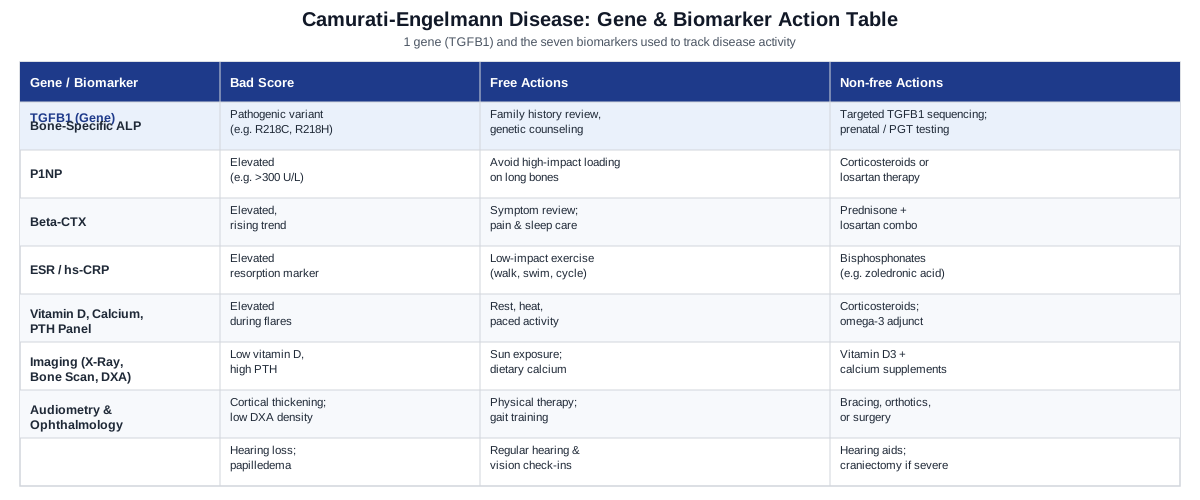
The Seven Biomarkers Worth Tracking in Camurati-Engelmann Disease
CED does not have a single blood test that confirms or rules it out day to day - diagnosis rests on imaging plus genetic testing. But once the diagnosis is established, a specific cluster of biomarkers tells you and your care team whether the disease is biologically active, quiet, or responding to treatment. Bone-specific formation markers, resorption markers, inflammatory markers, structural imaging, and functional testing of the cranial nerves most at risk each answer a different question. Tracked together over time, rather than as one-off snapshots, they turn a vague sense of "good days and bad days" into an actual trend line you can discuss with an endocrinologist, geneticist, or orthopedic specialist.
A caution before the details: CED is a rare, specialist-managed disease. None of the "plans" below are a substitute for corticosteroids, losartan, or bisphosphonate therapy prescribed and monitored by a physician familiar with this condition - they are the supportive, lower-risk actions that sit alongside that care.
1. Bone-Specific Alkaline Phosphatase (ALP)
Why it matters: Alkaline phosphatase is produced by active osteoblasts, the cells laying down new bone. In CED, excess active TGF-beta signaling drives osteoblasts into overdrive, and total or bone-specific ALP is frequently elevated - in one documented case, ALP started at 387 U/L and fell to 311 U/L over 28 months of treatment (Cui et al., 2022). It's the most widely available, longest-used marker of bone formation activity in this disease.
How to measure it
A standard blood draw measures total ALP (roughly $20-$50 through most labs); a bone-specific isoenzyme test isolates the skeletal fraction from liver ALP for about $50-$100 and is more specific when liver values are also abnormal. Most specialists recheck this every 3 to 6 months during active symptoms, and less often once stable.If the score is bad, the plan without supplements
Sustained elevation on its own is not an emergency, but it is a signal to bring imaging and symptom review forward rather than waiting for the next scheduled visit. Reducing high-impact loading on affected long bones (avoid repetitive running or jumping sports during flares) does not lower ALP directly but avoids adding mechanical stress to bone that is already remodeling abnormally. This costs nothing and has no side effects beyond adjusting activity choices.If the score is bad, the plan with supplements or equipment
Correcting vitamin D and calcium status (see marker 5) is the one "supplement-adjacent" step with real supporting rationale, since deficiency can independently push bone turnover markers higher and muddy the picture. Beyond that, ALP normalization in CED is primarily achieved through prescription therapy - corticosteroids or losartan - not supplements; discuss dosing and tapering schedules with the prescribing specialist, since both carry real side-effect profiles (steroids: weight gain, mood changes, bone density loss elsewhere with long-term use; losartan: dizziness, low blood pressure, elevated potassium).2. P1NP (Procollagen Type 1 N-Propeptide)
Why it matters: P1NP is a more specific bone-formation marker than total ALP, released when new type 1 collagen is being laid down by osteoblasts. It tends to move earlier and more dramatically than ALP - in the same case report, P1NP dropped from 1,627 ng/ml to 447 ng/ml over the same 28-month treatment course, a far larger relative change than ALP showed (Cui et al., 2022). That sensitivity makes it useful for judging whether a treatment change is actually working before symptoms shift.
How to measure it
P1NP requires a specialty or reference lab and typically costs $60-$150 out of pocket where not covered by insurance; it's less universally available than basic ALP, so ask whether your endocrinology clinic has a standing relationship with a lab that runs it. It is generally checked alongside ALP and CTX every 3-6 months.If the score is bad, the plan without supplements
As with ALP, a rising P1NP is a cue to prioritize the next imaging check and a symptom review (new pain, new gait change, new hearing symptoms) rather than a number to chase in isolation. Sleep and pain management matter here indirectly: poorly controlled pain often leads to reduced activity and deconditioning, which complicates interpreting whether a bone marker change reflects disease activity or simple disuse.If the score is bad, the plan with supplements or equipment
There is no supplement shown to lower P1NP in CED specifically. The documented improvements come from combination prednisone and losartan therapy under specialist supervision, typically low-to-moderate dose prednisone tapered to the lowest effective alternate-day dose, plus losartan around 50 mg once daily, adjusted for blood pressure and kidney function with routine labs every few months to watch for elevated potassium and reduced kidney filtration.3. Beta-CTX (C-Terminal Telopeptide of Type 1 Collagen)
Why it matters: CTX reflects osteoclast-driven bone resorption - the breakdown side of the remodeling cycle. Because CED involves TGF-beta-driven activation of osteoclasts as well as osteoblasts, both formation and resorption markers tend to run high together, a pattern of generally accelerated bone turnover rather than pure overbuilding (research on Rho GTPase-mediated osteoclast activity in CED). CTX helps distinguish whether treatment is calming the whole turnover cycle or only one side of it.
How to measure it
A morning fasting blood draw (levels vary by time of day) runs about $50-$120 and is available at most reference labs. It pairs naturally with P1NP testing on the same visit, typically every 3-6 months during active management.If the score is bad, the plan without supplements
Gentle, low-impact movement (walking, swimming, stationary cycling) supports circulation and muscle maintenance without adding the mechanical strain that higher-impact exercise places on already-remodeling bone. This is free and low-risk, though anyone with significant leg pain or gait instability should get physical therapy guidance first to avoid falls.If the score is bad, the plan with supplements or equipment
Bisphosphonates target osteoclast activity directly and have occasionally lowered CTX and bone pain in CED, but the evidence is genuinely mixed - one case series found pamidronate added no benefit beyond corticosteroids alone, while zoledronic acid helped in others (failure of bisphosphonate response, case report; literature review of bisphosphonate outcomes in CED). These are prescription infusions or oral drugs, not supplements, and carry their own risks (jaw osteonecrosis with long-term use, flu-like symptoms after infusion, GI irritation with oral forms) - a reason this decision belongs with a specialist experienced in metabolic bone disease, not a self-directed trial.4. ESR and hs-CRP (Inflammatory Activity Markers)
Why it matters: Elevated erythrocyte sedimentation rate (ESR) and high-sensitivity C-reactive protein (hs-CRP) track with active disease flares in CED and correlate with both bone pain intensity and the bone turnover markers above, reflecting the pro-inflammatory effects of excess active TGF-beta signaling. These are the cheapest, fastest way to get a snapshot of "is something active right now."
How to measure it
Both are simple, inexpensive blood tests, typically $10-$30 each and available anywhere. Many patients and specialists use ESR/CRP as a quick check during a pain flare, separate from the routine 3-6 month bone marker panel.If the score is bad, the plan without supplements
During a flare, reducing physical load, prioritizing sleep, and using non-drug pain strategies (heat, gentle stretching, paced activity) can help manage symptoms while inflammation settles, though they won't change the underlying ESR/CRP number directly. This costs nothing and carries no meaningful risk beyond needing to balance rest against deconditioning.If the score is bad, the plan with supplements or equipment
Corticosteroids remain the most consistent way to bring down inflammatory markers and pain in CED, typically started around 1.0-2.0 mg/kg/day of prednisolone and tapered to the lowest alternate-day dose that controls symptoms - a regimen requiring ongoing physician oversight given long-term steroid side effects (bone density loss elsewhere, blood sugar changes, mood effects, growth suppression in children). Omega-3 fatty acid supplementation has general anti-inflammatory evidence in other conditions and is low-risk at typical doses (1-2 g/day EPA/DHA), but has not been specifically studied in CED, so treat it as a plausible adjunct rather than a proven one, and check with your doctor if you're also on blood thinners.5. Vitamin D, Calcium, and Parathyroid Hormone (PTH) Panel
Why it matters: This trio doesn't measure CED activity directly, but deficiency in any of them distorts every other bone marker and can worsen bone pain independently. In one well-documented case, correcting a severe vitamin D deficiency (6.7 ng/ml) to an adequate level (39.6 ng/ml) alongside normalizing an elevated PTH (from 83.7 down to normal range) was part of the same treatment course that improved bone turnover markers and pain (Cui et al., 2022).
How to measure it
25-hydroxyvitamin D, calcium, and PTH together typically cost $80-$150 as a panel, or can be ordered individually for $20-$50 each. Checking every 6-12 months is reasonable once levels are stable; more often if actively correcting a deficiency or on long-term steroid therapy, which itself affects calcium metabolism.If the score is bad, the plan without supplements
Reasonable sun exposure (10-20 minutes several times a week, skin-type and climate dependent) and a diet with dairy, fortified foods, leafy greens, and fatty fish can modestly support vitamin D and calcium status, though diet alone rarely corrects a significant deficiency once one exists.If the score is bad, the plan with supplements or equipment
Vitamin D3 supplementation (typically 1,000-4,000 IU/day for maintenance, or physician-directed higher repletion doses for diagnosed deficiency, often 50,000 IU weekly for 6-8 weeks) alongside adequate dietary or supplemental calcium (1,000-1,200 mg/day total intake) is standard, low-risk practice, but retesting after 8-12 weeks is important since excess vitamin D and calcium together can raise the risk of hypercalcemia - a real, if uncommon, side effect. This is especially worth doing before or during corticosteroid or bisphosphonate therapy, both of which interact with calcium metabolism.6. Imaging Biomarkers: X-Ray, Bone Scan, and DXA
Why it matters: Blood markers tell you turnover is happening; imaging tells you where and how much. Long-bone X-rays show the classic symmetric cortical thickening of the diaphysis, technetium bone scans highlight areas of active new bone formation before X-ray changes are obvious, and DXA (dual-energy X-ray absorptiometry) tracks bone density trends over time, including in unaffected regions that may be at risk from long-term corticosteroid use.
How to measure it
A DXA scan generally costs $75-$250 (often insurance-covered), plain X-rays of the long bones run roughly $100-$300 depending on how many views are needed, and a full-body bone scan is more involved at $500-$1,500. GeneReviews recommends "serum ESR and bone scan as needed" to assess disease activity rather than on a fixed schedule, meaning imaging frequency should be driven by symptom changes, not a calendar (GeneReviews, Camurati-Engelmann Disease).If the score is bad, the plan without supplements
Physical therapy focused on gait training, contracture prevention, and safe strengthening around affected limbs is the most evidence-consistent non-drug response to worsening imaging findings, since much of the functional disability in CED comes from muscle weakness and joint contractures around thickened bone rather than the bone itself.If the score is bad, the plan with supplements or equipment
Bracing, orthotics, or a cane/walker for gait support are practical equipment-based responses when imaging shows progression affecting weight-bearing bones - low-risk, though a physical therapist or orthopedist should fit these rather than guessing at over-the-counter options. Surgical intervention (bone realignment, or intramedullary rodding in severe cases) is reserved for significant deformity or fracture risk and is a decision made jointly with an orthopedic surgeon experienced in skeletal dysplasias.7. Audiometry and Ophthalmologic Assessment (Cranial Nerve Function)
Why it matters: Because CED can thicken the bone around the skull base and cranial nerve foramina, hearing loss affects an estimated 19-54% of patients and headaches occur in about 25%, with vision complications arising from optic nerve compression in a meaningful subset of those with skull-base involvement (GeneReviews, Camurati-Engelmann Disease). These aren't blood tests, but they are genuine functional biomarkers - early changes here can be caught before permanent damage if monitored proactively.
How to measure it
A baseline and then annual audiogram (often paired with brainstem auditory evoked response, or BAER, testing) runs roughly $50-$200, and a comprehensive ophthalmologic exam with attention to optic disc swelling (papilledema) and visual fields costs about $100-$250. When skull-base involvement is suspected, a CT of the temporal bones or orbits ($300-$1,500) helps localize the narrowing. GeneReviews recommends annual audiology evaluation and inner-ear imaging as standard surveillance (GeneReviews, Camurati-Engelmann Disease).If the score is bad, the plan without supplements
For early conductive hearing changes from middle-ear involvement, an otolaryngologist may recommend bilateral myringotomy (small ear-drum incisions to drain fluid), which has helped some patients with serous otitis related to CED - a procedural rather than supplement-based fix. Regular hearing and vision check-ins simply ensure changes are caught while still manageable.If the score is bad, the plan with supplements or equipment
Hearing aids are the standard equipment response for progressive sensorineural loss, and low-vision aids or corrective lenses help with visual changes from optic nerve involvement; in more significant cases of raised intracranial pressure or optic canal narrowing, craniectomy to decompress the affected nerve is a recognized, specialist-directed intervention rather than something manageable outside a surgical center. There is no supplement shown to reverse bone-related cranial nerve compression - this is one area where equipment and, when needed, surgery genuinely outperform any adjunct approach.Tracking these seven markers together, rather than reacting to any single abnormal result, is what turns "the disease seems worse lately" into an actual conversation with data behind it. That same logic - looking at mechanism rather than surface symptoms - applies just as much to the genetic side of CED, which is worth understanding even though it changes less over time than any lab value.
What the TGFB1 Gene Tells You
Unlike most chronic conditions discussed in genetic terms, where dozens of common variants each nudge risk slightly, Camurati-Engelmann disease is caused almost entirely by mutations in a single gene: TGFB1. That makes the genetics section of this article different in kind from a typical "genes and biomarkers" piece - there is no polygenic score to interpret, no long list of SNPs to weigh. There is one gene, a small number of well-characterized mutation hotspots, and a clear, if not fully predictable, inheritance pattern.
The Gene Behind the Disease
TGFB1 encodes transforming growth factor beta-1, a protein that in its normal form is produced as an inactive precursor. Part of that precursor, called the latency-associated peptide (LAP), wraps around the active growth factor and holds it in check until the body needs it. Camurati-Engelmann disease results from mutations that damage this LAP "safety latch," most commonly through single amino acid substitutions in the carboxy terminus of LAP that disrupt the protein dimerization needed to keep TGF-beta1 inactive (GeneReviews, Camurati-Engelmann Disease). Two changes account for the large majority of cases: p.Arg218Cys (roughly 40% of cases) and p.Arg218His (roughly 35% of cases), both affecting the same critical amino acid position. Interestingly, research shows that total circulating TGF-beta1 is often similar between affected and unaffected people - it's specifically the active, unrestrained fraction of the protein that runs high, which is why total TGF-beta1 blood levels are not a useful biomarker on their own (TGFB1 mutations in four new families with CED).
How the Mutation Changes Bone Biology
Once TGF-beta1 escapes its latency control, it over-signals to both bone-building osteoblasts and bone-resorbing osteoclasts, accelerating overall bone turnover and shifting the balance toward net new bone formation, especially in the shafts (diaphyses) of long bones and the skull. Laboratory studies using cells from patients with the R218C mutation found osteoclast formation increased roughly five-fold and bone resorption activity roughly ten-fold compared to controls, with Rho GTPase signaling identified as a key downstream mechanism connecting excess TGF-beta1 activity to this remodeling surge (Rho GTPase-mediated bone turnover in CED). This is why CED biomarkers show elevated formation and resorption markers simultaneously rather than one or the other - the whole remodeling cycle is running too fast, not just tilted in one direction.
Inheritance and Family Risk
CED follows autosomal dominant inheritance: a single altered copy of TGFB1 is enough to cause the condition, and each child of an affected parent has a 50% chance of inheriting the pathogenic variant (GeneReviews, Camurati-Engelmann Disease). Some cases arise from de novo mutations with no family history at all, and the exact proportion of spontaneous versus inherited cases isn't precisely established. Penetrance is incomplete and expressivity is genuinely variable - some people confirmed to carry a pathogenic TGFB1 variant have had entirely normal X-rays, while others in the same family have significant symptoms. A detailed family case study of the c.653G>A variant illustrated exactly this kind of variability within a single pedigree, with relatives carrying the identical mutation experiencing meaningfully different severity (phenotypic variability in a CED family, 2024). Practically, this means a mild case in a parent does not reliably predict a mild case in a child, and a family history of "just some bone pain" should not be assumed to rule out a more significant course in another relative.
Getting Tested (Why a Consumer DNA Kit Won't Catch It)
Direct-to-consumer genetic testing services and the polygenic wellness panels popularized in mainstream health media - the kind of broad SNP-based reports associated with figures like Gary Brecka or discussed critically by genomics researchers such as Ali Torkamani - are built to screen large numbers of common variants across many people cheaply. They are not designed to detect rare, highly penetrant, disease-causing mutations in a single gene like TGFB1, and Torkamani's own published commentary on consumer genomics has repeatedly flagged this exact gap: common-SNP arrays miss the rare structural and single-gene variants responsible for most classic Mendelian disorders. If CED is suspected based on imaging or family history, the correct test is targeted TGFB1 sequence analysis or, in ambiguous cases, a clinical exome - not a consumer ancestry-and-wellness kit. Sequence analysis alone detects the pathogenic variant in more than 90% of clinically diagnosed cases, and no large gene deletions have been reported in this condition, meaning standard sequencing is usually sufficient without needing more specialized deletion/duplication testing (GeneReviews, Camurati-Engelmann Disease).
Genetic Counseling and Family Planning
Once a familial TGFB1 variant is identified, prenatal testing and preimplantation genetic testing become available options for family planning, and genetic counseling can walk through the 50% recurrence risk per pregnancy along with the honest caveat that severity in a future child cannot be predicted from a parent's own experience of the disease (GeneReviews, Camurati-Engelmann Disease). For adult relatives of a diagnosed patient, genetic testing (rather than waiting for symptoms or X-ray changes) can clarify who actually carries the variant, which matters given how variable and sometimes silent the radiographic findings can be. One additional wrinkle worth knowing: at least one reported case carried both a novel TGFB1 mutation and a separate missense change in TNFSF11 (the gene encoding RANK ligand, another bone-remodeling regulator), suggesting that in atypical or unusually severe presentations, broader genetic evaluation beyond TGFB1 alone may be worth discussing with a geneticist (unique CED variant with TGFB1 and TNFSF11 findings).
Knowing the mechanism behind the mutation naturally raises the next question: if excess active TGF-beta signaling is the actual problem, can it be targeted directly? That question is exactly what has driven the most interesting treatment research in CED over the past decade.
What a Decade of TGF-Beta Research Reveals
The most consequential shift in CED research hasn't been a new gene discovery - it's been a change in treatment logic. For decades, corticosteroids were the only reliably effective option, treating inflammation and pain without addressing the upstream signaling problem. More recent research has tested whether drugs that specifically dampen TGF-beta signaling - originally developed for entirely different conditions like hypertension - could do more. Here's what that body of work actually shows, distilled into the findings that matter most if you're trying to understand where treatment thinking is heading.
1. The Core Problem Is a Broken "Off Switch," Not Too Much Protein
The foundational insight is mechanistic: CED mutations don't necessarily increase how much TGF-beta1 the body makes, they damage the latency mechanism that keeps it inactive until needed. This reframes CED as a signaling-control disorder rather than a simple overproduction problem, which is precisely why drugs that block signal transduction downstream, rather than drugs that just lower general inflammation, became worth testing.2. Losartan Was Borrowed From an Entirely Different Disease
Losartan is an angiotensin II receptor blocker developed for blood pressure control, but it has a well-documented secondary effect of reducing TGF-beta signaling - a property that made it a rational, if unconventional, candidate for a disease where excess TGF-beta activity is the root cause. This is the kind of drug-repurposing logic that has also been explored in other TGF-beta-related connective tissue conditions, and it's a good example of treatment innovation coming from understanding mechanism rather than waiting for a disease-specific drug to be developed from scratch.3. One Case Report Showed Pain Elimination and Restored Exercise Capacity
A notable case documented a patient whose severe, incapacitating bone pain resolved and whose physical activity capacity improved substantially after starting losartan, a result striking enough to be published specifically because it was unexpected for a repurposed blood pressure medication (elimination of pain and improved exercise capacity with losartan). Case reports are not proof of consistent efficacy, but this one shaped how many specialists now think about second-line options.4. Combination Therapy Showed Something Steroids Alone Rarely Achieve
In the case series discussed earlier in this article, adding losartan to a tapering corticosteroid regimen was associated not just with improved bone pain and lower bone turnover markers, but with the initiation of delayed puberty in an affected teenager - suggesting the treatment effect extended beyond bone pain into broader hormonal and growth pathways affected by chronic disease activity (Cui et al., 2022).5. It Doesn't Work for Everyone - And That's Been Published Honestly
Not every case responds. A separate case report documented failure of both conventional corticosteroid treatment and losartan to meaningfully help a patient, an important counterweight to the more optimistic reports and a reminder that CED's variability extends to treatment response, not just disease severity (failure of conventional treatment and losartan, case report).6. Bisphosphonates Target the Wrong Half of the Problem, Sometimes
Because CED involves both accelerated bone formation and accelerated resorption, drugs like bisphosphonates that primarily suppress osteoclast-driven resorption don't always address the formation side driving symptoms - which may explain why some patients see no added benefit beyond what corticosteroids alone provide (failure of bisphosphonate response, case report), while others, particularly with zoledronic acid, do see improvement (bisphosphonate outcomes review in CED).7. Inflammation Markers and Bone Turnover Markers Move Together
Research has found that ESR and hs-CRP elevations in CED patients are positively associated with bone formation and resorption marker elevations, reinforcing that this is a genuinely inflammatory-and-metabolic bone disease, not a purely structural one - which is part of why anti-inflammatory strategies (corticosteroids specifically) have historically outperformed purely mechanical or resorption-focused approaches.8. Incomplete Penetrance Complicates Every Treatment Study
Because some TGFB1 mutation carriers have minimal or no radiographic findings, and severity varies so widely even within families, small case-based treatment research is inherently harder to interpret than it would be in a more uniform disease. This is a genuine limitation, not a minor caveat - it's part of why no large randomized trial exists for any CED treatment, and why case-by-case specialist judgment remains central to care.9. Genetic Confirmation Is Now Considered Part of Good Treatment Planning
Because different mutations may carry somewhat different severity patterns, and because ruling out overlapping or additional variants (like the TNFSF11 finding mentioned earlier) can change management, current expert guidance treats confirmed molecular genetic testing not just as a diagnostic formality but as useful context before committing to a treatment strategy.10. The Next Real Advance Will Likely Be a Registry, Not a Single Drug
Given how rare CED is, the biggest constraint on treatment research isn't a lack of ideas - it's a lack of patients in any single center to study. Specialists increasingly point to the need for structured, multi-center outcome tracking (of exactly the biomarkers discussed earlier in this article) to finally answer, with real statistical power, which patients benefit most from losartan, corticosteroids, bisphosphonates, or some sequence of the three.This pathway-level understanding also explains why so many popular complementary health approaches simply don't apply to CED - it isn't a condition of general inflammation or deficiency that responds to broad wellness protocols. But a smaller set of approaches, matched specifically to the pain, muscle weakness, and gait problems CED actually causes, does have genuine supporting evidence.
Complementary Approaches Worth Considering
None of the approaches below change TGF-beta signaling or bone biology - no complementary modality does, and claims otherwise should be treated skeptically. What they can realistically help with is the chronic pain, muscle tension, and gait-related deconditioning that come with living with CED day to day, alongside medical treatment rather than instead of it. Evidence for each comes from general chronic musculoskeletal pain research rather than CED-specific trials, since a disease this rare has never had a dedicated trial of any complementary therapy - a limitation worth stating plainly rather than glossing over.
Mindfulness Meditation and MBSR
Mindfulness-based stress reduction (MBSR) trains attention and acceptance skills that change how the brain processes persistent pain signals, which is relevant to CED given how central chronic bone pain and fatigue are to daily quality of life for many patients. It doesn't reduce inflammation or bone turnover, but it can change the lived experience of pain that isn't fully resolved by medication alone.
A systematic review and meta-analysis of 38 randomized controlled trials found mindfulness meditation associated with small but statistically significant improvements in chronic pain, depression symptoms, and quality of life compared to usual care or waitlist controls, though the authors rated the overall quality of evidence as low and called for larger, more rigorous trials (Hilton et al., mindfulness meditation for chronic pain, systematic review and meta-analysis).
In practice, an 8-week structured MBSR course (widely available in person or via reputable apps) with 20-30 minutes of daily practice is the most studied format. It carries essentially no physical side effects and no interaction with CED medications, making it one of the lowest-risk additions available - the main limiting factor is consistency of practice, not safety.
Tai Chi
Tai chi combines slow, low-impact movement with balance training and breath awareness, which fits CED's clinical picture unusually well: many patients deal with a waddling gait, muscle weakness, and elevated fall risk, and tai chi is specifically studied for improving balance and function in populations with chronic musculoskeletal pain and gait instability, without the high mechanical loading of running or jumping-based exercise.
A randomized pilot trial of a 12-week tai chi program in older adults with chronic multisite musculoskeletal pain and elevated fall risk assessed exactly this combination of outcomes - pain, physical function, gait mobility, and fall frequency - and found the approach feasible and acceptable with encouraging secondary outcome trends (Tai Chi for older adults with chronic multisite pain, randomized pilot study).
For someone with CED, this suggests tai chi is worth trying as a gentle movement practice 2-3 times per week under guidance from an instructor familiar with modifying for joint or bone conditions, ideally with sign-off from a physical therapist first given the gait and balance issues CED can cause. It is low-risk but not risk-free - anyone with significant balance impairment or recent fractures should start with seated or supported variations.
Massage Therapy
Muscle weakness and altered gait in CED often lead to compensatory muscle tension and overuse in unaffected areas of the body, a secondary pain source that massage therapy is reasonably well-studied for addressing in general musculoskeletal pain populations, separate from whatever is happening in the bone itself.
A systematic review and meta-analysis of randomized controlled trials examining massage therapy's impact on function in pain populations found generally positive, if modest, effects on pain and function, with the strongest support existing for non-specific low back pain and more preliminary support for other musculoskeletal pain presentations (massage therapy and function in pain populations, systematic review and meta-analysis).
A reasonable approach is a course of 4-6 sessions with a licensed massage therapist informed about CED, focused on compensatory tension areas rather than directly over the most affected, thickened bone segments, which some patients find uncomfortable under firm pressure. Side effects are minor (temporary soreness) but direct deep-tissue work over significantly hyperostotic bone should be avoided or approached cautiously and discussed with the treating physician first.
Biofeedback
Biofeedback, particularly EMG (electromyographic) biofeedback, trains conscious control over muscle tension patterns by making them visible in real time, which can help address the compensatory muscle guarding and tension that often develops around chronic pain sites - a mechanism distinct from, but complementary to, direct pain medication.
A randomized study of EMG biofeedback as an adjunct therapy for chronic low back pain (the BEAT-pain study) found it a feasible, low-risk addition to standard care for chronic musculoskeletal pain, contributing to a broader evidence base showing biofeedback's promise in rehabilitation for musculoskeletal conditions, even as researchers note more large-scale trials are still needed (EMG biofeedback for chronic low back pain, BEAT-pain study).
For CED, this looks like working with a physical therapist or biofeedback-trained clinician using surface EMG sensors over tense muscle groups, typically over 6-8 sessions, sometimes continued at home with portable devices. It has no meaningful side effects and no medication interactions, making it a reasonable option for anyone whose pain has a significant muscle-guarding component alongside the underlying bone disease.
Conclusion
Camurati-Engelmann disease is unusual among chronic conditions in how cleanly its biology maps to a single gene and a specific, trackable set of markers. That doesn't make it simple to live with, and it doesn't mean every question has an answer yet - treatment response varies, penetrance is incomplete, and no large trial exists to settle which regimen works best for whom. But it does mean you have more to work with than "rare disease, limited data" suggests. A confirmed TGFB1 result, a baseline set of the seven markers above, and a specialist willing to track them over time turn an unpredictable disease into one with actual signals to follow.
The next useful step is rarely dramatic: bring this list of markers to your next endocrinology or genetics appointment and ask which ones are already being tracked and which aren't, request a copy of your own lab trends rather than one-off values, and if bone pain or gait changes are affecting daily life, ask specifically about physical therapy and the complementary approaches with real evidence behind them. Better information doesn't promise a cure here - but it does mean fewer surprises, and decisions made with your eyes open.
Ear, Nose & Throat: Hearing & Balance Conditions