This article contains AI generated content.
Chronic Ankle Instability - 5 Genes And 5 Biomarkers To Track
Introduction
If you have rolled the same ankle more times than you can count, you already know the strange loneliness of it. The sprain heals, the swelling fades, people assume you are fine, and then a curb, a gravel path, or a misjudged step sends you down again. Chronic ankle instability is not clumsiness and it is not weakness of character. It is a real, measurable change in how the joint, the ligaments, and the nervous system talk to each other after injury.
Most advice you find stops at the same three lines: rest, ice, and do some balance exercises. That guidance is not wrong, but it is aimed at the average ankle, and your ankle is not average. It has a specific ligament structure, a specific injury history, and possibly a specific biological tendency toward loose or slow-healing connective tissue. Generic advice cannot see any of that, which is why it often plateaus after a few weeks.
This article takes a deeper route. Instead of treating your ankle as a single stubborn joint, we look at the underlying biology: the genes that shape how your collagen is built and repaired, and the biomarkers that reveal whether your body has the raw materials and the low inflammation it needs to keep ligaments strong. These are the levers that generic plans never mention.
The good news is grounded, not magical. You cannot rewrite your DNA, but you can understand your tendencies and build a plan around them. Below you will find, in order: the key genes involved and how to compensate for the unfavorable ones, the most useful blood markers to track, a study-dense book worth your evening, and complementary approaches with real clinical evidence. Each layer is one more way to tilt the odds back in your favor.
Summary
Chronic ankle instability sits at the intersection of anatomy, biology, and neuromuscular control, and this article walks through all three. First, we open the genetic file. There is real human research linking a handful of connective-tissue genes to loose, injury-prone ligaments, and knowing which ones matter tells you exactly where to focus your effort. Which five genes? They control the very scaffolding of your ligaments, and one of them may quietly raise your injury risk several-fold.
Then we turn to the blood. A small panel of biomarkers can show whether your body is actually able to build and defend strong connective tissue, or whether a quiet deficiency or low-grade inflammation is undermining every rehab session you do. Some of these tests cost less than a restaurant meal, and the fixes are often surprisingly simple.
After that, there is a study-heavy book that reframes how connective tissue really heals, plus complementary methods, including one with a randomized trial run specifically on unstable ankles, that most physiotherapists never bring up. Read on to see which genes, which markers, and which overlooked techniques could finally change the pattern.
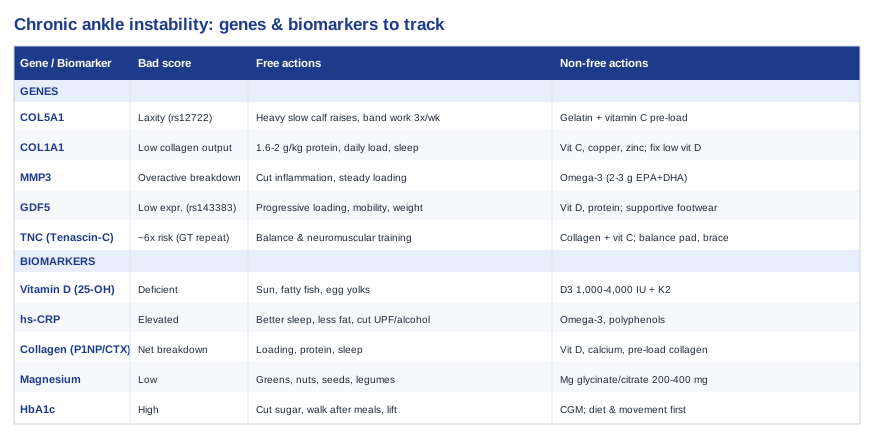
What Recent Genetics Research Suggests About Your Ankle Ligaments
Your ligaments are essentially ropes made of collagen, woven and maintained by a set of proteins that are, in turn, coded by your genes. When one of those genes carries a common variant that slightly weakens the rope or slows its repair, you inherit a connective tissue that is a little looser, a little slower to heal, and a little more likely to give way. This is the field that researchers such as Ali Torkamani in genomics and popularizers such as Gary Brecka point to when they talk about reading your genetic tendencies rather than fighting them blindly.
A crucial honesty note first: you cannot edit these genes, and no supplement changes your DNA sequence. What you can do is compensate, giving your body the raw materials, the training stimulus, and the low-inflammation environment that lets even a "weaker" genotype perform closer to its ceiling. Below are the five genes with the strongest human evidence, each paired with a compensation plan with and without supplements.
COL5A1 — The Master Regulator of Collagen Fiber Thickness
COL5A1 codes for a type of collagen that acts like a template, controlling how thick and well-organized your main type I collagen fibers become. The extensively studied variant here is rs12722. Multiple meta-analyses link COL5A1 variants to musculoskeletal soft-tissue injuries, including tendon and ligament injuries, and the same variants track with measurable joint laxity, exactly the trait that predisposes to a wobbly ankle. See the meta-analysis on rs12722 and soft-tissue injuries and the broader 21-study analysis of COL5A1, plus the finding that collagen gene variants also predict joint laxity.
If the gene is unfavorable, the plan without supplements
The most powerful non-supplement lever is loading. Collagen adapts to mechanical stress, so slow, heavy, controlled work builds thicker fibers over time. Perform heavy slow resistance calf raises and controlled ankle inversion/eversion work with a resistance band 3 times per week, using slow tempos (about 3 seconds down, 3 seconds up). Add a daily 5-minute single-leg balance practice. Cycle intensity in blocks: 6 weeks of progressive loading, then a lighter deload week, because tendon and ligament tissue adapts slower than muscle and needs recovery windows. The main "side effect" to watch for is overuse soreness, so progress load by roughly 10 percent per week, no faster.
If the gene is unfavorable, the plan with supplements or equipment
The best-supported nutritional lever is a collagen-building protocol timed before loading. In a controlled human study, vitamin C-enriched gelatin taken before exercise increased collagen synthesis. A practical version: take 15 g of gelatin or hydrolyzed collagen with about 50 mg of vitamin C roughly 45 to 60 minutes before your ankle-loading session, up to once daily on training days. Useful equipment includes a wobble board or balance pad and a set of resistance bands. Side effects are minimal; collagen and gelatin are generally well tolerated, though start at a lower dose if you have a sensitive stomach. There is no need to cycle it, but the benefit only appears when it is paired with loading, so skip it on complete rest days.
COL1A1 — The Main Cable of Your Ligaments
If COL5A1 is the template, COL1A1 codes for type I collagen, the main structural cable of ligaments and tendons. A common variant in its regulatory region can reduce collagen output, and variants here have been studied in the context of Achilles tendon injury and, together with COL5A1, in joint laxity and recurrent dislocation. Interestingly, some COL1A1 variants appear protective against soft-tissue rupture, which is a good reminder that genetic risk is a probability, not a verdict.
If the gene is unfavorable, the plan without supplements
Prioritize protein intake and consistency of loading. Collagen production depends on a steady supply of amino acids and repeated mechanical signals. Aim for roughly 1.6 to 2.0 g of protein per kilogram of body weight per day spread across meals, and treat your ankle rehab like brushing your teeth: short, daily, non-negotiable. Sleep matters more than people expect here, because most connective-tissue repair signaling happens during deep sleep; protect 7 to 9 hours. No cycling needed, and the only real risk is doing too much too soon on tissue that builds slowly.
If the gene is unfavorable, the plan with supplements or equipment
Beyond the pre-loading collagen-plus-vitamin-C protocol described above, ensure the cofactors of collagen cross-linking are covered: vitamin C (about 500 mg per day if diet is inadequate), adequate copper and zinc from diet or a basic multivitamin, and correcting low vitamin D if your blood test shows a deficiency. Equipment-wise, an adjustable ankle brace during high-risk activities offloads the ligament while you rebuild it. Vitamin C above roughly 1,000 mg per day can cause loose stools, so there is no benefit to megadosing. Braces should be used tactically, not permanently, since over-reliance can reduce the proprioceptive training your ankle needs.
MMP3 — The Demolition Crew That Can Overwork
Matrix metalloproteinase-3 (MMP3) is an enzyme that breaks down old collagen so new collagen can replace it, essential for remodeling, but harmful when overactive. Variants in MMP3 have been associated with chronic Achilles tendinopathy and with non-contact ACL injury in athletes. If your demolition crew works faster than your construction crew, ligaments can stay in a weakened, half-remodeled state longer.
If the gene is unfavorable, the plan without supplements
Because MMP activity is driven up by inflammation, the non-supplement priority is lowering the inflammatory load: manage body weight, minimize ultra-processed foods and excess alcohol, keep moving daily to avoid stiffness, and avoid repeated re-injury by using controlled progressive loading rather than sudden high-impact bursts. Steady, moderate exercise is anti-inflammatory; erratic overload is pro-inflammatory. Deload every 4 to 6 weeks so remodeling can complete.
If the gene is unfavorable, the plan with supplements or equipment
Support a lower-inflammation environment with omega-3 fatty acids (roughly 2 to 3 g of combined EPA and DHA per day from fish oil, taken with food) and adequate dietary polyphenols. If you track hs-CRP (see the biomarker section) and it is elevated, this is where those numbers become actionable. Omega-3 can thin the blood slightly, so tell your doctor before surgery and if you take anticoagulants. Cycle is not required, but reassess with a blood test every 3 to 6 months rather than assuming benefit.
GDF5 — The Growth Signal for Joints and Soft Tissue
Growth differentiation factor 5 (GDF5) helps develop and maintain joints, cartilage, ligaments, and tendons. The variant rs143383 reduces GDF5 expression, and it has been linked to Achilles tendon pathology and to osteoarthritis risk; reviews of tendon and ligament genetics and of the genetics of sports injuries summarize the evidence, which for ankle-specific outcomes is still emerging. Say it plainly: the ligament and tendon data are strong, the direct ankle-instability data are thinner, so treat GDF5 as supportive context, not proof.
If the gene is unfavorable, the plan without supplements
GDF5 responds to mechanical loading, the same lever as the collagen genes, so consistent progressive resistance and mobility work is again the foundation. Because GDF5 variants also associate with osteoarthritis, protect the joint long-term: keep a healthy body weight to reduce joint stress, maintain full ankle range of motion with daily mobility drills, and avoid the cycle of repeated sprains that accelerates cartilage wear. No cycling of the activity itself is needed, only sensible deloads.
If the gene is unfavorable, the plan with supplements or equipment
There is no supplement that raises GDF5 expression directly, so be skeptical of anything marketed that way. What you can do is protect the joint the gene helps maintain: ensure adequate vitamin D and protein, and if early joint stiffness appears, some people trial collagen peptides or a glucosamine/chondroitin product, with the honest caveat that evidence for these in joint symptoms is mixed. Equipment such as supportive footwear and, during sport, a lace-up ankle brace reduces cumulative joint insult. Discontinue any supplement that shows no benefit after 8 to 12 weeks rather than paying indefinitely.
TNC (Tenascin-C) — The Stress-Response Protein
Tenascin-C is a structural protein in tendons and ligaments that responds to mechanical stress. In a landmark case-control study, certain GT-repeat variants in the tenascin-C gene were associated with a roughly six-fold higher risk of Achilles tendon injury, and tenascin-C combined with MMP3 has since been studied as a phenotype linked to tendinopathy risk in athletes. For ankle ligaments specifically, this is extrapolation from tendon research, so hold it loosely.
If the gene is unfavorable, the plan without supplements
Since tenascin-C is a stress-response protein, the goal is to give tissue the right kind of stress: controlled, progressive, and repeated, never sudden and never through pain. This is precisely where balance and neuromuscular training earn their place, retraining the ankle to react before a load becomes an injury. Practice single-leg stability, hopping progressions, and reactive drills, building gradually over months. Deload periodically and respect that connective tissue adapts slowly.
If the gene is unfavorable, the plan with supplements or equipment
The supplement lever is again the pre-loading collagen-and-vitamin-C protocol and general anti-inflammatory nutrition, because there is no tenascin-C-specific supplement worth recommending. The most valuable "equipment" here is inexpensive: a balance pad, a wobble board, and a resistance band, used consistently. If you play cutting or jumping sports, a semi-rigid brace during play meaningfully lowers re-sprain risk while your neuromuscular control catches up. As with all bracing, wean off it during ordinary daily activity so proprioception keeps developing.
With the genetic tendencies mapped, the natural next question is whether your body currently has the raw materials and the internal environment to act on any of these plans. That is what blood markers reveal.
The Blood Markers Worth Tracking For Connective-Tissue Health
Genes describe your tendencies; biomarkers describe your current state. Even a favorable genotype underperforms if you are deficient in a key nutrient or running chronic inflammation. The following panel is chosen to be practical and affordable, in the spirit of what clinicians like Peter Attia, Thomas Dayspring, and Allan Sniderman advocate: measure, do not guess. Prices are rough US ranges and vary by lab and country.
25-Hydroxyvitamin D — The Foundation for Healing Tissue
Vitamin D influences muscle function, immune regulation, and bone and connective-tissue health. Deficiency is common in people with foot and ankle problems; studies report that a large share of ankle-injury patients are deficient, and vitamin D deficiency is prevalent in foot and ankle injuries, with lower levels linked to worse ankle fracture and healing outcomes.
How to measure it
A simple 25-hydroxyvitamin D blood test, widely available for roughly 30 to 70 US dollars, often included in basic panels. Retest 8 to 12 weeks after changing your dose.
If the score is low, the plan without supplements
Sensible sun exposure and vitamin-D-rich foods such as fatty fish, egg yolks, and fortified products. Sunlight alone is often insufficient in winter or at higher latitudes, so treat this as partial.
If the score is low, the plan with supplements or equipment
Vitamin D3 at 1,000 to 4,000 IU per day with a fat-containing meal is a common range; higher therapeutic doses should be guided by your result and a clinician. Take vitamin K2 alongside if using higher doses. The side effect to respect is that vitamin D is fat-soluble and can accumulate, so do not megadose blindly, retest instead.
hs-CRP — Your Background Inflammation Level
High-sensitivity C-reactive protein reflects low-grade systemic inflammation, which drives the collagen-degrading MMP activity discussed above. Elevated CRP is associated with local joint inflammation and with osteoarthritis progression, the long-term risk for a chronically unstable, repeatedly injured joint.
How to measure it
An hs-CRP blood test, roughly 15 to 50 US dollars. Do not test during an acute illness or right after a hard workout, both temporarily raise it.
If the score is high, the plan without supplements
Address the usual drivers: improve sleep, reduce visceral fat, cut ultra-processed foods and excess alcohol, and move daily. These changes lower CRP more reliably than any pill.
If the score is high, the plan with supplements or equipment
Omega-3 fatty acids (2 to 3 g EPA plus DHA daily) and a diet rich in polyphenols can help modestly. Watch for mild blood-thinning with high-dose fish oil. Recheck in 3 months rather than assuming it worked.
Collagen Turnover Markers (P1NP and CTX) — Build Versus Breakdown
These markers estimate collagen and bone formation (P1NP) versus breakdown (CTX). They are more advanced and mostly used for bone, but they offer a window into whether your body is net-building connective tissue.
How to measure it
Specialized blood tests, roughly 40 to 120 US dollars each, usually ordered by a clinician. Fasting morning samples are standard because CTX varies through the day.
If the score is unfavorable, the plan without supplements
Progressive loading plus adequate protein and sleep shifts the balance toward building. This marker is best used to confirm that your training and nutrition are working, not as a stand-alone target.
If the score is unfavorable, the plan with supplements or equipment
Ensure vitamin D, calcium, and protein sufficiency; the pre-loading collagen protocol supports formation. Because these markers are nuanced, interpret them with a clinician rather than self-adjusting.
Magnesium — Quiet Support for Muscle Control
Magnesium supports muscle contraction and relaxation and neuromuscular function, the very system that stabilizes your ankle. Deficiency is common and easy to miss.
How to measure it
Serum magnesium is cheap (about 10 to 30 US dollars) but insensitive; RBC magnesium is more informative if available.
If the score is low, the plan without supplements
Eat more leafy greens, nuts, seeds, legumes, and whole grains. For many people, diet alone corrects mild shortfalls.
If the score is low, the plan with supplements or equipment
Magnesium glycinate or citrate, roughly 200 to 400 mg per day, usually in the evening. The common side effect is loose stools, especially with citrate or oxide, so adjust the dose down if needed.
HbA1c — How Glycation Ages Your Collagen
HbA1c reflects your average blood sugar over about three months. Chronically high glucose stiffens collagen through glycation, making connective tissue more brittle and slower to remodel, relevant even if you are not diabetic.
How to measure it
A standard HbA1c blood test, roughly 15 to 40 US dollars, widely available.
If the score is high, the plan without supplements
Reduce refined carbohydrates and added sugar, walk after meals, build muscle through resistance training, and prioritize sleep. These are the highest-yield moves and require no product.
If the score is high, the plan with supplements or equipment
A continuous glucose monitor (equipment, often 50 to 100 US dollars per month) can reveal which meals spike you. Discuss any medication with your doctor; supplements here are secondary to diet and movement.
Numbers on a page only matter if you know how to reshape the habits behind them, which is where a good, study-dense book becomes more useful than another supplement.
The Book That Reframes How Connective Tissue Actually Heals
If you want one resource that pulls the research together, Built from Broken by Scott H. Hogan is a study-referenced guide to joint health, tendon and ligament repair, and training the body to resist injury. It is written for people who are tired of being told to simply rest, and it challenges several comfortable assumptions in conventional care. Here are ten of its most impactful ideas, each worth sitting with.
1. Connective Tissue Is Trainable, Not Fixed
Ligaments and tendons respond to load by getting stronger, just far more slowly than muscle. The implication is that a chronically unstable ankle is not a permanent sentence, it is undertrained tissue that has never been loaded correctly.
2. Rest Alone Weakens Tissue
Prolonged rest may calm pain, but it also lets connective tissue deconditioning set in. The book argues that controlled loading, not passive rest, is what rebuilds capacity, a direct challenge to "just stay off it" advice.
3. Collagen Synthesis Has a Timing Window
Feeding the body collagen-building nutrients shortly before loading appears to prime tissue repair. This is the practical basis for the pre-exercise gelatin-and-vitamin-C protocol, and it turns nutrition into a scheduled tool rather than a random supplement.
4. Tendons and Ligaments Prefer Slow, Heavy, Controlled Load
Explosive movements build power but can outpace connective-tissue readiness. Slow tempo work under meaningful load is presented as the safest way to thicken and strengthen the tissue.
5. Inflammation Is a Signal, Not Just an Enemy
Acute inflammation is part of healing; the real problem is chronic, low-grade inflammation that never resolves. Managing lifestyle drivers matters more than blunting every ache with anti-inflammatories.
6. Blanket Anti-Inflammatory Use Can Backfire
Routinely suppressing inflammation after every session may interfere with the adaptation you are trying to build. The book urges using such tools sparingly, a genuinely contrarian point.
7. Nutrition Sets the Ceiling
Without enough protein, vitamin C, and key minerals, no training program can fully rebuild tissue. Diet is framed as the raw-material budget your body spends on repair.
8. Sleep Is a Repair Session
Much of the body's tissue-repair signaling occurs during deep sleep. Treating sleep as optional quietly sabotages every other effort you make.
9. Movement Variety Protects Joints
Repeating the exact same motions creates predictable weak points. Varied, full-range movement distributes stress and builds a more resilient, adaptable joint.
10. Consistency Beats Intensity
Connective tissue rewards years of steady, moderate effort more than short bursts of heroics. The unglamorous daily habit is the strategy, and the book keeps returning to it.
Books build understanding; the next section adds hands-on methods that studies have tested directly on unstable ankles.
Complementary Approaches With Real Clinical Evidence
These methods are complements to core rehabilitation, not replacements. The foundation for chronic ankle instability remains balance and neuromuscular training, which a systematic review and meta-analysis found improves postural control and patient-reported outcomes, with even better results when balance training is combined with strength work. The approaches below can layer on top.
Tai Chi
Tai chi is a slow, weight-shifting movement practice that continuously challenges balance and ankle control. That makes it unusually well matched to chronic ankle instability, where the deficit is largely one of postural control and delayed neuromuscular reaction rather than raw strength.
The evidence is more direct than for most complementary methods. Beyond broad findings that tai chi improves balance and reduces falls, there is a randomized controlled trial designed specifically around 12 weeks of Tai Chi Chuan for people with functional ankle instability, targeting exactly the postural-stability deficits that define the condition.
To apply it realistically, treat tai chi as a supplement to, not a replacement for, targeted ankle rehab. A beginner class two or three times per week, or a short daily home practice, is sustainable. Progress gradually, work barefoot on a safe surface to engage foot and ankle sensors, and stop any stance that provokes sharp pain rather than pushing through it.
Yoga
Yoga combines single-leg balance postures, controlled weight shifting, and ankle mobility, all of which map onto the proprioceptive retraining that unstable ankles need. Standing balance poses in particular force the ankle stabilizers and the nervous system to work together.
The honest caveat is that the strongest evidence is for balance and postural control in general populations rather than for chronic ankle instability specifically, so this is a reasonable, low-risk complement rather than a proven stand-alone treatment. The mechanism it trains, however, is the same one that rehabilitation targets.
Apply it cautiously: favor balance-oriented styles over aggressive stretching, since a hypermobile or lax ankle usually needs stability more than extra range. Use a wall or chair for support in single-leg poses at first, practice two or three times weekly, and avoid deep, forced ankle positions that stress already-loose ligaments.
Low-Level Laser Therapy / Photobiomodulation
Low-level laser therapy uses specific wavelengths of light in an attempt to reduce pain and support tissue healing, and it is sometimes offered in clinics for ankle sprains and soft-tissue injury. The rationale is improved local circulation and modulation of the inflammatory response.
Here the evidence is limited and mixed. Some trials in acute ankle sprain report reduced pain and swelling, but high-quality data specific to chronic ankle instability are sparse, so it should be viewed as an optional adjunct rather than a core treatment. Claims of dramatic healing are not supported.
If you try it, do so through a qualified clinician who can set appropriate dosing, and use it alongside, never instead of, active balance and strength rehabilitation. Because it is passive and the evidence is modest, judge it on whether it genuinely reduces your pain within a few sessions, and stop if it does not.
Conclusion
Chronic ankle instability is not a single problem to be waited out; it is a layered one, and each layer gives you a place to act. Your genes set tendencies in how ligaments are built and repaired, but they can be compensated for with smart loading, nutrition, and lower inflammation. Your biomarkers reveal whether the raw materials and internal environment are actually there, and most of the important ones are cheap to check and fixable. On top of that, progressive balance and strength training remains the proven core, with methods like tai chi adding real support.
The through-line is simple: you get further by measuring and building than by guessing and resting. None of this is a miracle, and no single supplement will rescue a joint that is never loaded correctly, but the combination of the right information and consistent, patient effort genuinely changes outcomes over months.
So take one concrete next step this week. Book a basic blood panel that includes vitamin D and hs-CRP, start a short daily single-leg balance habit, or bring this framework to a physiotherapist or physician who can tailor it to your specific ankle. The smartest move is rarely the biggest one, it is the one you will actually repeat.
Musculoskeletal: Tendon & Ligament Conditions Sports Injuries
Autoimmune: Connective Tissue Conditions