This article contains AI generated content.
Chronic Fatigue Syndrome Genes & Biomarkers: 6 Genes And 7 Biomarkers To Track
Introduction
If you live with chronic fatigue syndrome, you already know the exhaustion is not the tiredness other people talk about. It is a heaviness that a full night of sleep does not lift, a fog that thickens after ordinary effort, and a body that seems to punish you a day or two after you dared to feel almost normal. That delayed crash — post-exertional malaise — is the part most people around you cannot see, and the part that makes standard advice feel almost insulting.
Most general guidance stops at "rest more, reduce stress, try to exercise gradually." Some of that is well-meaning; some of it, we now know, is actively wrong for this condition. The problem is that it treats a complex, measurable biological state as if it were a motivation problem or a simple lack of fitness. It rarely tells you what to actually look at, what those numbers mean, or what you can safely change.
This article takes a different route. Instead of vague reassurance, it looks at the specific biomarkers worth tracking, the genes that recent large studies have connected to the condition, and the small number of complementary approaches that have real human trial data behind them. Where the evidence is early or mixed, it says so plainly, because false certainty helps no one.
The hopeful part is genuine and grounded: chronic fatigue syndrome is finally being mapped at the level of immune cells, metabolism, and DNA. Better information leads to better decisions. In the sections below you will find a practical biomarker plan you can discuss with a clinician, a shorter look at the genetics, a summary of a mainstream science voice now taking cellular energy seriously, and evidence-based gentle modalities — each one a different angle on the same question: what is actually driving your fatigue, and what can be done about it.
Summary
Chronic fatigue syndrome, more precisely called myalgic encephalomyelitis (ME/CFS), still has no single diagnostic blood test. But that does not mean there is nothing to measure. Several biomarkers can reveal what is happening under the surface — immune dysfunction, a struggling stress-hormone axis, low-grade inflammation, and the circulatory problems that make standing up feel like a marathon.
In the main section you will discover the seven biomarkers most worth tracking, including natural killer cell function (one of the most consistent abnormalities found in ME/CFS research), the cortisol awakening response, inflammatory markers, iron and vitamin D status, thyroid hormones, and simple orthostatic vitals you can measure at home. For each one, you will learn why it matters, how it is measured and roughly what it costs, and exactly what to try if the number comes back poor — first without supplements, then with supplements or equipment, always with honest notes on frequency, cycling, and side effects.
After that, a shorter genetics section explains the six genes that the world's largest ME/CFS DNA study and clinical genomics have put on the map — from immune and infection-response genes to the classic methylation and dopamine-clearance variants — and what you can realistically do about each. Then comes a summary of a recent mainstream podcast that quietly challenges how doctors think about fatigue, and finally a set of gentle, trial-backed practices such as qigong and isometric yoga. Read on to see which numbers deserve your attention and which small changes carry the strongest evidence.
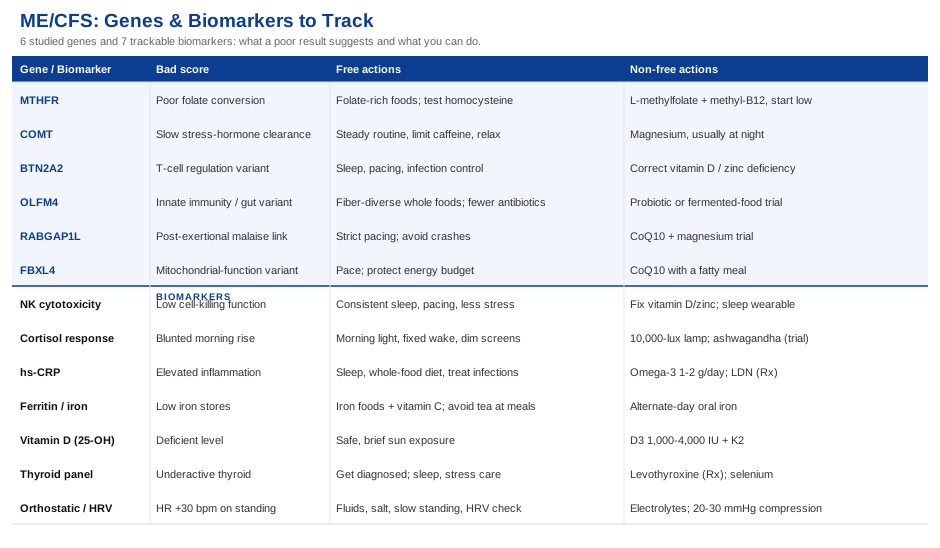
The 7 Biomarkers Worth Tracking In Chronic Fatigue Syndrome
There is no lab test that confirms ME/CFS on its own, and any clinic promising one is overselling. What good testing can do is two things: rule out other treatable causes of fatigue, and map the systems that tend to misbehave in this condition so you can track change over time. The biomarkers below are chosen because each is measurable, each has published human data in ME/CFS or closely related fatigue states, and each points to something you can potentially act on. A guiding principle from clinicians like Peter Attia applies well here: measure, intervene gently, then measure again rather than guessing. One caution runs through everything that follows — in ME/CFS, exertion can cause harm, so no plan here involves pushing through symptoms or graded exercise.
1. Natural Killer (NK) Cell Cytotoxicity
Natural killer cells are frontline immune cells that destroy virus-infected and abnormal cells. Reduced NK cell cytotoxicity — how well these cells actually kill their targets, not just how many you have — is one of the most repeatedly reported immune findings in ME/CFS. A multi-site clinical assessment sub-study confirmed lower NK function in patients, though it also noted the test is not yet standardized across labs (MCAM sub-study, PMC). A separate longitudinal study found the reduction persisted over a year (longitudinal NK and cytokine study, PMC).
How to measure it
This is a specialized functional assay, not a routine count. It is offered mainly through research or specialty immunology labs, must reach the lab quickly because the cells degrade, and typically costs somewhere in the range of 150 to 400 dollars or the local equivalent. A standard complete blood count showing NK cell numbers is cheap but far less informative, because in ME/CFS the problem is function, not quantity.
If the score is bad, the plan without supplements
You cannot reliably force NK function up, but you can remove the things that suppress it. Prioritize consistent sleep, because sleep deprivation measurably lowers NK activity. Protect against crashes with pacing and an activity-management approach that keeps you inside your energy envelope. Reduce chronic psychological stress through the relaxation practices covered later. Frequency: daily habits, not occasional efforts. Side effects: none, beyond the discipline required.
If the score is bad, the plan with supplements or equipment
Evidence for "boosting" NK cells with supplements is weak and should be treated as experimental. Adequate vitamin D and zinc support normal immune function if you are deficient (see biomarkers 4 and 5), and correcting a deficiency is more defensible than mega-dosing. A wearable that tracks sleep stages and resting heart rate is the most useful piece of equipment, because it turns "sleep better" into something you can verify. Frequency and cycling: repletion doses of any deficient nutrient are continued until levels normalize, then reduced to maintenance. Side effects: excess zinc causes copper deficiency and nausea, so do not stack high doses long term.
2. Cortisol Awakening Response (HPA Axis)
Cortisol should surge in the first 30 to 45 minutes after waking, giving you the biological "get up and go." Many people with ME/CFS show a blunted cortisol awakening response and mildly low daily cortisol output, reflecting a dysregulated hypothalamic-pituitary-adrenal (HPA) axis rather than classic adrenal failure. This is not the debunked "adrenal fatigue" product pitch — it is a measurable, published pattern, though it varies between individuals.
How to measure it
The most practical version is a salivary cortisol kit with several samples across the day, including one immediately on waking and one 30 minutes later. Home kits generally cost 100 to 250 dollars. A single morning blood cortisol from a lab is cheaper but misses the shape of the curve, which is the part that matters here.
If the score is bad, the plan without supplements
Anchor your circadian rhythm: get bright natural light into your eyes within an hour of waking, keep wake times consistent, and dim screens at night. This is the single most evidence-aligned lever for HPA rhythm. Avoid the late-day caffeine and alcohol that flatten the next morning's response. Frequency: daily, especially the morning light. Side effects: none.
If the score is bad, the plan with supplements or equipment
A morning light therapy lamp (10,000 lux, 10 to 20 minutes) is a reasonable piece of equipment when winters or housebound days limit sunlight. Adaptogens such as ashwagandha are sometimes used to modulate stress hormones, but ME/CFS-specific evidence is thin, so treat it as a trial. Licorice root can raise cortisol but also raises blood pressure and depletes potassium — usable only under supervision, and cycled in short courses rather than taken continuously. Any prescription cortisol replacement is a specialist decision and carries real risks of suppressing your own production; it is not a self-experiment.
3. Inflammatory Markers (hs-CRP And Cytokines)
Low-grade, persistent immune activation shows up across ME/CFS research. NIH's in-depth "deep phenotyping" study found immune signatures consistent with chronic antigenic stimulation, alongside distinct changes in the nervous system (NIH deep phenotyping study, PMC). Cytokine patterns are inconsistent between studies, so individual cytokine panels are best seen as research tools rather than treatment guides — but a simple high-sensitivity C-reactive protein (hs-CRP) is cheap, standardized, and worth trending.
How to measure it
hs-CRP is a routine blood test costing roughly 10 to 40 dollars and is widely available. Broader cytokine panels (IL-6, TNF-alpha, and others) are far more expensive, less reproducible, and generally reserved for research or specialist workups. Start with hs-CRP.
If the score is bad, the plan without supplements
Target the modifiable drivers of inflammation: prioritize sleep, favor a whole-food dietary pattern rich in vegetables, oily fish, and olive oil, and treat gum disease and other silent infections. Crucially, avoid the boom-and-bust activity cycles that trigger post-exertional flares, since overexertion itself provokes symptom and immune disturbance in ME/CFS. Frequency: continuous lifestyle pattern. Side effects: none.
If the score is bad, the plan with supplements or equipment
Omega-3 fish oil (roughly 1 to 2 grams of combined EPA and DHA daily) has the most general anti-inflammatory support and is reasonable to trial. Curcumin is popular but poorly absorbed and under-studied in this condition. Low-dose naltrexone (LDN) is a prescription-only, off-label option some ME/CFS clinicians use for its possible neuro-immune effects; evidence is preliminary and it must be doctor-supervised. Frequency and cycling: omega-3 daily with food; reassess hs-CRP after about 3 months. Side effects: fish oil can cause reflux and mild blood thinning; LDN can cause vivid dreams and sleep disturbance early on.
4. Ferritin And Iron Studies
Iron carries oxygen and fuels cellular energy production, so deficiency mimics and worsens fatigue. A study of adolescents with chronic fatigue and orthostatic intolerance found a strikingly high rate of low iron stores (iron insufficiency in chronic fatigue, PubMed). Iron is one of the genuinely treatable contributors, which is exactly why it belongs on a checklist.
How to measure it
Ask for ferritin plus a full iron panel (serum iron, transferrin saturation, total iron-binding capacity). This is an inexpensive routine blood test, often 20 to 50 dollars. Note that ferritin also rises with inflammation, so interpret it alongside your hs-CRP.
If the score is bad, the plan without supplements
Increase dietary iron from red meat, poultry, fish, legumes, and leafy greens, and pair plant sources with vitamin C (a squeeze of citrus) to boost absorption. Separate iron-rich meals from tea, coffee, and calcium, which block uptake. Frequency: daily dietary emphasis. Side effects: none.
If the score is bad, the plan with supplements or equipment
Oral iron (for example, ferrous sulfate or the gentler ferrous bisglycinate) corrects most deficiencies. Emerging evidence favors alternate-day dosing over daily, which improves absorption and reduces gut upset — a good example of cycling. Take it away from food with a little vitamin C. Frequency: every other day, with a recheck at about 8 to 12 weeks. Side effects: constipation, nausea, dark stools. Never supplement iron long-term without confirmed deficiency, because iron overload is genuinely harmful.
5. Vitamin D (25-Hydroxyvitamin D)
Vitamin D influences immune regulation, muscle function, and mood. A UK cohort found lower vitamin D levels in ME/CFS patients than in the general population (vitamin D cohort study, PMC). Honesty matters here: a systematic review found that correcting vitamin D has not been shown to reliably improve ME/CFS symptoms (vitamin and mineral status review, PMC). So the goal is to fix a true deficiency, not to expect it to cure fatigue.
How to measure it
A 25-hydroxyvitamin D blood test costs roughly 20 to 60 dollars and is widely available, including through home finger-prick kits. Aim to test at the end of winter, when levels are lowest.
If the score is bad, the plan without supplements
Safe sun exposure to bare skin, when your energy and climate allow, is the natural source. Housebound patients often cannot rely on this, which is the honest limitation. Frequency: short, regular exposure without burning. Side effects: none if sunburn is avoided.
If the score is bad, the plan with supplements or equipment
Vitamin D3 is inexpensive and effective; a common repletion approach is 1,000 to 4,000 IU daily, adjusted to your result and guided by a clinician for deficiency. Vitamin K2 is often taken alongside to direct calcium appropriately. Frequency and cycling: daily, then drop to a maintenance dose once levels normalize; retest in about 3 months. Side effects: toxicity is possible only at sustained very high doses, causing high calcium — which is exactly why you dose to a target rather than blindly.
6. Thyroid Panel (TSH, Free T4, Free T3)
An underactive thyroid produces fatigue, cold intolerance, and sluggish thinking that overlap heavily with ME/CFS, which is precisely why it must be checked — untreated hypothyroidism is a missed, fixable diagnosis. This test is standard in guideline-based ME/CFS workups (NICE guideline primary care summary, PMC).
How to measure it
Request TSH plus free T4, and ideally free T3, as a routine blood panel costing around 30 to 80 dollars. Adding thyroid antibodies once can identify autoimmune thyroid disease.
If the score is bad, the plan without supplements
Genuine hypothyroidism is not fixable by lifestyle, so the "without supplements" plan is really "get properly diagnosed and treated." Supporting steps include adequate sleep and stress management, which help the whole endocrine system function. Frequency: ongoing. Side effects: none.
If the score is bad, the plan with supplements or equipment
Confirmed hypothyroidism is treated with prescription thyroid hormone (levothyroxine), titrated by blood tests — this is standard medicine, not a supplement experiment. Selenium may support thyroid function and antibody levels in deficiency, and Brazil nuts are a natural source. Iodine should be handled with caution, because too much can worsen autoimmune thyroid disease. Frequency and cycling: prescription dosing is daily and adjusted every 6 to 8 weeks until stable. Side effects: over-replacement causes palpitations, anxiety, and bone loss, so it must be monitored.
7. Orthostatic Vitals And Heart Rate Variability
Many people with ME/CFS have orthostatic intolerance — the body struggles to maintain blood pressure and heart rate when upright, causing lightheadedness, brain fog, and worsening fatigue on standing. This overlaps with postural orthostatic tachycardia syndrome (POTS). Alongside this, morning heart rate variability (HRV) is a useful, cheap window into autonomic recovery and, used carefully, can help you pace.
How to measure it
A NASA lean test or active stand test needs only a blood pressure cuff and a timer: record heart rate and blood pressure lying down, then at intervals while standing. It is essentially free at home, or done formally with a tilt-table test in a clinic. HRV is tracked with a chest strap or wearable ring costing roughly 100 to 350 dollars. A rise in heart rate of more than about 30 beats per minute on standing is a flag worth showing a clinician.
If the score is bad, the plan without supplements
Increase fluids, raise the head of your bed slightly, stand up slowly, and use physical counter-maneuvers such as crossing the legs. Recumbent and seated movement is far safer than upright exertion. Use morning HRV as a "traffic light": a suppressed reading is a day to do less, not more. Frequency: daily habits. Side effects: none.
If the score is bad, the plan with supplements or equipment
Increasing dietary salt and using oral electrolyte solutions expands blood volume and often helps orthostatic symptoms — a cheap, practical first step, though it must be avoided if you have high blood pressure or kidney disease. Medical-grade compression garments (waist-high, 20 to 30 mmHg) are effective equipment. Prescription options such as fludrocortisone, midodrine, or beta-blockers exist for POTS and are doctor-managed. Frequency and cycling: electrolytes on active or symptomatic days; compression worn while upright. Side effects: excess salt raises blood pressure; compression can be uncomfortable in heat.
What Recent Genetics And Epigenetics Research Suggests
Biomarkers tell you what your body is doing now; genes hint at why it may be predisposed to do it. Genetics in ME/CFS is younger and less actionable than biomarker tracking, so treat this section as context rather than a prescription. The landmark development is DecodeME, the world's largest ME/CFS genome-wide association study, which recruited over 21,000 patients and identified eight genetic signals — an early but real biological foundation. Clinicians who popularized personal genomics, such as Ali Torkamani in research and Gary Brecka in the wellness space, have drawn attention to a handful of these variants. Below are six genes worth understanding, with realistic plans. Because these findings are early, no supplement here should be sold to you as a fix.
MTHFR (Methylation And Folate Processing)
MTHFR variants can reduce the efficiency of converting folate into its active form, potentially affecting homocysteine and methylation. This gene is heavily hyped, and the honest scientific position is that common MTHFR variants have far smaller effects than popular claims suggest.
If the gene is bad, the plan without supplements: eat naturally folate-rich foods — leafy greens, legumes, and citrus — and check homocysteine as an actual downstream marker rather than assuming a problem. If the score is bad, the plan with supplements: methylated folate (L-methylfolate) and methyl-B12 are the targeted forms. Frequency and cycling: daily, guided by homocysteine retesting; some people feel over-stimulated on high methyl doses, so start low. Side effects: irritability, insomnia, or anxiety at high doses.
COMT (Dopamine And Adrenaline Clearance)
COMT breaks down catecholamines like dopamine and adrenaline. NIH's deep phenotyping work highlighted central catecholamine pathway dysregulation in ME/CFS, which makes this family of genes conceptually interesting. Slow-clearing COMT variants may leave you more sensitive to stress and stimulation.
If the gene is bad, the plan without supplements: manage stimulation load — steady routines, limited caffeine, and the relaxation practices below to reduce catecholamine surges. If the score is bad, the plan with supplements: magnesium supports COMT-related enzymes and is generally well tolerated. Frequency and cycling: magnesium daily, often at night. Side effects: loose stools with magnesium; be cautious with methyl donors, which some slow-COMT individuals tolerate poorly.
BTN2A2 (Immune Regulation)
BTN2A2 sits near an immune-regulatory signal identified in DecodeME and is thought to influence T-cell responses. It reinforces the theme that immune regulation, not just "tiredness," is central to ME/CFS.
If the gene is bad, the plan without supplements: focus on the immune-protective habits already described — sleep, pacing, and infection control — since you cannot edit the gene, only support its environment. If the score is bad, the plan with supplements or equipment: correct any vitamin D or zinc deficiency that impairs immune balance. Frequency and cycling: repletion to target, then maintenance. Side effects: as noted for those nutrients above.
OLFM4 (Innate Immunity And Gut Lining)
OLFM4, another DecodeME signal, is linked to innate immune responses and gut epithelial function, connecting to longstanding interest in the microbiome in ME/CFS.
If the gene is bad, the plan without supplements: support gut health with a fiber-diverse, whole-food diet and by avoiding unnecessary antibiotics. If the score is bad, the plan with supplements: a trial of a well-studied probiotic or increased fermented foods is low-risk, though ME/CFS-specific evidence is limited. Frequency and cycling: daily for several weeks to judge tolerance. Side effects: transient bloating.
RABGAP1L And FBXL4 (Cellular And Mitochondrial Function)
RABGAP1L was among the signals also associated with post-exertional malaise, and FBXL4 is a gene with established links to mitochondrial function. Together they echo the metabolic and energy themes seen elsewhere in the research, though these are population-level associations, not individual diagnoses.
If the genes are bad, the plan without supplements: protect mitochondrial demand by pacing strictly and avoiding the crashes that follow overexertion — the most evidence-aligned strategy in this whole area. If the score is bad, the plan with supplements: CoQ10 and magnesium are the most commonly trialed mitochondrial supports, with some small studies in fatigue states. Frequency and cycling: CoQ10 daily with a fatty meal for absorption, reassessed after a couple of months. Side effects: generally mild; CoQ10 can cause insomnia if taken late.
The Podcast That May Change How You Think About Fatigue
Genes and biomarkers both keep circling back to one organelle: the mitochondrion. A recent, unusually thoughtful Huberman Lab episode, "Improve Energy & Longevity by Optimizing Mitochondria" with Columbia researcher Dr. Martin Picard, reframes energy in a way that quietly challenges the old "just push through it" doctrine. It is not about ME/CFS specifically, and it makes no cure claims — but its model of energy as a finite, defendable resource maps unusually well onto life with chronic fatigue. Here are the ten most useful ideas.
1. Mitochondria Do More Than Make Energy
Picard's central point is that mitochondria are not simple batteries; they sense your environment and coordinate the cell's response to it. Fatigue, in this view, can be a signaling state, not just a fuel shortage.
2. Energy Is A Budget, Not A Tap
The episode frames daily energy as a limited budget spent across physical, mental, and immune demands. For anyone with ME/CFS, this validates pacing: spending beyond the budget creates a debt the body collects later.
3. Psychological Stress Has A Metabolic Price
Chronic stress is described as an ongoing energy expense that competes with everything else. Reducing stress is therefore not "soft" advice — it frees measurable cellular resources.
4. The Mind-Body Link Is Physical
Picard's research argues that mindset and relationships feed into cellular energy through real biological pathways. This dissolves the false split between "psychological" and "physical" fatigue that has long harmed ME/CFS patients.
5. Recovery Is An Active Process
Rest is portrayed as active mitochondrial repair, not idleness. This reframes deliberate rest days as productive biology rather than lost time.
6. Hormesis Has Limits
The idea that small stressors strengthen mitochondria (hormesis) is real for healthy systems — but the episode is clear that dose matters. In an already-depleted system, the same "stressor" can be pure damage, which is exactly why graded exercise backfires in ME/CFS.
7. Sleep Is Non-Negotiable Repair Time
Mitochondrial maintenance is tied tightly to sleep. Protecting sleep quality is presented as one of the highest-leverage things anyone can do for cellular energy.
8. Overeating Also Taxes Mitochondria
Constant energy surplus stresses the system just as deficit does. A steady, whole-food eating pattern is easier on mitochondrial machinery than boom-and-bust fueling.
9. Light And Circadian Timing Matter
Aligning activity, light, and food with your body clock lets mitochondria work with the day rather than against it — the same circadian lever that helps the cortisol awakening response.
10. Individual Variation Is The Rule
Finally, the episode stresses that people differ enormously in mitochondrial function and response. That humility is the right frame for ME/CFS, where the NIH's own data show the condition is not one-size-fits-all.
Gentle, Evidence-Backed Complementary Approaches
The theme of respecting a limited energy budget leads naturally to the question of movement and mind-body practice. The critical rule in ME/CFS is that anything increasing exertion can trigger post-exertional malaise, and graded exercise therapy was removed from the UK's NICE guideline in 2021 over documented harm (analysis of the PACE/GET approach, PMC). The modalities below are chosen precisely because they are gentle, largely stationary or recumbent, and backed by human trials in this population. None is a cure, and all should be scaled to stay inside your envelope.
Qigong
Qigong combines slow movement, breath, and attention, making it low in exertion and adaptable to seated practice — a good fit for a condition where standing and effort are the enemy. It targets the stress and autonomic pathways that biomarkers 2 and 7 track.
In a randomized controlled trial, a four-month qigong program improved fatigue and mental functioning in people with chronic fatigue, and even increased telomerase activity compared with controls (qigong RCT on fatigue and telomerase, PMC). A recent systematic review of qigong and tai chi for ME/CFS found promising but still limited evidence (systematic review, PMC).
Realistically, start with just a few minutes of gentle seated qigong and treat it as relaxation, not workout. Track how you feel over the following 48 hours for signs of post-exertional malaise, and scale back immediately if any appear. Consistency at a tiny dose beats ambition.
Tai Chi
Tai chi is a close cousin of qigong, with flowing, low-impact movement and a strong meditative component. Its appeal in ME/CFS is the combination of gentle physical engagement with autonomic and cognitive benefits.
A pilot intervention study using fMRI reported that tai chi increased brain functional connectivity and reduced chronic fatigue symptoms (tai chi and functional connectivity pilot study, PMC). The evidence base remains small and early-stage, so this is a reasonable trial rather than a proven therapy.
Apply it cautiously: use seated or shortened forms, avoid long standing sequences, and prioritize the breathing and slowness over range or repetition. If the practice ever leaves you crashing the next day, it is too much and should be reduced.
Isometric Yoga
Conventional yoga can be too demanding, but isometric yoga — holding gentle poses, including seated and recumbent versions — was designed with fatigue conditions in mind and minimizes upright exertion. That design directly addresses the orthostatic problem in biomarker 7.
A randomized controlled trial found that seated isometric yoga improved fatigue in ME/CFS patients who had not responded to conventional therapy (isometric yoga RCT, PMC), and a follow-up pilot examined its effects on blood biomarkers and autonomic function (isometric yoga biomarker study, PMC).
In practice, look for a recumbent or seated protocol, keep sessions short (the trials used roughly 20 minutes with guidance), and ideally begin with an instructor familiar with fatigue conditions. Stop well before exhaustion — the goal is a calm nervous system, not a challenge.
Mindfulness And Relaxation Training
Mindfulness-based approaches do not claim to fix the underlying biology, but they help with the stress, sleep disruption, and distress that amplify symptoms — and they cost almost nothing in energy. This connects to the cortisol and inflammation biomarkers above.
A pilot randomized study of mindfulness-based cognitive therapy in people with ME/CFS still fatigued after standard treatment found lower fatigue levels that were maintained at follow-up (mindfulness-based cognitive therapy pilot RCT, PubMed). Evidence is modest and it is best framed as symptom support, not a driver of recovery.
Apply it in small doses — even a few minutes of guided breathing or body scan while lying down. The key caution is framing: this manages the response to a real physical illness and should never be presented as evidence the illness is "in your head."
Conclusion
Chronic fatigue syndrome does not yet have a single test or a single fix, but it is no longer a black box. You can measure immune function, stress-hormone rhythm, inflammation, iron, vitamin D, thyroid status, and how your body copes with standing — and each of those numbers points to something you can discuss, treat, or track. The genetics are early but real, and the strongest thread running through every section is the same: in this condition, energy is a budget to defend, not a limit to override.
The smartest next step is small and concrete. Pick one or two biomarkers from the list, arrange the tests with a clinician who takes ME/CFS seriously, and start keeping a simple symptom-and-activity log so you can see your own patterns. Bring your results to a professional rather than self-treating the serious pieces, protect your rest as real recovery, and change one variable at a time. Better information really can lead to better decisions — and for a condition this often dismissed, having your own map is where regaining a little control begins.
Neurological Cardiovascular Endocrine & Metabolic
Cardiovascular: Heart Rhythm Conditions Vascular Conditions
Endocrine & Metabolic: Thyroid Conditions Adrenal Conditions