This article contains AI generated content.
Chronic Inflammatory Demyelinating Polyneuropathy: 4 Genes and 7 Biomarkers to Track
Introduction
If you are living with chronic inflammatory demyelinating polyneuropathy, you already know that the standard advice tends to stop at a diagnosis and a first-line treatment. Take intravenous immunoglobulin, or steroids, or start plasma exchange, and see how you respond. For many people that works reasonably well. For a meaningful minority, it does not, and the reasons why are rarely explained beyond "everyone responds differently."
That vague explanation is unsatisfying because it is incomplete. CIDP is not one disease with one mechanism. It is a label applied to a group of immune-mediated nerve conditions that can be driven by different antibodies, different complement activity, and, in rare cases, by a misread genetic neuropathy that was never autoimmune at all. Generic guidance cannot account for that variation, which is exactly why two people with the same diagnosis can have completely different experiences with the same treatment.
This article takes a more specific approach. Instead of repeating broad statements about immune suppression, it walks through the actual biomarkers that clinicians and researchers use to characterize CIDP subtypes, what each one can reveal about your particular case, and how it is measured in practice. It also looks at the emerging, more preliminary genetic research that helps explain why some people respond to one therapy and not another.
None of this replaces a conversation with a neuromuscular specialist, and none of it promises a cure. What it offers is something more durable: a clearer map of what can actually be measured, so that the conversations you have with your medical team are grounded in specifics rather than generalities. Better information does not guarantee a better outcome, but it consistently leads to better decisions, and that is the realistic form of hope this article is built around.
Summary
CIDP is usually described as one condition, but the biomarker research tells a more layered story. A subset of patients carry specific antibodies against paranodal proteins like neurofascin-155 or contactin-1, and these antibodies predict who will respond poorly to standard immunoglobulin therapy and who might do better with a targeted approach like rituximab. Others show classic albuminocytologic dissociation on a spinal tap, or textbook demyelinating patterns on nerve conduction studies, without any of the newer antibodies at all. Newer tools, including blood neurofilament light chain and complement activation panels, are starting to offer a way to track disease activity in real time rather than waiting months to see if a treatment is working.
Underneath these biomarkers sits an early but genuinely interesting layer of genetics. A particular HLA gene variant appears strongly linked to one antibody-defined subtype. Variants in immune receptor genes may help predict who responds to IVIg and who does not. And in a small but clinically important fraction of cases, what looks like CIDP on standard testing turns out to be an inherited neuropathy carrying a completely different gene, which changes the entire treatment plan.
This article walks through both layers in detail: the seven biomarkers most worth discussing with your neurologist, and the four genetic findings reshaping how researchers think about CIDP subtypes. It also summarizes what a well-known functional medicine researcher's autoimmune protocol suggests about supporting nerve and mitochondrial health alongside medical treatment, and reviews which complementary approaches have real, if still limited, clinical evidence in peripheral neuropathy. The goal is not a shortcut, but a sharper set of questions to bring into your next appointment.
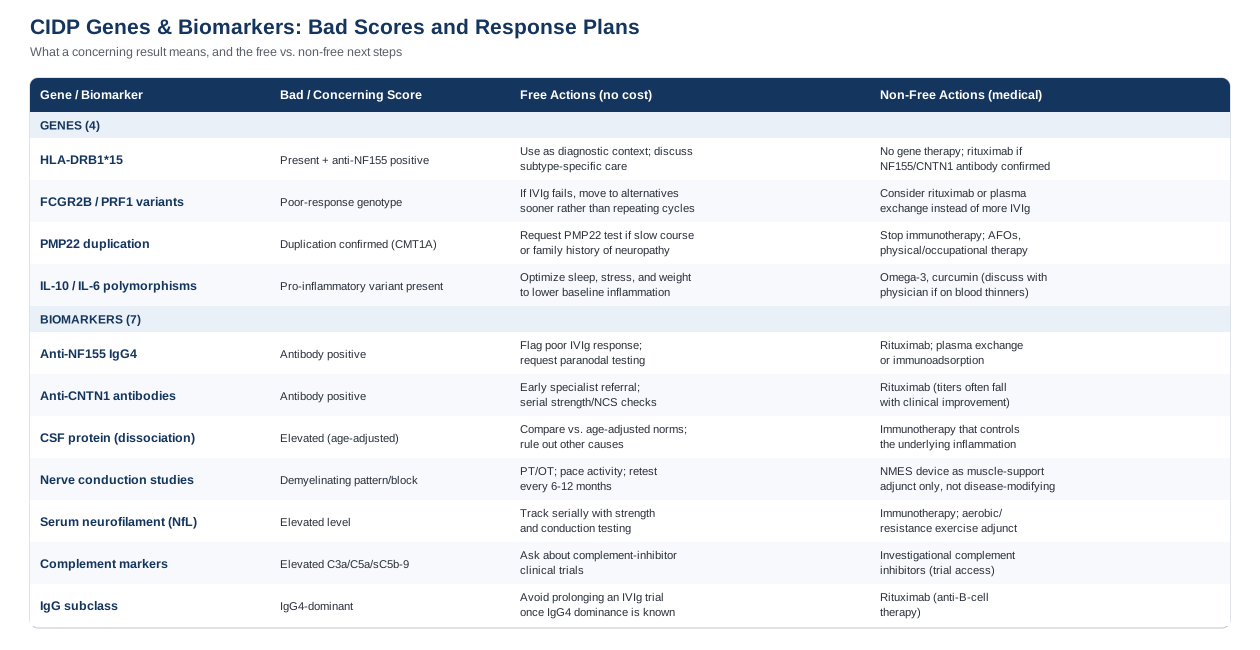
The 7 Biomarkers Worth Tracking in CIDP
CIDP is formally diagnosed using a combination of clinical exam findings, electrodiagnostic testing, and supportive laboratory markers, as outlined in the NIH's Genetic and Rare Diseases overview of CIDP. But diagnosis is only the starting point. The biomarkers below go further, helping distinguish disease subtypes, predict treatment response, and, in a few cases, track whether a treatment is actually working before symptoms visibly change.
1. Anti-Neurofascin-155 (NF155) IgG4 Antibodies
Why It Matters
Neurofascin-155 is a protein located at the paranodal region of myelinated nerves, where the myelin sheath meets the exposed node of Ranvier. In a subset of CIDP patients, the immune system produces IgG4 antibodies against this protein. A large case series found these antibodies in roughly 7 percent of CIDP patients, and this subgroup tends to be younger at onset, presents with prominent sensory ataxia and tremor, and responds poorly to standard IVIg therapy, according to research on neurofascin-155 IgG4 in CIDP. This matters clinically because it identifies a distinct disease mechanism, sometimes called a paranodopathy rather than classic CIDP, that calls for a different treatment strategy.How to Measure It
Testing requires a cell-based assay, a specialized blood test run at neuroimmunology reference labs rather than standard hospital labs. It is not part of routine neuropathy panels, so it usually requires a referral to a neuromuscular or neuroimmunology specialist. Out-of-pocket cost typically runs from 200 to 600 US dollars when billed as a specialty antibody panel, though coverage varies widely by insurer and country.If It Comes Back Positive: The Plan Without Supplements or Equipment
There is no lifestyle or behavioral intervention that clears this antibody. The practical, cost-free step is informational: if you have had a weak or absent response to IVIg after a reasonable trial, ask specifically whether paranodal antibody testing has been done. A positive result is a strong argument for shifting the conversation toward B-cell depleting therapy rather than repeating additional cycles of a treatment this subtype is known to resist.If It Comes Back Positive: The Plan With Supplements or Equipment
No supplement lowers this antibody. The relevant medical tool is rituximab, and in more urgent situations, plasmapheresis or immunoadsorption to physically remove circulating antibody, typically delivered as five exchanges over ten to fourteen days, repeated only if a relapse recurs. Side effects include low blood pressure during exchange, citrate-related tingling, line-related infection risk, and temporary depletion of protective antibodies that raises infection risk for several weeks. As a general supportive measure alongside medical therapy, omega-3 fatty acids (roughly 1 to 2 grams of combined EPA and DHA daily) and correcting vitamin D deficiency (targeting blood levels around 40 to 60 ng/mL, rechecked every three months) have broad anti-inflammatory support in the general immunology literature, though neither is CIDP-specific and neither substitutes for antibody-targeted treatment.2. Anti-Contactin-1 (CNTN1) and Related Paranodal Antibodies
Why It Matters
Contactin-1 is the binding partner of neurofascin-155 at the paranode. Patients with anti-CNTN1 antibodies tend to be older at onset, have a more motor-predominant and often aggressive presentation, and show earlier axonal damage, based on the original description of contactin-1 antibodies in CIDP. Like the NF155 subtype, this group generally responds poorly to IVIg, but a small case series found that most treatment-resistant patients with anti-CNTN1 or anti-NF155 antibodies improved substantially with rituximab, with antibody titers falling alongside clinical improvement.How to Measure It
Testing uses the same type of cell-based assay as NF155 testing, often run as part of the same paranodal antibody panel, at a similar cost of roughly 200 to 600 US dollars through a specialized lab.If It Comes Back Positive: The Plan Without Supplements or Equipment
Because this subtype progresses faster and involves earlier axonal loss, the single most valuable no-cost action is time: pushing for early specialist referral rather than waiting through multiple cycles of a therapy unlikely to help. Serial strength testing and nerve conduction studies every few months help catch axonal progression early enough to change course.If It Comes Back Positive: The Plan With Supplements or Equipment
Rituximab is again the relevant intervention, generally dosed as 375 mg/m2 weekly for four weeks or 1,000 mg on two occasions two weeks apart, with retreatment guided by B-cell repopulation or symptom relapse rather than a fixed calendar. Expect infusion reactions, increased infection susceptibility, and, rarely, more serious complications, which is why this is managed by a specialist rather than self-directed. Supplement-wise, B12 and alpha-lipoic acid are sometimes used to support symptomatic neuropathic pain and nerve metabolism generally, but neither has evidence of changing antibody titers or the underlying disease course.3. Cerebrospinal Fluid Protein (Albuminocytologic Dissociation)
Why It Matters
Elevated protein in the cerebrospinal fluid without a corresponding rise in white blood cells, known as albuminocytologic dissociation, is one of the oldest and most useful supportive findings in CIDP. Because CSF protein rises naturally with age, older diagnostic cutoffs produced false positives in older adults. A 2019 analysis proposed updated, age-adjusted CSF protein reference values that improve diagnostic accuracy.How to Measure It
This requires a lumbar puncture performed in an outpatient or hospital setting. Costs vary considerably by setting, from roughly 300 to 800 US dollars for an outpatient procedure fee plus lab analysis, up to several thousand dollars if performed during a hospital admission.If the Result Is Abnormal: The Plan Without Supplements or Equipment
The main practical step is making sure the result is interpreted against age-adjusted norms rather than a single flat cutoff, and ruling out other causes of elevated protein such as diabetes or spinal stenosis before attributing it entirely to CIDP.If the Result Is Abnormal: The Plan With Supplements or Equipment
CSF protein is not modifiable through supplements or equipment; it reflects blood-nerve-root barrier disruption from active inflammation. It should be treated as a diagnostic snapshot rather than a target to optimize directly. Effective immunotherapy that controls the underlying inflammation is what changes this value over time.4. Nerve Conduction Study Parameters
Why It Matters
Nerve conduction studies remain the objective core of CIDP diagnosis, measuring conduction velocity slowing, conduction block, and temporal dispersion, the electrical signatures of demyelination. A cohort study found that 89.7 percent of clinically diagnosed CIDP patients met EFNS/PNS electrodiagnostic criteria at definite, probable, or possible levels within a year, reinforcing how central this test is to both diagnosis and monitoring.How to Measure It
Performed by a neurologist or trained technician in an EMG lab, typically costing 300 to 1,500 US dollars depending on region and insurance. Repeat testing every six to twelve months is common practice for tracking treatment response.If Results Show Ongoing Demyelination: The Plan Without Supplements or Equipment
Physical and occupational therapy to preserve strength and function, paired with activity modification to avoid overexertion during active flares, is the realistic no-cost strategy while medical treatment takes effect. Consistent reassessment intervals, rather than one-off testing, are what actually let you and your neurologist see whether a treatment is working.If Results Show Ongoing Demyelination: The Plan With Supplements or Equipment
No supplement changes conduction velocity. Home neuromuscular electrical stimulation devices are sometimes used as an adjunct for muscle maintenance during periods of weakness, generally three sessions per week of 20 to 30 minutes, with skin irritation as the main side effect; this supports muscle function but does not address the underlying demyelination, which responds to immunotherapy rather than stimulation.5. Serum Neurofilament Light Chain (NfL)
Why It Matters
Neurofilament light chain is a structural protein released into the blood when axons are damaged, regardless of the underlying cause. In CIDP, serum NfL is elevated during new-onset or active disease and falls with effective IVIg treatment and remission, making it a promising real-time marker of disease activity rather than a static snapshot.How to Measure It
Measured via ultrasensitive single-molecule array technology, currently offered mainly through research protocols and a small number of specialty or academic reference labs. Where commercially available, cost runs roughly 200 to 400 US dollars, though routine clinical access remains limited.If NfL Is Elevated: The Plan Without Supplements or Equipment
Ask your treating team whether NfL testing is available through a research protocol or academic center, and if so, use serial measurements alongside strength and conduction testing to build a fuller picture of whether current treatment is controlling active nerve damage.If NfL Is Elevated: The Plan With Supplements or Equipment
No supplement directly lowers NfL; effective immunotherapy that halts axonal injury is what brings it down. Aerobic and resistance exercise, roughly 150 minutes per week as tolerated, has broad support for general neuronal and metabolic health and is reasonable as an adjunct, not as a treatment for the underlying inflammatory process.6. Complement Activation Markers (C3a, C5a, sC5b-9)
Why It Matters
The complement system, part of the innate immune system, appears to be an active driver of nerve damage in CIDP rather than a bystander. A recent study found significantly elevated complement fragments including C3a, C4a, and the terminal complement complex sC5b-9 in CIDP compared to controls and hereditary neuropathy, with terminal complement activity correlating with disease activity. This finding underlies the current development of complement-targeted therapies for treatment-resistant CIDP.How to Measure It
Complement activation panels are largely research-based at this stage and not yet part of routine clinical CIDP workups. Access is generally limited to academic centers running or affiliated with clinical trials of complement-targeted therapy.If Complement Is Elevated: The Plan Without Supplements or Equipment
For patients with refractory disease despite standard therapy, this is a reasonable basis for asking a neuromuscular specialist about ongoing clinical trials of complement inhibitors, rather than a marker to self-monitor at home.If Complement Is Elevated: The Plan With Supplements or Equipment
There is no established supplement or device that safely or reliably lowers complement activation in this context. This is a monitoring and research-access marker at present, not a self-directed treatment target.7. IgG Subclass Profiling
Why It Matters
When paranodal antibodies are present, their IgG subclass changes the treatment calculus substantially. IgG4 antibodies, unlike IgG1 or IgG3, do not efficiently activate complement or engage Fc receptors, which helps explain why IgG4-mediated nodopathies resist IVIg but respond durably to anti-B-cell therapies like rituximab. Knowing the subclass, not just the presence of an antibody, is what actually guides treatment choice.How to Measure It
Typically run as a reflex test once paranodal antibodies are confirmed positive, at specialized immunology or neuroimmunology labs, costing roughly 200 to 500 US dollars.If Subclass Testing Shows IgG4 Dominance: The Plan Without Supplements or Equipment
The main value here is preventing wasted time: if subclass testing confirms IgG4 dominance, that is a strong signal to avoid extending an IVIg trial further and to move the conversation toward B-cell depleting therapy sooner rather than later.If Subclass Testing Shows IgG4 Dominance: The Plan With Supplements or Equipment
As above, rituximab is the relevant intervention; no supplement changes antibody subclass or its downstream immune behavior.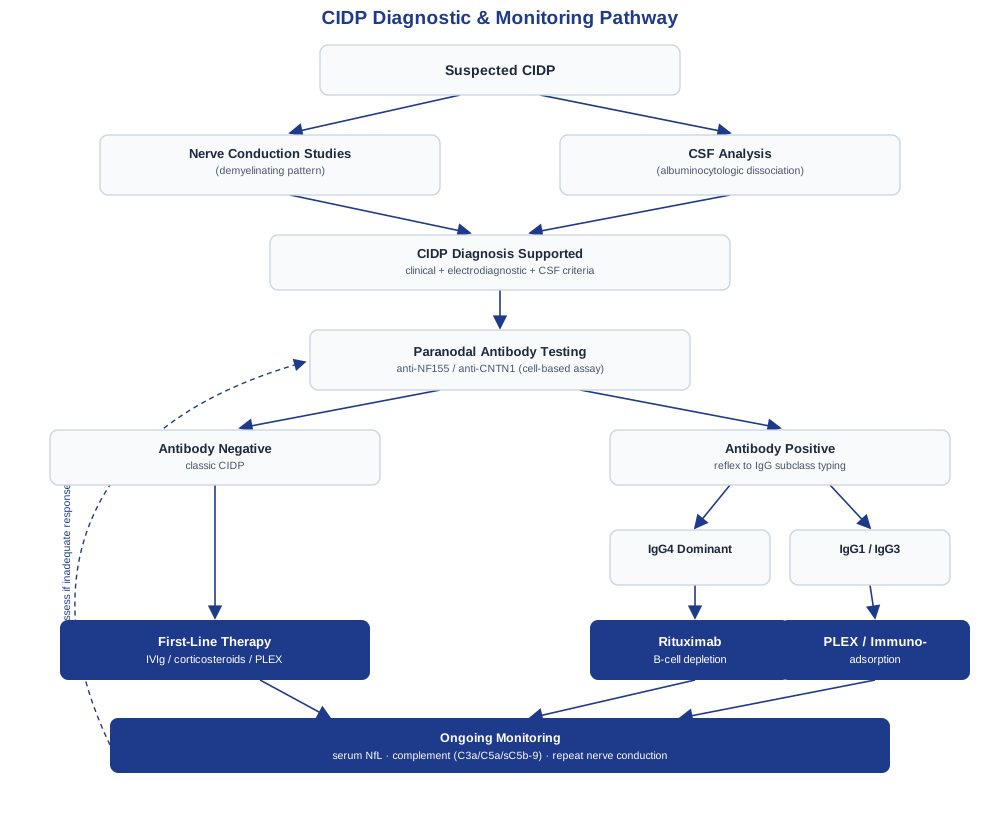
Taken together, these seven markers do not replace clinical judgment, but they do turn "try this treatment and see" into a more targeted process. The genetic research below adds an earlier, more upstream layer to that same picture.
What Genetic Research Suggests About CIDP Risk and Treatment Response
CIDP is an acquired autoimmune disease, not a classically inherited one, so genetics plays a different role here than in single-gene disorders. The research below is mostly early-stage, involves smaller cohorts, and in most cases has not been widely replicated. Treat it as context that may explain some of the variation in presentation and treatment response, not as a basis for predictive genetic testing today.
1. HLA-DRB1*15 and the Anti-NF155 Subtype
What It May Affect
HLA genes control how the immune system presents proteins to T cells, and certain variants make specific autoimmune reactions more likely. A study found that HLA-DRB1*15 alleles were present in 77 percent of anti-NF155-positive CIDP patients compared to just 14 percent of anti-NF155-negative patients, an odds ratio of roughly 20. This is one of the strongest genetic associations identified for any CIDP subtype, though it is specific to the NF155 antibody group rather than CIDP broadly.If the Gene Is Present: The Plan Without Supplements
HLA type is not modifiable, so the practical use of this finding is diagnostic context rather than prevention. If you test positive for anti-NF155 antibodies, this association helps explain why, and reinforces that this is a genetically distinct disease process warranting subtype-specific treatment discussion rather than a one-size-fits-all approach.If the Score Is Bad: The Plan With Supplements or Equipment
No supplement or device changes HLA genotype. General immune-regulatory habits, adequate sleep, stress management, and correcting vitamin D deficiency (1,000 to 2,000 IU daily if deficient, with levels rechecked every three months) have broad but non-specific support for immune regulation. Excess vitamin D carries a small risk of hypercalcemia at very high doses, which is why periodic blood level checks matter more than the dose itself.2. FCGR2B and PRF1 Variants: Predicting IVIg Response
What It May Affect
Fc gamma receptors determine how immune cells interact with infused antibody during IVIg treatment. A pharmacogenetic study found that a specific FCGR2B promoter variant was associated with a substantially better IVIg response (odds ratio of roughly 6.9), while a PRF1 variant was associated with a worse response. This is a single study that needs replication, but it points toward a future where IVIg response could be partly predicted before treatment starts rather than discovered by trial and error.If the Score Is Bad: The Plan Without Supplements
This type of genetic testing is not yet part of routine clinical care, so the realistic action today is behavioral: if IVIg is not producing meaningful improvement after a reasonable trial period, treat that as clinically meaningful information in its own right and move the conversation toward alternative therapies rather than repeating cycles indefinitely.If the Score Is Bad: The Plan With Supplements or Equipment
There is no supplement or equipment intervention that alters Fc receptor genetics. This remains a research and treatment-selection consideration rather than a self-directed target.3. PMP22 and the CIDP-Mimicking Hereditary Neuropathies
What It May Affect
PMP22 duplication causes Charcot-Marie-Tooth disease type 1A, a hereditary neuropathy that can closely resemble CIDP on nerve conduction studies. A multicenter retrospective study found that 3.2 percent of patients diagnosed with CIDP were actually found to have Charcot-Marie-Tooth disease, with PMP22 mutations identified in roughly a third of those misdiagnosed cases. This matters enormously in practice, because a genetic neuropathy does not respond to immunotherapy and exposes the patient to unnecessary treatment risk and cost.If the Gene Is Present: The Plan Without Supplements
If treatment response has been poor or absent despite an adequate trial, if the course has been very slowly progressive and highly symmetric, or if there is any family history of neuropathy, ask specifically about PMP22 genetic testing before continuing long-term immunosuppression. A single blood test, generally 300 to 500 US dollars, can settle the question.If the Gene Is Present: The Plan With Supplements or Equipment
If PMP22 duplication is confirmed, immunotherapy is typically discontinued since it is not treating the actual cause. No supplement reverses a gene duplication. Care shifts toward physical and occupational therapy, ankle-foot orthotics for foot drop, and monitoring for the emerging PMP22-targeted therapies currently in clinical development, which remain investigational rather than available treatments today.4. IL-10 and IL-6 Cytokine Gene Polymorphisms
What It May Affect
Cytokines regulate the intensity and duration of inflammatory responses. A 2023 study screening multiple cytokine gene polymorphisms in CIDP patients found that certain IL-10 and IL-6 gene variants showed associations with CIDP, while commonly studied TNF-alpha variants did not. This is early, single-cohort evidence, and the authors themselves frame it as a starting point for larger replication studies rather than a settled finding.If the Score Is Bad: The Plan Without Supplements
These are germline variants and cannot be changed directly. The practical takeaway is that even with a genetic predisposition toward a more inflammatory cytokine profile, downstream inflammatory activity is still influenced by modifiable factors like sleep quality, chronic stress, and body weight, all of which affect circulating cytokine levels in the general population.If the Score Is Bad: The Plan With Supplements or Equipment
Omega-3 fatty acids (roughly 2 to 3 grams of combined EPA/DHA daily) and curcumin have general, non-CIDP-specific evidence for modulating IL-6 activity in other inflammatory conditions. Both can be taken daily without a specific cycling schedule, though omega-3 at higher doses carries a mild bleeding risk, and curcumin can cause gastrointestinal upset and interacts with blood-thinning medications, so either should be discussed with a treating physician, especially if you are on anticoagulants or immunosuppressants.Genetics in CIDP is clearly still an emerging field compared to the biomarker work above, but the direction of travel is consistent: both layers point toward the same conclusion, that CIDP is better understood as several overlapping subtypes than a single uniform disease. That same theme, that the details of an individual case matter more than a generic protocol, carries over into the next section on lifestyle-based research.
What Terry Wahls' Autoimmune Research Suggests for Nerve Health
Terry Wahls is a physician who developed her own protocol for progressive multiple sclerosis after conventional treatment left her using a wheelchair, and has since published pilot research on the approach and discussed it widely, including on major health podcasts such as Huberman Lab. Her work centers on multiple sclerosis rather than CIDP, and the two conditions differ in important ways, MS affects the central nervous system while CIDP affects peripheral nerves, so nothing here should be read as CIDP-specific evidence. What makes it worth including is that both conditions share an autoimmune, inflammation-driven mechanism, and Wahls' central argument, that mitochondrial and nutrient status deserve as much attention as immune suppression, is a genuinely different framing than most conventional neurology offers. Her core pilot study, a small uncontrolled trial in secondary progressive MS, is published and reviewable, which is more than can be said for most lifestyle-medicine claims.
1. Mitochondria, Not Just Myelin, May Be the Hidden Battleground
Wahls' central thesis is that nerve damage in autoimmune neurological disease is not only about the immune system attacking myelin, but also about starved, dysfunctional mitochondria failing to keep nerve cells alive and functioning. This reframes nutrition from a peripheral concern into something directly tied to cellular energy supply for damaged nerves.2. Nine Cups of Vegetables and Fruit a Day: The Wahls Diet Foundation
The protocol asks for nine cups daily of vegetables and fruit, split roughly into three groups: leafy greens, sulfur-rich vegetables like broccoli and onions, and deeply colored produce. The intent is maximizing micronutrient density well beyond what a standard diet provides, on the theory that a chronically inflamed nervous system needs more, not less, nutritional support.3. Removing Gluten, Dairy, and Legumes: A Trial, Not a Life Sentence
The elimination phase removes common intestinal irritants for a defined trial period rather than permanently, with reintroduction used to test individual tolerance. This positions the approach as an experiment you run on yourself, not a rigid rule imposed from outside.4. B Vitamins and Cofactors: Feeding the Energy Factories
B vitamins, particularly B12, and other mitochondrial cofactors are emphasized because they are direct inputs into cellular energy production. The framing is practical: nerve cells with impaired energy production are less resilient to ongoing immune attack, regardless of what is causing that attack.5. Electrical Stimulation for Muscles That Can't Move on Their Own
In her own case and in the published pilot, Wahls used neuromuscular electrical stimulation on muscles too weak to be voluntarily exercised, on the premise that muscles need some form of activity signal to maintain function even when active movement is not possible.6. Exercise Prescribed by Ability, Not by a Generic Gym Plan
Rather than a standard exercise plan, movement is scaled to whatever the person can currently do safely, with the goal of consistent, sustainable activity rather than an intensity target that risks injury or exhaustion in someone with active neurological disease.7. Meditation and Stress Regulation as Medical Interventions, Not Luxuries
Daily stress-reduction practice is treated as a core component of the protocol rather than an optional add-on, reflecting a broader shift in autoimmune disease research toward taking the physiological effects of chronic stress on immune regulation seriously.8. Sleep Debt Undermines Every Other Intervention
Consistent, adequate sleep is presented as a prerequisite for the rest of the protocol to work, on the basis that poor sleep independently worsens inflammation and fatigue regardless of what else is being done nutritionally or medically.9. Community and Accountability Change Adherence, Not Just Motivation
Wahls emphasizes group and community support structures, arguing that adherence to a demanding protocol over months and years depends more on social accountability than on willpower alone, a point with broad support in behavior-change research generally.10. Track Yourself Like an N-of-1 Experiment, Not a Statistic
The published pilot itself, a small uncontrolled trial in ten people with secondary progressive MS combining diet, exercise, electrical stimulation, and meditation, found a statistically significant drop in fatigue scores over twelve months, according to the feasibility study on this multimodal intervention. It is small, uncontrolled, and cannot prove causation, and it was conducted in MS rather than CIDP, but the underlying message, track your own individual response systematically rather than assuming a population average applies to you, is sound practice regardless of diagnosis.The common thread across this research is treating the body as a system where nutrition, sleep, stress, and movement interact with immune function, rather than treating immune suppression as the only lever available. The complementary approaches below extend that same systems view into practices with more direct, if still limited, evidence in peripheral neuropathy specifically.
Complementary Approaches Worth Considering
The following approaches are not substitutes for immunotherapy in CIDP, and the clinical evidence behind most of them comes from related conditions like diabetic peripheral neuropathy or chemotherapy-induced neuropathy rather than CIDP itself. They are worth knowing about as adjuncts, with expectations calibrated to what the evidence actually shows.
The Autoimmune Protocol
The Autoimmune Protocol, developed by Sarah Ballantyne, is an elimination-diet framework originally designed for autoimmune conditions broadly, built on the idea that certain foods may perpetuate intestinal permeability and systemic inflammation in people with an already dysregulated immune system. Because CIDP is fundamentally an autoimmune disease, this is one of the more logically relevant dietary frameworks to be aware of, even though it has not been formally studied in CIDP itself. A pilot study applying the protocol in inflammatory bowel disease, another autoimmune condition, found that the elimination diet improved clinical symptom scores and reduced a marker of intestinal inflammation over six to eleven weeks in a small group of patients. Applied cautiously to CIDP, this would mean treating the protocol as a supervised, time-limited elimination trial, done alongside, never instead of, prescribed immunotherapy, with close attention to whether restrictive eating is sustainable and nutritionally adequate over time, ideally with a dietitian involved.Mindfulness-Based Stress Reduction
Mindfulness-based stress reduction is a structured eight-week program combining meditation, body awareness, and gentle movement, originally developed for chronic pain and increasingly studied in chronic neurological conditions. Chronic neuropathic symptoms and the uncertainty of an autoimmune diagnosis both carry a real psychological burden, and MBSR targets that burden directly rather than the underlying nerve pathology. A randomized trial in painful diabetic peripheral neuropathy found that MBSR improved pain-related disability, pain intensity, quality of life, and depression scores compared to usual care. For someone with CIDP, a realistic application is enrolling in a certified eight-week MBSR course, in person or online, as a complement to medical treatment for managing pain, fatigue, and the psychological load of a chronic diagnosis, understanding that the strongest evidence so far comes from diabetic rather than autoimmune neuropathy.Tai Chi
Tai chi is a slow, low-impact movement practice combining balance training, gentle strength work, and breath awareness, widely used in populations with impaired proprioception and fall risk. Peripheral neuropathy of any cause frequently impairs balance and increases fall risk, which makes a low-impact balance-focused practice a reasonable fit regardless of the exact underlying mechanism. A controlled trial in people with type 2 diabetes and neuropathy found that twelve weeks of tai chi improved neuropathy symptom scores, balance, and quality of life compared to a control group. For someone with CIDP, this translates into a supervised beginner tai chi class, roughly two to three sessions per week, chosen and progressed carefully given that CIDP-related weakness and sensory loss may affect balance differently than diabetic neuropathy, ideally with a physical therapist involved in the initial sessions to assess fall risk.Massage Therapy
Massage therapy involves manual manipulation of soft tissue and is frequently used for both pain relief and general symptom management in various neuropathies. Reduced sensation and neuropathic pain in CIDP can create secondary muscle tension and reduced circulation in affected limbs, which massage may help address as a symptomatic, supportive measure. An assessor-blinded randomized trial in breast cancer patients receiving neurotoxic chemotherapy found that classical massage reduced neuropathic pain and improved quality of life compared to standard care at twelve weeks. For CIDP, this points toward regular therapeutic massage, roughly once or twice weekly during periods of significant neuropathic pain, performed by a therapist informed about your reduced sensation so pressure can be calibrated safely, since impaired sensory feedback raises the risk of unnoticed tissue injury from overly firm technique.Low-Level Laser Therapy (Photobiomodulation)
Low-level laser therapy, also called photobiomodulation, uses specific wavelengths of light applied to the skin, theorized to support cellular energy metabolism and reduce local inflammation in affected tissue. Given the mitochondrial and inflammatory themes running through this article, this is a plausible, if still early, adjunct for neuropathic pain in general peripheral nerve disease. A study evaluating LLLT in diabetic polyneuropathy found statistically significant pain and clinical score improvement compared to sham treatment after two weeks, though benefits plateaued afterward. For someone with CIDP, a cautious application would be a short, defined trial, for example two to three sessions per week for two to four weeks, at a clinic with a device model matched to what has actually been studied, treating it as a possible modest pain-management adjunct rather than a disease-modifying treatment, and stopping if no benefit appears within that window.Across all five of these, the pattern is consistent: real, published human evidence exists, but mostly in related neuropathies rather than CIDP directly, and the effect sizes are modest and symptomatic rather than disease-modifying. That is a fair and honest place to set expectations.
Conclusion
CIDP responds better to specificity than to generic protocols. The seven biomarkers covered here, from paranodal antibodies to nerve conduction patterns to emerging complement and neurofilament markers, exist precisely because "CIDP" covers several distinct disease processes that behave differently under treatment. The genetic findings, though still early, reinforce the same point: an HLA variant, a receptor polymorphism, or a misidentified PMP22 duplication can each change what the right treatment actually is. Lifestyle and complementary approaches have a real, if modest, supporting role in managing symptoms and general nerve and inflammatory health, but they work alongside targeted medical treatment, not instead of it.
The most useful next step is not a dramatic change but a specific one: bring this list of biomarkers to your next appointment and ask which ones have already been tested, and which might be worth pursuing given how you have responded to treatment so far. If you have had an incomplete or absent response to a first-line therapy, that is itself clinically meaningful information worth raising directly rather than waiting out. Track your symptoms, your test results, and your treatment responses over time, and bring that record, not just your memory of how you have been feeling, into the conversation with your neurologist.