This article contains AI generated content.
Congenital Absence Of The Anterior Cruciate Ligament - 3 Genes And 7 Biomarkers To Track
Introduction
If you or your child has been told the knee has no anterior cruciate ligament — not torn, not stretched, but simply never formed — the usual advice can feel oddly generic. "Strengthen the muscles around the knee." "Avoid pivoting sports." "Come back if it locks or gives way." True, but thin. It doesn't answer the questions that actually keep a parent or a patient up at night: how much instability is too much, whether the knee is quietly wearing down cartilage that won't be missed until it's gone, or whether a growth spurt or a new sport is a reasonable risk.
Congenital absence of the ACL is rare enough — reported around 1 in 6,000 births, and often discovered alongside other developmental knee differences — that most orthopedic advice defaults to the reflexive, one-size version built for people who tore a normal ligament in a normal knee. That advice was never built for a knee that has been compensating since birth. It also tends to skip the part where structural absence and functional stability are two different things, and where the second can often be tracked and improved even when the first cannot be changed.
This article takes the more useful route: instead of repeating "protect the knee," it names the specific, measurable signals — mechanical laxity, muscle balance, cartilage stress markers, inflammation, proprioception — that actually tell you how the knee is doing over time, plus what current genetic research says (and does not yet say) about why some connective tissue develops this way. None of this rewrites the diagnosis. But knowing which numbers to track, how to measure them, and what realistically moves them gives you something generic advice never does: a way to notice a problem early, and a way to act on it before it becomes a bigger one.
The sections below walk through both angles. The main focus is a set of biomarkers worth tracking regularly, each with a plan for improving it with and without supplements or equipment. A shorter section covers what's known — and mostly not yet known — about the genetics behind ligament development. A summary of a widely read longevity book adds a useful outside lens on lifelong joint durability, and a look at complementary approaches rounds out what has genuine supporting evidence for this specific situation.
Summary
A knee born without its anterior cruciate ligament doesn't come with an instruction manual, but it does come with measurable clues. This guide walks through seven concrete markers — from instrumented laxity testing and the quadriceps-to-hamstring ratio, to cartilage stress proteins like COMP and CTX-II, to inflammation and vitamin D status — that together paint a far more useful picture than "watch for pain." Each one comes with realistic cost ranges, how it's actually measured, and two tracks to improve it: one using only training and habits, one adding supplements or equipment, complete with frequency and safety notes.
Beyond the numbers, you'll find what current genetics research (still early, but informative) suggests about genes like GDF5 and the COL5A1/COL1A1 collagen genes and why they matter even when the ligament itself can't be regrown. There's also a distilled look at ten ideas from Peter Attia's Outlive that apply directly to lifelong joint durability, and a review of which complementary approaches — tai chi, biofeedback, motor imagery, low-level laser therapy, mindfulness — actually have human evidence behind them for knee stability and pain, rather than just popularity. Read on for the specifics, starting with the biomarkers most worth tracking first.
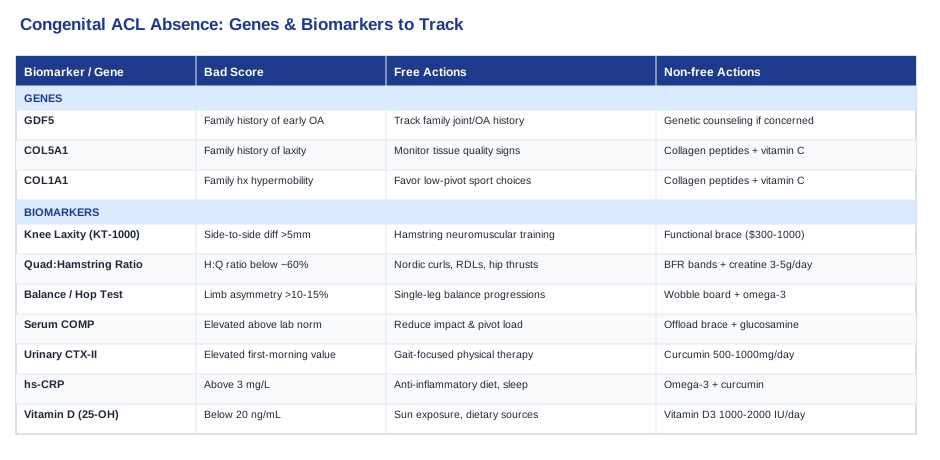
7 Biomarkers Worth Tracking When a Knee Is Missing Its ACL
The anterior cruciate ligament normally does two jobs: it mechanically limits how far the tibia slides forward under the femur, and it feeds the brain a constant stream of position sense through its mechanoreceptors. When it's congenitally absent, both jobs get outsourced — to muscles, to habit, to the nervous system's ability to adapt. That outsourcing can work reasonably well for years, but it isn't automatic, and it isn't uniform. The following seven markers are the most practical way to check whether the compensation is actually holding up, rather than waiting for a locking episode, a swelling flare, or an x-ray showing cartilage loss to find out the hard way.
1. Anterior Knee Laxity (Instrumented Arthrometry)
Why It Matters
This is the most direct read on the mechanical consequence of not having an ACL: how far the shin slides forward relative to the thigh bone under a defined load. Case reports of congenital ACL absence describe knees that stayed stable and pain-free for years before eventually developing knee and hip osteoarthritis, which is exactly why tracking laxity over time — rather than checking it once at diagnosis — is worth doing (see this bilateral case report on congenital ACL absence with later osteoarthritis).How to Measure It
An instrumented arthrometer such as the KT-1000 or KT-2000 is the standard clinical tool, typically done in a sports medicine or orthopedic clinic for roughly 100 to 300 dollars per visit (often bundled into a regular follow-up). Stress radiographs or a dedicated device like the GNRB can be more precise but cost more, generally 300 to 800 dollars. It's worth knowing that reliability between different examiners is only moderate — a comparison of common arthrometers found acceptable consistency when the same clinician repeats the test, but weaker agreement between different testers. Practically, that means tracking trend over time with the same device and, ideally, the same examiner matters more than comparing a single number against a textbook "normal."If Laxity Is High: The Plan Without Supplements or Equipment
Hamstring-dominant neuromuscular training is the unpaid understudy for a missing ACL, since the hamstrings can act as a partial synergist limiting forward tibial translation. A program built around closed-chain exercises — step-downs, single-leg squats, controlled deceleration drills — three times a week for 8 to 12 weeks, with reassessment afterward, is a reasonable structure. Avoiding high-torque pivoting sports (basketball, soccer, tennis) without additional support is the other half of this plan, and costs nothing beyond the training time.If Laxity Is High: The Plan With Supplements or Equipment
A functional knee brace designed for ligament-deficient knees (roughly 300 to 1,000 dollars, custom-fit versions at the higher end) is the equipment option with the most direct mechanical logic, worn specifically during higher-demand activities rather than all day. On the supplement side, there is no product that restores ligament mechanics, but collagen peptides (about 15 grams) paired with 50 milligrams of vitamin C taken 30 to 60 minutes before loading exercise have been studied for supporting collagen synthesis in connective tissue generally. Use it in blocks tied to training phases (for example, daily during a 12-week strengthening cycle, then reassess) rather than indefinitely; side effects are minimal, mainly mild digestive upset, and people with allergies to the collagen source (commonly bovine or marine) should check labels.2. Quadriceps-to-Hamstring Strength Ratio
Why It Matters
In a knee without an ACL, the hamstrings are doing mechanical work the ligament would normally share. Research in ACL-deficient knees has found that the hamstring-to-quadriceps ratio behaves differently than in intact knees and is tied to dynamic control of the joint, meaning this ratio is a reasonable proxy for how well the muscles are covering for the missing ligament, not just a general fitness number.How to Measure It
The gold standard is an isokinetic dynamometer (Biodex or Cybex) at a sports medicine clinic or university lab, typically 150 to 400 dollars per session. A cheaper field alternative — a hand-held dynamometer, or simply timing a single-leg hamstring bridge hold to fatigue on each side and comparing — won't give a precise ratio but can flag a meaningful side-to-side or muscle-group imbalance for near zero cost.If the Ratio Is Off: The Plan Without Supplements or Equipment
A hamstring-dominant strength block — Nordic hamstring curls, Romanian deadlifts, hip thrusts — two to three times a week in 8 to 12 week cycles, with the ratio rechecked at the end of each cycle, directly targets this number. Progressive overload matters more than volume; adding weight or resistance gradually across the cycle is what shifts the ratio, not simply doing more reps.If the Ratio Is Off: The Plan With Supplements or Equipment
Blood flow restriction (BFR) bands (roughly 50 to 150 dollars) allow hamstring strengthening at lower joint loads, which is useful when higher-load training isn't tolerated well. Creatine monohydrate, 3 to 5 grams daily, is one of the better-studied strength-training adjuncts and doesn't require cycling on and off; mild water retention is the most common side effect. Protein intake in the range of 1.6 to 2.2 grams per kilogram of body weight per day supports the muscle-building side of this plan and isn't a "supplement" so much as a baseline to check against actual diet.3. Dynamic Balance and Single-Leg Hop Performance
Why It Matters
The ACL is loaded with mechanoreceptors that normally feed the brain constant positional feedback; without it from birth, that feedback loop has to be built through other means. Studies following people after ACL reconstruction consistently find measurable deficits in balance and hop performance tied to knee function, which makes these functional tests a reasonable stand-in for how well the nervous system has adapted to an ACL-deficient knee, congenital or otherwise.How to Measure It
The Y-Balance Test uses an inexpensive kit (around 300 dollars, or a clinic visit for 75 to 150 dollars) and measures reach distance in three directions on a standing leg. Single-leg hop-for-distance testing needs nothing more than a tape measure and can be self-administered for a rough baseline, though a physical therapist's supervision is safer for anyone with a history of giving-way episodes.If Balance Is Poor: The Plan Without Supplements or Equipment
Single-leg stance progressions — eyes open to eyes closed, stable ground to foam pad, static to small perturbations — done 4 to 6 times a week for 10 to 15 minutes builds proprioceptive capacity gradually. This is one of the lowest-cost, highest-return interventions on this list and is often underused simply because it looks too simple to matter.If Balance Is Poor: The Plan With Supplements or Equipment
A wobble board or BOSU ball (30 to 80 dollars) adds progressive instability to the same training. Omega-3 fatty acids (1 to 2 grams combined EPA/DHA daily) are sometimes suggested for their general anti-inflammatory and nerve-support properties, though the evidence is more indirect here than for the strength-related markers above; a fishy aftertaste and mild GI upset are the main side effects, and anyone on blood thinners should check with their physician first given omega-3's mild anticoagulant effect.4. Serum COMP (Cartilage Oligomeric Matrix Protein)
Why It Matters
COMP is released when cartilage is under mechanical stress, and elevated levels have been linked to both current cartilage damage and future osteoarthritis progression in the knee, per a recent review of COMP as a knee osteoarthritis biomarker. Given that congenital ACL absence carries a documented long-term risk of secondary osteoarthritis, this is one of the more direct early-warning markers available, well before an x-ray would show visible joint space narrowing.How to Measure It
This isn't a standard blood panel; it typically requires a referral to orthopedics, rheumatology, or a specialty or research lab, at a cost of roughly 80 to 250 dollars. Because COMP rises temporarily after exercise, testing first thing in the morning before activity gives a more stable baseline reading.If COMP Is Elevated: The Plan Without Supplements or Equipment
Load management is the primary lever here: shifting from high-impact, pivoting activity toward lower-impact cross-training (cycling, swimming, rowing) reduces the mechanical stress driving cartilage turnover, while maintaining fitness. Maintaining a lean body weight also directly reduces joint loading forces on every step.If COMP Is Elevated: The Plan With Supplements or Equipment
An unloading or offloading brace during higher-risk activities is the equipment option. Glucosamine and chondroitin are commonly used for joint support, though the underlying evidence is mixed and inconsistent across trials — worth trying for 8 to 12 weeks with a clear before/after COMP comparison rather than assuming benefit. Omega-3s, as above, are a reasonable lower-risk addition. None of these should replace load management; they're additions to it, not substitutes.5. Urinary CTX-II
Why It Matters
CTX-II is a breakdown fragment of type II collagen, the main structural protein in cartilage, and tracking it over years has been shown to predict knee osteoarthritis severity and stiffness before it becomes symptomatic. Paired with COMP, it gives a more complete picture of ongoing cartilage stress than either marker alone.How to Measure It
A urine sample sent to a specialty lab, generally 100 to 200 dollars, and again not part of routine primary care panels. CTX-II has a diurnal rhythm, so a first-morning-void sample is the standard collection method and matters for comparing results across time.If CTX-II Is Elevated: The Plan Without Supplements or Equipment
The same load-management and gait-focused physical therapy approach used for COMP applies here — a physiotherapist assessing walking and running mechanics for compensations that are quietly overloading one compartment of the joint can identify a fixable pattern that no amount of general strengthening will address on its own.If CTX-II Is Elevated: The Plan With Supplements or Equipment
Curcumin (500 to 1,000 milligrams daily of a standardized curcuminoid extract) has reasonable anti-inflammatory research behind it and is often cycled in 8 to 12 week blocks with a break in between; mild GI upset is possible, and it should be avoided or discussed with a physician by anyone with gallstones or on blood-thinning medication, since curcumin can affect clotting. Collagen peptides with vitamin C, as described earlier, are a reasonable pairing here as well.6. hs-CRP (High-Sensitivity C-Reactive Protein)
Why It Matters
This is a general inflammation marker, not a joint-specific one, but a meta-analysis of CRP and COMP as knee osteoarthritis biomarkers found meaningful associations between elevated CRP and both the presence and severity of knee osteoarthritis. Because a congenitally unstable knee is a plausible long-term source of low-grade local inflammation, hs-CRP is a useful, cheap way to check whether that's showing up systemically.How to Measure It
A standard blood test available at essentially any lab, usually 15 to 50 dollars and often included in routine metabolic panels, which makes it the most accessible marker on this list.If hs-CRP Is Elevated: The Plan Without Supplements or Equipment
Because hs-CRP is nonspecific, an elevated result is worth discussing with a physician to rule out non-joint contributors (metabolic, dental, or other sources of chronic low-grade inflammation) rather than assuming it's purely knee-driven. Where it does track with joint symptoms, the same anti-inflammatory dietary pattern, weight management, sleep consistency, and regular moderate exercise that help general cardiometabolic inflammation tend to help here too.If hs-CRP Is Elevated: The Plan With Supplements or Equipment
Omega-3 fatty acids and curcumin, both described above, are the most evidence-backed lower-risk options for lowering inflammatory markers generally. Neither is a substitute for identifying and addressing an underlying cause if one is found on medical workup.7. Vitamin D (25-Hydroxyvitamin D)
Why It Matters
Vitamin D status affects muscle strength, power, and neuromuscular coordination, all of which matter more, not less, in a knee relying on muscular compensation instead of a ligament. A review of vitamin D in athletes found low levels associated with reduced muscle performance and higher musculoskeletal injury risk, which is directly relevant to anyone depending on strong, well-coordinated muscles to stabilize a ligament-deficient joint.How to Measure It
A standard blood test, 30 to 100 dollars, widely available and frequently covered by insurance once ordered by a physician.If Vitamin D Is Low: The Plan Without Supplements or Equipment
Regular, sensible sun exposure and dietary sources like fatty fish, egg yolks, and fortified foods are the no-cost starting point, though for many people, especially at higher latitudes or with limited sun exposure, diet and sun alone aren't enough to normalize levels.If Vitamin D Is Low: The Plan With Supplements or Equipment
Vitamin D3, typically 1,000 to 2,000 IU daily for maintenance, or up to 5,000 IU daily for correcting a deficiency under physician guidance, is a well-established, low-cost fix. Recheck levels after about 3 months to confirm the dose is working, then retest every 6 to 12 months going forward. Side effects at these doses are rare; the main caution is avoiding very high doses over long periods without monitoring, since that can raise calcium levels.What the Genetics of Ligament Development May Suggest
The genetics of congenital ACL absence itself are not well mapped in humans — most of what's documented is a handful of case reports, including one describing eight cases across five members of the same family, which hints at a hereditary component without pinning down a specific gene. What's better studied is the biology of joint and ligament formation generally, and the collagen genetics tied to ligament injury risk. Both are worth understanding, with the honest caveat that neither currently offers a way to change how a ligament formed before birth — the practical value here is understanding downstream risk and what, if anything, can be supported.
GDF5 and Joint Interzone Formation
GDF5 (growth differentiation factor 5) is one of the earliest genes expressed at the "interzone" where a joint forms in the embryo, and it's essential for normal patterning of the knee, hip, and other joints. Research on GDF5's joint-specific control sequences shows that different enhancer regions direct its activity independently at each joint, meaning a disruption affecting the knee specifically, without affecting other joints, is biologically plausible. This is animal and developmental biology evidence primarily — human data linking specific GDF5 variants directly to isolated congenital ACL absence doesn't yet exist in any robust form, so this should be read as a plausible mechanism, not an established cause. There's no supplement or lifestyle intervention that changes GDF5 expression retroactively; its relevance today is mainly that GDF5 variants are also linked to general osteoarthritis risk, which folds back into the case for tracking the cartilage biomarkers above more closely if there's a family history of early joint degeneration.COL5A1 and Ligament Tissue Quality
COL5A1 codes for a component of type V collagen, a minor but structurally important collagen found in ligaments and tendons that helps regulate the diameter and organization of the larger type I collagen fibrils around it. A systematic review of genetic determinants of ACL rupture found COL5A1 variants among the more consistently studied candidates, though results across studies are mixed rather than uniform — some find a protective association for certain variants, others find none. Separately, the same collagen gene variants linked to ACL rupture risk have also been associated with general joint laxity, which is a more directly relevant finding for anyone managing a congenitally lax or unstable knee, since it suggests some of the same collagen-quality factors that predict ligament injury risk in intact knees may also influence how well surrounding tissue compensates for one that's missing entirely. Again, this can't be changed by supplementation, but it reinforces why the tissue-support measures already listed under the biomarker plans — adequate protein, vitamin C-paired collagen peptides, and avoiding load spikes — are reasonable general-purpose insurance rather than wasted effort.COL1A1 and Connective Tissue Structural Support
COL1A1 encodes a chain of type I collagen, the dominant structural collagen in ligaments, tendons, and bone. It's studied alongside COL5A1 in the same ACL injury genetics literature referenced above, generally as part of a broader profile of connective tissue "stiffness versus compliance" rather than as a single decisive gene. The practical takeaway is similar: this is a contributing-factor gene, not a fixable one, and the evidence connecting specific COL1A1 variants to outcomes in congenital ACL absence specifically simply doesn't exist yet — it's an extrapolation from ACL injury genetics in otherwise normal knees. Where this becomes useful is in expectation-setting: if a family history includes joint hypermobility, easy bruising, or early joint problems, it's a reasonable prompt to be more conservative about high-pivot sports and more consistent about the tracking plan above, rather than a reason to pursue genetic testing for its own sake.Family history and the biomarker trends described earlier tend to be far more actionable, in practice, than a genetic panel — which is exactly why the next section shifts back to a broader, well-tested framework for thinking about joints over a lifetime, rather than genes in isolation.
10 Ideas From Peter Attia's Outlive That Apply to a Lifetime With an Unstable Knee
Peter Attia's book Outlive: The Science and Art of Longevity isn't written about congenital ACL absence specifically, but its central argument — that most people wait too long to measure and train the physical capacities that quietly determine quality of life decades later — maps directly onto managing a knee that has been compensating since birth. The following ideas are drawn from the book's framework and applied to this specific situation.
1. Muscle Is Medicine, Not Vanity
Attia frames strength training as a medical intervention rather than an aesthetic one, arguing that the muscle mass and strength built in midlife is what determines mobility and injury resilience decades later. For a knee missing its ACL, the muscles aren't optional scaffolding — they're doing a structural job the ligament would otherwise do, which makes consistent strength training closer to a treatment than a lifestyle choice.2. The "Centenarian Decathlon" Concept
Attia's exercise is to work backward from the physical tasks you want to still perform in the last decade of life — getting up off the floor, carrying groceries, walking briskly — and train for those specific capacities now. Applied here, that might mean identifying the specific movements (getting up from a squat, changing direction while walking a dog, descending stairs) that stress the compensating muscles, and training those patterns directly rather than generic fitness.3. Stability Training Deserves Equal Billing With Strength
The book argues that stability — the ability to control a joint through its full range under load — is chronically undertrained compared to raw strength. This lines up precisely with the balance and hop-testing biomarker above; strength without stability doesn't fully substitute for a missing ligament.4. Zone 2 Cardio as Joint-Friendly Conditioning
Attia is well known for advocating large amounts of low-intensity, steady-state ("Zone 2") cardiovascular training. For a joint where high-impact, high-torque activity carries elevated cartilage-stress risk, this is a practical way to maintain cardiovascular fitness without adding to COMP or CTX-II elevations.5. Marginal Decade Thinking
The idea of protecting function in the final "marginal decade" of life reframes today's training decisions: consistent, moderate protection of the knee now is what prevents a forced, more severe restriction later, rather than a reason to avoid activity altogether today.6. Rate of Decline Matters More Than Starting Point
Attia emphasizes tracking trajectory over single snapshots — the direction a marker is moving matters more than where it sits today. This is the same logic behind rechecking COMP, CTX-II, and laxity over time rather than treating one test result as a verdict.7. Objective Testing Over Subjective Feeling
A recurring theme is distrust of "I feel fine" as a health metric, in favor of measurable data. A knee can feel stable for years before a laxity or cartilage marker shows otherwise, which is the core argument for the tracking plan in this article.8. Nutrition in Service of Function, Not Aesthetics
Protein intake, in Attia's framework, is sized to support muscle maintenance and strength training capacity, not weight loss. The 1.6 to 2.2 g/kg protein target mentioned under the quadriceps-hamstring plan reflects this same logic.9. Emotional Health Affects Physical Consistency
Attia argues that the psychological piece — motivation, consistency, relationship with one's own body — determines whether any physical plan actually gets followed for years, not weeks. Managing a congenital condition is a long game, and the book's emphasis on sustainable habits over short bursts of intensity applies directly.10. Prevention Beats Intervention, but Only If You Start Early
The book's overarching thesis is that most preventable decline is preventable specifically because it was addressed years before symptoms appeared. For a knee that has technically been "at risk" since birth, this is the most directly relevant idea in the entire book: the biomarker tracking described above is most valuable exactly when the knee still feels fine.Complementary Approaches With Real Supporting Evidence
Beyond strength training and biomarker tracking, a handful of complementary approaches have actual human evidence behind them for knee stability, pain, and rehabilitation outcomes relevant to an ACL-deficient joint. The following five are worth considering as additions to, not replacements for, the core plan above.
Tai Chi
Tai chi combines slow, controlled weight shifts with sustained single-leg loading, which makes it a natural fit for anyone needing to rebuild the proprioceptive feedback normally supplied by an intact ACL. Because movements are slow and low-impact, it also avoids the sudden pivoting loads that are riskiest for a ligament-deficient knee.A pilot randomized controlled trial testing tai chi's effect on proprioception in knee osteoarthritis found measurable improvements in joint position sense after a structured program, twice weekly for 12 weeks, compared to a control group — directly relevant given that proprioceptive deficit, not just structural instability, is a core issue in congenital ACL absence.
Realistically, this means starting with a beginner class or instructor-led online program 2 sessions a week for at least 8 to 12 weeks before expecting a noticeable proprioceptive change, and treating it as a complement to hop testing and balance training rather than a substitute for strength work.
Biofeedback (EMG-Guided Muscle Retraining)
Electromyographic (EMG) biofeedback gives real-time visual or auditory feedback on muscle activation, which is particularly useful when a muscle group (commonly the quadriceps) is under-firing due to inhibition rather than weakness — a known issue around ACL-deficient and post-surgical knees.A randomized controlled trial on EMG biofeedback following ACL reconstruction found improved knee extension and quadriceps activation in the biofeedback group compared to standard rehabilitation alone over a 6-week program.
For congenital absence specifically, this is most useful during structured physical therapy rather than as a stand-alone home practice — a physical therapist with EMG equipment (commonly available in outpatient orthopedic clinics) can identify and retrain a lagging muscle far more precisely than exercise alone.
Motor Imagery (Guided Mental Rehearsal)
Motor imagery — mentally rehearsing a movement in vivid detail without performing it — sounds like a stretch, but it has a specific, testable mechanism: mental rehearsal activates overlapping motor cortex regions used in actual movement, which can support muscle activation patterns during rehabilitation.A study on motor imagery during ACL rehabilitation found increased quadriceps muscle activation in patients who combined structured mental imagery sessions with standard physiotherapy, compared to physiotherapy alone, though a broader systematic review notes the evidence base is still developing and effect sizes are modest.
In practice, this looks like 10 to 15 minutes of guided imagery — visualizing controlled, stable knee movement in detail — before a physical therapy session, at no cost and no risk, making it a reasonable add-on even given the still-limited evidence.
Low-Level Laser Therapy (Photobiomodulation)
Low-level laser therapy uses specific wavelengths of light applied to the skin over a joint, with proposed effects on local inflammation, pain signaling, and possibly muscle recovery, making it relevant to the inflammation and cartilage-stress side of this condition rather than the mechanical instability side.A double-blinded randomized controlled trial found improvements in muscle strength and functional outcomes in knee osteoarthritis patients receiving low-level laser therapy alongside standard care, compared to sham treatment, over an 8-week, three-times-weekly protocol.
This requires access to a clinic-based device in most cases (home devices exist but with more variable quality and dosing), and is best considered during a flare of pain or after a period of elevated inflammatory markers, rather than as an everyday maintenance therapy.
Mindfulness Meditation
Living with a joint that requires ongoing vigilance and periodic monitoring carries a chronic-condition mental load that's easy to underestimate; mindfulness-based approaches are among the better-studied tools for the pain-coping and stress side of chronic musculoskeletal conditions generally.A meta-analysis of mindfulness meditation for chronic pain found a small but statistically significant improvement in pain outcomes compared to usual care, alongside improvements in depression symptoms and quality of life, though the authors note substantial variability between studies and call for caution given some risk of publication bias.
A realistic entry point is a structured 8-week mindfulness-based stress reduction (MBSR) course, in person or via a well-validated app, treated as a support for coping and consistency rather than a direct fix for knee mechanics.
Conclusion
Congenital absence of the ACL isn't something biomarkers or genetics can reverse — the ligament's structural absence is fixed from birth. What can be tracked, and often improved, is how well everything around it is compensating: mechanical laxity, muscle balance, proprioception, and the quiet biochemical signs of cartilage stress and inflammation that tend to show up years before symptoms do. That's the real, achievable goal here — not restoring a ligament, but catching and correcting the small drifts that, left unmeasured, add up to bigger problems.
The most useful next step is rarely dramatic. It's picking two or three of the biomarkers above — laxity, the quadriceps-hamstring ratio, and vitamin D are a reasonable, low-cost starting trio — getting a baseline, and building a recheck schedule into existing follow-up visits. Pair that with a conversation with an orthopedic specialist familiar with congenital knee conditions about which markers matter most for your specific anatomy, since congenital ACL absence often comes with other structural variations that change the picture. Better information, tracked consistently, is what turns a vague diagnosis into a manageable, well-understood part of life.
Musculoskeletal: Bone Conditions Sports Injuries
Autoimmune: Inflammatory Conditions