This article contains AI generated content.
Congenital Insensitivity to Pain: 7 Genes and 6 Biomarkers to Track
Most people who search for information on congenital insensitivity to pain are not doing so out of curiosity. They are parents who just watched a toddler chew through a lip without crying, or adults who noticed a family pattern of unexplained fractures, or clinicians trying to make sense of a case that does not fit the usual textbook categories. The condition is rare enough that most general practitioners will see it once, if ever, in an entire career.
Generic advice does not help much here. "See a specialist" is true but not actionable. "It's genetic" is accurate but says nothing about which gene, what it does, or what a family can realistically do once a diagnosis is confirmed. Congenital insensitivity to pain is not one disease — it is a small cluster of distinct mutations in different genes, each with its own mechanism, its own pattern of complications, and its own practical implications for day-to-day safety.
This article takes the more specific route. Instead of describing pain insensitivity as a single vague entity, it walks through the individual genes known to cause it, what current human research actually shows about each one, and what a realistic monitoring and protection plan looks like once a specific gene is identified. It also looks at the biological markers that matter most for catching the silent injuries this condition is known for, since in this particular disorder, pain — the body's usual alarm system — is exactly what is missing.
None of this amounts to a cure, and anyone offering one should be treated with suspicion. But accurate, gene-specific and biomarker-specific information changes what families and clinicians can actually do: which injuries to watch for, which tests catch problems early, and which complementary supports have genuine evidence behind them. That is a meaningfully better position than "be careful."
Summary
Congenital insensitivity to pain is caused by a handful of well-characterized genes — mostly sodium channels and nerve growth factor signaling components — each producing a slightly different clinical picture, from the classic self-mutilation and fractures of SCN9A and NTRK1 mutations to the strange, milder case of a woman whose FAAH-OUT variant left her nearly painless and remarkably anxiety-free. Knowing which gene is involved changes the entire management plan, from dental mouthguards to bone-density scanning schedules. Just as important, in a condition where pain cannot serve as a warning sign, a short list of blood tests, imaging studies and physical exams effectively replaces the alarm system the body no longer provides — catching silent fractures, infections and corneal damage before they become irreversible. The sections below walk through both, plus a look at how this rare disorder has quietly reshaped mainstream pain medicine, and which complementary approaches have any real evidence behind them for the behavioral and autonomic issues that often come with it.
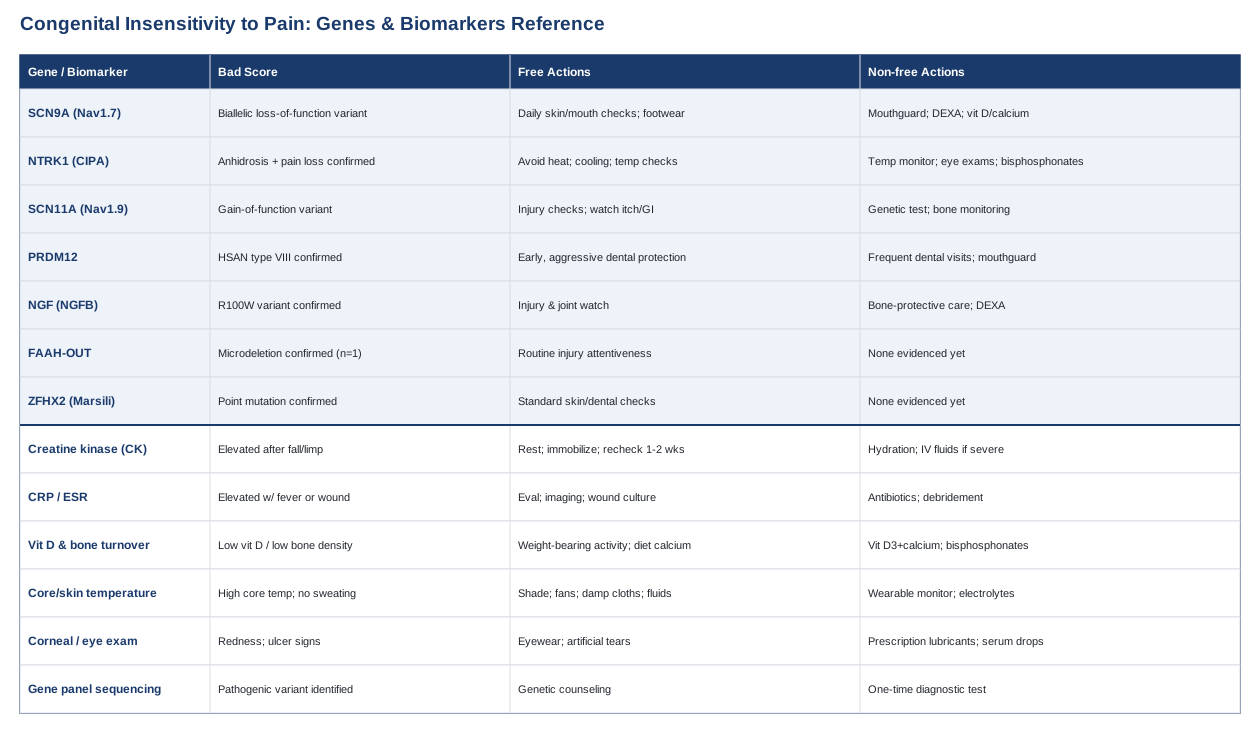
The Genes Behind Congenital Insensitivity to Pain
Pain perception depends on a relay system: a noxious stimulus is detected in the skin or tissue, converted into an electrical signal by ion channels, carried along sensory neurons through the dorsal root ganglion, and finally interpreted by the spinal cord and brain. Every gene linked to congenital insensitivity to pain (CIP) disrupts a different point in that relay. Some knock out the channel that starts the signal. Others destroy the neurons that would have carried it, before they ever mature. A couple of very rare variants dial the system down rather than switching it off, producing partial, milder phenotypes.
Genetic testing (usually a targeted panel or whole-exome sequencing) is what actually distinguishes between them, since the surface presentation — a child who does not react to injury — can look similar across genes even though the underlying biology, prognosis and complication pattern differ substantially. The overview from the National Institutes of Health's GeneReviews program is a good anchor reference for how clinicians currently classify these subtypes (NCBI GeneReviews: Congenital Insensitivity to Pain Overview).
A note before going gene by gene: none of what follows describes a way to correct the underlying mutation. These are structural changes to an ion channel or a receptor gene, present from conception. No supplement, exercise routine, or diet alters the DNA sequence itself. What can genuinely be influenced is the downstream damage the mutation allows to happen unnoticed — and that is where a real, evidence-based management plan operates.
SCN9A (Nav1.7) — the best-studied cause of CIP
SCN9A encodes Nav1.7, a voltage-gated sodium channel heavily concentrated in the peripheral nerve endings that detect pain. Loss-of-function mutations on both copies of the gene (it is autosomal recessive) prevent these nociceptors from firing at all, while other mutations in the same gene do the opposite — causing the extreme pain disorders erythromelalgia and paroxysmal extreme pain disorder. It is the same channel, pushed in opposite directions.
Human evidence here is unusually strong for a rare disease. Multiple independent families across different countries, with different truncating and missense mutations, have been documented with the identical phenotype: insensitivity to all pain modalities, normal touch and temperature discrimination in most cases, and normal cognitive development, which distinguishes SCN9A-CIP from some of the other subtypes below (Novel SCN9A missense mutations in congenital insensitivity to pain, PMC). The discovery of this gene is also one of the more consequential findings in modern pain research — more on that later.
If this gene is affected: the plan without supplements
There is no drug-free way to restore Nav1.7 function, so the realistic plan is entirely about damage prevention. This means daily, structured visual inspection of hands, feet, mouth and pressure points (a caregiver-led routine, ideally at the same time every day so it isn't skipped), protective footwear at all times outdoors, avoidance of very hot or very sharp objects without a designated adult present, and a written injury-response protocol shared with schools or caregivers, since a SCN9A-affected child will not self-report an injury the way another child would. Regular dental checks are essential, since biting injuries to the tongue and lips are common in early childhood.If this gene is affected: the plan with supplements or equipment
Equipment matters more than supplements for this gene specifically. A padded mouthguard for young children (worn during waking hours, replaced every 3 to 6 months or sooner if damaged) reduces self-inflicted oral trauma. Home infrared thermometers can flag fevers that would otherwise be missed as an infection indicator, since pain is not available as a warning sign. On the supplement side, if a DEXA scan or fracture history shows early bone loss (common after repeated undetected fractures and reduced weight-bearing activity), a physician may recommend vitamin D3 (typically 1,000 to 2,000 IU daily, adjusted by blood level) plus calcium from diet or supplementation, monitored every 6 to 12 months via blood calcium and vitamin D levels — over-supplementation carries a real risk of hypercalcemia, so this should never be self-directed.NTRK1 — congenital insensitivity to pain with anhidrosis (CIPA)
NTRK1 encodes TrkA, the receptor for nerve growth factor (NGF). Without functioning TrkA, the sensory and sympathetic neurons that depend on NGF for survival during development never mature properly — including the nerves that would normally trigger sweating. The result, hereditary sensory and autonomic neuropathy type IV (also called CIPA), combines pain insensitivity with anhidrosis (absence of sweating) and, in many but not all cases, intellectual disability. This is generally considered the most medically dangerous of the CIP subtypes because the loss of sweating creates a second, independent life-threatening risk: unregulated body temperature.
This is one of the most thoroughly documented subtypes in the literature, with detailed molecular and clinical descriptions available through NCBI's GeneReviews (NCBI GeneReviews: NTRK1-Related Congenital Insensitivity to Pain with Anhidrosis), including confirmation via direct tissue studies that eccrine sweat glands in these patients lack the nerve fibers that would normally trigger sweating (Lack of eccrine sweat gland innervation confirmed in CIPA, PubMed).
If this gene is affected: the plan without supplements
Temperature management is the priority that does not exist for other CIP genes. This means avoiding direct sun exposure and hot environments, using cooling measures (damp cloths, fans, air conditioning) proactively rather than reactively during hot weather or fevers, and monitoring core temperature at set intervals during any illness rather than waiting for the child to "seem unwell." Because CIPA carries the highest documented rate of unrecognized bone and joint destruction (Charcot joints) of any CIP subtype, orthopedic surveillance — periodic X-rays of frequently stressed joints even without symptoms — is part of a realistic protocol, not an overreaction (Charcot neuroarthropathy in congenital insensitivity to pain, PMC).If this gene is affected: the plan with supplements or equipment
A wearable core-temperature or skin-temperature monitor (used during hot weather, exercise, or illness, checked every 1 to 2 hours in high-risk conditions) is one of the few pieces of equipment with a direct, mechanism-based rationale for this specific gene. Because unrecognized corneal ulcers are common in CIPA, routine ophthalmologic exams (roughly every 6 to 12 months, more often if any eye redness appears) matter more here than in most other subtypes (Ophthalmic findings in congenital insensitivity to pain with anhidrosis, PMC). Bone-protective supplementation (vitamin D and calcium, dosed and monitored as above) follows the same logic as with SCN9A, and in cases of confirmed recurrent fractures with documented osteopenia, a physician may consider bisphosphonate therapy — typically cycled (for example, an infusion every 3 to 6 months rather than continuously), with known side effects including flu-like symptoms after the first dose and, rarely with long-term use, atypical femoral fractures or jaw osteonecrosis, which is why this route is reserved for confirmed bone loss and managed by a specialist, never self-initiated.SCN11A (Nav1.9)
SCN11A encodes Nav1.9, a sodium channel closely related to Nav1.7 but with a different biophysical role — it normally dampens neuronal excitability near resting potential. Counterintuitively, it is gain-of-function mutations here (not loss-of-function) that cause pain insensitivity, because an overactive Nav1.9 channel keeps nociceptors chronically depolarized and unable to fire a usable pain signal, essentially jamming the circuit rather than deleting it. This was demonstrated in a well-designed study combining human genetics with a knock-in mouse model reproducing the same mutation (A de novo gain-of-function mutation in SCN11A causes loss of pain perception, PubMed).
Clinically, SCN11A-related CIP looks similar to SCN9A cases but with some distinguishing features reported in case series: pruritus (itching), slower wound healing, and gastrointestinal dysmotility in some patients, alongside the expected fractures and self-injury. The core injury-prevention and bone-monitoring plan described for SCN9A above applies here as well; the main practical difference is that clinicians managing SCN11A cases should also ask about bowel symptoms and unusual itching, which are not typical features of the other subtypes and are easy to miss if the diagnosis isn't already known.
PRDM12
PRDM12 is not an ion channel but a transcription factor — a protein that controls which genes get switched on during the development of pain-sensing neurons. Without functional PRDM12, an entire class of nociceptive sensory neurons fails to develop properly in the first place, rather than developing normally and then malfunctioning. This developmental mechanism has been demonstrated in animal models and confirmed with human case data, including a detailed literature review of confirmed cases (Congenital insensitivity to pain associated with PRDM12 mutation, PMC).
PRDM12-related HSAN (type VIII) is particularly associated with severe oral self-mutilation — tooth loss, tongue and lip injuries — reported consistently across case series, likely because the mouth is where undetected minor injury accumulates fastest in early childhood. The management plan mirrors the SCN9A protocol closely, with an even stronger emphasis on early, aggressive dental protection: mouthguards fitted as soon as teeth erupt, dental review every 3 to 4 months rather than the standard 6, and consideration of selective tooth extraction in severe, treatment-resistant self-mutilation cases, which some case reports describe as a last-resort but effective intervention once conservative measures fail.
NGF (NGFB) — hereditary sensory and autonomic neuropathy type V
NGF encodes nerve growth factor itself, the signaling molecule that NTRK1's TrkA receptor normally binds. A specific missense mutation (R100W) disrupts NGF's interaction with one of its two receptors while leaving the other largely intact, producing a more selective, milder deficit than NTRK1 mutations: deep pain and temperature sensitivity are reduced, but — unlike CIPA — sweating and cognitive development are typically preserved (Taking pain out of NGF: a painless NGF mutant with full neurotrophic activity, PMC).
Because anhidrosis is not part of this picture, the temperature-monitoring urgency described for NTRK1 does not apply here. The practical plan instead resembles the SCN9A protocol: injury surveillance, joint and fracture monitoring, and bone-protective care as needed. This distinction matters clinically — a family told simply "it's a pain insensitivity gene" without knowing which one might adopt a hyperthermia-monitoring routine that isn't actually necessary for their specific mutation, or skip one that is.
FAAH-OUT and ZFHX2 — the milder, more recently discovered variants
These two deserve separate treatment because they don't behave like classic CIP. Both were identified far more recently, in far smaller numbers of people, and produce partial rather than complete pain insensitivity.
FAAH-OUT is a pseudogene that regulates FAAH, the enzyme that breaks down anandamide, the body's own cannabinoid-like signaling molecule. A single, extensively studied case — a Scottish woman identified through a 2019 case study — carried a microdeletion in FAAH-OUT alongside a common FAAH variant, resulting in elevated anandamide levels and a lifelong pattern of painless injuries, unusually fast wound healing, and notably low anxiety (Microdeletion in a FAAH pseudogene identified in a patient with pain insensitivity, PubMed). This is genuinely an n-of-1 finding in terms of direct human confirmation — a landmark case, but not yet replicated at population scale — so it should be read as a strong lead rather than an established syndrome.
ZFHX2, identified in a large multigenerational Italian family and described as Marsili syndrome, is an autosomal dominant mutation causing reduced (not absent) pain and temperature sensation, with light touch and some forms of visceral pain still perceived normally (A novel human pain insensitivity disorder caused by a point mutation in ZFHX2, PMC). Because the phenotype is partial, the injury-prevention plan for both of these variants is less intensive than for the classic CIP genes: routine attentiveness to burns and cuts, standard dental and skin checks, and no specific equipment or supplement protocol currently supported by evidence, since the complication rate reported in these families is meaningfully lower than in SCN9A, NTRK1 or PRDM12 cases.
Genetics explains why the danger exists in the first place, but it does not, by itself, catch the injury that has already happened silently. That is the role of a second, complementary layer: biomarkers and structured surveillance testing.
Biomarkers Worth Tracking When Pain Can't Do the Warning
In most conditions, biomarkers are used to catch disease before symptoms appear. In congenital insensitivity to pain, the logic is almost reversed: the symptom that would normally prompt someone to seek care — pain — is precisely what's absent, so a small set of tests and exams effectively takes over the job the nervous system can no longer do. None of these are exotic; the value here is in knowing which ones matter for this specific condition and how often to check them.
Creatine kinase (CK)
Why it matters: CK rises with muscle and soft-tissue damage. In someone who cannot feel a sprain, a deep bruise, or overuse injury, CK is one of the few objective signals that tissue damage occurred, even without visible swelling.
How to measure it: A standard blood draw at any lab or clinic, typically $15 to $40 out of pocket in the United States without insurance, or included in a basic metabolic workup. There's no need for continuous tracking; it's most useful after a suspected fall, unexplained limp, or period of unusually vigorous activity.
If the score is bad, the plan without supplements: Rest and immobilization of the affected limb, reduced activity for 1 to 2 weeks, and a recheck of CK levels before resuming normal activity, since resuming too early on an undetected injury is a common way these situations worsen.
If the score is bad, the plan with supplements or equipment: Hydration support (plain water, no specific supplement needed) helps the kidneys clear myoglobin if CK is significantly elevated; in more severe elevations, a physician may order IV fluids. There is no supplement that lowers CK directly — the correct response is always rest and re-testing, not a product.
CRP and ESR (inflammatory markers)
Why it matters: Osteomyelitis (bone infection) and deep soft-tissue infections are among the more serious recurring complications in CIP, particularly CIPA, precisely because pain — the symptom that usually brings an infection to a doctor's attention early — never appears. CRP and ESR pick up the inflammatory signal instead, though it's worth being upfront that these markers are imperfect: studies in hand and pediatric osteomyelitis show CRP sensitivity around 85 percent, meaning a normal result doesn't fully rule out infection (Serum inflammatory markers and amputations in hand osteomyelitis, PMC).
How to measure it: A simple blood test, generally $20 to $60 combined for both markers, run whenever there's unexplained fever, swelling, or a wound that isn't healing as expected. In CIP, a low threshold for ordering this test is appropriate, since the usual trigger (pain) is missing.
If the score is bad, the plan without supplements: Prompt clinical evaluation with imaging (X-ray or MRI) of any suspicious area, wound culture if a lesion is present, and close follow-up rather than a wait-and-see approach that would be reasonable in someone with normal pain sensation.
If the score is bad, the plan with supplements or equipment: This is a scenario for antibiotics and surgical debridement when indicated, prescribed and managed by a physician — not a supplement-treatable situation. The only "equipment" role here is a home thermometer for early fever detection, checked at least daily during any period of suspected infection.
Vitamin D and bone turnover markers (with DEXA scanning)
Why it matters: Repeated undetected fractures, reduced weight-bearing activity after injury, and in some cases reduced mobility due to Charcot joints all contribute to lower bone density over time in CIP patients (A systematic review of congenital insensitivity to pain, PMC).
How to measure it: 25-hydroxyvitamin D blood test ($40 to $80), bone turnover markers like P1NP or CTX where available (typically $60 to $150, less widely offered than vitamin D testing), and a DEXA bone density scan (roughly $100 to $250 without insurance) every 1 to 2 years, or sooner after any fracture.
If the score is bad, the plan without supplements: Weight-bearing activity appropriate to the person's injury history, sun exposure in moderation, and dietary calcium from dairy, leafy greens, or fortified foods.
If the score is bad, the plan with supplements or equipment: Vitamin D3 (1,000 to 2,000 IU daily, retested every 6 to 12 months) plus calcium supplementation if dietary intake is insufficient; bisphosphonates in confirmed osteopenia or recurrent fracture cases, typically cycled every 3 to 6 months under specialist supervision, with side effects (jaw osteonecrosis, atypical fractures with long-term use) that make ongoing monitoring non-negotiable.
Core and skin temperature monitoring
Why it matters: For NTRK1-related CIPA specifically, the absence of sweating makes fever and heatstroke a much faster-moving danger than in the general population, since the body's main cooling mechanism is offline (Clinical presentation in congenital insensitivity to pain and anhidrosis, PMC).
How to measure it: A basic digital thermometer costs under $15; a continuous wearable skin-temperature patch runs roughly $30 to $80 and is more useful during high-risk periods (hot weather, exercise, illness) than for constant daily use.
If the score is bad, the plan without supplements: Immediate cooling — shade, fans, damp cloths, removing excess clothing — and fluids, applied faster and more assertively than would typically be needed for someone who can feel and report overheating.
If the score is bad, the plan with supplements or equipment: Electrolyte replacement drinks during confirmed heat stress episodes; a wearable continuous temperature monitor for high-risk days is a reasonable equipment investment for CIPA families specifically, less so for other CIP subtypes without anhidrosis.
Corneal and eye exams
Why it matters: Reduced corneal sensitivity leads to unnoticed micro-injuries, dryness, and in more severe cases neurotrophic keratopathy or corneal ulcers that can threaten vision if missed (Ophthalmic findings in congenital insensitivity to pain with anhidrosis, PMC).
How to measure it: A slit-lamp eye exam by an ophthalmologist, generally $100 to $250 depending on region and insurance, every 6 to 12 months, or sooner if any redness or discharge is noticed by a caregiver (since the patient often won't report eye discomfort).
If the score is bad, the plan without supplements: Protective eyewear in bright light or windy conditions, and lubricating eye drops (preservative-free artificial tears, used as needed, generally without side effects).
If the score is bad, the plan with supplements or equipment: Prescription-strength lubricants or, in more advanced neurotrophic keratopathy, specialist treatments such as autologous serum eye drops — these require an ophthalmologist's direction and are not appropriate for self-management.
Diagnostic gene panel sequencing
Why it matters: This is the biomarker that determines which of the other five actually apply. Without knowing which gene is involved, a family might over-monitor for hyperthermia that isn't relevant to their case, or under-monitor for a bone or eye risk that is.
How to measure it: A targeted sensory neuropathy gene panel or whole-exome sequencing, typically $250 to $1,500 depending on the lab and whether insurance covers it, usually ordered once, at diagnosis, rather than repeated.
If the score is bad, the plan without supplements: Genetic counseling to understand inheritance pattern and recurrence risk for future children — a conversation, not a purchase.
If the score is bad, the plan with supplements or equipment: None directly follows from the test itself; its value is in correctly directing every other item on this list.
Testing and monitoring answer the "what could go wrong" question. The next section looks at how this rare condition, almost by accident, became one of the more important recent stories in mainstream pain medicine.
The Pain Science Story Reshaping How Doctors Treat Pain
There's a broader story here worth knowing, and it's one that pain-focused podcasts, including several Huberman Lab episodes on the biology of pain, have used to illustrate just how much rare human genetics can reshape mainstream medicine. The short version: a disease so rare it affects a few hundred people worldwide has directly shaped a new class of drugs now reaching millions of patients recovering from surgery. That's a genuinely unusual translation path, and it challenges the assumption that opioids are the only serious option for moderate to severe acute pain.
1. Pain insensitivity in humans pointed straight at one target
Once SCN9A loss-of-function mutations were confirmed as the cause of CIP, researchers had something animal models alone could never provide: direct proof that blocking Nav1.7 in a living, otherwise healthy human being removes pain without other major sensory loss (Defining the functional role of Nav1.7 in human nociception, PMC).2. The obvious next step wasn't as simple as it looked
Pharmaceutical efforts to build selective Nav1.7 blockers ran for over a decade, including a long collaboration between Yale researcher Stephen Waxman's lab and Pfizer. Despite promising early trials, a larger study failed to show a significant benefit — a reminder that a validated human genetic target doesn't guarantee a workable drug (Nav1.7 and other voltage-gated sodium channels as drug targets for pain relief, PMC).3. Attention shifted to a related channel, Nav1.8
Rather than abandoning sodium channels, researchers pivoted to Nav1.8, another channel concentrated in peripheral pain-sensing neurons, with a different selectivity profile that turned out to be more druggable.4. A new drug class actually reached approval
Suzetrigine (brand name Journavx) received FDA approval in January 2025 as the first non-opioid, Nav1.8-selective analgesic for moderate to severe acute pain — the first entirely new mechanism of action for acute pain treatment approved in decades.5. The trials focused on real surgical pain, not lab models
Its approval rested on randomized, double-blind trials in people recovering from abdominoplasty and bunion surgery, comparing it against both placebo and a standard opioid combination — a design built to answer the practical question doctors actually care about.6. It performed comparably to a standard opioid, without the opioid risks
Efficacy was comparable to hydrocodone-acetaminophen, while avoiding the sedation, dependence potential, and abuse liability that make opioids risky for routine post-surgical prescribing (Clinical efficacy and safety profile of suzetrigine, PMC).7. This directly challenges a default assumption in surgical care
For years, the working assumption in post-surgical pain management was that opioids were simply necessary for anything beyond mild pain. A validated, non-opioid alternative with comparable efficacy pushes back on that default in a way pure caution or tapering guidelines never could.8. Other genes on this list remain in earlier stages of the same pipeline
SCN11A and NTRK1 biology are both being explored for related drug development, though nothing at Nav1.8's stage of clinical validation yet exists for those targets.9. FAAH-OUT points toward a second, unrelated drug pathway
Separately from sodium channels, the discovery that reduced FAAH activity and elevated anandamide can produce pain insensitivity alongside low anxiety and fast wound healing has renewed pharmaceutical interest in FAAH inhibitors, an approach previously stalled after an unrelated drug trial safety incident in a different compound class.10. The underlying lesson is about where drug targets come from
The strongest validation for a new pain drug target didn't come from a mouse study or a molecular screen — it came from paying close attention to a small number of people whose rare genetics had already run the experiment. That's a case worth knowing regardless of whether CIP runs in your family, because it's shaping the pain medications available to everyone else.That pharmacological story is about new drugs. The next section turns to something more immediately actionable for families managing CIP day to day: which non-drug approaches have genuine supporting evidence, and which don't.
Complementary Approaches Worth Considering
It's worth being direct about a limitation here: congenital insensitivity to pain is rare enough that dedicated clinical trials of complementary therapies specifically in CIP populations essentially don't exist. What follows draws on the closest available evidence — from related autonomic conditions and from behavioral management research in populations that share specific features with CIP, particularly the self-injurious behavior and intellectual disability seen in some NTRK1-CIPA cases — rather than CIP-specific trials. That distinction matters, and none of it should be read as more established than it is.
Biofeedback
Biofeedback trains a person to consciously influence a physiological process — typically skin temperature, heart rate variability, or sweat response — by watching real-time readouts of that process. For CIPA specifically, where the underlying problem is a broken autonomic sweat response, biofeedback's core mechanism (learning to modulate an autonomic signal you can now see, even though you can't feel it) is at least mechanistically plausible in a way it wouldn't be for, say, a purely structural bone problem.
The relevant technique is thermal biofeedback, where a skin-temperature sensor gives a patient a visual or auditory signal they learn to influence through relaxation and attention training; this approach has reasonable trial evidence in other autonomic and vascular conditions such as Raynaud's phenomenon, though not in CIPA directly.
Realistically, this means working with a biofeedback-trained clinician (not a home gadget alone) for periodic sessions, typically weekly for 6 to 8 weeks initially, framed as a way to build body-awareness habits and support caregiver-led temperature monitoring routines — a supplement to the surveillance protocol above, not a replacement for it.
Music therapy / music-based interventions
Music therapy uses structured musical activity, guided by a trained therapist, to influence behavior, mood, or communication. It's included here because self-injurious behavior (biting, hitting) is a recognized management challenge in NTRK1-CIPA cases with co-occurring intellectual disability, and music-based behavioral interventions have a real evidence base in reducing self-injurious behavior in other neurodevelopmental populations, even though CIP-specific trials don't exist.
A typical protocol involves regular sessions (often 2 to 3 times weekly) using preferred music paired with structured redirection techniques when self-injurious behavior begins, delivered by a board-certified music therapist working alongside a behavioral specialist familiar with the child's specific triggers.
For a CIPA family, this looks like adding music therapy as one piece of a broader behavioral support plan for self-mutilation risk, not a standalone fix — and coordinating closely with whoever manages the child's dental and orthopedic surveillance, since reducing self-injurious behavior directly reduces the burden on every other monitoring system described above.
Relaxation training for caregivers
This one is aimed less at the person with CIP and more at the adults managing their care, and it's included because caregiver burden in rare, safety-intensive pediatric conditions is a well-documented issue with real evidence behind structured relaxation and stress-management programs reducing caregiver anxiety and burnout in chronic pediatric illness generally.
A standard protocol involves progressive muscle relaxation or structured breathing exercises, practiced daily for 10 to 15 minutes, often taught through a short in-person or telehealth course over 4 to 6 weeks.
Practically, this supports the sustainability of everything else in this article — the daily skin checks, the temperature monitoring, the dental vigilance — since caregiver exhaustion is one of the more realistic ways a good monitoring plan quietly breaks down over time.
Where This Leaves You
Congenital insensitivity to pain is not a single condition with a single fix — it's a small family of distinct genetic mechanisms, each with a different risk profile and a different practical response. Knowing which gene is involved changes what actually needs watching, from oral self-mutilation and temperature regulation to bone density and corneal health. None of it reverses the underlying mutation, and anyone claiming otherwise isn't being straight with you. What it does offer is a genuinely useful substitute for the warning system that pain would normally provide, built from a short, specific list of tests, exams, and behavioral supports rather than a vague instruction to "be careful."
The most useful next step is usually the most concrete one: if a diagnosis isn't yet confirmed, ask about targeted genetic testing so the rest of this plan can be tailored correctly rather than generically. If it already is confirmed, take the relevant biomarker list to the next appointment and ask which of these are already being tracked and which aren't. That single conversation does more than any general caution ever could.
Musculoskeletal: Bone Conditions