This article contains AI generated content.
· UpdatedCornelia De Lange Syndrome Genes And Biomarkers - 6 Genes And 7 Biomarkers To Track
If you are the parent of a child with Cornelia de Lange syndrome, or an adult living with it yourself, you have probably already noticed the gap between what genetic counselors say in a diagnostic appointment and what actually happens day to day: the reflux that won't settle, the ear infection that keeps coming back, the growth curve that refuses to climb, the behavior that spikes for no obvious reason. General descriptions of the syndrome — "intellectual disability, distinctive facial features, growth delay" — are accurate, but they are not built to help you make this week's decisions.
That gap exists because Cornelia de Lange syndrome (CdLS) is not one condition with one trajectory. It is a spectrum caused by variants in a small group of genes that all disrupt the same cellular machinery, called cohesin, but do so to different degrees and in different tissues. Two children with the same diagnosis can have very different medical priorities depending on which gene is involved, how severely it is disrupted, and which organ systems are showing strain right now. Generic advice averages all of that away.
This article is built around the two things that actually change outcomes: knowing which of the six confirmed genes is driving the picture, and tracking the handful of biomarkers that consistently predict where problems will show up — reflux, hearing, vision, growth, heart and kidney structure, and endocrine function. None of this reverses the underlying mutation. What it does is give you an evidence-based way to catch the treatable complications early, which is where the real, measurable gains in comfort and function come from.
There is grounded reason for optimism here, even without a cure. The 2018 international consensus statement on CdLS management, backed by dozens of specialists and the CdLS patient registry, converted decades of scattered case reports into a concrete surveillance schedule. Combined with a clear picture of the genetics and a realistic look at supportive therapies, that guidance is the closest thing available to a roadmap. The rest of this article walks through all three: the biomarkers worth tracking, what each gene actually does, and what the consensus statement and complementary approaches can add on top.
Summary
Cornelia de Lange syndrome comes from disruptions to the cohesin complex, the molecular ring that organizes and regulates DNA — but "cohesin problem" plays out very differently depending on which of six genes is affected, from the severe, limb-involving presentation linked to NIPBL to the markedly milder pattern seen with RAD21. Below, you'll find what each gene does, what can realistically be done to manage its downstream effects, and seven biomarkers — from reflux and hearing to endocrine panels — that a 2018 international consensus statement identified as the highest-yield things to monitor, each with measurement options, cost ranges, and a concrete plan for when the numbers come back abnormal. There's also a closer look at what that consensus statement actually recommends point by point, and an honest assessment of which complementary approaches (vision training, dental protocols, music and massage therapy, light therapy) have real supporting evidence for this population and which don't yet.
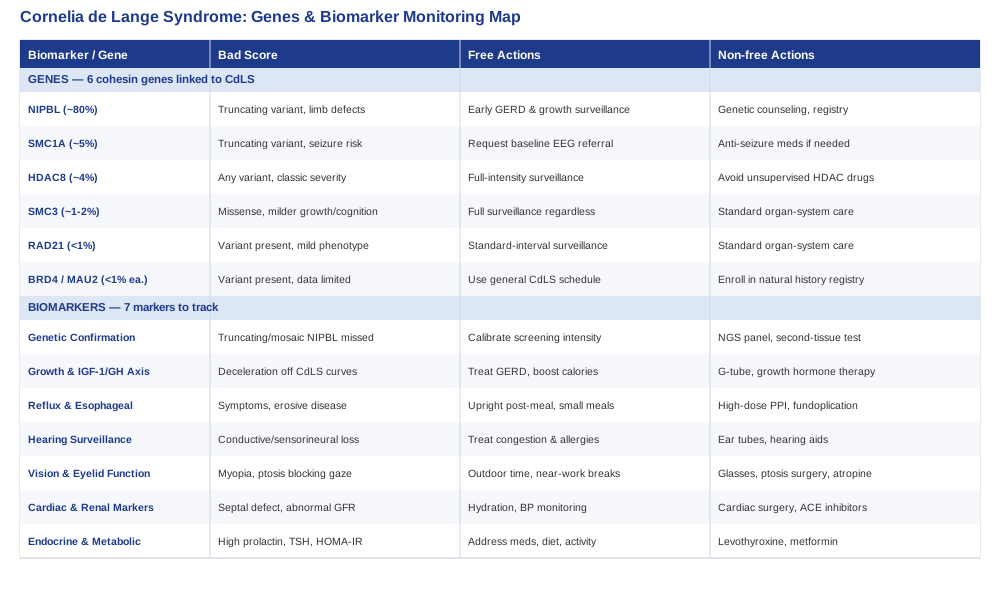
7 Biomarkers Worth Tracking In Cornelia De Lange Syndrome
The genetics of CdLS explain why the syndrome exists. The biomarkers below explain what to actually do about it, week to week and year to year. They are drawn largely from the 2018 international consensus statement on CdLS diagnosis and management, which pooled outcome data across hundreds of patients to identify where surveillance changes outcomes. Unlike biomarker panels built for adult metabolic or cardiovascular risk, these are mostly structural and functional — the goal is to catch treatable secondary problems before they compound.
1. Molecular Genetic Confirmation (Which Gene, Which Variant Type)
Why it matters: The gene and the specific variant type is itself a biomarker — it predicts severity better than almost anything else available at diagnosis. Truncating NIPBL variants track with the most severe growth restriction, the most limb involvement, and the greatest developmental impact, while missense variants in NIPBL and most variants in SMC1A, SMC3, and RAD21 tend to produce a milder picture. Roughly 20-30% of clinically diagnosed NIPBL cases are mosaic — the mutation is only present in a fraction of the body's cells — and mosaic cases are frequently missed by a standard blood draw.
How it's measured: A multi-gene next-generation sequencing panel covering NIPBL, SMC1A, SMC3, HDAC8, RAD21, BRD4, and MAU2 typically costs $1,500–$4,000, though clinical exome sequencing ($1,000–$2,500) is now often the first-line test and is frequently covered by insurance once CdLS is clinically suspected. If a blood panel is negative but the clinical picture still fits, deep sequencing of a second tissue source — buccal swab or skin fibroblasts — is the recommended next step to catch mosaicism, per the GeneReviews clinical summary.
If the result is unfavorable, the plan without supplements or equipment: There is no lifestyle or dietary intervention that changes a germline mutation, and no legitimate reason to pursue one. What you can do without spending anything is use the result to calibrate expectations and screening intensity — a confirmed truncating NIPBL variant is a reason to be more proactive about limb, growth, and GERD surveillance from infancy, while a milder-gene result still warrants full surveillance but with somewhat different odds. Genetic counseling (usually included with testing or billed separately at $150–$400 per session) clarifies recurrence risk for future pregnancies, which is generally low but not zero due to the possibility of parental germline mosaicism.
If the result is unfavorable, the plan with supplements or equipment: There is no supplement or device that repairs a cohesin gene mutation, and any product marketed as "epigenetic support" for a diagnosed cohesinopathy should be treated with skepticism — a few of these genes (notably HDAC8) interact directly with enzymes that are also targeted by certain investigational or repurposed drugs, so unsupervised experimentation is not a neutral choice. The appropriate "equipment" here is enrollment in the CdLS Foundation's patient registry, which feeds the natural history studies that shape future consensus guidelines.
2. Growth Trajectory And The IGF-1/Growth Hormone Axis
Why it matters: Growth failure is close to universal in CdLS, present prenatally in the large majority of cases and persisting as proportionate short stature from around six months of age onward, according to GeneReviews. An older but still-used reference study of 180 patients found 68% had a birth weight below the 5th percentile, with head circumference persistently below the 2nd centile through childhood (Kline et al., 1993). Growth that decelerates faster than the CdLS-specific curves predict is a genuine signal, not just a data point — it often means an undertreated secondary problem, most commonly reflux, feeding volume, or a thyroid issue.
How it's measured: Plotting height, weight, and head circumference against CdLS-specific growth charts (not standard population charts) every 3 months in infancy and every 6-12 months afterward; a basic IGF-1 and IGFBP-3 blood panel ($50-$150) when growth deceleration is unexplained; a formal growth hormone stimulation test ($500-$1,500, pediatric endocrinology only) if IGF-1 is low and secondary causes have been ruled out.
If the score is bad, the plan without supplements or equipment: Before anything else, address the two most common reversible causes: undertreated GERD (which suppresses appetite and intake) and insufficient caloric density in feeds. This is a monitoring cadence, not a one-time fix — recheck growth parameters every 3 months until trends stabilize, and involve a dietitian rather than guessing at calorie targets.
If the score is bad, the plan with supplements or equipment: If caloric intake genuinely can't be achieved orally, a gastrostomy tube is a legitimate long-term feeding solution, not a last resort — the consensus statement is explicit that it should be considered earlier rather than later when oral feeding is unsafe or takes more than about three hours a day. Recombinant growth hormone therapy has been used successfully in at least one well-documented case (de Graaf et al., 2017), with a height gain of 1.8 SD over 8 years, but that same case revealed unexpectedly high IGF-1 on standard dosing, suggesting partial IGF-1 insensitivity rather than classic deficiency in at least some CdLS patients. GH therapy is daily by injection, requires IGF-1 rechecks roughly every 6 months to catch over-dosing, and remains, in the consensus statement's own words, controversial — it should only be initiated and monitored by a pediatric endocrinologist familiar with the syndrome.
3. Reflux And Esophageal Markers
Why it matters: Gastroesophageal reflux disease affects roughly 75% of individuals with CdLS, per GeneReviews, and it is arguably the single most consequential biomarker on this list because it is both extremely common and directly treatable, yet frequently under-recognized in people who can't verbally describe pain. Chronic untreated reflux contributes to poor growth, dental erosion, and — because pain often shows up as behavior rather than words — a meaningful share of what looks like "unexplained" agitation or self-injury. Barrett esophagus has been documented in 10-12% of individuals in some cohorts, with rare cases of early-onset esophageal adenocarcinoma, which is why this is not a problem to manage casually.
How it's measured: A structured symptom score is the free first step; beyond that, upper endoscopy with biopsy ($1,000-$3,000) and pH-impedance monitoring ($500-$1,500) are the objective tools, generally reserved for cases that don't respond to an empiric medication trial or that need Barrett's surveillance.
If the score is bad, the plan without supplements or equipment: Positioning upright for 20-30 minutes after every feed or meal, smaller and more frequent meals rather than large ones, and elevating the head of the bed are free, low-risk, and worth doing consistently regardless of medication status — this is a daily habit, not a phase.
If the score is bad, the plan with supplements or equipment: High-dose proton pump inhibitor therapy (the consensus statement cites omeprazole at roughly 0.7-3.5 mg/kg/day) is first-line, reassessed at 8-12 weeks and stepped down to the lowest effective maintenance dose once symptoms are controlled. Long-term acid suppression is not free of tradeoffs — it has been associated with reduced calcium/B12/magnesium absorption and a modestly increased infection risk, which is a reason for periodic reassessment rather than indefinite unmonitored use. When medication fails, Nissen fundoplication surgery or a gastrostomy/jejunal feeding tube are the equipment-based options, and given the Barrett's/adenocarcinoma risk noted above, periodic surveillance endoscopy is reasonable for anyone with confirmed erosive disease.
4. Hearing Surveillance
Why it matters: Hearing loss is the norm rather than the exception in CdLS. GeneReviews lists conductive hearing impairment in roughly 60% and sensorineural impairment in roughly 40% of children; a separate systematic review and meta-analysis of 1,310 patients found somewhat different but still substantial rates — sensorineural loss in about 40% and conductive loss in about 23% (Wong et al., 2020) — a reminder that exact numbers vary by cohort, but the direction is consistent. Chronic middle ear effusion is extremely common on top of this. Because hearing loss compounds communication and behavior difficulties that are already present, it is one of the highest-leverage things to catch early.
How it's measured: Newborn hearing screening (OAE/ABR) as a baseline, then formal audiometry and tympanometry roughly every 6-12 months through childhood ($100-$400 per visit, usually covered by insurance).
If the score is bad, the plan without supplements or equipment: Treating chronic nasal congestion and allergies aggressively, and adjusting feeding position to reduce eustachian tube dysfunction, can meaningfully reduce effusion frequency at no cost beyond the underlying allergy treatment.
If the score is bad, the plan with supplements or equipment: Myringotomy with tube placement is the consensus-recommended first-line intervention for persistent middle ear effusion; it's a short outpatient procedure, generally well tolerated, with the main downsides being occasional tube extrusion requiring replacement and a small scarring/perforation risk over repeated procedures. Hearing aids or bone-conduction devices are appropriate for persistent conductive loss that isn't fully corrected surgically. Encouragingly, the consensus statement notes that roughly half of adults with CdLS show some hearing improvement over time, which is a reason to keep reassessing rather than assuming a childhood result is permanent.
5. Vision And Eyelid Function
Why it matters: Ocular findings are close to as common as hearing findings. GeneReviews reports myopia in about 58% of individuals, ptosis (drooping eyelid) in about 44%, blepharitis in about 25%, epiphora (excess tearing) in about 22%, and nasolacrimal duct obstruction in about 16%. Ptosis severe enough to obstruct the visual axis, or to force a chin-up compensatory head posture, raises real amblyopia risk if untreated in early childhood.
How it's measured: Annual pediatric ophthalmology exam with cycloplegic refraction ($100-$300 per visit), started in infancy rather than waiting for a child to be able to report symptoms.
If the score is bad, the plan without supplements or equipment: Time outdoors is one of the few myopia-progression factors with reasonably consistent evidence in the general pediatric population, and costs nothing; it's a reasonable habit to build in regardless of formal diagnosis, alongside regular breaks from close-up visual tasks.
If the score is bad, the plan with supplements or equipment: Corrective glasses for refractive error, ptosis surgery when the eyelid is obstructing vision or causing compensatory neck strain, and low-dose atropine eye drops (an off-label but increasingly common approach for progressive pediatric myopia, used nightly and reassessed every few months with dilated exams) are the standard tools. Atropine's main side effects are light sensitivity and blurred near vision, both manageable with photochromic lenses or reading glasses.
6. Cardiac And Renal Structural Markers
Why it matters: Congenital heart disease affects around 30% of individuals with CdLS according to GeneReviews, with a more detailed study of 149 patients finding a rate of 34.9%, most often septal defects and pulmonary or peripheral pulmonic stenosis (Sarimski/Selicorni-type cohort, 2017). Renal and urinary tract malformations are present in roughly 10% at birth, and structural renal abnormalities become detectable in closer to 30% of individuals over time, with abnormal creatinine clearance in about 24% of one surveyed cohort per the 2018 consensus statement — often silent until checked.
How it's measured: A baseline echocardiogram and renal ultrasound at diagnosis ($500-$1,500 combined, often bundled in a genetics workup), then periodic renal function testing — serum creatinine, cystatin C, estimated GFR — roughly annually even when the baseline is normal ($50-$150).
If the score is bad, the plan without supplements or equipment: Consistent hydration and blood pressure monitoring at home, and flagging the renal finding to any prescriber so nephrotoxic medications are avoided or dose-adjusted when alternatives exist.
If the score is bad, the plan with supplements or equipment: Structural cardiac defects are managed by pediatric cardiology on their own surgical timeline; for renal involvement with proteinuria, ACE inhibitors are the standard pharmacologic option under nephrology supervision, with renal function rechecked more frequently — often every 3-6 months rather than annually — until stable.
7. Endocrine And Metabolic Panel (Thyroid, Prolactin, Insulin Resistance)
Why it matters: This is the newest and least appreciated cluster on this list. A 2024 endocrine evaluation of 24 individuals with CdLS found hyperprolactinemia in 50%, making it the single most common endocrine abnormality identified, subclinical hypothyroidism in roughly 12.5%, and elevated insulin resistance by HOMA-IR in about 21% (Ascaso et al., 2024). None of these were previously part of routine CdLS surveillance, but all three are cheap to screen for and straightforward to treat once identified.
How it's measured: TSH and free T4 ($30-$80), prolactin ($40-$100), and fasting glucose/insulin for HOMA-IR calculation ($30-$70) — a reasonable annual panel, more often if a specific symptom (unexplained fatigue, delayed puberty, irregular growth) prompts an earlier look.
If the score is bad, the plan without supplements or equipment: For mildly elevated prolactin, ruling out and addressing contributing medications and stress/sleep disruption first is appropriate before assuming a pituitary cause. For early insulin resistance, focusing on carbohydrate quality and regular physical activity to the extent the individual's mobility allows is the reasonable first step.
If the score is bad, the plan with supplements or equipment: Confirmed hypothyroidism is treated with daily levothyroxine, with dose retitrated by TSH roughly every 6-8 weeks until stable and then rechecked every 6-12 months; overtreatment shows up as anxiety, tachycardia, or poor sleep, so retesting matters as much as starting the medication. For confirmed insulin resistance that doesn't respond to lifestyle measures, metformin is the standard next step under specialist guidance, with gastrointestinal upset as its main tolerability issue — usually manageable by starting at a low dose and increasing gradually.
Taken together, these seven markers cover the systems that the consensus literature consistently flags as high-impact: the gut, the ears, the eyes, the heart and kidneys, growth, and the endocrine system. None of them require exotic testing — most can be obtained through a standard pediatrician or family physician plus the relevant specialist referral. The harder part is usually the scheduling discipline, not the science.
What The Six CdLS Genes Actually Do
Every confirmed CdLS gene converges on the same molecular structure — cohesin, a ring-shaped protein complex that holds strands of DNA together and helps regulate which genes get switched on during development. That shared mechanism is why the six genes below produce overlapping features, and why the differences between them are really differences in degree rather than in kind. This is early-consolidating but reasonably solid genetics; the percentages below come from the GeneReviews clinical summary, which is continuously updated by the clinicians who maintain the CdLS diagnostic literature.
It's worth being direct about something the supplement and biohacking world sometimes blurs: these are structural, largely de novo germline or mosaic mutations present from conception. They are not the kind of common single-nucleotide variants (like an MTHFR or APOE polymorphism) that respond to a nutrient cofactor or lifestyle nudge. What follows for each gene is what can realistically be influenced — almost always downstream organ-system support, not the mutation itself — versus what cannot.
NIPBL — The Major Gene, About 80% Of Cases
NIPBL, working together with its partner protein MAU2, is responsible for loading cohesin onto DNA in the first place. Its role in CdLS is mostly about gene regulation during development rather than classic cell-division cohesion — losing half of the normal NIPBL dose (haploinsufficiency) throws off the expression of hundreds of genes involved in limb formation, facial development, and growth, which is why NIPBL-related CdLS tends to be the most severe subtype, with the greatest likelihood of limb reduction defects and pronounced growth failure. Truncating variants (which eliminate protein function entirely) are consistently associated with more severe presentations than missense variants, and mosaic NIPBL mutations — present in only some of the body's cells — can produce a much milder, sometimes initially unrecognized phenotype.
The plan without supplements or equipment: Nothing changes the NIPBL sequence itself. What does help is treating a confirmed truncating NIPBL result as a signal to front-load surveillance — starting limb, growth, and GERD monitoring earlier and more frequently than you might for a milder-gene diagnosis, since this subgroup carries the highest documented rates of those complications.
The plan with supplements or equipment: There is no device or supplement that restores NIPBL dosage. The practical "equipment" is the surveillance schedule from the biomarkers section above, applied proactively rather than reactively.
SMC1A — X-Linked, About 5% Of Cases
SMC1A encodes one of the two core structural rods of the cohesin ring itself. Missense variants that partially preserve ring function typically produce the classic CdLS picture without the limb defects seen in severe NIPBL cases. A separate and important detail: certain other SMC1A variants — usually truncating, and overwhelmingly in females — cause a distinct, unrelated condition, SMC1A-related developmental and epileptic encephalopathy, which carries a much higher seizure burden than typical CdLS. This makes precise variant classification (not just "SMC1A positive") clinically important.
The plan without supplements or equipment: If the specific variant falls into the higher seizure-risk category, requesting a baseline EEG discussion with neurology — even absent current seizure activity — costs nothing but a referral and can shorten the path to diagnosis if seizures do emerge later.
The plan with supplements or equipment: Beyond standard anti-seizure medication management if epilepsy develops (a decision for neurology, not a supplement aisle), there is no intervention that alters the cohesin ring's structure.
HDAC8 — X-Linked, About 4% Of Cases
HDAC8 is mechanistically the most interesting of the six, because it doesn't build cohesin — it recycles it. HDAC8 is the enzyme responsible for removing an acetyl group from the SMC3 subunit after each round of cell division, which is required to release "used" cohesin from chromatin so a fresh supply can be loaded. When HDAC8 is disrupted, SMC3 stays acetylated and used cohesin can't be efficiently cleared, which indirectly starves the cell of properly cycling cohesin — arriving at essentially the same downstream transcriptional problem as a direct NIPBL loss, just via a different route (Deardorff et al., 2012). That study is also a useful corrective to the assumption that "non-NIPBL" always means milder: the HDAC8-mutated patients in that cohort showed growth, cognitive, and facial features consistent with classic, NIPBL-like CdLS, not a distinctly softer phenotype.
The plan without supplements or equipment: None specific to the gene — general surveillance applies at full intensity, since this subgroup is not reliably milder.
The plan with supplements or equipment: This is the one gene where a specific caution is worth stating clearly: HDAC-modulating compounds exist, both as prescription drugs (used in some cancers) and as supplements marketed loosely around "epigenetics" (certain sulforaphane- or butyrate-based products, for instance). None have evidence of benefit in HDAC8-related CdLS, the mechanism runs in a direction that offers no obvious rationale for supplementation, and introducing an HDAC-modulating compound without specialist input is not a neutral experiment. This is a case where doing nothing extra is the evidence-based choice.
SMC3 — Autosomal Dominant, About 1-2% Of Cases
SMC3 is the second structural rod of the cohesin ring, partnering with SMC1A. Variants here are almost always missense and generally produce a milder phenotype — growth and cognitive involvement are usually present but tend to be less pronounced than classic NIPBL-related disease, with a subtler facial gestalt that sometimes delays diagnosis.
The plan without supplements or equipment: Full biomarker surveillance still applies; "milder" is a population-level tendency, not an individual guarantee, so it's not a reason to screen less.
The plan with supplements or equipment: No gene-specific intervention exists; management follows the same organ-system surveillance outlined above.
RAD21 — Autosomal Dominant, Under 1% Of Cases
RAD21 encodes the "kleisin" subunit that closes the cohesin ring after SMC1A and SMC3 come together. Of the confirmed CdLS genes, RAD21-related disease tends to produce the mildest overall phenotype — closer to typical growth, subtler facial features, and less limb involvement — though the general CdLS behavioral and gastrointestinal features can still occur.
The plan without supplements or equipment: Given the generally lower disease burden reported for this subgroup, standard-interval surveillance (rather than the more front-loaded schedule reasonable for severe NIPBL cases) is usually appropriate, confirmed with your genetics team.
The plan with supplements or equipment: None specific to the gene; standard biomarker tracking applies.
BRD4 And MAU2 — The Rarest Confirmed Genes, Each Under 1%
BRD4 is a chromatin "reader" protein that helps position cohesin-loading machinery at active gene regulatory regions, while MAU2 is NIPBL's obligate partner for loading cohesin onto DNA — a MAU2 loss-of-function variant effectively mimics a milder version of NIPBL loss. Both have been reported in only a small number of families each, so unlike the other four genes, phenotype data here should be treated as early and provisional rather than well-established.
The plan without supplements or equipment: Given how little cohort data exists for these two genes specifically, leaning on the general CdLS biomarker schedule rather than gene-specific assumptions is the more defensible approach right now.
The plan with supplements or equipment: None established; this is a case where enrolling in a natural history registry adds more value than any individual intervention, simply because so few cases exist to learn from.
Beyond the six individual genes, there's a broader epigenetic layer worth understanding: cohesin disorders are increasingly described in the literature as "chromatinopathies" rather than purely structural defects, because the acetylation states these genes control (particularly through the HDAC8/SMC3 axis) ripple out to affect chromatin accessibility and gene transcription genome-wide during development. That framing helps explain why CdLS behaves as a continuous spectrum rather than a simple on/off condition — and why two people with the same gene and even a similar variant can still land in different places on that spectrum.
The Consensus Statement That Reset CdLS Care
Most single papers don't change clinical practice. The 2018 international consensus statement on the diagnosis and management of Cornelia de Lange syndrome, published in Nature Reviews Genetics by Antonie Kline and a large multidisciplinary working group, is one of the exceptions. It converted decades of scattered single-center case series into an explicit, prioritized surveillance and treatment schedule — and in several places it directly challenged assumptions that had shaped CdLS care for years, particularly the idea that behavior problems should be treated as primarily psychiatric rather than medical in origin. The ten points below are the ones most likely to change what you actually do this month, not just what you know.
1. GERD Is Probably The Single Most Underestimated Problem
At 65-75% prevalence, reflux is not a minor comorbidity — it's close to a core feature of the syndrome, and it plausibly explains a meaningful share of feeding refusal, growth failure, and pain-driven behavior. The consensus statement pushes for a low threshold to start empiric high-dose PPI therapy rather than waiting for endoscopic confirmation in symptomatic patients.2. Hearing Loss Is The Norm, Not The Exception
With combined conductive and sensorineural impairment affecting the large majority of children, the statement recommends baseline audiometry for every child at diagnosis, not just those with obvious signs — because obvious signs are often absent in nonverbal children who simply adapt.3. Vision Problems Are Nearly As Common As Hearing Loss
Ptosis, myopia, and nasolacrimal duct issues are frequent enough that the statement calls for routine ophthalmology involvement from infancy, specifically to catch amblyopia risk from ptosis before the critical visual development window closes.4. The Heart And Kidneys Need A Baseline Scan Even Without Symptoms
Roughly 25-30% cardiac and 10% renal malformation rates at birth are high enough that the statement recommends echocardiogram and renal ultrasound as routine newborn workup for every diagnosed infant, regardless of exam findings.5. Feeding Difficulties Are Universal, And Gastrostomy Is Not A Last Resort
The statement is unusually direct here: if oral feeding is unsafe, exhausting, or consumes more than about three hours a day, a gastrostomy tube should be considered a proactive quality-of-life decision, not an admission of failure.6. Anesthesia Carries Real, Predictable Risk
Difficult intubation occurs in roughly half of individuals who require anesthesia, related to small mouth size, short neck, and cleft palate in some patients; documented adverse reactions to midazolam specifically are also flagged. The recommendation is a pre-surgical anesthesiology consultation for any planned procedure, elective or otherwise.7. Dental Care Deserves Its Own Care Team
With dental anomalies affecting the large majority of individuals — delayed eruption, small or missing teeth, malocclusion, and caries worsened by chronic reflux — the statement recommends interdisciplinary dental involvement with topical fluoride and short recall intervals, rather than standard annual checkups.8. "Challenging Behavior" Often Has A Medical Cause Hiding Underneath It
This may be the single most practice-changing recommendation: with self-injurious behavior reported in roughly half of individuals and autism-spectrum features common, the statement insists that GERD, dental pain, ear infection, and other medical causes be actively ruled out before any new behavior is treated as purely psychiatric or behavioral in origin.9. Scoliosis Tends To Show Up Around Age 10
Thoracic scoliosis affects roughly a third of individuals, often emerging in later childhood, and is more common in individuals with reduced mobility — a reasonable cue to add a spine check to routine visits starting well before adolescence.10. Growth Deceleration Is A Signal, Not Just A Data Point
The statement calls for CdLS-specific growth charts rather than standard population curves, and treats any unexpected deceleration as a trigger to actively investigate GI, thyroid, and hormonal causes rather than attributing it to "just how the syndrome is."Read as a whole, the consensus statement's real contribution isn't any single recommendation — it's the shift from reactive, symptom-driven care toward scheduled, proactive surveillance across every organ system at once. That's the same philosophy behind the seven biomarkers earlier in this article; the statement is simply the primary source they're drawn from.
Complementary And Supportive Approaches Worth Knowing About
None of what follows treats the underlying genetics, and none of it should replace the medical surveillance above. But several complementary approaches have real, if sometimes limited, human evidence relevant to specific CdLS-associated problems — vision, teeth, sleep, and behavior — and are worth understanding honestly rather than dismissing outright or overselling.
Vision Support Approaches (Including The David De Angelis Method)
Given that myopia affects close to 60% of individuals with CdLS and ptosis affects roughly 44%, anything claiming to influence eye development is naturally of interest to families. The David De Angelis method, popularized in The Secret of Perfect Vision: How You Can Prevent and Reverse Nearsightedness, proposes that behavioral and visual-habit changes can slow or reverse myopia, and frequently cites classic primate research on form-deprivation myopia as foundational evidence for the idea that visual experience shapes eye growth.
That underlying primate research is real and well documented: when researchers surgically fused the eyelids of infant macaque monkeys, the deprived eyes developed significant axial myopia during the critical growth period, while adult monkeys given the same procedure did not (Wiesel & Raviola, 1977; Raviola & Wiesel, 1985). It's important to be precise about what these studies actually show, though: they demonstrate that abnormal, degraded visual input during a critical developmental window can induce myopia through surgical deprivation — they do not demonstrate that any behavioral technique reverses myopia that has already developed in humans. That's a real gap between the cited evidence and the marketed claim.
For a child or adult with CdLS, the realistic, low-risk version of this approach is the general behavioral piece that does have broader pediatric evidence behind it: regular outdoor time and periodic breaks from near-work, both associated with slower myopia progression in general pediatric populations. Given how common ptosis and significant refractive error are in this population, any vision-habit approach should be layered on top of, not instead of, the annual ophthalmology exams described earlier — undiagnosed ptosis-related amblyopia is a time-sensitive risk that behavioral vision training cannot address.
Dental Protocols (Including The Cure Tooth Decay Approach)
Dental problems occur in more than 90% of individuals with CdLS — delayed eruption, small or absent teeth, overcrowding, and caries that are frequently worsened by chronic reflux — making dental health one of the more universally relevant complementary topics for this population.
Ramiel Nagel's Cure Tooth Decay argues that a diet rich in fat-soluble vitamins (A, D, K2) and mineral cofactors, drawing heavily on the early-20th-century field observations of dentist Weston A. Price, can slow or reverse early dental decay. It's important to be clear-eyed about the evidence base here: Price's original work was observational field study, not controlled clinical trials, and Nagel's book has not been validated by modern randomized dental research. It should be understood as a nutritional hypothesis with a long following, not an established alternative to standard dental care.
For CdLS specifically, where reflux-driven enamel erosion compounds already-elevated caries risk, the practical approach is to treat nutritional density as a reasonable supporting habit — adequate vitamin D status, whole-food fats, and minimizing between-meal sugar exposure — layered underneath, never instead of, the interdisciplinary dental care with topical fluoride and short recall intervals that the 2018 consensus statement specifically recommends for this population.
Music Therapy
Music-based interventions are one of the better-evidenced complementary approaches for the behavioral and communication challenges common in CdLS, even though most of the supporting research comes from the broader autism and intellectual disability population rather than CdLS specifically. A systematic review covering 81 studies and over 43,000 participants found that vibroacoustic music reduced challenging and self-injurious behaviors, and that music combined with movement therapy reduced compulsive and stereotyped behaviors, with active music therapy also improving social engagement and eye contact during sessions (Geretsegger et al. review, 2022). One large trial in that review, worth noting honestly, failed to replicate the positive effect, so this should be read as a promising but not uniformly consistent evidence base.
A reasonable protocol drawn from that literature is regular, structured sessions with a trained music therapist — typically 30-45 minutes, one to two times weekly — focused on active participation (instruments, turn-taking, rhythm) rather than passive listening, since active engagement is where most of the social and behavioral benefit has been observed.
Given the high rates of self-injurious behavior (around 56%) and autism-spectrum features documented in CdLS, music therapy is a genuinely low-risk addition to a care plan — there are essentially no meaningful side effects — but it should complement, not substitute for, the "rule out a medical cause first" principle from the consensus statement above, since pain-driven behavior can look identical to sensory-driven behavior.
Massage Therapy
Massage therapy has a smaller but genuinely condition-adjacent evidence base, again mostly from the broader autism population. A classic controlled study found that 15 minutes of parent-delivered bedtime massage per night for one month reduced stereotypic behavior, increased on-task and socially engaged play at school, and reduced sleep problems at home, compared to a reading-only control group (Escalona et al., 2001). That said, a more recent systematic review of eight randomized trials concluded the overall evidence base remains insufficient due to methodological weaknesses across studies, even though every individual study reported some positive effect (Ho et al., 2022) — an honest, mixed picture rather than a clear endorsement.
The practical version of this protocol is brief, parent-delivered massage at bedtime, roughly 15 minutes nightly for a trial period of four weeks before judging effect, focused on firm, predictable pressure rather than light touch, which tends to be better tolerated by children with sensory sensitivities.
Because CdLS involves both sensory processing differences and a high rate of sleep disturbance, this is a reasonable, essentially risk-free addition for families to try, with the caveat that expectations should be modest given the mixed strength of the underlying evidence.
Light Therapy For Sleep Disruption
Sleep disturbance affects up to 55% of individuals with CdLS according to GeneReviews — though it's worth being upfront that a dedicated case-control study found this rate is not significantly different from other children with intellectual disability of any cause, meaning it's likely a feature of the broader neurodevelopmental profile rather than something specific to cohesin dysfunction (Hall & Arron, 2008).
An early but directly relevant study applied structured bright light exposure to 14 children with moderate-to-severe intellectual disability and severe circadian sleep disturbance, aiming to reset day-night rhythm through timed light exposure rather than medication (Guilleminault et al.). The sample is small and not CdLS-specific, so this should be treated as suggestive rather than definitive.
A realistic protocol is 20-30 minutes of bright light exposure (natural morning sunlight or a 10,000-lux light box) shortly after waking, done consistently rather than occasionally, since circadian interventions generally need days to weeks of consistency to shift a sleep-wake pattern. This is a genuinely low-risk approach with essentially no side effects beyond mild transient eye strain, and it pairs naturally with — rather than competes against — evidence-based melatonin dosing, which a separate meta-analysis of 13 randomized trials found modestly improves sleep onset and duration in children with neurodisabilities broadly, with the largest effect seen in those with autism-spectrum features (Cortesi et al. meta-analysis).
Conclusion
Cornelia de Lange syndrome doesn't have a single lever to pull, but it does have a well-mapped set of places where attention pays off: which of the six cohesin genes is involved shapes what to expect, and the seven biomarkers above — reflux, hearing, vision, growth, cardiac/renal structure, and endocrine function — are where the 2018 international consensus statement consistently found that early detection changes outcomes. The complementary approaches covered here are genuinely useful additions in a few specific areas, mainly sleep, behavior, and general dental and vision habits, but they work alongside structured medical surveillance, not as a substitute for it.
If there's one next step worth taking after reading this, it's a practical one: pull together the last set of hearing, vision, growth, and GI records and check them against the schedule above, then bring any gaps to the next visit with your genetics or primary care team. Better information doesn't change the underlying gene, but it does change how early the treatable parts get caught — and in a condition like this one, that's where the real ground gets gained.