This article contains AI generated content.
Dedifferentiated Chondrosarcoma: 6 Genes And 7 Biomarkers To Track
Introduction
A diagnosis of dedifferentiated chondrosarcoma rarely comes with a tidy explanation. The pathology report describes two tumors living inside one mass — a slow, cartilage-forming component sitting next to an aggressive, fast-growing one — and most of the general cancer information available online was not written with that kind of biology in mind. It talks about "chondrosarcoma" as if it were one disease, or about "bone cancer" in terms broad enough to cover a dozen unrelated conditions.
That gap matters because dedifferentiated chondrosarcoma behaves the way it does for specific, identifiable reasons at the molecular level. The two components usually share an early mutation, then the aggressive part accumulates additional genetic damage that changes its behavior entirely. Generic advice about "healthy living" or "boosting your immune system" does not engage with that mechanism, and it can leave patients and families feeling like they are managing uncertainty with tools that were never built for it.
This article takes a narrower, more mechanistic approach. It walks through the genes most consistently implicated in this tumor's biology, what current human research actually shows about each one, and where that research translates into something actionable — a test to request, a trial to ask about, a monitoring schedule to follow. It also looks at the biomarkers used to track the disease over time, at a podcast episode that reframes how genetics and the immune system intersect in cancer care, and at supportive, evidence-backed approaches that can make treatment more tolerable.
None of this replaces oncology care, and nothing here claims to reverse or cure a cancer through lifestyle changes — that would be dishonest given what is actually known. But better information changes the questions you bring to a tumor board, the trials you ask to be screened for, and the way you interpret a pathology report. That is a realistic form of hope, and it is where this article starts.
Summary
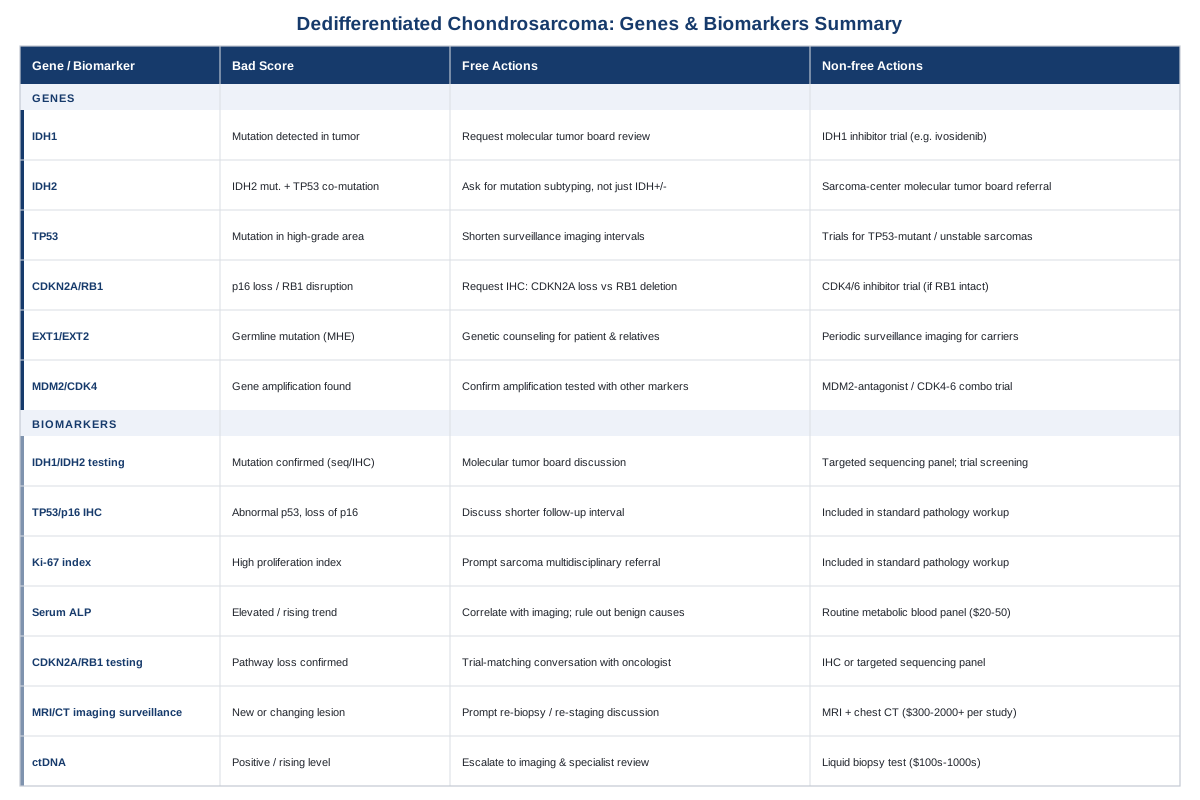
Dedifferentiated chondrosarcoma is driven by a small, increasingly well-mapped set of genetic events: IDH1 and IDH2 mutations that appear early and are shared by both tumor components, TP53 mutations that mark the switch to aggressive behavior, loss of the CDKN2A/RB1 pathway, the EXT1/EXT2 route seen in hereditary cases, alterations in MDM2/CDK4, and an epigenetic "hypermethylation" state caused by the IDH mutations themselves. Each of these has a different practical implication — some point toward specific clinical trials, others toward how closely a tumor needs to be watched.
Beyond the genetics, this article covers the seven biomarkers oncology teams actually use to monitor this disease over time, what a recent cancer-immunology podcast episode gets right about where treatment is heading, and which supportive, non-drug approaches have real evidence behind them for people going through sarcoma treatment. Read on for the gene-by-gene breakdown, the monitoring biomarkers, and the practical steps that follow from each.
What The Tumor's Genetics Actually Tell You
Dedifferentiated chondrosarcoma is unusual among sarcomas because it is, in effect, two tumors in one. Under the microscope, pathologists typically find a low-grade, cartilage-forming region sitting abruptly next to a high-grade, non-cartilaginous region that can resemble osteosarcoma, undifferentiated pleomorphic sarcoma, or another aggressive sarcoma subtype. That collision of two very different growth patterns is not incidental — it is the direct result of a shared genetic starting point followed by a divergent path of additional mutations, and understanding that sequence is the single most useful thing the genetics literature offers a patient or family trying to make sense of this disease.
Why Two Tumors In One Matters
Genomic sequencing studies that compare the low-grade and high-grade regions of the same tumor consistently find that both components carry the same founding mutation, most often in IDH1 or IDH2. That confirms both regions arose from a single ancestral cell rather than being two unrelated cancers that happened to collide. The high-grade region then accumulates additional damage — most often in TP53 and the CDKN2A/RB1 pathway — and it is this second wave of mutation that is thought to drive dedifferentiation, faster growth, and a higher risk of metastasis (Genetics and Molecular Pathogenesis of Chondrosarcoma: A Review of the Literature). This matters practically because it means the aggressive component is not a mystery growing independently — it is traceable, and increasingly targetable.
IDH1 And IDH2 Mutations
IDH1 and IDH2 encode isocitrate dehydrogenase enzymes involved in normal cell metabolism. When mutated, they produce an abnormal metabolite called 2-hydroxyglutarate, which interferes with enzymes that regulate DNA methylation and gene expression. A landmark 2011 study found these mutations in the majority of conventional central chondrosarcomas and in a very high proportion of dedifferentiated chondrosarcomas, making them the first common genetic abnormality identified in this tumor family and an early, foundational event in its development (IDH1 and IDH2 mutations are frequent events in central chondrosarcoma).
The evidence here is strong and human-derived, not preclinical speculation, and it has already changed treatment options. A phase 1 trial of the IDH1 inhibitor ivosidenib in patients with IDH1-mutant chondrosarcoma showed manageable side effects and durable disease control in a meaningful subset of patients, with some remaining on treatment for years (Phase I Study of the Mutant IDH1 Inhibitor Ivosidenib: Long-term Safety and Clinical Activity). Some research also suggests IDH2-mutant, TP53 co-mutant tumors carry a worse prognosis than IDH1-mutant or IDH-wild-type disease, which is one reason mutation subtyping — not just "IDH positive or negative" — is increasingly requested by treating teams.
If the gene is flagged: the plan without supplements or equipment starts with confirming the exact mutation (IDH1 vs. IDH2, and which variant) through tumor sequencing if this was not already part of the original pathology workup, then asking the treating oncologist whether the case should be presented at a sarcoma-specific molecular tumor board and whether an IDH-inhibitor trial or ivosidenib access program is a realistic option given tumor location and prior treatment. This is a request, not a purchase — it requires a referral to a sarcoma center with molecular testing capability, and results typically take one to three weeks. There is no supplement, device, or over-the-counter intervention that alters IDH mutation status; the only evidence-based way to act on this finding is through molecular oncology channels, and treatment decisions belong to the oncology team managing the case.
TP53 Mutations
TP53 is the classic tumor-suppressor gene, often described as the "guardian of the genome" because its normal job is to halt division of damaged cells or trigger their death. In dedifferentiated chondrosarcoma, TP53 mutation is one of the most common alterations found specifically in the high-grade component, present in a large share of cases, and it is consistently associated with worse overall and metastasis-free survival in clinico-genomic studies (Clinico-genomic profiling of conventional and dedifferentiated chondrosarcomas reveals TP53 mutation to be associated with worse outcomes). The same analysis found TERT promoter mutations in a similar proportion of cases, often co-occurring with TP53 loss, which together point to a tumor that has lost several layers of growth control at once.
There is currently no approved drug that directly restores normal TP53 function in solid tumors, which makes this finding more prognostic than immediately actionable — but it is not meaningless information. Because TP53-mutant, genomically unstable tumors tend to progress faster, its presence often shifts monitoring intervals shorter and makes early referral to a specialized sarcoma center more urgent.
If the gene is flagged: the plan without supplements or equipment is to treat a confirmed TP53 mutation as a signal to tighten surveillance imaging intervals (discussed further in the biomarkers section below) and to ask specifically whether the case qualifies for any trial studying TP53-mutant or genomically unstable sarcomas, since this is an active area of drug development even without an approved TP53-targeted therapy yet. The plan with supplements or equipment is, honestly, limited here — no supplement reactivates a mutated tumor-suppressor gene, and claims to the contrary should be treated with real skepticism. What does have supporting evidence is maintaining adequate protein intake (generally 1.2–1.5 g/kg body weight per day, adjusted by an oncology dietitian) to preserve lean mass through treatment, since sarcoma patients tolerate surgery and systemic therapy better when nutritional status is protected — this is supportive care, not gene modification, and should be coordinated with the treatment team rather than self-directed.
CDKN2A And RB1 Pathway Loss
The CDKN2A gene encodes p16, a brake on the cell cycle that normally works upstream of the RB1 (retinoblastoma) protein. Loss of p16 through deletion or silencing, and downstream disruption of RB1 signaling, is one of the more consistently reported findings in the dedifferentiated component of these tumors, with pathway alterations detected across a wide range of cases depending on the detection method used (Dedifferentiated Central Chondrosarcoma: A Clinical, Histopathological, and Immunohistochemical Analysis of 57 Cases). Functionally, losing this brake lets cells divide with less restraint, which is part of why the high-grade component grows so much faster than the cartilage-forming region it emerged from.
This pathway has a genuinely actionable angle: tumors with intact RB1 but CDK4 pathway activation can, in principle, be sensitive to CDK4/6 inhibitors. A phase 2 trial of the CDK4/6 inhibitor palbociclib in advanced sarcomas selected patients by CDK4 and CDKN2A expression and found meaningful activity in tumors matching that molecular profile, though the trial enrolled sarcomas broadly rather than dedifferentiated chondrosarcoma specifically (Phase II trial of CDK4/6 inhibitor palbociclib in advanced sarcoma based on mRNA expression of CDK4/CDKN2A). This is an important nuance: if RB1 itself is deleted, CDK4/6 inhibitors generally do not work, because the drug needs a functional RB1 downstream to act on — so testing which part of the pathway is disrupted changes whether this class of drug is even worth discussing.
If the gene is flagged: the plan without supplements or equipment is to request immunohistochemistry or sequencing that distinguishes CDKN2A loss with intact RB1 (potentially CDK4/6-inhibitor relevant) from RB1 deletion itself (not expected to respond to this drug class), since this distinction determines whether asking about a palbociclib-type trial is worthwhile. There is no supplement or equipment-based plan that meaningfully alters CDKN2A or RB1 status; framing it that way would overstate what is known.
EXT1 And EXT2 (The Hereditary Route)
A minority of chondrosarcomas, including some that dedifferentiate, arise not from the IDH pathway but from pre-existing osteochondromas in people with hereditary multiple exostoses, a condition caused by mutations in EXT1 or EXT2. These genes function as tumor suppressors that produce enzymes needed for normal heparan sulfate synthesis, and losing them disrupts growth-plate signaling in a way that predisposes to cartilage-capped bone tumors. People with hereditary multiple exostoses have a substantially elevated lifetime risk of developing a secondary chondrosarcoma compared with the general population, though the great majority of their osteochondromas never transform (Hereditary Multiple Osteochondromas — GeneReviews).
This gene pair matters most for family history and surveillance rather than for the specific tumor's drug sensitivity — EXT-driven and IDH-driven chondrosarcomas appear to be largely distinct molecular routes to a similar-looking disease.
If the gene is flagged: because EXT1/EXT2 mutations are germline (inherited) rather than confined to the tumor, the plan without supplements or equipment centers on genetic counseling for the patient and first-degree relatives, and a discussion of baseline and periodic imaging for anyone in the family carrying a known osteochondroma, since new pain, growth, or a thickening cartilage cap in an existing osteochondroma after skeletal maturity is the classic warning sign of transformation and warrants prompt imaging rather than a "wait and see" approach. There is no supplement or device that changes EXT gene function; the actionable step here is surveillance, not intervention.
MDM2 And CDK4 Alterations
MDM2 and CDK4, often amplified together because they sit near each other on chromosome 12, are best known from atypical cartilaginous tumors and low-grade chondrosarcomas, where MDM2 amplification is used diagnostically to distinguish these tumors from benign enchondromas. MDM2's normal role is to target the TP53 protein for degradation, so amplifying it has a similar practical effect to losing TP53 outright — it removes a check on cell division. In dedifferentiated tumors, this amplification can coexist with the other alterations described above, adding another layer to an already complex genomic picture (Genetics and Molecular Pathogenesis of Chondrosarcoma: A Review of the Literature).
MDM2 antagonists exist and are in clinical development for MDM2-amplified sarcomas broadly (most maturely studied in dedifferentiated liposarcoma), sometimes paired with CDK4/6 inhibitors for combined effect, though data specific to dedifferentiated chondrosarcoma remain limited and early.
If the gene is flagged: the plan without supplements or equipment is to ask whether MDM2 amplification status was tested alongside the other markers, since a positive result — particularly combined with intact TP53 elsewhere in the tumor — can open eligibility for MDM2-antagonist trials that would otherwise not come up in a standard treatment discussion. As with the other pathway alterations, there is no supplement-based way to reverse gene amplification; equipment-based "plans" here would simply be misleading.
Epigenetic Reprogramming From IDH Mutations
The IDH mutations described earlier do more than sit passively in the genome — the abnormal 2-hydroxyglutarate metabolite they produce blocks a family of enzymes that normally remove methyl groups from DNA and histones. The result is a broad hypermethylation pattern across the genome, sometimes called a CpG island methylator phenotype, which silences multiple genes at once, including some involved in normal cartilage differentiation (Biological Heterogeneity of Chondrosarcoma: From (Epi)Genetics through Stemness and Deregulated Signaling to Immunophenotype). This is the clearest example of an epigenetic — as opposed to purely genetic — mechanism in this disease, and it explains why IDH-mutant chondrosarcomas behave differently from IDH-wild-type ones even beyond the direct effects of the mutation itself.
This is also an area where drug development is actively exploring whether reversing the methylation pattern, rather than just blocking the mutant enzyme, could sensitize resistant tumors to other treatments — an approach still in early, largely preclinical stages for this specific tumor type.
If the gene's downstream effect is flagged: the plan without supplements or equipment is to understand that this hypermethylation state is a consequence of the IDH mutation already discussed, so the actionable step is the same — mutation testing and trial eligibility screening — rather than a separate intervention. No supplement modifies genome-wide methylation in a targeted, tumor-specific way; broad claims about "epigenetic supplements" reversing this specific cancer mechanism are not supported by current human evidence and should be treated with caution, especially since some methyl-donor compounds could theoretically interact unpredictably with methylation-driven tumor biology and should only be used under oncology supervision, if at all.
Turning Genetics Into A Practical Plan
Across all six of these findings, the realistic path forward looks similar: confirm the exact molecular subtype through tumor sequencing if it has not already been done, bring the results to a sarcoma-specialized center capable of molecular tumor board review, and ask specifically about trial eligibility tied to each alteration rather than assuming standard chemotherapy is the only option. Genetic counseling is worth adding to that list whenever EXT1/EXT2 involvement is suspected, since that is the one category here with implications for family members, not just the patient. None of this genetics work replaces standard staging and treatment planning — it supplements it, and its main value is making sure no trial-eligible alteration goes unnoticed simply because it wasn't tested for.
Biomarkers Worth Tracking Alongside The Genetics
Genetics explain why a tumor behaves aggressively; biomarkers are how that behavior gets monitored over the course of treatment and follow-up. For dedifferentiated chondrosarcoma, the useful biomarkers are a mix of pathology markers checked at diagnosis, blood tests used for general monitoring, and imaging protocols that function as the real backbone of surveillance in a disease with no single reliable blood test for recurrence.
IDH1/IDH2 Mutation Testing
How it's measured: targeted sequencing or immunohistochemistry on tumor tissue obtained at biopsy or resection, typically costing several hundred to a few thousand dollars depending on whether it is a single-gene test or part of a broader tumor sequencing panel, and often covered by insurance when ordered for treatment planning. Why it matters: as covered above, this is both a diagnostic marker distinguishing chondrosarcoma subtypes and a gateway to IDH-inhibitor trial eligibility. If the score is bad — meaning a mutation is confirmed — the plan without supplements is trial screening and molecular tumor board discussion as described earlier; there is no equipment-based way to influence this result, since it reflects tissue already removed or biopsied.
TP53 And p16 Immunohistochemistry
How it's measured: immunohistochemical staining performed on the same tumor tissue block used for diagnosis, generally included in a standard sarcoma pathology workup at no separate major cost beyond the original biopsy. Why it matters: abnormal p53 staining patterns and loss of p16 expression correlate with the high-grade, dedifferentiated component and with worse prognosis, making this a low-cost way to flag which tumors need closer follow-up. If the score is bad, the plan without supplements is shortened surveillance imaging intervals agreed with the oncology team; the plan with equipment involves nothing beyond the imaging schedule discussed next, since immunohistochemistry results themselves are not modifiable through diet, supplementation, or devices.
Ki-67 Proliferation Index
How it's measured: an immunohistochemical stain that estimates what percentage of tumor cells are actively dividing, read by the pathologist from the same tissue sample, typically bundled into standard pathology costs. Why it matters: a high Ki-67 index generally correlates with the aggressive, dedifferentiated component and can help distinguish it from the slower low-grade region within the same tumor, informing how urgently treatment needs to proceed. If the score is high, the plan without supplements is prompt referral to a sarcoma multidisciplinary team if this has not already happened, since a high proliferation index is a marker of urgency rather than something to monitor passively over months.
Serum Alkaline Phosphatase (ALP)
How it's measured: a standard blood draw, widely available and inexpensive, generally $20–$50 out of pocket where not covered by insurance, often already included in a routine metabolic panel. Why it matters: ALP is a nonspecific marker of bone turnover and can be elevated with active bone tumor growth, healing fractures, or bone metastases, so trending it over time — rather than reading a single value — gives more useful information than the number itself. If the score is elevated, the plan without supplements is correlating the result with recent imaging and ruling out benign causes like a healing surgical site or unrelated liver involvement before treating it as tumor-related; the plan with supplements or equipment has limited direct relevance here, since ALP reflects tumor and bone activity rather than a deficiency state, though adequate vitamin D and calcium intake (per standard bone-health dosing, typically 800–1000 IU vitamin D and 1000–1200 mg calcium daily, reviewed with the treatment team given interactions with some chemotherapy regimens) supports overall bone health during treatment without directly lowering a tumor-driven ALP elevation.
CDKN2A/RB1 Pathway Testing
How it's measured: immunohistochemistry or targeted sequencing on tumor tissue, similar cost profile to the other tissue-based tests above, sometimes requiring a specific request if not part of the default sarcoma panel at a given center. Why it matters: as discussed in the genetics section, this determines CDK4/6 inhibitor trial relevance and adds prognostic information about pathway disruption. If the result shows pathway loss, the plan without supplements is the same trial-matching conversation described earlier; no equipment or supplement protocol changes this result.
Cross-Sectional Imaging Surveillance (MRI And CT)
How it's measured: MRI of the primary tumor site plus CT of the chest (the most common site of sarcoma metastasis), typically ranging from a few hundred to over two thousand dollars per study depending on region, insurance, and contrast use, generally repeated every 3 months for the first two to three years after diagnosis in high-grade disease, then gradually spaced out if stable, following patterns used in sarcoma follow-up guidelines from major cancer centers. Why it matters: because dedifferentiated chondrosarcoma has no reliable tumor-marker blood test, imaging is the primary tool for detecting local recurrence or metastatic spread early enough to act on it. If surveillance imaging shows a change, the plan without supplements is prompt re-biopsy or re-staging rather than waiting for the next scheduled scan; there is no supplement or device that substitutes for imaging-based surveillance in this disease.
Circulating Tumor DNA (ctDNA)
How it's measured: a blood-based liquid biopsy test that sequences tumor-derived DNA fragments circulating in plasma, currently more expensive than standard blood work (often several hundred to a few thousand dollars per test) and not yet standard of care for chondrosarcoma specifically, though increasingly used in clinical trials and at major sarcoma centers as a research or adjunct tool. Why it matters: because it can, in principle, detect recurrence earlier than imaging and track known mutations like IDH1/2 or TP53 over time without repeat tissue biopsy, though its role in chondrosarcoma is still being defined compared with more established uses in other cancers. If ctDNA becomes positive during follow-up, the plan without supplements is escalation to imaging and specialist review rather than treating the blood result alone as diagnostic, since this technology is still maturing for this specific tumor type; equipment-based plans do not apply, as this is a laboratory test rather than something patients can influence directly.
Taken together, these seven markers give a fuller picture than any single test: pathology markers established at diagnosis, a cheap and easy blood marker for general trending, and imaging as the backbone of actual surveillance, with ctDNA as an emerging addition rather than a replacement for any of the above.
The Podcast Episode That Reframes How Doctors Talk About Cancer Genetics
Andrew Huberman's conversation with Dr. Alex Marson, an immunologist and gene-editing researcher at the Gladstone Institutes and UCSF, is not about chondrosarcoma specifically, but it is one of the more useful recent public explanations of how modern cancer treatment is shifting away from a purely "cut, poison, or irradiate" model toward one built on genetics and immune engineering — which is precisely the direction the alterations discussed above (IDH, TP53, CDKN2A/RB1, MDM2) are pulling treatment for rare sarcomas as well (Avoiding, Treating & Curing Cancer With the Immune System — Dr. Alex Marson, Huberman Lab). Here are ten of the most useful ideas from that discussion, reframed for someone navigating a rare, genetically complex sarcoma.
Cancer Is A Genetics Problem Before It Is Anything Else
Marson frames cancer fundamentally as damage to the genes that control cell division and death — which lines up directly with what the genomic studies above describe: IDH mutations, TP53 loss, and RB1 pathway disruption are not side details, they are the disease mechanism itself, and treatment that ignores them is treating a symptom rather than a cause.
The Same Mutation Can Behave Differently Depending On What Else Is Broken
A recurring theme is that single mutations rarely act alone — it's the combination that determines behavior. This mirrors the dedifferentiated chondrosarcoma story precisely: an IDH mutation alone produces a slow-growing tumor, but IDH plus TP53 plus RB1 pathway loss produces an aggressive one. Testing for one gene and stopping there tells an incomplete story.
The Immune System Already Fights Cancer Constantly — Sometimes It Just Loses
Marson describes the immune system as continuously identifying and eliminating abnormal cells, with cancer emerging when that surveillance fails or gets actively suppressed by the tumor. This is the conceptual basis for checkpoint inhibitors and CAR-T therapy, and while these are far more established in blood cancers and some solid tumors than in chondrosarcoma, the underlying logic is being actively tested across rare sarcomas.
CRISPR Turned Gene Editing From Theory Into A Clinical Tool
The episode explains how CRISPR-Cas9 allows researchers to direct precise edits to specific DNA sequences using a programmable guide RNA — a technology that, within a decade, went from a laboratory curiosity to a component of real clinical trials, including engineering a patient's own T cells to better recognize their tumor.
Engineered T Cells Can Be Redirected Against Solid Tumors
Much of the conversation focuses on CAR-T and next-generation engineered T-cell therapies, including work inserting large custom DNA sequences into T cells to help them recognize solid tumors — historically much harder targets for cell therapy than blood cancers. This is directly relevant to sarcoma research broadly, where engineered cell therapies are an active but still-early area of investigation.
Some Everyday Cancer Risk Factors Are More Actionable Than People Assume
Marson discusses modifiable exposures — smoking, certain pesticides, UV exposure, and other mutagens — as levers that measurably shift mutation risk over a lifetime. This is more relevant to primary prevention than to an existing diagnosis, but it is a useful reminder that not all genetic risk is fixed at birth.
Inherited Mutations Like BRCA Are A Different Category From Tumor-Only Mutations
The episode draws a clear line between mutations present in every cell of the body from birth (like BRCA) and mutations that arise only within the tumor. This distinction maps directly onto the difference between EXT1/EXT2 (germline, hereditary, relevant to family screening) and IDH1/IDH2 or TP53 (almost always tumor-only, not passed to children) described earlier.
Precision Medicine Depends On Testing, Not Assumption
A consistent thread is that genetic and immune-based treatments only help patients whose tumors are actually tested for the relevant markers — a drug matched to a mutation nobody checked for cannot be offered. This is the single most transferable lesson for a rare cancer like dedifferentiated chondrosarcoma, where testing is not always automatic at every center.
Delivery Technology Is Often The Bottleneck, Not The Concept
Marson spends real time on the practical challenge of delivering gene-editing tools into the right cells — lipid nanoparticles, electroporation, viral vectors — noting that many promising genetic concepts stall not because the biology is wrong but because getting the tool into the tumor safely is still hard. This tempers unrealistic expectations about how quickly gene-based treatments move from concept to bedside.
The Field Is Moving Toward Combination, Not Single-Bullet, Strategies
The clearest takeaway for a genomically complex tumor like dedifferentiated chondrosarcoma is that future treatment increasingly looks like combinations — an IDH inhibitor alongside an immune-based approach, for example — rather than a single drug targeting a single gene. That mirrors exactly the multi-hit genetic picture (IDH plus TP53 plus RB1 pathway) this tumor actually presents.
Complementary Approaches That Can Support Treatment
None of the following approaches affect tumor genetics, and none should be presented as such. What they have real, human evidence for is helping patients tolerate treatment better — managing pain, anxiety, and quality of life during a demanding course of surgery, chemotherapy, or radiation. Evidence specific to dedifferentiated chondrosarcoma essentially does not exist given how rare the disease is, so what follows draws on broader oncology and sarcoma-adjacent research, with that limitation stated plainly.
Mindfulness Meditation And MBSR
Mindfulness-based stress reduction is a structured, secular meditation program originally developed for chronic illness, and it is relevant here because a rare, aggressive cancer diagnosis carries a level of uncertainty that standard coping strategies often don't touch. A randomized study of mindfulness training in cancer patients found measurable improvements in psychological well-being and stress symptoms sustained at six-month follow-up, one of the better-controlled trials in this space (A Randomized Study of the Effects of Mindfulness Training on Psychological Well-being and Symptoms of Stress in Patients Treated for Cancer). A realistic and cautious way to apply this is enrolling in an established 8-week MBSR program, in person or via a reputable hospital-affiliated virtual program, rather than an unstructured meditation app alone, and treating it as a supplement to — never a substitute for — psychosocial oncology support.
Massage Therapy
Massage therapy is relevant for sarcoma patients dealing with post-surgical pain, particularly after limb-sparing surgery or amputation, and the anxiety that often accompanies a rare cancer diagnosis. A 2024 systematic review and meta-analysis of massage therapy in post-surgical cancer patients found significant reductions in both pain and anxiety, though the authors noted the certainty of evidence remains limited by study quality across the field (The Effects of Massage Therapy in Decreasing Pain and Anxiety in Post-Surgical Patients With Breast Cancer: A Systematic Review and Meta-Analysis). Applied cautiously, this means working only with a licensed oncology massage therapist familiar with surgical sites, bone fragility, and any lymphedema risk, and avoiding direct pressure over the tumor site or recent surgical field without explicit surgeon clearance.
Progressive Muscle Relaxation
Progressive muscle relaxation involves systematically tensing and releasing muscle groups to reduce physiological arousal, and it has one of the stronger evidence bases among relaxation techniques in oncology. A meta-analysis of twelve randomized trials involving over a thousand cancer patients found significant reductions in anxiety with this technique (Progressive Muscle Relaxation and Guided Imagery in Breast Cancer: A Systematic Review and Meta-analysis of Randomised Controlled Trials). It requires no equipment, can be practiced in 15–20 minute sessions several times a week during active treatment, and has essentially no downside risk, making it one of the lowest-barrier options on this list.
Guided Imagery
Guided imagery uses structured, often audio-led visualization to reduce anxiety around procedures and treatment. A randomized trial combining guided imagery with progressive muscle relaxation in patients undergoing chemotherapy found meaningful reductions in anxiety and depression compared with usual care (A Randomized Controlled Trial for the Effectiveness of Progressive Muscle Relaxation and Guided Imagery as Anxiety Reducing Interventions in Cancer Patients Undergoing Chemotherapy). A practical protocol is a 20-minute recorded session used before infusions or scans, which is when anticipatory anxiety tends to peak for most patients.
Biofeedback
Biofeedback uses real-time physiological data — heart rate variability, muscle tension, or skin conductance — displayed back to the patient to help them learn voluntary control over stress responses. A randomized trial combining mindfulness meditation with biofeedback in patients undergoing chemotherapy for pancreatic cancer found significant improvements in anxiety, pain, and quality-of-life scores compared with standard care (A Randomized Controlled Trial of Mindfulness Meditation Combined With Biofeedback in Cancer Patients Under Chemotherapy). This typically requires access to a biofeedback device or a supervised session at a cancer center's integrative medicine program, and works best as a structured add-on over 6–8 sessions rather than a one-time trial.
Conclusion
Dedifferentiated chondrosarcoma is driven by a traceable set of genetic events — IDH1/IDH2 mutations as the shared starting point, TP53 loss and CDKN2A/RB1 pathway disruption marking the shift to aggressive behavior, EXT1/EXT2 defining the hereditary route, and MDM2/CDK4 adding another layer in some tumors. None of these can be reversed with diet, supplements, or equipment, but each one changes a real, practical question worth raising with an oncology team: which mutations were actually tested for, which trials they open eligibility to, and how closely the tumor needs to be watched. The seven biomarkers covered here — from a simple ALP blood test to imaging surveillance to emerging ctDNA — are the tools used to answer that last question over time, and the supportive approaches in the final section exist to make the process of answering it more bearable, not to replace it.
If there is one next step worth taking after reading this, it is a direct one: bring this list of genes and biomarkers to your next oncology appointment and ask, plainly, which of them have already been tested in your specific tumor, and which have not. That single question tends to surface gaps faster than almost anything else — and closing them is squarely within reach.
Musculoskeletal Cancer & Oncology
Musculoskeletal: Bone Conditions