This article contains AI generated content.
Distal Adductor Magnus Tendinopathy: 7 Genes and 6 Biomarkers to Track
Groin pain that lives at the inner thigh, worsens with sprinting, cutting, or forced abduction, and refuses to fully resolve despite months of physiotherapy has a way of making people feel like they are doing something wrong. Rest doesn't fix it. Stretching sometimes makes it worse. Generic "strengthen your adductors" advice gets handed out regardless of why the tendon broke down in the first place, whether that's mechanical overload, poor tissue quality, a metabolic issue affecting collagen turnover, or a genetic predisposition nobody has ever tested for.
Standard tendinopathy protocols are built for the average patient, and the average patient does not exist. Two athletes with identical symptoms and identical MRI findings can respond very differently to the same eccentric loading program, and a meaningful part of that difference traces back to collagen genetics, systemic inflammation, vitamin D status, or thyroid function — factors a typical rehab plan never screens for. Case reports of insertional adductor tendinopathy in high-level runners, such as the one documented in a 3,000-meter steeplechase athlete, show how long these injuries can persist even under expert care when the underlying tissue biology isn't addressed.
This article looks past the generic playbook and into the two layers that actually explain why some tendons fail and heal poorly: the genetic variants that shape collagen structure and remodeling capacity, and the bloodwork that reveals whether your body currently has the raw materials and hormonal environment to repair tendon tissue at all. Neither layer is a diagnosis, and neither replaces a qualified physiotherapist or sports medicine physician — but together they turn "why does my adductor tendon keep breaking down" into a more answerable question.
None of this promises a cure. Genetics load the dice; they don't decide the outcome, and biomarkers describe a moment in time, not a fixed fate. But better information changes what you measure, what you supplement, and what you ask your clinician — and that is a realistic, grounded form of hope. Below, the primary approach walks through seven tendon-relevant genes and how to work with each one, a bonus section covers six blood biomarkers worth tracking, a dedicated section unpacks a researcher whose work is reshaping tendon rehabilitation, and a final section reviews complementary approaches with genuine supporting evidence.
Summary
Distal adductor magnus tendinopathy rarely has a single cause, and the reason it lingers in some people and resolves in others often comes down to biology that never shows up on an ultrasound. Variants in collagen genes such as COL5A1, COL1A1, and the COL11A1/COL11A2 pair affect how tightly and efficiently tendon fibrils assemble, while MMP3, TNC, and GDF5 influence how the tendon remodels itself under repeated load — and a poorly performing combination of these can mean a tendon that is structurally more prone to microtrauma no matter how well-managed the training load is. Layered on top of genetics, blood markers like vitamin D, vitamin C status, HbA1c, ApoB, TSH, and hs-CRP reveal whether the body currently has what it needs to actually repair the tissue, and these are far more actionable day to day than any gene ever will be.
This article walks through what each of the seven genes does, what the current human evidence actually shows (not overstated), and a concrete plan — with and without supplements — for working around an unfavorable variant. It then covers the six biomarkers most worth tracking, with realistic testing costs and improvement strategies favored by physicians like Peter Attia and lipidologists such as Thomas Dayspring and Allan Sniderman. A separate section distills the tendon research of physiologist Keith Baar, whose work is quietly rewriting how clinicians think about loading, collagen nutrition, and the old "rest and ice" model. A final section reviews which complementary therapies — photobiomodulation, deep friction massage, and mindfulness-based pain approaches — actually have human evidence behind them for tendinopathy, and which ones don't.
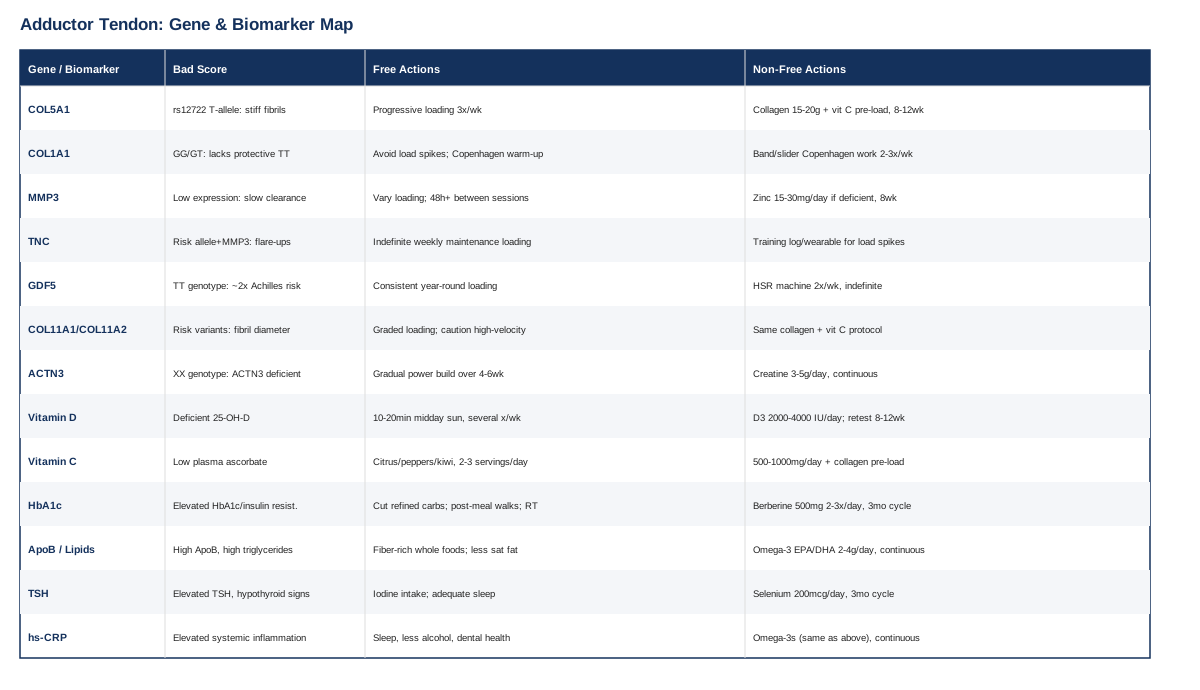
What Your Genes May Reveal About Adductor Tendon Resilience
Genetics research into tendinopathy has grown steadily over the past fifteen years, largely out of sports genomics labs studying Achilles and patellar tendon injuries in athletes. The same collagen and extracellular-matrix genes implicated in those tendons are structurally involved in every tendon in the body, including the adductor magnus tendon, because the underlying biology — fibril assembly, cross-linking, and remodeling — is shared tissue chemistry rather than something unique to the ankle or knee. Researchers like Ali Torkamani at Scripps Research have spent years building large-scale genomic risk models for common conditions, and personalities like Gary Brecka have popularized the idea of using genetic and blood panels to personalize health decisions rather than rely on population averages. It's worth being clear-eyed about the difference: Torkamani's work is peer-reviewed genomic epidemiology, while Brecka's public protocols are commercialized and not independently validated in journals — the gene-specific findings below come from the former category of research, not the latter.
It's also worth being honest about the state of the evidence before getting into specifics. Almost all of these gene-tendinopathy associations come from candidate-gene case-control studies and meta-analyses, which are a real form of evidence but a weaker one than large-scale genome-wide studies or randomized trials. Odds ratios in this field are typically modest (in the 1.3 to 2.5 range), which means a "risk" variant shifts probability, it does not determine outcome. Treat every gene below as one input among many, not a verdict.
COL5A1 — Collagen Fibril Assembly
COL5A1 encodes the alpha-1 chain of type V collagen, a minor collagen that sits inside type I collagen fibrils and controls how thick those fibrils are allowed to grow during assembly. Certain COL5A1 variants, particularly around the rs12722 marker, are associated with altered fibril diameter and stiffer, less compliant tendon tissue — and a British case-control study on Achilles tendon pathology found this marker, along with other extracellular matrix regulators, modified pathology risk. A broader meta-analysis in Caucasian populations confirmed the association across multiple tendon and ligament injury types.
If this variant runs unfavorably: the plan without supplements
Because the underlying issue is fibril structure rather than a nutrient deficiency, the highest-leverage free intervention is progressive, tendon-specific loading rather than blanket rest. This means a structured isometric-to-heavy-slow-resistance program for the adductors, dosed at a frequency of roughly 3 non-consecutive days per week, with load increased only when the tendon tolerates the previous stage without a pain flare lasting more than 24 hours. Extended rest is not protective here and tends to worsen outcomes, since tendons need repeated, moderate mechanical stimulus to remodel favorably.If this variant runs unfavorably: the plan with supplements or equipment
Collagen peptides (15 to 20 grams) combined with 50 to 100 mg of vitamin C, taken roughly 60 minutes before the loading session, is the protocol with the most direct human mechanistic support (detailed further below). A cycling approach of 8 to 12 weeks on, reassessing symptoms and function before continuing, avoids indefinite supplementation without benefit tracking. Side effects are minimal — mild gastrointestinal discomfort at higher gelatin doses is the main complaint, and vitamin C above 2,000 mg/day can cause loose stools.COL1A1 — The Sp1 Binding Site Variant
COL1A1 codes for the major structural collagen in tendon, type I collagen. A well-studied polymorphism in the Sp1 transcription factor binding site (rs1800012) alters the ratio of collagen chains produced. Interestingly, the rare TT genotype appears protective rather than harmful — a meta-analysis of over 2,300 participants found this genotype substantially under-represented in people with tendon and ligament ruptures. The more common GG and GT genotypes are not "bad" in an absolute sense, but they lack this same protective effect, meaning tendon tissue may be somewhat more vulnerable to rupture-level loading under the same training stress.
If this variant runs unfavorably: the plan without supplements
Since this gene affects failure risk under high peak load more than chronic degeneration, the free intervention that matters most is avoiding abrupt spikes in sprint volume, change-of-direction intensity, or maximal hip abduction range without a graded build-up — the classic "too much, too soon" pattern that ruptures marginal tissue. A structured warm-up incorporating adductor-specific dynamic loading (such as Copenhagen plank progressions) before high-speed work is a reasonable, free countermeasure.If this variant runs unfavorably: the plan with supplements or equipment
There's no specific supplement shown to correct COL1A1 genotype effects; the more relevant equipment-based intervention is a portable resistance band or sliding disc setup for regular Copenhagen adduction training, done 2 to 3 times weekly. No meaningful side effects apply here beyond standard delayed-onset soreness from a new exercise.MMP3 — Matrix Remodeling Enzyme
MMP3 (stromelysin-1) breaks down and remodels extracellular matrix components, and it is one of the primary enzymes responsible for clearing damaged collagen so new collagen can be laid down. A functional promoter variant affects how much MMP3 is produced, and research on Achilles tendinopathy found that MMP3 variants interact with COL5A1 genotype to modify overall risk — suggesting these genes don't act in isolation but compound each other's effects.
If this variant runs unfavorably: the plan without supplements
Low MMP3 expression can mean sluggish clearance of damaged matrix, so the practical countermeasure is avoiding training monotony — repeating the identical loading pattern day after day doesn't give a slow-remodeling tendon adequate turnover time. Building in at least 48 hours between higher-intensity adductor sessions, and rotating movement patterns (isometric holds, slow eccentrics, and sport-specific work across a week) gives remodeling enzymes more varied signals to work with.If this variant runs unfavorably: the plan with supplements or equipment
Zinc (15 to 30 mg/day with food) is a required cofactor for several matrix metalloproteinases including MMP3, and correcting a subclinical deficiency (confirmed via a plasma zinc test) is the more evidence-grounded move than blind high-dose supplementation. Cycle for 8 weeks and retest, since chronic zinc excess above 40 mg/day can impair copper absorption and cause a secondary deficiency — this is the main side-effect risk to monitor.TNC — Tenascin-C
Tenascin-C is an extracellular matrix glycoprotein that increases sharply in tendon tissue under mechanical stress and is thought to play a role in matrix reorganization during healing. A case-control study in high-performance athletes found that a specific TNC risk allele, especially when combined with the MMP3 risk allele, was associated with more tendinopathy episodes and more frequent disease flare-ups — a combination worth knowing if you have both variants, since it suggests a tendon that reinjures more readily rather than one that simply started with a single acute episode.
If this variant runs unfavorably: the plan without supplements
Because this variant is linked to recurrence rather than initial injury, the highest-value free strategy is a maintenance loading program that continues well past symptom resolution — most people stop rehab once pain disappears, but a tendon with this genotype profile appears to benefit from ongoing low-frequency isometric or heavy-slow-resistance work (roughly once weekly) indefinitely, not just during the symptomatic phase.If this variant runs unfavorably: the plan with supplements or equipment
There is no direct supplement for tenascin-C regulation; the more useful equipment investment is a simple load-monitoring tool (a training log or wearable that tracks weekly sprint/cutting volume) so spikes that precede past flare-ups can be identified and moderated before the next one starts. This is a monitoring habit, not a supplement cycle, so there are no dosing or side-effect considerations.GDF5 — Growth Differentiation Factor 5
GDF5 is part of the TGF-beta superfamily and plays a role in the development and maintenance of tendons, ligaments, and cartilage. The rs143383 variant, located in the 5' UTR, reduces GDF5 gene expression, and people with the TT genotype have been found to carry roughly twice the risk of Achilles tendon pathology in genetic association studies, a finding echoed in broader research on TGF-beta family members and Achilles tendon disease.
If this variant runs unfavorably: the plan without supplements
Since reduced GDF5 signaling is thought to impair the tendon's baseline structural maintenance rather than its response to a single training block, consistency matters more than intensity here — a lower but genuinely sustained year-round loading habit for the adductors outperforms high-intensity blocks separated by long off-periods, because the tissue may be slower to rebuild its structural baseline once it's lost.If this variant runs unfavorably: the plan with supplements or equipment
No supplement directly restores GDF5 expression. The most defensible equipment-based approach is a heavy-slow-resistance program using a leg press or hip adduction machine allowing precise, progressive load tracking (since consistent overload, not novelty, is the goal), performed 2 times weekly on non-consecutive days, maintained indefinitely rather than cycled — this is a structural maintenance strategy, not a short-term fix, and carries no supplement-related side effects.COL11A1 and COL11A2 — Fibril Diameter Regulators
Like COL5A1, these two genes encode minor fibrillar collagens (type XI) that co-assemble with type I collagen and regulate fibril diameter. A study on young athletes with rotator cuff tendinopathy found variants in COL5A1, COL11A1, and COL11A2 jointly associated with tendinopathy risk, reinforcing that fibril-regulating collagens act as a coordinated system rather than independently.
If this variant runs unfavorably: the plan without supplements
The practical implication mirrors COL5A1: prioritize graded loading over prolonged rest, and be especially cautious about rapid increases in high-velocity, high-force movements (accelerations, decelerations, forceful adduction against resistance) since fibril structure genes appear to matter most under peak mechanical stress rather than low-level daily activity.If this variant runs unfavorably: the plan with supplements or equipment
The same collagen peptide plus vitamin C, pre-loading protocol described under COL5A1 applies here, since both gene groups affect the same fibril-assembly pathway. There's no added benefit to combining multiple collagen-support supplements simultaneously — one consistent protocol, reassessed every 8 to 12 weeks, is sufficient.ACTN3 — Muscle Power and Load Transfer
ACTN3 doesn't act directly on tendon tissue — it determines whether a person produces the alpha-actinin-3 protein in fast-twitch muscle fibers, affecting explosive power output. It's included here because the adductor magnus is a muscle-tendon unit, and how forcefully the muscle contracts directly determines the load transmitted through its tendon. A systematic review of ACTN3 R577X genotype and non-contact injury risk found the XX genotype (complete alpha-actinin-3 deficiency) associated with higher injury incidence, greater injury severity, and slower return to play — though the authors were careful to note the evidence isn't yet strong enough to justify genotyping for individual injury prediction.
If this variant runs unfavorably: the plan without supplements
XX genotype carriers tend to rely more on slow-twitch, endurance-oriented muscle function and may be more vulnerable to eccentric damage during sudden explosive efforts. The free countermeasure is longer, more gradual power-development phases (building sprint and cutting intensity over 4 to 6 weeks rather than 1 to 2) instead of jumping straight into high-velocity work after a period of lower-intensity training.If this variant runs unfavorably: the plan with supplements or equipment
Creatine monohydrate (3 to 5 g daily, no loading phase required) has the strongest human evidence among supplements for supporting fast-twitch muscle function and may partially offset the power deficit associated with alpha-actinin-3 deficiency, though this hasn't been studied specifically in ACTN3 XX carriers. It can be taken continuously without cycling; the main side effect is water retention and rare gastrointestinal discomfort at higher doses, which resolves by splitting the dose across meals.Epigenetics: How Loading Talks to Your Tendon Genes
Genes are not fixed instructions — mechanical loading itself changes which tendon genes get switched on through DNA methylation, and a review of epigenetic mechanisms in tendon aging describes how these methylation patterns shift with age and reduced loading, contributing to the stiffer, less responsive tendon tissue seen in older or chronically undertrained individuals. This is genuinely encouraging news for anyone worried that an unfavorable genetic profile is destiny: consistent mechanical loading is one of the few known ways to favorably shift these epigenetic marks, meaning the training program itself is doing double duty as a genetic-expression intervention, not just a strengthening one.
Blood Markers Worth Tracking Alongside Your Genetic Picture
Genes describe a predisposition; biomarkers describe your current physiological state, and the latter is far more actionable on a month-to-month basis. The six markers below were chosen because each has direct, evidence-backed relevance to tendon tissue quality, healing capacity, or the systemic conditions known to worsen tendinopathy outcomes.
Vitamin D (25-hydroxyvitamin D)
Vitamin D supports tenocyte survival, modulates inflammation in tendon tissue, and helps regulate the matrix metalloproteinases (including MMP3) responsible for collagen remodeling. A scoping review of vitamin D and postoperative tendon healing found deficiency consistently linked to delayed healing, higher retear rates, and worse functional recovery, though the authors noted study quality across this literature remains modest.
How to measure it
A standard 25-OH-D blood test costs roughly $30 to $60 out of pocket in the US, or is often bundled into an annual physical panel at no extra cost.If the score is bad, the plan without supplements
Ten to twenty minutes of midday sun exposure on bare arms and legs, several times weekly, is the free intervention, though this is highly seasonal and latitude-dependent and often insufficient in winter months at northern latitudes.If the score is bad, the plan with supplements or equipment
Vitamin D3, dosed at 2,000 to 4,000 IU daily with a fat-containing meal, is standard for correcting deficiency, retested after 8 to 12 weeks. Doses above 10,000 IU/day sustained for months can cause hypercalcemia, so ongoing supplementation above 4,000 IU/day should be guided by follow-up labs rather than taken indefinitely without monitoring.Vitamin C (Plasma Ascorbate)
Vitamin C is a required cofactor for the enzymes (prolyl and lysyl hydroxylase) that stabilize the collagen triple helix — without adequate vitamin C, newly synthesized collagen is structurally weaker. A scoping review on vitamin C and tendinopathy recovery found consistent mechanistic support for its role in collagen synthesis, alongside early clinical signals of benefit when combined with other nutrients.
How to measure it
Plasma vitamin C testing is less routinely offered than vitamin D and typically costs $40 to $80 through specialty or functional medicine labs; it is not part of a standard annual panel.If the score is bad, the plan without supplements
Citrus fruit, bell peppers, and kiwi provide 60 to 120 mg of vitamin C per serving, and two to three servings daily is generally sufficient to normalize plasma levels within a few weeks without supplementation.If the score is bad, the plan with supplements or equipment
500 to 1,000 mg daily is a reasonable correction dose, taken with collagen peptides before tendon loading sessions for the synergistic effect described in the section below. No cycling is necessary since vitamin C is water-soluble and excess is excreted; doses above 2,000 mg/day risk only mild diarrhea.HbA1c and Fasting Insulin
Chronic hyperglycemia promotes advanced glycation end-products that stiffen and weaken collagen cross-links, and insulin resistance is now recognized as an independent driver of tendon degeneration separate from mechanical overuse. Research on type 2 diabetes and tendinopathy development found significantly elevated risk in diabetic populations, and this risk gradient likely begins well before a formal diabetes diagnosis, in the insulin-resistant range.
How to measure it
HbA1c costs $15 to $40 as a standalone test or is included in most standard metabolic panels; fasting insulin is a slightly less common add, typically $20 to $50.If the score is bad, the plan without supplements
Reducing refined carbohydrate and added sugar intake, walking for 10 to 15 minutes after meals, and adding two weekly resistance training sessions are the highest-leverage free interventions for improving insulin sensitivity, typically showing measurable HbA1c improvement within 3 months.If the score is bad, the plan with supplements or equipment
Berberine (500 mg two to three times daily with meals) has reasonable human evidence for improving insulin sensitivity and is often used as a lower-cost alternative to prescription options; cycle 3 months on, 2 to 4 weeks off, since long-term continuous use data is limited. Gastrointestinal upset is the most common side effect, and it should not be combined with metformin without physician guidance due to overlapping mechanisms.ApoB and a Full Lipid Panel
This one may seem disconnected from a tendon problem, but a study on Achilles tendinopathy found the dyslipidemia pattern in affected patients closely mirrored the pattern seen in insulin resistance — elevated triglycerides and small, dense LDL particles rather than high total cholesterol. Physicians like Peter Attia and lipidologists Thomas Dayspring and Allan Sniderman have long argued that ApoB (which counts the actual number of atherogenic particles) is a more accurate marker than standard LDL-C, and this same particle-based view of metabolic health applies to tendon risk.
How to measure it
ApoB typically costs $20 to $50 as an add-on to a standard lipid panel and is increasingly available through direct-to-consumer lab services without a physician order.If the score is bad, the plan without supplements
Replacing refined carbohydrates with fiber-rich whole foods and reducing saturated fat intake modestly are the two dietary levers with the best evidence for lowering ApoB and triglycerides, typically over 8 to 12 weeks.If the score is bad, the plan with supplements or equipment
Omega-3 fatty acids (2 to 4 g EPA/DHA daily) have solid evidence for lowering triglycerides specifically, taken continuously rather than cycled, with fish-burp aftertaste and mild blood-thinning effects as the primary side effects to watch at higher doses, particularly if already on anticoagulant medication.TSH and a Thyroid Panel
Thyroid hormones directly influence tenocyte survival and collagen production, and research on thyroid hormones and tendon homeostasis describes how hypothyroidism can cause glycosaminoglycan accumulation in tendon matrix and impair healing — with Achilles tendinopathy occasionally serving as the first clinical clue to undiagnosed thyroid dysfunction.
How to measure it
A basic TSH test costs $20 to $40; a fuller panel including free T3, free T4, and thyroid antibodies runs $80 to $150 and is worth requesting if TSH alone is borderline or symptoms (fatigue, cold intolerance) are present.If the score is bad, the plan without supplements
Adequate iodine intake through iodized salt or seafood, and sufficient sleep (thyroid function is disrupted by chronic sleep restriction), are the relevant free levers, though frank hypothyroidism generally requires medical management rather than lifestyle correction alone.If the score is bad, the plan with supplements or equipment
Thyroid hormone replacement is a prescription matter and should not be self-directed; selenium (200 mcg daily) has modest supporting evidence for supporting thyroid hormone conversion in people with autoimmune thyroid involvement, cycled for 3 months with retesting, and should be stopped if levels move into supplementation-related excess since chronic high-dose selenium carries its own toxicity risk.hs-CRP (High-Sensitivity C-Reactive Protein)
hs-CRP is a general marker of systemic low-grade inflammation, and while its clinical interpretation is best established in cardiovascular and rheumatologic contexts rather than tendinopathy specifically, chronically elevated systemic inflammation plausibly impairs the local healing environment of an already irritated tendon. This is the one marker on this list where the tendon-specific evidence is more inferred than directly demonstrated, and it should be read as a general health signal rather than tendon-specific proof.
How to measure it
hs-CRP costs $15 to $35 and is widely available as a standalone add-on to routine bloodwork.If the score is bad, the plan without supplements
Improving sleep consistency, reducing alcohol intake, and addressing periodontal health are underrated free levers for lowering baseline CRP, often working within 6 to 8 weeks.If the score is bad, the plan with supplements or equipment
Omega-3s (same dosing as above) have modest anti-inflammatory evidence and serve double duty with the ApoB marker; no separate cycling is needed beyond the standard continuous use noted earlier.What Tendon Scientist Keith Baar Wants You to Know
Keith Baar runs the Functional Molecular Biology Lab at UC Davis and has become one of the most direct challengers of the traditional "rest, ice, and eccentric-only" tendinopathy model, discussing his research most extensively in a recent, widely shared conversation on The Tim Ferriss Show. His lab's work, most of it published and peer-reviewed, reframes tendon injury as a tissue engineering problem rather than a purely orthopedic one. Below are the ten most useful, evidence-grounded ideas from his body of research as it applies to a stubborn tendon like the distal adductor magnus.
1. Load is anti-inflammatory, not just protective
Baar's research reframes appropriate mechanical loading as an active anti-inflammatory signal to tendon tissue, not merely something to tolerate once pain subsides — meaning prolonged, complete rest may actually work against the tendon's own resolution process.2. Isometric holds calm pain faster than dynamic movement
A randomized clinical trial in athletes with patellar tendon pain found isometric contractions produced significantly greater immediate pain relief than isotonic (dynamic) contractions, making isometric holds a practical first-line tool during an in-season flare.3. Isometric loading has real meta-analytic support
Beyond single trials, a systematic review and meta-analysis of isometric exercise across tendinopathy studies confirmed meaningful pain and functional benefits, though the effect appears more consistent in patellar tendon than in Achilles tendon research — a useful reminder that tendon location matters when interpreting the evidence.4. Tenocytes have a refractory period
Baar's research suggests tendon cells respond meaningfully to about 6 to 10 minutes of mechanical load and then become temporarily unresponsive to further stimulus — meaning a single, focused loading bout is doing most of the work a longer session would, and going longer doesn't proportionally add benefit.5. Spacing sessions doubles the collagen response
Because of that refractory window, splitting loading into two short sessions spaced 6 to 8 hours apart appears to produce a larger cumulative collagen synthesis signal than one longer continuous session — a genuinely counterintuitive, practical training insight.6. Vitamin C-enriched gelatin measurably boosts collagen synthesis
The foundational human study behind this protocol, published in the American Journal of Clinical Nutrition, found that participants who consumed 15 g of vitamin C-enriched gelatin one hour before a short bout of exercise showed roughly double the blood marker of collagen synthesis compared to placebo.7. Timing the supplement to the workout matters more than the supplement alone
The same study found the effect was tied specifically to consuming the gelatin/vitamin C combination shortly before the mechanical stimulus — collagen precursors circulate and peak around the one-hour mark, which is when tendon cells need to be actively loaded to make use of them.8. Caffeine may blunt this exact process
A more recent line of research found that caffeine decreased tendon protein synthesis and reduced engineered ligament strength in laboratory models — a genuinely surprising finding for anyone using pre-workout caffeine and collagen-loading protocols in the same session, and a reasonable argument for separating the two by a few hours.9. Combined collagen peptide and vitamin C protocols show promise clinically
Beyond the mechanistic studies, a clinical study on managing tendinopathy with a collagen peptide, glucosamine, and vitamin C combination reported meaningful improvements in pain and function, supporting the nutrient-plus-loading approach beyond the lab bench.10. This challenges the "just rest it" instinct most people default to
Perhaps the most practically important takeaway across Baar's body of work is that the instinct to fully offload a painful tendon is usually the wrong one — appropriately dosed, well-timed load is the actual repair signal, and the goal of management should be finding the right dose, not eliminating load altogether.Complementary Approaches Worth Considering
Alongside genetics, bloodwork, and loading protocols, a small number of complementary therapies have genuine — if sometimes limited — human evidence specifically in tendinopathy. The three below were chosen because they have condition-relevant clinical research behind them, unlike several other commonly recommended modalities that lack tendon-specific data.
Low-Level Laser Therapy and Photobiomodulation
Photobiomodulation uses specific wavelengths of red or near-infrared light believed to stimulate mitochondrial activity in tenocytes and modestly reduce local inflammatory signaling, making it relevant for a chronically irritated tendon like the distal adductor magnus that hasn't responded fully to loading alone. It is best considered an adjunct to, not a replacement for, an active loading program.
A foundational systematic review and meta-analysis of low-level laser treatment for tendinopathy found positive outcomes were consistently associated with using recommended dosage parameters, and a more recent 2025 meta-analysis confirmed superior short-term pain relief compared to minimal intervention across 15 randomized trials, though a separate systematic review cautioned that overall evidence quality remains mixed and dosing protocols are inconsistent across studies.
Realistically, this means seeking treatment from a practitioner using published dosage parameters (rather than a generic setting) and treating it as a pain-management adjunct during the early, most irritable phase of rehab, alongside — never instead of — a structured loading program.
Massage Therapy
Deep transverse friction massage, a specific technique applied across (not along) the tendon fibers, has long been used clinically on the theory that it increases local blood flow and may help reorganize collagen fiber alignment during healing, making it a plausible adjunct for the fibrous, poorly vascularized adductor tendon.
A systematic review of deep friction massage for tendinopathy identified several randomized trials showing benefit, primarily in tennis elbow, though an older Cochrane-style review of deep transverse friction for tendinitis found the evidence inconsistent and insufficient to draw firm conclusions on its own.
Given the mixed evidence, this is reasonably used as a short (5 to 10 minute), practitioner-applied adjunct once or twice weekly during a rehab block, evaluated on whether it subjectively reduces stiffness before loading sessions — not as a stand-alone treatment expected to resolve the tendinopathy by itself.
Mindfulness Meditation and MBSR
Chronic tendinopathy pain, especially the kind that persists for months despite reasonable rehab, involves central nervous system sensitization alongside local tissue changes, and mindfulness-based approaches target the pain-processing side of that equation rather than the tendon tissue directly.
A systematic review and meta-analysis of mindfulness meditation for chronic pain across 30 randomized trials found a small but statistically significant reduction in pain compared to control conditions, alongside improvements in mood and quality of life — modest effects, but consistent ones, and notably low-risk to add alongside any physical rehab plan.
A realistic entry point is a structured 8-week MBSR course or app-based program, practiced around four days a week as the research suggests correlates with better outcomes, used specifically to manage the frustration and hypervigilance that often accompanies a slow-healing tendon rather than as a treatment for the tissue itself.
Conclusion
Distal adductor magnus tendinopathy that doesn't respond to generic rehab usually isn't a mystery — it's a sign that the underlying tissue biology, whether genetic, nutritional, metabolic, or hormonal, hasn't been accounted for. Collagen genes like COL5A1, COL1A1, MMP3, TNC, GDF5, the COL11A1/COL11A2 pair, and ACTN3 don't determine your outcome, but an unfavorable profile explains why some tendons need more deliberate loading, more consistent maintenance work, or targeted nutritional support to recover well. Blood markers like vitamin D, vitamin C, HbA1c, ApoB, TSH, and hs-CRP are more immediately actionable, cheap to test, and often the first thing worth correcting before assuming a rehab program has failed. And the loading-first, well-timed-nutrition approach championed by researchers like Keith Baar directly challenges the instinct to simply rest an irritated tendon into submission.
The realistic next step isn't to overhaul everything at once. Start with the bloodwork — it's inexpensive, fast, and gives an immediate read on whether your body currently has what it needs to repair tendon tissue. Bring these results, along with a clear symptom timeline, to a sports medicine physician or physiotherapist who can integrate them into an actual loading program rather than a generic handout. Genetics, if you're curious, is the slower-burning piece worth exploring afterward — interesting context, not the first lever to pull.
Endocrine & Metabolic: Diabetes & Blood Sugar Thyroid Conditions