This article contains AI generated content.
Distal Semimembranosus Insertional Syndrome: 5 Genes and 7 Biomarkers to Track
If you've been told your posteromedial knee pain is "just tendinitis" and left to figure out the rest yourself, you already know how unsatisfying that explanation is. Distal semimembranosus insertional syndrome — pain and thickening where the semimembranosus tendon anchors into the back-inner part of the tibia — behaves differently from one runner or cyclist to the next. Some people recover in six weeks of loading exercises. Others do everything "right" and still flare up a year later. That gap is rarely explained by technique alone.
Generic advice exists because it has to apply to everyone, which means it's calibrated to the average case, not to your tendon, your metabolic profile, or your collagen-remodeling capacity. "Rest it, stretch it, strengthen it" is true and incomplete. It doesn't explain why two runners with identical mileage and identical rehab programs end up with different outcomes. The missing piece is usually biological: what your blood chemistry says about inflammation and glycation, what your genes suggest about your collagen's baseline durability, and whether your recovery habits are actually matched to how tendon tissue repairs itself.
This article takes the more specific route. Instead of repeating the standard eccentric-loading protocol you've probably already read elsewhere, it looks at the biomarkers that plausibly influence tendon healing capacity, the genetic variants researchers have linked to tendon and ligament injury risk, a body of exercise-nutrition research that quietly upends some default physical therapy advice, and a short list of complementary approaches with actual human evidence behind them for tendon pain.
None of this replaces a proper clinical diagnosis or a structured rehab program — imaging, a hands-on exam, and a loading plan built by a sports medicine clinician or physiotherapist still come first. But better information about what's happening under the hood — inflammatory load, glycation, collagen genetics — can sharpen the decisions you make around that plan. The sections ahead cover the biomarkers worth tracking first, the genetic variants worth knowing about, a research-backed loading and nutrition strategy that challenges some conventional rehab timing, and a handful of complementary techniques with real supporting evidence.
Summary
Distal semimembranosus insertional syndrome isn't just a mechanical overuse problem — it sits at the intersection of tendon biology, metabolic health, and (to a smaller but real degree) genetics. Below, you'll find the seven blood biomarkers most worth checking if your posteromedial knee pain isn't resolving on schedule, including which ones are cheap and which require a specialty panel, and exactly what to do — with or without supplements — when a number comes back unfavorable. You'll also find the five genes researchers have most consistently linked to tendon and ligament injury risk, what a "bad" variant may mean practically, and how to compensate for it through training and nutrition rather than fatalism. Further down, a research-backed loading-and-nutrition protocol that quietly contradicts some standard physical therapy advice, plus a short list of complementary techniques with genuine human evidence for tendon pain. The goal throughout is specific enough to actually change what you do this month.
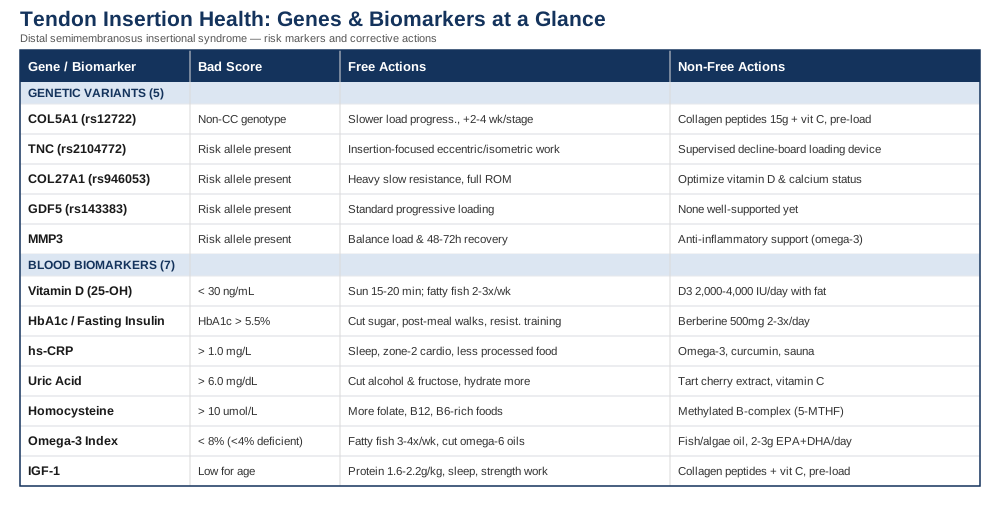
Seven Biomarkers Worth Tracking For Tendon Insertion Health
Before getting into individual markers, it's worth being clear about what distal semimembranosus insertional syndrome actually is, since the name alone tends to obscure it. It's a tendinopathy — a failed-healing response in tendon tissue, not a simple inflammation — at the point where the semimembranosus tendon inserts into the posteromedial tibia, and it's frequently under-recognized because it mimics other causes of medial knee pain such as pes anserine bursitis or medial meniscus injury. A 2022 narrative review in PM&R notes that it's most common in runners, tends to respond to a structured rehabilitation program built around kinetic-chain correction, hamstring strengthening, and progressive tendon loading, and that recalcitrant cases with bursal involvement may need an ultrasound-guided injection (Sederberg et al., 2022).
What that review doesn't dwell on — because it's outside its scope — is why tendon tissue fails to remodel properly in the first place. That's where systemic biomarkers come in. Tendon is a living, metabolically active tissue that depends on adequate micronutrient status, low background inflammation, and functional collagen cross-linking chemistry to repair itself under load. When those systems are off, the same loading program that would fix a tendon in a metabolically healthy person can stall out in someone else. The seven markers below are the ones with the most direct, plausible link to that repair process.
1. 25-Hydroxyvitamin D
Vitamin D does more for tendons than most rehab programs acknowledge. It supports tenocyte proliferation, helps regulate the matrix metalloproteinases that break down collagen during remodeling, and low levels have been directly associated with tendon injury risk in large retrospective data — one analysis of over 336,000 patients found vitamin D deficiency was linked to a markedly higher incidence of distal biceps tendon injury, roughly 118 versus 44 per 100,000 person-years (Erickson et al.). A scoping review of postoperative tendon healing reaches a similar conclusion about vitamin D's supportive role in collagen organization at the tendon-bone junction (PMC12535649).
How to measure it
A standard 25-OH vitamin D blood test costs roughly 15 to 50 US dollars out of pocket, or is often bundled into a basic metabolic panel through a physician. Target range for tendon and bone health purposes is generally considered 30 to 50 ng/mL, with many sports medicine clinicians preferring the upper half of that range.If the score is bad, the plan without supplements
Aim for 15 to 20 minutes of midday sun exposure on bare arms and legs, several times a week, adjusted for skin tone and latitude — darker skin and higher latitudes require more time. Include fatty fish such as salmon, mackerel, or sardines two to three times weekly. Retest after 8 to 12 weeks, since sunlight-driven changes are slow and seasonal.If the score is bad, the plan with supplements or equipment
Vitamin D3 at 2,000 to 4,000 IU daily is a common corrective dose for a moderate deficiency, taken with a meal containing fat to improve absorption; higher doses (10,000 IU) are sometimes used short-term under medical supervision for more severe deficiency. Retest at 8 to 12 weeks rather than adjusting the dose sooner. Side effects are rare at these doses but hypercalcemia can occur with excessive, prolonged high-dose use, so this isn't a supplement to take indefinitely without rechecking blood levels roughly twice a year. A light box is not a substitute here — it doesn't produce vitamin D.2. HbA1c and Fasting Insulin
This is arguably the most underrated biomarker pairing for tendon problems, because tendinopathy is often treated as a purely mechanical issue even when glycemic control is quietly working against recovery. Elevated blood glucose drives the formation of advanced glycation end-products (AGEs), which stiffen and disorganize collagen fibers and directly impair the biomechanical properties of tendon. A large study found that people with HbA1c in the prediabetic range — above 5.7 percent — had roughly three times higher odds of lower-extremity tendon injury compared with those in the normal range, and metabolic syndrome overall was linked to 2.5 times higher odds (Diabetes Care, 2024). Separate research shows diabetes measurably impairs tendon-to-bone healing after rotator cuff repair, a reasonable proxy for how insertional tendinopathies more broadly might behave in a hyperglycemic environment (PMC5257255), and normal-range fasting glucose combined with insulin resistance has also been associated with degenerative rotator cuff pathology even without a diabetes diagnosis (PMC10724963).
How to measure it
HbA1c is a standard, inexpensive blood test (10 to 30 US dollars, often covered by insurance as part of routine bloodwork). Fasting insulin is a bit less commonly ordered but still affordable (20 to 40 dollars) and, paired with fasting glucose, allows calculation of HOMA-IR, a more sensitive early marker of insulin resistance than HbA1c alone. Target: HbA1c under 5.5 percent, fasting insulin under 6 μIU/mL.If the score is bad, the plan without supplements
Reduce refined carbohydrate and added sugar intake, prioritize protein and fiber at each meal to blunt glucose spikes, and add a 10 to 15 minute walk after meals — this alone has measurable effects on postprandial glucose. Resistance training two to three times weekly improves insulin sensitivity independent of weight loss. Recheck HbA1c every three months, since it reflects roughly a 90-day average and won't move meaningfully sooner.If the score is bad, the plan with supplements or equipment
Berberine (500 mg two to three times daily with meals) has clinical evidence comparable to metformin for glucose control in some studies, but should be cycled — commonly 8 to 12 weeks on, with a break — and avoided in pregnancy or alongside certain medications without medical guidance; GI upset is the most common side effect. A continuous glucose monitor (worn for two to four week blocks, a few times a year) can make the food-glucose relationship concrete and actionable. Any of this should be discussed with a physician if fasting glucose is already in the diabetic range rather than simply prediabetic.3. High-Sensitivity C-Reactive Protein (hs-CRP)
Tendinopathy isn't classic inflammation in the way a sprained ankle is, but a persistently elevated systemic inflammatory background makes it harder for tendon tissue to shift out of the degenerative phase and into productive remodeling. hs-CRP is the simplest, most widely validated marker of that background inflammatory load, and it's the one Peter Attia and Thomas Dayspring both routinely reference as a baseline systemic-health marker worth tracking regardless of the specific complaint, precisely because it reflects the general inflammatory terrain that slower-healing tissues like tendon have to repair within.
How to measure it
A standard blood draw, 15 to 40 US dollars, frequently included in cardiovascular risk panels. Target under 1.0 mg/L is considered low risk; 1.0 to 3.0 mg/L is average; above 3.0 mg/L is considered elevated and worth investigating further (including ruling out an unrelated acute infection at the time of the draw, which can transiently spike it).If the score is bad, the plan without supplements
Improve sleep consistency and duration first — short or fragmented sleep reliably raises inflammatory markers. Reduce ultra-processed food and trans fat intake, increase fiber from vegetables and legumes, and add two to three sessions of zone-2 cardio weekly, which has a well-documented anti-inflammatory effect over 8 to 12 weeks. Retest no sooner than 6 to 8 weeks after changes, ideally when you're not acutely ill.If the score is bad, the plan with supplements or equipment
Omega-3 fatty acids (covered in more detail below) are the best-supported supplement option here. Curcumin with piperine (500 to 1,000 mg daily) has modest evidence for lowering inflammatory markers and is generally well tolerated, though it can interact with blood thinners and should be cycled with breaks every 8 to 12 weeks rather than taken indefinitely. Sauna use, 3 to 4 sessions weekly at 15 to 20 minutes, has emerging evidence for lowering systemic inflammation, though it requires access to equipment most people don't have at home.4. Uric Acid
Uric acid is worth checking specifically in tendon problems because it isn't just a gout marker — even asymptomatic hyperuricemia appears to have direct effects on tendon cells. In vitro work shows uric acid dose-dependently reduces tendon stem and progenitor cell viability, decreases collagen expression, and increases degradative enzymes and inflammatory factors, and it also alters how tendon cells respond to platelet-rich plasma treatment (PMC4170825). Separate clinical data has linked hyperuricemia to a higher risk of spontaneous Achilles tendon rupture, which is a reasonable signal that chronically elevated uric acid isn't neutral for tendon tissue generally.
How to measure it
A basic, cheap blood test (10 to 25 US dollars), often already included in a comprehensive metabolic panel. Target generally under 6.0 mg/dL, with some researchers suggesting under 5.0 mg/dL is more optimal for tissue health, not just gout prevention.If the score is bad, the plan without supplements
Reduce alcohol (especially beer) and fructose-sweetened beverages, both of which are strong uric-acid drivers. Moderate purine-dense food intake — organ meats, certain shellfish, excessive red meat — without eliminating protein broadly. Increase water intake and non-starchy vegetable intake. Recheck in 4 to 6 weeks.If the score is bad, the plan with supplements or equipment
Tart cherry extract has modest clinical evidence for lowering uric acid and is generally low-risk, typically used as a course of 4 to 8 weeks with reassessment rather than continuously. Vitamin C supplementation (500 mg daily) has some evidence of mildly lowering uric acid, though effects are modest. Medication-grade urate-lowering therapy (such as allopurinol) is a medical decision for confirmed hyperuricemia or gout, not a self-directed supplement choice.5. Homocysteine
This one is less commonly discussed in sports medicine circles but has a clear biochemical rationale. Homocysteine interferes directly with collagen cross-linking — it suppresses lysyl oxidase, the enzyme responsible for forming stable collagen cross-links, both by inhibiting its activity and down-regulating its expression (PMC3037671). The clearest human evidence for this mechanism comes from homocystinuria, a genetic condition of extreme homocysteine elevation, where researchers directly observed impaired collagen fibril formation in affected connective tissue (PMC302517). Ordinary elevated homocysteine from B-vitamin insufficiency is a much milder version of the same chemistry, so this is a plausible-but-not-fully-proven mechanism in typical tendinopathy — worth knowing, not worth over-interpreting.
How to measure it
A blood test costing 30 to 70 US dollars, less commonly bundled into routine panels so it may need to be specifically requested. Target under 10 μmol/L; above 15 is generally considered elevated.If the score is bad, the plan without supplements
Increase dietary folate (leafy greens, legumes) and B12 (animal products, or fortified foods for those eating plant-based) and B6 (poultry, fish, potatoes). Retest after 8 to 12 weeks, since red blood cell turnover and dietary changes take time to shift blood levels meaningfully.If the score is bad, the plan with supplements or equipment
A B-complex supplement containing methylated folate (5-MTHF), B12 (methylcobalamin), and B6, taken daily, is the standard corrective approach and is low-risk for most people. This is particularly relevant for anyone with an MTHFR gene variant reducing standard folate processing, in which case the methylated forms specifically (rather than folic acid) tend to work better. Recheck at 8 to 12 weeks; there's no strong reason to cycle B-vitamin supplementation, though very high-dose B6 (well above typical supplement doses, sustained for months) has been linked to peripheral neuropathy, so stick to standard label doses.6. Omega-3 Index
The Omega-3 Index measures the percentage of EPA and DHA in red blood cell membranes and is a better long-term indicator of omega-3 status than a one-off dietary recall. It's directly relevant here: patients with degenerative rotator cuff tears — a comparable chronic tendinopathy — had a significantly lower Omega-3 Index than pain-free controls (5.01 percent versus 6.01 percent), consistent with omega-3's known anti-inflammatory role in chronic tendon pathology (Pubmed 31492432). A separate meta-analysis of dietary supplementation alongside physiotherapy for tendinopathy found mixed but not negative results, suggesting supplementation is reasonable as an adjunct rather than a standalone fix (PMC8950117).
How to measure it
This is a specialty test, not part of routine bloodwork — typically 40 to 100 US dollars through a specialty lab (this is the "more advanced option" Attia and Dayspring both point to when discussing omega-3 status, since a plain dietary self-report is far less reliable). Target above 8 percent is considered optimal; below 4 percent is considered a deficiency zone.If the score is bad, the plan without supplements
Eat fatty fish (salmon, sardines, mackerel, anchovies) three to four times weekly. Reduce omega-6-heavy seed oil intake somewhat, since the ratio between omega-6 and omega-3 intake matters as much as omega-3 intake alone. Recheck the index at 12 to 16 weeks, since red blood cell membrane turnover is slow.If the score is bad, the plan with supplements or equipment
A fish oil or algae-based EPA/DHA supplement in the 2 to 3 gram daily combined-EPA/DHA range is standard for raising the index over 8 to 12 weeks. Side effects are generally mild (fishy aftertaste, occasional GI upset) but doses above 3 grams daily should be discussed with a physician if on blood thinners, given a mild antiplatelet effect. No cycling is typically necessary, though retesting every 6 to 12 months to confirm the dose is still appropriate is reasonable.7. IGF-1
Insulin-like growth factor 1 is one of the most consistently studied growth factors in tendon repair biology — it drives early collagen type I deposition and supports tenocyte proliferation during the healing window, with peak local expression typically seen around two weeks into the repair process (PMC11983469). It's worth the caveat that this evidence is strongest at the cellular and animal-model level; clinical trials directly targeting IGF-1 in human tendon healing have so far been less convincing, so this marker is more useful as a general marker of anabolic/recovery capacity than a tendon-specific readout.
How to measure it
A blood test in the 40 to 100 US dollar range, sometimes ordered alongside growth hormone or general hormonal panels rather than as routine bloodwork. Reference ranges vary significantly by age and lab, so results need age-adjusted interpretation rather than a single universal target.If the score is bad, the plan without supplements
Prioritize adequate total protein intake (roughly 1.6 to 2.2 g/kg bodyweight daily for someone actively rehabbing tissue), sufficient total calorie intake (under-eating suppresses IGF-1 meaningfully), consistent resistance training, and adequate sleep, since most growth-hormone/IGF-1 pulsatile release happens during deep sleep. Recheck after 8 to 12 weeks of consistent habits.If the score is bad, the plan with supplements or equipment
There's no well-supported standalone supplement that safely and reliably raises IGF-1 in healthy adults — claims around specific "IGF-1 boosting" supplements are generally overstated. The more defensible approach is collagen peptides with vitamin C taken before loading exercise (detailed in the loading protocol section below), which supports the collagen-synthesis side of repair even without directly changing circulating IGF-1. Approach any hormone-adjacent supplement claiming to raise IGF-1 with skepticism, and treat this marker as a signal to fix training, sleep, and nutrition basics rather than a target for supplementation.Taken together, these seven markers describe a coherent picture: vitamin D and IGF-1 speak to raw repair capacity, HbA1c and homocysteine speak to collagen quality and cross-linking chemistry, and hs-CRP, uric acid, and the Omega-3 Index speak to the inflammatory terrain the tendon has to heal within. None of them diagnose distal semimembranosus insertional syndrome on their own, but an unfavorable result on two or three of them is a reasonable explanation for why a standard loading program is underperforming.
What Your Genes May Already Be Telling You
Genetics research into tendinopathy is real but earlier-stage than the biomarker research above — mostly candidate-gene association studies in athletic cohorts, not large population-scale genome-wide studies, and results don't always replicate across populations. Ali Torkamani's work on genome interpretation is a useful reference point here for how to read this kind of evidence responsibly: candidate-gene associations in small-to-moderate cohorts are hypothesis-generating, not deterministic, and a "risk" variant shifts probabilities rather than sealing an outcome. Gary Brecka's approach of pairing gene panels with actionable lifestyle and nutrient interventions is the right instinct for this category too — a gene is a starting point for a compensation plan, not a verdict.
COL5A1 (rs12722)
COL5A1 codes for a minor structural component of type V collagen that regulates the diameter and organization of the much more abundant type I collagen fibrils that make up the bulk of tendon tissue. The rs12722 variant is the most studied tendon-related genetic marker, and a meta-analysis across multiple Caucasian cohorts found the CC genotype associated with a meaningful reduction in tendon-ligament injury risk compared with other genotypes, with reductions in relative risk reported up to roughly 40 to 55 percent depending on the specific comparison (PMC6197339). A separate British case-control study similarly found COL5A1 variants modified Achilles tendon pathology risk. This is one of the better-replicated findings in the sports-genetics field, though "better-replicated" in this niche still means a handful of moderate-sized studies, not a massive validated cohort.
If the gene is bad, the plan without supplements
If you carry the higher-risk genotype, the practical response is more conservative load progression and longer tendon adaptation timelines than a generic rehab protocol assumes — giving tissue an extra 2 to 4 weeks at each loading stage rather than advancing on a fixed calendar. Prioritizing the isometric-then-isotonic-then-energy-storage loading sequence (detailed further down) matters more, not less, for a genetically less extensible tendon matrix.If the score is bad, the plan with supplements or equipment
Collagen peptides (15 grams) with 50mg vitamin C, taken about an hour before loading sessions, is the best-evidenced nutritional compensation strategy for anyone whose baseline collagen matrix may be less robust — this is covered in depth in the loading-protocol section below. There's no supplement that changes the gene itself; the compensation is entirely about supporting the collagen-synthesis pathway around training rather than altering the variant's effect directly.Tenascin-C (TNC, rs2104772)
Tenascin-C is an extracellular matrix glycoprotein expressed at tendon-bone and myotendinous junctions — exactly the anatomical zone relevant to an insertional syndrome — where it's thought to help tissue handle mechanical stress during remodeling. A case-control study in high-level Croatian athletes found the TNC rs2104772 variant, alongside COL27A1 rs946053, significantly associated with tendinopathy risk (PMC12386131). This is a single cohort study rather than a replicated meta-analysis, so treat it as suggestive rather than settled.
If the gene is bad, the plan without supplements
Since TNC is specifically implicated at insertion sites, extra attention to eccentric and isometric loading focused directly at the tibial insertion (rather than mid-tendon or muscle-belly work alone) is the sensible training adjustment, along with more conservative return-to-running mileage progression (10 percent weekly increases rather than faster ramps).If the score is bad, the plan with supplements or equipment
No supplement directly targets tenascin-C expression with human evidence behind it. The most defensible equipment-based approach is a portable ultrasound-guided or clinician-supervised eccentric loading device (a decline board or leg press setup with controlled tempo) to standardize insertional loading dose, since consistency of mechanical stimulus matters more than any single supplement for this particular gene's downstream tissue.COL27A1 (rs946053)
COL27A1 is involved in the calcification zone at the tendon-bone junction and in fibril organization more broadly. As noted above, it was jointly implicated with TNC in the Croatian athlete cohort (PMC12386131), and it appears in broader reviews of tendon and ligament injury genetics as a candidate gene of interest, though again from a limited number of studies (PMC3838326).
If the gene is bad, the plan without supplements
Because this gene relates specifically to the bone-tendon junction, the practical translation is treating the insertional zone (rather than the tendon body) as the priority in rehab — heavy slow resistance training with full range of motion at the joint, since junctional tissue tends to respond well to graded mechanical loading over months rather than weeks.If the score is bad, the plan with supplements or equipment
Adequate vitamin D and calcium status (see the vitamin D biomarker section above) is the most relevant nutritional lever here, given COL27A1's role at a mineralizing junction. There is no specific supplement shown to compensate for this variant directly; the realistic plan is consistent loading plus making sure the vitamin D and calcium inputs to that junction are not limiting.GDF5 (rs143383)
GDF5 is involved in joint, tendon, and ligament formation and healing, and the rs143383 promoter variant has been associated with reduced GDF5 expression across a range of soft tissues, with links to osteoarthritis and other musculoskeletal traits. It's worth being direct about the mixed evidence here: a study measuring the mechanical properties of tendon structures directly found no significant difference in tendon elongation, strain, or stiffness across GDF5 rs143383 genotypes, in contrast to a clear COL5A1 effect in the same cohort (PMC3728528). This is a case where the biological plausibility (GDF5's known role in connective tissue development) outpaces the direct human mechanical evidence, and it's included here specifically because that gap is worth knowing rather than glossing over.
If the gene is bad, the plan without supplements
Given the uncertain direct effect on tendon mechanics, the sensible response to a lower-expression GDF5 variant is standard, well-structured progressive loading rather than any GDF5-specific modification — there isn't strong enough human tendon evidence yet to justify a different training approach based on this gene alone.If the score is bad, the plan with supplements or equipment
No supplement has meaningful human evidence for compensating GDF5 expression in tendon tissue specifically. This is one of the clearer cases in this list where the honest answer is that current evidence doesn't support a targeted intervention, and general tendon-health measures (loading, vitamin D, adequate protein) are the appropriate default.MMP3
Matrix metalloproteinase 3 is one of the enzymes responsible for breaking down and remodeling extracellular matrix components during tendon adaptation and repair — too little activity can impair remodeling, too much can degrade tissue faster than it's rebuilt. It appears repeatedly in tendon and ligament injury genetics reviews as a candidate modifier gene, generally studied alongside COL5A1 and GDF5 in the same cohorts (PMC3838326; PMC3728528), though — as with GDF5 — the direct mechanical-property data in humans has so far been inconsistent.
If the gene is bad, the plan without supplements
Because MMP3 governs the balance between matrix breakdown and rebuild, the practical takeaway is avoiding both extremes: don't under-load (insufficient remodeling stimulus) and don't overload with inadequate recovery between sessions (excessive breakdown). The 48-to-72-hour recovery window between hard loading sessions that most tendon rehab protocols already recommend is the right default here.If the score is bad, the plan with supplements or equipment
There's no supplement with solid human evidence for directly modulating MMP3 activity in tendon tissue in a way that's clearly beneficial — some inflammation-lowering approaches (from the hs-CRP section above) plausibly help keep MMP3 activity in a more favorable range indirectly, but this is inference rather than direct trial evidence, and should be treated that way.Genetics here is best used as context, not a verdict — a way to decide whether to be more conservative with loading timelines or more attentive to a specific anatomical zone, not a reason to assume a tendon problem is fixed or fated. The next section shifts from static genetic risk to a specific, actionable research thread on tendon loading and nutrition timing that's been reshaping how clinicians think about rehab sequencing.
The Tendon Research Reshaping How Rehab Actually Works
Much of the most practically useful recent tendon research comes from physiologist Keith Baar's lab, and it's been widely discussed across sports-science and longevity-focused podcasts precisely because it challenges some default physical therapy assumptions — particularly around supplement timing and session structure. It's not a single book but a body of work built on a core human trial, and it's worth walking through as a connected set of ideas rather than isolated tips.
1. Collagen synthesis is timing-dependent, not just dose-dependent
The foundational human trial had subjects consume vitamin C-enriched gelatin and then perform six minutes of intermittent activity (rope skipping) one hour later. Collagen synthesis markers roughly doubled with exercise alone, and doubled again with the higher gelatin dose beforehand — but only when the supplement preceded the loading by about an hour (Shaw et al., 2016). Taking the same supplement after training, or on a non-training day, doesn't recreate this effect. Timing relative to loading is the active ingredient, not the supplement alone.2. Fifteen grams of gelatin (or hydrolyzed collagen) is the tested dose
The 15-gram dose produced a clearly larger effect than 5 grams in the same trial, suggesting a meaningful dose-response relationship rather than a flat threshold effect. This is a substantially higher dose than what's in most "collagen supplement" servings sold for skin or joint health, which typically provide 5 to 10 grams.3. Vitamin C is a required cofactor, not an optional add-on
Vitamin C is essential for the hydroxylation reactions that stabilize collagen's triple-helix structure; without adequate vitamin C, the amino acids from gelatin or collagen peptides can't be properly incorporated into new, stable collagen. The trial paired gelatin specifically with vitamin C-rich juice for this reason — taking collagen peptides without any vitamin C source is a meaningfully weaker version of the protocol.4. Short, frequent loading beats long, infrequent loading
Baar's broader body of work on tendon mechanotransduction suggests tendons respond to about 5 to 10 minutes of targeted loading before entering a refractory period where additional volume stops producing additional adaptation signal. Two short sessions spaced 6 to 8 hours apart appear to produce a larger cumulative collagen synthesis response than one long session — a meaningfully different structure from the "one thorough physio session daily" model many rehab plans default to.5. Isometric loading has a distinct, underused role
Sustained isometric holds (roughly 30 to 45 seconds, several repetitions) appear to stimulate tendon adaptation with less compressive and shear stress on an irritable insertion than dynamic eccentric or concentric work, making it a plausible early-stage entry point for an acutely painful insertional tendinopathy before progressing to more dynamic loading — consistent with the staged loading approach described in the broader tendinopathy rehabilitation literature.6. Leucine-rich protein and collagen peptides may work through different pathways
Leucine activates the mTOR pathway most associated with muscle protein synthesis, but tendon cells appear to respond to it as well, suggesting a possible complementary (not redundant) relationship between a leucine-rich protein source like whey and a gelatin or collagen-peptide dose — supporting the idea of combining rather than choosing between them around a training session.7. The refractory period argument cuts against "more rehab is always better"
If tendon tissue genuinely stops responding to additional mechanical stimulus after roughly 10 minutes, then extending a single rehab session, or adding extra exercises to an already-loaded session, may add fatigue and irritation without adding meaningful adaptation. This directly challenges longer, exercise-heavy physical therapy sessions as the default model for tendon-specific work, though it doesn't apply the same way to strength or mobility work elsewhere in a kinetic chain.8. Age and hormonal status shift tendon remodeling capacity
Baar's research group has also highlighted that tendon collagen turnover slows with age, and that hormonal shifts (including in perimenopausal and postmenopausal women) can further reduce baseline collagen synthesis rates — a reasonable argument for being more patient with rehab timelines and more consistent with the nutrition-timing protocol in older or hormonally shifting individuals rather than assuming a fixed recovery timeline applies to everyone.9. Full recovery windows matter as much as the loading stimulus
The same 6-to-8-hour spacing logic that governs same-day sessions extends across days — tendon collagen synthesis remains elevated for many hours after a loading bout, but adding another hard bout too soon (within roughly 24 hours for a genuinely irritable tendon) risks compounding breakdown signals faster than the tissue can lay down new, organized collagen.10. None of this replaces addressing why the tendon is irritated in the first place
This protocol optimizes the biology of collagen synthesis around a loading program; it does nothing to fix a biomechanical driver like poor running gait, inadequate hip strength, or a rapid training-volume increase. Baar's own framing treats nutrition timing as an amplifier of a sound loading program, not a substitute for one — which is the same caution worth applying to every strategy in this article.Nutrition and loading protocols address the biological inputs to healing, but pain and function during that process are also shaped by nervous system and movement-pattern factors — which is where the complementary approaches below come in.
Complementary Approaches Worth Considering
The options below aren't substitutes for structured loading rehab, but each has some human evidence specific to tendinopathy or directly relevant chronic musculoskeletal pain, and each is low-risk enough to reasonably add alongside a standard program.
Photobiomodulation (Low-Level Laser Therapy)
Photobiomodulation uses low-level red or near-infrared light, theorized to support mitochondrial activity in tendon cells and modestly reduce local inflammation and pain signaling, which makes it a plausible adjunct for a slow-healing insertional tendinopathy where pain is limiting loading tolerance.
A systematic review and meta-analysis of randomized controlled trials found that photobiomodulation combined with exercise produced greater pain reduction and functional improvement than sham treatment plus exercise, though the authors rated the overall evidence quality as low to moderate and called for more standardized treatment protocols (PMC8364035).
Realistically, this means treating photobiomodulation as a pain-management adjunct that might make loading exercises more tolerable in the early, most painful phase, delivered by a clinic with proper dosing parameters (wavelength, power, treatment time) rather than a low-powered consumer device, and expecting a modest rather than transformative effect.
Massage Therapy
Massage and soft-tissue techniques are widely used around tendinopathy on the theory that they reduce local muscle tension in the surrounding musculotendinous unit (in this case, the hamstrings) and may improve short-term pain and perceived tissue quality, even though they don't directly change tendon structure.
The evidence here is genuinely mixed: a Cochrane-level review found insufficient evidence that deep transverse friction massage meaningfully improves pain or function in tendinopathy, while a separate trial found pressure massage produced results comparable to eccentric exercise for Achilles tendinopathy, though combining the two didn't outperform either alone — a reasonable summary is that soft-tissue work for tendinopathy is common practice without strong dedicated trial evidence behind it specifically.
Given that mixed picture, massage is best used as a short-term comfort measure around the hamstring and calf musculature adjacent to the semimembranosus insertion — useful for perceived tightness and pain modulation before a loading session — rather than as a primary treatment expected to change the underlying tendinopathy on its own.
EMG Biofeedback
Surface electromyography (EMG) biofeedback provides real-time visual or auditory feedback on muscle activation, which is relevant here because altered hamstring activation patterns and quadriceps-hamstring imbalances are commonly implicated in posteromedial knee overload and semimembranosus strain.
Research on EMG biofeedback for knee-related muscle inhibition and activation retraining shows it can meaningfully improve muscle activation patterns after knee injury, including in helping correct arthrogenic muscle inhibition and normalize quadriceps-hamstring activation ratios during rehabilitation (PMC11752188; PMC12225364).
In practice, this means working with a physiotherapist who has EMG biofeedback equipment to correct hamstring firing patterns and activation timing during rehab exercises, particularly if there's a suspected activation asymmetry between the injured and uninjured leg — this is a technique-correction tool rather than a passive treatment, so its value depends on being paired with an active loading program.
Mindfulness Meditation / MBSR
Chronic tendinopathy pain, like other chronic musculoskeletal pain, involves central nervous system sensitization over time, not just local tissue signaling — which is why interventions that address pain processing, not just tissue healing, have a legitimate role, particularly for cases that have persisted for months.
A randomized pilot trial of an online mindfulness-based stress reduction (MBSR) program specifically for chronic musculoskeletal pain found it feasible, well-adhered to, and associated with improvements in patient-reported pain outcomes (PMC11909893), consistent with a broader body of mindfulness-based chronic pain research.
Applied here, an 8-week structured MBSR course (in person or via a validated app-based or online program) is a reasonable complement for anyone whose semimembranosus pain has become chronic and is affecting sleep, mood, or activity avoidance beyond what the tissue pathology alone would predict — not a replacement for the loading and biomarker work above, but a way to address the pain-processing side that tissue-focused interventions don't touch.
Conclusion
Distal semimembranosus insertional syndrome responds to structured loading, but how well and how fast it responds is shaped by things a standard rehab handout doesn't cover: vitamin D and glycemic status, background inflammation, uric acid and homocysteine, and — to a smaller, more probabilistic degree — collagen-related genetic variants like COL5A1. None of the seven biomarkers or five genes above is a diagnosis, and none of the complementary approaches is a cure; they're levers that can make a well-built loading program work better, or explain why it hasn't been working as expected.
The most useful next step is a concrete one: get the affordable biomarkers (vitamin D, HbA1c, hs-CRP, uric acid) checked first, since they're cheap, fast, and address the most common recovery bottlenecks, then bring the results — along with a clear description of what hasn't improved after a genuine loading effort — to a sports medicine physician or physiotherapist who can integrate that information into your actual rehab plan. Tracking a simple pain and loading-tolerance log alongside those numbers over the next two to three months will tell you more about what's actually working than any single data point in isolation.
Endocrine & Metabolic: Diabetes & Blood Sugar
Autoimmune: Inflammatory Conditions