This article contains AI generated content.
Erdheim-Chester Disease: 5 Genes and 7 Biomarkers to Track
Introduction
If you or someone close to you has been told the words "Erdheim-Chester disease," you already know how little ordinary advice applies here. Most health content assumes a common condition with a predictable script — eat better, move more, sleep well, recheck in six months. That script was not built for a disease this rare, this molecularly specific, or this dependent on getting one blood or tissue test right.
Generic wellness advice tends to fail people with Erdheim-Chester disease (ECD) in a very particular way: it treats inflammation, fatigue, or bone pain as isolated symptoms to manage, rather than as downstream signals of a clonal, mutation-driven process happening inside myeloid cells. Telling someone to "reduce inflammation" without mentioning that a single gene test can unlock an FDA-approved targeted therapy is not just incomplete — it can waste months a patient does not have to lose.
This article takes a different approach. It starts from what actually drives ECD at the molecular level — the genes that switch on the disease and the biomarkers that track it — and works outward toward what a patient and their care team can realistically monitor, question, and act on. None of this replaces a hematologist, oncologist, or a histiocytosis referral center. It is meant to make those conversations sharper.
There is real, grounded reason for hope here, not because ECD is simple, but because it is unusually well understood at the genetic level compared to most rare diseases. Knowing which biomarkers matter, what the key genes reveal, and where the evidence is strong versus early can change how confidently someone participates in their own care. The sections ahead cover the biomarkers worth tracking, the genetics behind them, a book that reframes how mutation-driven disease should be understood, and complementary approaches that may support the harder medical work already underway.
Summary
Erdheim-Chester disease is now understood as a clonal, inflammatory myeloid neoplasm rather than a mysterious lipid-storage disorder, and that reclassification changed everything about how it is tracked and treated. Roughly four out of five patients carry an activating mutation in the MAPK signaling pathway — most often BRAF V600E — and that single genetic fact determines whether a targeted pill can replace years of older, less effective therapy. Below, this article walks through the seven biomarkers a care team is likely to track over time — from the mutation itself to inflammatory markers, whole-body PET imaging, kidney and cardiac findings, pituitary hormones, and an emerging cytokine signature — explaining what each one means, how it's measured, its approximate cost, and realistic ways to support it. It then goes deeper into the genetics: five genes and gene families in the MAPK and epigenetic-regulator space that explain why ECD behaves the way it does, and why "fixing" a driver mutation looks nothing like fixing a common inherited variant. A summary of lessons from a landmark book on the history of mutation-driven cancer treatment follows, along with a look at complementary approaches — like mindfulness, yoga, tai chi, and massage — that have real, if general, supporting evidence for people living with a serious inflammatory illness. The goal is not a shortcut. It's a clearer map of what to ask, what to measure, and what to watch.
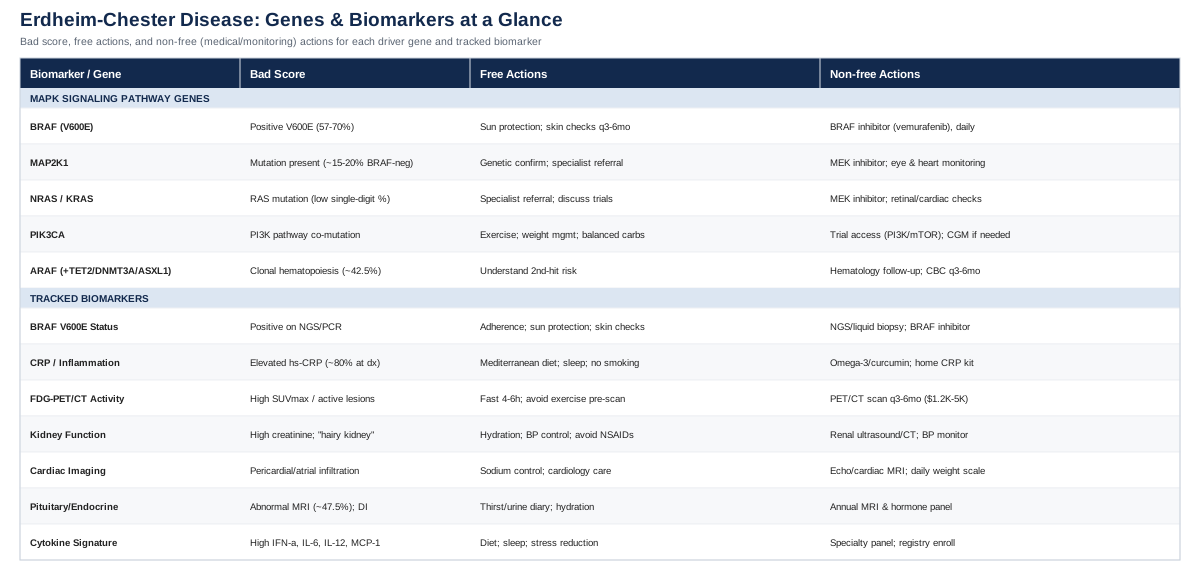
Seven Biomarkers Worth Tracking in Erdheim-Chester Disease
Because ECD is a systemic disease that can involve bone, kidneys, the heart, the brain, and the pituitary gland all at once, no single lab value tells the whole story. The biomarkers below are the ones referenced most consistently in specialist consensus guidelines and cohort studies, and together they give a reasonably complete picture of disease activity, treatment response, and organ risk. For each one, "the plan" is split into what can be done without supplements or equipment, and what supplements, devices, or monitoring tools might realistically add — always as a complement to, never a substitute for, specialist-directed treatment.
BRAF V600E Mutation Status
This is the single most consequential biomarker in ECD. Roughly 57 to 70 percent of patients carry the BRAF V600E mutation, and its presence or absence directly determines eligibility for BRAF-inhibitor therapy such as vemurafenib, which produced sustained metabolic and clinical responses in a landmark trial of patients with this mutation published in the Journal of Clinical Oncology, later confirmed in the larger histology-independent VE-BASKET study.
How it's measured: an initial tissue biopsy is sent for next-generation sequencing (NGS) or allele-specific PCR, typically costing $300 to $1,500 through a hospital pathology lab, often covered by insurance once ECD is suspected. Circulating cell-free DNA (liquid biopsy) panels are increasingly used to track mutant allele burden over time without repeat biopsies, though these run $3,000 to $6,000 and remain concentrated in specialized histiocytosis centers.
If the result comes back positive, the plan without supplements centers on adherence and surveillance: taking the prescribed BRAF inhibitor exactly as directed, attending every follow-up, using rigorous sun protection (photosensitivity is a common side effect), and getting a skin check every three to six months, since BRAF inhibitors carry a real, documented risk of secondary cutaneous squamous cell carcinomas. Frequency here is not flexible — BRAF inhibitors are typically dosed continuously, not cycled, and stopping or skipping doses can allow disease rebound.
The plan with supplements or equipment is limited by biology: no supplement reverses a somatic driver mutation. What genuinely helps is monitoring equipment — a home thermometer and mirror-assisted skin check routine, and if a MEK inhibitor is added to the regimen, a connected blood pressure cuff and periodic ECG for QT monitoring. Omega-3 fatty acids (roughly 1 to 2 grams of combined EPA/DHA daily) are sometimes used adjunctively for general inflammatory support, but should be flagged to the prescribing physician given interaction risk with any blood thinners, and are not a substitute for targeted therapy.
C-Reactive Protein and Inflammatory Markers
CRP is elevated in about 80 percent of ECD patients at diagnosis, according to the 2014 consensus guidelines for diagnosis and clinical management, making it one of the simplest and most widely available ways to track systemic disease activity between imaging studies.
How it's measured: a standard high-sensitivity CRP blood draw costs $15 to $40 out of pocket, or is typically covered by insurance; erythrocyte sedimentation rate (ESR) is a similarly inexpensive complementary marker at $10 to $20. Both are available at essentially any lab and can be rechecked every few months during active treatment.
If CRP is elevated, the plan without supplements starts with the basics that support any inflammatory condition: a Mediterranean-style eating pattern, regular moderate activity as tolerated, smoking cessation, and consistent sleep of seven to nine hours. These will not substitute for interferon-alpha or targeted therapy, which are what actually lower CRP in ECD, but they support the broader inflammatory load the body is managing.
The plan with supplements or equipment might reasonably include omega-3 fish oil (1 to 2 grams daily, taken continuously with a periodic lipid panel check; side effects include GI upset and increased bleeding risk at higher doses) and curcumin extract (500 to 1,000 mg of standardized curcuminoids daily; watch for GI upset and interaction with anticoagulants). Home fingerstick CRP kits (roughly $30 to $50 per test) allow interval tracking between formal labs, but any sustained elevation should be reported to the treating specialist rather than managed independently, since in ECD, an elevated CRP usually reflects active disease, not a lifestyle problem to solve alone.
Whole-Body FDG-PET/CT Metabolic Activity
FDG-PET/CT has become close to indispensable in ECD because it shows disease activity that structural imaging misses. A registry study of 50 patients found that metabolic imaging identified far more measurable disease sites than CT or MRI alone, translating into 94 percent of patients qualifying for clinical trials by metabolic criteria versus only 34 percent by conventional anatomic criteria — a striking gap documented in this registry analysis.
How it's measured: a nuclear medicine referral is required, with costs ranging from roughly $1,200 to $5,000 depending on region and insurance coverage. The 2014 consensus guidelines recommend scanning every three to six months during active treatment, spacing out to annually once the disease is stable.
There is no affordable at-home substitute for PET imaging, so the realistic plan without supplements is procedural: control blood glucose before the scan (fasting four to six hours, since hyperglycemia interferes with FDG uptake), avoid strenuous exercise for 24 hours beforehand, and keep every scheduled scan rather than skipping or delaying due to cost or logistics, since gaps in imaging make it harder to catch a treatment plateau early.
The plan with equipment is mostly about preparation: a home glucose meter to confirm fasting glucose is under roughly 200 mg/dL before appointments, and a simple symptom journal or app to correlate flare-ups with scan timing. No supplement lowers disease-related metabolic activity on a PET scan — that requires actual antineoplastic treatment, and framing it otherwise would be misleading.
Kidney Function and "Hairy Kidney" Imaging
Perirenal histiocytic infiltration — the distinctive "hairy kidney" appearance on imaging — is one of the most characteristic findings in ECD and can progress to hydronephrosis or renal impairment if it encases the ureters.
How it's measured: a basic metabolic panel checking creatinine and estimated GFR costs $15 to $30, while renal ultrasound runs $150 to $400 and CT imaging $500 to $1,500. These are usually checked at diagnosis and rechecked periodically based on findings.
If renal function is abnormal or hairy kidney changes are seen, the plan without supplements involves adequate hydration, blood pressure control, avoiding nephrotoxic medications like regular NSAID use, and consistent nephrology follow-up. Underlying treatment of the disease itself is what typically improves perirenal infiltration over months.
The plan with supplements or equipment is conservative here by design: a home blood pressure cuff for regular monitoring, especially if renal artery involvement is contributing to hypertension, and physician-guided correction of vitamin D or magnesium only if labs show a deficiency. Herbal supplements marketed for "kidney cleansing" should be avoided outright, since several carry documented nephrotoxic potential that is particularly unwelcome in a kidney already under structural stress.
Cardiac Imaging and NT-proBNP
Cardiac involvement affects an estimated 40 to 75 percent of ECD patients, most often as pericardial thickening or effusion and right atrial infiltration. This matters enormously for prognosis: a study tracking 46 patients with cardiac MRI over a median of four years found that regression of cardiac involvement was significantly associated with better survival, and that patients started on vemurafenib as frontline therapy had complete cardiac regression with zero mortality in that subgroup, as reported in Blood Advances.
How it's measured: echocardiogram costs roughly $1,000 to $3,000, while cardiac MRI, which offers better resolution of infiltration, runs $1,500 to $5,000. NT-proBNP blood testing adds $50 to $100 and is a useful adjunct when heart failure symptoms are present.
If cardiac findings are present, the plan without supplements includes close cardiology co-management, sodium moderation if there is any effusion or heart failure component, and activity levels cleared explicitly by a cardiologist rather than self-guided.
The plan with supplements or equipment centers on early detection tools: a home blood pressure monitor and a connected scale for daily weights, since a gain of more than two pounds overnight can signal fluid retention worth reporting immediately. Coenzyme Q10 (100 to 200 mg daily) is sometimes used adjunctively in general cardiology practice for myocardial support, though evidence specific to ECD does not exist, and it should only be added with physician approval given potential interactions with blood thinners.
Pituitary and Endocrine Panel
Pituitary involvement is remarkably common in ECD and is frequently the first sign of the disease before a diagnosis is even made. A cross-sectional study of 61 patients found abnormal pituitary imaging in 47.5 percent, with diabetes insipidus present in roughly a third of the full cohort and in over 80 percent of those with abnormal imaging, alongside high rates of anterior pituitary hormone deficiencies detailed in this Cancers study.
How it's measured: pituitary MRI costs $1,000 to $3,000, and a morning hormone panel (cortisol, TSH/free T4, IGF-1, prolactin, and sex hormones) runs $100 to $300 as a bundle. The study's authors specifically recommend an annual pituitary panel for ECD patients given how often deficiencies appear and persist.
If diabetes insipidus or a hormone deficiency is found, the plan without supplements includes a symptom diary tracking thirst and urine volume, consistent hydration habits, and annual (or more frequent, if symptomatic) endocrine follow-up. Desmopressin for DI and standard hormone replacement for deficiencies are medical treatments, not lifestyle fixes, and should be managed by an endocrinologist.
The plan with supplements or equipment is mainly about tracking tools: a simple fluid intake and output log or app, and a connected scale to catch fluid balance shifts. If long-term hormone replacement raises fracture risk, a periodic DEXA scan and physician-guided vitamin D (typically 1,000 to 2,000 IU daily) plus dietary calcium review are reasonable, standard-of-care additions.
Cytokine and Immune Signature
ECD patients show a distinct Th1-skewed cytokine profile, with elevated interferon-alpha, IL-6, IL-12, and MCP-1, and reduced IL-4 and IL-7, compared to healthy controls — a pattern consistent with the disease's dual identity as both an inflammatory and a clonal neoplastic process.
How it's measured: this is not a routine commercial lab test. Cytokine panels are typically run through specialty immunology labs or academic histiocytosis research protocols, costing roughly $200 to $600 per panel when available, and are far less standardized or accessible than CRP or PET imaging.
Because access is limited, the plan without supplements is largely about prioritization: rely on the more accessible markers — CRP and PET activity — for day-to-day monitoring, while asking a specialist center whether enrollment in a histiocytosis natural-history registry could provide access to this deeper immune profiling.
The plan with supplements or equipment overlaps substantially with the CRP section, since no supplement specifically targets this cytokine signature. General anti-inflammatory lifestyle measures — diet quality, sleep, moderate exercise, and stress-reduction practices like the mindfulness approaches discussed later in this article — are the most evidence-supported general levers available outside of the interferon-alpha and targeted therapies used to treat the disease directly.
Taken together, these seven markers give a far more actionable picture than any single test in isolation — but they only make sense in light of the genetics that produce them in the first place.
What the Genetics Research Shows
ECD's reclassification from a mysterious lipid-storage condition to a clonal, inflammatory myeloid neoplasm happened largely because of genetics research. More than 80 percent of patients carry an activating mutation in the MAPK signaling pathway, according to a comprehensive 2020 review in Blood by Haroche and colleagues. Unlike the inherited SNPs covered in most consumer genomics reports — the kind of variant work popularized by researchers like Ali Torkamani and educators like Gary Brecka, where a "bad" gene score can often be offset with diet, exercise, or supplementation — the genes below are somatic driver mutations, acquired within blood-forming cells rather than inherited. That distinction matters enormously for what "the plan" can realistically look like.
BRAF (the V600E mutation)
What it affects: BRAF is a normal signaling protein in the MAPK/ERK pathway that controls cell growth and survival. The V600E mutation locks it in an "always on" position, driving the uncontrolled proliferation of histiocytes seen in ECD. This is the most common single mutation in the disease, found in an estimated 57 to 70 percent of patients.
Strength of evidence: this is about as strong as human evidence gets for a rare disease. Multiple independent cohorts, a phase 2 histology-independent trial (VE-BASKET), and an FDA approval for vemurafenib specifically in BRAF V600–mutant ECD all point the same direction.
If the gene is abnormal, the plan without drugs is confirmatory and logistical: get NGS-based confirmation from an accredited lab, seek care at (or in consultation with) a histiocytosis referral center, and build a symptom and side-effect tracking habit before treatment starts. The plan with targeted therapy and monitoring equipment is where the real leverage sits — a BRAF inhibitor, often combined with a MEK inhibitor, taken daily and continuously (not cycled), alongside routine skin checks, sun protection, periodic ECG for QT interval, and standard bloodwork. Reported side effects include joint pain, rash, photosensitivity, and a real risk of secondary skin cancers, which is why dermatologic surveillance is not optional.
MAP2K1
What it affects: MAP2K1 encodes MEK1, sitting directly downstream of BRAF in the same pathway. It is the most frequently identified alternative driver in patients who test negative for BRAF V600E, found in roughly 15 to 20 percent of that subgroup.
Strength of evidence: solid, based on targeted sequencing cohorts and case series showing clinical response to MEK inhibitors such as cobimetinib or trametinib, though the total number of MAP2K1-specific patients studied is understandably smaller than for BRAF.
If the gene is abnormal, the plan without drugs mirrors the BRAF pathway — genetic confirmation and specialist referral come first. The plan with medication and monitoring equipment centers on MEK inhibitor therapy, which requires its own surveillance: a baseline and periodic ophthalmologic exam (MEK inhibitors carry a risk of serous retinopathy), echocardiogram monitoring for reduced ejection fraction, and routine creatine kinase checks. Common side effects include an acneiform rash and diarrhea, both of which are usually manageable but should be reported rather than tolerated silently.
NRAS and KRAS
What it affects: these RAS family genes sit upstream of BRAF and MEK in the same MAPK cascade, and mutations here account for a smaller share of cases, generally cited in the low single digits.
Strength of evidence: mostly case reports and small series rather than large trials, partly because RAS mutations are notoriously difficult to target directly with drugs — a challenge that spans essentially all RAS-driven cancers, not just ECD.
If the gene is abnormal, the plan without drugs is the same specialist-first approach. Because RAS itself is hard to target, the plan with medication and monitoring tends to lean on MEK inhibitors, since RAS signals through MEK downstream, with the same retinal and cardiac monitoring described above. This is an area where the honest answer is that options are more limited, and clinical trial enrollment may be worth discussing directly with a referral center.
PIK3CA
What it affects: PIK3CA is part of the PI3K/AKT/mTOR pathway, which can co-occur alongside MAPK pathway mutations in a subset of ECD cases and has been associated in early research with distinct clinical patterns and potential resistance mechanisms to MAPK-targeted drugs alone.
Strength of evidence: early. This is one area where it is important to say plainly that human evidence is still limited to smaller cohorts and case-level reporting, not large randomized trials.
If the gene is abnormal, the plan without drugs includes a general focus on metabolic health — maintaining insulin sensitivity through regular exercise, weight management, and balanced carbohydrate intake — since the PI3K/AKT pathway intersects with insulin signaling broadly, even though this will not directly alter tumor biology. The plan with medication and equipment is best framed around clinical trial access, since PI3K or mTOR inhibitor combinations remain investigational in ECD specifically; a continuous glucose monitor can be genuinely useful if any prescribed regimen affects blood sugar.
ARAF and the Epigenetic Layer: TET2, DNMT3A, ASXL1
What it affects: ARAF is a rarer MAPK pathway member reported mainly in individual case reports. Separately, and just as importantly, a 2021 Blood study found that 42.5 percent of 120 ECD patients carried clonal hematopoiesis mutations in bone marrow, most commonly in the epigenetic regulator genes TET2, ASXL1, and DNMT3A, alongside NRAS. Notably, TET2 mutations were significantly associated with the presence of BRAF V600E and with vascular involvement, as reported in this cohort analysis.
Strength of evidence: human, and reasonably robust for a rare-disease cohort of this size, though the clinical implications of finding these epigenetic co-mutations (beyond flagging higher vascular risk and a possible link to future blood cancers) are still being worked out.
If these markers are found, the plan without drugs is mainly informational and preventive: understanding that clonal hematopoiesis mutations alone rarely cause a blood cancer unless a second "hit" occurs, which is why hematology follow-up and periodic blood counts matter over the long term. There is no supplement or equipment protocol that reverses TET2 or DNMT3A mutations — these are epigenetic regulators, not lifestyle-modifiable methylation patterns in the sense marketed by consumer epigenetic clocks — so the realistic "plan with equipment" here is simply consistent complete blood count monitoring, typically every three to six months, to catch any emerging second mutation early.
Understanding these genes clarifies why ECD responds so differently to treatment than most chronic conditions — which is exactly the shift in thinking one well-known book on cancer history captures unusually well.
The Book That Reframes How to Think About a Mutation-Driven Disease
Siddhartha Mukherjee's The Emperor of All Maladies: A Biography of Cancer is not written about ECD specifically, but its central argument — that cancer (and cancer-adjacent clonal diseases) are fundamentally genomic conditions that happen to appear in a particular organ — maps almost perfectly onto how ECD is now understood and treated. Below are ten of its most transferable lessons for anyone trying to make sense of a mutation-driven diagnosis.
1. Disease Location Is Not Disease Identity
For decades, cancers (and by extension, conditions like ECD) were categorized by which organ they appeared in — bone, kidney, brain. Mukherjee traces how that framework broke down once genomics revealed that what matters more is which gene is broken, not where the resulting cells happen to accumulate. ECD's bone, cardiac, and renal manifestations are all downstream of the same MAPK pathway malfunction.
2. One-Size-Fits-All Treatment Fails Molecularly Distinct Disease
The book documents how uniform chemotherapy protocols, applied without regard to a tumor's underlying biology, produced wildly inconsistent results. This is precisely the problem BRAF testing solves in ECD: a BRAF-positive and BRAF-negative patient can have visually identical scans and radically different treatment paths.
3. The Gleevec Story Is the Blueprint
Perhaps the book's most important case study is imatinib (Gleevec), the drug that transformed chronic myeloid leukemia from a near-certain fatal diagnosis into a manageable condition by targeting the exact fusion protein driving the disease, first demonstrated in Druker's landmark 2001 trial. Vemurafenib's effect on BRAF-mutant ECD follows the same logic decades later: find the driver, build a drug that blocks it.
4. Medical Paradigms Change Slower Than Evidence
Mukherjee is unsparing about how long disproven approaches (like radical, disfiguring mastectomies) persisted after evidence should have retired them. ECD has its own version of this: for years it was treated empirically with interferon-alpha before genetic testing became standard, even after BRAF's role was established.
5. Reclassification Is a Sign of Progress, Not Confusion
The book frames repeated reclassification of cancers as evidence that understanding is deepening, not that doctors don't know what they're doing. ECD has been reclassified multiple times — from a lipid disorder, to a reactive inflammatory condition, to its current designation as a clonal inflammatory myeloid neoplasm — and each shift brought better treatment matching.
6. Oncogenes Are Normal Genes Behaving Badly
A pivotal thread in the book covers Bishop and Varmus's discovery that cancer-causing genes are mutated versions of genes the body needs for normal function — not foreign invaders. This is exactly the story of BRAF and MAP2K1 in ECD: essential growth-signaling genes, switched permanently on.
7. A Biomarker Only Matters If It Changes the Plan
Mukherjee repeatedly returns to the idea that screening and biomarker detection only improve outcomes when paired with an actionable next step. This is the entire practical argument for BRAF testing in ECD — it is not testing for its own sake, it is testing that unlocks a specific FDA-approved therapy.
8. Rare Diseases Need Registries, Not Just Researchers
The book highlights how patient advocacy and organized data collection accelerated matching rare mutations to rare drugs faster than individual research labs could alone. ECD's small global patient population makes histiocytosis registries and referral centers disproportionately valuable for exactly this reason.
9. Remission Is Increasingly a Molecular Definition
Modern oncology, as the book describes, increasingly measures success by molecular response — falling mutant allele burden, declining metabolic activity — rather than symptom absence alone. This is the same logic behind tracking PET SUVmax and ctDNA burden in ECD rather than relying on how a patient feels day to day.
10. The Next Chapter Is Combination, Not Monotherapy
Mukherjee's closing chapters point toward combination targeted and immune-based approaches as the likely future of cancer treatment. ECD is already living in that future to some degree, with BRAF-plus-MEK combinations and interferon-alpha-based immune approaches both in active clinical use.
The book's throughline — that precise molecular understanding beats broad, generic treatment — connects naturally to a final layer of support: approaches that don't target the mutation directly, but may genuinely help a person live better while the harder medical work continues.
Complementary Approaches Worth Considering Alongside Treatment
None of the following modalities treat ECD itself, and no responsible source should suggest otherwise. Direct clinical trial evidence in ECD specifically does not exist given how rare the disease is. What follows is evidence drawn from broader oncology and chronic inflammatory illness research, which is the most relevant available proxy, applied cautiously and always as an addition to, not a replacement for, disease-directed treatment.
Mindfulness Meditation and MBSR
Mindfulness-based stress reduction (MBSR) is a structured, secular meditation program originally developed for chronic pain patients, and it is relevant here because ECD carries a heavy psychological load: an uncommon diagnosis, uncertain prognosis in some cases, and a treatment course that can stretch over years.
A large 2019 analysis covering 3,274 cancer patients found that mindfulness-based approaches significantly reduced psychological distress, fatigue, sleep disturbance, pain, and symptoms of anxiety and depression, according to the National Center for Complementary and Integrative Health — though the same source notes most participants were women with breast cancer, so applicability to other populations, including ECD, is reasonably inferred rather than directly proven.
A realistic way to apply this is a standard eight-week MBSR course, in person or via a validated app, with daily practice of 10 to 20 minutes. Side effects are minimal, though people with significant trauma history sometimes find sitting meditation activating and may do better starting with guided, shorter sessions before extending duration.
Yoga
Yoga combines gentle movement, breath control, and attention training, and its relevance for ECD lies mainly in managing fatigue, joint discomfort, and treatment-related anxiety, particularly for patients on BRAF or MEK inhibitors who may need lower-impact activity than they're used to.
A review of 138 studies and 10,660 participants found that most studies showed yoga improved physical and psychological symptoms and quality of life in cancer patients, with a 2021 review of 26 studies showing small-to-moderate benefits for depression specifically, per the NCCIH's overview of the evidence.
Practically, this means starting with a restorative or gentle Hatha class (rather than a hot or power style) two to three times weekly, and explicitly informing the instructor about joint involvement or cardiac status so poses can be modified. It's worth checking with the treating oncologist before beginning if there is active bone lesion risk of fracture.
Tai Chi and Qigong
These low-impact, meditative movement practices are worth considering for the same fatigue and quality-of-life reasons as yoga, with the advantage of being gentler on joints and requiring less flexibility, which may suit patients managing bone pain or reduced mobility.
A 2018 review of 1,283 cancer patients found that three to twelve weeks of tai chi or qigong were associated with significant improvement in fatigue, sleep difficulty, depression, and overall quality of life, though the NCCIH notes that researchers stop short of definitive recommendations given study quality limitations.
A reasonable starting point is a beginner class or instructional video two to three times per week for 20 to 30 minutes, building consistency before intensity. It is low-risk, though anyone with significant balance issues or active lower-limb bone lesions should get physical therapy clearance first.
Massage Therapy
Massage therapy is included cautiously here, mainly for stress, anxiety, and localized musculoskeletal discomfort that can accompany ECD's bone involvement, rather than for any effect on the disease process itself.
The evidence base is genuinely mixed: a 2016 review of 19 studies in cancer patients found only weak support, with the NCCIH describing the overall evidence quality as "very low", even though clinical guidelines still suggest it may help with stress, anxiety, and fatigue as supportive care.
If pursued, it should be with a licensed oncology-trained massage therapist who knows to avoid deep pressure directly over known bone lesions or areas of cardiac or renal involvement, generally at a light-to-moderate pressure and no more than weekly, adjusting based on comfort and any bone fragility identified on imaging.
Conclusion
Erdheim-Chester disease rewards precision over generic effort. The single most consequential thing a patient or caregiver can do is make sure BRAF V600E and broader MAPK pathway testing has actually been done, since that result reshapes the entire treatment conversation. Beyond that, tracking CRP, PET activity, kidney and cardiac status, and pituitary hormones over time turns an abstract diagnosis into something measurable and, to a real degree, manageable in partnership with a specialist. The genetics explain why the disease behaves as it does; the biomarkers show whether treatment is actually working; the complementary approaches support the person carrying all of it.
None of this replaces a hematologist or a histiocytosis referral center, and no supplement or lifestyle change substitutes for confirmed BRAF or MEK-targeted therapy when it's indicated. The next practical step is a concrete one: if genetic testing hasn't been done or the results aren't clear, ask for it explicitly at the next appointment, and start a simple log of the seven biomarkers above so trends — not just single numbers — become visible over time.