This article contains AI generated content.
Femoral Nerve Neuritis: 4 Genes And 7 Biomarkers To Track
If a physician has told you that your femoral nerve pain, thigh weakness, or numbness running down the front of your leg is "neuritis" and left it at that, you have probably noticed how little that label actually explains. Neuritis is a description of what is happening (inflammation or irritation of a nerve), not a reason why it is happening in your body specifically. Two people with the same diagnosis can have completely different underlying drivers — one a silent metabolic problem, another a nutrient deficiency, another a genetic quirk in how they process a particular vitamin.
Generic advice for nerve pain tends to stop at "rest it," "take B vitamins," or "see a neurologist if it doesn't improve." That advice is not wrong, but it is not built for you. It does not ask whether your blood sugar control is quietly damaging small nerve fibers before it shows up on a standard glucose test, whether your B12 status looks normal on paper but is functionally low, or whether you carry a common gene variant that changes how your body handles folate and homocysteine. Nerve tissue is metabolically demanding and unusually sensitive to these underlying imbalances, which is exactly why a purely symptom-focused approach so often plateaus.
This article takes a more layered approach. It starts with the laboratory values that have the strongest, most direct evidence for influencing nerve health and gives you a practical way to check and act on each one. It then looks at a smaller set of genes that can shape your risk and your response to treatment, a pain-science framework that has changed how clinicians think about nerve pain, and a handful of complementary approaches with real human trial data behind them for neuropathic and femoral-type nerve pain.
None of this replaces a proper clinical workup, imaging, or electrodiagnostic testing when those are warranted, and nothing here promises a cure. But better information, applied consistently, tends to produce better decisions — and better decisions are what actually move a nerve problem from "chronic and mysterious" to "understood and manageable."
Summary
Femoral nerve neuritis rarely has one single cause, and the biomarkers behind it are often more revealing than the diagnosis itself. A HbA1c that looks "borderline," a B12 level that looks "normal," or a homocysteine value nobody ever ordered can each be quietly feeding nerve irritation for months before symptoms peak. This article walks through the seven blood markers worth tracking first, the four genes that shape how your body handles the nutrients and antioxidants your nerves depend on, a pain-science framework that has reshaped how clinicians treat nerve pain without more pills, and the complementary techniques — from targeted laser therapy to structured mindfulness — that actually have human trial data behind them for nerve-related pain. Read on to see exactly which numbers to ask your doctor for, what a bad result means, and what a realistic plan looks like with or without supplements.
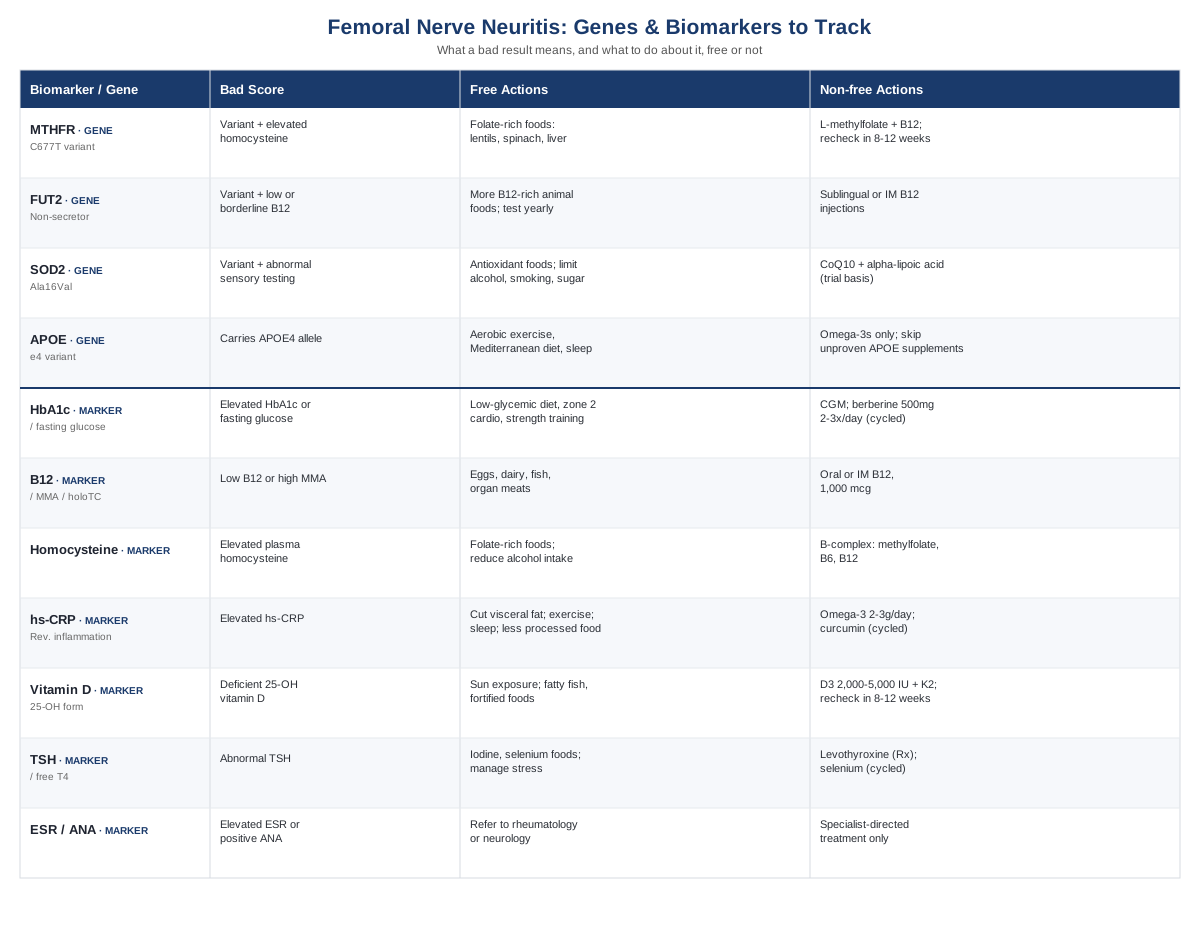
7 Biomarkers To Track For Femoral Nerve Neuritis
Femoral nerve neuritis is frequently a downstream sign of something systemic — a metabolic, nutritional, or inflammatory process affecting the nerve rather than a purely local injury. The biomarkers below are the ones with the most direct human evidence linking them to peripheral nerve dysfunction, femoral neuropathy, or diabetic amyotrophy (a well-documented cause of femoral nerve damage). Peter Attia and Thomas Dayspring both emphasize testing beyond the standard panel when a symptom doesn't match the "normal" labs, and that philosophy applies well here: several of these markers are cheap, underused, and more informative than the tests most people already have.
1. HbA1c and fasting glucose
Why it matters: femoral nerve involvement is one of the classic presentations of diabetic lumbosacral radiculoplexus neuropathy, also called diabetic amyotrophy — a painful, asymmetric nerve disorder that often shows up in people with new or poorly controlled diabetes, sometimes before diabetes has even been formally diagnosed. Nerve imaging changes in this condition correlate with HbA1c levels, and glucose control is one of the few modifiable drivers with strong evidence behind it, according to NIH StatPearls on diabetic amyotrophy.
How it's measured: a simple blood draw for HbA1c (reflecting roughly 3 months of average glucose) plus fasting glucose. Cost is typically 15 to 40 dollars out of pocket if not covered by insurance, and it's part of nearly every basic metabolic workup.
If the score is bad, the plan without supplements: the highest-leverage changes are a lower-glycemic-load diet (reducing refined carbohydrates and sugary drinks), 150 minutes per week of zone 2 cardio, resistance training twice weekly to improve insulin sensitivity, and a consistent sleep schedule, since poor sleep independently worsens glucose control. Reassess HbA1c every 3 months, since that's the turnover time of the marker itself.
If the score is bad, the plan with supplements or equipment: a continuous glucose monitor (roughly 50 to 100 dollars a month) gives real-time feedback that dietary changes alone often can't. Berberine (500 mg two to three times daily with meals) has glucose-lowering evidence comparable to some oral medications in trials, but should be cycled (for example 8 to 12 weeks on, 2 to 4 weeks off) and avoided in pregnancy or alongside certain diabetes medications without physician supervision, since it can cause gastrointestinal upset and, combined with other glucose-lowering agents, hypoglycemia.
2. Vitamin B12, holotranscobalamin, and methylmalonic acid (MMA)
Why it matters: B12 is essential for the myelin sheath that insulates peripheral nerves, and deficiency is a well-established, reversible cause of peripheral neuropathy. The complication is that a "normal" serum B12 can still coexist with a functional deficiency — urinary or serum MMA is a more sensitive early marker, especially in diabetic populations, according to a study in PMC on urinary methylmalonic acid and diabetic polyneuropathy, which found MMA and holotranscobalamin — not total serum B12 — independently predicted nerve involvement.
How it's measured: serum B12 (20 to 50 dollars) is the standard first test; if it's borderline (roughly 200 to 400 pg/mL) or symptoms persist despite a "normal" result, ask for serum MMA and holotranscobalamin (often 60 to 150 dollars combined, sometimes bundled into specialty neuropathy panels).
If the score is bad, the plan without supplements: increase dietary B12 through eggs, dairy, fish, and organ meats; if you follow a vegan or strict vegetarian diet, this alone is usually insufficient and supplementation becomes necessary rather than optional.
If the score is bad, the plan with supplements or equipment: oral methylcobalamin or cyanocobalamin (1,000 mcg daily) corrects mild deficiency in most people over 8 to 12 weeks; for confirmed deficiency, malabsorption, or neurological symptoms, intramuscular B12 injections (1,000 mcg weekly for 4 weeks, then monthly) bypass absorption issues entirely — relevant if you also carry the FUT2 variant discussed later in this article. Side effects are minimal at these doses, though very high chronic doses have been loosely associated with acne-like breakouts in some people.
3. Homocysteine
Why it matters: elevated homocysteine is an independent risk factor for peripheral neuropathy, with a clear dose-response relationship shown in diabetic patients — each 4.0 μmol/L rise in plasma homocysteine was associated with increased neuropathy risk in a study reported on PubMed on homocysteine and diabetic peripheral neuropathy. Homocysteine sits at the crossroads of B12, folate, and B6 metabolism, which is why it's a more integrative marker than any one vitamin level alone.
How it's measured: a fasting blood draw, typically 30 to 80 dollars, often available through the same panel as a lipid or cardiovascular risk workup (Dayspring and Attia both routinely include it for cardiovascular reasons, and the nerve relevance is a useful secondary benefit).
If the score is bad, the plan without supplements: increase folate-rich foods (leafy greens, legumes, liver) and reduce excess alcohol intake, which depletes folate and B6 and raises homocysteine independently.
If the score is bad, the plan with supplements or equipment: a B-complex containing methylfolate (400 to 800 mcg), methylcobalamin (500 to 1,000 mcg), and B6 (25 to 50 mg) daily for 8 to 12 weeks, then recheck. This is especially relevant if the MTHFR gene section below applies to you, since standard folic acid may not be well processed by everyone. High-dose B6 (over 100 mg daily) taken long-term has been linked to sensory neuropathy itself, so more is not better — stay within standard supplement doses and avoid indefinite high-dose regimens.
4. High-sensitivity C-reactive protein (hs-CRP)
Why it matters: low-grade systemic inflammation is increasingly recognized as a contributor to peripheral nerve dysfunction, not just a bystander. In non-diabetic obese patients, hs-CRP and interleukin-6 were both significantly elevated in those with peripheral neuropathy and inversely correlated with nerve conduction velocity, per research on hs-CRP as an early biomarker for peripheral polyneuropathy.
How it's measured: a standard hs-CRP blood test, 15 to 30 dollars, widely available and often included in cardiovascular risk panels favored by Peter Attia and Allan Sniderman.
If the score is bad, the plan without supplements: address the upstream drivers of chronic inflammation — visceral fat reduction, regular aerobic exercise, adequate sleep, and reducing ultra-processed food intake typically lower hs-CRP over 8 to 12 weeks.
If the score is bad, the plan with supplements or equipment: omega-3 fatty acids (2 to 3 g EPA/DHA daily with food) have consistent evidence for modestly lowering hs-CRP; curcumin (500 to 1,000 mg with piperine, cycled 8 weeks on and 2 weeks off) is a reasonable adjunct. Fish oil at these doses can mildly increase bleeding risk, so pause it before surgery and check with a physician if you're on blood thinners.
5. Vitamin D (25-hydroxyvitamin D)
Why it matters: vitamin D deficiency is an independent risk factor for diabetic peripheral neuropathy, with one study finding 81.5 percent of neuropathy patients were deficient versus 60.4 percent of those without neuropathy, and an odds ratio of 3.47 for neuropathy in deficient individuals, according to research on vitamin D deficiency and peripheral neuropathy in type 2 diabetes. Severe deficiency has also been linked to higher levels of inflammatory cytokines specifically in painful diabetic neuropathy.
How it's measured: a simple blood test, 25 to 60 dollars, widely available and often bundled into annual physicals.
If the score is bad, the plan without supplements: 15 to 20 minutes of midday sun exposure on bare skin several times weekly (more in darker skin tones, less at higher UV index) and dietary sources like fatty fish and fortified foods.
If the score is bad, the plan with supplements or equipment: vitamin D3, 2,000 to 5,000 IU daily depending on how deficient you are, taken with a fat-containing meal for absorption, paired with vitamin K2 (100 mcg) if taking higher doses long-term. Recheck levels after 8 to 12 weeks rather than supplementing indefinitely without monitoring, since excessive vitamin D can raise calcium to unsafe levels over time.
6. Thyroid-stimulating hormone (TSH) and free T4
Why it matters: both overt and subclinical hypothyroidism are documented, reversible causes of peripheral neuropathy. In one case, correcting hypothyroidism with thyroxine fully resolved a patient's polyneuropathy and normalized nerve conduction studies, as described in PMC's review of polyneuropathy in hypothyroidism. Thyroid dysfunction is common, cheap to test, and often overlooked in nerve pain workups until symptoms are severe.
How it's measured: TSH alone (10 to 25 dollars) is a reasonable screen; if abnormal or borderline, add free T4 and consider thyroid antibodies (another 30 to 60 dollars) to check for autoimmune thyroid disease.
If the score is bad, the plan without supplements: for mild, subclinical elevations, prioritizing adequate iodine and selenium intake through diet (seafood, dairy, Brazil nuts in moderation) and addressing chronic stress, which affects thyroid function through the HPA axis, can help in borderline cases — but this is not a substitute for treatment of confirmed hypothyroidism.
If the score is bad, the plan with supplements or equipment: confirmed hypothyroidism requires physician-prescribed levothyroxine; this is not a supplement to self-manage. Selenium (100 to 200 mcg daily) has modest supporting evidence for thyroid antibody reduction in autoimmune thyroiditis but should be cycled and not exceed 400 mcg daily due to toxicity risk at high chronic doses.
7. ESR and ANA (inflammatory and autoimmune screen)
Why it matters: when femoral neuritis doesn't fit a metabolic or nutritional pattern, an inflammatory or autoimmune process (such as vasculitis affecting the nerve's blood supply) needs to be ruled out. Erythrocyte sedimentation rate (ESR) and antinuclear antibody (ANA) testing are standard parts of the diagnostic workup for atypical or non-diabetic femoral neuropathy and diabetic amyotrophy alike, as noted in the same NIH StatPearls reference on diabetic amyotrophy.
How it's measured: ESR (10 to 20 dollars) and ANA (30 to 70 dollars) are both standard labs; an elevated result usually prompts referral to rheumatology rather than self-directed treatment.
If the score is bad, the plan without supplements: this is the one biomarker on this list where self-management is not appropriate — an elevated ESR or positive ANA in the context of nerve symptoms warrants a rheumatology or neurology referral for further workup rather than a home protocol.
If the score is bad, the plan with supplements or equipment: likewise, treatment here depends entirely on the underlying diagnosis (for example, vasculitis or another autoimmune condition) and should be directed by a specialist; omega-3s and a generally anti-inflammatory diet are reasonable general-health adjuncts but are not a substitute for diagnosis-specific treatment.
4 Genes That Influence Nerve-Related Nutrient Handling
Genetic testing is not required to manage femoral nerve neuritis, but for people who already have consumer genetic data (23andMe raw data run through a tool, or a clinical panel), a few specific genes help explain why the biomarkers above sometimes stay stubborn despite a seemingly reasonable diet. Researchers like Ali Torkamani, who has studied how common genetic variants modify disease risk and drug response at scale, and Gary Brecka, who has popularized MTHFR and nutrient-gene interactions in a more mainstream setting, are useful starting points for understanding this space — though it's worth noting the human evidence for some of these genes is stronger than for others, and this section is intentionally more cautious than the biomarker section above.
MTHFR (C677T variant)
What it may affect: MTHFR encodes the enzyme that converts folate into its active, usable form. The C677T variant reduces enzyme efficiency, raising homocysteine and altering how well the body responds to folate supplementation. In a randomized, double-blind, placebo-controlled trial, the C677T genotype directly influenced how much diabetic polyneuropathy patients benefited from folic acid supplementation on nerve conduction measures, according to this PMC-published randomized controlled trial — meaning the same supplement dose does not help everyone equally.
If the gene is bad, the plan without supplements: emphasize naturally folate-rich foods (lentils, spinach, asparagus, liver) over fortified processed foods containing synthetic folic acid, since some carriers process the natural form more efficiently.
If the gene is bad, the plan with supplements or equipment: choose L-methylfolate (400 to 800 mcg daily) rather than plain folic acid, since it bypasses the enzymatic step MTHFR affects. Pair with methylcobalamin B12 and recheck homocysteine after 8 to 12 weeks. Cycling isn't strictly necessary for methylfolate at these doses, but very high doses (over 1,000 mcg daily long-term) can mask B12 deficiency symptoms, so B12 status should always be checked alongside it.
FUT2 (secretor status variant)
What it may affect: FUT2 variants, particularly rs602662, are strongly associated with plasma vitamin B12 levels — "non-secretor" variant carriers tend to run lower, independent of diet, as shown in a population study on FUT2 and vitamin B12 levels. This matters directly for nerve myelin health, since B12 is one of the more clearly reversible causes of peripheral neuropathy discussed above.
If the gene is bad, the plan without supplements: increase intake of B12-dense animal foods somewhat above general recommendations, and get serum B12 or MMA tested more proactively (annually rather than only when symptomatic) rather than assuming diet alone is protective.
If the gene is bad, the plan with supplements or equipment: sublingual or intramuscular B12 may be more reliable than standard oral tablets for carriers with absorption-related variants, since it reduces dependence on gut-level absorption pathways. A reasonable regimen is 1,000 mcg sublingual daily, rechecking serum B12 and MMA after 3 months; injections (monthly, 1,000 mcg) are an option if levels remain low despite oral supplementation. Side effects at these doses are minimal, though unnecessary frequent injections carry a small infection risk at the injection site.
SOD2 (Ala16Val / +47C/T variant)
What it may affect: SOD2 encodes a mitochondrial antioxidant enzyme that neutralizes superoxide, a byproduct of cellular energy production. Certain variants have been associated with reduced antioxidant capacity and, specifically, with abnormal quantitative sensory testing (reduced ability to detect cold, warmth, and vibration) in type 2 diabetic patients, per this study on SOD2 polymorphism and diabetic sensory testing. This connects oxidative stress genetics directly to the kind of sensory nerve dysfunction seen in femoral neuropathy.
If the gene is bad, the plan without supplements: prioritize antioxidant-dense whole foods (berries, cruciferous vegetables, olive oil) and minimize known oxidative stressors — excess alcohol, smoking, and chronic hyperglycemia — since diet-driven oxidative load compounds a genetically reduced antioxidant reserve.
If the gene is bad, the plan with supplements or equipment: some clinicians suggest CoQ10 (100 to 200 mg daily with a fat-containing meal) and alpha-lipoic acid (300 to 600 mg daily, a compound separately studied for diabetic neuropathy symptoms) as adjuncts to support mitochondrial antioxidant capacity; evidence here is more preliminary than for the B12 or folate strategies above, so treat this as a reasonable trial over 8 to 12 weeks rather than a guaranteed fix. Alpha-lipoic acid can occasionally cause mild gastrointestinal upset or, at high doses, hypoglycemia when combined with diabetes medication.
APOE (nerve repair modifier)
What it may affect: apolipoprotein E helps redistribute lipids to support axon and myelin repair after peripheral nerve injury, and apoE-mimetic compounds have accelerated nerve regeneration and functional recovery in animal models of nerve injury, according to research on an apoE-mimetic and peripheral nerve regeneration. It's important to be direct about the limits of this evidence: this is largely animal and mechanistic data, and human studies on APOE genotype specifically predicting recovery from peripheral nerve conditions have so far shown mixed or inconclusive results. This gene is included because it is genuinely relevant to the underlying biology of nerve repair, not because it currently has strong, actionable human trial evidence.
If the gene is bad (i.e., you carry the APOE4 variant), the plan without supplements: general nerve- and vascular-healthy habits — regular aerobic exercise, a Mediterranean-style diet, and good sleep — support the same lipid-handling and vascular pathways APOE is involved in, independent of genotype.
If the gene is bad, the plan with supplements or equipment: given the weak human evidence specifically for nerve recovery, this is the one gene here where no aggressive supplement protocol can be responsibly recommended; omega-3s (already discussed under hs-CRP) are a reasonable, low-risk general choice, but anyone considering targeted "APOE support" supplements sold online should treat marketing claims skeptically until better human data exists.
The Pain-Science Book That Reframes Nerve Pain
Explain Pain, by physiotherapist David Butler and pain scientist Lorimer Moseley, is one of the most influential works behind a broader shift in how clinicians approach nerve and chronic pain — a shift now backed by a growing body of randomized controlled trials on pain neuroscience education (PNE), the clinical approach the book helped popularize. It directly challenges the older assumption that pain intensity simply mirrors tissue damage, which matters enormously for nerve conditions where imaging often looks unremarkable relative to how much pain someone feels. Below are ten of its most useful, evidence-connected ideas.
1. Pain is an output of the brain, not a direct readout of tissue damage
The book's central reframe is that pain is produced by the brain based on perceived threat, using nerve signals as one input among many — not a simple alarm bell equal to injury severity. This matters for femoral neuritis specifically because pain intensity can stay high even as the nerve itself heals, which can be frightening if you assume pain always equals ongoing damage.
2. Nerves themselves can become the source of the problem
Beyond signaling damage elsewhere, nerves can become sensitized and generate pain signals on their own after injury or irritation — a process called peripheral sensitization, directly relevant to neuritis, where the nerve itself is the inflamed tissue.
3. Central sensitization can persist after the original injury resolves
Repeated pain signaling can "turn up the volume" on the central nervous system's pain processing, so that non-painful stimuli start to hurt. A systematic review of pain neuroscience education found meaningful improvements in pain and disability specifically in conditions involving central sensitization, per this systematic review of pain neuroscience education.
4. Understanding pain mechanisms reduces fear, and fear reduces pain
Fear of movement (kinesiophobia) is one of the strongest predictors of prolonged disability in nerve and musculoskeletal pain. Simply understanding that hurt does not always equal harm has been shown, across multiple trials, to reduce catastrophizing and improve function.
5. Education works best combined with movement, not instead of it
The reviewed trials consistently show PNE is most effective paired with graded exercise or manual therapy, not delivered as a stand-alone lecture — a nuance often missed when people expect information alone to resolve pain.
6. Gradual, graded exposure beats total avoidance
Completely avoiding movement that triggers nerve pain often worsens long-term outcomes by deconditioning the area and reinforcing fear circuits. A structured, gradual return to activity — even if imperfect — tends to outperform strict rest for chronic nerve pain.
7. Chronic nerve pain has different treatment needs than acute nerve pain
The book stresses that once pain becomes chronic (generally beyond 3 months), addressing purely peripheral tissue is no longer sufficient — the nervous system's processing itself needs to be part of the treatment target, alongside any biomarker or structural work.
8. Individual delivery outperforms generic group content
The same systematic review found PNE delivered one-on-one and tailored to the person's specific pain story was more effective than generic group or online formats — a point directly relevant to why cookie-cutter advice about nerve pain underperforms.
9. Language matters more than clinicians often realize
Terms like "degeneration," "wear and tear," or "nerve damage" used casually by clinicians can measurably increase a patient's fear and pain perception. The book argues for more accurate, less alarming language when discussing imaging or diagnostic findings.
10. Long-term evidence is still developing
To be fair to the science rather than the marketing around it, the same systematic review notes most trials only track outcomes over the short to medium term, and long-term durability of these benefits is still being established — a reasonable caveat rather than a reason to dismiss the approach.
Complementary Approaches With Real Supporting Evidence
A handful of complementary modalities have meaningful human trial data specifically for nerve-related and neuropathic pain, rather than just general wellness claims. The following five were selected because they have direct or closely analogous evidence for peripheral nerve conditions; where evidence is limited or mixed, that is noted explicitly.
Low-level laser therapy (photobiomodulation)
Low-level laser therapy (LLLT), also called photobiomodulation, uses specific wavelengths of light to reduce inflammation and support tissue repair in an irritated or compressed nerve, making it directly relevant to femoral nerve neuritis given the nerve's superficial course through the groin and thigh, where light penetration is feasible.
A double-blinded randomized controlled trial applied gallium-aluminum-arsenide laser treatment (15 sessions, 18 J per session) over the nerve area combined with a neutral wrist splint for carpal tunnel syndrome, another compressive peripheral neuropathy, and found meaningful improvements in grip strength and electroneurophysiological parameters lasting up to three months, according to this randomized controlled trial on LLLT and carpal tunnel syndrome.
To apply this realistically for femoral nerve neuritis, seek a physiotherapist or clinic with a class 3B or class 4 therapeutic laser device rather than attempting to replicate this with consumer red-light devices, which typically use much lower power. A reasonable trial is 2 to 3 sessions weekly for 4 to 6 weeks, reassessing pain and strength; direct trial evidence for the femoral nerve specifically is limited, so this should be considered an evidence-informed extrapolation from other compressive neuropathies rather than a femoral-nerve-specific proven treatment.
Mindfulness-based stress reduction (MBSR)
MBSR is a structured 8-week program combining meditation, body awareness, and gentle movement, and it is one of the few complementary approaches with a trial specifically in painful diabetic peripheral neuropathy — a close clinical cousin of femoral neuritis given the shared metabolic drivers discussed in the biomarker section above.
A randomized trial found that patients with optimized pharmacotherapy for painful diabetic peripheral neuropathy who added community-based MBSR experienced improved function, better quality of life, and reduced pain intensity and catastrophizing compared to usual care alone, per this randomized trial on MBSR for painful diabetic peripheral neuropathy.
Realistically, this means enrolling in a certified 8-week MBSR course (in person or validated online) rather than relying on generic meditation apps alone, and treating it as an addition to medical care rather than a replacement — the trial specifically studied it as an adjunct to already-optimized treatment, not a stand-alone therapy.
Massage therapy
Massage therapy may help by improving local circulation, reducing muscle guarding around an irritated nerve, and modulating pain signaling, which is plausible for femoral neuritis given how closely the nerve runs alongside the psoas and iliacus muscles in the thigh and groin.
An assessor-blinded randomized controlled trial in breast cancer patients found that classical massage applied before chemotherapy infusions significantly reduced chemotherapy-induced peripheral neuropathic pain and improved nerve conduction study findings at 12 weeks compared to controls, according to this randomized controlled trial on massage and chemotherapy-induced peripheral neuropathy. Evidence specific to femoral neuritis itself is limited, so this should be considered supportive rather than definitive.
To apply this cautiously, seek a licensed massage therapist experienced with nerve-related conditions, avoid direct deep pressure over an acutely inflamed nerve, and start with 1 to 2 sessions weekly for 4 weeks, adjusting based on whether symptoms improve or flare.
Biofeedback
Biofeedback trains a person to consciously influence normally automatic physiological processes — muscle tension, skin conductance, or heart rate variability — that are known to modulate pain perception, making it relevant for the muscle guarding and stress-driven pain amplification common in chronic neuritis.
A randomized controlled trial of biofeedback electrostimulation therapy in chronic neuropathic pain found pain scores dropped meaningfully more than placebo (from 7.5 to 3.5 versus minimal change), along with a significant reduction in cortisol levels, according to this randomized controlled trial on biofeedback electrostimulation and chronic neuropathic pain; notably this benefit appeared after a single treatment session, though durability over time needs more study.
Realistically, biofeedback requires access to a trained provider and equipment (electromyography or skin-conductance biofeedback devices), typically available through pain clinics or physical therapy practices; a reasonable starting point is 4 to 6 weekly sessions with reassessment of pain scores throughout.
Yoga
Yoga combines gentle movement, stretching, and breath-focused practice, and has been studied specifically in neuropathic pain populations, making it a reasonable low-risk option for femoral neuritis given the nerve's involvement with hip flexor and groin musculature that yoga routinely addresses.
A systematic review and meta-analysis of randomized controlled trials found a favorable trend toward yoga for neuropathic pain, particularly in multiple sclerosis populations, though the pooled effect did not reach statistical significance across the available trials, per this systematic review and meta-analysis of yoga for neuropathic pain — an honest reflection that the evidence here is promising but still preliminary.
Given the mixed evidence, yoga is best approached as a low-risk complement rather than a primary treatment: a gentle, restorative style (avoiding deep hip flexor stretches during acute flares) 2 to 3 times weekly, guided initially by an instructor familiar with nerve-related pain rather than a general fitness class.
Bringing It Together
Femoral nerve neuritis is rarely explained by one number or one gene — it tends to sit at the intersection of glucose control, B12 and folate status, homocysteine, inflammation, vitamin D, thyroid function, and, for a subset of people, genetic variants that quietly shape how well the body handles each of those inputs. The seven biomarkers covered here are the most actionable starting point: cheap to test, backed by direct human evidence in nerve conditions, and each paired with a realistic next step whether or not you want to use supplements. The genetic layer, the pain-science reframe, and the complementary approaches are best treated as reinforcing tools around that biomarker foundation, not replacements for it.
None of this is a substitute for a proper diagnostic workup, and the ESR/ANA section above is a genuine exception where self-management isn't appropriate — some causes of femoral neuritis need a specialist, not a supplement plan. But for the metabolic and nutritional drivers that make up a large share of cases, you now have a concrete list of labs to request, realistic timeframes to expect change, and both non-supplement and supplement paths for each one.
The next smart step is simple: write down which of these seven biomarkers you've actually had tested in the last year, ask your physician for the ones you haven't, and track your symptoms alongside the results as you make changes — that combination of data and observation is what actually turns a vague diagnosis into a plan you can act on.
Musculoskeletal Endocrine & Metabolic
Neurological: Nerve Conditions
Endocrine & Metabolic: Diabetes & Blood Sugar Thyroid Conditions