This article contains AI generated content.
Femoroacetabular Impingement: 4 Genes And 7 Biomarkers To Track
If you've been told your hip pain comes from "cam morphology" or "pincer impingement" and left with little beyond "modify activity and see a physical therapist," you're not imagining the gap. Femoroacetabular impingement (FAI) is a mechanical diagnosis — extra bone at the femoral head-neck junction or over the acetabular rim — but what actually determines whether that shape turns into a torn labrum, chronic pain, or early hip arthritis by your 40s varies enormously between two people with near-identical X-rays.
Generic advice tends to stop at the anatomy: rest it, strengthen the glutes, maybe get a scope. That advice isn't wrong, but it treats every cam lesion as interchangeable, when in reality your family history, the way your bone and cartilage are remodeling right now, and how much background inflammation your joint is exposed to all shape the trajectory very differently. Two hips with the same alpha angle on imaging can be heading toward very different futures.
This article goes one level deeper. It looks at the biological signals — genetic and biochemical — that sit underneath the anatomy: what current research says about why cam and pincer morphology develop in the first place, and which lab-measurable biomarkers give you an early, trackable read on whether your joint is quietly degrading or holding steady. None of this replaces an orthopedic evaluation or imaging, but it gives you something generic hip advice doesn't: a way to monitor the biology, not just the bone shape.
None of this amounts to a cure, and no biomarker panel or gene variant rewrites a cam lesion. But better information changes decisions — when to push activity, when to back off, what to ask a surgeon or rheumatologist, and what's actually worth measuring twice a year instead of once. The sections ahead cover the biomarkers worth tracking, what current genetics research suggests, a set of findings from longevity research that reframes joint health as a systemic issue rather than a local one, and complementary approaches with real supporting evidence.
Summary
Femoroacetabular impingement starts as a bone-shape problem, but whether it stays quiet or accelerates toward labral damage and early hip osteoarthritis depends on biology you can actually measure. Twin and sibling data show cam and pincer morphology run in families, and specific variants in genes like GDF5 and COL2A1, along with an overactive bone-remodeling pathway involving RANKL, OPG, and ALPL, help explain why some joints grow extra bone and lose cartilage integrity faster than others. Layered on top of genetics, seven blood and urine biomarkers — from cartilage breakdown markers like COMP and urinary CTX-II to inflammatory signals like hs-CRP and IL-6 — offer a way to track, in real time, whether your joint is trending toward trouble long before a scan would show it. Below, each gene and each biomarker comes with a concrete plan: what to do without supplements, and what a supplement or equipment-based approach could add, including realistic dosing, cycling, and side-effect notes. A longevity-research detour and a short list of complementary therapies with actual clinical trial support round out the picture.
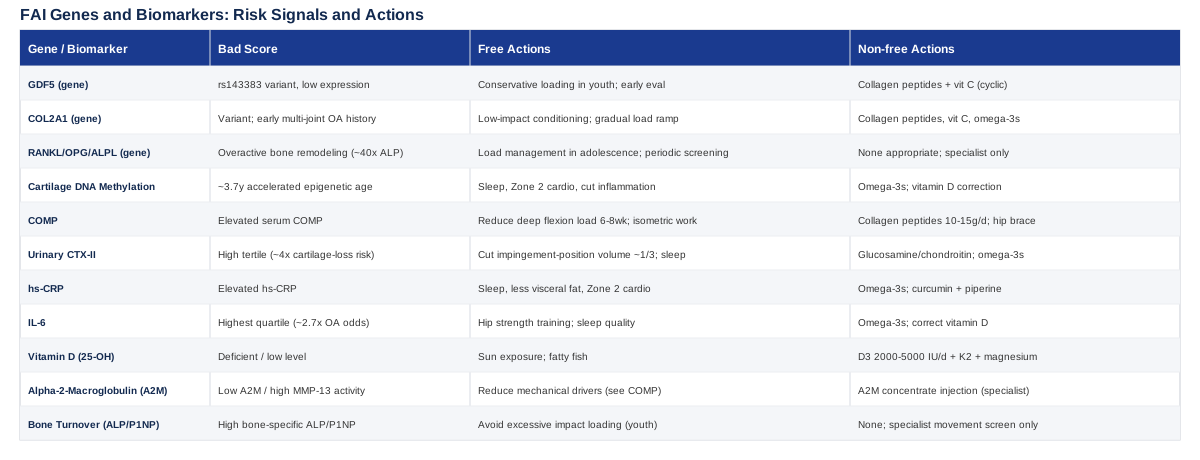
The 7 Biomarkers Worth Tracking If You Have FAI
Femoroacetabular impingement doesn't have its own dedicated biomarker panel the way, say, cardiovascular disease does. But the pathway from repetitive impingement to labral tear to cartilage breakdown to osteoarthritis is well studied in orthopedic and rheumatology research, and several biomarkers from that literature apply directly to anyone managing FAI, especially active people who want to keep training without accelerating joint damage. The logic mirrors how Peter Attia, Thomas Dayspring, and Allan Sniderman approach cardiometabolic risk: don't wait for the structural damage to show up on imaging, track the biochemical signals that precede it.
Cartilage Oligomeric Matrix Protein (COMP)
COMP is a structural protein released into the bloodstream when cartilage matrix breaks down. Because FAI causes repetitive abnormal contact between the femoral neck and acetabular rim, the cartilage and labrum in that specific zone take ongoing mechanical stress, and COMP is one of the more validated proxies for how much cartilage turnover is happening as a result. A study in knee osteoarthritis patients found serum COMP was significantly elevated compared to controls and tracked with disease severity, which is why it's used as both a diagnostic and prognostic signal in joint research (Verma & Dutta, 2013).
How To Measure It
Serum COMP is measured via ELISA blood test, typically ordered through a rheumatology lab or a longevity-focused physician; it isn't part of routine bloodwork. Cost runs roughly 60 to 150 dollars out of pocket if insurance doesn't cover it, and results take a few days to a week depending on the lab.If The Result Is Poor: The Plan Without Supplements
Reduce the volume of deep hip flexion under load — deep squats, certain hip-flexor-dominant movements — for 6 to 8 weeks, and substitute range-of-motion-limited variations that avoid the impingement position. Add isometric hip strengthening (glute medius, deep external rotators) 3 times a week, since better joint centration reduces abnormal shear on the labrum and cartilage. Reassess COMP after 8 to 12 weeks, not sooner — cartilage turnover markers move slowly.If The Result Is Poor: The Plan With Supplements Or Equipment
Collagen peptides (10-15g daily, taken with vitamin C to support synthesis) have modest supporting evidence for cartilage matrix support and are low-risk; cycle 3 months on, take a month off, and reassess. A hip brace or unloading strap during high-volume training is a reasonable equipment addition for someone unwilling to fully de-load. Side effects of collagen peptides are minimal (occasional mild GI upset); there's no strong evidence they reverse existing cartilage damage, only that they may support turnover balance.Urinary CTX-II
Urinary CTX-II measures the breakdown products of type II collagen, the main collagen type in articular cartilage. It's one of the better-validated predictive markers in osteoarthritis research — elevated levels don't just reflect current damage, they predict future cartilage loss. A study following patients over 21 months found that those in the higher CTX-II tertiles had 3.9 to 4.0 times the odds of measurable cartilage loss on MRI compared to those with lower levels (Dam et al., 2009). For FAI specifically, this makes it a useful early-warning marker for whether the impingement is actively degrading cartilage versus staying mechanically stable.
How To Measure It
A second-morning-void urine sample tested via ELISA, usually available through specialty labs (Quest and LabCorp both offer versions under names like "urinary CTX-II" or "collagen crosslinks, type II"). Expect 80 to 200 dollars depending on the lab and whether it's bundled with other collagen markers.If The Result Is Poor: The Plan Without Supplements
Cut training volume in positions that reproduce impingement (deep hip flexion plus internal rotation) by roughly a third for 8 to 12 weeks, prioritize eccentric-controlled loading over ballistic or end-range movements, and add sleep and recovery consistency — collagen remodeling happens disproportionately during sleep, so under-recovery inflates breakdown markers independent of activity.If The Result Is Poor: The Plan With Supplements Or Equipment
Glucosamine sulfate (1500mg/day) and chondroitin (1200mg/day) have mixed but not negligible evidence in cartilage-related outcomes; a reasonable trial is 3 to 6 months, since earlier isn't long enough to judge effect, with a break every 6 months to reassess necessity. Omega-3s (2-3g EPA/DHA daily) can modestly reduce the inflammatory component of collagen breakdown. Side effects are minimal for both — mild GI effects, and a theoretical bleeding-risk interaction with omega-3s at high doses if you're on anticoagulants.High-Sensitivity CRP (hs-CRP)
hs-CRP is a systemic inflammation marker, not joint-specific, but it correlates directly with the amount of synovial inflammation present in osteoarthritic joints. One study found that elevated plasma hs-CRP tracked with the degree of inflammatory cell infiltration found in synovial tissue of OA patients (Pearle et al., 2007). For someone with FAI, a chronically elevated hs-CRP suggests the joint (and possibly the rest of the body) is running a low background inflammatory load that can accelerate labral and cartilage degeneration beyond what the mechanical impingement alone would cause.
How To Measure It
hs-CRP is a standard, cheap blood test — usually 10 to 30 dollars out of pocket, often bundled into routine metabolic panels, and covered by most insurance when ordered by a physician.If The Result Is Poor: The Plan Without Supplements
Address the usual systemic inflammation drivers first: poor sleep, visceral fat, ultra-processed food intake, and untreated dental or gut issues all raise hs-CRP independent of joint status. Zone 2 cardio (3-4 sessions/week, 30-45 minutes) has some of the best evidence for lowering baseline inflammation without adding hip-impingement-provoking load, making it a good substitute if running or deep squatting currently aggravates the joint.If The Result Is Poor: The Plan With Supplements Or Equipment
Omega-3 fatty acids (2-3g/day EPA/DHA) have the most consistent hs-CRP-lowering evidence among commonly available supplements; give it 8-12 weeks before retesting. Curcumin with piperine (500-1000mg/day) is a reasonable adjunct with anti-inflammatory signal in joint research, cycled 8 weeks on/2 weeks off due to limited long-term safety data at higher doses. Both are generally well tolerated; curcumin can cause GI upset and should be used cautiously alongside blood thinners.Interleukin-6 (IL-6)
IL-6 is an inflammatory cytokine that plays a direct role in cartilage catabolism, and it has one of the more specific links to osteoarthritis progression among circulating inflammatory markers. In the Chingford study, women in the highest IL-6 quartile had 2.74 times higher odds of radiographic knee osteoarthritis than those in the lowest (Livshits et al., 2009). For FAI, IL-6 is worth tracking alongside hs-CRP because it captures a more joint-specific inflammatory signal rather than general systemic inflammation.
How To Measure It
A blood draw processed via ELISA, typically available through specialty or research-oriented labs rather than standard primary care panels; expect 50 to 120 dollars.If The Result Is Poor: The Plan Without Supplements
Strength training focused on the hip stabilizers (2-3x/week, moderate load, full but pain-free range) has anti-inflammatory systemic effects independent of local joint loading, and improving sleep quality (consistent 7-9 hours) is one of the more reliable non-pharmacological levers on IL-6 specifically.If The Result Is Poor: The Plan With Supplements Or Equipment
Omega-3s again apply here, alongside vitamin D correction if deficient (see below), since vitamin D deficiency independently raises inflammatory cytokine activity. There's no strong case for an IL-6-specific supplement beyond addressing the upstream drivers; avoid unsupervised use of IL-6-pathway-targeting drugs (like tocilizumab), which are prescription immunosuppressants with meaningful side effects and are not appropriate for biomarker optimization outside of diagnosed autoimmune disease.25-Hydroxyvitamin D
Vitamin D status matters more for FAI than it might seem, particularly in athletic populations where the condition is common. Inadequate vitamin D is associated with reduced muscle strength and a higher risk of musculoskeletal injury, including stress-related bone issues (Yoon, 2021). For someone managing FAI, weak hip stabilizers and poor neuromuscular control around the joint increase the odds of provoking impingement during activity, so correcting vitamin D is a low-risk lever on both muscular support and background inflammation.
How To Measure It
A standard 25-OH vitamin D blood test, widely available and inexpensive — typically 20 to 50 dollars, often covered by insurance.If The Result Is Poor: The Plan Without Supplements
15-20 minutes of midday sun exposure on bare skin several times a week (season and latitude dependent) can meaningfully raise levels for many people, alongside dietary sources like fatty fish and fortified foods, though food alone rarely fully corrects a true deficiency.If The Result Is Poor: The Plan With Supplements Or Equipment
Vitamin D3, dosed based on how deficient you are — commonly 2000 to 5000 IU/day for correction, then a lower maintenance dose (1000-2000 IU/day) once levels normalize. Retest after 8-12 weeks rather than guessing. Pair with vitamin K2 (100mcg/day) and adequate magnesium, since both support proper calcium utilization. Side effects are rare at these doses but toxicity is possible at very high, unsupervised intake over long periods, so retesting before continuing high doses matters.Alpha-2-Macroglobulin (A2M)
A2M is a naturally occurring protease inhibitor that appears to play a protective, chondroprotective role by neutralizing the enzymes (like MMP-13) that degrade cartilage. Preclinical research identified A2M as a "master inhibitor" of cartilage-degrading factors, with intra-articular administration reducing cartilage breakdown in models of post-traumatic osteoarthritis (Wang et al., 2014). This is earlier-stage evidence than the other markers here, largely preclinical, but it's included because A2M-based treatments (autologous A2M concentrate injections) are increasingly used clinically in sports medicine for joint preservation, including in FAI-adjacent hip pathology.
How To Measure It
Serum A2M levels can be measured via blood test at specialty labs, though it's less standardized than the markers above; cost varies widely, roughly 60 to 150 dollars, and it's most relevant if you're already discussing A2M-based injection therapy with a sports medicine physician.If The Result Is Poor: The Plan Without Supplements
There's no well-established behavioral intervention specifically shown to raise A2M; the more useful frame is reducing the mechanical drivers of cartilage breakdown (see COMP and CTX-II sections) rather than trying to move this marker directly through lifestyle alone.If The Result Is Poor: The Plan With Supplements Or Equipment
Rather than a supplement, this is where equipment-based intervention matters: autologous A2M concentrate injection, done by a sports medicine or orthopedic specialist, directly delivers the protective protein to the joint. This is a clinical procedure, not a self-directed option, typically done as a single injection or short series, with side effects limited mostly to injection-site soreness. It should be discussed with a specialist familiar with FAI-specific joint preservation, not pursued independently.Bone Turnover Signaling (ALP / Bone Remodeling Activity)
Cam-type FAI isn't just cartilage wear — it starts with bone overgrowth at the femoral head-neck junction, and research on early-stage cam lesions found the impingement-zone bone itself showed roughly 40-fold higher alkaline phosphatase gene expression along with elevated RANKL/OPG signaling, indicating unusually active bone remodeling driving the overgrowth (Gao et al., 2021). That study measured gene expression in bone tissue directly rather than a blood test, but it supports checking systemic bone turnover markers (like serum bone-specific alkaline phosphatase or P1NP) as a proxy for whether your overall bone remodeling activity is running hot, particularly in younger athletes still actively developing cam morphology.
How To Measure It
Serum bone-specific alkaline phosphatase or P1NP, drawn via standard blood test, typically 40 to 100 dollars, available through most commercial labs though not routinely ordered outside of bone-metabolism workups.If The Result Is Poor: The Plan Without Supplements
This one is less about suppressing bone activity (which is often necessary and adaptive) and more about avoiding excessive repetitive high-impact loading in the impingement position during adolescence and early adulthood, when cam morphology most actively develops — this is a training-volume and technique conversation with a coach or physical therapist, not a supplement fix.If The Result Is Poor: The Plan With Supplements Or Equipment
There is no supplement shown to selectively reduce cam-lesion bone overgrowth once it's underway, and attempting to broadly suppress bone turnover pharmacologically without a bone-metabolism specialist's guidance is inappropriate. The realistic move is a hip-specific movement screen with a sports medicine physician to assess whether training modification is warranted while bone remodeling is still active, which mainly applies to adolescent and young adult athletes rather than adults with mature, stable cam morphology.The throughline across all seven markers is that FAI's biology extends well beyond the alpha angle on an X-ray — inflammation, collagen turnover, vitamin D status, and bone remodeling activity all interact with the mechanical impingement to determine how fast (or whether) things progress. That same biological substrate is shaped, in part, by genetics, which is where the next section goes.
What Current Genetics Research Says About FAI
Before getting into specific genes, it's worth being direct about the state of the evidence: FAI genetics research is younger and thinner than, say, cardiovascular or metabolic genetics. Much of what follows comes from smaller studies, some from adjacent conditions (hip osteoarthritis, hip dysplasia) rather than FAI itself, and should be read as suggestive rather than definitive. Ali Torkamani's work on genomic risk interpretation and Gary Brecka's approach to actionable gene-based health optimization are useful frameworks here: the point isn't to treat a variant as destiny, it's to identify where your biology might need more deliberate compensation than someone without that variant.
The Family Pattern Behind Cam And Pincer Morphology
Before looking at individual genes, the clearest evidence for a genetic component in FAI comes from a sibling study: siblings of people with FAI had 2.8 times the relative risk of cam deformity and 2.0 times the relative risk of pincer deformity compared to spouse controls who share environment but not genetics (Pollard et al., 2010). This doesn't point to one gene — it's a polygenic pattern, meaning multiple variants each contribute a small amount of risk. It does mean that if you have a first-degree relative with FAI or early hip osteoarthritis, your own risk of developing significant cam or pincer morphology is meaningfully elevated, which is worth mentioning to an orthopedist even before symptoms appear.
GDF5 (Growth Differentiation Factor 5)
GDF5 regulates cartilage and joint formation during development, and the rs143383 variant in its promoter region reduces GDF5 expression. A systematic review and meta-analysis found this variant associated with hip osteoarthritis risk under certain genetic models in Caucasian populations, though with some heterogeneity between studies (Wang et al., 2023).
What It May Affect
Lower GDF5 expression is linked to altered joint shape formation during skeletal development and reduced cartilage resilience, both plausible contributors to how a hip joint's shape and cartilage quality develop over time.How It May Be Compensated For
There's no way to directly upregulate GDF5 expression through lifestyle, but the practical compensation is being more conservative about joint-loading decisions during adolescence and early adulthood — the period when cartilage and joint shape are still most responsive to mechanical input — and prioritizing early identification of impingement symptoms rather than pushing through hip pain in youth sports.If The Gene Variant Is Unfavorable: The Plan Without Supplements
Focus on joint-friendly strength training that builds hip stability without maximal end-range loading (controlled range Bulgarian split squats over deep barbell squats, for example), and get any persistent hip or groin pain in a young athlete evaluated promptly rather than assuming it's normal growing pain.If The Gene Variant Is Unfavorable: The Plan With Supplements Or Equipment
Collagen peptides with vitamin C (10-15g/day, 3 months on/1 month off) provide raw material support for cartilage matrix, though they won't compensate for reduced GDF5 signaling itself. There's no supplement that meaningfully substitutes for the gene's developmental role — the actionable lever here is behavioral, not pharmacological.COL2A1 (Collagen Type II Alpha 1)
COL2A1 encodes the primary structural collagen in cartilage. Rare, more severe mutations cause dramatic early-onset multi-joint osteoarthritis within affected families (Li et al., 2021), and a hip-specific variant has been linked directly to acetabular dysplasia, a related structural hip condition (Xin et al., 2025). Most people with FAI won't carry one of these rarer, high-impact mutations, but milder common variants in collagen-related genes are thought to contribute to the population-level variation in cartilage quality and resilience.
What It May Affect
Structural integrity of the collagen network in cartilage — how well the joint surface tolerates the repetitive abnormal shear forces that FAI morphology creates.How It May Be Compensated For
If a family history of early-onset, multi-joint osteoarthritis exists (not just isolated hip issues), it's worth mentioning to a physician, since it may prompt closer monitoring or genetic counseling. For most people, the practical compensation is treating cartilage as a slower-recovering tissue than muscle and adjusting training progression accordingly — more gradual load increases, more recovery time between high-impact sessions.If The Gene Variant Is Unfavorable: The Plan Without Supplements
Prioritize low-impact conditioning (cycling, swimming, rowing) for a larger share of weekly cardiovascular volume, reserving high-impact and deep-flexion loading for planned, well-recovered sessions rather than daily default training.If The Gene Variant Is Unfavorable: The Plan With Supplements Or Equipment
The same collagen-support approach as above applies (collagen peptides, vitamin C, omega-3s), cycled and reassessed every 3 months. For anyone with a strong family history of early multi-joint OA, a conversation with a geneticist or rheumatologist is more valuable than any supplement stack, since it may change surveillance frequency for other joints too.RANKL, OPG, And ALPL: The Bone-Remodeling Genes Behind Cam Overgrowth
The tissue-level study on early cam-type FAI found the impingement-zone bone had roughly 40-fold higher alkaline phosphatase (ALPL) gene expression along with altered RANKL/OPG signaling — the core pathway controlling bone formation versus resorption (Gao et al., 2021). This is gene-expression evidence from affected bone tissue itself, not a blood-based genetic test, so it points to a mechanism rather than something you can currently test for with a cheek swab.
What It May Affect
An overactive RANKL/OPG/ALPL remodeling response at the femoral head-neck junction appears to directly drive the bone overgrowth that defines cam morphology, particularly during the adolescent growth period.How It May Be Compensated For
Since this pathway operates during skeletal development, the main compensation window is adolescence and early adulthood: reducing repetitive high-torque hip loading (common in soccer, hockey, and heavy squat-based training done at a young age) during the years when growth plates are still active may reduce how pronounced the resulting cam lesion becomes, though this is inferred from mechanism rather than proven by a direct intervention trial.If The Gene Variant Is Unfavorable: The Plan Without Supplements
For young athletes in high-risk sports, periodic hip screening (a simple exam plus imaging if symptomatic) during peak growth years, combined with load management rather than early single-sport specialization, is the most evidence-aligned approach available.If The Gene Variant Is Unfavorable: The Plan With Supplements Or Equipment
There is no supplement shown to modulate RANKL/OPG signaling safely for this purpose — pharmacologic RANKL inhibitors (like denosumab) are prescription osteoporosis treatments, not appropriate for this context, and should never be used off-label for joint shape modification. This is a training-management issue, not a supplement one.Cartilage-Specific Epigenetic Aging (DNA Methylation)
Beyond fixed gene variants, epigenetic research shows osteoarthritic cartilage carries a distinct DNA methylation signature — appearing roughly 3.7 years "older" by methylation-based aging clocks than the same patient's bone or blood tissue, while bone and blood didn't show this acceleration (Vidal-Bralo et al., 2016). This tells us that cartilage ages faster, epigenetically, specifically in joints under abnormal mechanical stress — exactly the situation FAI creates.
What It May Affect
Accelerated epigenetic aging in cartilage is associated with reduced cartilage repair capacity, which may explain why some FAI-affected hips progress to osteoarthritis faster than the mechanical severity alone would predict.How It May Be Compensated For
This isn't currently something you can test commercially for a single joint, but the broader principle — that mechanically stressed tissue ages faster epigenetically — supports reducing unnecessary repetitive impingement-position loading as a way to limit that acceleration, alongside general anti-inflammatory lifestyle habits known to slow methylation-based aging elsewhere in the body.If The Gene Variant Is Unfavorable: The Plan Without Supplements
Consistent sleep, regular Zone 2 cardio, and minimizing chronic systemic inflammation (see the hs-CRP and IL-6 sections above) are the most evidence-grounded levers on epigenetic aging broadly, even though joint-specific methylation testing isn't yet practical outside research settings.If The Gene Variant Is Unfavorable: The Plan With Supplements Or Equipment
Omega-3s and adequate vitamin D (dosed as described earlier) have some supporting evidence for favorably influencing methylation patterns tied to inflammation, though this is a general systemic effect, not a joint-targeted one. There's no current supplement protocol specifically validated to slow cartilage epigenetic aging.Genetics and epigenetics explain part of why one hip degrades faster than another with similar morphology, but they're not the only lens worth applying. A broader look at joint longevity research adds a useful, less orthopedics-specific perspective.
What A Longevity-Focused Approach To Joints Gets Right
Peter Attia's book Outlive: The Science and Art of Longevity isn't about FAI specifically, but its central argument — that joint and movement health deserve the same rigorous, biomarker-driven, preventive approach usually reserved for cardiovascular or metabolic disease — reframes how to think about a hip condition that's often dismissed as "just an orthopedic issue." Attia's "Centenarian Decathlon" framework, which asks what physical tasks you want to still do in your 80s and then reverse-engineers training from there, is a genuinely useful mental model for someone with FAI trying to decide how aggressively to modify activity now versus later.
Joint Health Is A Systemic Issue, Not Just A Local One
The book's recurring point is that isolated-joint thinking misses the bigger picture — muscle mass, strength, and metabolic health all influence how well a joint tolerates load and recovers from stress, meaning FAI management shouldn't stop at the hip itself.Strength Is A Vital Sign, Not A Vanity Metric
Attia treats grip strength and overall muscular strength as predictive of long-term mortality risk, citing the PURE study's finding that grip strength predicted all-cause and cardiovascular mortality more strongly than systolic blood pressure across nearly 140,000 people (Leong et al., 2015) — a reminder that building strength around an impinged hip isn't just symptom management, it's a broader health investment.Medicine 3.0 Means Acting Before The Diagnosis Gets Worse
The book's framing of "Medicine 3.0" — proactive, personalized, biomarker-driven care versus reactive treatment of late-stage disease — maps directly onto tracking the biomarkers in this article rather than waiting for a hip replacement conversation.Zone 2 Training Deserves More Credit Than It Gets
Attia's emphasis on low-intensity aerobic base-building as foundational (not supplementary) training fits well for FAI, since Zone 2 work can usually be done on low-impact modalities that don't provoke impingement while still building the metabolic and inflammatory profile that supports joint health.Stability Work Is Underrated Compared To Raw Strength
The book argues that stability and movement quality prevent the injuries that stop long-term training consistency — directly relevant to FAI, where poor hip stabilization is part of what turns benign morphology into symptomatic impingement.Inflammation Is A Silent Multiplier On Joint Damage
Attia treats chronic low-grade inflammation as a core driver of age-related decline across systems, which lines up precisely with the hs-CRP and IL-6 biomarker logic covered earlier in this article.Delaying Intervention Isn't Automatically The Conservative Choice
One of the more doctor-thinking-challenging points in the book is that waiting passively is itself a decision with consequences — applied to FAI, this means "wait and see" isn't inherently safer than earlier surgical consultation if imaging and symptoms suggest active progression.VO2 Max And Aerobic Capacity Predict Far More Than Endurance Performance
Attia treats cardiorespiratory fitness as one of the strongest predictors of longevity, which reframes low-impact cardio for FAI patients as a health priority rather than a consolation prize for those who can't run.Muscle Mass Is A Metabolic Reserve
The book frames skeletal muscle as functioning like a metabolic "retirement account" — relevant for FAI patients tempted to fully stop lower-body training, since preserving hip and leg muscle mass protects long-term metabolic and joint health even when certain movements need modification.Objective Data Beats Subjective Feeling For Tracking Progress
Attia's consistent argument for measuring rather than guessing supports exactly the biomarker-tracking approach in this article — pain levels alone are a poor guide to whether a joint is actually improving or quietly worsening.Prevention Windows Close — Earlier Action Has Outsized Value
The book's strongest challenge to conventional reactive medicine is that many of the most effective interventions only work well if started before significant damage accumulates, which for FAI means the biomarker and training decisions made now matter more than the same decisions made after a labral tear has already occurred.Biomarkers and genetics describe the biology; a systemic, longevity-oriented lens shows why local hip decisions connect to broader health. There's also a set of hands-on and mind-body approaches with actual clinical evidence worth knowing about alongside all of this.
Complementary Approaches With Real Supporting Evidence
None of the following replace orthopedic evaluation, imaging, or surgical consultation when indicated, and most of the supporting evidence below comes from knee or general osteoarthritis research rather than FAI-specific trials, since dedicated hip-impingement trials for these modalities largely don't exist yet. They're included because the underlying mechanisms (joint loading tolerance, inflammation, pain modulation) transfer reasonably well to FAI.
Yoga
Yoga combines controlled mobility work, isometric strength holds, and breath-based relaxation, all of which are relevant to FAI because the condition often responds well to improved hip control and reduced compensatory tension in surrounding muscles, rather than more mobility alone (some yoga poses can actually provoke impingement if done carelessly).
A systematic review and meta-analysis of 9 randomized controlled trials covering 640 participants found low-to-moderate quality evidence that yoga reduces pain in lower-extremity osteoarthritis (Lauche et al., 2019), though this evidence is knee-focused rather than hip-specific.
For FAI, the practical approach is working with an instructor familiar with hip impingement to avoid deep hip flexion combined with internal rotation poses (like deep pigeon pose), focusing instead on hip-stabilizing and externally-rotation-friendly sequences, 2-3 sessions a week.
Massage Therapy
Massage therapy addresses the compensatory muscular tightness (particularly in the hip flexors, TFL, and deep external rotators) that commonly develops around an impinged hip as the body tries to avoid painful ranges of motion, which can itself become a secondary source of pain and reduced function.
A randomized dose-finding trial found that weekly 60-minute Swedish massage over 8 weeks produced clinically meaningful, lasting improvement in osteoarthritis pain and function (Perlman et al., 2012), again in a knee OA population rather than hip-specific.
For FAI, a realistic protocol is weekly to biweekly sessions targeting the hip flexor complex and gluteal muscles, ideally coordinated with a physical therapist so massage complements rather than substitutes for corrective strengthening.
Low-Level Laser Therapy (Photobiomodulation)
Low-level laser therapy uses specific light wavelengths to modulate cellular activity and reduce localized inflammation, and it's increasingly used in sports medicine settings for joint and tendon pain where reducing inflammation without systemic medication is the goal.
A meta-analysis of randomized, placebo-controlled trials found that LLLT at specific validated doses significantly reduced pain and disability in knee osteoarthritis, with peak effects appearing 2 to 4 weeks post-treatment (Stausholm et al., 2019).
For FAI, this would typically be delivered by a physical therapist or sports medicine clinic using a validated dosing protocol over the anterior hip and groin region, generally 2-3 times weekly for several weeks — dose parameters matter significantly here, so it's worth confirming the clinic uses evidence-based settings rather than an arbitrary protocol.
Mindfulness Meditation / MBSR
Mindfulness-Based Stress Reduction doesn't change hip mechanics, but chronic joint pain has a well-documented psychological amplification component, and MBSR specifically targets the nervous system's pain processing rather than the joint itself.
An 8-week MBSR program produced significant improvements in pain severity and quality of life in patients with chronic musculoskeletal pain (Ardito et al., 2017), in a low-back pain population, supporting its use as an adjunct for chronic pain generally.
For FAI, this is most useful for people whose pain has become chronic and centrally sensitized despite reasonable structural management — a standard 8-week MBSR course (available in-person or via well-validated apps) run alongside, not instead of, physical treatment.
Biofeedback
Biofeedback provides real-time visual or auditory data on muscle activation or movement patterns, directly addressing one of the core problems in FAI rehab: patients often unconsciously avoid loading the hip properly after pain develops, which slows recovery and can worsen mechanics.
A pilot randomized controlled trial found real-time visual biofeedback during rehabilitation after total hip arthroplasty significantly improved weight-bearing compliance and peak load at 12 weeks compared to standard care (Raaben et al., 2018) — notably, this is one of the few hip-specific studies in this section.
For FAI, biofeedback is most relevant during post-surgical rehab (after hip arthroscopy) or when a physical therapist identifies a persistent movement compensation pattern that verbal cueing alone hasn't corrected, typically used for a defined number of sessions rather than indefinitely.
Conclusion
Femoroacetabular impingement is a mechanical diagnosis, but its trajectory isn't purely mechanical. The genes covered here — GDF5, COL2A1, the RANKL/OPG/ALPL bone-remodeling pathway, and cartilage's own epigenetic aging pattern — help explain why cam and pincer morphology forms and why some joints hold up better than others with similar imaging. The seven biomarkers give you something more immediately actionable: a way to check, every few months, whether your joint biology is trending toward trouble or staying stable, well before that shows up as worsening pain or a new tear on MRI.
None of this replaces a hands-on orthopedic evaluation, and no single number should drive a major decision on its own. But if you have FAI, the next useful step is concrete: get a baseline on two or three of the more accessible biomarkers (hs-CRP, vitamin D, and COMP are a reasonable, affordable starting trio), track your training load against symptom flares for a month, and bring both to your next appointment with a sports medicine physician or orthopedist. That conversation, grounded in your own data rather than general hip advice, is where better information actually turns into a better decision.
Musculoskeletal: Bone Conditions Joint Conditions Tendon & Ligament Conditions