This article contains AI generated content.
Fibrodysplasia Ossificans Progressiva: 4 Genes And 6 Biomarkers To Track
If you or your child has been diagnosed with fibrodysplasia ossificans progressiva, or a doctor has raised it as a possibility after an unusual toe shape and a lump that appeared after a bump or a vaccination, you already know that most health content is not written for you. FOP affects roughly one in a million people. The general advice that circulates for "bone health" or "inflammation" — more calcium, more vitamin D, more movement — was never built with a disease like this in mind, and some of it can be actively dangerous if applied without knowing what is actually driving the condition.
That gap is the reason this article exists. FOP is not a lifestyle disease shaped by dozens of small genetic nudges that add up over decades. It is caused, in the overwhelming majority of cases, by one specific, identifiable change in one gene. That single fact changes almost everything about how you should think about genetic testing, biomarkers, monitoring, and day-to-day precautions. Generic "optimize your genes" content that treats every mutation like a dial you can turn with the right supplement simply does not apply here, and pretending otherwise would do readers a disservice.
What does apply is precision: understanding exactly which gene is involved, what it does at the molecular level, which laboratory and imaging markers are actually useful to track over time, and which everyday decisions (from dental visits to physical therapy) carry real, documented risk. That is the deeper, more useful approach this article takes — grounded in the peer-reviewed research from the labs and clinical networks that have spent the last two decades mapping this disease, not in general wellness advice repurposed for a rare condition it was never designed for.
None of this replaces a metabolic bone disease specialist or a genetics team experienced with FOP — for a disease this rare and this consequential, specialist care is not optional. But better information changes the questions you ask, the precautions you take, and how confidently you can participate in decisions about your own or your child's care. Below, we walk through the genes that matter most, the practical implications of each, the biomarkers worth tracking, a look at the research story that reshaped FOP treatment, and complementary approaches that can realistically support quality of life alongside — never instead of — specialist medical care.
Summary
Almost every case of FOP traces back to one recurring change in one gene, ACVR1 — but that single fact opens up a much more complex and, in places, hopeful picture. Below, we break down what the classic mutation actually does to bone-forming signaling, why a small group of "atypical" variants behave differently, why a hormone-like protein called Activin A turned out to be the unexpected key that unlocked new drug development, and why some children get misdiagnosed with FOP when the real cause is a different gene entirely. We also walk through the six lab and imaging markers that specialists actually use to track disease activity, what they cost, and what they can and cannot tell you — plus the everyday precautions, drawn directly from clinical natural-history data, that matter more than any supplement ever could. If you want to understand what the genetics really suggests, and what to do with that information without falling for miracle claims, this is the deeper version of that conversation.
The Genes Behind Fibrodysplasia Ossificans Progressiva
FOP sits at the opposite end of the genetics spectrum from the polygenic risk scores that dominate most "genes and biomarkers" content. It is not about dozens of common variants each nudging risk up a few percent. It is a single-gene, highly penetrant, dominant condition — meaning one altered copy of one gene is sufficient to cause the disease in nearly everyone who carries it. That has direct, practical consequences for what "fixing the gene" can and cannot mean here.
Why This Isn't A Typical "Bad Gene, Better Supplement" Story
Consumer genomics commentators like Ali Torkamani, who studies which genetic findings are actually actionable, have long made a useful distinction: common variants (the kind found on most direct-to-consumer panels) usually shift risk modestly and can often be offset by diet, exercise, or targeted supplementation. Rare, high-penetrance disease mutations like the one behind FOP are a different category entirely — they do not respond to lifestyle compensation, and no supplement regimen changes what the mutated receptor does at the molecular level. Similarly, the kind of genetic panels popularized by figures like Gary Brecka — built around common variants such as MTHFR or APOE — are not the tool used here. FOP is confirmed through targeted clinical sequencing of a specific gene, ordered by a geneticist after clinical suspicion, not through a consumer wellness panel. Keeping this distinction clear matters, because it sets honest expectations: the interventions below are about managing risk and signaling pathways, not reversing a mutation.
ACVR1: The Gene Behind Almost Every Case
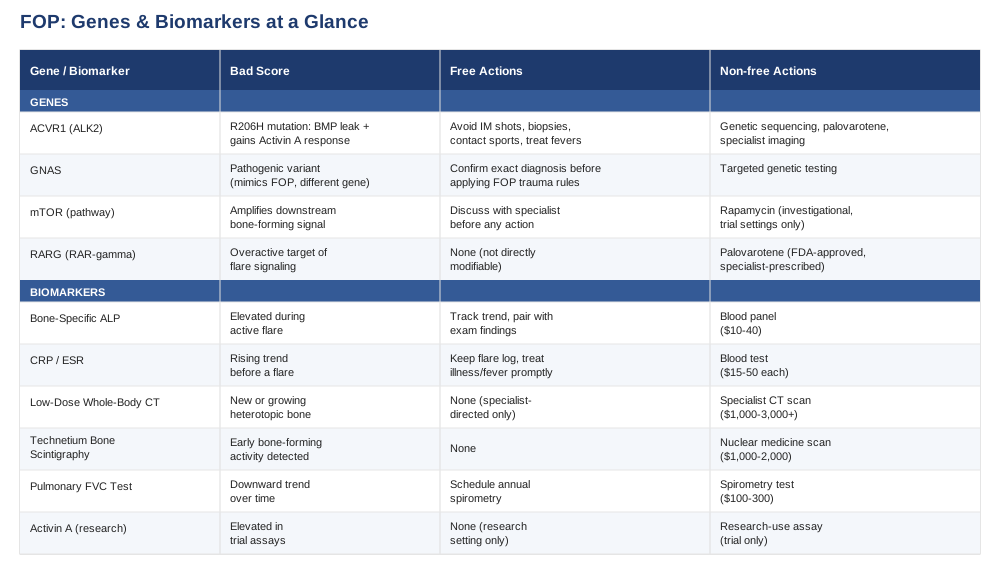
ACVR1 (also called ALK2) encodes a type I bone morphogenetic protein (BMP) receptor — a protein on the cell surface that normally helps regulate skeletal development in a tightly controlled way. In 2006, a research team led by Eileen Shore and Frederick Kaplan identified a recurring mutation in this gene, a single nucleotide change (617G→A, producing the R206H amino acid substitution), in nearly all classic FOP cases studied, whether inherited or spontaneous (Shore et al., Nature Genetics, 2006). This mutation sits in a regulatory region of the receptor and causes it to leak low-level activating signal even when it shouldn't, and — as later research would show — to respond abnormally to a molecule that should be inhibiting it. The result is progressive, episodic replacement of muscle, tendon, and connective tissue with bone, largely following predictable anatomical patterns (starting in the neck and shoulders, then moving down the body).
Genetic confirmation of the R206H variant, via clinical sequencing of blood or saliva DNA, is now considered the diagnostic gold standard, and current clinical guidance recommends it be pursued for any child presenting with the classic combination of malformed great toes and early soft-tissue swelling, so that unnecessary and potentially harmful biopsies can be avoided (GeneReviews: Fibrodysplasia Ossificans Progressiva).
If ACVR1 R206H Is Confirmed: The Plan Without Medication
There is no supplement, diet, or exercise protocol that alters the underlying receptor mutation. What genuinely changes outcomes at this stage is trauma and injury avoidance, because soft-tissue injury is one of the best-documented triggers of new heterotopic bone flare-ups in the natural history data (Pignolo et al., Journal of Bone and Mineral Research, 2016). In practice, this means: avoiding intramuscular injections (oral or subcutaneous alternatives are used instead wherever possible, including for vaccines), avoiding muscle biopsies and unnecessary surgery, avoiding contact sports and high fall-risk activities, using extreme caution with dental work (mandibular blocks and prolonged mouth-opening have both been linked to flares), and treating any viral illness or fever promptly, since systemic inflammation is also an observed trigger. None of this requires equipment or purchase — it requires a written care plan shared with every provider the person sees, including dentists, ER staff, and school nurses, because the biggest real-world risk is a well-meaning clinician who doesn't know the rules and orders a routine IM injection or biopsy.
If ACVR1 R206H Is Confirmed: The Plan With Medical Therapies And Monitoring Tools
This is not a supplement stack — it is a specialist-managed medical plan, and it should never be self-directed. The first therapy specifically approved for FOP, palovarotene (a retinoic acid receptor gamma agonist that dampens the downstream bone-forming signal), received FDA approval in 2023 for reducing new heterotopic ossification during flare-ups; a randomized phase 2 trial found trends favoring the drug that were not fully statistically significant, which is why it is prescribed and monitored closely by FOP specialists rather than used casually, and why larger confirmatory studies are ongoing (Pignolo et al., Journal of Bone and Mineral Research, 2022). Short courses of high-dose corticosteroids at the very first sign of a flare (within the first 24 hours) are a longer-standing, guideline-supported strategy to reduce local inflammation, used intermittently and only under physician direction because of the real side effects of repeated steroid courses, including bone density loss and mood changes. On the equipment side, periodic low-dose CT or bone scintigraphy imaging (discussed in the biomarkers section below) and, later in the disease course, mobility aids and home modifications become part of realistic long-term planning as joint mobility becomes progressively restricted.
Atypical ACVR1 Variants: When FOP Doesn't Follow The Textbook
Not every case matches the classic picture. A minority of patients carry different mutations in the same ACVR1 gene — variants such as R258S, G328E, G328R, G328W, or G356D — that produce "atypical FOP," sometimes with a different pace of progression, different toe involvement, or unusual patterns of soft-tissue swelling (Kaplan et al., Human Mutation, 2009). This matters practically for two reasons: first, an atypical presentation without the classic toe finding can delay diagnosis, sometimes for years, because clinicians are trained to look for the textbook pattern; second, some emerging targeted therapies are designed around the specific biochemical behavior of R206H and may need adjustment or may behave differently in atypical variants, which is one more reason exact variant identification (not just "FOP, unspecified") matters for treatment planning.
The Activin A Signaling Switch: The Discovery That Changed Drug Development
For years after ACVR1 was identified, researchers knew the mutated receptor was overactive but didn't fully understand why bone formation was episodic rather than constant. A 2015 study provided the missing piece: the R206H mutation doesn't just make the receptor leaky, it also makes it newly responsive to Activin A, a signaling protein that normally blocks this receptor rather than activating it (Hatsell et al., Science Translational Medicine, 2015). In effect, a molecule that should be putting the brakes on bone formation gets turned into an accelerator by the mutation. This single finding redirected an entire generation of drug development toward neutralizing Activin A directly, including monoclonal antibody approaches now in clinical testing. It is a useful example of how a precise mechanistic finding — not a lifestyle intervention — opened up an entirely new treatment category within a decade.
Downstream Amplifiers: mTOR And Inflammatory Signaling
Beyond the receptor itself, researchers have identified downstream pathways, including mTOR signaling, that appear to amplify the abnormal bone-forming response once it's triggered, which is why mTOR inhibitors such as rapamycin have been studied as adjunct approaches in early-phase and preclinical work. Local inflammation — driven by immune cells including mast cells and macrophages responding to injury — is part of what turns a bump or strain into a full flare-up in a person with the mutation, which is the biological reason behind the trauma-avoidance guidance above. These pathways are described here for context and completeness; unlike ACVR1 itself, they are not yet standard-of-care treatment targets outside of clinical trials, and should be discussed with a specialist rather than pursued independently.
GNAS And The Genes That Mimic FOP
A genuinely practical, often overlooked piece of the genetics picture: not everyone with unexplained heterotopic (out-of-place) bone or cartilage growth has FOP. Progressive osseous heteroplasia, caused by mutations in the GNAS gene, can produce bone formation in skin and soft tissue that superficially resembles FOP but follows a different pattern, has a different inheritance mechanism, lacks the characteristic great-toe malformation, and — critically — is managed differently. Getting a precise genetic diagnosis rather than a clinical "looks like FOP" label is not academic; it determines which flare-avoidance rules genuinely apply, which emerging drugs are even biologically relevant, and what the realistic long-term trajectory looks like. Any child with unexplained soft-tissue ossification should be referred for genetic testing that specifically distinguishes ACVR1-related FOP from these look-alike conditions before being told they have "probable FOP" based on imaging alone.
Family Planning And Recurrence Risk
Because FOP is autosomal dominant, an affected parent has roughly a 50% chance of passing the mutation to each child. However, the vast majority of cases arise from new (de novo) mutations in a child of unaffected parents, meaning most parents of a child with FOP are not carriers themselves and are not at meaningfully elevated risk for future pregnancies beyond a small residual chance related to germline mosaicism. Families navigating a new diagnosis, or planning future pregnancies, should be offered formal genetic counseling rather than relying on general probability rules of thumb, since the counseling also covers prenatal testing options for families who want them.
Understanding the genetics answers the question of why FOP happens and what can realistically be targeted. The next layer — tracking what is happening in the body over time — is where biomarkers and imaging come in, and where the day-to-day monitoring decisions actually get made.
Biomarkers Worth Tracking If You Have FOP
Because FOP's root cause is a single confirmed gene, biomarkers here play a genuinely supporting role: they don't diagnose the disease (genetic testing does that), but they help specialists catch flares early, gauge disease activity, and track systemic complications like restrictive lung disease before they become emergencies. Clinicians who champion precise, early biomarker tracking in cardiometabolic disease, such as Peter Attia, Thomas Dayspring, and Allan Sniderman, built their approach around a simple idea: measure the right thing early enough to act, rather than waiting for symptoms. That same philosophy — precision over waiting — is exactly why FOP specialists have pushed to standardize a small set of markers across the small global patient population, even though the specific tests differ completely from lipid and metabolic panels.
Serum Alkaline Phosphatase (Bone-Specific ALP)
Bone-specific alkaline phosphatase rises during periods of active bone formation, making it one of the more accessible signals of ongoing disease activity, particularly around flare-ups. It is measured with a standard blood draw, widely available through any clinical lab, typically costing $10 to $40 out of pocket or bundled into a routine metabolic panel usually covered by insurance. It is not specific to FOP or even to abnormal bone formation, so it must be interpreted alongside clinical exam findings and imaging rather than in isolation.
Inflammatory Markers: CRP And ESR
C-reactive protein and erythrocyte sedimentation rate are general inflammation markers that can rise during the inflammatory phase that precedes and accompanies a flare-up. They cost roughly $15 to $50 each, are run by any standard lab, and are useful mainly as a rough trend line rather than a precise readout — a rising CRP alongside new soft-tissue swelling supports treating early, while normal values don't rule out an evolving flare, since FOP's inflammatory signature is not always dramatic in routine labs.
Low-Dose Whole-Body CT For Mapping Heterotopic Bone
Low-dose CT imaging allows specialists to map existing heterotopic bone, track new ossification over time, and plan around joints that remain mobile. It is considerably more expensive and involved than a blood test, generally in the $1,000 to $3,000+ range depending on scope and location, and is used at intervals determined by a specialist rather than routinely, partly because of cumulative radiation exposure considerations. This is one of the more advanced options and is typically coordinated through an FOP specialty center rather than ordered independently.
Technetium Bone Scintigraphy For Early Flare Detection
Bone scans using technetium-99m tracer can sometimes detect new areas of bone-forming activity earlier than they become clinically obvious, which has research and, in some centers, clinical monitoring value. Costs generally run $1,000 to $2,000 and require a nuclear medicine facility. Its main practical use is in research settings and in specialist centers trying to catch a flare at its earliest, most treatable stage.
Pulmonary Function Testing (Forced Vital Capacity)
As heterotopic bone progressively fuses the rib cage and spine, restrictive lung disease becomes one of the most serious long-term complications of FOP, and it develops gradually enough that it can go unnoticed without regular testing. Spirometry measuring forced vital capacity is inexpensive and widely available, typically $100 to $300 and often covered by insurance, and is one of the more affordable, high-value tests a person with FOP can have repeated annually, since a downward trend gives the care team a concrete signal to escalate pulmonary and postural management before a respiratory crisis develops.
Activin A And Emerging Research Biomarkers
Given Activin A's central mechanistic role, researchers have investigated circulating Activin A levels as a potential biomarker of disease activity and treatment response, particularly in clinical trials of Activin A-targeting drugs. This is currently a research-use assay rather than a standard clinical order, is not widely commercially available, and its cost and reference ranges are not yet standardized outside of trial settings. It is included here because it is genuinely likely to become clinically relevant as Activin A-targeting therapies mature, and readers enrolled in or considering clinical trials will likely encounter it.
How To Build A Practical Monitoring Schedule
For most families, a realistic starting cadence looks like this: routine bloodwork (ALP, CRP, ESR) opportunistically alongside other pediatric or adult check-ups rather than on a rigid separate schedule; annual pulmonary function testing once a child is old enough to perform spirometry reliably, or sooner if there is any sign of chest wall involvement; and imaging (CT or bone scan) only as directed by an FOP specialist, since imaging frequency needs to be balanced against radiation exposure and typically isn't done more than annually outside of specific clinical questions. The single highest-value habit is a written, dated log of flare-ups (location, suspected trigger, treatment given, and outcome), because this kind of structured tracking is exactly what large natural-history studies have used to build the evidence base that now guides treatment decisions (Pignolo et al., Genetics in Medicine, 2022).
With the genetics and the monitoring markers covered, it's worth stepping back to look at how this understanding of FOP actually came together — because the research story itself carries lessons that are still shaping treatment decisions today.
The Research Story That's Rewriting How Doctors Think About FOP
FOP's modern scientific understanding did not emerge from a single breakthrough paper; it built up over roughly two decades of work from a small, tightly focused research community, much of it centered at the University of Pennsylvania under Frederick Kaplan and Eileen Shore, in partnership with the patient-founded International FOP Association. Reviewing that history is genuinely useful, because it explains why current clinical guidance looks the way it does, and because several of its lessons still challenge default medical instincts today.
1. A Single Preserved Skeleton Anchored Decades Of Research
Harry Eastlack, who died in 1973 with nearly his entire skeleton fused by heterotopic bone after a childhood misdiagnosis, donated his skeleton for research. It remains on public display at Philadelphia's Mütter Museum and served for decades as one of the most complete physical references for understanding how FOP progresses anatomically, long before the genetics were known.
2. One Letter Change Explained Nearly The Whole Disease
After years of linkage studies across families, the 2006 identification of the recurring ACVR1 R206H mutation gave the field, for the first time, a precise molecular target rather than a purely descriptive clinical diagnosis.
3. The Mutation Usually Isn't Inherited From A Parent
Most cases arise from new mutations rather than being passed down, which reframed genetic counseling for newly diagnosed families away from "who else in the family might be affected" and toward accurate recurrence-risk conversations.
4. Standard Medical Instincts Made Things Worse
For decades before the genetics were understood, biopsies and surgical removal of early soft-tissue lumps were common — and reliably triggered more aggressive bone growth. This single clinical lesson, now central to every FOP treatment guideline, is a clear example of why a rare disease this specific needs its own management rules rather than being folded into generic orthopedic protocols.
5. The Receptor Doesn't Just Turn On — It Learns To Respond To The Wrong Signal
The 2015 discovery that the mutated receptor becomes responsive to Activin A, a molecule that normally restrains it, reframed the entire disease mechanism and is arguably the single most consequential finding for drug development since 2006.
6. A Malformed Big Toe Is Often The Earliest Physical Clue
Present from birth in most classic cases, congenital shortening or malformation of the great toes frequently precedes the first soft-tissue flare by years, and remains one of the most useful low-cost diagnostic clues for prompting earlier genetic testing.
7. Flare-Ups Follow A Trackable Pattern
Large-scale natural history data has shown that flare-ups are not random noise; they cluster around identifiable triggers (injury, illness, intramuscular injections) and follow a documented anatomical progression, which is what allows meaningful prevention guidance to exist at all.
8. The First Approved Drug Took Until 2023 — And It's Not A Cure
Palovarotene's approval was a genuine milestone, but the pivotal trial data showed favorable trends without full statistical certainty, a reminder that "first approved treatment" and "solved problem" are very different milestones, and one that keeps ongoing research funding and further trials essential.
9. Correct Genetic Diagnosis Redrew The Map Of "FOP-Like" Conditions
Distinguishing true ACVR1-driven FOP from GNAS-related progressive osseous heteroplasia and other look-alikes only became possible once the causal genes were known — before that, diagnosis relied on clinical pattern-matching that could and did misclassify patients.
10. Patients Built The Infrastructure That Made The Research Possible
The International FOP Association, founded by a patient rather than a clinician or institution, built the patient registry and biobank that made the natural history studies and clinical trials of the last decade feasible — a reminder that for diseases this rare, organized patient communities are often the rate-limiting resource, not laboratory technology.
That research history explains what medicine can currently offer. Alongside it, there is a realistic role for supportive, non-pharmacological approaches — not as alternatives to genetic and medical management, but as ways to manage the daily reality of living with a progressive, unpredictable condition.
Complementary Approaches That Support Daily Life With FOP
None of the approaches below affect the underlying genetics or receptor biology, and none should be used as a reason to delay or replace specialist medical care. Their realistic role is supporting pain coping, anxiety management, and — in a condition that progressively restricts chest wall movement — respiratory function, without adding physical trauma risk. It's worth being direct about what to avoid: deep tissue massage, spinal manipulation, and other manual therapies involving forceful pressure on muscle and connective tissue carry a documented, non-trivial risk of triggering new heterotopic ossification in FOP, in the same way intramuscular injections and biopsies do, and are generally advised against by FOP specialists rather than being a matter of personal preference.
Mindfulness Meditation And MBSR
Mindfulness-based stress reduction is a structured, non-physical practice for managing the psychological load of chronic, unpredictable pain and illness. For a condition where every fall, cold, or dental visit carries background anxiety about triggering a flare, a non-invasive tool for reducing pain-related distress has obvious appeal.
There is no FOP-specific trial of mindfulness, but a well-conducted systematic review and meta-analysis of 38 randomized controlled trials found mindfulness meditation associated with modest reductions in chronic pain and improvements in depression and quality of life (Hilton et al., Annals of Behavioral Medicine, 2017); the evidence quality was rated low to moderate, so this should be framed as a reasonable, low-risk supportive tool rather than a proven disease-specific therapy.
Realistically, this means a standard 8-week MBSR course (in person or via a reputable app-based program) done seated or lying down, with no requirement for any movement that risks joint strain or falls — making it one of the few supportive interventions with essentially zero physical risk for someone with progressive joint restriction.
Breathing-Based Therapies
As FOP progressively fuses the costovertebral joints and spine, restrictive lung disease becomes a major long-term concern, which makes any safe, non-traumatic way to support respiratory muscle function and chest mobility worth considering early, while movement is still relatively preserved.
Direct FOP trials don't exist, but a randomized controlled trial in ankylosing spondylitis — a different condition that similarly causes spinal and rib cage fusion — found that a program combining stretching, strengthening, and breathing exercises improved functional and physical parameters over six months (Nolte et al., South African Journal of Physiotherapy, 2021), suggesting a plausible, mechanistically-relevant benefit that has not yet been formally tested in FOP specifically.
Any breathing program for someone with FOP needs individualized clearance from their pulmonology and FOP specialist team first, since exercise selection has to strictly avoid any component involving resistance training, stretching against fixed joints, or postures that risk falls or soft-tissue strain — gentle diaphragmatic breathing and seated chest-expansion breathing exercises, done for a few minutes daily, are the realistic, low-risk starting point.
Progressive Muscle Relaxation
Progressive muscle relaxation is a structured relaxation technique that alternates tensing and releasing muscle groups to reduce anxiety and pain perception. For FOP specifically, any tensing needs to stay very gentle and well within a comfortable range, since the technique's traditional instruction to "tense firmly" is not appropriate advice for muscle tissue that may already contain areas of early heterotopic change.
A 2022 systematic review and meta-analysis of randomized controlled trials in cancer patients found progressive muscle relaxation training produced significant reductions in anxiety alongside broader quality-of-life benefits (Tan et al., Complementary Therapies in Clinical Practice, 2022), a population that, like FOP patients, deals with chronic illness-related anxiety and unpredictable disease-related events, even though the underlying condition is different.
A cautious, FOP-appropriate adaptation replaces active muscle tensing with a passive "notice and soften" version of the technique, guided by audio, done seated or lying down, ideally reviewed once with a physical or occupational therapist familiar with the person's specific joint and soft-tissue status before doing it independently.
Alongside these three, gentler tools like guided imagery and calm, seated music listening are commonly used by families managing chronic, unpredictable pediatric and adult illness for mood and pain-distraction purposes; they carry essentially no physical risk, even though dedicated FOP-specific trial evidence for them does not yet exist.
Putting It Together
The core fact worth carrying away from all of this is simple even though the biology isn't: fibrodysplasia ossificans progressiva is, in nearly every case, driven by one identifiable mutation in one gene, ACVR1, and that precision is what has made real (if incremental) treatment progress possible — from understanding why biopsies backfire, to the Activin A discovery that opened new drug targets, to the first FDA-approved therapy in 2023. Biomarkers and imaging don't replace that genetic understanding; they give a specialist team a way to catch flares early and track the complications, like restrictive lung disease, that matter most over the long run. And the supportive approaches covered here have a real, if modest, role — as long as they're chosen specifically because they avoid the physical trauma that this disease responds to so poorly.
If you're navigating a new or existing FOP diagnosis, the most useful next steps are concrete ones: confirm the exact ACVR1 variant through genetic testing if that hasn't been done, start a simple written flare-up log if you haven't already, ask your care team about a baseline pulmonary function test if it's been more than a year, and put a written trauma-avoidance plan in the hands of every clinician involved in care, from dentists to emergency departments. None of that is dramatic, and none of it promises a cure — but it's the kind of precise, informed groundwork that gives you and your medical team the best possible footing for whatever comes next.
Musculoskeletal: Bone Conditions Joint Conditions Muscle Conditions Spine Conditions