This article contains AI generated content.
Fibular Collateral Ligament Cyst: 2 Genes and 7 Biomarkers to Track
You noticed a firm little lump along the outside of your knee, maybe with a dull ache when you squat, pivot, or sit cross-legged for too long. An ultrasound or MRI came back with a name for it — a cyst arising from or near the fibular collateral ligament — and then, often, not much else. You were told it's usually benign, sometimes it's aspirated or watched, sometimes it comes back. That's medically accurate, and also not very satisfying if you're the kind of person who wants to understand what's actually happening in your own tissue.
Generic advice about ganglion-type cysts tends to stop at "rest it, monitor it, consider aspiration or surgery if it's painful." That's reasonable first-line guidance, but it treats every person's ligament the same way, when in reality connective tissue quality varies enormously from one person to the next — shaped by collagen genetics, nutrient status, blood sugar control, and background inflammation. Two people with an identical-looking cyst on imaging can have very different internal environments driving how their ligament tissue behaves, heals, and whether a cyst is likely to recur after treatment.
This article takes a more granular approach. Instead of stopping at the diagnosis, it looks at the biology underneath it: the blood-based biomarkers that reflect how your body builds, cross-links, and maintains collagen, and the inherited variants in collagen-related genes that can make ligament tissue more prone to degenerative or myxoid change in the first place. Neither of these replaces a clinical evaluation of the mass on your knee — imaging and, when needed, tissue sampling remain the way an actual cyst gets diagnosed and characterized. But they can meaningfully inform how you support healing, reduce recurrence risk, and have a more precise conversation with your orthopedic or sports medicine provider.
None of this is about finding a single cause or a miracle fix — connective tissue lesions like this are usually multifactorial, and some of the genetic influence here is modest. But better information, measured carefully and interpreted honestly, tends to lead to better decisions. Below, you'll find a practical biomarker panel to track, a shorter look at the two most-studied genes involved in ligament resilience, a research-backed podcast worth your time, and a review of complementary approaches with real supporting evidence.
Summary
Here's the short version before you dive in. Ligament and tendon tissue is mostly type I and type V collagen, held together by copper-dependent cross-linking enzymes and remodeled by a family of enzymes called matrix metalloproteinases — and every one of those steps can be nudged in a better or worse direction by things you can actually measure. Below you'll find seven blood markers — from a simple hs-CRP to a specialty enzyme test few people have heard of — that reveal how your body is handling inflammation, collagen synthesis, and tissue remodeling around the knee, plus a straightforward, cost-ranked plan for each one if it comes back unfavorable. You'll also see why two specific genes, COL5A1 and MMP3, are the ones researchers keep coming back to when they study why some ligaments are more injury- and degeneration-prone than others, and what — realistically — can be done about that. Further down, a research-heavy podcast episode reframes healing itself as something you can actively influence, and a look at complementary approaches like Tai Chi, yoga, and photobiomodulation rounds out what the evidence actually supports versus what's still unproven. Read on before you decide what, if anything, to change.
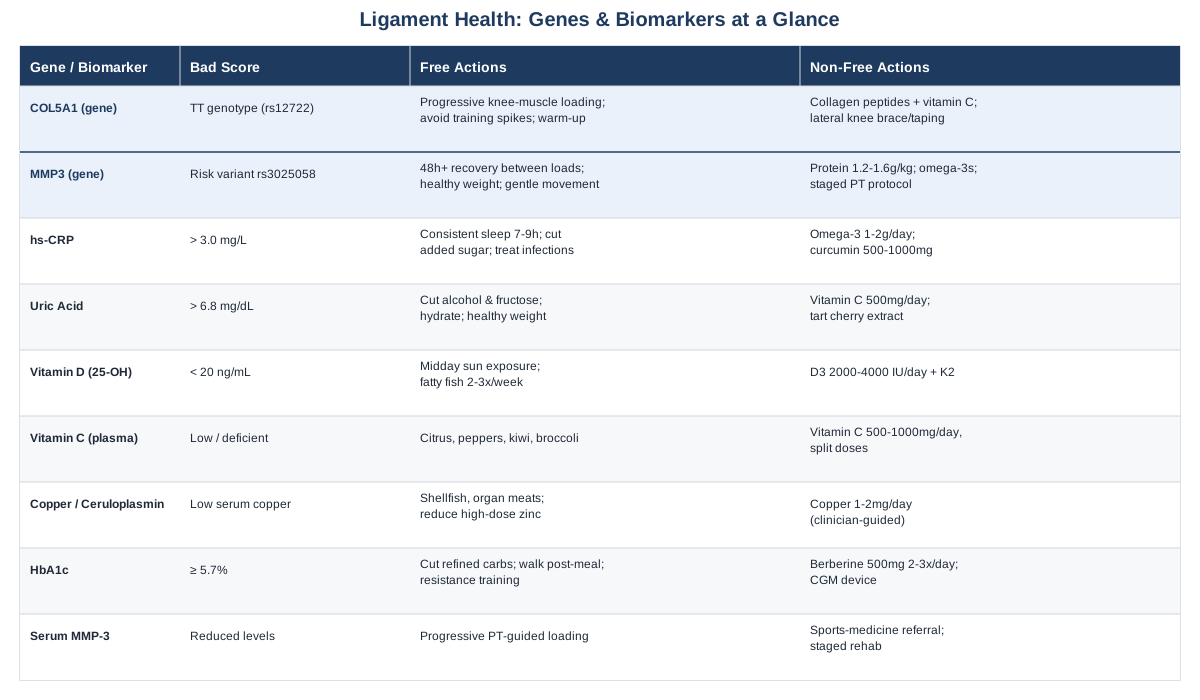
The 7 Biomarkers Worth Tracking When You Have a Fibular Collateral Ligament Cyst
Ganglion and mucoid cysts near the fibular collateral ligament are generally thought to form through myxoid degeneration of connective tissue, sometimes following minor repetitive stress or trauma. There isn't a large body of research linking specific blood biomarkers directly to FCL cyst formation itself — this is a relatively uncommon, localized lesion, and most of the underlying research on ligament tissue quality comes from studies of the ACL, Achilles tendon, and rotator cuff. What follows draws on that broader connective-tissue literature, applied sensibly to a ligament cyst context: these markers reflect the biological environment your ligament tissue is healing and remodeling in, which matters whether you're watching a small cyst, recovering from aspiration, or trying to reduce the odds it comes back.
High-Sensitivity C-Reactive Protein (hs-CRP)
hs-CRP is the most widely used blood marker of low-grade systemic inflammation, and it correlates with local joint inflammatory activity in conditions like osteoarthritis, where a CRP-derived neoepitope has been shown to track knee and multi-joint inflammation (NIH: CRP neoepitope and knee inflammation). A persistently elevated hs-CRP suggests your body is running a background inflammatory load that can slow soft-tissue healing and keep a periarticular cyst irritated and symptomatic, even if it isn't the direct cause of the lesion.
How to measure it
hs-CRP is a standard blood draw available through primary care or direct-to-consumer lab services, typically costing between $10 and $30 without insurance. A result under 1.0 mg/L is generally considered low risk from an inflammatory standpoint; above 3.0 mg/L is worth discussing with a clinician, especially if repeated on a separate day.If the score is off, the plan without supplements or equipment
Prioritize sleep consistency (7 to 9 hours, regular wake time), since poor sleep is one of the most reliable drivers of elevated CRP. Reduce ultra-processed food and added sugar intake, which independently raises inflammatory markers, and address any underlying dental, gut, or skin infections, which can quietly keep CRP elevated. Reassess after 8 to 12 weeks rather than week to week, since CRP is noisy and reacts to any recent illness.If the score is off, the plan with supplements or equipment
Omega-3 fatty acids (1 to 2 g/day EPA/DHA combined, with food) have the most consistent evidence for modestly lowering CRP over 8 to 12 weeks; cycle by reassessing levels quarterly rather than taking indefinitely without recheck. Curcumin (500 to 1000 mg/day with piperine or a phospholipid formulation for absorption) is a reasonable adjunct with a good safety profile, though it can interact with blood thinners. Avoid stacking multiple anti-inflammatory supplements at once, since it becomes impossible to know what's actually working.Serum Uric Acid
This one is a genuinely useful screen precisely because of a diagnostic trap: gouty tophi can form directly on or around knee ligaments and have been reported presenting as a mass on the posterior cruciate ligament and even mimicking an ACL lesion on imaging (NIH: gouty tophus presenting as ACL mass, NIH: atypical gouty tophus as PCL cyst). A lateral knee mass near the fibular collateral ligament deserves the same consideration. If uric acid is high, it doesn't confirm your cyst is a tophus rather than a true ganglion, but it flags a differential worth raising with your imaging team, since the management is different.
How to measure it
Serum uric acid is part of most comprehensive metabolic panels and costs $10 to $25 alone. Values above 6.8 mg/dL are the threshold at which urate becomes prone to crystallizing in tissue, though many people run high without symptoms.If the score is off, the plan without supplements or equipment
Reduce alcohol (especially beer) and high-fructose beverages, both strongly linked to elevated uric acid. Moderate purine-dense foods like organ meats and shellfish rather than eliminating them outright, stay well hydrated, and maintain a healthy body weight, since adiposity independently raises uric acid production.If the score is off, the plan with supplements or equipment
Vitamin C (500 mg/day) has modest, consistent evidence for lowering uric acid over months, with minimal side effects at that dose. Tart cherry extract is commonly used anecdotally for urate and inflammation, though the trial evidence is smaller and mixed — treat it as a low-risk trial-and-observe option rather than a guaranteed fix. If uric acid stays significantly elevated despite lifestyle changes, this is a conversation for a physician, not a supplement aisle, since prescription urate-lowering therapy exists and is well studied.25-Hydroxyvitamin D
Tendons and ligaments express the vitamin D receptor directly, and a recent scoping review found that sufficient vitamin D status is associated with more favorable healing outcomes and lower revision rates after tendon surgery, likely through effects on inflammation modulation, cell proliferation, and extracellular matrix remodeling (NIH: vitamin D and postoperative tendon healing). The evidence base here is still emerging and concentrated in tendon rather than ligament tissue specifically, so treat it as a plausible, low-risk lever rather than a settled fact.
How to measure it
A 25-hydroxyvitamin D blood test costs $20 to $50 out of pocket. Most labs flag under 20 ng/mL as deficient and 20 to 30 ng/mL as insufficient; many musculoskeletal-health-focused clinicians target 40 to 60 ng/mL, though there isn't universal consensus above the deficiency threshold.If the score is off, the plan without supplements or equipment
Ten to twenty minutes of midday sun exposure on bare skin several times a week, when season and skin tone allow, meaningfully raises vitamin D over 8 to 12 weeks. Include fatty fish (salmon, mackerel, sardines) two to three times weekly.If the score is off, the plan with supplements or equipment
Vitamin D3, 2000 to 4000 IU/day with a meal containing fat for absorption, is a reasonable and safe correction dose for most adults; retest in 8 to 12 weeks and adjust rather than guessing indefinitely, since D is fat-soluble and can accumulate at high, sustained doses. Pairing with vitamin K2 (90 to 180 mcg/day) is a common practice to support proper calcium utilization when supplementing D long term. A UVB lamp is a niche equipment option for those with very limited sun exposure, used for short, controlled sessions per manufacturer guidance to avoid skin burns.Plasma Vitamin C (Ascorbate)
Vitamin C is a required cofactor for prolyl and lysyl hydroxylase, the enzymes that stabilize the collagen triple helix during synthesis. A systematic review of musculoskeletal injury studies found that vitamin C supplementation increased type I collagen synthesis and reduced oxidative stress markers during tissue healing (NIH: vitamin C, collagen synthesis, and oxidative stress after musculoskeletal injury). This is one of the more mechanistically direct links on this list — without adequate vitamin C, newly formed collagen is structurally weaker.
How to measure it
Plasma vitamin C isn't part of routine panels; it typically requires a specialty or functional-medicine lab and runs $40 to $90. Because levels are affected by recent intake, fasting status for the test should be standardized if you're tracking it over time.If the score is off, the plan without supplements or equipment
Citrus fruit, bell peppers, kiwi, broccoli, and strawberries are all vitamin-C-dense and can restore adequate levels within a few weeks for most people without any supplementation.If the score is off, the plan with supplements or equipment
Vitamin C, 500 to 1000 mg/day, split into two doses for better absorption, is inexpensive and low-risk; doses above 2000 mg/day can cause gastrointestinal upset and are generally unnecessary. There's no strong rationale for cycling this one — it's water-soluble and excess is simply excreted — but reassess intake if you stop supplementing to make sure diet alone covers it.Copper / Ceruloplasmin
Copper is the essential cofactor for lysyl oxidase, the enzyme responsible for cross-linking collagen and elastin fibers into mechanically stable tissue — without adequate copper-dependent cross-linking, collagen fibrils form in a disorganized, weaker structure (NIH: copper and the synthesis of elastin and collagen, NIH: lysyl oxidase and ordered collagen fibrillogenesis in tendon). This is a less commonly discussed marker, but it's directly relevant to ligament tensile strength.
How to measure it
Serum copper and ceruloplasmin (the copper-transport protein, a more stable proxy) are available through most labs for $30 to $70 combined. True dietary copper deficiency is uncommon but occurs more often than assumed in people who supplement high-dose zinc long-term, since zinc and copper compete for absorption.If the score is off, the plan without supplements or equipment
Shellfish, organ meats, nuts, seeds, and dark chocolate are copper-rich foods that can correct a mild deficiency within a couple of months. If you're taking high-dose zinc, reducing it is often enough to normalize copper on its own.If the score is off, the plan with supplements or equipment
Copper supplementation (1 to 2 mg/day) should be approached cautiously and ideally under clinical guidance, since the therapeutic window is narrow and excess copper is toxic — this is not a marker to self-correct aggressively. If supplementing, keep the zinc-to-copper intake ratio roughly balanced (commonly cited around 8:1 to 15:1) and recheck ceruloplasmin after 8 to 12 weeks rather than continuing indefinitely.HbA1c (Glycated Hemoglobin)
Chronically elevated blood glucose accelerates the formation of advanced glycation end-products (AGEs) that non-enzymatically cross-link collagen fibrils in a disorganized way, distinct from the ordered enzymatic cross-linking copper enables. Research on diabetic tendon tissue shows AGEs suppress mitochondrial function and proliferative capacity in tendon-derived fibroblasts, and reduce the normal sliding behavior between collagen molecules that gives healthy tissue its resilience (NIH: AGEs suppress mitochondrial function in tendon fibroblasts). In plain terms: poorly controlled blood sugar makes connective tissue stiffer and slower to repair itself.
How to measure it
HbA1c is a standard, inexpensive test ($15 to $30) reflecting average blood glucose over roughly three months. Under 5.7% is normal, 5.7 to 6.4% is prediabetic range, and 6.5% or above meets the diabetes threshold.If the score is off, the plan without supplements or equipment
Reducing refined carbohydrate and added sugar intake, walking for 10 to 15 minutes after meals, and adding resistance training two to three times weekly are the most evidence-backed, no-cost interventions for improving glycemic control and, over months, HbA1c.If the score is off, the plan with supplements or equipment
Berberine (500 mg two to three times daily with meals) has trial evidence comparable to some first-line glucose-lowering approaches, though it can cause GI upset and interacts with several medications, so check with a physician first, particularly if already on glucose-lowering drugs. A continuous glucose monitor (roughly $50 to $100/month) is the most useful equipment option here, since it shows in real time which specific foods and habits spike your glucose, letting you personalize changes instead of guessing. Recheck HbA1c every three months, since that matches its biological turnover window.Serum MMP-3 (Matrix Metalloproteinase-3)
MMP-3 is the enzyme primarily responsible for breaking down and remodeling collagen, proteoglycans, and other extracellular matrix components in tendon and ligament tissue. It's the more advanced, specialty-lab option on this list: research has found reduced MMP-3 levels in tissue affected by painful tendinopathy and tendon rupture, suggesting impaired matrix turnover and remodeling capacity (NIH: MMP-3 gene polymorphisms and tendon-ligament injuries). This test isn't part of routine primary-care panels and is mostly used in research or sports-medicine specialty settings.
How to measure it
Serum or synovial MMP-3 testing runs $100 to $300 through specialty or research-affiliated labs and typically requires a referral from a sports medicine physician or rheumatologist; it is not something to order casually without a clinical reason.If the score is off, the plan without supplements or equipment
Because MMP-3 reflects active tissue remodeling, the most relevant non-supplement lever is appropriately progressive loading of the surrounding musculature (particularly the lateral quadriceps, biceps femoris, and iliotibial band complex that support the FCL) under a physical therapist's guidance, avoiding both total immobilization and overuse, both of which disrupt normal remodeling balance.If the score is off, the plan with supplements or equipment
There is no well-established supplement that reliably normalizes MMP-3 specifically, and this is not a marker to self-treat. If levels are markedly abnormal, the appropriate next step is a referral back to orthopedics or sports medicine for a tailored rehabilitation or intervention plan, potentially incorporating modalities like therapeutic ultrasound or blood flow restriction training under supervision, rather than an at-home fix.Taken together, these seven markers sketch a picture of the internal environment your ligament tissue is operating in — inflammatory load, nutrient cofactor status, glycemic control, and remodeling activity. None of them diagnose or rule out a cyst on their own, but a clinician evaluating your knee will often welcome this kind of context, particularly the uric acid result given how easily gouty tophi can be mistaken for ligament cysts on imaging.
The Genetic Side: Two Genes That Influence Ligament Strength and Repair
Biomarkers show your current internal state, but they don't explain why some people's ligament tissue seems more prone to degenerative or cystic change in the first place, even with similar activity levels and lab values. That's where genetics comes in — and it's worth being honest about the strength of this evidence upfront: most of it comes from studies of tendon and ligament injury risk (ACL tears, Achilles ruptures, tennis elbow), not ganglion cysts specifically, and effect sizes are generally modest rather than deterministic. Researchers like Ali Torkamani, whose genomics work has pushed for using polygenic and single-gene data to inform actionable, individualized health decisions rather than treating genetic results as fixed fate, and Gary Brecka, who has popularized applying genetic and biomarker testing together to build practical intervention plans, both represent this "test, then act" philosophy rather than a "genes are destiny" one. That framing applies well here: these variants shift your baseline risk and give you a reason to be more deliberate about the modifiable factors above, not a diagnosis of an unavoidable outcome.
COL5A1
Collagen V is a minor but structurally critical component of ligament and tendon tissue — it regulates the diameter and organization of the much more abundant type I collagen fibrils around it, essentially acting as a scaffold-quality-control gene. A specific variant in the gene's regulatory region, rs12722, has been studied extensively in relation to soft tissue injury risk. A meta-analysis across Caucasian populations found the TT genotype was associated with a meaningfully elevated risk of tendon and ligament injuries, while other genotype combinations were, in some studies, protective (NIH: COL5A1 polymorphisms and tendon-ligament injury risk meta-analysis). A separate study in skiers found certain COL5A1 variants were associated with reduced ACL injury risk (NIH: COL5A1 variants and ACL injury risk in skiers). The practical takeaway if you carry a higher-risk variant: your collagen fibril architecture may organize slightly less efficiently under mechanical stress, which is a reasonable argument for prioritizing the connective-tissue-supportive habits below rather than a reason for alarm.
If the gene is unfavorable, the plan without supplements
Build a consistent, moderate progressive-loading routine for the muscles crossing the knee — especially the lateral hamstring (biceps femoris), popliteus, and IT band — two to three times per week, since well-conditioned surrounding musculature reduces strain transmitted directly through the ligament. Avoid sudden spikes in training volume or unfamiliar high-torque rotational activity, which is when collagen-organization variants matter most. Prioritize a proper warm-up with dynamic mobility work before activities involving pivoting or lateral knee stress.If the gene is unfavorable, the plan with supplements or equipment
Collagen peptides (10 to 15 g/day) taken with a vitamin-C source about 30 to 60 minutes before connective-tissue-loading exercise has trial support for modestly increasing collagen synthesis markers around activity; cycle in phases tied to training blocks (for example, 8 to 12 weeks on during a loading phase) rather than continuously, and stop if any GI upset occurs. A lateral knee brace or taping during high-risk pivoting sports is a reasonable equipment-based option during return-to-activity phases, used situationally rather than permanently, since long-term over-reliance on bracing can reduce proprioceptive adaptation.MMP3
Where COL5A1 affects how collagen is built, MMP3 affects how it's broken down and remodeled — this gene encodes an enzyme that degrades proteoglycans, fibronectin, and collagen as part of normal tissue turnover. Polymorphisms in MMP3 have been studied across a range of tendon and ligament injuries, including Achilles rupture, ACL injury, and tennis elbow, with a meta-analysis of thirteen studies finding that one variant (rs3025058) was associated with increased tendon-ligament injury risk in Caucasian and Brazilian populations, while another (rs679620) was linked to reduced Achilles rupture risk (NIH: MMP3 gene polymorphisms and tendon-ligament injury meta-analysis). If your remodeling enzyme runs less efficiently, matrix turnover after any minor ligament stress may be slower, which is one plausible contributor to degenerative, cyst-prone tissue changes over time — again, a modest risk shift, not a mechanism proven specifically for FCL cysts.
If the gene is unfavorable, the plan without supplements
Give tissue adequate recovery time between higher-load knee sessions — 48 hours minimum for anything involving repeated lateral stress — since impaired remodeling efficiency means overuse errors compound faster than in someone with a more favorable variant. Keep body weight in a healthy range, since excess mechanical load on the knee compounds a slower-remodeling baseline. Gentle, consistent movement (walking, cycling, swimming) supports ongoing matrix turnover better than long stretches of total inactivity.If the gene is unfavorable, the plan with supplements or equipment
There's no supplement that directly corrects MMP3 enzyme efficiency, but supporting the inputs to healthy remodeling helps: adequate protein intake (around 1.2 to 1.6 g/kg body weight daily) gives the raw material for matrix synthesis to keep pace with breakdown. Omega-3s (as above, 1 to 2 g/day) help balance the inflammatory signaling that regulates MMP activity, and should be reassessed every 3 months via symptoms and, if you're tracking it, hs-CRP, rather than adjusted on a whim. If you're recovering from a cyst aspiration or surgery, a formal, staged physical therapy protocol is more valuable equipment-wise than any product, since remodeling-limited tissue benefits most from controlled, incremental loading rather than either rest or aggressive early return to activity.Genetics and blood biomarkers tell two different parts of the same story — one is your starting architecture, the other is your current environment — and the most useful move is treating an unfavorable gene result as a reason to be more attentive to the biomarkers above, not as a separate problem to solve on its own.
The Podcast Episode That Reframes How You Think About Healing
If you want one piece of long-form content on this topic, it's Andrew Huberman's episode Control Pain & Heal Faster with Your Brain on the Huberman Lab podcast. It's not about ligament cysts specifically, but it's one of the more evidence-dense explanations available on how the nervous system, inflammation, and simple daily tools interact to shape tissue repair — directly relevant whether you're managing an active cyst, recovering from aspiration, or just trying to keep the surrounding tissue resilient. Here are ten of the most useful, occasionally counter-intuitive points from it.
Pain is a construction, not a direct readout of tissue damage
The brain generates the experience of pain based on perceived threat, not a one-to-one measurement of injury severity — which is why psychological state, prior experience, and context measurably change how much a given injury hurts. This doesn't mean pain isn't real; it means the volume of pain can be influenced independently of the underlying tissue state.Healing happens in distinct phases, and each has different needs
Tissue repair moves through inflammatory, proliferative, and remodeling phases, each requiring different support — early aggressive anti-inflammatory suppression can actually blunt the signals that kick off proper repair, while unmanaged inflammation later on delays remodeling. Timing matters more than most people assume.Cold exposure has a narrower window of usefulness than commonly believed
Icing immediately post-injury can reduce swelling and pain, but applying cold repeatedly during the days after may blunt the natural inflammatory signaling that's needed to actually trigger repair — a nuance often lost in generic "ice everything" advice.Heat can support blood flow and tissue pliability once acute swelling has settled
Once the initial inflammatory spike has passed, heat can support circulation to the area, which may aid the delivery of nutrients and immune cells involved in tissue remodeling.Red and near-infrared light exposure is discussed as a legitimate, if still-maturing, tool
Photobiomodulation is framed as a plausible mechanism for supporting cellular energy production in healing tissue, consistent with the photobiomodulation research discussed later in this article — promising, but still an area with mixed clinical trial results depending on dose and tissue type.Breathing patterns directly modulate the nervous system's pain and stress response
Slow, extended-exhale breathing shifts the autonomic nervous system toward a parasympathetic, lower-stress state, which can reduce the perceived intensity of pain and support a physiological environment more conducive to recovery.Chronic stress and elevated cortisol interfere with tissue repair
Sustained psychological stress keeps cortisol elevated, which can impair collagen synthesis and immune function relevant to healing — connecting directly back to why sleep and stress management aren't "soft" advice but physiologically load-bearing parts of a repair plan.Sleep is described as the single most powerful, least utilized recovery tool
Deep sleep stages are when a large share of tissue repair and growth hormone release occurs; chronically shortened or fragmented sleep measurably slows healing timelines across injury types.Movement and controlled mechanical loading, not just rest, drive proper remodeling
Appropriately dosed movement stimulates the fibroblasts responsible for organized collagen deposition — total immobilization, past the acute phase, tends to produce weaker, more disorganized scar tissue.Emerging peptide research (such as BPC-157) is mentioned, with real caveats
The episode notes interest in peptides being studied for tissue repair signaling, but it's worth being direct here: these remain investigational, are not FDA-approved for this use, carry unknown long-term safety data in humans, and should not be pursued outside of a legitimate research or closely supervised medical context.Taken as a whole, the episode's throughline is that healing is influenced by a stack of controllable inputs — sleep, stress, movement, temperature, light — working alongside, not instead of, whatever clinical treatment your ligament cyst requires.
Complementary Approaches Worth Considering
Alongside the biomarker and genetic picture, a handful of complementary modalities have real, condition-relevant human evidence for supporting knee joint stability, soft tissue swelling, and connective tissue healing. These aren't substitutes for medical evaluation or treatment of the cyst itself, but they're reasonable additions to a broader plan.
Tai Chi
Tai Chi is a slow, weight-shifting movement practice that emphasizes controlled balance and joint position awareness, making it particularly relevant for the proprioceptive and stabilizing demands placed on the fibular collateral ligament during everyday pivoting and weight-bearing. Because the FCL is a key lateral stabilizer of the knee, improving the surrounding neuromuscular control can reduce the abnormal micro-stress that may contribute to degenerative cystic change over time.A pilot randomized controlled trial in people with knee osteoarthritis found that 12 weeks of twice-weekly Tai Chi practice, using modified Yang-style forms, produced measurable improvements in knee joint proprioception compared to a stretching and education control group (NIH: Tai Chi and knee proprioception in osteoarthritis RCT). The evidence is specific to osteoarthritis populations rather than isolated ligament cysts, so it should be read as suggestive of a broader joint-stability benefit rather than condition-specific proof.
Realistically, this means two 30- to 45-minute sessions per week of a beginner Tai Chi class or app-guided routine, continued for at least 12 weeks before expecting a noticeable change in balance or joint awareness. It's low-risk and can be done alongside any medical management of the cyst, though anyone with significant pain during weight shifting should get clearance from a physical therapist on modified stances first.
Yoga
Yoga combines static and dynamic postures that build strength, flexibility, and body awareness around a joint, which is relevant here for the same proprioceptive and load-distribution reasons as Tai Chi, with an added flexibility component for the iliotibial band and lateral hip structures that influence FCL strain.A randomized controlled trial of a yoga-based lifestyle intervention in people with knee osteoarthritis found meaningful improvements in pain and functional outcomes compared to standard exercise therapy (NIH: yoga-based lifestyle intervention RCT in knee osteoarthritis). As with Tai Chi, this evidence comes from osteoarthritis populations rather than ligament cysts specifically, so the extrapolation is reasonable but not condition-proven.
In practice, a beginner-friendly, knee-conscious yoga sequence two to three times weekly — avoiding deep, unsupported lateral knee twisting poses until a clinician confirms it's appropriate for your specific cyst — is a realistic and low-cost way to apply this.
Low-Level Laser Therapy / Photobiomodulation
This modality uses specific wavelengths of red or near-infrared light, applied directly to the skin over the target tissue, based on the theory that it stimulates mitochondrial energy production (via cytochrome C oxidase) in cells involved in tissue repair — directly relevant to supporting ligament healing after a cyst aspiration or during a watch-and-monitor period.The evidence here is genuinely mixed rather than uniformly positive, which is worth stating plainly. A systematic review and meta-analysis of randomized trials found photobiomodulation improved pain and function in tendinopathy (NIH: photobiomodulation for tendinopathy, systematic review and meta-analysis), while a broader systematic review of LLLT's histological and biomechanical effects on tendon healing across animal and human studies found inconsistent results depending on dosing parameters and tissue type (NIH: LLLT effects on tendon healing, systematic review).
Given the mixed evidence, this is best approached as a low-risk adjunct rather than a primary strategy — sessions are typically short (a few minutes per area) and are most reasonably done through a licensed physical therapy or sports medicine clinic that can select appropriate wavelength and dose parameters, rather than relying on an unverified consumer device.
Massage Therapy (Manual Lymphatic Drainage)
Manual lymphatic drainage is a gentle, specific massage technique designed to encourage fluid movement through lymphatic pathways, which is directly relevant to a cystic, fluid-filled lesion and the soft tissue swelling that can accompany it, particularly after aspiration or surgical intervention.A randomized controlled trial examining postoperative swelling after total knee arthroplasty found manual lymphatic drainage produced measurable reductions in swelling as part of a standardized post-treatment protocol (NIH: manual lymphatic drainage and postoperative knee swelling RCT). This evidence comes from a related but distinct surgical context (joint replacement) rather than ganglion cyst aspiration specifically, so the read-across is reasonable but not directly proven for this exact scenario.
A realistic application is one to two sessions weekly with a therapist trained specifically in manual lymphatic drainage technique (not general deep-tissue massage, which uses different pressure and direction) during any period of post-procedure swelling, tapering off as swelling resolves.
Conclusion
A fibular collateral ligament cyst is a localized, usually benign finding, but the tissue environment around it isn't random — it's shaped by measurable, and in some cases modifiable, biological factors. Inflammatory load, uric acid, vitamin D, vitamin C, copper, blood sugar control, and tissue remodeling capacity all influence how resilient your ligament tissue is and how well it heals, whether you're watching a small cyst or recovering from treatment. Genetic variants in COL5A1 and MMP3 add useful context about your baseline collagen architecture and remodeling efficiency, without determining your outcome. And the complementary approaches covered here — Tai Chi, yoga, photobiomodulation, and manual lymphatic drainage — offer real, if sometimes modest, supporting evidence when layered onto proper medical evaluation, not in place of it.
The next smart step is a practical one: get the imaging findings and any recommended treatment plan from your orthopedic provider, then bring this framework to that conversation rather than trying to substitute for it. Consider a baseline panel of the biomarkers above, track how they shift alongside your symptoms over a few months, and keep a simple log of what you notice — pain with specific movements, swelling patterns, response to any intervention. That combination of clinical guidance and your own tracked data is what turns a diagnosis into an actual plan.