This article contains AI generated content.
Fibular Head Avulsion Fracture: 4 Genes And 7 Biomarkers To Track
A fibular head avulsion fracture rarely shows up alone. Most people who search for this term were told, after an X-ray, that a small piece of bone near the top of the fibula had been pulled off — usually by the lateral collateral ligament, the biceps femoris tendon, or the arcuate ligament complex tugging at their attachment point during a twisting or hyperextension injury to the knee. The fracture itself is often small. The concern behind it — instability of the posterolateral corner of the knee, possible stretch or injury to the common fibular (peroneal) nerve, and the question of whether the bone and soft tissue will actually heal well — is usually much bigger than the fragment on the film.
Generic advice tends to stop at "rest, brace, physical therapy, follow up in six weeks." That advice isn't wrong, but it treats every patient as if their biology were identical. It doesn't ask whether your vitamin D is low enough to slow bone consolidation, whether your blood sugar is quietly working against tissue repair, or whether your collagen cross-linking chemistry is a contributing factor in why this ligament gave way under a load someone else might have tolerated. Those questions matter more for an avulsion injury than for almost any other fracture type, because healing here depends on both bone union and ligament/tendon reattachment happening well.
This article takes the more specific approach: it looks at the biomarkers that actually reflect how your body is healing bone and connective tissue right now, and at the genetic variants that may explain part of why this injury happened and how your tissue responds to repair. Neither list is a diagnosis, and neither replaces your orthopedic surgeon or physical therapist. But used alongside their guidance, this information turns a vague recovery timeline into something you can actually track, question, and adjust.
The goal isn't a promise that any single number or gene will "fix" a fibular head avulsion fracture. It's more grounded than that: better information, checked against real evidence, tends to produce better decisions — about what to eat, what to supplement cautiously, what to ask your doctor to test, and what to leave to time and physical therapy. The sections below walk through the biomarkers worth tracking, what current genetic research does and doesn't tell us, one longevity book that reframes how to think about bone and joint resilience, and a short set of complementary approaches with real human evidence behind them.
Summary
Before going deep into lab values and gene names, here's the short version of what's ahead. Healing a fibular head avulsion fracture well depends on more than time in a brace — it depends on whether your body has the raw materials and hormonal signaling to rebuild both bone and ligament. Below, you'll find the seven biomarkers with the clearest human evidence behind them: one that predicts healing speed with a striking tenfold difference in odds, one that diabetes doubles your risk on, and one tied directly to why connective tissue sometimes fails under normal loads. You'll also see which genetic variants — including one carried by a large share of the population — are linked to a lower or higher chance of exactly this kind of ligament-pulling, bone-avulsing injury in the first place, and what can realistically be done about a "bad" version of that gene, with and without supplements. Further down, a widely read longevity book gets summarized through the lens of bone and joint resilience, followed by complementary therapies — from photobiomodulation to tai chi — that have actual clinical trial data behind them rather than just tradition. Read on before you decide your recovery plan is "just wait and see."
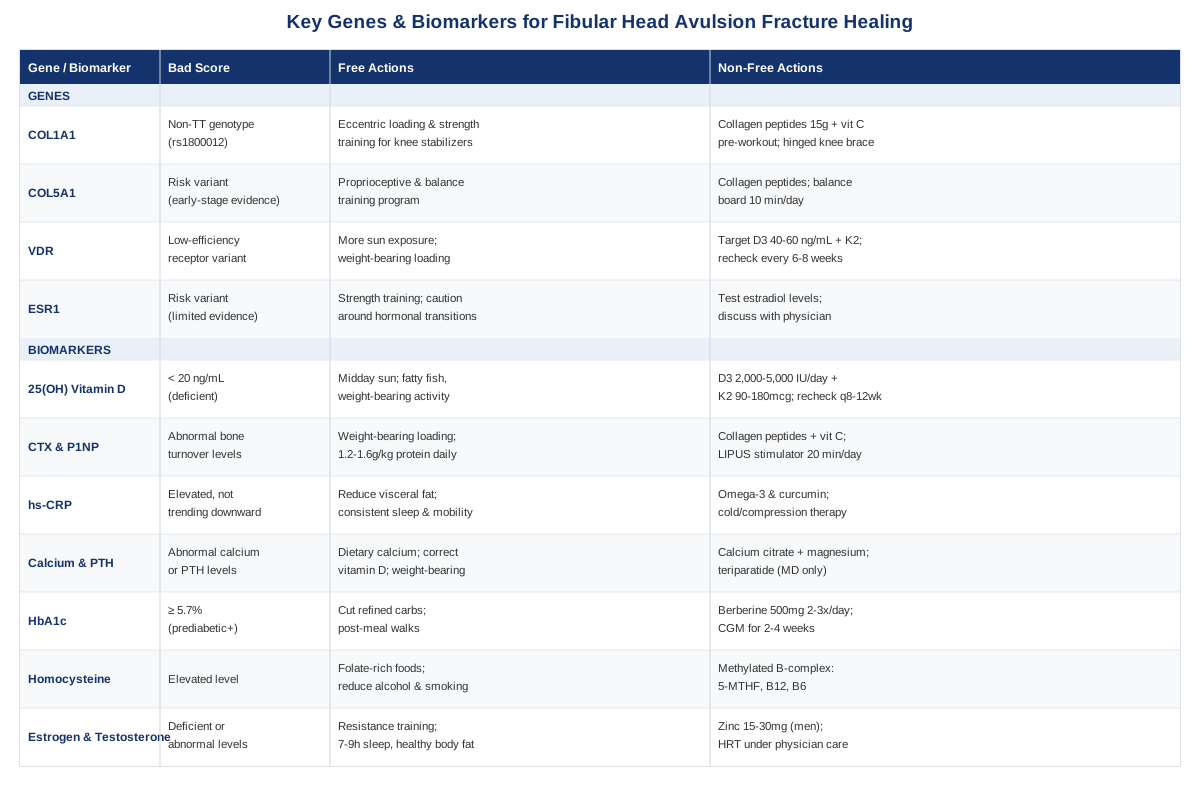
7 Biomarkers To Track After A Fibular Head Avulsion Fracture
An avulsion fracture at the fibular head is a two-tissue problem: a bone fragment needs to reunite, and the ligament or tendon that pulled it loose needs to reattach and remodel with enough strength to stabilize the knee again. That means the biomarkers worth watching span bone metabolism, inflammation, blood sugar regulation, and connective tissue chemistry — not just a single "fracture healing number," because no such single number exists. The seven below are the ones with the most direct human evidence, ordered roughly by how specific their relevance is to bone and ligament healing itself.
1. 25-Hydroxyvitamin D
Vitamin D governs how much calcium your gut absorbs and how that calcium gets deposited into the bone matrix that's trying to bridge your fracture. Low vitamin D status has been associated with slower and less complete fracture healing in human trials, including a randomized controlled trial in which high-dose D3 supplementation was linked to improved clinical healing outcomes compared with placebo, although the study's prespecified primary endpoints didn't reach statistical significance — a nuance worth knowing rather than glossing over (RCT on vitamin D and fracture healing).
How To Measure It
A serum 25(OH)D blood test costs roughly $40 to $120 out of pocket, or is often bundled into a standard metabolic panel if your physician orders it. Results are reported in ng/mL; most labs flag anything under 20 ng/mL as deficient, with 30-50 ng/mL considered a reasonable target range for bone health, though some practitioners aim slightly higher during active fracture recovery.If The Score Is Bad: The Plan Without Supplements
Fifteen to thirty minutes of midday sun exposure on bare skin, several times a week, adjusted for skin tone and latitude; regular intake of fatty fish, egg yolks, and fortified dairy; and weight-bearing activity as soon as your surgeon or physical therapist clears it, since mechanical loading and vitamin D status work together to stimulate bone remodeling.If The Score Is Bad: The Plan With Supplements Or Equipment
Vitamin D3 in the range of 2,000 to 5,000 IU daily, ideally paired with vitamin K2 (as MK-7) at 90-180 mcg to help direct calcium toward bone rather than soft tissue. Recheck blood levels every 8 to 12 weeks and adjust the dose based on results rather than stopping arbitrarily. A UVB light box is a reasonable substitute in low-sunlight climates during winter months. Side effects appear mainly with sustained doses above 10,000 IU/day: hypercalcemia and kidney stone risk, so anyone on higher doses should have serum calcium monitored periodically.2. Bone Turnover Markers: CTX And P1NP
CTX (a marker of bone resorption) and P1NP (a marker of bone formation) reflect the remodeling activity happening at your fracture site in real time. In a prospective cohort of patients recovering from long-bone fractures, elevated CTX and P1NP measured at six weeks were strongly associated with confirmed radiological healing at twelve weeks — with an odds ratio around 10.5 — suggesting these markers may act as an early, blood-based preview of whether a fracture is on track before it's visible on imaging (bone turnover markers and fracture healing).
How To Measure It
These aren't part of routine post-fracture labs — you'll need to specifically ask an orthopedic surgeon or endocrinologist to order a bone turnover panel. Cost runs $50 to $150 per marker. CTX has meaningful diurnal variation, so a fasting morning draw improves consistency between repeat tests.If The Score Is Bad: The Plan Without Supplements
Progressive, cleared weight-bearing loading is the single strongest natural driver of healthy bone turnover balance. Alongside that, aim for 1.2 to 1.6 grams of protein per kilogram of body weight daily to supply the amino acids needed for collagen matrix formation, and avoid heavy, prolonged NSAID use in the early weeks — the evidence on NSAIDs blunting bone formation is mixed, but it's a reasonable caution during active healing.If The Score Is Bad: The Plan With Supplements Or Equipment
Collagen peptides at roughly 15 grams daily combined with 500 mg of vitamin C (a required cofactor for collagen synthesis) is a low-risk combination worth 8-12 weeks of consistent use. If dietary calcium is low, calcium citrate at 500-600 mg can be added. For confirmed delayed union, a low-intensity pulsed ultrasound (LIPUS) bone stimulator — used about 20 minutes daily under physician guidance — has supporting evidence in nonunion literature, typically continued until union is confirmed on imaging. Side effects are minimal for both: mild GI upset is possible with collagen peptides, and LIPUS occasionally causes minor skin irritation at the contact site.3. hs-CRP (And ESR)
High-sensitivity C-reactive protein tracks systemic inflammation, which rises normally after any fracture or surgery but should trend downward as healing progresses. It's worth being precise about what this marker can and can't tell you: a large multicenter cohort study found that CRP, alongside white blood cell count and ESR, added limited diagnostic value specifically for identifying fracture-related infection (CRP and fracture-related infection diagnosis). That means CRP is a useful trend marker to watch over time alongside how you actually feel and look at the injury site — not a stand-alone infection test.
How To Measure It
A CRP blood test is inexpensive, typically $15-$50, and widely available; it's often already included in post-operative lab panels when infection is a concern.If The Score Is Bad: The Plan Without Supplements
Addressing excess visceral fat if present, prioritizing consistent sleep, and gentle, cleared mobility work to reduce local swelling all lower baseline inflammatory load without any pills involved.If The Score Is Bad: The Plan With Supplements Or Equipment
Omega-3 fish oil at 1-2 grams combined EPA/DHA daily, and curcumin extract at 500-1,000 mg with piperine to improve absorption, cycled for 8-12 weeks before reassessing labs. Fish oil can mildly increase bleeding risk, so timing around any planned surgery should be discussed with your surgeon. Locally, a cold therapy/compression device used for 15-20 minutes several times daily in the first two weeks is a reasonable non-supplement option for controlling swelling-driven inflammation.4. Calcium And Parathyroid Hormone (PTH)
PTH mobilizes calcium from bone stores when blood calcium drops, and the calcium-PTH axis is central to how much raw material is available for healing. It's worth noting the evidence here is more mixed than marketing around bone-building drugs suggests: a meta-analysis of five randomized trials on teriparatide (a PTH analog) found improvements in some functional outcomes but no significant acceleration of radiographic healing time overall (teriparatide and fracture healing meta-analysis). That doesn't make the calcium-PTH axis irrelevant — it means pharmacologic PTH isn't a guaranteed shortcut, and the everyday inputs still matter.
How To Measure It
A corrected serum calcium test plus intact PTH blood test runs $60-$150 and is generally ordered if calcium levels look abnormal or fractures have been recurrent.If The Score Is Bad: The Plan Without Supplements
Dietary calcium from dairy, leafy greens, and almonds, combined with correcting vitamin D status (since PTH rises reactively when vitamin D is low), plus cleared weight-bearing activity.If The Score Is Bad: The Plan With Supplements Or Equipment
Calcium citrate or carbonate at 500-1,000 mg daily, split into smaller doses for better absorption, alongside magnesium glycinate at 200-400 mg to support PTH regulation. Avoid megadosing calcium above roughly 2,000 mg/day, since cardiovascular calcification risk from excess supplemental calcium remains debated. Teriparatide itself is prescription-only and physician-administered — typically a 20 mcg daily injection with a lifetime cap around 24 months — and is reserved for confirmed delayed union under specialist supervision, not a self-directed option.5. HbA1c And Fasting Glucose
Blood sugar control has one of the clearest and most consequential links to fracture healing on this list. A systematic review and meta-analysis found that diabetes more than doubled the risk of impaired fracture healing compared with non-diabetics (odds ratio 2.11) (diabetes and impaired fracture healing meta-analysis). Even sub-diabetic glucose dysregulation is worth catching early during recovery from an avulsion fracture.
How To Measure It
HbA1c costs $20-$50 and is part of most routine panels. Under 5.7% is considered normal, 5.7-6.4% prediabetic, and 6.5% or above diabetic range — the diabetic range is where healing risk rises most sharply.If The Score Is Bad: The Plan Without Supplements
Reducing refined carbohydrates and added sugar, short walks after meals to blunt glucose spikes, resistance training as cleared, and prioritizing sleep and stress management, since cortisol elevation independently worsens glucose control.If The Score Is Bad: The Plan With Supplements Or Equipment
Berberine at 500 mg two to three times daily, cycled for 8-12 weeks with reassessment, can modestly improve glucose control, though it can cause GI upset and should not be combined with diabetes medications without physician oversight. A continuous glucose monitor worn for 2-4 diagnostic weeks ($50-$100/month) is a useful, equipment-based way to identify your own personal glucose spikes. If HbA1c is already in diabetic range, this shifts from a supplement conversation to a medical management one with your physician.6. Homocysteine
Elevated homocysteine has been associated with increased osteoporotic fracture risk independent of bone density, and the proposed mechanism is directly relevant here: homocysteine appears to disrupt collagen cross-linking, the same chemistry that determines how strong a healing ligament or bone matrix actually is (homocysteine and fracture risk).
How To Measure It
A fasting plasma homocysteine test costs $40-$100 and is not part of standard panels — it needs to be specifically requested.If The Score Is Bad: The Plan Without Supplements
Increasing folate-rich foods like leafy greens and legumes, and reducing excess alcohol and smoking, both of which deplete the B vitamins needed to metabolize homocysteine efficiently.If The Score Is Bad: The Plan With Supplements Or Equipment
A methylated B-complex — 5-MTHF folate at 400-800 mcg, methylcobalamin B12 at 500-1,000 mcg, and B6 at 25-50 mg — taken daily, with homocysteine rechecked at 8-12 weeks to confirm response before continuing long-term. Side effects are generally mild, but sustained B6 doses above 100 mg/day have been linked to peripheral neuropathy, so megadosing should be avoided.7. Estrogen And Testosterone
Sex hormones influence the mechanical properties of ligament tissue itself, which matters directly for an injury involving the lateral collateral ligament and posterolateral corner. A 2025 systematic review and meta-analysis found that estradiol and relaxin have the greatest measurable effect on ligament mechanical and cellular properties in women, while normal menstrual-cycle fluctuations alone don't meaningfully change laxity — pregnancy, oral contraceptives, and menopause are the states that do (sex hormones and ligament properties). Testosterone plays a comparable supportive role in bone density and collagen synthesis in men.
How To Measure It
Serum estradiol and total/free testosterone testing costs $50-$150; testosterone should be drawn in the morning due to diurnal variation.If The Score Is Bad: The Plan Without Supplements
Resistance training, 7-9 hours of consistent sleep, and maintaining body fat in a healthy range in either direction — both too low and too high body fat disrupt hormone balance and, by extension, connective tissue quality.If The Score Is Bad: The Plan With Supplements Or Equipment
For men with mild, confirmed deficiency, zinc at 15-30 mg daily alongside vitamin D optimization can modestly support natural testosterone production. Confirmed hormone deficiency in either sex — including postmenopausal estrogen loss contributing to recurrent ligament injury — is a conversation for hormone replacement therapy with a physician, not a self-directed supplement plan, since any hormone therapy carries risks that require medical supervision and monitoring.What Genes May Also Be Involved
Biomarkers tell you what's happening in your body right now. Genetics can add context on why some people are more prone to this exact injury pattern in the first place, and how their tissue might respond to repair. Researchers like Ali Torkamani, whose work on genomic risk prediction has shaped how consumer and clinical genetics are interpreted, and Gary Brecka, known for popularizing practical genetic panels around collagen, methylation, and nutrient metabolism genes, are reasonable starting points for understanding how this kind of information gets used outside a research lab. That said, most of the genetic evidence below is early- to moderate-strength — useful context, not a verdict.
COL1A1
COL1A1 codes for a chain of type I collagen, the dominant structural protein in bone, tendon, and ligament. A meta-analysis of case-control genetic association studies found that the COL1A1 rs1800012 TT genotype was linked to reduced susceptibility to sports-related tendon and ligament injuries, including ACL injuries — meaning certain genotype carriers appear to have comparatively less structurally resilient collagen under load (COL1A1 and ligament/tendon injury risk).
If The Gene Is Bad: The Plan Without Supplements
Progressive eccentric loading and structured strength training for the muscles crossing the knee — hamstrings, quadriceps, and hip stabilizers — can partially compensate for less resilient collagen by reducing the mechanical strain the ligament itself has to absorb. Consistent, gradual training load (rather than sporadic high-intensity activity) is the single most evidence-backed non-supplement lever here.If The Gene Is Bad: The Plan With Supplements Or Equipment
Collagen peptides (15g/day) plus vitamin C (500mg) taken about 30-60 minutes before loading exercise has some supporting mechanistic and small human trial evidence for connective tissue synthesis, cycled in phases of 8-12 weeks around rehab blocks. A hinged knee brace during higher-load activity is a reasonable mechanical compensator during the return-to-activity phase. Side effects are minimal; collagen supplementation is generally well tolerated.COL5A1
COL5A1 regulates collagen fibril assembly and has been studied extensively — most prominently by researchers building on early work from groups like Malcolm Collins' lab — in relation to ACL and other soft-tissue injury susceptibility. The evidence here is genuinely early-stage: several case-control studies suggest certain COL5A1 variants associate with altered soft-tissue injury risk and joint range of motion, but findings haven't been as consistently replicated as COL1A1's, so this should be read as a hypothesis-generating area rather than settled science.
If The Gene Is Bad: The Plan Without Supplements
Because COL5A1-linked risk appears to interact with joint hypermobility and flexibility, targeted proprioceptive and balance training — the same kind used in ACL injury prevention programs — is a sensible, low-risk response regardless of confirmed genotype.If The Gene Is Bad: The Plan With Supplements Or Equipment
Given the early evidence, an aggressive supplement stack isn't well justified here. A conservative approach — collagen peptides as described above, plus a balance board or wobble board used 10 minutes daily for proprioceptive training — is reasonable without overstating what's proven.VDR (Vitamin D Receptor)
Variants in the VDR gene affect how efficiently vitamin D signaling actually reaches bone tissue, independent of your measured blood vitamin D level. This means two people with identical 25(OH)D blood levels can have meaningfully different downstream calcium handling and bone remodeling response, depending on their VDR genotype.
If The Gene Is Bad: The Plan Without Supplements
Since receptor sensitivity, not just circulating vitamin D, is the limiting factor, consistent sun exposure and weight-bearing loading (which independently stimulates bone remodeling pathways) matter more for someone with a less efficient VDR variant.If The Gene Is Bad: The Plan With Supplements Or Equipment
Running vitamin D levels toward the higher end of the normal range (40-60 ng/mL rather than just above 30) with the same D3/K2 protocol described earlier, and rechecking levels more frequently (every 6-8 weeks rather than 8-12), gives a practical way to compensate for reduced receptor efficiency without guessing.ESR1 (Estrogen Receptor Gene)
ESR1 variants affect estrogen receptor sensitivity in ligament and bone tissue. This is one of the least-established areas on this list — early studies suggest a link between certain ESR1 variants and ligament laxity or lower bone density, but robust, large-scale human replication specific to knee ligament injury is still limited.
If The Gene Is Bad: The Plan Without Supplements
Strength training focused on the muscles supporting the knee, and being intentional about training load around major hormonal transitions (postpartum, perimenopause), are reasonable precautions independent of confirmed genotype.If The Gene Is Bad: The Plan With Supplements Or Equipment
Given the thin evidence base, the more defensible move is testing actual estradiol levels (biomarker #7 above) rather than acting on ESR1 genotype alone, and discussing any hormone-related findings with a physician rather than self-supplementing based on genetics.Genetics can explain part of your risk profile, but it rarely explains all of it — and unlike a gene, a biomarker can be retested next month to see if your plan is actually working. That's the practical reason the biomarker list above deserves more of your attention day to day.
The Longevity Book That Reframes How You Should Think About Bone And Joint Health
Peter Attia's Outlive: The Science and Art of Longevity isn't written about fibular head fractures specifically, but its central argument — that most modern medicine treats the body reactively instead of tracking the metrics that predict decline years in advance — applies directly to how people think about a "minor" avulsion fracture. Below are ten of its most relevant ideas, each with a direct line to injury prevention, healing, and long-term joint resilience.
1. Medicine 3.0 Means Tracking Risk Before It Becomes A Diagnosis
Attia's framework contrasts reactive "Medicine 2.0" (wait for a problem, then treat it) with a proactive "Medicine 3.0" that tracks biomarkers and functional capacity long before something breaks. Applied here: the biomarkers above aren't just for post-injury recovery — tracked earlier, several of them (vitamin D, HbA1c, hormone status) might have flagged elevated injury risk before the fracture happened.2. VO2 Max Is One Of The Most Powerful Predictors Of Longevity
Attia repeatedly cites VO2 max as having a stronger association with all-cause mortality risk reduction than almost any drug. It's not a bone-specific marker, but higher aerobic capacity correlates with better tissue oxygenation and recovery capacity during rehab from any musculoskeletal injury.3. The "Centenarian Decathlon" Concept: Train For The Physical Tasks Of Your Future Self
Rather than training generically, Attia proposes identifying specific physical tasks you want to be capable of decades from now (carrying groceries, getting off the floor unassisted, hiking) and reverse-engineering training toward them. For someone recovering from a knee ligament and bone injury, this reframes rehab as building toward a functional target, not just "getting back to normal."4. Stability And Balance Training Reduce Injury Recurrence
Attia argues that stability work is chronically undertrained compared to strength and cardio, yet it's often the missing piece in preventing the exact kind of twisting or hyperextension mechanism that causes posterolateral corner and fibular head avulsion injuries in the first place.5. Muscle Mass Is A Longevity Organ, Not Just An Aesthetic Goal
Muscle tissue acts as a metabolic buffer and a mechanical shock absorber for joints. Attia frames declining muscle mass ("sarcopenia") as a driver of injury risk in aging populations — directly relevant to why maintaining quadriceps and hamstring strength during and after fracture recovery matters beyond just "looking strong."6. Zone 2 Training Builds The Metabolic Base For Recovery
Attia is well known for advocating large volumes of low-intensity "Zone 2" cardio to build mitochondrial efficiency. During fracture recovery, when high-intensity training is off the table, Zone 2 work is one of the few cardiovascular options that remains accessible on a stationary bike or in a pool without loading the injured knee.7. Grip Strength Is An Underrated Biomarker Of Overall Robustness
Attia cites grip strength as a simple, cheap proxy for overall physical resilience and future disability risk. It won't tell you anything about your fibula directly, but it's a useful, five-second check-in metric during a recovery period when many other training metrics are temporarily unavailable.8. Bone Density Testing Is Underused, Especially Around Perimenopause[TITLE level="3"]
Attia argues that DEXA bone density scans are ordered too late and too rarely, particularly in women approaching menopause when estrogen decline accelerates bone loss — directly tying back to the estrogen-ligament connection discussed in the biomarker section above.9. Sleep Is Foundational To Every Repair Process In The Body
Attia treats sleep as a non-negotiable pillar alongside exercise and nutrition, citing its role in tissue repair, hormone regulation, and inflammation control — all of which are directly relevant during active fracture and ligament healing.10. You Should Learn To Read Your Own Labs
Perhaps the book's most quietly radical argument is that patients should understand their own bloodwork well enough to ask informed questions, rather than deferring entirely to a once-a-year physical. That's the same spirit behind tracking the seven biomarkers above rather than waiting passively for a six-week follow-up X-ray.Complementary Approaches Worth Considering
None of the following replace surgical evaluation, bracing, or structured physical therapy for a fibular head avulsion fracture — but each has real human clinical evidence behind a specific, relevant use case during recovery.
Low-Level Laser Therapy (Photobiomodulation)
Low-level laser therapy uses specific wavelengths of red or near-infrared light to stimulate cellular activity at the injury site, and it has been studied directly in bone fracture healing rather than just pain relief. A randomized controlled trial in patients with closed wrist and hand fractures found that 830nm LLLT improved not just pain, but objective healing indicators including functional disability scores, grip strength, and radiographic healing parameters compared with placebo (LLLT and fracture healing RCT). Evidence in fibular-specific avulsion fractures doesn't exist yet, so this should be treated as a plausible extrapolation from other closed fracture types rather than condition-specific proof. In practice, this typically means short sessions (a few minutes per area) several times a week with a clinic-grade or well-reviewed home device, applied over the fracture site once a physician confirms the fracture is closed and stable, alongside — not instead of — standard bracing and rehab.
Massage Therapy
Massage therapy is relevant here mainly for managing post-injury and post-surgical pain, swelling, and anxiety rather than accelerating bone union directly. A randomized controlled trial in patients recovering from tibial shaft fracture surgery found that a simple 10-minute foot massage significantly reduced postoperative pain intensity and anxiety compared with a control group (massage therapy and post-fracture surgery recovery). For a fibular head avulsion injury, a comparable approach would be gentle massage of areas away from the acute fracture and ligament repair site — calf, foot, or the uninjured leg — during the early painful phase, done by a licensed therapist aware of your surgical precautions, rather than direct massage over the fracture or repaired ligament itself.
Biofeedback
Biofeedback uses real-time visual or sensor feedback to help retrain muscle activation and balance control, which is particularly relevant given that posterolateral corner injuries often affect proprioception and, in some cases, common fibular nerve function. A controlled clinical study found that one month of visual biofeedback-based rehabilitation significantly improved both static and dynamic balance control in patients recovering from ACL reconstruction, with the largest gains showing up specifically when visual cues were removed — suggesting genuine improvement in the body's own proprioceptive sense, not just reliance on the feedback device (biofeedback and post-ligament-injury balance). Realistically, this looks like structured sessions with a physical therapist using a force plate or balance board with visual feedback, two to three times a week during the mid-to-late rehab phase, once weight-bearing is cleared.
Tai Chi
Tai chi's slow, controlled, weight-shifting movements make it a reasonable late-stage rehabilitation and injury-prevention tool for an injury centered on knee stability. A systematic review and meta-analysis of randomized controlled trials found that tai chi effectively reduces fall risk and improves balance performance across multiple assessment measures in older adults (tai chi and balance/fall risk meta-analysis). The evidence base is strongest for general balance and fall prevention rather than knee-ligament-specific rehabilitation, so it's best framed as a complementary balance tool rather than a replacement for targeted PLC rehab exercises. A practical entry point is a beginner tai chi class, twice weekly, started only once your surgeon or physical therapist confirms sufficient weight-bearing tolerance and joint stability.
Conclusion
A fibular head avulsion fracture heals at the intersection of bone biology, connective tissue chemistry, and mechanical rehabilitation — which is exactly why a single follow-up X-ray date doesn't tell the whole story. The biomarkers in this article give you a way to see, in numbers, whether your vitamin D, bone turnover, inflammation, blood sugar, homocysteine, and hormone status are working with your recovery or quietly against it. The genetic variants add useful context on predisposition, though the evidence there is earlier-stage and should be weighted accordingly. And the complementary approaches — laser therapy, massage, biofeedback, tai chi — each have a specific, evidence-backed role rather than being generic add-ons.
None of this replaces the judgment of your orthopedic surgeon or physical therapist, who can see your imaging and knee stability directly. What it can do is turn your next appointment into a more useful conversation: ask which of these labs are worth checking for your specific case, track the ones that come back abnormal, and revisit them on a set schedule rather than waiting to see if the knee "just feels better." That's the smart next step — not a bigger promise, just a clearer one.
Musculoskeletal: Joint Conditions Sports Injuries
Neurological: Nerve Conditions