This article contains AI generated content.
Foot Drop, Genes and Biomarkers — 5 Genes and 6 Biomarkers to Track
Introduction
If your toes catch on carpet edges, if you find yourself lifting your knee higher than usual to clear the ground, or if the front of one foot slaps down when you walk, you already know something that a lot of people around you don't: this is not clumsiness, and it is not laziness. Foot drop is a mechanical failure of the muscles that lift the front of the foot, usually because the nerve driving them — most often the peroneal (fibular) nerve — is compressed, damaged, or being slowly starved by something upstream. That "something upstream" is where the interesting story lives.
Most advice you'll find stops at the surface. It tells you to wear a brace, do some ankle exercises, and "see a specialist." All of that is reasonable, and none of it is wrong. But it treats foot drop as one single problem when it is really the end point of many different roads — a pinched nerve from crossing your legs, a slipped disc at L5, poorly controlled blood sugar, a vitamin you can't absorb, an old lead exposure, or an inherited quirk in how your nerves build their insulation. The generic version of the advice can't tell those apart, and so it can't tell you which lever will actually move.
This article takes the deeper route. It looks at the genes and epigenetic factors that make some people far more vulnerable to foot drop than others, and at the blood biomarkers that quietly reveal what may be damaging your nerves right now. For each one, you'll get a plan you can run without supplements and a plan that adds supplements or equipment — always with honest notes on frequency, cycling, and side effects.
No part of this replaces a neurologist, and nothing here is a cure. But better information genuinely leads to better decisions. If you understand which gene loaded the gun and which biomarker is pulling the trigger, you can stop guessing and start compensating in the specific ways that fit your body. That is the whole premise of what follows.
Summary
Here is what you are about to learn, and why it may be worth twenty minutes of your attention.
The genetics section covers five genes that repeatedly show up in foot drop: PMP22 (the single most important one — a duplication causes the most common inherited neuropathy, while a deletion makes your nerves collapse under mild pressure), MPZ, GJB1, MFN2, and MTHFR (the one you can actually do the most about). For each, you'll see what it affects and a concrete plan — with and without supplements — to compensate.
The biomarker section names six numbers to track that most people never think to check for a foot problem: HbA1c, vitamin B12 (with methylmalonic acid), homocysteine, vitamin D, hs-CRP, and — the one almost nobody screens for — blood lead. Any of these, out of range, can be quietly poisoning the nerve that lifts your foot.
After that, a summary of a book on neuroplasticity that challenges the old medical belief that damaged nerves and brains can't rewire, plus the complementary approaches (biofeedback, tai chi, red-light therapy) that actually have human trials behind them. Read on to find out which lever is yours to pull.
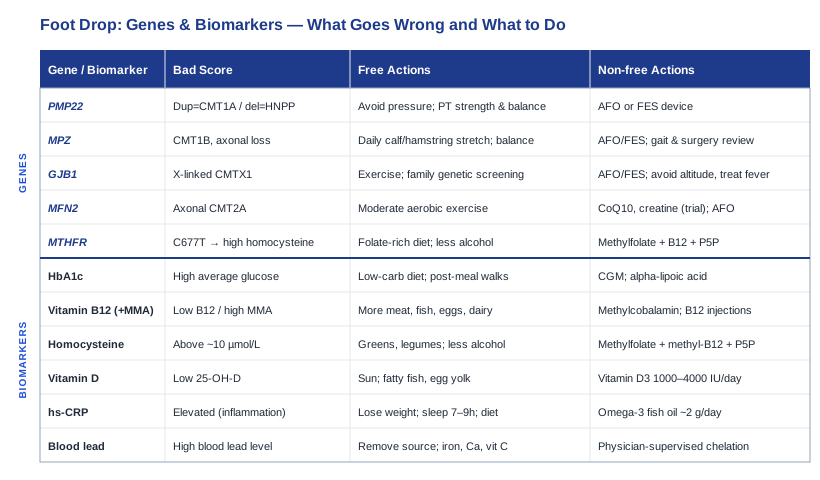
What Recent Genetics Research Suggests About Foot Drop
When foot drop runs in a family, appears in both feet, or shows up young with high arches and hammertoes, genetics is usually in the room. The largest single genetic cause is a group of inherited neuropathies called Charcot-Marie-Tooth disease (CMT), and its close relative hereditary neuropathy with liability to pressure palsies (HNPP). Together these are the reason so many "unexplained" foot drops turn out to be explainable after all.
An important honesty note before we start: you cannot edit these germline genes at home, and no supplement rewrites your DNA. When this section says "the plan to fix a bad gene," it means the realistic thing — protecting the nerve the gene put at risk, supporting the biological pathway the gene sits in, and compensating so the foot still clears the ground. That is where epigenetics matters: how you load, feed, and protect a nerve influences how badly a vulnerable gene actually expresses itself. With that framing, here are the five.
PMP22 — the master gene of inherited foot drop
PMP22 codes for a protein that Schwann cells use to build myelin, the fatty insulation around nerves. The dosage is exquisitely sensitive. A duplication (too much PMP22) causes CMT type 1A, the most common inherited neuropathy, and a deletion (too little) causes HNPP, where nerves buckle under trivial pressure — a crossed leg, a long squat, a night of sleeping oddly. In a 2025 systematic review of PMP22-related neuropathies, weakness and foot drop were the leading presenting symptom, reported in roughly 65% of CMT1A and 76% of HNPP patients (PMP22-Related Neuropathies: A Systematic Review, PMC 2025). HNPP specifically involves the deep peroneal nerve — the exact nerve behind foot drop (Partial gene deletions of PMP22 causing HNPP, PMC).
If the gene is bad, the plan without supplements
For HNPP the single most powerful intervention is pressure avoidance, and it costs nothing. Stop crossing your legs, avoid prolonged squatting and kneeling, pad chair edges, and never fall asleep with an arm or leg compressed. For CMT1A, the evidence-based backbone is exercise and physical therapy: moderate resistance training for the ankle and hip, aerobic work, and balance training. A systematic review of randomized trials found exercise therapy improves strength and function in CMT and is safe when kept moderate (Effectiveness of exercise therapy in CMT: a systematic review of RCTs). Frequency: strength work 2–3 non-consecutive days per week, aerobic activity most days; cycle in a lighter deload week every 4–6 weeks. Side effects: overtraining a partly denervated muscle can worsen it, so stop short of exhaustion and never train to failure.
If the gene is bad, the plan with supplements or equipment
The honest headline: no supplement has been shown to reverse CMT1A. High-dose vitamin C looked promising in mice but failed in large human trials, so don't spend money on it for this purpose. The real levers here are equipment. An ankle-foot orthosis (AFO) — carbon-fiber or custom polypropylene — mechanically holds the toes up and is the highest-value purchase most people with foot drop will make (roughly $100 off-the-shelf to $2,000+ custom). Functional electrical stimulation (FES) devices stimulate the peroneal nerve to lift the foot each step and can be a good alternative for those who dislike a rigid brace. Frequency: wear as needed for walking, daily. Cycling: skin needs rest — inspect for pressure sores and rotate AFO wear. Side effects: skin irritation, disuse of the muscle if you rely on the device without any active exercise, so pair equipment with the movement plan above.
MPZ — when the myelin's structural glue fails
MPZ (myelin protein zero) is the most abundant protein in peripheral myelin; it holds the layers of insulation together. Mutations cause CMT1B, which can range from a severe infantile form to a late-onset, slowly progressive neuropathy that presents in adulthood with — again — foot drop and sensory loss (Mutation analysis of MFN2, GJB1, MPZ and PMP22 in CMT). Late-onset MPZ neuropathy is often mistaken for "just aging" until nerve conduction studies reveal the pattern.
If the gene is bad, the plan without supplements
The management overlaps heavily with PMP22: protect, strengthen, balance. Because MPZ forms can be more axonal (nerve-fiber loss rather than pure insulation loss), the priority is preserving the muscle you still have. Daily calf and hamstring stretching prevents the Achilles contractures that make foot drop functionally worse, and proprioceptive/balance drills reduce falls. Frequency: stretch daily, hold 30–60 seconds; balance work 3–5 times weekly. Side effects: minimal, though aggressive stretching of an insensate foot risks unnoticed strain, so keep it gentle.
If the gene is bad, the plan with supplements or equipment
There is no MPZ-specific supplement. Equipment strategy mirrors PMP22 — an AFO or FES for foot clearance. Where MPZ differs is that more severe axonal forms may benefit from a full gait assessment and, in some cases, orthopedic surgical options (tendon transfer, joint stabilization) once conservative measures are exhausted; that is a specialist decision, not a self-care one. What you can do proactively is avoid known neurotoxic exposures that stack damage on an already-fragile nerve: certain chemotherapy agents, excessive alcohol, and — where medically possible — drugs like high-dose vitamin B6 taken chronically, which is itself neurotoxic.
GJB1 — the X-linked wildcard
GJB1 codes for connexin-32, which forms the gap-junction channels that let Schwann cells shuttle nutrients across myelin. It causes CMTX1, which is X-linked: men are typically affected more severely than women, who may be mild or asymptomatic carriers. It is one of the most common CMT subtypes and can include transient, stroke-like neurological episodes in addition to the classic leg weakness and foot drop (GJB1 Disorders — GeneReviews, NCBI).
If the gene is bad, the plan without supplements
Same evidence-based core — exercise, balance, stretching, pressure and toxin avoidance. Because GJB1 is X-linked, the highest-value "free" intervention is often family screening and genetic counseling: knowing a daughter is a carrier or a son is at risk changes decisions decades early. For the affected individual, a physical-therapy program focused on gait and balance is well supported (Physical therapy interventions for gait and balance in CMT: a scoping review). Frequency and cycling follow the PMP22 template.
If the gene is bad, the plan with supplements or equipment
No proven supplement. The equipment plan is identical (AFO/FES), but with one GJB1-specific caution: because some patients have transient CNS episodes triggered by fever, altitude, or metabolic stress, avoid rapid high-altitude exposure and manage fevers promptly. This is a genuinely gene-specific piece of advice you won't get from generic foot-drop content.
MFN2 — the mitochondrial engine gene
MFN2 (mitofusin-2) governs mitochondrial fusion and transport down the long axons of your nerves. It is the leading cause of the axonal form CMT2A — in one cohort nearly 29% of axonal CMT cases traced to MFN2 (Mutation analysis in axonal CMT). Because the problem is energy delivery to the very ends of the longest nerves, the feet are hit first and hardest, and foot drop is a common early sign (Concomitant MPZ and MFN2 variants and CMT — clinical and genetic review, PMC).
If the gene is bad, the plan without supplements
The strategy that fits the biology is mitochondrial support through activity, not pills. Regular moderate aerobic exercise is the single best-evidenced way to increase mitochondrial density and function in muscle, and a pilot study of anti-gravity aerobic training in CMT1A and CMTX improved balance and stability (Aerobic anti-gravity exercise in CMT: a pilot study, PMC). Frequency: 20–40 minutes of low-impact aerobic work (cycling, swimming, elliptical) most days; cycle intensity so you're not grinding a denervated muscle. Side effects: fatigue is the main limit — MFN2 patients tire quickly, so build volume slowly.
If the gene is bad, the plan with supplements or equipment
Because the defect is energetic, some patients and clinicians trial mitochondrial-support supplements — coenzyme Q10, L-carnitine, creatine, and B-vitamins. Be clear-eyed: human evidence specifically in MFN2 neuropathy is thin to absent, so treat this as experimental, not established. If you try it, a reasonable trial is CoQ10 (ubiquinol form, ~100–200 mg/day with a fatty meal) and creatine monohydrate (3–5 g/day) for 8–12 weeks, then reassess whether anything changed; cycle off if there is no benefit. Side effects are generally mild (GI upset, mild water retention with creatine). Equipment (AFO/FES) remains the reliable performer.
MTHFR — the gene you can actually do the most about
MTHFR doesn't cause CMT, but it earns its place here because it is common, modifiable, and directly tied to nerve health. The C677T variant reduces enzyme activity — homozygotes (TT) may have only 10–20% function — which raises homocysteine, a compound toxic to nerves and blood vessels. Elevated homocysteine and impaired folate/B12 methylation are linked to peripheral neuropathy and to subacute combined degeneration of the cord (MTHFR C677T and subacute combined degeneration, PMC). This is the one gene on the list where a supplement genuinely changes the biochemistry.
If the gene is bad, the plan without supplements
You can lower homocysteine substantially through food alone: folate-rich leafy greens, legumes, and B12 sources (or B12-fortified foods if plant-based), while reducing alcohol, which depletes folate. Frequency: daily dietary pattern, not an event. Side effects: none of note — this is ordinary healthy eating. Also address the classic homocysteine drivers: don't smoke, and treat low thyroid or kidney issues that raise it.
If the gene is bad, the plan with supplements or equipment
For TT genotypes, methylated B vitamins work where ordinary folic acid may not, because the enzyme that activates folic acid is the very one that's impaired. A randomized trial found methylfolate plus P5P (active B6) plus methylcobalamin (active B12) meaningfully lowered homocysteine in people with MTHFR-type polymorphisms (Methylfolate, P5P and methylcobalamin RCT on homocysteine, PMC), and an MTHFR-C677T-stratified RCT showed folate improved nerve conduction in diabetic polyneuropathy (MTHFR C677T and folic acid on nerve conduction, RCT). A broader systematic review found folate-based regimens show a promising symptomatic signal in peripheral neuropathy (Folate supplementation for peripheral neuropathy: a systematic review, PMC). Typical dose: L-methylfolate 400–1000 mcg/day, methylcobalamin 500–1000 mcg/day, P5P 10–25 mg/day. Frequency: daily, ideally in the morning. Cycling: retest homocysteine after 8–12 weeks and adjust; there's no need to megadose indefinitely. Side effects: some people feel over-stimulated or anxious on high methylfolate ("overmethylation") — start low, and don't confuse this with a benefit.
Six Biomarkers Worth Tracking Before You Blame Your Foot
Genes set the stage, but biomarkers tell you what is happening this year. Many foot drops that get labeled "idiopathic" are actually a treatable metabolic or toxic neuropathy hiding in plain sight. These six are the numbers I'd want on the table — a mix of cheap first-line tests and a couple of more advanced ones, in the spirit of the "measure, don't guess" approach popularized by clinicians like Peter Attia and lipidologists such as Thomas Dayspring and Allan Sniderman.
HbA1c — the slow-burn nerve killer
Diabetes is the most common cause of peripheral neuropathy worldwide, and HbA1c reflects your average blood sugar over ~3 months. Chronically high glucose damages the small vessels feeding your nerves, producing the length-dependent neuropathy that can end in foot weakness and drop.
How to measure it
A standard lab HbA1c costs roughly $10–40 and needs no fasting; many pharmacies offer it. Aim to know both HbA1c and, ideally, a fasting glucose and fasting insulin for a fuller picture.
If the score is bad, the plan without supplements
The most effective lever is diet and movement: reduce refined carbohydrate, walk after meals (a 10–15 minute post-meal walk blunts glucose spikes), and build muscle, which acts as a glucose sink. Frequency: daily. Side effects: none — this is the foundation.
If the score is bad, the plan with supplements or equipment
A continuous glucose monitor (CGM, ~$50–100/month) turns abstract numbers into real-time feedback and is arguably the highest-value "equipment" here. On supplements, evidence is modest — some use alpha-lipoic acid (600 mg/day), which has trial support for diabetic neuropathy symptoms. Cycle: reassess HbA1c every 3 months. Side effects of ALA are usually mild (nausea); it can lower blood sugar, so watch for it if you're on glucose-lowering medication.
Vitamin B12 (with methylmalonic acid)
B12 deficiency is a classic, reversible cause of neuropathy — and one of the most missed, because a "normal" serum B12 can still be functionally low. Adding methylmalonic acid (MMA) catches the deficiency serum B12 misses.
How to measure it
Serum B12 is cheap (~$20–40); MMA is more sensitive (~$50–90). If you take metformin, use acid-blocking medication, are vegan, or are over 60, this pairing is especially worth it.
If the score is bad, the plan without supplements
Increase B12-rich foods — meat, fish, eggs, dairy — or fortified foods if plant-based. This helps mild dietary shortfalls but won't fix an absorption problem.
If the score is bad, the plan with supplements or equipment
Oral or sublingual methylcobalamin (1000 mcg/day) corrects most deficiencies; genuine absorption failure (pernicious anemia) needs B12 injections from a clinician. Frequency: daily oral, or per your doctor for injections. Cycle: recheck B12/MMA at 3 months. Side effects: essentially none — excess is excreted.
Homocysteine — the MTHFR readout
This is the biomarker that connects your genes to your plate. High homocysteine is both a marker of impaired B-vitamin methylation and, plausibly, a direct nerve and vascular irritant.
How to measure it
A fasting plasma homocysteine test runs ~$30–70. Optimal is generally considered under ~10 µmol/L; many neuropathy-prone people sit higher.
If the score is bad, the plan without supplements
Leafy greens, legumes, adequate B12, less alcohol, and no smoking — the same low-cost pattern described under MTHFR above.
If the score is bad, the plan with supplements or equipment
Methylfolate + methyl-B12 + P5P, which lowered homocysteine in a randomized trial of people with these polymorphisms (RCT of methylated B vitamins on homocysteine, PMC). Frequency: daily; retest at 8–12 weeks and taper the dose once it normalizes. Side effects: possible overstimulation on high methylfolate.
Vitamin D (25-hydroxy)
Low vitamin D is independently associated with diabetic peripheral neuropathy, even after adjusting for blood sugar and other factors, and supplementation has improved neuropathy symptoms in trials.
How to measure it
A 25-OH vitamin D test costs ~$30–60. A meta-analysis found low 25-OH-D consistently tracks with diabetic neuropathy (Serum 25-hydroxyvitamin D and diabetic peripheral neuropathy: meta-analysis, PMC).
If the score is bad, the plan without supplements
Sensible sun exposure and vitamin-D-rich foods (fatty fish, egg yolk). Useful but often insufficient in winter or at higher latitudes.
If the score is bad, the plan with supplements or equipment
Vitamin D3, typically 1000–4000 IU/day depending on your level, with short-term supplementation shown to improve neuropathy symptoms (Vitamin D for painful diabetic neuropathy, PMC). Take with a fatty meal and pair with vitamin K2 if using higher doses. Frequency: daily; retest at 3 months and dial back once you're in range. Side effects: rare at these doses, but excessive intake can raise calcium — don't megadose blindly.
hs-CRP — the inflammation signal
High-sensitivity C-reactive protein measures low-grade systemic inflammation, which is increasingly tied to nerve damage and, in some studies, to more severe neuropathy. It's a general "is my body inflamed" gauge that context-frames everything else.
How to measure it
Cheap (~$15–40) and widely available. Interpret alongside the others; a single high value can also reflect a passing infection, so retest if surprised.
If the score is bad, the plan without supplements
The big movers are weight, sleep, and diet: reduce visceral fat, sleep 7–9 hours, cut ultra-processed food, and move daily. Frequency: ongoing. Side effects: none.
If the score is bad, the plan with supplements or equipment
Omega-3 fish oil (~2 g/day EPA+DHA) modestly lowers CRP for many people; the anti-inflammatory Mediterranean pattern does likewise. Cycle: recheck at 3 months. Side effects: fishy aftertaste, mild blood-thinning at high doses — mention it before surgery.
Blood lead — the biomarker almost nobody checks
This is the one that separates a thorough workup from a lazy one. Lead is a classic cause of a motor neuropathy — historically wrist drop, but it can contribute to lower-limb motor weakness too — and it's entirely missed unless someone thinks to test for it. Old paint, certain occupations (battery work, radiator repair, smelting, construction), some imported cosmetics and pottery, and contaminated water are the usual sources.
How to measure it
A blood lead level (BLL) costs ~$20–50. If you have unexplained motor neuropathy plus any exposure history, it belongs on the list.
If the score is bad, the plan without supplements
The first move is remove the source — identify and eliminate the exposure, which alone stops ongoing damage. Adequate iron, calcium, and vitamin C status reduces lead absorption from the gut, so a nutrient-replete diet genuinely helps. Frequency: immediate and ongoing.
If the score is bad, the plan with supplements or equipment
High levels may require medical chelation therapy — this is a physician-supervised treatment, not a supplement you buy online; over-the-counter "detox chelators" can be dangerous and are not appropriate self-care. Frequency and protocol are entirely clinician-directed. The takeaway for you: get the number, and if it's high, get a real toxicology or occupational-medicine referral.
The Book That Rewrites What "Nerve Damage" Means: Norman Doidge's The Brain That Changes Itself
If the genetics and biomarkers tell you what's wrong, the science of neuroplasticity tells you why the story isn't over. Norman Doidge's The Brain That Changes Itself gathers decades of human research to dismantle a belief many people were handed by a well-meaning clinician: that once nerves and the brain are wired, they can't change, and damage is permanent. For anyone with foot drop, that reframing matters — because rehab works through plasticity. Here are ten ideas from that body of work worth carrying with you.
1. The adult nervous system is not fixed
The old "localizationist" dogma held that each function lives in one unchangeable spot. The research Doidge assembles shows the opposite: the nervous system reorganizes throughout life. Foot drop rehab is not fighting biology — it's using it.
2. Neurons that fire together, wire together
Repeated, attentive practice strengthens the circuits you use. Practicing deliberate toe-lift and controlled heel-strike — even slowly, even badly at first — recruits and reinforces the pathways that remain.
3. Use it or lose it — competitive plasticity
Unused brain and nerve territory gets reassigned. If you let a weak foot stop moving entirely, the map for that movement shrinks. Keeping the movement alive, however assisted, defends its territory.
4. Attention is the on-switch
Passive, distracted repetition changes little; focused attention drives plastic change. Watching your foot, feeling the contraction, and concentrating during rehab is not sentimental — it's mechanistic.
5. Constraint forces recovery
Doidge highlights constraint-induced therapy: restraining the good limb forces the impaired one to work. The principle generalizes — deliberately loading the weaker side, under guidance, provokes adaptation rather than letting the strong side compensate away the problem.
6. Sensory input reshapes motor output
Movement and sensation are coupled. Barefoot balance work, textured surfaces, and proprioceptive drills feed the system the input it needs to rebuild control — which is exactly why balance training helps neuropathic gait.
7. Small, frequent doses beat rare heroic efforts
Plastic change accrues with consistent, spaced repetition. Ten focused minutes daily outperforms one exhausting session weekly — and protects a partly denervated muscle from overuse.
8. The map can be "unlearned" too
Compensatory habits (hip-hiking, circumduction) become wired in and can outlast the original problem. Retraining a clean gait pattern early prevents a bad map from hardening.
9. Plasticity has no strict age limit
The book's case studies span older adults regaining function. Age slows but does not abolish the capacity to rewire — a direct rebuttal to "you're too old to improve."
10. Recovery is a process, not a switch
Change is incremental and non-linear, with plateaus. Understanding this keeps people in the game long enough for gains to compound — the single biggest predictor of who recovers function.
The caveat Doidge himself respects: plasticity is not magic, and it can't regrow a nerve that's been fully severed or rebuild myelin a gene refuses to make. But within whatever capacity your nerves retain, how you train determines how much of it you get to use.
Complementary Approaches With Real Human Evidence
Beyond genes, biomarkers, and standard rehab, a few adjunct therapies have actual clinical trials behind them for foot-drop-relevant conditions. These support — they don't replace — bracing, physical therapy, and medical care. I've kept the list to the ones with genuine evidence and flagged where it's still thin.
Biofeedback (EMG and foot-clearance training)
Biofeedback turns invisible signals — your muscle's electrical activity, or how high your toe clears the floor — into a screen or sound you can respond to in real time. For foot drop, that's directly relevant: the core problem is a foot that won't lift enough to clear the ground, and biofeedback lets you see and correct exactly that during gait retraining.
A specific, well-studied protocol is real-time minimum-toe-clearance biofeedback delivered during treadmill training — visual feedback showing how high your foot clears each step, over roughly 10 sessions across 5–6 weeks (Real-time foot-clearance biofeedback for stroke gait: RCT protocol, PMC). Targeted EMG/gait biofeedback has also improved gait parameters in a single-blind randomized trial in subacute stroke (Targeted biofeedback training to improve gait in subacute stroke: RCT, PMC).
Realistically, this is something to pursue with a physical therapist who has the equipment, ideally in a gait lab or neuro-rehab clinic. Most of the trial evidence is in stroke-related foot drop, so results may not transfer identically to inherited or compressive causes — but the underlying skill (learning to lift the foot with conscious feedback) is broadly applicable and low-risk. Start with a short block of supervised sessions and carry the movement cues into daily walking.
Tai Chi
Tai chi is a slow, weight-shifting movement practice that trains exactly the two things foot drop erodes: balance and confidence on your feet. Since the real danger of foot drop is falling — from catching a toe and losing balance — an intervention that measurably improves postural control earns its place.
A systematic review with meta-analysis found tai chi improves postural control in people with peripheral neuropathy (Effects of Tai Chi on postural control in peripheral neuropathy: systematic review with meta-analysis, PMC), and pilot work in older adults with neuropathy showed a 15-week program reduced fall risk and fear of falling. A reasonable protocol is a supervised class 2–3 times weekly for 12–15 weeks, then continued at home.
Apply it as a fall-prevention layer, not a cure for the weakness itself — tai chi won't lift a paralyzed foot, but it can keep you upright and moving while you address the cause. It's gentle, low-cost, and safe for most people; if your balance is severely impaired, start near a wall or with supervision.
Photobiomodulation (low-level laser / red-light therapy)
Photobiomodulation applies specific wavelengths of red or near-infrared light to tissue, aiming to support cellular energy production and reduce inflammation in and around damaged nerves. Its most-studied use in this space is diabetic peripheral neuropathy, one of the metabolic drivers of foot drop discussed earlier.
Randomized trials and a systematic review report improvements in neuropathic pain, and in some studies nerve conduction, with typical protocols using 630/810 nm light for around 15 minutes per session, several times weekly over several weeks (Photobiomodulation on neuropathic pain and nerve conduction in diabetic neuropathy: systematic review, PubMed). The evidence is promising but still mixed, with variable protocols and mostly modest effect sizes.
Practically, treat this as an adjunct for symptom relief in metabolic neuropathy, not a treatment for mechanical or inherited foot drop. If you try a clinic device or a home unit, follow tested wavelength and dosing ranges, keep expectations measured, and don't let it displace the higher-yield levers (glucose control, bracing, exercise). It's generally safe; avoid shining it over the eyes or over undiagnosed skin lesions.
Conclusion
Foot drop is a single visible symptom with many invisible causes, and that is genuinely good news: it means there is usually a specific lever to find rather than a dead end to accept. The genetic side — PMP22, MPZ, GJB1, MFN2, and the highly modifiable MTHFR — tells you where your vulnerability comes from and how to protect the nerve you were dealt. The six biomarkers — HbA1c, B12/MMA, homocysteine, vitamin D, hs-CRP, and blood lead — tell you what may be damaging that nerve right now, and most of them are cheap to check and treatable when caught.
None of this is a cure, and honesty is part of the value here: germline genes can't be rewritten, severed nerves don't regrow on command, and no supplement earns the word "miracle." But the combination of protecting the nerve, correcting the treatable biomarker, training through neuroplasticity, and using a good brace or feedback device is exactly what separates people who slowly lose function from people who keep walking.
The smartest next step is small. Book a blood panel that includes the six markers above — especially the ones your last doctor probably skipped, like homocysteine and lead. Start tracking when and how your foot catches. Keep the foot moving daily, with attention. And bring the genetic questions to a neurologist, because if this runs in your family, nerve conduction studies and genetic testing can turn "unexplained" into a plan. Better information really does lead to better decisions — and with foot drop, the right decision is often closer than it looks.
Neurological Endocrine & Metabolic
Neurological: Nerve Conditions