This article contains AI generated content.
Fucosidosis - 2 Genes and 7 Biomarkers to Track
If someone in your family has just received a fucosidosis diagnosis, or a newborn screen or genetic panel has flagged a possible FUCA1 variant, you are probably not looking for reassurance. You are looking for specifics: which gene, which tests, which numbers actually matter, and what, realistically, can be done. Generic "rare disease" pages tend to repeat the same three paragraphs about prevalence and symptoms without ever getting to the level of detail a family living with this condition actually needs.
That gap matters more here than in most conditions. Fucosidosis is caused by a single well-characterized gene, diagnosed with a small set of concrete laboratory measurements, and managed through decisions — early hematopoietic stem cell transplant referral, enzyme replacement trial eligibility, seizure and orthopedic surveillance — that depend on understanding exactly what those measurements mean. A parent who understands what alpha-L-fucosidase activity, urinary oligosaccharide patterns, and MRI findings represent is better positioned to ask the right questions at the metabolic genetics clinic than one who only knows the disease is "rare and serious."
This article goes deeper than the usual overview. It walks through the FUCA1 gene itself and the fucose-metabolism pathway around it, then through the seven laboratory and imaging biomarkers that clinicians actually use to diagnose and monitor the disease, then through a rare-disease research strategy that has changed how families and physicians approach conditions like this one, and finally through supportive, evidence-informed approaches that can help with quality of life alongside — never instead of — specialist metabolic care.
None of this replaces a metabolic geneticist, and nothing here claims to reverse or cure a lysosomal storage disease. But precise information changes decisions: when to push for early transplant evaluation, when to enroll in a registry, when a symptom is worth flagging sooner rather than later. That is the kind of hope this article is built around — not false hope, but the practical kind that comes from knowing exactly what you are dealing with.
Summary
Fucosidosis comes down to one gene doing too little of one job: FUCA1 normally makes an enzyme, alpha-L-fucosidase, that trims fucose sugars off proteins and fats inside the lysosome. When FUCA1 is broken on both copies, those fucose-tagged molecules pile up in cells throughout the body, and the buildup is what drives everything from skin changes to brain and bone involvement. Below, we cover FUCA1 in detail — how mutations differ in severity, why some children have a milder course than others, and what current research (including a real dog model and early gene therapy work) suggests about future treatment.
We then walk through the seven measurements — enzyme activity, urine sugars, genetic sequencing, sweat chloride, brain MRI, skeletal X-rays, and newborn dried-blood-spot screening — that turn a suspicion into a diagnosis and then into an ongoing monitoring plan, including approximate costs and what an abnormal result should prompt you to do next. A bonus section summarizes the ten most useful lessons from a rare-disease physician's own patient-turned-researcher story, and a final section looks at which supportive therapies — massage, music therapy, saline nasal irrigation — have real evidence behind them for children with this kind of neurodevelopmental and lysosomal disease burden, and which don't.
The Genetics Behind Fucosidosis: What FUCA1 and Its Pathway Actually Do
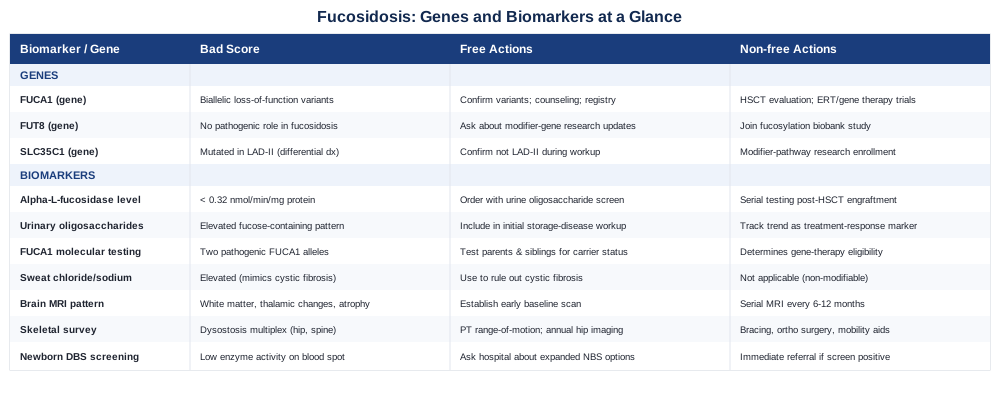
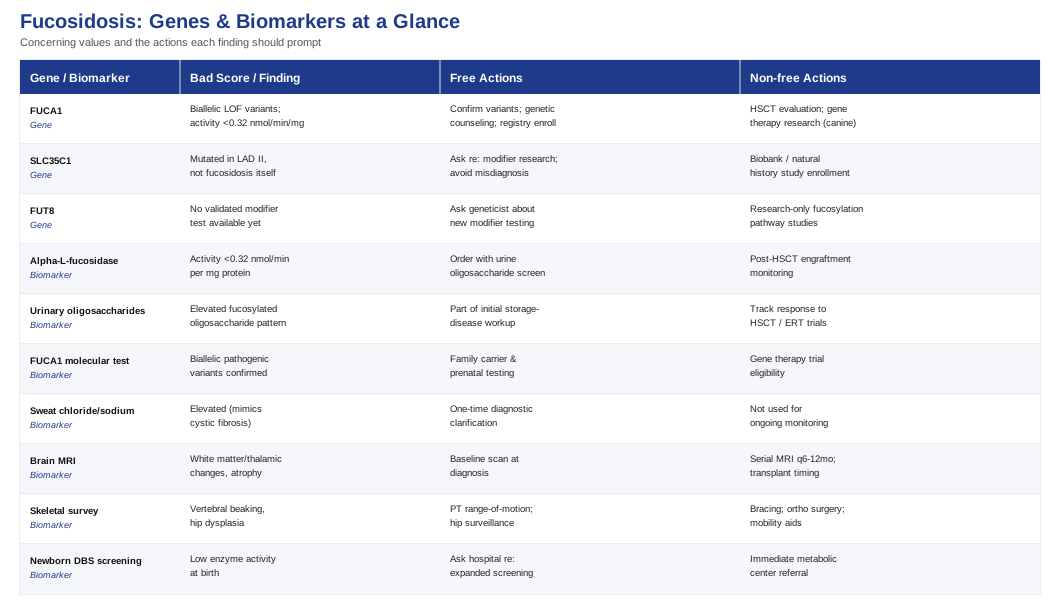
Fucosidosis is what geneticists call a "clean" monogenic disease: essentially all cases trace back to biallelic (both copies) pathogenic variants in a single gene, FUCA1, located on chromosome 1p36. This is different from the polygenic, lifestyle-modifiable conditions usually discussed under "genes and biomarkers" headlines. There is no supplement stack, cold exposure protocol, or exercise regimen that restores a missing lysosomal enzyme. What genetics research does offer here is something more specific and, in its own way, more useful: a precise understanding of which mutations cause which severity of disease, and where the realistic points of medical intervention are. According to the GeneReviews clinical summary of fucosidosis, the condition is inherited in an autosomal recessive pattern and split clinically into a severe, infantile-onset type 1 and a more slowly progressive type 2.
FUCA1: the gene that defines the disease
FUCA1 encodes alpha-L-fucosidase, an enzyme that lives inside the lysosome — the cell's recycling center — and whose only job is to clip fucose sugar residues off the ends of glycoproteins, glycolipids, and oligosaccharides so the rest of the molecule can be broken down and reused. When both copies of FUCA1 carry loss-of-function variants, that clipping step stalls, and fucose-tagged molecules accumulate progressively inside cells across the brain, skin, liver, spleen, connective tissue, and skeleton. The NIH Genetic and Rare Diseases Information Center (GARD) describes the resulting picture: rapid mental and motor regression, coarse facial features, hepatosplenomegaly, angiokeratoma (small dark-red skin bumps, usually first appearing on the lower abdomen and thighs), seizures, and dysostosis multiplex, a characteristic pattern of skeletal abnormality shared across several storage diseases.
Genotype-phenotype correlation in FUCA1 is genuinely informative, and it is one of the more human-evidence-backed areas of this disease. Nonsense variants, frameshift deletions, and splice-site mutations that produce essentially zero residual enzyme activity are associated with the severe, type 1 presentation — onset of regression around 6 months of age, elevated sweat chloride, and historically a life expectancy into early childhood. Missense variants that leave a small amount of residual enzyme function tend to track with the milder type 2 form, where survival into adulthood is possible, cognitive decline is slower, and angiokeratoma and skeletal disease may dominate the picture more than acute neurologic crisis. A 2016 analysis of novel FUCA1 mutations, reported on PubMed, reinforces this pattern: the specific mutation combination a child carries is one of the best available predictors of disease trajectory, which is exactly why molecular confirmation of the specific variants (not just a positive enzyme test) is worth pursuing early.
Population genetics also matters practically here. Fucosidosis has an overall incidence below 1 in 200,000, but it clusters in specific populations — Italy, the Hispanic American communities of New Mexico and Colorado, and Cuba report the highest documented rates, consistent with founder mutations passed down in those populations. If your family has ancestry from one of these regions and a fucosidosis diagnosis is in the picture, extended-family carrier testing is disproportionately useful, because the same founder variant is more likely to be segregating elsewhere in the family tree.
If the gene is bad: the plan without supplements or equipment
There is no over-the-counter or lifestyle intervention that compensates for a non-functional FUCA1 gene — no supplement raises lysosomal alpha-L-fucosidase activity, and claims to the contrary are not supported by any human evidence. What genuinely helps at this "no equipment" level is entirely informational and organizational, and it is not trivial:
First, get molecular confirmation of the exact FUCA1 variants, not just an enzyme-activity result, since the specific mutations shape the expected disease course and eligibility for research studies. Second, pursue genetic counseling for the whole family — both parents are obligate carriers in a biallelic recessive condition, and full siblings have a 25% chance of being affected and a 50% chance of being unaffected carriers themselves. Third, ask about prenatal or preimplantation genetic testing for future pregnancies once the family's specific variants are known; this is a decision for the parents, not a directive, but it requires the variant information to even be on the table. Fourth, enroll in a patient registry or natural history study if one exists for fucosidosis or the broader lysosomal storage disease category — this costs nothing, takes an hour of paperwork, and is one of the highest-leverage things a family can do, both for their own child's future care and for the handful of other affected families worldwide. Frequency-wise, this is a one-time process per major decision point (initial diagnosis, each subsequent pregnancy, each new research study opening), not something to repeat on a schedule. There are no side effects to genetic counseling or registry enrollment beyond the emotional weight of the conversation itself, which is worth preparing for with a counselor experienced in lysosomal storage diseases.
If the gene is bad: the plan with equipment or advanced intervention
The interventions that actually change the biology require specialized medical infrastructure, not supplements, and they are time-sensitive. Hematopoietic stem cell transplantation (HSCT) is the most established option: donor blood-forming stem cells, engineered or naturally producing normal alpha-L-fucosidase, are transplanted so that circulating and tissue-resident immune cells (including microglia in the brain) begin producing functional enzyme that can partially cross-correct neighboring cells. A review on brain outcomes after transplant, published via PubMed, and a classic multi-disease series on bone marrow transplantation for CNS-involving storage diseases available through PubMed, both make the same essential point: transplant works best, and sometimes only works at all, when performed before significant neurologic regression has occurred. A long-term follow-up of two adult siblings with fucosidosis, published in PMC, illustrates how differently the disease can run its course even within one family, underscoring why individualized, early evaluation matters more than a generic protocol. In practice this means: if fucosidosis is suspected or confirmed in an infant, the conversation about transplant candidacy needs to happen within weeks, not months — this is a "frequency" consideration unlike anything in typical biomarker optimization, where the entire treatment window can close permanently.
Enzyme replacement therapy (ERT) — periodic infusions of lab-made alpha-L-fucosidase — is not yet an approved therapy for humans, but it has been tested with real biological effect in the canine model of fucosidosis, which naturally carries a FUCA1 mutation nearly identical in effect to the human disease. A study of intracisternal (direct into the cerebrospinal fluid) enzyme delivery in affected dogs, reported in PMC, found measurable reduction in brain storage pathology, and a broader review of canine model-based therapy development for fucosidosis, in PubMed, covers both HSCT and ERT approaches side by side. Gene therapy — inserting a working copy of FUCA1 directly, often via viral vectors, into blood stem cells before they are returned to the patient — has similarly been trialed in the same canine model, as documented in early retroviral gene-transfer work in PubMed, and a 2016 mouse model paper in PMC gives researchers a smaller, faster animal system to test these approaches further. None of this is available as routine human treatment today, which is exactly why registry enrollment and connection to an academic metabolic disease center matter: that is how families get access to trials as they open.
The GDP-fucose pathway: SLC35C1, FUT8, and modifier genes worth knowing about
FUCA1 is the gene that breaks fucose off molecules; a separate set of genes governs how fucose gets put on molecules in the first place, and understanding this pathway explains both why fucosidosis symptoms are so widespread and why researchers are interested in it as a modifier system. FUT8[/BOLT] (fucosyltransferase 8) is the primary enzyme that attaches fucose onto glycoproteins during normal cell metabolism, and [BOLD]SLC35C1 encodes the transporter that shuttles GDP-fucose, the "fucose donor" molecule, into the Golgi apparatus where that attachment happens. Neither of these genes is mutated in fucosidosis itself, but they define the upstream supply line that determines how much fucosylated material is being produced and therefore how much substrate FUCA1 has to clear downstream.
This matters for two reasons. First, SLC35C1 mutations cause a distinct, separate condition — Leukocyte Adhesion Deficiency type II, also called Congenital Disorder of Glycosylation type IIc — which shares the theme of fucose-pathway dysfunction but produces a very different clinical picture (immune dysfunction and recurrent infections rather than lysosomal storage), which is worth knowing simply so it is not confused with fucosidosis during genetic workup. Second, researchers studying storage disease severity have looked at whether variation in fucosylation-pathway output (essentially, how much fucosylated substrate a person's cells generate in the first place) could partially explain why two people with similar FUCA1 genotypes have somewhat different symptom burdens — the idea being that a lower baseline fucosylation "load" could, in theory, mean less material for a deficient FUCA1 enzyme to fail to clear. This remains an early, mechanistic research hypothesis rather than an established modifier with actionable human data, and there is no clinical test or intervention today that adjusts FUT8 or SLC35C1 activity to influence fucosidosis severity.
If this pathway is a factor: the plan without supplements or equipment
Because there is no validated modifier test for FUT8 or SLC35C1 status in fucosidosis, the practical "no-equipment" step here is purely about staying current: ask the treating metabolic geneticist, at each visit, whether any modifier-gene testing or research protocol has become available, since this is an active area of storage-disease research rather than a settled one. It also means being cautious about unproven claims — no diet or supplement changes fucose metabolism at the cellular level in a way that has been shown to affect fucosidosis severity, and time spent chasing such claims is time not spent on the surveillance steps (described in the biomarkers section below) that do have established value.
If this pathway is a factor: the plan with equipment or advanced intervention
At present, the only "equipment" relevant to this modifier pathway is research-grade: enrollment in a natural history study or biobank that collects samples specifically to study fucosylation-pathway variation across fucosidosis patients would let a family contribute to (and eventually benefit from) any future modifier-based insight. This is not a treatment plan today, but flagging interest in fucosylation-pathway research when registering with a rare disease registry costs nothing and keeps the door open if the science matures.
Understanding the gene is only half the picture — the other half is knowing exactly which measurements turn a genetic risk into an actionable clinical plan, which is where the biomarker side of this condition becomes just as important.
Seven Biomarkers That Matter Most in Fucosidosis
Because fucosidosis is diagnosed and monitored through a small, well-defined set of laboratory and imaging tests, knowing what each one measures — and what an abnormal result should trigger — is some of the most practically useful information a family or clinician can have. These seven biomarkers cover diagnosis, severity staging, and ongoing surveillance.
1. Alpha-L-fucosidase enzyme activity
This is the single most important biomarker in the entire condition: it is the direct functional readout of what FUCA1 is actually doing. Reduced alpha-L-fucosidase activity in white blood cells, plasma, or cultured skin fibroblasts is what converts clinical suspicion into a biochemical diagnosis. Testing labs typically report values well below 0.32 nmol of substrate cleaved per minute per milligram of protein as consistent with fucosidosis, using a fluorescent substrate assay described in detail alongside the GeneReviews protocol.
How it's measured: a blood draw (for leukocyte or plasma testing) or, less commonly, a skin biopsy for fibroblast culture, sent to a specialized biochemical genetics laboratory. Turnaround is typically one to three weeks. Cost through a US reference lab generally falls in the 150 to 400 dollar range when billed as a standalone enzyme panel, though it is frequently bundled into a larger lysosomal enzyme panel that costs more; insurance coverage varies widely and prior authorization is common. Plan without supplements or equipment: none — this is a diagnostic test, not a modifiable score, so the only action is ensuring it gets ordered promptly (ideally alongside urine oligosaccharide screening) whenever fucosidosis is clinically suspected, and repeating it is not usually necessary once a diagnosis is confirmed by both enzyme and molecular testing. Plan with equipment or advanced intervention: after HSCT, serial enzyme activity measurement in blood becomes a monitoring tool to confirm donor engraftment is producing functional enzyme, typically checked at defined post-transplant intervals set by the transplant center rather than on a fixed home schedule.
2. Urinary oligosaccharide profile
Before enzyme testing even happens, an elevated pattern of fucose-containing oligosaccharides in a urine sample — detected by thin-layer chromatography or mass spectrometry — is usually the first clue that prompts a fucosidosis workup, since it directly reflects the buildup of undegraded material the deficient enzyme should be clearing.
How it's measured: a random urine sample sent to a biochemical genetics lab; cost is generally in the 50 to 150 dollar range as an initial screen, though this is often part of a broader "oligosaccharide screen" panel used to differentiate several storage diseases at once. Plan without supplements or equipment: nothing changes the underlying oligosaccharide accumulation through diet or lifestyle; the actionable step is simply ensuring this screen is part of the initial diagnostic workup whenever coarse facial features, developmental regression, or angiokeratoma raise suspicion of a storage disease. Plan with equipment or advanced intervention: after HSCT or in future ERT trials, a falling urinary oligosaccharide level over time is one of the biomarkers researchers use to gauge biochemical response to treatment, typically measured at intervals defined by the treating research protocol.
3. FUCA1 molecular (genetic) testing
Sequencing both copies of FUCA1 confirms the diagnosis at the DNA level, identifies the exact variants (which, as covered above, correlates with expected severity), and is the test that makes family carrier testing and prenatal or preimplantation testing possible.
How it's measured: a blood or saliva sample sent for single-gene sequencing or as part of a lysosomal storage disease gene panel; single-gene FUCA1 sequencing typically costs 300 to 1,500 dollars out of pocket depending on the lab, while broader next-generation sequencing panels can run higher, though many labs offer no-cost or reduced-cost testing programs for pediatric metabolic disease. Plan without supplements or equipment: pursue this test once biochemically confirmed, then use the exact variants identified to test parents (confirming carrier status) and, when relevant, siblings — this is a one-time test per family member, not a repeating measurement. Plan with equipment or advanced intervention: variant-specific results are what determine eligibility for gene therapy research protocols as they open, since some experimental approaches are designed around specific mutation types (for example, nonsense-mutation-targeted approaches would only apply to a subset of FUCA1 variants).
4. Sweat chloride/sodium
An elevated sweat electrolyte level is a distinctive, somewhat counterintuitive feature of fucosidosis type 1 that can otherwise cause diagnostic confusion with cystic fibrosis, since both conditions can present with elevated sweat chloride. In fucosidosis, though, it appears alongside neurologic regression and coarse features rather than the respiratory and gastrointestinal picture typical of cystic fibrosis.
How it's measured: a standard quantitative pilocarpine iontophoresis sweat test, the same test used for cystic fibrosis screening, widely available at pediatric hospitals for roughly 50 to 200 dollars. Plan without supplements or equipment: no intervention changes this value; its main use is diagnostic clarification early in the workup, distinguishing fucosidosis from cystic fibrosis when the clinical picture is ambiguous, and it is not a test that needs to be repeated once the diagnosis is settled by enzyme and genetic testing. Plan with equipment or advanced intervention: not applicable — this biomarker does not respond to treatment and is not used for monitoring.
5. Brain MRI pattern
Neuroimaging tracks the structural progression of the disease and is one of the key pieces of evidence used when weighing the timing and expected benefit of transplant. Characteristic findings include progressive white matter changes, thalamic and globus pallidus signal abnormality, and eventually brain atrophy as storage material accumulates in the central nervous system.
How it's measured: MRI of the brain, generally requiring sedation in young children, at a cost typically ranging from 1,000 to 3,000 dollars in the US depending on sedation needs and facility, though pediatric hospitals often coordinate this alongside other diagnostic procedures to reduce total sedation events. Plan without supplements or equipment: no home-based or lifestyle measure alters MRI findings; the practical action is establishing a baseline scan as early as possible after diagnosis so that later scans have something concrete to compare against. Plan with equipment or advanced intervention: serial MRI, typically every 6 to 12 months or per transplant-center protocol, is a core part of monitoring both natural disease progression and, where transplant has occurred, whether further storage accumulation has been slowed.
6. Skeletal survey (dysostosis multiplex markers)
A full-body skeletal X-ray survey documents the pattern of bone changes — including vertebral beaking, thickened long bones, and hip dysplasia — collectively known as dysostosis multiplex, which fucosidosis shares with other lysosomal storage diseases like the mucopolysaccharidoses. This biomarker matters practically because skeletal complications (particularly hip and spine issues) can be addressed with orthopedic and physical therapy planning well before they become severe.
How it's measured: a series of plain X-rays of the spine, long bones, hands, and skull, typically costing 300 to 800 dollars as a bundled survey. Plan without supplements or equipment: regular positioning, gentle range-of-motion exercises guided by a physical therapist, and hip surveillance imaging can help catch progressive joint issues early, at a frequency your orthopedic team sets based on findings (commonly annually in growing children). Plan with equipment or advanced intervention: bracing, orthopedic surgical consultation for hip subluxation, and mobility equipment (positioning chairs, standers, orthotics) are the realistic "equipment" tier here, introduced as the skeletal survey and clinical exam indicate need rather than on a fixed calendar.
7. Newborn dried-blood-spot enzyme screening
This is the most forward-looking biomarker on this list: pilot newborn screening programs using dried blood spot alpha-L-fucosidase activity assays aim to catch fucosidosis before symptoms begin, since the biggest determinant of transplant success is how early it happens. This is not yet universal public health screening in most regions the way phenylketonuria or biotinidase screening is, but it is the same underlying assay technology used for confirmed diagnostic enzyme testing, applied to the dried blood spot already collected at birth for other conditions.
How it's measured: a dried blood spot, typically the same card used for standard newborn metabolic screening, analyzed via the fluorometric enzyme assay; where available through expanded or research newborn screening programs, this is usually at no direct cost to families since it piggybacks on existing state or hospital newborn screening infrastructure. Plan without supplements or equipment: if a family has a known FUCA1 carrier status or a previously affected child, ask the delivering hospital and pediatrician directly whether expanded or research-based newborn screening for lysosomal storage diseases is available in your region — this is a conversation to have during pregnancy, not after birth. Plan with equipment or advanced intervention: a positive newborn screen should trigger immediate referral to a metabolic genetics center for confirmatory enzyme and molecular testing, ideally within days, precisely so that transplant evaluation can begin before any neurologic regression occurs.
Numbers and imaging only mean something in the context of a bigger strategic question — how families and physicians should approach a disease this rare in the first place — which is where the next section's core lesson comes in.
The Rare Disease Playbook Every Family Should Know: Lessons From Chasing My Cure
There is no fucosidosis-specific bestselling book, but there is a book that has quietly reshaped how patients and families approach ultra-rare, poorly funded genetic diseases in general, and its lessons map directly onto navigating fucosidosis. Chasing My Cure is physician-scientist David Fajgenbaum's account of nearly dying repeatedly from Castleman disease, a rare immune condition, and becoming his own researcher when the medical system had no answers left to offer. His subsequent work founding a patient-registry-driven research network and a drug-repurposing nonprofit challenges a default assumption many families are handed at diagnosis: that they should wait for the system to produce an answer. For a disease as rare as fucosidosis — where formal clinical trials may never reach the scale of common-disease research — that shift in posture, from waiting to participating, is genuinely practical, not just inspirational.
1. Samples collected during a crisis are more valuable than samples collected after it
Fajgenbaum's own research breakthroughs depended on blood and tissue samples drawn during his sickest moments, not afterward, because that is when the relevant biology is most visible. For fucosidosis, this translates concretely: if your child is hospitalized for a seizure, infection, or acute decline, ask whether extra blood, urine, or tissue could be banked for the family's own future reference or for a connected research biobank, since these moments are scientifically the most informative and hardest to recreate later.
2. A patient registry is infrastructure, not paperwork
The registry Fajgenbaum's network built became the backbone that made drug-repurposing research possible at all for a rare disease with few patients scattered worldwide. Fucosidosis registries and natural history studies serve the same function: they are what allows researchers to even see the pattern across the small number of global cases, which is a precondition for any future treatment development.
3. Drug repurposing is a legitimate strategy for ultra-rare diseases
Rather than waiting for a fucosidosis-specific drug to be developed from scratch — economically unlikely given the patient population size — the repurposing model asks whether existing approved drugs, developed for other conditions, might address part of the underlying biology. This is exactly the logic behind ERT and HSCT approaches borrowed from other lysosomal storage diseases and adapted to fucosidosis.
4. The physician-parent-researcher triangle should communicate directly
Fajgenbaum emphasizes that the traditional one-way flow of information from doctor to patient breaks down in rare disease, where the patient's family may accumulate more disease-specific reading and network connections than any single treating physician has time to gather. Bringing research articles, registry updates, or trial announcements directly to your metabolic geneticist is not overstepping — it is often how these specialists themselves first learn about developments in ultra-rare conditions.
5. Hope should be treated as a discipline, not a feeling
A recurring theme in the book is that hope divorced from action becomes exhausting, while hope tied to a concrete next step — a test to schedule, a registry to join, a specialist to call — is sustainable. For fucosidosis families, this might mean setting a standing quarterly check-in specifically to ask "is there anything new" rather than either constantly searching or avoiding the subject entirely.
6. Second opinions from disease-specific specialists, not just academic centers, matter
General academic medical centers are excellent, but for a disease this rare, the handful of clinicians and centers with actual fucosidosis-specific transplant or metabolic experience carry disproportionate value. It is reasonable, and increasingly normal, to request records review from a center known specifically for lysosomal storage disease transplant experience even when your local team is excellent.
7. Time-sensitive diseases need time-sensitive decision-making
Because transplant benefit in fucosidosis is tightly linked to how early it happens relative to neurologic regression, the book's broader point — that some diseases punish delay far more than others — applies directly. The standard "take time to process the diagnosis before deciding" approach that works for many chronic conditions can be actively costly here.
8. Track your own data even when no one asks you to
Fajgenbaum's personal habit of logging his own lab values and symptoms over time, independent of what any single doctor's visit captured, ended up revealing patterns his medical team had missed. A simple running log of a fucosidosis child's developmental milestones, seizure frequency, and major test results, kept by the family, can surface trends before any single specialist visit would.
9. Advocacy and treatment are not separate tracks
The book resists the idea that a patient or family should either focus on their own care or get involved in broader disease advocacy, arguing instead that for rare disease the two reinforce each other — registry participation and advocacy directly shape what research eventually becomes available. Joining or supporting a fucosidosis or broader lysosomal storage disease patient organization is not a distraction from your own child's care; historically, in diseases like this, it has been how care options expanded at all.
10. The goal is actionable hope, not certainty
Fajgenbaum is explicit that he never had certainty his approach would work — he had a reasoned next step, tried it, and adjusted. For a fucosidosis family, this reframes the goal of all the biomarker tracking and registry enrollment above: not to guarantee an outcome, but to make sure every available next step is actually being taken.
Alongside this research-and-advocacy mindset, there is also a supportive, day-to-day layer of care worth understanding — approaches that will not affect the underlying enzyme deficiency but can meaningfully affect comfort and quality of life.
Supportive Approaches Worth Discussing With Your Care Team
None of the approaches below treat the underlying enzyme deficiency, and the evidence for each is drawn largely from related pediatric neurodevelopmental and storage-disease populations rather than fucosidosis-specific trials, simply because a disease this rare has not been the subject of its own dedicated clinical trials in these areas. They are worth knowing about as adjuncts to, never substitutes for, specialist metabolic and neurologic care.
Massage therapy
Children with fucosidosis, particularly as neurologic involvement progresses, commonly develop spasticity and joint stiffness similar to what is seen in cerebral palsy and other pediatric neuromuscular conditions, making comfort-focused bodywork a reasonable supportive consideration. Massage is one of the more studied physical therapies in pediatric spasticity, giving it a firmer evidence base than most complementary options on this list, even without fucosidosis-specific trials.
A multicenter randomized controlled trial of 182 children with spastic cerebral palsy, published in PMC, found that structured pediatric massage combined with standard rehabilitation reduced spasticity on standardized scales more than rehabilitation alone. A separate trial of traditional massage in children with cerebral palsy reported similar spasticity reduction, available via PubMed.
Realistically, this means asking your child's physical therapist whether a structured massage protocol can be layered onto existing physical therapy sessions, rather than seeking massage as a standalone treatment; a typical studied frequency is several sessions per week over a period of weeks, tolerated well with minimal side effects, though any new bodywork should be introduced gradually and stopped if it causes distress, given communication limitations in more severely affected children.
Music therapy
Music therapy is one of the few complementary approaches with direct evidence in children with severe neurological disorders and communication limitations, which makes it particularly relevant for fucosidosis, where verbal communication is often progressively affected. It offers a way to engage, soothe, and assess responsiveness even after other communication channels have narrowed.
A study evaluating music therapy as part of a neurorestoration program for children with severe neurological disorders, published in PMC, found significantly greater improvement in neuropsychological status among children receiving music therapy alongside standard rehabilitation compared to standard rehabilitation alone. Broader systematic reviews of music therapy in pediatric neurodevelopmental disorders, also available through PMC, support similar behavioral and engagement benefits, though most of this evidence comes from autism spectrum populations rather than lysosomal storage disease specifically.
In practice, this looks like short, regular sessions (often two to three times weekly in studied protocols) with a trained pediatric music therapist, ideally coordinated with occupational or speech therapy goals; it carries essentially no physical risk, making it one of the lower-barrier supportive options to try, though benefit should be judged individually since response varies with a child's sensory preferences and hearing status, which can itself be affected in fucosidosis.
Saline nasal irrigation
Recurrent respiratory and sinus congestion is common in lysosomal storage diseases, including fucosidosis, related to mucosal thickening from glycoconjugate accumulation in the airway lining, which makes simple nasal hygiene measures worth considering for comfort and infection prevention.
A Cochrane review of saline irrigation for chronic rhinosinusitis found that saline irrigation relieves symptoms and is well tolerated as an adjunct to other treatments, though it found no evidence it can replace standard therapies. A more recent systematic review and meta-analysis on hypertonic saline irrigation, available via PMC, similarly supports symptom benefit, particularly with larger-volume, regular irrigation compared to small nebulized sprays.
For a child with fucosidosis-related chronic nasal or sinus congestion, this typically means daily saline irrigation using a pediatric-appropriate delivery method as recommended by an ENT or pediatrician, used as an adjunct alongside any prescribed treatment rather than in place of it; side effects are minimal (occasional mild nasal irritation or ear discomfort) and it can be used long-term, though technique and volume should be guided by a clinician given feeding, swallowing, or airway involvement that can accompany more advanced disease.
The thread running through all of this — precise genetics, precise biomarkers, a deliberate research-participation mindset, and carefully chosen supportive care — points to the same conclusion.
Conclusion
Fucosidosis is caused by one gene, FUCA1, failing at one specific job, and that job failure is measurable through a small, well-defined set of biomarkers: enzyme activity, urinary oligosaccharides, molecular testing, sweat electrolytes, brain MRI, skeletal survey, and increasingly, newborn screening. Understanding these precisely does not change the underlying biology by itself, but it changes the speed and quality of the decisions that do — particularly around the narrow window in which transplant evaluation offers the most benefit.
The most useful next step is rarely dramatic: confirm the exact FUCA1 variants if this hasn't been done, get carrier testing arranged for the immediate family, ask directly about transplant-center referral timing if diagnosis is recent, and enroll in a patient registry or natural history study if one is available. Bring these specifics to your metabolic genetics team as concrete questions rather than general concerns — that is where accurate information actually turns into better decisions.
Neurological Skin Endocrine & Metabolic
Musculoskeletal: Bone Conditions
Neurological: Brain Conditions