This article contains AI generated content.
· UpdatedGuillain-Barré Syndrome: 5 Genes and 7 Biomarkers to Track
If you or someone close to you has been through Guillain-Barré syndrome, you already know that the standard advice — rest, physical therapy, "give it time" — doesn't answer the questions that actually keep you up at night. Why did this happen. Whether the numbness creeping back into your feet means something is wrong again. Whether your nerves are actually healing or just plateauing. Generic recovery timelines are built from population averages, and averages are not useful when you are the one waiting to feel your fingers again.
The reason generic advice falls short is that GBS is not one disease with one course. It is an umbrella term for several distinct immune attacks on the peripheral nervous system, each with different antibodies, different nerve fiber involvement, and different recovery trajectories. Two people with the same diagnosis code can be dealing with completely different biological events. Without looking at the specific markers involved — which antibodies were present, how the nerves conducted electrical signals, how fast the damage marker in the blood is falling — "wait and do PT" is the only advice anyone can offer.
This article takes a more specific approach. Instead of treating GBS as a single black box, it walks through the actual biomarkers clinicians use to diagnose, stage, and monitor the condition, what each one tells you, and what is realistically within a patient's control around each one. It also looks at the genetic and epigenetic research into why some people develop GBS after an infection and others with the same infection don't, and at complementary approaches with actual evidence behind them for nerve and immune recovery.
None of this replaces a neurologist, and nothing here should delay emergency care — GBS can progress to respiratory failure within days, and that fact does not change no matter how much you read. What better information can do is help you ask sharper questions, understand your own labs and nerve studies, and make more informed decisions during the long recovery window that follows the acute phase. That is a realistic kind of hope, and it's the one this article is built around.
Summary
Guillain-Barré syndrome is driven by a specific, traceable chain of events: an infection (often Campylobacter jejuni) triggers antibodies that cross-react with nerve gangliosides, complement proteins puncture the nerve membrane, and the resulting damage shows up in blood, spinal fluid, and nerve conduction studies weeks before it shows up as measurable strength. This article breaks down the seven biomarkers that actually matter — from anti-ganglioside antibody panels to serum neurofilament light chain to the respiratory numbers that predict whether ventilation will be needed — and explains what each one reveals, how it's measured, what it costs, and what genuinely helps move it in the right direction. It also covers the early genetic research (HLA variants, Fc-receptor polymorphisms, complement gene variants) behind why some people are more vulnerable than others, ten research-backed lessons from autoimmune nutrition research worth borrowing for nerve recovery, and which complementary therapies — breathing training, biofeedback, mindfulness, the autoimmune protocol — have real human evidence behind them for this specific condition.
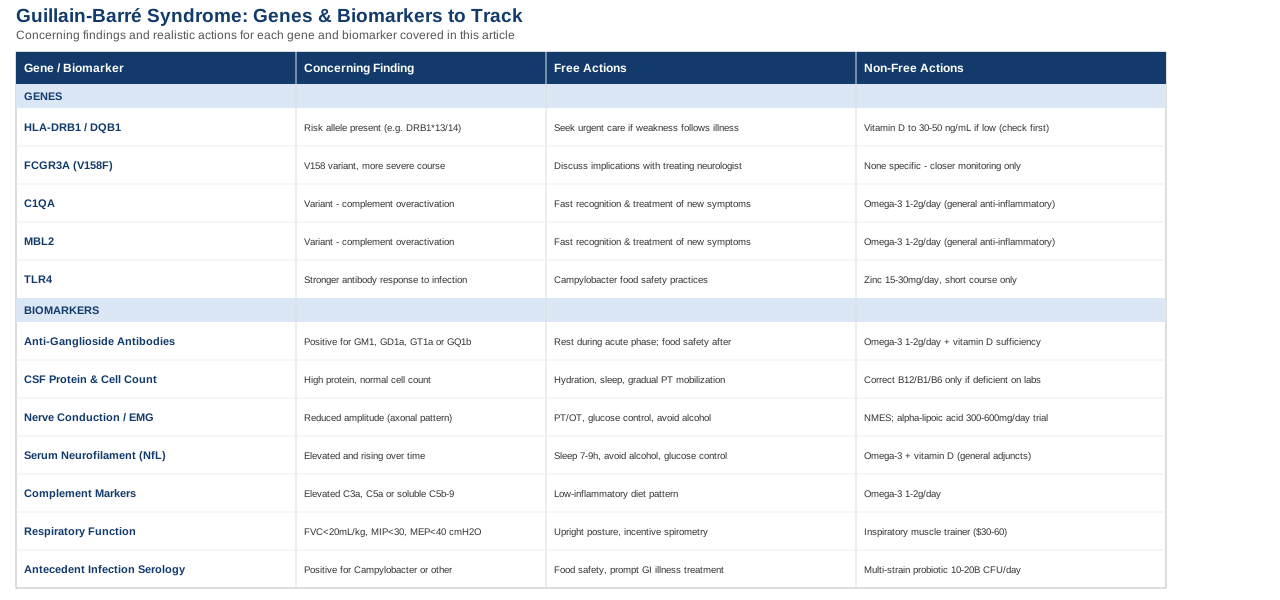
7 Biomarkers That Reveal What's Actually Happening to the Nerves
Guillain-Barré syndrome is unusual among neurological conditions in that its biomarkers map almost directly onto its biology: an antecedent infection triggers cross-reactive antibodies, those antibodies fix complement at specific points on the nerve, the nerve's insulation or axon is damaged, and the damage shows up first in spinal fluid and blood, then in nerve conduction studies, then in strength and breathing. Tracking these markers in sequence is how neurologists actually manage GBS in real time, and understanding them gives patients and caregivers a much clearer picture than "your labs are being monitored."
One caveat before the list: GBS is a medical emergency in its acute phase, and the primary lever that moves every marker below is timely IVIG or plasma exchange, administered in a hospital. The "plans" described here are about what happens around that treatment — supporting recovery, reducing recurrence risk, and using serial monitoring intelligently — not a substitute for it.
1. Anti-Ganglioside Antibody Panel (GM1, GD1a, GT1a, GQ1b)
This panel is what actually identifies the molecular mechanism behind an individual's case. Antibodies against GM1 and GD1a point toward the axonal forms of GBS (AMAN/AMSAN), while antibodies against GQ1b are almost diagnostic of Miller Fisher syndrome, the variant involving eye movement paralysis and ataxia. The pattern of antibodies present is a direct readout of which gangliosides the immune system mistook for bacterial antigens, a phenomenon first mapped in detail between Campylobacter jejuni lipo-oligosaccharides and GQ1b by Yuki and colleagues, and reviewed comprehensively by Willison and Yuki.
How to measure it
A blood draw sent to a specialized neuroimmunology reference lab, using ELISA or line-blot assays. Expect $150–$400 for a focused panel, or $500–$1,000 if bundled into a broader autoimmune neuropathy panel. Turnaround is typically one to two weeks, and it's usually ordered once during the initial diagnostic workup rather than repeated routinely.If the antibody panel is positive, the plan without supplements or equipment
There is nothing a patient can do to directly clear these antibodies outside of medical treatment — this is squarely IVIG or plasma exchange territory, and speed matters more than anything else. What is within your control: minimizing additional physiological stress during the acute window (adequate sleep, avoiding overexertion), and afterward, reducing future exposure to the likely trigger through food safety — cooking poultry thoroughly, avoiding cross-contamination, and using safe water sources, since recurrent Campylobacter exposure is a plausible (if rare) risk factor for relapse.If the antibody panel is positive, the plan with supplements or equipment
No supplement reduces antibody titers. Omega-3 fatty acids (roughly 1–2g/day combined EPA/DHA) and maintaining vitamin D sufficiency (not megadosing) are reasonable general anti-inflammatory adjuncts drawn from the broader autoimmune literature, taken daily without cycling. Side effects are mild — fish oil can cause GI upset and has a mild blood-thinning effect, which is worth flagging to the treating team if plasma exchange is planned. These are genuinely adjunctive; they support general immune tone and are not a substitute for immunotherapy.2. Cerebrospinal Fluid Protein and Cell Count
The classic diagnostic signature of GBS is "albuminocytologic dissociation" — high protein in the spinal fluid with a normal or near-normal white cell count. This pattern, described in detail in the major GBS review by van den Berg and colleagues, reflects a breakdown in the blood-nerve-root barrier and typically becomes apparent after the first week of symptoms, which is why an early lumbar puncture can sometimes look deceptively normal.
How to measure it
A lumbar puncture performed in a hospital or outpatient neurology setting, generally costing $500–$3,000 depending on facility fees and whether imaging guidance is used. It's a one-time or occasional test during the acute workup, not something repeated on a schedule.If CSF protein is elevated, the plan without supplements or equipment
The protein level falls as the underlying immune attack resolves — a process driven by treatment and time, not lifestyle. Supportive measures that genuinely help the broader recovery: staying well hydrated (which also reduces post-lumbar-puncture headache risk), gradual PT-guided mobilization once medically cleared, and consistent sleep, since nerve repair processes are more active during deep sleep stages.If CSF protein is elevated, the plan with supplements or equipment
There's no supplement that lowers CSF protein directly. If bloodwork shows a genuine B12, B1, or B6 deficiency, correcting it supports general nerve metabolism — but this should be based on an actual lab value, not assumption. One important caution: chronic high-dose B6 (above roughly 100mg/day for extended periods) can itself cause a peripheral neuropathy, which is the opposite of what you want here, so more is not better.3. Nerve Conduction Studies and EMG
This is arguably the single most clinically useful biomarker in GBS because it answers the question that determines prognosis: is this a demyelinating attack (AIDP, generally better and faster recovery) or an axonal one (AMAN/AMSAN, generally slower and less complete)? Demyelinating GBS shows conduction block and slowed velocity; axonal GBS shows reduced signal amplitude with relatively preserved velocity. Serial studies over months also show reinnervation as it happens, well before it's obvious on a strength exam.
How to measure it
An outpatient neurophysiology study, costing roughly $300–$1,500 per session depending on region and insurance coverage. A reasonable monitoring cadence is a baseline study, a repeat at 2–4 weeks, and another at 3–6 months to track the recovery curve objectively rather than by feel alone.If the study shows axonal damage, the plan without supplements or equipment
Nerve regeneration is fundamentally biological and time-limited — axons regrow at roughly 1mm per day once the attack stops. The actionable lever is structured rehabilitation: physical and occupational therapy with progressive loading, early controlled mobilization once medically stable, and avoiding additional neurotoxic stress during the recovery window — that means tight blood sugar control if diabetic, and minimizing alcohol, both of which independently damage peripheral nerves.If the study shows axonal damage, the plan with supplements or equipment
Neuromuscular electrical stimulation (NMES), used under physical therapy supervision, is sometimes applied to maintain muscle mass while reinnervation is underway — evidence for this specific use in GBS is modest, so it should be framed as an adjunct, not a proven accelerant. Alpha-lipoic acid (300–600mg/day) has evidence for improving nerve conduction in diabetic peripheral neuropathy; extrapolating it to GBS recovery is reasonable but not proven, so treat it as a time-limited three-month trial with a follow-up EMG to see if it's actually doing anything, rather than an indefinite regimen. Mild GI upset is the main side effect; it can also lower blood sugar, so diabetics should monitor closely.4. Serum Neurofilament Light Chain (NfL)
NfL is a structural protein released into the blood when axons are actively being damaged, and it has emerged as one of the more useful blood-based severity markers in GBS. Patients with GBS show markedly higher serum NfL than healthy controls, and higher levels predict worse long-term outcome, while the trajectory of NfL over time — how sharply it rises and how slowly it normalizes — tracks disease severity and axonal involvement more precisely than clinical exam alone.
How to measure it
NfL requires an ultrasensitive single-molecule array (Simoa) assay, which is still more available through academic neurology centers and research labs than routine commercial ordering. Where available, cost runs roughly $100–$300 per draw; in many regions it remains a research-context test rather than a standard clinical order, which is worth knowing before assuming your local lab can run it.If NfL is elevated, the plan without supplements or equipment
NfL falls as axonal injury stops and the nervous system stabilizes — again, primarily a function of prompt treatment and time. Sleep of 7–9 hours, avoiding alcohol and other axonal stressors, and controlling blood glucose all support the underlying repair process the marker is measuring.If NfL is elevated, the plan with supplements or equipment
Nothing is proven to lower NfL specifically in GBS. Omega-3 intake and vitamin D sufficiency are reasonable general adjuncts as discussed above. The more useful application of NfL is as a monitoring tool you discuss with your neurologist — a falling trend is reassuring information, not a number to chase with supplements.5. Complement Activation Markers (C3a, C5a, Soluble C5b-9)
Complement-mediated attack at the nodes of Ranvier is a core mechanism in axonal GBS, which is the rationale behind complement-inhibitor drugs like eculizumab. A Japanese phase 2 trial found the drug did not meet its primary endpoint though it appeared safe, and a 2024 phase 3 trial produced mixed results — a useful reminder that a plausible mechanism doesn't always translate into a clean clinical win.
How to measure it
These markers are largely research-use ELISA assays run in specialty immunology or academic complement labs, generally not part of routine GBS workups outside of trial settings. Where available, expect $100–$300 per marker.If complement markers are elevated, the plan without supplements or equipment
Prompt IVIG or plasma exchange is the intervention with actual evidence for modulating complement-driven nerve injury. A generally low-inflammatory dietary pattern — vegetables, fiber, fatty fish, minimal ultra-processed food — is a sound general habit, though it hasn't been shown to specifically blunt complement activation in GBS.If complement markers are elevated, the plan with supplements or equipment
Complement inhibitors like eculizumab are prescription biologics, not supplements, and their track record in GBS trials so far is mixed at best — worth knowing so expectations stay realistic. Omega-3s remain the reasonable general adjunct, at 1–2g/day, with the same mild bleeding-risk caution around any planned plasma exchange.6. Respiratory Function: Forced Vital Capacity, MIP, MEP
This is the biomarker with the most immediate life-or-death relevance in GBS. The well-established "20/30/40 rule" — forced vital capacity under 20mL/kg, maximal inspiratory pressure under 30cmH2O, or maximal expiratory pressure under 40cmH2O — predicts impending respiratory failure and the need for mechanical ventilation, often before a patient subjectively feels short of breath.
How to measure it
Bedside spirometry, essentially built into acute hospital monitoring and measured every few hours during the unstable phase. For outpatient follow-up during recovery, portable spirometers cost roughly $50–$300.If respiratory numbers are declining, the plan without supplements or equipment
This is an emergency-monitoring signal, not a wellness metric — declining FVC in the acute phase means immediate hospital escalation, not home management. During the recovery phase, upright positioning, incentive spirometry, early safe mobilization, and smoking cessation all support pulmonary mechanics.If respiratory numbers are declining, the plan with supplements or equipment
Inspiratory muscle training (IMT), using a simple handheld resistance device, has real feasibility evidence in GBS rehabilitation. The InspireGBs study used a protocol of twice-daily sessions, five days a week, three sets of ten breaths, starting at 50% of baseline maximal inspiratory pressure and increasing about 10% weekly as tolerated, over six weeks — done only once medically stable and under physical therapy supervision. Devices cost around $30–$60. Side effects are mild fatigue or lightheadedness if overexerted; stop and reassess if breathlessness or oxygen desaturation occurs.7. Antecedent Infection Serology
Roughly two-thirds of GBS cases follow an identifiable infection, most commonly Campylobacter jejuni, but also Mycoplasma, cytomegalovirus, Epstein-Barr virus, and (in some regions) Zika. Identifying the trigger, through the same molecular mimicry mechanism reviewed by Willison and Yuki above, helps explain the antibody pattern and gives some insight into likely course.
How to measure it
Blood serology for the relevant pathogens, roughly $50–$150 each, or stool PCR/culture for Campylobacter if still within the diarrheal window ($100–$250). This is typically a one-time test during initial workup.If a trigger infection is identified, the plan without supplements or equipment
Going forward, food safety practices meaningfully reduce reinfection risk: cooking poultry to a safe internal temperature, avoiding cross-contamination between raw meat and other food, and using safe water sources. Prompt medical treatment of any future gastroenteritis is also reasonable, given the (rare) association with recurrence.If a trigger infection is identified, the plan with supplements or equipment
Probiotics for gut microbiome recovery after a Campylobacter infection are of genuine interest but the evidence is early and general rather than GBS-outcome-specific — worth stating plainly rather than overselling. A reasonable approach, if tried, is a multi-strain probiotic at 10–20 billion CFU/day for four to eight weeks post-infection; it's generally well tolerated with occasional mild bloating, and is not a substitute for antibiotics when a bacterial infection is still active and requires treatment.With the biomarker picture in place, it's worth stepping back to the genetic layer underneath it — the reason some people develop GBS after a routine stomach bug while most people with the same infection never do.
What Genes and Epigenetic Signals May Shape GBS Risk
Genetic research into Guillain-Barré syndrome is considerably less mature than the biomarker research above, and it's worth being upfront about that rather than overselling early findings. Researchers like Ali Torkamani, whose work at Scripps focuses on polygenic risk scoring for common disease, have shown that most autoimmune conditions have a meaningful polygenic component — but no validated, clinically usable polygenic risk score exists yet for GBS specifically. Consumer genomics advocates like Gary Brecka popularize testing for variants such as MTHFR that affect broad nutrient metabolism; that framework is a reasonable starting point for general nutrient-gene interactions, but none of it has been validated as GBS-specific, and it shouldn't be mistaken for a diagnostic or preventive tool for this condition.
HLA-DRB1 and HLA-DQB1 Variants
These immune-recognition genes determine which antigen fragments the immune system presents to T cells, making them a natural candidate for autoimmune disease risk. A systematic review and meta-analysis of nearly 800 GBS cases found no consistent association between HLA-DQB1 variants and overall GBS risk across Asian and Caucasian populations, though population-specific associations (for example, DRB1*13 and DRB1*14 in Tunisian patients) have been reported. The honest summary: HLA variation may matter in specific subgroups, but it is not a general, reliable predictor of GBS risk.
If the gene variant is present, the plan without supplements
There's no way to modify HLA type, so the practical response is behavioral vigilance rather than intervention: if you know you carry a risk-associated variant (through incidental genetic testing) and you develop a diarrheal or respiratory illness, seek prompt medical evaluation if any limb weakness, tingling, or facial weakness develops afterward, rather than waiting it out.If the gene variant is present, the plan with supplements or equipment
No supplement changes HLA-mediated risk. General immune-regulatory support — vitamin D sufficiency (checking a 25-OH vitamin D level rather than blind dosing, then supplementing to the 30–50 ng/mL range if low) — is a reasonable, low-risk general practice, taken daily, with the main side effect being rare hypercalcemia at excessive doses (above 4,000 IU/day sustained without monitoring).FCGR3A (V158F) and Related Fc-Receptor Variants
Fc-gamma receptors determine how strongly immune cells bind to antibody-coated targets, including antibody-coated nerve tissue. Research has found the FcγRIIIa-V158F variant is associated with more severe GBS compared to milder forms, though a broader meta-analysis of FCGR gene variants found inconsistent associations with overall susceptibility across populations. These receptors are also mechanistically relevant to how well a patient responds to IVIG, since IVIG works partly by engaging these same receptors.
If the gene variant is present, the plan without supplements
This is really a conversation for the treating neurologist rather than a self-directed plan — if severity markers (rapid progression, high antibody titers, poor early response to first-line treatment) suggest a harder course, that's the trigger for considering treatment intensification (a second course of IVIG, or switching to plasma exchange), not genetic testing itself.If the gene variant is present, the plan with supplements or equipment
Nothing supplement-based modifies Fc-receptor function in a clinically meaningful way. This is one of the clearer cases where the honest answer is: there is no compensatory supplement plan, and the correct response is closer medical monitoring rather than self-treatment.Complement Pathway Variants (C1QA, MBL2)
Variants in complement-pathway genes, including mannose-binding lectin (MBL2), influence how aggressively the complement cascade activates once antibodies bind to nerve gangliosides. This is early-stage research relative to the Fc-receptor and HLA literature, with most of the mechanistic support coming from broader complement biology rather than large GBS-specific genetic cohorts — worth flagging clearly rather than overstating.
If the gene variant is present, the plan without supplements
As with the markers above, the actionable response is fast recognition and treatment of any new GBS symptoms, since complement-driven axonal damage progresses quickly. There's no lifestyle intervention shown to blunt genetically-influenced complement activity.If the gene variant is present, the plan with supplements or equipment
Complement inhibition that matters clinically comes from prescription biologics (eculizumab), with mixed trial results as noted earlier — not from supplements. Omega-3 fatty acids remain a reasonable, low-risk general anti-inflammatory adjunct (1–2g/day), without meaningful evidence of directly altering complement gene expression.TLR4 Polymorphisms
Toll-like receptor 4 is the sensor that recognizes bacterial lipopolysaccharide, including the Campylobacter jejuni LPS structurally similar to GQ1b ganglioside. Variants affecting TLR4 sensitivity are a plausible contributor to why some people mount a stronger cross-reactive antibody response than others after the same infection, though this remains an area of early mechanistic research rather than a validated clinical risk marker.
If the gene variant is present, the plan without supplements
The practical takeaway mirrors the infection-prevention advice above: reducing exposure to Campylobacter through food safety is the most concrete lever available, since it removes the trigger rather than trying to modify the downstream immune sensor.If the gene variant is present, the plan with supplements or equipment
There is no established supplement protocol for modulating TLR4 sensitivity in a way proven to reduce GBS risk. Zinc has some general evidence for supporting innate immune regulation (typically 15–30mg/day, short courses rather than indefinite use, since chronic high-dose zinc can cause copper deficiency), but this is general immune-support reasoning, not a GBS-specific intervention.Genetics explains predisposition; it doesn't drive day-to-day recovery decisions the way nutrition and lifestyle research does. That's where a closer look at autoimmune-focused research becomes useful.
Ten Lessons From Autoimmune Nutrition Research Worth Borrowing for Nerve Recovery
Terry Wahls, a physician who developed a progressive autoimmune neurological condition (multiple sclerosis) and later ran clinical trials on dietary intervention, built a body of research that's specific to MS but mechanistically relevant to any autoimmune-driven nerve condition, including the recovery phase after GBS. Her work deserves a direct caveat: it was tested in multiple sclerosis, not GBS, and MS is a chronic relapsing condition while GBS is typically a single monophasic event — the biology overlaps (autoimmune-mediated nerve damage, myelin and axon repair) but the evidence does not transfer automatically. With that stated clearly, here are ten findings from her randomized WAVES trial and related research worth knowing.
1. Diet Can Move Fatigue as Much as Some Drugs Do
In the WAVES trial, both the Wahls (modified Paleolithic) and Swank (low saturated fat) diets produced clinically meaningful reductions in fatigue over 24 weeks in relapsing MS patients — a reminder that fatigue, one of the most disabling and under-treated symptoms in nerve-damage recovery, responds to more than pharmacology alone.2. Metabolic Markers Moved Alongside Symptoms
Both diet groups saw significant reductions in weight, BMI, total cholesterol, and LDL, suggesting that the same dietary changes that improve neurological symptoms also improve standard cardiometabolic biomarkers — a useful two-for-one for anyone recovering from a period of forced inactivity, which itself worsens metabolic markers.3. Functional Disability Improvements Were Mediated by Fatigue Reduction
A secondary analysis of the WAVES trial found that improvements in functional disability were statistically explained by reductions in fatigue — meaning fatigue isn't just a side symptom to tolerate, it may be a primary lever that, if addressed, drags functional capacity up with it.4. Nutrient Density, Not Calorie Restriction, Was the Operating Principle
Both trial diets emphasized vegetable and nutrient density over calorie counting — a framework that translates well to nerve recovery, where the raw materials for remyelination (B vitamins, choline, fatty acids) matter more than total intake.5. Mitochondrial Support Is a Recurring Theme
Wahls' broader research program frames nerve and muscle fatigue partly through a mitochondrial-function lens — cells with high energy demand, like neurons and myelin-producing oligodendrocytes, are disproportionately affected by nutrient gaps that impair mitochondrial output.6. Omega-3 Intake Was a Consistent Feature of Both Study Diets
Despite their differences, both the Wahls and Swank diets emphasized fatty fish and reduced saturated fat, aligning with the broader anti-inflammatory rationale discussed throughout the biomarker section above.7. Single-Blind Design Still Showed Real Separation Between Diets
The Wahls group showed a significantly greater reduction in fatigue than the Swank group at 24 weeks, suggesting the specific dietary pattern — not just "eating better" in general — mattered for this particular outcome.8. Sleep and Mood Markers Moved Together With Diet
Related secondary analyses tracked mood alongside nutritional biomarkers like B12, folate, and homocysteine, reinforcing that the same nutrients relevant to nerve metabolism also affect mood and sleep quality during a long recovery process.9. Trials Ran Long Enough to Matter (24–36 Weeks)
Unlike many short nutrition studies, this trial followed patients for 36 weeks, which matters for GBS recovery specifically — nerve regeneration and functional improvement often unfold over many months, so short-term dietary trials would have missed the real effect size entirely.10. The Studies Focused on What's Modifiable, Not What's Fixed
The consistent thread across this research is a focus on levers a patient actually controls — food choices, sleep, activity — rather than markers that can't be changed. That's a genuinely useful mindset to borrow for GBS recovery: focus energy on the inputs you can influence (nutrition, sleep, structured rehab) rather than fixating on genetic or antibody results you cannot.Diet and lifestyle research sets the foundation; alongside it, a handful of complementary therapies have real, condition-relevant clinical evidence worth knowing about.
Complementary Approaches With Real Evidence for GBS Recovery
Complementary therapies are most useful in GBS during the rehabilitation and recovery phase, not the acute crisis phase, and none of the following should be seen as an alternative to IVIG, plasma exchange, or emergency respiratory monitoring.
Breathing-Based Therapies (Inspiratory Muscle Training)
Respiratory muscle weakness is one of the most dangerous and most persistent complications of GBS, often lingering well after limb strength has substantially recovered, which makes targeted breathing muscle training directly relevant rather than a generic wellness add-on.
The clearest specific protocol comes from the InspireGBs feasibility study: twice-daily inspiratory muscle training, five days a week, three sets of ten breaths per session, starting at 50% of baseline maximal inspiratory pressure and increasing roughly 10% weekly as tolerated, over six weeks, in patients already in inpatient rehabilitation. The study found it safe and feasible, with signals of improved inspiratory strength, though the authors themselves note a larger randomized trial is still needed.
Realistically, this should be introduced once a patient is medically stable and off ventilatory support, using an inexpensive handheld resistance device ($30–$60), under the guidance of a physical therapist or respiratory therapist rather than self-directed from day one. Stop and reassess with the care team if it triggers excessive breathlessness or dizziness.
Heart Rate Variability Biofeedback
GBS frequently involves autonomic nervous system disruption — blood pressure swings, heart rate irregularities, temperature regulation problems — alongside the motor and sensory symptoms that get most of the attention, making autonomic-targeted therapy a logical complement to standard rehab.
A randomized sham-controlled study of heart rate variability biofeedback in critical illness polyneuropathy — a closely related condition involving diffuse nerve damage often arising in ICU settings — found measurable improvements in neurocardiac function, offering a reasonable evidence bridge even though it isn't GBS-specific.
In practice, this involves sessions with a biofeedback-capable heart rate monitor and breathing pacer, typically guided by a therapist trained in the technique, done a few times a week for several weeks during the outpatient recovery phase. It's low-risk, though people with pacemakers or certain arrhythmias should clear it with their cardiologist first.
Mindfulness Meditation and MBSR
Post-GBS fatigue, anxiety about relapse, and the psychological toll of sudden paralysis are underappreciated parts of recovery, and this is where mindfulness-based approaches have the most directly relevant evidence, even though the specific trials come from adjacent neurological populations rather than GBS itself.
Randomized trials in multiple sclerosis have found that structured mindfulness training improves quality of life, depression, and fatigue, and a mindfulness-based cognitive therapy trial in chronic fatigue syndrome showed sustained fatigue reduction at six-month follow-up — both conditions sharing the fatigue and uncertainty burden common to GBS recovery.
A standard MBSR-style course runs eight weeks, with weekly 2-hour group sessions and daily 20–30 minute home practice; this is realistic to start once a patient is medically stable and out of the acute hospital phase, and is genuinely low-risk, with the main "side effect" being that some people initially find sitting with physical sensations uncomfortable during a period when those sensations have been genuinely alarming.
The Autoimmune Protocol
Because GBS is fundamentally an autoimmune attack on peripheral nerves, it's worth knowing about the autoimmune protocol (AIP), an elimination-and-reintroduction dietary framework developed by Sarah Ballantyne specifically for autoimmune conditions, even though direct GBS trials don't exist.
AIP removes common inflammatory triggers (grains, legumes, dairy, nightshades, processed sugar, alcohol) for a defined period, typically 30–90 days, then systematically reintroduces foods one at a time to identify individual triggers — a structure borrowed from broader autoimmune dietary research rather than a GBS-specific trial, and it should be stated plainly that evidence for AIP specifically in GBS does not currently exist.
If tried, this is best done in the recovery phase rather than the acute phase, ideally with a dietitian's involvement given how restrictive the elimination phase is, and should not replace any part of standard immunotherapy. People with a history of disordered eating should be cautious given the restrictive structure, and anyone on other medications should confirm there's no interaction with dietary changes (for example, vitamin K intake if on blood thinners).
Conclusion
Guillain-Barré syndrome is one of the more genuinely traceable neurological conditions once you know what to look for: a specific infection triggers specific antibodies, those antibodies attack specific parts of the nerve, and the resulting damage is visible in blood work, spinal fluid, nerve conduction studies, and respiratory numbers well before it's obvious in day-to-day function. The genetic research behind who develops GBS is still early and shouldn't be overweighted, but the biomarkers used to diagnose, stage, and monitor recovery are well established and worth understanding in detail rather than accepting as a black box managed entirely by someone else.
The next useful step isn't dramatic — it's asking your neurology team which of these seven markers were checked in your case, what your electrodiagnostic subtype is, and what your respiratory numbers looked like at their worst. If you're past the acute phase, it's worth reviewing your antibody and nerve conduction results with a clinician to understand your specific recovery trajectory, and considering which of the complementary and lifestyle approaches above are realistic to layer in now. Better information doesn't shortcut nerve regeneration, but it does change how confidently you can participate in your own recovery.
Autoimmune: Inflammatory Conditions