This article contains AI generated content.
Hamstring Tendinopathy Genes And Biomarkers: 5 Genes And 6 Biomarkers To Track
If you've been dealing with nagging pain deep in the sit-bone area, or a hamstring that flares up every time you increase your running volume, you've probably already heard the standard advice: rest, stretch gently, strengthen slowly, be patient. That advice isn't wrong. It's also not really about you. It was written for an average case, and your tendon is not an average case — it has its own collagen composition, its own inflammatory tendencies, its own history of loading, and its own biochemistry running quietly in the background.
Generic tendinopathy protocols tend to plateau for a reason: they treat the tendon as a mechanical problem alone, when in reality tendon repair is also a biological problem. Two people can follow the exact same eccentric loading program and get very different results, and that gap is often explained by things that never show up on an ultrasound — a matrix protein that's structurally a little different, an inflammatory response that runs a little hotter, a hormonal or metabolic environment that's quietly working against collagen remodeling.
This article looks at hamstring tendinopathy through that second lens. It walks through the genes most consistently linked to tendon structure and injury risk, what the evidence for each one actually shows (including where it's thin), and what a sensible response looks like — with and without supplements or equipment. It then adds a shorter look at blood biomarkers worth tracking alongside your genes, a research-backed podcast that pushes back on some standard tendon-care advice, and a review of complementary approaches with real, if sometimes modest, evidence behind them.
None of this replaces a proper clinical diagnosis, and none of it is a shortcut around loading your tendon correctly. But better information changes the quality of the decisions you can make — about what to test, what to prioritize, and what's worth discussing with a physiotherapist or sports physician. That's the honest promise here: not a fix, but a clearer map.
Summary
Hamstring tendinopathy sits at the intersection of mechanical overload and biology, and the biology part is where most rehab plans stop looking too early. Research into tendon and ligament injuries — mostly done on Achilles and patellar tendons, plus hamstring muscle-tendon units directly — has repeatedly pointed to a handful of genes involved in building and remodeling collagen, including COL5A1, COL1A1, MMP3, TNC, and GDF5. None of these genes doom you to injury, and none of them guarantee it either; they shift probabilities and, more usefully, they suggest where your rehab and prevention strategy should put its emphasis. Alongside genetics, a small set of blood biomarkers — inflammatory, metabolic, and hormonal — can reveal whether your internal environment is currently helping or working against tendon repair, often with more actionable, short-term feedback than a genetic test ever will. This article breaks down both angles in practical terms, then adds a research-backed challenge to conventional "rest and ice" thinking from a leading tendon physiologist, plus a short review of complementary approaches with genuine supporting evidence. The goal is a plan you can actually act on this month, not just a longer list of things to worry about.
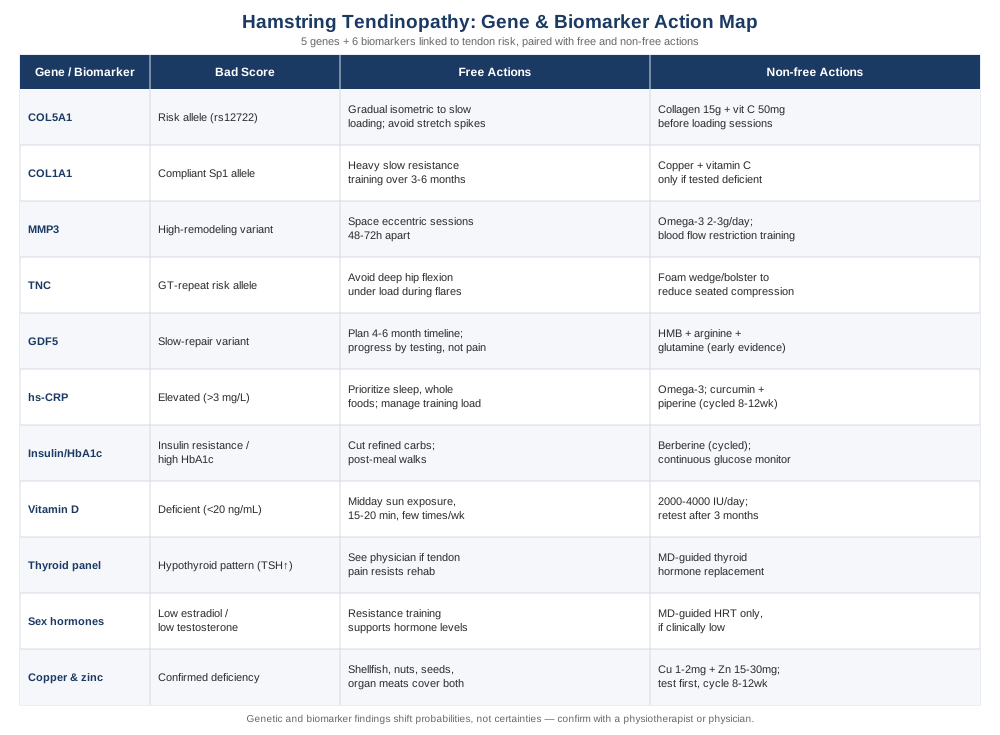
The Genes Most Linked to Hamstring Tendon Trouble
Genomics researchers like Ali Torkamani, whose work has focused on translating genetic variation into practical, individualized health decisions, and Gary Brecka, who has popularized using genetic and biomarker panels to guide targeted lifestyle interventions, both make the same basic point: a gene variant is not a diagnosis, it's a probability that becomes useful only when it's paired with a concrete plan. That framing fits hamstring tendinopathy well. Most of the strongest genetic evidence for tendon injury comes from research on Achilles and patellar tendinopathy and on anterior cruciate ligament rupture, because these have been studied in far larger cohorts than proximal hamstring tendinopathy specifically. The underlying biology — type I and type V collagen assembly, matrix remodeling enzymes, and growth factor signaling — is shared across tendons, so this research is reasonably extrapolated to the hamstring tendon, but it is extrapolation, and that distinction matters. Direct hamstring-specific data exists mainly for muscle strain injury genetics, which is a related but not identical condition to tendinopathy at the ischial tuberosity.
COL5A1: the collagen-assembly gene
COL5A1 codes for a component of type V collagen, a minor but structurally critical collagen that regulates the diameter and organization of the much more abundant type I collagen fibrils in tendon. A specific variant in the gene's 3'-untranslated region (rs12722) has been associated with Achilles tendon pathology and with altered joint flexibility in several studies, with certain genotypes appearing more often in people with chronic tendinopathy than in uninjured controls, as reported in the original South African and Australian cohorts (Mokone et al., COL5A1 gene and Achilles tendon pathology).
The evidence is genuinely mixed, though, and that's worth stating plainly rather than glossing over. A more recent study in Japanese athletes found no association between this same COL5A1 variant and either passive hamstring stiffness or muscle injury risk (COL5A1 rs12722 and muscle injury in Japanese athletes), suggesting the effect may be population-specific, tendon-specific, or smaller than early studies implied. Treat COL5A1 as a moderate-confidence signal for tendon-specific structure, not a settled hamstring-injury predictor.
If the gene is flagged as higher-risk, the plan without supplements centers on protecting the structural weak point rather than trying to change it: build tendon stiffness gradually through progressive isometric and then heavy slow resistance loading, avoid sudden jumps in sprint volume or range-of-motion work (deep stretching under load is the classic aggravator for proximal hamstring tendinopathy), and prioritize consistent, moderate loading over sporadic intense sessions, since tendon adapts slowly and punishes inconsistency. This costs nothing beyond a structured program and typically 8 to 12 weeks of patience before reassessing.
If you want to add supplements or equipment, the most evidence-aligned addition is timed collagen-supportive nutrition: 15 grams of hydrolyzed collagen or gelatin with roughly 50mg of vitamin C, taken 30 to 60 minutes before loading sessions, which has been shown to measurably increase collagen synthesis markers around exercise (Shaw et al., vitamin C-enriched gelatin and collagen synthesis). A reasonable cycle is on training days only, 3 to 5 times per week, reassessed after 3 months; side effects are minimal, though gelatin can cause mild gastrointestinal discomfort in some people at higher doses, and collagen supplements should be used with caution if you have a shellfish or bovine-product allergy relevant to the source.
COL1A1: the load-bearing collagen gene
COL1A1 encodes a chain of type I collagen, the dominant structural protein in tendon, making up the majority of its dry weight. A regulatory polymorphism in the gene's Sp1 binding site has been linked to differences in collagen fiber quality and to altered risk of Achilles tendon and ligament injuries, with one allele associated with a stiffer, more injury-resistant tendon phenotype and the other with more compliant, arguably more injury-prone tissue (Sp1-binding site polymorphism in COL1A1 and Achilles tendon injuries). A broader narrative review of tendon and ligament genetics situates COL1A1 among the more consistently replicated markers in this field, alongside COL5A1 and GDF5 (Tendon and ligament genetics: a narrative review).
If this gene is flagged as higher-risk, the plan without supplements is mechanical: because a more compliant tendon needs more total structural reinforcement rather than more mobility work, favor heavy, slow, tendon-specific strength training (think 3 to 4 second eccentric and concentric phases, 3 to 4 sets of 6 to 8 reps) over ballistic or high-rep endurance work, and build hip and posterior chain strength symmetrically so the hamstring tendon isn't compensating for weaker synergists. Expect meaningful tendon remodeling to take 3 to 6 months, since collagen turnover in tendon is slow compared with muscle.
If you're open to supplements or equipment, copper and vitamin C intake deserve attention because both are required cofactors for lysyl oxidase, the enzyme that cross-links collagen fibers into a stable, load-tolerant matrix — a process well documented at the cellular level in tendon fibroblasts (Lysyl oxidase activity and collagen fibrillogenesis in tendon cells). A typical approach is a food-first strategy (shellfish, nuts, seeds, organ meats for copper; citrus and peppers for vitamin C), reserving a low-dose copper supplement (1-2mg/day) only if a blood copper or ceruloplasmin test shows deficiency, cycling for 8 to 12 weeks and rechecking levels, since chronic excess copper supplementation carries real toxicity risk, including liver strain, and should not be taken indefinitely without monitoring.
MMP3: the matrix remodeling gene
MMP3 (matrix metalloproteinase 3, also called stromelysin-1) codes for an enzyme that breaks down and remodels components of the extracellular matrix, including collagen and proteoglycans. Variants in MMP3 have been associated with Achilles tendinopathy, and notably appear to interact with COL5A1 genotype — meaning the combination of a "high-remodeling" MMP3 variant and a "compliant" COL5A1 variant seems to raise risk more than either alone (MMP3 gene variants and Achilles tendinopathy, interaction with COL5A1). Excess or poorly regulated MMP activity is a recurring theme in the broader tendinopathy literature, where degraded, disorganized matrix — rather than classic inflammation — is now understood as the core pathology (Metalloproteases and tendinopathy).
If this gene is flagged as higher-risk, the plan without supplements is about controlling remodeling stress: avoid stacking high-intensity eccentric sessions back-to-back (tendon needs 48 to 72 hours to reset collagen synthesis after a heavy loading bout), keep total weekly high-strain volume in check even as pain improves, and treat "feels fine" as an unreliable stopping cue, since tendon can feel good structurally weeks before it's actually remodeled.
With supplements or equipment, omega-3 fatty acids (roughly 2-3g/day EPA/DHA) are worth considering, since they're associated with a more favorable balance of matrix-remodeling signaling in connective tissue research broadly, alongside blood flow restriction (BFR) training equipment, which allows tendon-loading strength work at lower absolute loads — useful when higher loads are still provoking symptoms. Cycle omega-3 continuously as a daily supplement, but reassess dose if you're on anticoagulant medication, since high-dose fish oil can mildly increase bleeding risk; BFR should be introduced under guidance, 2 to 3 sessions per week, since improper cuff pressure or duration can cause numbness or excessive swelling.
TNC: the tenascin-C gene
Tenascin-C is a matrix glycoprotein that helps tendons handle load and compression, particularly at sites where a tendon wraps around bone — which describes the proximal hamstring tendon's relationship with the ischial tuberosity reasonably well. A GT dinucleotide repeat polymorphism within the TNC gene has been associated with a substantially higher risk of Achilles tendon injury in carriers of certain repeat lengths, in one of the earliest and most cited genetic tendinopathy studies (GT dinucleotide repeat in tenascin-C and Achilles tendon injuries). Persistent tenascin-C overexpression has also been observed directly in pathological tendon tissue, suggesting it's involved in the disorganized matrix remodeling seen in chronic tendinopathy, not just as a risk marker but as an active participant.
If this gene is flagged as higher-risk, the plan without supplements should specifically address compression-plus-load combinations, which is the classic trigger for proximal hamstring tendinopathy: avoid deep hip flexion under load (deep lunges, hip-flexed deadlifts, low bike saddle position) during flare-ups, and reintroduce compressive positions only after pain-free tendon loading is established, rather than the other way around.
With equipment, a foam wedge or bolster to modify seated posture (reducing direct ischial tuberosity compression during prolonged sitting) is a low-cost, evidence-aligned adjustment given how strongly compression is implicated in this specific tendon's pathology; there's no meaningful downside or cycling consideration here since it's purely mechanical.
GDF5: the growth and repair signaling gene
GDF5 (growth differentiation factor 5) is part of the TGF-beta superfamily and plays a role in the development and repair of tendons, ligaments, and joints. Regulatory variants near GDF5 are among the most replicated genetic findings in musculoskeletal research, most robustly for osteoarthritis risk, but also flagged in tendon and ligament injury reviews as relevant to the same growth-factor signaling pathways that govern tendon repair capacity (Tendon and ligament genetics narrative review). The practical takeaway is that GDF5 variants may correlate less with initial injury risk and more with how efficiently your tendon repairs itself once irritated — a slower "repair signaling" variant means rehab timelines should be planned generously rather than judged against a friend's faster recovery.
If this gene is flagged as lower-efficiency, the plan without supplements is mainly about calibrating expectations and program length: budget for a 4 to 6 month rehabilitation timeline rather than 6 to 8 weeks, use objective strength and load-tolerance testing (not just pain) to advance stages, and avoid the common mistake of abandoning a loading program at week 6 because it "isn't working," when tendon adaptation on this timeline is still in its early phase.
With supplements, some early research has looked at the amino acid combination of arginine, glutamine, and beta-hydroxy-beta-methylbutyrate (HMB) for supporting connective tissue repair in slow-healing populations; evidence specific to tendon (rather than muscle or wound healing) is still early-stage, so this should be framed as a low-risk adjunct rather than a core strategy — typical dosing is 3g HMB with 14g each of arginine and glutamine daily, cycled for 8 weeks with a reassessment, and it's generally well tolerated, though high-dose arginine can cause gastrointestinal upset in some people.
Six Biomarkers Worth Tracking Alongside Your Genes
Genes describe your tendency; blood biomarkers describe your current state, which is why clinicians in the Peter Attia and Thomas Dayspring mold of practice — measure what matters, act on trends rather than single readings — apply just as well here as they do to cardiometabolic health. These six markers won't diagnose tendinopathy, but they'll tell you whether your internal environment is helping or hindering repair.
High-sensitivity CRP (hs-CRP)
Chronic low-grade inflammation is associated with worse musculoskeletal recovery generally, and hs-CRP is the cheapest, most available marker of it. How to measure it: a standard blood draw, widely available through primary care or direct-to-consumer labs, typically $10 to $30 without insurance. If elevated, the plan without supplements is prioritizing sleep consistency, reducing ultra-processed food intake, and managing overall training load, since overtraining itself raises inflammatory markers. With supplements, omega-3s (2g/day, ongoing) and curcumin with piperine (500-1000mg/day, cycled 8-12 weeks with a break, since very high-dose curcumin can affect liver enzymes and interacts with blood thinners) are the best-supported additions.
Fasting insulin and HbA1c
Insulin resistance and elevated blood glucose are linked to poorer tendon health and higher tendinopathy rates, plausibly through advanced glycation end-products stiffening collagen and impairing normal remodeling (Metabolic dysfunction and tendinopathy). How to measure it: fasting blood draw, $15-40 for HbA1c, fasting insulin sometimes needs to be requested separately, around $20-30. Without supplements, the highest-leverage change is reducing refined carbohydrate and added sugar intake and adding post-meal walks. With supplements or equipment, berberine (500mg 2-3x/day, cycled 8-12 weeks then reassessed, not for use with certain diabetes medications without medical supervision) and a continuous glucose monitor to identify personal glycemic triggers are reasonable, evidence-informed additions.
25-hydroxyvitamin D
Vitamin D deficiency has been linked to poorer tendon healing outcomes and slower postoperative recovery across several tendon sites, though most direct research is on rotator cuff repair rather than hamstring tendon specifically (Vitamin D and postoperative tendon healing, scoping review). How to measure it: a simple blood test, $20-50, worth doing at least once given how common deficiency is. Without supplements, 15-20 minutes of midday sun exposure several times a week is the free option, though seasonally unreliable. With supplements, 2000-4000 IU/day (higher short-term doses only under guidance if severely deficient) is standard, generally well tolerated, though very high doses over long periods can raise calcium to unsafe levels, so retesting after 3 months is worthwhile.
Thyroid panel (TSH, free T4)
Both hypothyroidism and Hashimoto's thyroiditis have been associated with tendinopathy at multiple sites, plausibly through slowed collagen turnover and altered extracellular matrix metabolism when thyroid hormone signaling is low. How to measure it: TSH alone runs $20-30; a full panel with free T4 and antibodies is $50-100. Without supplements, this is a case where the "fix" is largely diagnostic rather than lifestyle-driven — persistent tendon symptoms that resist normal rehab progress alongside thyroid symptoms (fatigue, cold intolerance, hair thinning) warrant a physician visit rather than a self-directed plan. With supplements or medication, this is squarely a case for physician-guided thyroid hormone replacement if a genuine deficiency is confirmed; self-supplementing iodine or thyroid support blends without a diagnosed deficiency carries real risk and isn't recommended.
Sex hormones (estradiol and testosterone)
Estrogen supports tendon collagen synthesis and matrix maintenance, and its decline around menopause is associated with reduced tendon collagen content and increased tendinopathy risk in several human studies (Estrogen and tendon collagen synthesis in postmenopausal women; Sex hormone supplementation and tendon: a systematic review). Low testosterone in men has a plausible, if less directly studied, parallel effect on connective tissue repair capacity. How to measure it: $40-80 depending on the panel, best done in the morning for consistency. Without supplements, resistance training itself modestly supports healthy hormone levels over time. With supplements or hormone therapy, this is not a do-it-yourself supplement category — if levels are clinically low, discuss hormone replacement therapy with a physician who can weigh the real, well-documented risks and benefits rather than pursuing over-the-counter "boosters" with weak evidence.
Serum copper and zinc
Both minerals are required cofactors for the enzymes that build and cross-link collagen, tying directly back to the COL5A1 and COL1A1 genetic discussion above. How to measure it: a specialty panel, $40-70, not always included in standard panels so it typically needs to be requested. Without supplements, oysters, shellfish, nuts, seeds, and organ meats cover both minerals well through diet alone for most people. With supplements, correct only a confirmed deficiency (low-dose copper 1-2mg/day, zinc 15-30mg/day, taken at different times since they compete for absorption), cycling for 8-12 weeks with a recheck, since excess zinc can itself cause copper deficiency and excess copper carries toxicity risk — this is a "test, don't guess" category more than most.
A Podcast Worth Your Attention: Rethinking Tendon Care
Much of standard tendon-injury advice still traces back to the RICE protocol — rest, ice, compression, elevation — developed decades ago for acute injury, and often applied by default to chronic tendinopathy where it fits poorly. Tendon researcher Dr. Keith Baar of UC Davis, who has spent much of his career studying collagen synthesis and connective tissue adaptation, laid out a research-grounded challenge to several of these defaults in a 2025 conversation on The Tim Ferriss Show (Dr. Keith Baar, UC Davis — Simple Exercises That Can Repair Tendons). It's worth a listen for anyone managing a stubborn tendon issue, and here are ten of its most useful, study-backed points.
1. Collagen synthesis has a narrow post-exercise window
Human tendon biopsy research shows collagen synthesis rates in tendon rise notably within about 6 hours after loading exercise and peak around 24 hours, then decline — meaning the biological "building window" opens and closes on a fairly specific schedule that training programs can be designed around (Miller et al., collagen and muscle protein synthesis after exercise).2. Vitamin C-enriched collagen taken before loading measurably boosts synthesis
The randomized, controlled human study behind this point showed gelatin plus vitamin C, taken about an hour before intermittent activity, increased circulating amino acids tied to collagen production more than either component alone (Shaw et al., 2016).3. Tendon needs roughly 6 to 8 hours of rest between loading bouts
Because collagen synthesis machinery in tendon activates and stays elevated for hours, spacing two loading sessions too close together may not give the tendon time to actually use the raw materials it's been supplied.4. Long, slow isometric holds may remodel tendon differently than fast lifting
Baar's research points to extended, low-movement isometric loading (holds in the 20 to 30 second range) as a distinct stimulus for tendon stiffness adaptation, separate from the hypertrophy-focused rep ranges typical of standard strength training.5. Icing may blunt the very process needed for repair
Inflammation is an active, necessary part of tissue regeneration, and animal-model research has found that icing can delay the arrival of the immune cells responsible for clearing damaged tissue and initiating repair (Icing and muscle regeneration, animal model). This is early-stage, largely preclinical evidence, and it hasn't overturned all uses of icing for acute swelling control, but it's a meaningful reason to question reflexive, prolonged icing for a chronic, low-inflammation tendinopathy.6. Routine NSAID use around training may not help tendon adaptation
A broad review of NSAID effects on tendon and bone healing found consistent negative effects in laboratory and animal models, even though large clinical studies in humans have found a smaller, more mixed effect on outcomes like surgical repair failure rates (NSAID therapy and healing of bone, tendon, and enthesis) — the honest summary is "probably don't rely on them for tendon adaptation," not "they're proven harmful in every human context."7. Isometrics can act as a genuine anti-inflammatory tool
Sustained isometric loading appears to reduce tendon pain acutely in some studies, offering a loading-based alternative to reaching for medication before or after a session — useful specifically because it treats pain without removing the mechanical stimulus the tendon needs.8. Orthobiologic injections (PRP, prolotherapy, stem cells) remain unproven as a default
The evidence for these interventions in tendon repair is inconsistent across trials, and Baar's take — echoed broadly in the sports medicine literature — is that they shouldn't replace a structured loading program, only potentially supplement one in specific, physician-guided cases.9. Tendon adapts slower than muscle, and programs should be built around that mismatch
Because tendon collagen turnover operates on a timescale of months rather than the days-to-weeks timescale of muscle adaptation, the same program that builds muscle strength in 6 weeks may need 4 to 6 months to meaningfully change tendon capacity — a mismatch that explains a lot of frustration in self-directed rehab.10. Load, applied correctly, is the primary anti-inflammatory and repair signal
The overarching message across the conversation is that mechanical loading — not rest, not medication — is the strongest lever available for actually changing tendon tissue, which reframes "how much can I load this" as the central rehab question rather than "how do I make the pain stop."Complementary Approaches Worth Considering
Alongside genetics, biomarkers, and loading science, a small number of complementary approaches have real, condition-relevant human evidence behind them for tendinopathy specifically. These aren't replacements for structured loading, but reasonable additions where the evidence supports them.
Low-level laser therapy (photobiomodulation)
Photobiomodulation uses low-intensity red or near-infrared light applied directly to the tendon, with the proposed mechanism being improved mitochondrial function and modulation of inflammatory signaling in the treated tissue, making it relevant wherever tendon healing has stalled or pain limits loading progress. A systematic review and meta-analysis of randomized controlled trials found low-level red and near-infrared photobiomodulation produced measurable improvements in pain and function across several tendinopathies when applied at recommended doses (Photobiomodulation for tendinopathy: systematic review and meta-analysis), though the same body of evidence notes real inconsistency between studies and calls the overall certainty only moderate. Realistically, this means treating it as a reasonable adjunct — typically 2 to 3 sessions per week for several weeks, using a device dosed within the ranges shown effective in trials — rather than a primary treatment, and pairing it with, not instead of, a loading program.
Deep friction massage
Deep transverse friction massage applies focused, cross-fiber pressure directly over the tendon, with the rationale that it may promote localized circulation and encourage more organized collagen fiber alignment during remodeling — plausible for a chronic hamstring tendinopathy where matrix disorganization, not acute inflammation, is the core issue. The evidence here is genuinely mixed: a broad review of tendinopathy treatments notes massage-based approaches as a reasonable adjunct with some supportive trial data, while a Cochrane-referenced systematic review of deep friction massage specifically found limited high-quality evidence of benefit over other conservative care (Treatment of tendinopathy: what works, what doesn't). Used realistically, this means treating it as a low-risk, modestly-supported adjunct — a few minutes of focused pressure a few times a week, ideally from a trained practitioner initially so you learn correct technique and pressure — rather than expecting it to resolve tendinopathy on its own.
Mindfulness meditation
Chronic tendinopathy pain, like most persistent musculoskeletal pain, has a real central nervous system component: pain perception, fear of movement, and inconsistent adherence to loading programs all interact with how the tendon actually heals, which is where mindfulness-based approaches become relevant even though they don't act on the tendon tissue directly. A systematic review and meta-analysis of mindfulness meditation for chronic pain found consistent, moderate improvements in pain and associated quality-of-life measures across multiple pain conditions (Mindfulness meditation for chronic pain: systematic review and meta-analysis), though it's worth being direct that this evidence isn't tendinopathy-specific, and should be understood as supporting better pain coping and program adherence rather than changing tendon structure. Realistically, a short daily practice — 10 to 15 minutes, using a structured app or guided program, most useful during the frustrating plateau phases of rehab where adherence typically breaks down — is a low-cost, low-risk addition worth trying.
Bringing It Together
Hamstring tendinopathy rarely responds to a single lever. The genetic variants covered here — COL5A1, COL1A1, MMP3, TNC, and GDF5 — describe tendencies in how your tendon is built and how it remodels, and each comes with a concrete response, not just a risk label. The biomarkers layered on top describe your current internal environment, which changes month to month and is far more actionable in the short term than any genetic result. And the loading science from researchers like Keith Baar is a reminder that the biggest lever of all is still the most boring one: consistent, correctly-dosed mechanical loading, given enough time to actually change the tissue.
None of this is a substitute for a proper diagnosis or for working with a physiotherapist or sports physician who can assess your specific tendon, movement pattern, and training history. What it does offer is a more precise starting point — a shortlist of what's worth testing, what's worth tracking, and what's worth questioning in the advice you've already been given. The next useful step is a practical one: pick one or two of the biomarkers above to check, keep a simple log of your pain and loading tolerance over the next month, and bring both to your next conversation with a qualified professional.
Musculoskeletal Endocrine & Metabolic
Musculoskeletal: Tendon & Ligament Conditions