This article contains AI generated content.
· UpdatedHemophilic Arthropathy: 7 Genes and 7 Biomarkers to Track
If you or someone you care for has hemophilia, you already know the standard advice by heart: take your factor on schedule, avoid contact sports, do your physical therapy, watch for swelling. What that advice rarely explains is why two people with the same factor level, the same treatment plan, and a similar bleed history can end up with very different joints ten years later. One knee stays serviceable. The other becomes the "target joint" that dictates every decision about activity, travel, and work.
That gap is not random, and it is not simply a matter of trying harder. It reflects biology happening below the surface — iron accumulating in synovial tissue, inflammatory signaling that outlasts the bleed that triggered it, and inherited variants in genes that have nothing to do with clotting factor itself but everything to do with how a joint responds to blood. Generic guidance can't address any of this, because it isn't built to. It's built for the average case, not for your joint, your labs, or your genotype.
This article takes a more granular approach. Instead of repeating the same prophylaxis reminders, it walks through the specific biomarkers that let you and your hematology team see joint damage forming before it shows up on an X-ray, and the genetic variants that help explain why arthropathy sometimes progresses faster or slower than factor level alone would predict. Neither replaces your treatment plan — both make it sharper.
None of this amounts to a cure, and it shouldn't be framed as one. But better information changes decisions: which joint gets extra monitoring, which lab gets rechecked in six months, which lifestyle lever is actually worth pulling. The sections ahead cover the biomarkers worth tracking, the genes that modify risk independent of your factor level, a longevity framework that reframes joint preservation in useful terms, and a short, honest look at complementary approaches that have real (if modest) evidence behind them in hemophilia specifically.
Summary
Hemophilic arthropathy doesn't progress on a single dial — it progresses on several, and most of them are measurable. Iron deposited from old bleeds keeps synovial tissue chemically active long after the bleed itself has resolved. Cartilage breaks down at a rate you can actually quantify in blood and urine, months before it's visible on imaging. And genetic variants in inflammation and immune-recognition genes — not just F8 or F9 — appear to shape how aggressively a given joint responds to the same amount of blood exposure.
This article walks through seven biomarkers that give a more precise picture of what's happening inside a joint than a physical exam alone, what each one costs to check, and what a realistic response plan looks like — with and without supplements. It then covers seven genes tied to hemophilia and its joint complications, including a few surprising ones that have nothing to do with coagulation. A longevity-focused framework adds a useful reframe on joint preservation as a long-game skill rather than a reactive fix, and a final section covers which complementary approaches actually have hemophilia-specific evidence behind them — and which popular ones, honestly, don't.
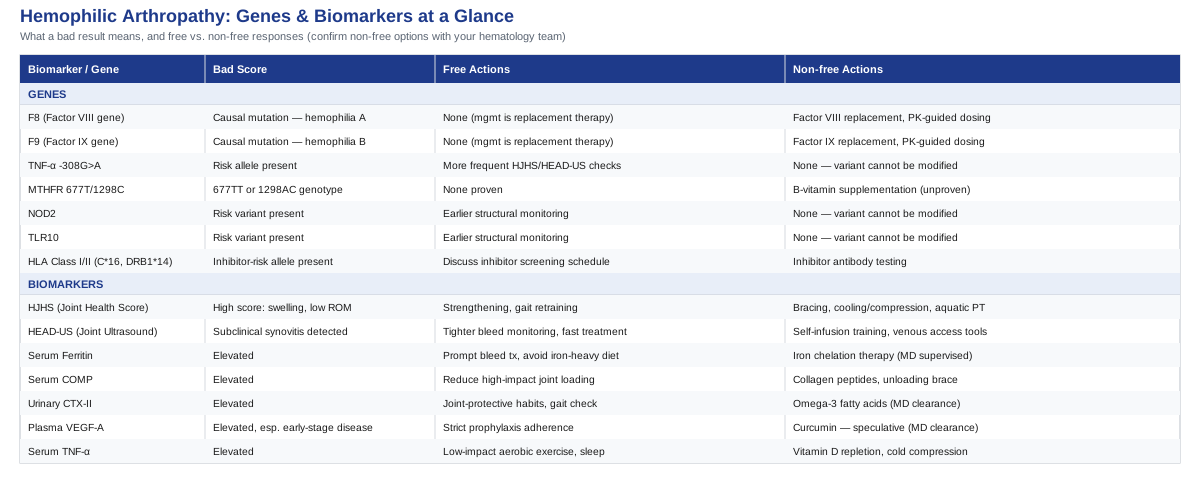
The Biomarkers Worth Tracking in Hemophilic Arthropathy
Factor level and annual bleed rate (ABR) have long been the default proxies for joint health, but the relationship is looser than it seems. A six-year follow-up of prophylaxis patients found only a weak correlation between trough factor levels and actual bleeding or joint outcomes, which is part of why dosing is increasingly individualized rather than protocol-driven (Haemophilia, 2004). More recent pharmacokinetic work suggests a practical floor — around 17.7–19.2 IU/dL of factor VIII activity — below which joint bleeding risk rises sharply in mild hemophilia A (Blood Advances, 2023), and similar dose-to-bleed-probability modeling now exists for factor IX prophylaxis (Clinical Pharmacology & Therapeutics, 2025). Useful context, but not the whole story. The seven biomarkers below fill in what trough levels miss: what's actually happening in the joint tissue itself.
One safety note before diving in: several of the "improve it" suggestions below involve omega-3 fatty acids, turmeric/curcumin, or other supplements with mild antiplatelet effects. In a bleeding disorder, that interaction matters. None of these should be started without your hematology team's input.
1. Hemophilia Joint Health Score (HJHS)
HJHS is a structured physical exam — swelling, muscle atrophy, crepitus, range of motion, strength, and gait, scored across the index joints (elbows, knees, ankles). It was validated specifically to be more sensitive than older exam scales: in the original validation study it was 97% more efficient at distinguishing severe from mild/moderate hemophilia, and 74% better at separating prophylaxis patients from those on episodic treatment (Feldman et al., Arthritis Care & Research, 2011).
How it's measured: Performed by a physiotherapist trained in the protocol, typically 10–15 minutes per limb set, usually bundled into an annual comprehensive visit at a hemophilia treatment center. Standalone private assessment, where available, runs roughly $150–300.
If the score is bad, the plan without supplements or equipment: Structured quadriceps and hip-stabilizer strengthening (open and closed chain), gait retraining, and activity modification to reduce repetitive joint load. This is the single best-supported non-pharmacological intervention in hemophilia care — a 2023 meta-analysis of 35 randomized trials covering over 1,200 patients found manual therapy combined with structured exercise reliably improved joint health scores and quality of life (Archives of Physical Medicine and Rehabilitation, 2023).
If the score is bad, the plan with supplements or equipment: Bracing or orthotics to offload the worst-affected joint during flares, cooling/compression equipment for acute swelling, and an unweighting treadmill or pool access for aquatic therapy where available. Frequency: strengthening work 3x/week, ongoing rather than cycled, since it's foundational rather than a short-term fix. Reassess HJHS every 6–12 months. Side effect to watch for: resuming loaded exercise too soon after a hemarthrosis can trigger re-bleeding — ease back in gradually.
2. Joint Ultrasound Score (HEAD-US)
HEAD-US is a standardized point-of-care ultrasound protocol built specifically to catch subclinical synovitis and early cartilage change — damage that HJHS and symptoms won't pick up yet (Martinoli et al., Thrombosis and Haemostasis, 2013). Think of it as the biomarker equivalent of a check-engine light for a joint that still feels fine.
How it's measured: Performed by a trained hematologist or radiologist using portable ultrasound, roughly 15–20 minutes, cost $75–250 depending on whether it's bundled into clinic care or billed as standalone imaging.
If the score is bad, the plan without supplements or equipment: Tighter bleed monitoring in the affected joint, more conservative activity during any flare window, and — most importantly — treating suspected joint bleeds within hours rather than days, since early treatment limits progression to detectable synovitis.
If the score is bad, the plan with supplements or equipment: Self-infusion training or improved venous access equipment to shorten time-to-treatment for bleeds. If ferritin (below) is also elevated, ask about iron-focused management, since iron is a modifiable driver of the synovitis HEAD-US is detecting. Frequency: rescan every 6–12 months for at-risk joints, every 3 months for an actively managed target joint. No direct side effects from the scan itself.
3. Serum Ferritin
Each joint bleed leaves behind iron that synovial tissue can't fully clear. That iron — largely as hemosiderin — doesn't just sit there; it catalyzes oxidative stress and drives synovial cells to pump out IL-1, IL-6, and TNF-α, keeping inflammation active long after the bleed has resolved (Journal of Bone and Joint Surgery (Br), 1998; mechanistic review: Haemophilia, 2007).
How it's measured: Standard serum ferritin blood draw, $10–30, often already included in routine hematology labs.
If the score is bad, the plan without supplements or equipment: Treat every joint bleed promptly to limit further iron deposition, and avoid heme-iron-heavy diets or incidental iron supplementation if ferritin is already trending high without confirmed anemia.
If the score is bad, the plan with supplements or equipment: True iron overload in hemophilia is uncommon outside heavily transfused patients, but if labs confirm it, iron chelation therapy under hematology supervision is the appropriate response — this is a prescription-level intervention, not a supplement. Never self-treat elevated ferritin with iron restriction without a full iron panel; low-normal ferritin with restriction risks anemia. Frequency: recheck every 6–12 months; chelation, if used, is continuous with periodic renal and GI monitoring, not a casual on/off cycle.
4. Serum COMP (Cartilage Oligomeric Matrix Protein)
COMP reflects active cartilage matrix breakdown in real time. In a study measuring it alongside urinary CTX-II and chondroitin sulfate 846, elevated COMP tracked with radiographic joint-space narrowing (Pettersson score) in hemophilic arthropathy (Jansen et al., Arthritis & Rheumatism, 2009), with levels roughly 25% higher than controls confirmed in a later cohort (Haemophilia, 2017).
How it's measured: Serum ELISA, currently mostly available through specialty or research labs rather than routine clinic panels; roughly $50–150 where accessible. Worth asking your hemophilia treatment center whether they participate in a research protocol that includes it.
If the score is bad, the plan without supplements or equipment: Temporarily reduce high-impact loading on the affected joint and prioritize fast bleed control, since active cartilage turnover is often a downstream effect of recent or ongoing joint bleeding.
If the score is bad, the plan with supplements or equipment: Collagen peptide supplementation (roughly 10–15g/day) is commonly used for general cartilage support in osteoarthritis, though there's no hemophilia-specific evidence it changes COMP — treat it as a reasonable, low-risk extrapolation rather than a proven fix. An unloading brace during high-turnover periods can help short-term. Frequency: collagen daily for a 3-month trial, then reassess; braces should be cycled with strengthening work, not worn indefinitely, to avoid deconditioning. Side effects are minimal (mild GI upset with collagen at most).
5. Urinary CTX-II
CTX-II is a breakdown fragment of type II collagen — the structural backbone of cartilage — and complements COMP by measuring degradation of a different cartilage component. It was measured in the same study above as part of a three-marker panel correlating with joint-space narrowing (Arthritis & Rheumatism, 2009).
How it's measured: Morning urine sample, ELISA normalized to creatinine, $40–100, primarily a research-context test at present.
If the score is bad, the plan without supplements or equipment: Same joint-protective behaviors as above, plus a biomechanical assessment — malalignment or gait compensation can focally overload cartilage in one compartment of a joint, accelerating collagen breakdown there specifically.
If the score is bad, the plan with supplements or equipment: Omega-3 fatty acids (roughly 2–3g/day combined EPA/DHA) are used broadly for joint inflammation, though evidence specific to hemophilic cartilage is absent. Important caveat: high-dose fish oil has a mild antiplatelet effect, which matters in a bleeding disorder — clear this with your hematologist before starting, and recheck triglycerides periodically if using a high dose long-term.
6. Plasma VEGF-A
Chronically inflamed synovium grows new blood vessels to feed itself, and those vessels are fragile and prone to bleeding — a self-reinforcing cycle. One study found VEGF-A elevated roughly fourfold in hemophilic synovium and blood, alongside SDF-1 and pro-MMP-9, and — notably — plasma VEGF-A was about tenfold higher in early-stage joint disease than in advanced arthropathy, suggesting it's most valuable as an early-warning signal rather than a late-stage marker (Acharya et al., Blood, 2011).
How it's measured: Serum/plasma ELISA, specialty or research lab, roughly $60–150, not yet a routine clinical test.
If the score is bad, the plan without supplements or equipment: The most direct lever is minimizing recurrent microbleeds through strict prophylaxis adherence, since each hemarthrosis re-triggers the angiogenic cascade that VEGF-A reflects.
If the score is bad, the plan with supplements or equipment: Curcumin has anti-angiogenic properties in general inflammation research, but there's no hemophilia-specific data, and turmeric/curcumin at higher doses carries a mild antiplatelet effect — this is speculative territory that requires medical clearance before trying, not a default recommendation.
7. Serum TNF-α
TNF-α is produced by iron-laden, hyperplastic synovium and correlates with both hemarthrosis frequency and joint damage scores — a systemic readout of local joint inflammation (Journal of Clinical Medicine, 2019).
How it's measured: Serum ELISA, specialty lab, roughly $40–100.
If the score is bad, the plan without supplements or equipment: Low-impact aerobic exercise as tolerated has a broad systemic anti-inflammatory effect; adequate sleep and weight management help lower baseline inflammatory tone as well.
If the score is bad, the plan with supplements or equipment: Correcting vitamin D deficiency if present (vitamin D has an immune-modulating role), typically 1,000–2,000 IU/day after lab-guided repletion, rechecked in 3 months. Cold compression equipment can blunt the local cytokine surge during an acute flare. The omega-3 caveat from above applies here too if considered.
The Genetic Layer: Genes That Shape Joint Outcomes Beyond Factor Level
The biomarkers above answer "what is happening in this joint right now." Genetics answers a different question: why does a given amount of bleeding cause more damage in one person than another. Genomics communicators like Ali Torkamani (Scripps Research Translational Institute) and Gary Brecka (known for popularizing consumer genetic and biomarker testing) have both pushed a broader idea worth borrowing here: a diagnosis is not the whole genetic story. Neither has published hemophilia-specific research — Torkamani's work centers on population-scale variant discovery generally, and Brecka's public work is commercial rather than peer-reviewed — but the underlying point holds. Variants in inflammation and immune-recognition genes may explain why two people with "hemophilia A" end up with very different joints.
F8: The Hemophilia A Gene
Mutations in F8, which codes for clotting factor VIII, are the direct cause of hemophilia A (GeneReviews, NCBI Bookshelf). There's no supplement-based "fix" for a causal factor-gene mutation — management is factor VIII replacement (recombinant or plasma-derived) with individualized prophylaxis dosing guided by pharmacokinetic testing, which is itself one of the most effective interventions in all of medicine for preventing arthropathy.
F9: The Hemophilia B Gene
The analogous gene for hemophilia B, F9, codes for factor IX (GeneReviews, NCBI Bookshelf). Same logic applies: replacement therapy and individualized dosing are the intervention, not lifestyle or supplement measures.
TNF-α -308G>A: An Inflammatory Volume Dial
This promoter polymorphism, which affects how much TNF-α a person's cells produce under inflammatory stress, has been linked specifically to subchondral bone cysts in pediatric hemophilic arthropathy patients (Molecular Genetics & Genomic Medicine, 2019). There's no way to "turn down" a promoter variant, but knowing you carry it is a reasonable argument for closer HEAD-US and HJHS monitoring, since your joints may translate a given amount of bleeding into more bone-level damage than average.
MTHFR 677T/1298C: A Possible Joint-Effusion Modifier
The same study found the MTHFR 677TT and 1298AC genotypes associated with a higher number of affected joints and more effusion. MTHFR affects folate metabolism and homocysteine levels, and B-vitamin supplementation to normalize homocysteine is a commonly floated intervention for this genotype in other contexts — but there's no evidence yet that it changes joint outcomes in hemophilia specifically. It's a low-risk, unproven step, not a validated one.
NOD2 and TLR10: Immune Sensors Linked to Joint Mobility
A genome-wide SNP screen in hemophilia patients found variants in NOD2 and TLR10 — both innate-immune pattern-recognition genes — associated with joint range-of-motion abnormalities (Thrombosis and Haemostasis, 2016/17). There's no direct supplement countermeasure here either; the practical takeaway is the same as with TNF-α — carriers may benefit from earlier and more frequent structural monitoring rather than waiting for symptoms.
HLA Class I/II: The Inhibitor Risk Genes
Certain HLA alleles, including HLA-C*16 and HLA-DRB1*14, have been associated with a higher risk of developing factor VIII inhibitors — antibodies that neutralize replacement therapy (Haemophilia, 2012; mechanistic detail: PLoS Computational Biology, 2013). The evidence isn't uniform — a separate study found no clear HLA association in a specific mild-hemophilia mutation subgroup (Haemophilia, 2004) — but inhibitors matter enormously for arthropathy, because once they develop, bleeds become harder to treat effectively and joint damage tends to accelerate. If your family history suggests elevated inhibitor risk, this is worth a direct conversation with your hematologist about screening frequency, not something to act on unilaterally.
What a Longevity-Focused Framework Adds to Joint Preservation
Peter Attia's book Outlive and his podcast The Drive aren't written for people with bleeding disorders, but the central argument — that most of medicine treats disease reactively when the highest-leverage work happens years before a crisis — maps unusually well onto joint preservation in hemophilia, a field that has historically been just as reactive: treat the bleed, then assess the damage afterward. Here are the ten ideas from that framework most worth borrowing.
1. Muscle Is the Organ of Longevity — and of Joint Protection
Attia's repeated point is that muscle mass and strength predict long-term function better than almost any other single marker. In hemophilia, this isn't theoretical — strong muscles around a joint act as a shock absorber that reduces the mechanical stress reaching the joint capsule itself, which is exactly why structured strengthening shows up as the best-evidenced intervention in the biomarker section above.2. Work Backward From the Joint You Want to Keep
Attia's "Centenarian Decathlon" concept asks what physical tasks you want to still perform decades from now, then trains for those specifically. Applied here: decide which joint function matters most to your life — climbing stairs, kneeling, walking distances — and build your PT program around preserving that capability, not a generic routine.3. Stability Before Strength
Before loading a joint heavily, Attia emphasizes building control and stability around it. For a joint with any history of hemarthrosis, this ordering matters even more — stability work reduces the odds of an awkward movement triggering a new bleed during a strengthening phase.4. Zone 2 Cardio as an Anti-Inflammatory Base
Low-intensity aerobic training, sustained well below the ventilatory threshold, is Attia's foundation layer for metabolic and inflammatory health. It's also low-impact enough to be joint-friendly, making it one of the more realistic cardio options for someone managing a compromised joint.5. VO2 Max as a Resilience Marker
Attia treats cardiorespiratory fitness as a proxy for overall physiological reserve — the capacity to handle a stressor, whether that's an infection or an injury. A joint bleed is exactly that kind of stressor, and better systemic fitness plausibly supports faster recovery from one, even without hemophilia-specific data confirming it.6. Track Trajectories, Not Snapshots
A single HJHS or ultrasound score matters less than its trend over time. Attia's "marginal decade" thinking — asking what today's habits mean for function ten years out — is a useful lens for interpreting the biomarkers above as a trend line, not a one-time verdict.7. Medicine 3.0: Preventive Data Over Reactive Treatment
Attia's core critique of conventional medicine is that it waits for disease before acting. The parallel in hemophilia care is HEAD-US and biomarker panels catching synovitis before symptoms appear — the same shift from reactive to preventive, applied to a joint instead of a coronary artery.8. Be Skeptical of "Normal" Lab Values
Attia frequently argues that population-normal reference ranges can mask meaningful individual risk. A ferritin or TNF-α value inside the "normal" lab range can still represent a meaningful upward trend for you specifically — worth flagging to your hematologist rather than dismissing because it's technically in range.9. Sleep as an Overlooked Inflammatory Lever
Poor sleep raises systemic inflammatory markers broadly, and Attia treats it as a non-negotiable pillar alongside exercise and nutrition. For someone managing chronic joint inflammation, sleep is a genuinely free, low-risk lever that's easy to overlook next to more dramatic interventions.10. Start the Practice Before the Crisis
The overall thesis — that the time to build strength, track data, and establish habits is before the joint fails, not after — is the single most transferable idea here. The hemophilia-specific evidence backs this directly: the physical therapy meta-analysis cited earlier (Archives of Physical Medicine and Rehabilitation, 2023) and a systematic review of hydrotherapy in chronic ankle arthropathy (Rehabilitation Research and Practice, 2013) both point the same direction: consistent, structured, proactive joint work outperforms treatment started after damage is already visible.Complementary Approaches With Real Supporting Evidence
Most complementary modalities marketed for joint conditions have no hemophilia-specific research behind them at all, and it's worth saying so plainly rather than stretching general-population studies to fit. Tai chi and qigong, for instance, have essentially no dedicated hemophilia evidence despite being commonly recommended for joint conditions generally. The four approaches below are the ones with actual human data in bleeding-disorder populations, even where that data is limited.
Yoga
Yoga combines gentle, controlled range-of-motion work with body awareness, which is plausibly relevant to hemophilic arthropathy because it builds joint control without the ballistic movements that raise re-bleed risk. It's one of the few complementary modalities with a study in this population, rather than an extrapolation from unrelated conditions.A study of 27 boys with hemophilia found a structured yoga program reduced bleeding frequency and improved quality of life over the study period (International Journal of Community Based Nursing and Midwifery, 2015). The sample is small and the practice needs adaptation, but the direction of effect is genuinely encouraging.
To apply this realistically: work with an instructor experienced in adaptive practice, avoid deep joint-loading poses on any target joint, and treat it as a complement to prescribed physiotherapy rather than a replacement for it.
Relaxation Training
Chronic joint pain has a stress-amplification component, and structured relaxation techniques aim to interrupt that loop. In a bleeding disorder, this matters slightly more, since pain-related muscle guarding around a joint can itself alter movement mechanics and increase strain.A randomized trial of Benson's relaxation technique in hemophilia patients found it reduced pain intensity compared to standard care (International Journal of Community Based Nursing and Midwifery, 2021). It's worth noting this is a structured relaxation-response protocol, not formal mindfulness-based stress reduction, which hasn't been separately tested in this population.
Realistically, this is a genuinely low-risk addition — a 15–20 minute daily practice, no equipment needed — best used during pain flares or around infusion anxiety rather than as a standalone joint-protection strategy.
Manual and Myofascial Therapy
This sits adjacent to classic massage therapy — softer-tissue work targeting the muscles and fascia around an affected joint rather than deep massage of the joint itself, which carries obvious re-bleed risk if done incorrectly.A trial combining manual therapy with passive stretching exercises in hemophilic knee arthropathy found added benefit over stretching alone (Haemophilia, 2021), reinforcing the broader physical-therapy evidence base rather than standing as independent proof of massage specifically.
Any manual work on a joint with hemophilia should be performed by a therapist experienced with bleeding disorders, avoiding direct deep pressure over the joint line itself, and only outside of active bleeding episodes.
Low-Level Laser Therapy (Photobiomodulation)
Photobiomodulation is proposed to reduce local inflammation and support tissue repair using specific light wavelengths, which is relevant here because it's non-invasive and doesn't add mechanical stress to a healing joint.A randomized trial in children with hemophilia found LLLT combined with physical therapy outperformed pulsed electromagnetic field therapy combined with physical therapy on pain, range of motion, and inflammatory markers after hemarthrosis (Lasers in Medical Science, 2015). A newer pediatric trial on photobiomodulation for knee hemarthrosis is currently registered and ongoing, so more data is still coming.
In practice, this is a clinic-administered treatment rather than a home remedy — ask your hemophilia treatment center whether it's available as an adjunct during recovery from an acute joint bleed, not as a substitute for factor treatment.
Putting It Together
Hemophilic arthropathy isn't driven by one number. It's the sum of bleed frequency, iron deposition, ongoing synovial inflammation, cartilage turnover, and a genetic background that shapes how loudly each of those processes runs — independent of your factor level. The seven biomarkers here give you a way to see that process before it becomes irreversible structural damage, and the genetics explain some of why the same treatment plan doesn't produce the same joint outcome in every patient.
None of this replaces your hematology team, and several of the supplement-adjacent options carry real bleeding-risk interactions that need medical sign-off first. But there's a concrete next step available to almost anyone reading this: ask at your next hemophilia treatment center visit whether HEAD-US and a baseline ferritin are part of your routine monitoring, and if a joint has been quietly declining, whether a structured strengthening program is currently part of your plan. That single conversation is a more useful starting point than any single supplement on this list.