This article contains AI generated content.
Hereditary Sensory And Autonomic Neuropathy Genes And Biomarkers - 7 Genes And 7 Biomarkers To Track
If someone in your family goes through life barely noticing burns, cuts, or fractures — or, at the other extreme, struggles with unstable blood pressure, poor temperature control, and unexplained vomiting episodes — you already know that "peripheral neuropathy" as a label doesn't capture what's happening. You've likely already heard words like hereditary sensory and autonomic neuropathy (HSAN) from a neurologist, and you've probably noticed that most general advice about neuropathy — vitamin B12, glycemic control, compression socks — doesn't seem to apply to something present since birth or early childhood.
That mismatch is not a coincidence. HSAN is not one disease; it's a group of at least eight genetically distinct conditions, each traced to a specific gene that builds or maintains sensory and autonomic nerves. A treatment plan written for diabetic neuropathy has almost nothing to say about a mutation in a sodium channel or a splicing defect in a transcriptional regulator. Generic neuropathy content is broad by necessity — it has to apply to millions of people with different causes. Your situation is narrower, and that narrowness is actually useful: it means the biology is more specific, more studied at the molecular level, and more actionable in a targeted way.
This article takes that narrower path. Instead of general nerve-health tips, it walks through the specific genes implicated in HSAN, what is actually known from human studies (as opposed to mouse models or theory), and what can realistically be done — with or without supplements or equipment — to reduce the damage these mutations cause. It also covers the practical biomarkers and clinical tests that let a family or a clinician track disease activity over time, because in HSAN, monitoring consequences (skin integrity, kidney function, autonomic stability) often matters as much as the genetic diagnosis itself.
None of this amounts to a cure — these are, for the most part, rare monogenic conditions, and no supplement reverses a mutated gene. But accurate information changes decisions: which specialists to see, which tests to request, which precautions actually matter versus which are folklore, and which experimental therapies are worth discussing with a genetics clinic. That's a realistic kind of hope, and it's the one this article is built around.
Summary
Before going deeper, here's the shape of what follows. Hereditary sensory and autonomic neuropathy is caused by mutations in a small set of genes — SPTLC1, SPTLC2, ELP1, NTRK1, NGF, SCN9A, PRDM12, and WNK1 — each disrupting a different part of how sensory and autonomic neurons are built, wired, or maintained. Some cause toxic lipid buildup inside nerves. Others knock out the ability to feel pain entirely, with consequences that are far more dangerous than they sound. One in particular has already inspired a newly FDA-approved, non-opioid pain drug.
The article breaks the topic into four parts. First, gene by gene, what the mutation does, how strong the human evidence is, and what a realistic management plan looks like — both the precaution-based approach that needs no products, and the supplement, equipment, or investigational-drug approach that has actual trial data behind it, including dosing, cycling, and side effects. Second, the seven clinical biomarkers worth tracking over a lifetime with this diagnosis, from nerve fiber density to kidney function, with cost ranges and what an abnormal result should trigger. Third, a look at what pain science — including a widely discussed Huberman Lab episode — has learned from people who feel no pain at all, and how that research is now reshaping pain medicine for everyone else. Fourth, a short, honest look at which complementary approaches have actual human evidence behind them for this population, and which don't. By the end, the goal is that you know exactly what to ask your genetics team next.
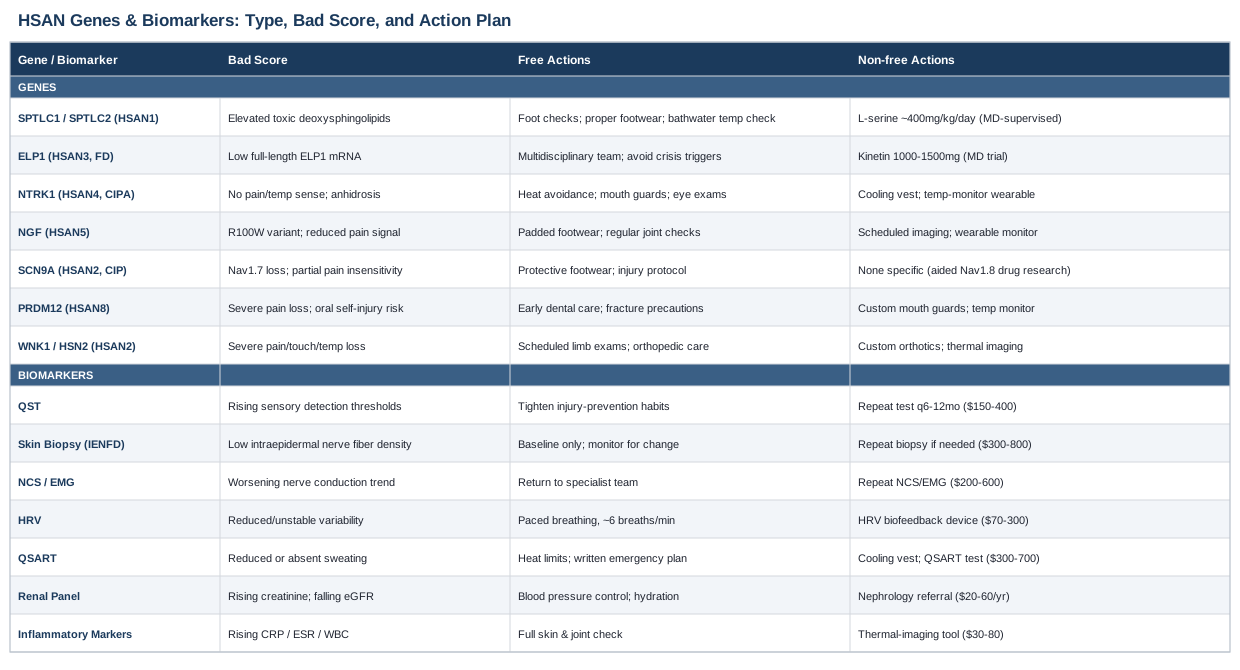
The Genes That Drive Hereditary Sensory and Autonomic Neuropathy
Consumer genomics figures like Ali Torkamani and Gary Brecka have popularized the idea that a genetic report plus targeted supplementation can meaningfully shift common, polygenic risks — things like methylation efficiency or lipid handling. HSAN doesn't work that way. These are rare, highly penetrant, mostly single-gene mutations, not small nudges from common variants, and no amount of supplementation makes a broken serine palmitoyltransferase or a truncated TrkA receptor function normally again. What follows is deliberately honest about that distinction: for each gene, you'll see what real human research supports, and — separately — what can be done to reduce harm, because reducing harm is where the actual leverage exists today.
SPTLC1 and SPTLC2: The Sphingolipid Overload Genes (HSAN Type 1)
SPTLC1 and SPTLC2 encode the two subunits of serine palmitoyltransferase, the enzyme that starts sphingolipid production in every cell. Disease-causing variants shift the enzyme's chemistry so that it builds abnormal, toxic byproducts called deoxysphingolipids instead of normal sphingolipids. These accumulate in sensory neurons and are directly neurotoxic, which is why HSAN1 shows up in adulthood as a slowly progressive loss of pain and temperature sensation in the feet, often followed by ulcers, slow-healing wounds, and sometimes amputation when injuries go unnoticed. The mechanism is well documented in human tissue and cell studies, and the SPTLC1-related hereditary sensory neuropathy GeneReviews entry is the most authoritative clinical summary available.
If the gene is bad, the plan without supplements
Daily visual foot and hand inspection (a mirror or a family member checking is often the practical version, since the person cannot feel early damage), properly fitted footwear with no internal seams or pressure points, prompt wound care for any break in the skin, and a standing relationship with a podiatrist rather than waiting for a crisis. Temperature testing of bathwater with a thermometer rather than a hand. None of this reverses nerve loss, but it is the single biggest lever against amputation risk, which is the real-world stakes of this gene.If the gene is bad, the plan with supplements or equipment
Because the pathogenic mechanism is a metabolic shift in sphingolipid synthesis, researchers have tested whether supplementing the enzyme's normal substrate — L-serine — can outcompete the abnormal reaction and lower toxic deoxysphingolipid levels. Human trials in the related condition macular telangiectasia (which shares the same enzyme defect) have shown L-serine measurably lowers deoxysphingolipid levels in blood, and small studies in HSAN1 patients have used doses in the range of 400 mg/kg/day, typically split into two or three doses, cycled under physician supervision with periodic blood monitoring rather than taken indefinitely without follow-up. Reported side effects are generally mild (GI upset at higher doses), but this should be run through a metabolic or neurogenetics specialist, not self-directed, since dosing is weight-based and monitoring matters more than the supplement itself.ELP1 (formerly IKBKAP): The Splicing Gene Behind Familial Dysautonomia (HSAN Type 3)
ELP1 encodes a scaffold protein essential for producing correctly spliced messenger RNA in neurons. The classic Ashkenazi Jewish founder mutation causes a splicing error that reduces — but doesn't eliminate — the amount of full-length, functional protein. This is the gene behind familial dysautonomia, a severe, present-from-birth condition involving blood pressure instability, autonomic crises with cyclical vomiting, poor pain and temperature perception, recurrent aspiration pneumonia, and reduced life expectancy. The Familial Dysautonomia GeneReviews overview describes the multidisciplinary management this condition typically requires.
If the gene is bad, the plan without supplements
Because the underlying problem is a splicing defect rather than a missing gene, management centers on a coordinated specialist team: pulmonology for aspiration risk, cardiology for blood pressure swings, ophthalmology for corneal protection (reduced tearing and corneal sensation are common), and feeding specialists for dysphagia. Fall-risk precautions, careful hydration and salt intake during autonomic crises, and avoiding known crisis triggers (excitement, fatigue, certain foods) are the non-pharmacological backbone, as outlined by the current treatment review for familial dysautonomia.If the gene is bad, the plan with supplements or equipment
This is one of the few HSAN genes with a genuine splicing-correction strategy tested in humans. Kinetin (6-furfurylaminopurine), an oral plant hormone-derived compound, has been shown in clinical studies to increase full-length ELP1 mRNA after oral dosing in the 1000–1500 mg range, and a 2019 study demonstrated that correcting ELP1 splicing after birth reversed proprioceptive sensory loss in a mouse model, published in this PMC study on ELP1 splicing correction. In humans, tolerability has been the limiting factor — nausea is common at effective doses — and follow-on compounds are being developed specifically to improve on that. This is not an over-the-counter decision: it requires a physician trial, blood-level splicing assays, and a plan for cycling or dose adjustment if nausea limits use.NTRK1: The Nerve Growth Factor Receptor Gene (HSAN Type 4 / CIPA)
NTRK1 encodes TrkA, the receptor that nerve growth factor (NGF) binds to guide the development of pain- and temperature-sensing neurons. Loss-of-function mutations cause congenital insensitivity to pain with anhidrosis (CIPA) — a complete inability to feel pain combined with an inability to sweat, which sounds almost enviable until you consider that it removes the body's core defense against heat stroke, unnoticed fractures, corneal injury, and self-mutilation in early childhood (commonly biting the tongue or fingers before a child understands the risk). The NTRK1 CIPA GeneReviews entry and a 25-year follow-up study also document a real, if underappreciated, risk of early-onset kidney disease in some patients.
If the gene is bad, the plan without supplements
Because anhidrosis removes the ability to sweat, the single highest-yield intervention is active core-temperature management: avoiding heat exposure, scheduling outdoor activity for cooler hours, and using cooling vests or wet-cloth cooling during hot weather or fever — this is a real equipment-based intervention, not a supplement, and it directly prevents hyperthermic emergencies. Mouth guards and dental monitoring reduce self-injury from unnoticed biting; protective helmets and padding during a child's early years reduce fracture risk before self-protective habits are learned; and routine ophthalmologic exams catch corneal damage before it threatens vision, since these patients don't feel the foreign-body sensation that normally triggers blinking and tearing.If the gene is bad, the plan with supplements or equipment
There is no supplement that restores TrkA/NGF signaling — this pathway isn't nutritionally modifiable. The realistic "equipment" side of this plan is a wearable core-temperature or skin-temperature monitor (used off-label, as no device is FDA-cleared specifically for CIPA) to give an early warning before heat injury sets in, since the person cannot feel it happening themselves. Given the documented renal risk, periodic kidney-function monitoring (covered in the biomarker section below) functions as an early-warning system rather than a treatment, and should be discussed with a nephrologist rather than managed informally.NGF: The Growth Factor Itself (HSAN Type 5)
Where NTRK1 mutations disable the receptor, NGF mutations disable the signal itself. The best-characterized variant, R100W, produces a nerve growth factor molecule that is made and secreted normally but fails to activate TrkA properly, producing a milder version of the same core problem: reduced pain perception with relatively preserved cognition (unlike some CIPA cases). This is documented in the original description of the NGFB mutation causing loss of pain perception, and mouse models carrying the human mutation confirm the nociception-specific effect.
If the gene is bad, the plan without supplements
Management mirrors NTRK1: structured injury-prevention habits (padded footwear, careful monitoring of joints for painless swelling that could indicate an unnoticed fracture or early Charcot joint), and regular musculoskeletal imaging in patients who report no pain even after a fall or twist, since pain is normally the signal that prompts someone to seek imaging in the first place.If the gene is bad, the plan with supplements or equipment
As with NTRK1, there is no validated supplement pathway — NGF itself is a protein, not something you can take orally to fix a receptor-binding defect, and recombinant NGF therapies developed for other conditions are not a treatment for this genetic defect. The practical "equipment" layer is the same wearable temperature and activity-monitoring approach used for CIPA, plus scheduled orthopedic and podiatric check-ins on a fixed calendar (not symptom-triggered, since symptoms won't appear) — commonly every 6 months for growing children and annually for adults.SCN9A: The Pain Channel Gene (HSAN Type 2, Partial CIP)
SCN9A encodes Nav1.7, a voltage-gated sodium channel concentrated in pain-sensing neurons. It's one of the most studied genes in this entire group because its effects run in both directions: loss-of-function mutations cause congenital insensitivity to pain, while gain-of-function mutations in the same gene cause inherited erythromelalgia — severe burning pain from ordinarily mild stimuli. That two-way relationship, confirmed in human and animal studies on Nav1.7 blockade and deletion, is exactly why Nav1.7 has become one of the most closely watched targets in pain drug development (more on this in the pain-science section below).
If the gene is bad, the plan without supplements
Standard injury-prevention precautions apply (protective footwear, wound checks, dental monitoring), but SCN9A-related insensitivity is often partial rather than absolute, so some patients retain enough protective sensation that structured self-checks — rather than constant supervision — are realistic. Family members and caregivers benefit from a written injury-response protocol, since the person themselves may not report pain even from a significant injury like a fracture or appendicitis.If the gene is bad, the plan with supplements or equipment
No supplement modulates Nav1.7 selectively. What's genuinely new here is pharmacological: research into this exact gene validated peripheral sodium channels as safe non-opioid pain targets, which contributed to the development of selective Nav1.8 inhibitors — not a treatment for insensitivity itself, but a downstream benefit for family members with the opposite, pain-amplifying variants, and a sign of how directly this gene's biology has translated into real medicine. For the insensitivity phenotype itself, the only current "equipment" layer is the same injury-monitoring and protective-gear approach used across this whole gene family — there is no drug that restores the missing pain signal, and restoring it would arguably reintroduce the injuries the mutation currently masks.PRDM12: The Nociceptor Development Gene (HSAN Type 8)
PRDM12 is a transcription factor, not a channel or enzyme — its job is to guide the developing nervous system to correctly build nociceptors (pain-sensing neurons) in the first place, partly by regulating TrkA expression. Mutations here cause a severe, early-onset congenital insensitivity to pain, frequently complicated by self-inflicted oral injuries — lip and tongue mutilation, tooth loss — because young children don't yet have the judgment to avoid biting behavior that isn't stopped by pain. This is documented in detail in a case series and literature review on PRDM12-associated congenital insensitivity to pain.
If the gene is bad, the plan without supplements
Because oral self-injury is the dominant early risk, dental teams recommend early tooth extraction or padded mouth guards in severe pediatric cases specifically to prevent progressive self-mutilation — a real, if drastic-sounding, intervention with documented benefit. Beyond the mouth, the same fracture- and burn-prevention habits described above apply, ideally coordinated through a pediatric pain or genetics clinic from infancy rather than after the first injury.If the gene is bad, the plan with supplements or equipment
As a developmental transcription factor, PRDM12 isn't something a supplement can compensate for after the nervous system has already formed — the relevant window would be prenatal, and no intervention currently exists at that stage. The realistic "equipment" tools are protective dental appliances (custom-fitted mouth guards, sometimes worn continuously in early childhood) and, again, wearable temperature monitoring for heat-injury prevention, since sudomotor function can also be affected.WNK1 (HSN2 exon): The Ion Transport Gene (HSAN Type 2)
WNK1 is a kinase involved broadly in ion transport, but a nervous-system-specific segment of the gene, the HSN2 exon, is where nearly all HSAN-causing mutations cluster. Loss of this exon specifically affects peripheral sensory neurons, producing early-onset loss of pain, touch, and temperature sensation, often severe enough to cause limb destruction (unrecognized fractures and infections leading to auto-amputation of fingers or toes) if not caught early — described in a GeneReviews entry on HSAN type 2. Interestingly, carriers of a single mutated copy (who don't have the disease) show measurably altered thermal sensitivity, suggesting a partial gene-dose effect worth noting for genetic counseling.
If the gene is bad, the plan without supplements
This is arguably the gene where non-supplement precautions matter most, because the clinical literature explicitly documents limb loss as an outcome of missed injuries. Routine, scheduled extremity exams (not waiting for a visible problem), custom orthopedic footwear, and early referral to a hand or foot specialist for any joint swelling are the evidence-backed priorities.If the gene is bad, the plan with supplements or equipment
There is no supplement or drug therapy targeting WNK1/HSN2 currently in human trials. The most useful "equipment" is protective, not pharmacological: pressure-redistributing footwear or orthotics fitted by a specialist familiar with insensate limbs, and — where available — regular thermal imaging of the hands and feet, which can flag an unnoticed inflamed injury before it becomes visible or infected.The thread running through all seven genes is the same: strong genetic diagnosis, but management that is overwhelmingly about preventing the downstream damage caused by absent or distorted sensory signals, not about correcting the gene itself. That's exactly why ongoing monitoring — the subject of the next section — carries as much practical weight as the genetic report.
Biomarkers Worth Tracking Alongside a Genetic Diagnosis
A genetic result tells you what mechanism you're dealing with once. These seven measures tell you how the disease is behaving over months and years — which is where most of the actionable decisions in HSAN actually happen.
Quantitative Sensory Testing (QST)
QST measures the exact thresholds at which someone detects warmth, cold, vibration, and pain using calibrated stimuli, producing a numeric score rather than a subjective impression. It matters because it can quantify how much protective sensation remains — directly informing how much supervision or precaution is realistic. It's performed in specialized neurology or pain clinics, typically costing $150–$400 per session where insurance doesn't cover it. If a score shows declining sensation, the non-equipment response is tightening injury-prevention habits (described above); the equipment-based response is repeat testing every 6–12 months to catch further decline early, since QST has no direct treatment of its own — it's a monitoring tool, not a therapy.Intraepidermal Nerve Fiber Density (Skin Punch Biopsy)
This is the closest thing to a gold-standard biomarker in small-fiber neuropathy: a 3mm skin punch biopsy, usually from the distal leg, stained for the nerve marker PGP9.5 and counted under a microscope, per the joint EFNS/PNS diagnostic criteria for small fiber neuropathy. It costs roughly $300–$800 depending on the lab and directly confirms and quantifies nerve fiber loss, which imaging and blood tests cannot. There's no supplement that regrows these fibers in HSAN; the practical value is a baseline reading repeated only if there's a meaningful clinical change, since it's invasive enough that annual repeats aren't standard practice.Nerve Conduction Studies (NCS/EMG)
NCS measures how fast and how strongly electrical signals travel along larger nerve fibers, complementing QST and skin biopsy (which focus on small fibers). It's widely available through neurology clinics, generally $200–$600, and is often the first objective test ordered when HSAN is suspected. A worsening trend over time is the clearest objective signal that a gene's effects are actively progressing, which should prompt a return visit to the specialist team rather than a change in supplements — there's no product-based intervention for slowing conduction loss directly.Heart Rate Variability (HRV)
HRV reflects the balance and responsiveness of the autonomic nervous system, which is directly relevant in ELP1-related familial dysautonomia and in any HSAN subtype with autonomic involvement. It can be tracked affordably with consumer chest-strap or wrist-based HRV monitors (roughly $70–$300 for equipment) or more rigorously in a clinical autonomic lab. If HRV trends show reduced variability or unstable patterns, the no-supplement approach is structured biofeedback-based breathing training — shown in autonomic populations to improve regulation, as in this biofeedback intervention trial in patients with orthostatic hypotension; the equipment-based approach is a home HRV biofeedback device used in short daily sessions (commonly 10–15 minutes, 4–5 days a week), with essentially no side effects beyond the time commitment.QSART (Quantitative Sudomotor Axon Reflex Test)
QSART measures the sweat response to a small electrical/chemical stimulus at standard body sites, directly assessing the autonomic nerve fibers responsible for sweating — critical in NTRK1- and PRDM12-related conditions where anhidrosis drives heat-injury risk. It requires a specialized autonomic lab, costing roughly $300–$700, and the original methodology is described in the foundational QSART validation study. A poor result (reduced or absent sweating) has no supplement fix; it converts directly into an equipment decision — cooling vests, environmental temperature limits, and a written heat-emergency plan, reassessed if the family relocates to a hotter climate or the affected person takes up a new physically demanding activity.Renal Function Panel (Creatinine, eGFR, Cystatin C, Urinalysis)
Several HSAN subtypes, particularly NTRK1-related CIPA, carry a documented, under-recognized risk of early kidney disease, shown in a 25-year follow-up report on CIPA patients with early-onset renal disease. This is the most affordable biomarker on this list — a standard blood and urine panel, typically $20–$60 out of pocket or covered by routine insurance, ideally annually. There's no supplement that reliably reverses declining kidney function in this context; an abnormal trend should go straight to a nephrologist, with blood pressure control and hydration management as the realistic non-drug levers.Inflammatory and Infection Markers Paired With a Home Wound Log
Because unnoticed injuries are the central risk across nearly every gene covered above, a simple combination of periodic inflammatory bloodwork (CRP, ESR, white blood cell count — roughly $30–$80) and a low-tech home log of any skin break, swelling, or redness turns "silent" injuries into something trackable. If markers rise unexpectedly, the no-equipment response is a full-body skin and joint check by a caregiver or clinician looking for a source; the equipment-based response, useful in patients with reduced pain and temperature sensation, is a smartphone thermal-imaging attachment or a simple infrared thermometer to catch a "hot spot" from infection before it's visible, checked weekly as a habit rather than only when something looks wrong.Genetics explains the mechanism; these seven markers explain the trajectory. Together they turn a diagnosis into an actual management plan rather than a static label — which is also, as it turns out, exactly what has made this specific gene family so interesting to pain researchers well beyond the rare-disease world.
What Pain Science Has Learned From People Who Feel No Pain
Andrew Huberman's episode "Control Pain & Heal Faster With Your Brain" on the Huberman Lab podcast is one of the more widely shared deep dives into how pain actually works in the nervous system, and it directly touches the same biology behind several of the genes above — particularly SCN9A. It's worth a listen not because it offers a treatment for HSAN, but because it reframes what these rare mutations have taught mainstream medicine. Here are the ten most useful ideas from that broader body of pain research, several of which trace directly back to families like the ones this article is about.
1. Pain Is Constructed by the Brain, Not Just Reported by It
Tissue damage produces a signal, but whether that signal is experienced as pain — and how intense it feels — is determined by processing in the spinal cord and brain, not by the injury alone. This is the foundation of gate control theory, and it's why two people with identical injuries can report very different pain levels.2. Congenital Insensitivity to Pain Proves Injury Detection and Pain Are Separable Systems
People with SCN9A, NTRK1, NGF, or PRDM12 mutations still sustain tissue damage — cuts still happen, bones still break — but the alarm system that would normally signal it is disconnected. That clean separation, only possible to observe because these rare mutations exist, gave researchers direct proof that pain is a distinct neural pathway that can, in principle, be targeted in isolation.3. Chronic Stress Measurably Amplifies Pain Perception
Elevated stress hormones sensitize the nervous system's pain-processing circuits, which is one reason chronic pain and chronic stress so often travel together clinically, independent of the original injury's severity.4. Attention and Focus Directly Change Pain Intensity
Where you direct visual and mental attention during a painful procedure measurably changes reported pain intensity — part of why distraction techniques are used clinically during injections, wound care, and dental work.5. Deliberate Relaxation Shifts Pain Through Top-Down Modulation
Structured rest and calming practices don't just feel subjectively better — they engage descending neural pathways from the brain that can dampen incoming pain signals at the spinal cord level before they're even fully processed.6. Cold and Heat Exposure Can "Gate" Pain Signals
Applying a competing temperature stimulus can reduce the perceived intensity of pain from an unrelated site, a practical, low-cost technique with a long history in physical therapy.7. The Placebo Response Is a Real, Measurable Neurobiological Event
Expecting relief triggers the release of the body's own opioid-like compounds, producing genuine, measurable reductions in pain — not "just in your head" in the dismissive sense, but a real physiological effect worth understanding rather than discounting.8. Inflammation and Pain Sensitize Each Other in Both Directions
Persistent inflammation lowers the threshold at which nociceptors fire, and pain-related stress can in turn promote further inflammatory signaling — a loop relevant to anyone managing a chronic injury, including the unnoticed wounds common in HSAN.9. Breathwork Directly Influences the Autonomic Nervous System's Pain Response
Slow, controlled breathing shifts the autonomic balance toward parasympathetic dominance, which measurably affects both pain perception and stress hormone levels — the same autonomic circuitry disrupted in ELP1-related familial dysautonomia.10. Rare Pain-Insensitivity Genetics Are Now Driving Non-Opioid Drug Development
The clearest real-world payoff of studying SCN9A and its relatives: research into sodium channels expressed specifically in pain neurons led to suzetrigine (Journavx), a selective Nav1.8 inhibitor approved by the FDA in 2025 as the first new class of non-opioid acute pain medication in over two decades — a direct scientific descendant of studying families who cannot feel pain at all.That last point is a useful bridge to the final section, because it shows what's genuinely possible when rare genetic disease and mainstream medicine inform each other — and it sets realistic expectations for what complementary approaches can and can't add to a management plan built primarily on precaution and monitoring.
Complementary Approaches Worth Considering
None of the approaches below change the underlying genetics, and evidence specific to HSAN itself is thin simply because the condition is rare. What follows draws on the closest available human evidence — chronic peripheral neuropathy, dysautonomia, and small-fiber neuropathy populations — with that limitation stated plainly rather than glossed over.
Biofeedback
Biofeedback uses real-time physiological data — usually heart rate variability or skin conductance — displayed back to the person so they can learn, through practice, to consciously influence an otherwise automatic body function. For HSAN subtypes with autonomic instability, particularly ELP1-related familial dysautonomia, this is relevant because blood pressure swings and autonomic crises are a major source of morbidity, and biofeedback directly targets the nervous system pathways involved.The clearest supporting evidence comes from a biofeedback-based intervention trial for older adults with orthostatic hypotension, which used HRV biofeedback breathing training combined with education and found improvements in autonomic and psychological outcomes. This is not an HSAN-specific trial, but orthostatic instability is a shared feature, making the extrapolation reasonable rather than a stretch.
In practice, this means a home HRV biofeedback device (chest strap or finger sensor with a companion app), used for 10–15 minutes daily, focusing on slow paced breathing around 6 breaths per minute. There are no meaningful side effects, but people with severe autonomic crises should coordinate this with their cardiology or autonomic specialist rather than adopting it as a standalone fix.
Mindfulness Meditation / MBSR
Mindfulness-Based Stress Reduction is a structured, typically 8-week program combining meditation, body awareness, and gentle movement, originally developed for chronic pain populations. It's relevant here both for the subset of HSAN patients who do experience pain (some SPTLC1 carriers report painful, rather than painless, presentations) and for the anxiety and crisis-frequency concerns common in familial dysautonomia.The strongest directly relevant evidence is a randomized trial of MBSR in patients with painful diabetic peripheral neuropathy, which found improvements in pain-related disability, pain intensity, and quality of life compared to usual care. It's not an HSAN trial, but it's the closest population match available — a peripheral neuropathy with a mixed pain profile.
A realistic starting point is an instructor-led or app-based 8-week MBSR course, done in parallel with — not instead of — standard neurological follow-up. Evidence quality across chronic pain conditions is generally described as low-to-moderate, so this belongs in the "worth trying, unlikely to harm, not a substitute for monitoring" category rather than a core treatment.
Massage Therapy
Massage therapy is relevant here less for direct nerve repair and more for circulation, joint awareness, and caregiver-led skin surveillance in limbs with reduced sensation — a regular massage session is also a natural opportunity to visually and manually check for unnoticed cuts, pressure sores, or swelling in someone who can't feel them.Human evidence exists specifically in chemotherapy-induced peripheral neuropathy, a different cause but a comparable sensory profile: a randomized pilot trial of oncology massage for chemotherapy-induced peripheral neuropathy found feasibility and early symptom benefit with a structured weekly protocol.
Applied to HSAN, this means scheduled (not incidental) massage sessions — commonly weekly for 4–6 weeks as a trial period — performed by a therapist briefed on the person's reduced sensation, using moderate rather than deep pressure to avoid unnoticed tissue damage in an insensate limb. This is a supportive, not corrective, addition to the precaution-based plan described earlier in this article.
Conclusion
Hereditary sensory and autonomic neuropathy isn't one problem with one fix — it's a set of distinct genetic mechanisms, each with its own realistic management plan built mostly around precaution, monitoring, and, in a couple of cases like ELP1, an actual splicing-correction strategy with real human data behind it. No supplement rewrites a mutated gene, but knowing exactly which gene is involved changes which specialists you see, which tests are worth requesting, and which precautions are folklore versus evidence-backed. The seven biomarkers covered here turn that genetic diagnosis into an ongoing, trackable plan rather than a static label from a single test years ago.
The next concrete step is usually the smallest one: if a genetic diagnosis already exists, book the nerve conduction study or skin biopsy that hasn't been done yet, or bring the renal and inflammatory panel into a regular annual habit if it isn't already. If a diagnosis is still pending, ask a neurogenetics clinic directly which of these seven genes fits the clinical picture, since that answer reshapes everything else on this list. Either way, the right next conversation is with a genetics counselor or neurologist familiar with HSAN — not a supplement aisle.
Urological: Kidney Conditions