This article contains AI generated content.
Hip Adductor Strain: 5 Genes and 7 Biomarkers to Track
Introduction
If you have dealt with a nagging groin pull that keeps coming back, generic advice starts to feel hollow fast. "Stretch more," "strengthen your adductors," "rest it" — you have likely already tried all of that, and the strain still resurfaces the moment you sprint, cut, or kick at full speed. That pattern is not a sign that you are doing rehab wrong. It is a sign that the advice you are getting was written for an average person, not for your tissue, your hormones, or your recovery capacity.
The truth is that adductor strain risk and recovery speed vary enormously between two athletes doing the identical rehab program. Some of that variation comes from training load and technique, but a meaningful part of it comes from things a coach cannot see: collagen-related gene variants, vitamin D status, iron stores, inflammatory tone, and hormonal recovery capacity. Two people can follow the same eccentric-strengthening protocol and get very different outcomes, and blood work or genetic data can often explain why.
This article takes a more granular approach. Instead of repeating "warm up properly," it walks through the specific, measurable biomarkers worth tracking if you are prone to adductor strains, what the genetic research suggests about connective tissue injury risk, what a well-known recovery-science podcast adds to the picture, and which complementary therapies actually have human evidence behind them for this kind of injury.
None of this is a guarantee, and nothing here reverses a strain overnight. But better information tends to lead to better decisions — a vitamin D level you did not know was low, a gene variant that explains why your last three strains happened on the same side, a recovery habit backed by real data instead of gym folklore. Each section below is built to move you a step closer to a plan that fits your actual physiology, not a generic one.
Summary
This article covers two connected angles on hip adductor strain: the blood biomarkers that most directly reflect your injury risk and recovery capacity, and the genetic variants that help explain why connective tissue behaves differently from one person to the next. You will find seven biomarkers worth tracking — from vitamin D and creatine kinase to testosterone and omega-3 index — each with how it is measured, typical cost, and a concrete plan for improving it with and without supplements. You will also find five genes tied to tendon and ligament injury risk (COL5A1, GDF5, MMP3, COL1A1, VDR), what having a higher-risk variant may mean in practice, and how to compensate for it. A summary of practical, science-backed recovery lessons from a leading physiology podcast follows, along with a look at which complementary therapies — massage, photobiomodulation, biofeedback, and manual therapy — actually have supporting evidence for groin and adductor-region injuries. By the end, you should have a much clearer sense of which levers are worth pulling first.
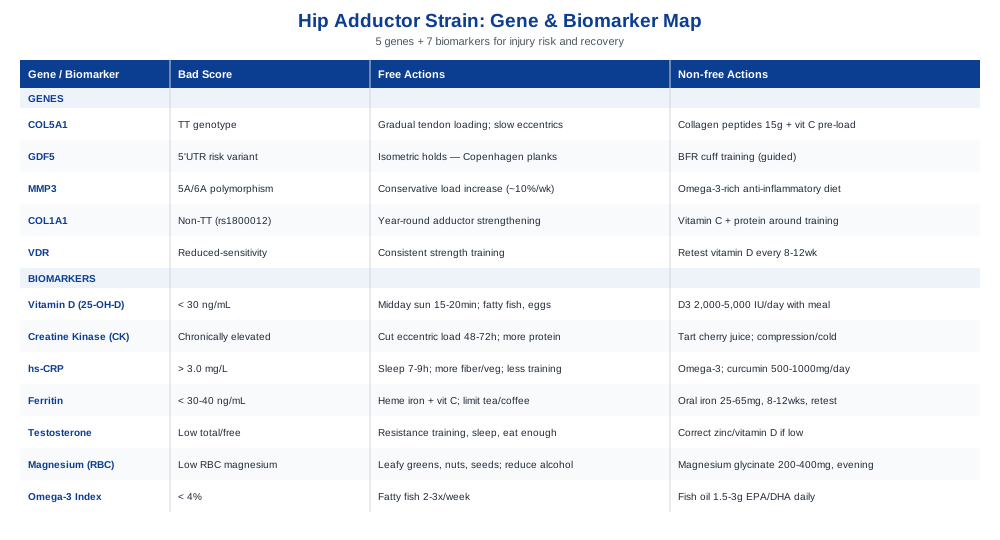
Biomarkers Worth Tracking for Hip Adductor Strain Risk and Recovery
Blood biomarkers are useful precisely because they are current, actionable, and modifiable. A gene variant tells you about predisposition; a blood test tells you what is actually happening in your body this month. For an injury like adductor strain — where connective tissue quality, inflammatory control, and muscular recovery capacity all matter — a small panel of well-chosen markers gives you far more signal than "just listen to your body." Peter Attia, Thomas Dayspring, and Allan Sniderman have each argued, in different contexts, that tracking the right handful of markers consistently beats tracking many markers occasionally. The same logic applies here.
25-Hydroxyvitamin D (Vitamin D Status)
Vitamin D receptors are present in skeletal muscle tissue, and low vitamin D status has repeatedly been linked to reduced muscle strength, slower tissue repair, and higher musculoskeletal injury rates in athletes, including strain-type injuries Vitamin D in athletes: performance and injury risk. Adductor tissue, like any muscle-tendon unit, depends on adequate vitamin D signaling for normal contractile function and repair.
How to Measure It
A serum 25-hydroxyvitamin D test is a standard blood draw available through most primary care providers or direct-to-consumer lab services. Cost typically runs from $25 to $60 out of pocket in the United States, though it is often covered by insurance if ordered by a physician. Target ranges most performance-focused clinicians use are roughly 40 to 60 ng/mL, above the minimum "sufficiency" cutoff of 30 ng/mL used for general population screening.If the Score Is Low: The Plan Without Supplements or Equipment
Fifteen to twenty minutes of midday sun exposure on bare arms and legs, several times per week, is the most reliable non-supplement lever, though it is highly dependent on latitude, season, and skin tone. Pairing this with dietary sources — fatty fish, egg yolks, fortified dairy — provides a modest additional contribution. Retest after 8 to 12 weeks, since sunlight-driven changes are slow and seasonal.If the Score Is Low: The Plan With Supplements or Equipment
Vitamin D3 (cholecalciferol) at 2,000 to 5,000 IU daily is the typical dosing range used to correct insufficiency, ideally taken with a fat-containing meal to aid absorption. Retest after 8 to 12 weeks and adjust the dose based on the result rather than guessing indefinitely. Supplementing without periodic retesting risks overshooting into hypervitaminosis D, which can raise blood calcium; staying under 10,000 IU/day and confirming levels every few months keeps this risk low. A UVB phototherapy lamp is a reasonable equipment-based alternative for those with very limited sun exposure, used for a few minutes per session, a few times weekly.Creatine Kinase (CK)
CK is released into the bloodstream when skeletal muscle fibers are damaged, making it the most direct available marker of exercise-induced muscle damage and incomplete recovery Post-exercise creatine kinase variability: a literature review. Chronically elevated CK between sessions can indicate that training load is outpacing recovery — a pattern that often precedes strain injuries in the adductors and hip flexors.
How to Measure It
A basic serum CK panel costs roughly $15 to $40 and is included in most comprehensive metabolic panels ordered through a physician or direct lab-testing service. Because CK is highly variable between individuals and rises sharply after any hard eccentric session, it is most useful as a personal trend over time rather than a single absolute number.If the Score Is Elevated: The Plan Without Supplements or Equipment
The most effective lever is simply adjusting training load: reducing eccentric-heavy work (sprint deceleration, change-of-direction drills) for 48 to 72 hours, prioritizing sleep, and increasing protein intake to roughly 1.6 to 2.2 g/kg bodyweight to support repair. Active recovery — light walking or cycling — tends to clear CK faster than complete rest.If the Score Is Elevated: The Plan With Supplements or Equipment
Tart cherry juice concentrate, taken twice daily for 4 to 5 days around a hard training block, has modest supporting evidence for reducing markers of muscle damage in some studies, though effect sizes are inconsistent. A pneumatic compression device or cold-water immersion (10 to 15 minutes, water around 10 to 15°C) after high-load sessions is a reasonable equipment-based option; use it situationally rather than after every session, since chronic overuse of cold immersion may blunt the adaptive signaling that builds tissue resilience over time.High-Sensitivity C-Reactive Protein (hs-CRP)
hs-CRP is a general marker of systemic inflammation, and it rises specifically in people who show a strong muscle-damage response to training, making it a useful companion to CK rather than a replacement for it CRP is elevated only in high-CK responders to muscle-damaging exercise. Persistently elevated hs-CRP outside of acute training spikes can indicate under-recovery, poor sleep, or an unresolved low-grade inflammatory state that may slow tendon and muscle healing.
How to Measure It
An hs-CRP blood test costs approximately $20 to $50 and is widely available through standard labs. A result under 1.0 mg/L is generally considered low risk; above 3.0 mg/L warrants attention to sleep, training load, body composition, and diet quality.If the Score Is High: The Plan Without Supplements or Equipment
Prioritizing 7 to 9 hours of sleep, reducing training volume temporarily, increasing dietary fiber and vegetable intake, and addressing excess body fat (visceral fat is a significant driver of baseline CRP) are the most evidence-supported non-supplement approaches. Retest after 6 to 8 weeks of consistent changes.If the Score Is High: The Plan With Supplements or Equipment
Omega-3 fatty acids (discussed further below) and curcumin (500 to 1,000 mg daily with black pepper extract for absorption) both have modest evidence for lowering inflammatory markers when used for 8 to 12 weeks at a time, then reassessed rather than taken indefinitely without re-checking labs. High-dose curcumin can interact with blood thinners, so anyone on anticoagulant medication should check with a physician first.Ferritin (Iron Status)
Iron deficiency, even without full-blown anemia, is common in endurance and field-sport athletes and is associated with fatigue, reduced training capacity, and slower recovery — all of which raise strain risk indirectly by degrading movement quality late in sessions Absolute and functional iron deficiency in professional athletes.
How to Measure It
A ferritin panel costs roughly $20 to $45. Clinical "normal" ranges are broad (often 20 to 300 ng/mL), but many sports-medicine practitioners consider levels below 30 to 40 ng/mL suboptimal for athletes, even without frank anemia.If the Score Is Low: The Plan Without Supplements or Equipment
Increasing dietary heme iron (red meat, poultry, fish) and pairing plant-based iron sources with vitamin C-rich foods improves absorption meaningfully. Avoiding tea or coffee within an hour of iron-containing meals helps, since tannins inhibit absorption.If the Score Is Low: The Plan With Supplements or Equipment
Oral iron supplementation (ferrous sulfate or a gentler bisglycinate form, typically 25 to 65 mg elemental iron) is usually cycled daily for 8 to 12 weeks with a retest afterward, since unnecessary long-term supplementation can push iron stores too high. Iron supplements commonly cause constipation or GI upset; taking every other day rather than daily has been shown to improve absorption and tolerability. Anyone with a family history of hemochromatosis should test iron status before supplementing.Total and Free Testosterone
Testosterone plays a direct role in muscle protein synthesis and tissue repair capacity, which matters for anyone recovering repeatedly from a strain injury rather than a single isolated one Testosterone replacement and muscle protein synthesis in hypogonadal men. Low levels do not cause strains directly, but they can slow the rebuilding process between injuries and reduce overall resilience.
How to Measure It
A combined total and free testosterone panel costs approximately $40 to $90. Morning blood draws (testosterone peaks early in the day) give the most reliable reading.If the Score Is Low: The Plan Without Supplements or Equipment
Resistance training, adequate sleep, sufficient caloric intake (chronic under-eating suppresses testosterone), and reducing excess body fat are the most reliable non-pharmacological levers. Chronic overtraining without adequate recovery days can also suppress testosterone over time.If the Score Is Low: The Plan With Supplements or Equipment
Zinc and vitamin D correction (if deficient) have modest supporting evidence for normalizing testosterone in people who are actually deficient in those nutrients, though they will not raise levels in someone who is already replete. Any consideration of testosterone replacement therapy itself is a medical decision that requires a physician's evaluation and ongoing monitoring, not a self-directed supplement plan.Red Blood Cell (RBC) Magnesium
Magnesium is involved in muscle contraction and relaxation, and low status is commonly discussed in relation to cramping and muscle tightness, though the human evidence for magnesium supplementation preventing cramps specifically is weaker than commonly assumed Magnesium for skeletal muscle cramps (Cochrane review). It is still worth checking, since genuine deficiency can contribute to muscle dysfunction, but it should not be treated as a guaranteed fix.
How to Measure It
RBC magnesium (a better reflection of tissue stores than standard serum magnesium) costs around $40 to $70 and is available through most functional-medicine-oriented labs.If the Score Is Low: The Plan Without Supplements or Equipment
Increasing intake of leafy greens, nuts, seeds, and legumes is the first step. Reducing alcohol intake also helps, since alcohol increases magnesium excretion.If the Score Is Low: The Plan With Supplements or Equipment
Magnesium glycinate, 200 to 400 mg daily, taken in the evening, is well tolerated and commonly used for 8 to 12 weeks before retesting. Given the honest state of the cramp-prevention evidence, treat this as a "correct a real deficiency" strategy rather than a performance enhancer. Excess magnesium citrate or oxide forms can cause loose stools; switching forms usually resolves this.Omega-3 Index
The omega-3 index reflects the proportion of EPA and DHA in red blood cell membranes and is a meaningful marker of the body's baseline inflammatory tone. Higher omega-3 status has been associated with reduced muscle soreness and faster recovery markers after eccentric, muscle-damaging exercise in randomized trials Omega-3 supplementation and muscle soreness after eccentric exercise.
How to Measure It
An omega-3 index test costs roughly $50 to $75 and typically requires only a finger-prick blood spot sample mailed to a lab. A target above 8% is generally considered favorable; below 4% is considered a risk zone.If the Score Is Low: The Plan Without Supplements or Equipment
Two to three servings per week of fatty fish (salmon, sardines, mackerel) is the most direct dietary lever and can meaningfully shift the index over 8 to 12 weeks.If the Score Is Low: The Plan With Supplements or Equipment
Fish oil providing 1.5 to 3 grams combined EPA/DHA daily, taken with food, is a standard corrective dose, retested after 3 months. Doses above 3 grams/day have a mild blood-thinning effect and should be discussed with a physician if combined with anticoagulant medication or before surgery.While gene panels get more attention in wellness media, this biomarker panel is the more immediately actionable starting point — every marker above can be measured this month and re-checked on a predictable schedule, which is exactly the kind of feedback loop that turns vague injury-prevention advice into a real plan.
What Genetics and Epigenetics Research Suggests
Genetic testing for injury risk has moved from academic curiosity to something genomics researchers like Ali Torkamani and health-optimization figures like Gary Brecka now discuss more publicly, generally with the caveat that most variants shift risk modestly rather than deterministically. For adductor strain specifically, the strongest human evidence sits in genes that shape collagen structure and extracellular matrix remodeling in tendons and ligaments, since adductor strains frequently occur at the musculotendinous junction.
COL5A1
COL5A1 encodes a component of type V collagen, which regulates the diameter and organization of type I collagen fibrils in tendons and ligaments. A meta-analysis across Caucasian populations found the TT genotype at a common COL5A1 variant associated with meaningfully higher odds of tendon and ligament injury, including Achilles and other soft-tissue injuries COL5A1 polymorphisms and tendon-ligament injury risk: a meta-analysis.
If the gene is unfavorable, the plan without supplements centers on load management: longer, more gradual tendon-loading progressions before high-speed sprint or change-of-direction work, and extra emphasis on eccentric strengthening tempo (3 to 4 seconds per rep) two to three times weekly, since tendon adaptation is slower than muscle adaptation regardless of genotype. If the score is unfavorable, the plan with supplements or equipment includes collagen peptides (15 grams) with 50 mg vitamin C taken roughly 40 to 60 minutes before loading sessions, a protocol studied for its effect on collagen synthesis; cycle this around hard training blocks rather than year-round, since the benefit is tied to the loading stimulus itself.
GDF5
GDF5 (growth differentiation factor 5) is involved in joint and tendon development, and a specific 5'UTR variant has been associated with roughly double the risk of Achilles tendon pathology in some populations GDF5 and Achilles tendon pathology: a genetic association study. The mechanism is thought to relate to reduced tendon stiffness and altered matrix regulation.
Without supplements, the practical compensation is prioritizing consistent, moderate tendon loading (isometric holds at long muscle lengths, such as Copenhagen plank progressions, 3 sets of 20 to 30 seconds, several times weekly) rather than sporadic high-intensity exposure, since tendons with reduced baseline stiffness benefit disproportionately from steady mechanical stimulus. With supplements or equipment, a blood-flow-restriction cuff used during low-load rehab exercises can allow meaningful strengthening stimulus at lower joint stress in the early stages of a strain, an approach increasingly used in return-to-play protocols; this should be introduced gradually and ideally under guidance from a physical therapist familiar with the equipment.
MMP3
MMP3 encodes a matrix metalloproteinase involved in breaking down and remodeling extracellular matrix proteins, including collagen. A meta-analysis found associations between the 5A/6A promoter polymorphism and tendon-ligament injury risk, though the effect was inconsistent across all subgroups studied MMP3 polymorphisms and tendon-ligament injuries: a meta-analysis.
Without supplements, the compensation strategy is similar to COL5A1: conservative progression of training load increases (roughly 10% per week rather than aggressive jumps), since MMP3 activity governs how quickly matrix remodeling keeps pace with mechanical demand. With supplements or equipment, anti-inflammatory nutrition strategies (adequate omega-3 intake, limiting ultra-processed food) may support healthier matrix turnover indirectly, though this is an extrapolation from general inflammation research rather than a direct MMP3-targeted intervention, and should be framed that way rather than oversold.
COL1A1
COL1A1 encodes type I collagen, the dominant structural protein in tendons and ligaments. A specific Sp1-binding-site variant has shown a strong protective association in meta-analysis, with the TT genotype linked to substantially lower odds of sports-related tendon and ligament injury compared to other genotypes COL1A1 rs1800012 and sports-related tendon and ligament injuries: a meta-analysis. Knowing you carry a higher-risk genotype here is less about alarm and more about justifying extra caution in training design.
Without supplements, the practical response is the same conservative loading philosophy: longer general preparation phases before competitive intensity, and more consistent adductor-specific strengthening (Copenhagen planks, cable or band adduction, 2 to 3 sessions weekly) maintained year-round rather than only in pre-season. With supplements or equipment, ensuring adequate vitamin C and protein intake around training (vitamin C is a required cofactor for collagen crosslinking) is a low-risk, low-cost way to support the raw materials for collagen synthesis; this is a nutritional sufficiency strategy, not a way to override genetic risk.
VDR (Vitamin D Receptor)
Variants in the VDR gene have been directly associated with differences in muscle strength, independent of vitamin D blood levels in some studies Muscle strength and vitamin D receptor gene variants, suggesting that some people may need higher circulating vitamin D to achieve the same muscular effect as others.
Without supplements, this means paying closer attention to strength-training consistency rather than assuming genetics alone will "fill the gap." With supplements or equipment, this is one case where retesting blood vitamin D status (covered in the biomarker section above) more frequently — every 8 to 12 weeks rather than annually — makes sense, since a favorable blood level may still not translate into optimal muscular effect if VDR sensitivity is reduced.
Ten Recovery Lessons From a Leading Muscle-Physiology Podcast
The Huberman Lab podcast's episodes with exercise scientist Andy Galpin on muscle repair and injury recovery have become a widely referenced source for athletes trying to move past outdated "ice and rest" thinking. Several of the ideas discussed challenge conventional physical-therapy defaults and are worth applying cautiously to adductor strain recovery specifically.
1. Inflammation Is Part of Repair, Not Just a Problem to Suppress
The early inflammatory response after a strain recruits the cellular machinery needed to clear damaged tissue and begin rebuilding. Reflexively suppressing it with high-dose anti-inflammatories or constant icing in the first 24 to 48 hours may blunt this signal, so these tools are best used selectively for pain control rather than as a default.2. Complete Rest Is Rarely the Right Default
Gentle, pain-free movement through a partial range of motion tends to support blood flow and tissue remodeling better than total immobilization, provided it stays below the threshold that reproduces sharp pain.3. Protein Timing Still Matters for Tissue Repair
Spreading protein intake across the day, with attention to reaching an effective per-meal dose (commonly cited around 30 to 40 grams for adults), supports the same repair machinery discussed in the testosterone and muscle protein synthesis research above Testosterone and muscle protein synthesis.4. Sleep Is a Repair Window, Not Just Rest
Deep sleep stages coincide with growth hormone release, which supports tissue repair; consistently shortened sleep during a rehab period is one of the more overlooked ways recovery gets slowed down.5. Blood Flow Restriction Training Has a Real Role Early in Rehab
Using light loads with a blood-flow-restriction cuff can produce meaningful strength stimulus when joint or tendon loading needs to stay low, echoing the GDF5 compensation strategy discussed above.6. Tendons Adapt Slower Than Muscle — Program Accordingly
Because tendon collagen turnover is slower than muscle protein turnover, rehab timelines built purely around "muscle feels fine" milestones can under-prepare the tendon and predispose to re-injury.7. Isometrics Have a Specific, Useful Role
Long-duration isometric holds are commonly discussed as a way to load tissue and modulate pain without the shear stress of dynamic movement, making them a reasonable early-stage tool for a fresh adductor strain.8. Gradual Load Reintroduction Beats a Fixed Return-to-Play Date
Progress based on how tissue responds to incremental load increases rather than a calendar date reduces re-injury risk, a principle consistent with the Hölmich group's finding that structured active exercise progression outperforms passive treatment for groin-related injuries Active training versus physiotherapy for adductor-related groin pain.9. Cold Exposure Right After Training May Blunt Adaptation
Frequent, prolonged cold-water immersion immediately following resistance or eccentric training sessions may dampen the same signaling pathways that drive strength and tissue adaptation, suggesting it is better reserved for genuine recovery emergencies than daily habit.10. Recovery Metrics Should Guide Training Load in Real Time
Rather than following a fixed program regardless of readiness, adjusting session intensity based on markers like soreness, sleep quality, and (per the biomarker section above) CK or hs-CRP trends creates a feedback loop that is more responsive than either strict programming or pure intuition.These ideas are not a replacement for individualized physical therapy, especially for a structural injury like an adductor strain, but they reflect a shift in recovery science worth factoring into any rehab plan.
Complementary Approaches Worth Considering
Beyond blood work, genetics, and mainstream rehab programming, a handful of complementary therapies have real, if sometimes modest, human evidence for muscle strain recovery and adjunct groin-pain management. These are not replacements for structured strength rehabilitation, but they can reasonably support it.
Massage Therapy
Massage is one of the more evidence-supported adjuncts for muscle strain recovery, working through mechanisms that likely include improved local blood flow, reduced perceived soreness, and possibly modest effects on inflammatory markers. For an adductor strain specifically, it is relevant both in the sub-acute recovery phase and as ongoing maintenance for athletes prone to recurrence.
A meta-analysis of 11 randomized trials involving 504 participants found that massage administered after strenuous exercise reduced delayed-onset muscle soreness at 24, 48, and 72 hours and lowered creatine kinase levels compared to no treatment Massage alleviates delayed-onset muscle soreness: a systematic review and meta-analysis.
Realistically, this means scheduling massage 24 to 72 hours after a hard training session or in the sub-acute phase of a strain (once acute sharp pain has resolved), rather than immediately on the day of injury when tissue is most vulnerable. Two sessions per week during a heavy training block is a reasonable frequency; there is no strong evidence that more frequent sessions add proportional benefit.
Photobiomodulation (Low-Level Laser Therapy)
Photobiomodulation uses specific wavelengths of red or near-infrared light, theorized to support mitochondrial function in muscle cells and modestly reduce fatigue and improve performance markers around exercise. It is relevant to adductor strain recovery mainly as a tool to support the surrounding muscle tissue's recovery capacity rather than as a treatment for the tendon injury itself.
A systematic review and meta-analysis found low-to-moderate quality evidence that photobiomodulation therapy improved muscular performance and reduced fatigue markers associated with exercise in healthy adults Photobiomodulation therapy and muscular performance: a systematic review and meta-analysis.
In practice, this typically means a clinic-administered session lasting several minutes over the affected muscle group, two to three times weekly during an active rehab phase, generally priced between $30 and $75 per session, though home devices exist at a range of price points and quality. Given that the evidence is described as low-to-moderate quality, it is best treated as a supplementary tool rather than a primary recovery strategy.
Biofeedback (EMG-Based)
Electromyographic (EMG) biofeedback provides real-time visual or auditory feedback on muscle activation, which can help retrain proper firing patterns in muscles that have been inhibited or under-recruited after an injury — a common issue in the hip adductors and surrounding stabilizers following a strain.
Direct evidence in hip adductor rehabilitation specifically is limited; the clearest related evidence comes from lower-limb rehabilitation after knee surgery, where EMG biofeedback improved muscle recovery outcomes in soccer players following meniscectomy EMG biofeedback and muscle recovery after meniscectomy in soccer players. This should be considered an extrapolation from adjacent lower-limb evidence rather than adductor-specific proof.
Given that caveat, EMG biofeedback is most reasonably used under the guidance of a physical therapist during the mid-to-late rehab phase, when the goal shifts from pain control to restoring normal muscle activation patterns, typically for a few sessions per week over several weeks.
Manual Therapy and Spinal Manipulation
Manual therapy, including soft-tissue mobilization and spinal or pelvic manipulation, is sometimes used as an adjunct for athletic groin pain on the theory that pelvic and lumbar joint mechanics influence adductor loading patterns. The evidence here is genuinely mixed, and this is worth stating plainly rather than overselling.
A case series reported high patient satisfaction with manual therapy for chronic groin pain Manual therapy for chronic groin pain: a case series, and a randomized trial found manual therapy combined with exercise outperformed exercise alone Manual therapy plus exercise versus exercise alone for groin pain. However, the stronger and more consistent evidence base for adductor-related groin pain remains structured active exercise therapy on its own, as shown in the landmark Hölmich trial comparing active training to passive physiotherapy Active training versus physiotherapy for adductor-related groin pain.
The realistic application is to treat manual therapy as a possible adjunct to, never a substitute for, a structured adductor strengthening program — most useful if pelvic or lumbar stiffness is a demonstrable contributing factor, and delivered by a licensed practitioner working alongside, not instead of, a physical therapist managing the strengthening progression.
Conclusion
Adductor strains that keep recurring are rarely explained by effort or technique alone. The biomarkers covered here — vitamin D, creatine kinase, hs-CRP, ferritin, testosterone, magnesium, and omega-3 index — give a concrete, retestable picture of whether your body is genuinely ready to handle load, while genes like COL5A1, GDF5, MMP3, COL1A1, and VDR help explain why some tissue simply needs more conservative loading than the standard program assumes. Recovery science from sources like the Huberman Lab podcast and evidence-backed complementary therapies round out a plan that goes beyond "rest and stretch."
The next useful step is not to overhaul everything at once. Pick one or two biomarkers from this list to test this month, track your training load against how your body actually responds, and bring the results to a sports medicine physician or physical therapist who can help you build a rehab and prevention plan around your real numbers rather than a generic one.
Musculoskeletal: Tendon & Ligament Conditions
Autoimmune: Connective Tissue Conditions