This article contains AI generated content.
Hypocomplementemic Urticarial Vasculitis Syndrome Genes And Biomarkers - 4 Genes And 7 Biomarkers To Track
If you are reading this, you or someone you love has probably already heard a version of the standard explanation: hives that do not go away in 24 hours, painful rather than itchy skin lesions, low complement, and a diagnosis that most primary care doctors have only seen once in a textbook. Hypocomplementemic urticarial vasculitis syndrome (HUVS) is rare enough that even the advice you get from specialists can feel thin once you leave the appointment. You are told to watch for joint pain, eye inflammation, or kidney involvement, and to come back if things change. That is reasonable medicine, but it is not a plan.
Generic guidance struggles here because HUVS is not one disease with one mechanism. It sits at the intersection of complement biology, autoantibody production, and small-vessel inflammation, and it frequently overlaps with systemic lupus erythematosus, Sjögren's disease, or monoclonal gammopathies. Two people with the same diagnosis can have very different antibody profiles, different organs at risk, and different reasons their complement system is behaving the way it is. A one-size-fits-all list of "avoid triggers, take antihistamines" does not reflect that complexity, and it leaves patients without a way to track whether they are actually getting better or quietly getting worse.
This article takes a more specific approach. Instead of repeating general vasculitis advice, it focuses on the laboratory markers that actually describe what is happening inside the complement cascade and the immune system in HUVS, why each one matters, and what realistically can and cannot be done about an abnormal result. It also looks at the genetic and molecular research behind related complement deficiencies, because understanding the biology - even when it cannot yet be "fixed" with a supplement - changes how you interpret your own labs and conversations with your rheumatologist or dermatologist.
None of this replaces a specialist. But better information changes the quality of the questions you ask, the tests you request, and the decisions you make between appointments. The biomarker section below is the core of this article, because it offers the most immediate, trackable value. A shorter section on the genetics of complement deficiency follows, along with a look at a book that reframes how autoimmune disease is understood, and a review of complementary approaches with real evidence behind them for vasculitis-adjacent, itch-driven, and stress-sensitive conditions.
Summary
Hypocomplementemic urticarial vasculitis syndrome is driven by anti-C1q antibodies that activate and deplete the complement cascade, which is why blood tests, not symptoms alone, are the most reliable way to track it. Seven biomarkers - C1q, anti-C1q antibodies, C4, C3, CH50, inflammatory markers, and lupus-overlap antibodies - together map how active the disease is, whether it is drifting toward systemic lupus, and whether current treatment is actually controlling the underlying process rather than just masking hives. Beyond the labs, this article also unpacks the four complement genes (C1QA, C1QB, C1QC, and the C4A/C4B locus) that researchers have linked to related complement deficiencies, what a "recent genetics" reading of HUVS can and cannot tell you, a science journalist's book on the immune system worth knowing about, and five complementary approaches with genuine, condition-relevant human evidence. The goal is to leave you with a concrete tracking plan, not just a longer list of things to worry about.
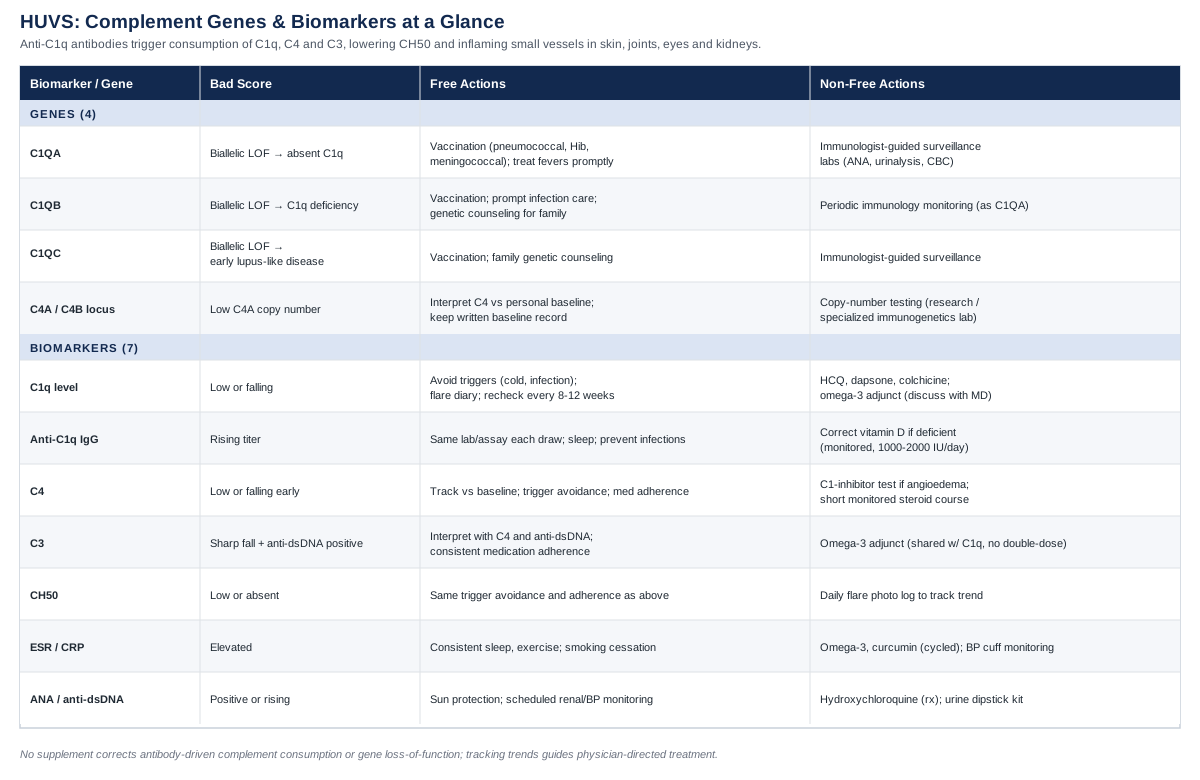
Seven Biomarkers To Track In Hypocomplementemic Urticarial Vasculitis Syndrome
HUVS is, at its core, a complement-consumption disease. Autoantibodies against C1q bind the collagen-like stalk of the C1q molecule, switch on the classical complement pathway, and burn through complement proteins faster than the liver can replace them. That single mechanism is why blood work in HUVS is unusually informative: the same cascade that damages small vessels in the skin, joints, eyes, and kidneys also leaves a very legible trail in routine and specialty labs. Tracking the right markers over time, rather than reacting to flares as they happen, is the most practical way to understand whether the disease is stable, worsening, or drifting toward a lupus-like systemic picture.
C1q (Complement Component 1q) Level
C1q is the recognition molecule that starts the classical complement pathway, and in HUVS it is both the trigger and the casualty. Anti-C1q antibodies bind circulating and tissue-bound C1q, which both activates complement and accelerates C1q clearance, so most people with active HUVS run persistently low C1q levels. A falling C1q, more than a single low reading, tends to track with disease activity and is one of the four major diagnostic criteria used by rheumatologists evaluating this syndrome, alongside anti-C1q antibodies, hypocomplementemia, and biopsy-proven leukocytoclastic vasculitis, as described in reviews of the condition such as the case-based analysis of kidney involvement in HUVS published in Case Reports in Nephrology and Dialysis (PMC7408727).
How To Measure It
C1q level is measured from a standard blood draw, usually radial immunodiffusion or nephelometry, and is typically ordered alongside a broader complement panel. Cost through a hospital or reference lab generally runs 40 to 90 dollars in the United States when billed outside insurance, though it is frequently bundled into complement panels ordered by a rheumatologist and covered when medically indicated.If The Level Is Bad: The Plan Without Supplements
There is no lifestyle intervention that meaningfully raises circulating C1q, because the problem is antibody-driven consumption, not underproduction. What is realistic is reducing the triggers that appear to provoke flares in individual patients - cold exposure, pressure on skin, infections, and in some patients UV exposure - and keeping a symptom-and-flare diary alongside lab draws so you and your physician can see whether C1q trends track with clinical activity. Getting complement rechecked on a fixed schedule (commonly every 8 to 12 weeks when stable, sooner during a flare or medication change) turns a one-off number into a trend line, which is what actually guides treatment decisions.If The Level Is Bad: The Plan With Supplements Or Equipment
Supplements do not correct antibody-mediated complement consumption, and no supplement should be positioned as an alternative to disease-modifying treatment (commonly hydroxychloroquine, dapsone, colchicine, or in more severe systemic disease, immunosuppressants). Where equipment has a role, it is monitoring, not correction: a simple symptom-tracking app or paper diary logging hive count, joint pain, and eye symptoms daily gives your rheumatology team something objective to correlate against C1q trends, and cold-avoidance measures (layered clothing, avoiding cold-water swimming, gloves in air-conditioned environments) are a low-risk, no-side-effect way to reduce one common trigger. If your physician is separately addressing general immune support, omega-3 fatty acids (1 to 2 g/day EPA/DHA) are sometimes used adjunctively for their anti-inflammatory profile; the main side effects are GI upset and a mild bleeding-risk increase at higher doses, so this should be discussed with your prescriber, particularly if you are on anticoagulants or high-dose NSAIDs.Anti-C1q Antibodies (IgG)
This is arguably the single most specific marker in HUVS. Anti-C1q antibodies are found in essentially all patients who meet criteria for the syndrome, and they are the antibodies that actually activate C1q and drive the rest of the cascade downstream, as shown in the original serologic characterization of these antibodies in patients with hypocomplementemic urticarial vasculitis (PubMed 2528353) and further described in reports characterizing C1q found in affected patients (PubMed 2502705). Titers do not always move in lockstep with symptoms, but a rising titer alongside falling complement is a meaningful signal of increasing disease activity, and anti-C1q antibodies are also relevant because they appear (at lower rates) in systemic lupus erythematosus, so tracking them helps distinguish primary HUVS from HUVS occurring as part of a broader lupus picture.
How To Measure It
This requires a specialty or reference lab ELISA, not a routine hospital test; expect a cost in the range of 100 to 250 dollars per draw, and turnaround of one to two weeks. It is not always included in a standard "complement panel" order, so it is worth confirming with your physician that it has specifically been requested.If The Score Is Bad: The Plan Without Supplements
As with C1q itself, there is no non-pharmacologic way to lower anti-C1q antibody titers directly. The practical, no-cost step is consistency: draw this marker at the same lab, ideally the same assay, at fixed intervals (every 3 to 6 months when stable) so that trends are comparable, since inter-assay variability across different labs can otherwise be mistaken for real change. Reducing physiologic stress load - adequate sleep, infection prevention (vaccination status, prompt treatment of intercurrent infections) - is a reasonable general measure, since infections are a recognized trigger for autoantibody-driven flares in complement-mediated disease, though this is supportive rather than corrective.If The Score Is Bad: The Plan With Supplements Or Equipment
There is no supplement with human evidence for lowering anti-C1q antibody titers in HUVS specifically. Where a physician has diagnosed overlapping vitamin D insufficiency, correcting it (typically 1000 to 2000 IU/day, retested at 3 months) is common practice in lupus-spectrum disease given associations between low vitamin D and higher autoimmune activity, but this is a general immune-modulation measure, not a targeted fix, and high-dose vitamin D without monitoring can cause hypercalcemia, so retesting levels rather than dosing indefinitely is important. Equipment-wise, the only meaningful tool is disciplined lab scheduling itself - a shared calendar or reminder system with your care team so titers are not drawn erratically.C4 (Complement Component 4)
C4 sits directly downstream of C1q activation and is one of the fastest-moving complement proteins in this disease. Because C4 is consumed early and in proportion to classical pathway activation, it often falls before or more dramatically than C3, making it a sensitive early marker of a developing flare. C4 is also genetically variable at baseline (see the genetics section below), so a single low reading is less useful than a personal baseline established when the disease is quiet.
How To Measure It
C4 is a standard nephelometric blood test available at almost any hospital or commercial lab, typically 20 to 50 dollars, and is usually run alongside C3 as a basic complement panel.If The Level Is Bad: The Plan Without Supplements
Track C4 at the same intervals as C1q and anti-C1q antibodies rather than in isolation, since a falling C4 with rising anti-C1q titers is a more actionable pattern than either marker alone. Avoiding known personal flare triggers (cold, infection, in some patients specific medications) and maintaining consistent adherence to prescribed disease-modifying therapy is the realistic non-supplement lever, since C4 largely normalizes as the underlying immune activation is controlled medically.If The Level Is Bad: The Plan With Supplements Or Equipment
No supplement raises C4 by correcting complement consumption. Occasionally low C4 in a patient with recurrent angioedema-type swelling raises the question of a separate condition (hereditary or acquired C1-inhibitor deficiency) rather than HUVS; if that distinction is being worked up, your physician may add a C1-inhibitor level and function test, which is a lab addition, not a supplement, and is worth explicitly asking about if swelling is a prominent feature. If your clinician is managing a flare with short-term corticosteroids, understand this is a prescription intervention with real side effects (weight gain, mood changes, bone density loss with prolonged use, blood sugar elevation) that requires tapering under supervision, not something to start or stop independently.C3 (Complement Component 3)
C3 is the central hub of all three complement pathways and, while less specific to HUVS than C1q or C4, its degree of depression gives a rough sense of how far activation has propagated. In pure HUVS, C3 is often only mildly reduced compared to C4 and C1q; a C3 that falls sharply alongside C4 and C1q, together with anti-dsDNA positivity, raises the likelihood that the picture has shifted toward systemic lupus erythematosus rather than isolated HUVS, a distinction with direct treatment implications, as discussed in reviews of the overlap between the two conditions (PMC12368617).
How To Measure It
Also a routine nephelometric test, generally 20 to 50 dollars, almost always ordered together with C4.If The Level Is Bad: The Plan Without Supplements
Interpret C3 in the context of C4 and anti-dsDNA rather than alone, and bring the pattern (not just the number) to your rheumatologist, since the relative depression of C3 versus C4 is diagnostically meaningful. Consistent medication adherence remains the single highest-leverage non-supplement action, since disease-modifying therapy is what actually reduces the upstream antibody activity driving C3 consumption.If The Level Is Bad: The Plan With Supplements Or Equipment
As above, no supplement corrects C3 consumption in an antibody-driven disease. If omega-3 supplementation is being used adjunctively (discussed above under C1q), it is the same intervention here, not a separate one; do not double dose because two markers are abnormal. The most useful "equipment" here is simply ensuring C3 and C4 are drawn from the same lab each time, since inter-laboratory reference ranges vary enough to create false trends.CH50 (Total Hemolytic Complement)
CH50 is a functional assay: rather than measuring the quantity of one protein, it measures whether the entire classical complement pathway, from C1 through C9, functions well enough to lyse antibody-coated sheep red blood cells in a test tube. A markedly low or absent CH50 in HUVS confirms that the pathway is not just partially consumed but functionally overwhelmed, and CH50 is one of the four cardinal laboratory findings used in the diagnostic criteria described in reviews unraveling the diagnosis of HUVS (PMC11073586).
How To Measure It
CH50 requires careful sample handling (it is heat- and time-sensitive, so the sample must reach the lab quickly and be processed correctly), which is why it is usually a send-out or reference-lab test costing roughly 60 to 130 dollars, with results sometimes taking a week or more.If The Score Is Bad: The Plan Without Supplements
Because CH50 is a functional read-out of the whole cascade, it responds to the same interventions that control C1q, C4, and C3: trigger avoidance, infection prevention, and adherence to prescribed treatment. There is genuinely little else within a patient's direct control here, and that is worth accepting rather than searching for a workaround, since this marker is a downstream reflection of upstream immune activity.If The Score Is Bad: The Plan With Supplements Or Equipment
No supplement restores functional complement activity in an antibody-consumption state. Where equipment is genuinely useful is in flare detection: a simple daily photo log of skin lesions (timestamped on a phone) helps correlate visible flares with CH50 trend lines over months, which is useful data to bring to a specialist appointment rather than a treatment in itself.Inflammatory Markers: ESR And CRP
Erythrocyte sedimentation rate and C-reactive protein are not specific to HUVS, but they are useful because they are cheap, fast, and track overall inflammatory burden, including the vasculitic component that complement testing alone does not capture. Elevated ESR is a common laboratory finding reported across case series of HUVS, often accompanying active hypocomplementemia and anti-C1q positivity (PMC11073586).
How To Measure It
Both are inexpensive standard blood tests, typically 10 to 30 dollars each, available at essentially any lab with same-day or next-day results.If The Score Is Bad: The Plan Without Supplements
General anti-inflammatory lifestyle measures have modest but real supportive value here: consistent sleep (poor sleep is independently associated with elevated inflammatory markers and immune dysregulation, as summarized in reviews of sleep deprivation and immune-related disease risk, PubMed 34795404), regular moderate exercise as tolerated by joint and skin symptoms, and smoking cessation if applicable, since smoking is independently pro-inflammatory. None of these will normalize ESR or CRP if the underlying vasculitis is active, but they remove confounding sources of elevation so the numbers reflect the disease itself rather than lifestyle noise.If The Score Is Bad: The Plan With Supplements Or Equipment
Omega-3 fatty acids (as above, 1 to 2 g/day EPA/DHA, discussed with your prescriber) have modest evidence for lowering CRP in general inflammatory conditions; expect to reassess at 8 to 12 weeks, and stop or reduce if GI side effects or easy bruising develop. Curcumin (500 to 1000 mg/day of a bioavailable formulation) is sometimes used adjunctively for general inflammation with a reasonable safety profile, though evidence specific to vasculitis is limited; it can interact with anticoagulants and should be cycled (for example, five days on, two off, or discontinued periodically) rather than used indefinitely without medical input. A basic home blood pressure cuff and symptom log are useful "equipment," since inflammatory flares in vasculitis can coincide with blood pressure changes, particularly if kidneys are involved.ANA And Anti-dsDNA (Lupus-Overlap Screening)
Because HUVS exists on a spectrum with systemic lupus erythematosus, and a meaningful proportion of patients either have or go on to develop lupus, antinuclear antibody and anti-double-stranded DNA testing are essential for staging the disease correctly, not just diagnosing it once. A positive ANA with rising anti-dsDNA in a patient with known HUVS is a signal to escalate systemic monitoring (kidney function, urinalysis for proteinuria) rather than treating it as an isolated skin and joint disease, a pattern discussed in case reports and reviews of HUVS presenting alongside or evolving into lupus (PMC12368617).
How To Measure It
ANA by immunofluorescence typically costs 40 to 90 dollars; anti-dsDNA (usually ordered as a reflex test if ANA is positive) adds roughly 50 to 100 dollars. Both are widely available through commercial and hospital labs.If The Score Is Bad: The Plan Without Supplements
A positive ANA or rising anti-dsDNA is a reason to ask specifically about systemic monitoring: urinalysis, kidney function tests, and blood pressure checks at a defined interval (commonly every 3 to 6 months), since kidney involvement is one of the more serious complications reported in HUVS case reviews. Sun protection (broad-spectrum SPF daily, protective clothing) is a genuinely useful no-cost measure here, since UV exposure is a recognized trigger for lupus-spectrum autoimmune activity.If The Score Is Bad: The Plan With Supplements Or Equipment
There is no supplement that lowers ANA or anti-dsDNA titers with meaningful evidence; hydroxychloroquine, a prescription antimalarial, remains the mainstay for this exact purpose in lupus-spectrum disease and should be discussed with your rheumatologist rather than substituted with an over-the-counter alternative (it requires baseline and annual ophthalmologic screening for retinal toxicity, a genuine and monitorable side effect). Equipment-wise, a simple home urine dipstick kit (a few dollars per box) used periodically between labs can flag new proteinuria early, which is worth mentioning to your physician rather than acting on alone.What Recent Genetics Research Suggests About HUVS
The genetics of HUVS itself are less settled than the biomarker picture above, and it is worth being direct about that: HUVS is, in the large majority of cases, an acquired autoantibody-driven disease rather than a classic single-gene inherited disorder. Where genetics research becomes genuinely useful is in a closely related family of conditions, hereditary complement component deficiencies, which share overlapping biology and sometimes overlapping clinical presentations with HUVS, and which occasionally show up in the same diagnostic workup. Ali Torkamani's work on polygenic and rare-variant risk scoring, and the popularized emphasis on actionable genetic findings associated with figures like Gary Brecka, are a reasonable starting frame for how to think about this: most complex immune disease is not explained by one gene, but specific rare variants in complement genes can meaningfully shift risk and presentation, and knowing your status changes how a physician interprets your labs.
C1QA, C1QB, And C1QC
C1q is assembled from three separate gene products, C1QA, C1QB, and C1QC, all clustered on chromosome 1. Biallelic loss-of-function mutations in any of these three genes cause hereditary C1q deficiency, an autosomal recessive condition that overlaps mechanistically with HUVS because both result in dysfunctional C1q-mediated complement activation and clearance of immune complexes. More than 90 percent of patients with hereditary C1q deficiency develop a severe, early-onset lupus-like disease, as described in reviews of the condition (PMC5186770), and specific splicing mutations in C1QB have been characterized in affected families, including a Japanese kindred with a novel splice mutation (PMC3874733). The evidence for these genes causing classic, complete hereditary C1q deficiency is strong; the evidence that milder variants in these genes contribute to acquired HUVS specifically is much thinner and mostly limited to case reports, such as a pediatric case of HUVS associated with a complement factor deficiency (PMC11456532).
If The Gene Is Bad: The Plan Without Supplements
There is no way to "compensate" for a biallelic C1QA/B/C loss-of-function mutation through diet, exercise, or lifestyle, because the defect is structural: the protein is not made correctly, or not made at all. What matters practically is infection prevention, since C1q is central to clearing encapsulated bacteria and apoptotic debris, so patients with confirmed hereditary C1q deficiency are typically kept current on pneumococcal, meningococcal, and Haemophilus influenzae vaccination, and are advised to seek prompt medical evaluation for fevers rather than waiting them out. Genetic counseling is the other realistic, no-cost step for families with a confirmed case, since this is an autosomal recessive condition with implications for siblings and future children.If The Gene Is Bad: The Plan With Supplements Or Equipment
No supplement restores C1q protein function. The relevant "equipment" in confirmed hereditary C1q deficiency is medical, not consumer-grade: heightened surveillance labs (periodic ANA, urinalysis, complete blood count) on a schedule set by an immunologist, given the strong association with early lupus-like disease. Live vaccines require individualized discussion with an immunologist before administration in any confirmed complement deficiency, since the risk-benefit calculation differs from the general population.C4A And C4B (The C4 Gene Locus)
Unlike most complement genes, C4 is genetically unusual: it exists as two functionally distinct genes, C4A and C4B, and both show extensive copy-number variation between individuals, meaning some people naturally carry more or fewer copies than average. Low copy number of C4A in particular is one of the strongest known genetic risk factors for systemic lupus erythematosus, and because HUVS sits on the same biological spectrum, baseline C4 copy number partly explains why some patients run chronically lower C4 levels even between flares, independent of active disease. This is a well-established, strong-evidence area of complement genetics, though it is more established for lupus risk broadly than for HUVS specifically.
If The Gene Is Bad: The Plan Without Supplements
Low C4A copy number is not something lifestyle changes can alter, since gene copy number is fixed at conception. What is realistic is contextualizing your labs correctly: if you know you carry low C4A copy number, a chronically low-normal C4 level is less alarming in isolation and should be interpreted relative to your own baseline rather than the population reference range, which is a conversation worth having explicitly with your physician if copy-number testing has been done (it is not routine and is mainly available through research or specialized immunogenetics labs).If The Gene Is Bad: The Plan With Supplements Or Equipment
There is no supplement or device that changes C4 gene copy number. The only genuinely useful step is documentation: keeping a written record of your personal complement baseline when well, so that future providers unfamiliar with your case do not misread an inherently low but stable C4 as new disease activity.Epigenetics: Why DNA Methylation May Matter As Much As Any Single Gene
Genes alone do not fully explain why HUVS and lupus-spectrum disease develop when they do, or why identical twins can be discordant for autoimmune disease despite sharing DNA. This is where epigenetics, and specifically DNA methylation, becomes relevant. A systematic review of 44 case-control studies covering more than 3,400 lupus patients found consistent, reproducible DNA methylation alterations in immune cells compared to healthy controls (PubMed 36573333), and earlier genome-wide work identified over 300 differentially methylated sites in CD4+ T cells from lupus patients, with a pattern of hypomethylation that effectively unlocks genes that should otherwise stay transcriptionally quiet (PubMed 21436623). Because HUVS shares immunologic territory with lupus, including overlapping autoantibody production and, in a meaningful subset of patients, an eventual lupus diagnosis, this hypomethylation pattern is a plausible contributor to disease activity even in patients without an identifiable causal gene.
If The Epigenetic Pattern Is Unfavorable: The Plan Without Supplements
DNA methylation patterns are not fixed the way gene sequence is, and several of the environmental exposures linked to lupus-associated hypomethylation are modifiable: UV exposure, smoking, and certain medications (notably some anti-arrhythmic and antihypertensive drugs associated with drug-induced lupus) are established triggers, so sun protection, smoking cessation, and a medication review with your prescriber are the realistic, no-cost levers here. Consistent, adequate sleep is also worth taking seriously in this context, since sleep loss is independently linked to adverse shifts in inflammatory gene expression, not just subjective fatigue (PubMed 34795404).If The Epigenetic Pattern Is Unfavorable: The Plan With Supplements Or Equipment
Methylation-supporting nutrients (folate, vitamin B12, choline) are sometimes proposed as general epigenetic support, but there is no controlled human evidence that they correct disease-associated hypomethylation in lupus-spectrum disease specifically, so this should be framed as general nutritional adequacy rather than a targeted fix; a standard multivitamin or confirmed correction of an actual deficiency (checked by blood test, not assumed) is reasonable, while very high-dose B-vitamin supplementation without a documented deficiency has no established benefit here and should be avoided. There is no consumer device that measures or modifies methylation status outside of research settings, so this remains an area to watch rather than one to act on aggressively today.An Elegant Defense: Ten Ideas Worth Knowing From Matt Richtel's Book On The Immune System
An Elegant Defense: The Extraordinary New Science of the Immune System by Pulitzer Prize-winning journalist Matt Richtel is not a HUVS-specific text, but it is one of the more useful lay books for understanding why complement and antibody-driven diseases behave the way they do, told through four real patients, two of whom live with autoimmune disease. It is worth reading precisely because it challenges the instinct to think of the immune system as simply "too strong" or "too weak," reframing autoimmune disease as a system that has lost the ability to correctly distinguish self from threat.
The Immune System Is A Society, Not A Single Organ
Richtel's central framing is that immunity functions like a decentralized society of cells constantly negotiating identity and threat, which is a more accurate mental model for a disease like HUVS than "the immune system attacking itself," since what is actually failing is a specific recognition step (anti-C1q antibodies misidentifying a normal complement protein).Autoimmunity Is A Failure Of Discrimination, Not Just Overactivity
The book repeatedly returns to the idea that autoimmune disease is fundamentally a breakdown in self-versus-nonself discrimination rather than a simple case of an immune system running "too hot," which matches the mechanism in HUVS: the antibodies are not nonspecifically inflamed, they are specifically, mistakenly targeted at C1q.Regulatory T Cells Are The System's Brakes
Richtel spends considerable time on regulatory T cells as the immune system's braking mechanism, a concept well supported in the broader literature on self-tolerance and autoimmunity (PubMed 16081026), and relevant here because impaired regulatory control is part of why autoantibody-producing B cells persist in chronic complement-mediated diseases.Chronic, Low-Grade Immune Activation Is Different From Acute Infection Response
One of the book's more challenging ideas for readers used to thinking about immunity in infection terms is that chronic autoimmune activation is a fundamentally different mode of immune behavior than fighting a cold, which is why HUVS flares are not treated like infections and do not respond to the interventions people instinctively reach for.The Same System That Attacks Self Can Be Redirected Therapeutically
Through the lens of cancer immunotherapy, Richtel documents how modern medicine has learned to deliberately unleash or restrain immune targeting, a conceptual bridge to why HUVS treatment (hydroxychloroquine, dapsone, immunosuppressants) works by dialing overall immune activation down rather than targeting one antibody in isolation.Genetic Predisposition Is Necessary But Rarely Sufficient
Consistent with the genetics section above, the book emphasizes that most autoimmune conditions require both a genetic susceptibility and an environmental or infectious trigger, which is a more accurate way to think about HUVS than searching for a single causal gene.Women Are Disproportionately Affected By Autoimmune Disease, And The Reasons Are Still Being Worked Out
The book explores emerging hypotheses (hormonal, X-chromosome-linked immune gene dosage) for why autoimmune diseases skew heavily female, directly relevant to HUVS, which shows an approximately 8:1 female predominance according to GARD (NIH GARD).Stress And The Immune System Are Genuinely, Measurably Linked
Richtel does not romanticize the stress-immune connection but does document real physiological pathways linking chronic stress to inflammatory signaling, consistent with broader research on sleep, stress, and immune-related disease risk (PubMed 34795404).Diagnosis Delay Is Common And Not A Personal Failing
Through his patients' stories, Richtel documents years-long diagnostic odysseys for rare autoimmune conditions, a validating point for HUVS patients given how often the syndrome is initially mistaken for ordinary chronic urticaria before biopsy and complement testing clarify the picture.Living Well With Chronic Immune Disease Requires Tracking, Not Just Treatment
A recurring theme is that patients who actively track their own data (symptoms, labs, triggers) end up as better collaborators with their physicians, which is the entire premise behind the biomarker-tracking approach in this article.The Field Is Moving Fast, And Today's Standard Of Care Is Not The Ceiling
Richtel closes on the idea that immunology is one of the fastest-advancing areas of medicine, which is a fair, non-hyperbolic note to end on for a rare complement disease where treatment options (including targeted biologics used off-label in refractory cases) continue to expand.Molecular Mimicry Explains Why Infections So Often Precede A Flare
Richtel walks through the concept of molecular mimicry, where an antibody built to recognize a viral or bacterial protein cross-reacts with a structurally similar human protein, as one of the more credible explanations for why autoimmune flares (including complement-mediated ones) so often follow an infection rather than appearing at random. This lines up with the practical advice already given for anti-C1q antibody and CH50 tracking above: prompt treatment of infections is not just general good health advice, it is a specific lever against one of the known flare mechanisms.The Hygiene Hypothesis Is More Nuanced Than The Popular Version
Rather than simply endorsing the popular idea that "too much cleanliness causes autoimmune disease," the book presents a more careful version: early-life microbial exposure appears to help calibrate immune tolerance, but the relationship is one of many contributing factors, not a standalone explanation, and is not something an adult with an existing diagnosis like HUVS can meaningfully reverse. It is included here mainly as a caution against over-interpreting any single popular theory, including this one, as a complete explanation for a complex condition.Read together, these ten ideas add up to a specific, useful reframe: HUVS is not a system that is simply "too active," it is a recognition system that has been misdirected against one of its own proteins, shaped by a mix of genetic susceptibility, epigenetic exposure, and probably at least one infectious or environmental trigger that may never be identified with certainty. That reframe matters practically, because it explains why the most effective interventions available today work by restoring balance to immune signaling rather than by suppressing the immune system indiscriminately, and it sets a realistic expectation for what lifestyle and complementary measures can and cannot be expected to do alongside that treatment.
Complementary Approaches Worth Considering
None of the following replace immunosuppressive or complement-directed treatment, and evidence specific to HUVS itself is scarce given how rare the condition is. What follows are modalities with meaningful human evidence in closely related conditions - chronic urticaria, lupus, and general autoimmune inflammation - that are reasonable to layer alongside medical care. The common thread across all five is that they target the stress-inflammation-symptom loop that runs alongside the complement biology described earlier, rather than the complement cascade itself, which is exactly why they belong in a supporting role and not a primary one. Used this way, with realistic expectations and in coordination with your treating physician, they can meaningfully improve day-to-day quality of life even when they have no measurable effect on C1q, C4, or anti-C1q antibody titers.
Mindfulness Meditation / MBSR
Mindfulness-based stress reduction is relevant to HUVS because psychological stress and disease flares are frequently linked in complement-mediated and lupus-spectrum autoimmune conditions, and because chronic, unpredictable hives and pain carry a real psychological burden that itself deserves treatment. A mixed-methods pilot randomized controlled trial of an adapted MBSR protocol in systemic lupus erythematosus found improvements in quality of life and disease-related shame compared to a waitlist control group (PMC8509215), and a broader systematic review of randomized trials found consistent, modest immune-modulatory effects of mindfulness training (PMC4940234). A realistic starting point is an 8-week structured MBSR course (in person or via a validated app), practiced 20 to 30 minutes daily; there are no meaningful physical side effects, though some people with significant trauma history should approach body-scan practices with a trained instructor rather than self-guided.The Autoimmune Protocol (Sarah Ballantyne)
Because HUVS is an autoantibody-driven autoimmune condition, the autoimmune protocol (AIP) developed by Sarah Ballantyne deserves mention, even though it has not been studied in HUVS directly. AIP is an elimination-and-reintroduction dietary framework designed to reduce intestinal permeability and immune activation in autoimmune disease; the strongest human evidence comes from inflammatory bowel disease, where a prospective study of the 6-week AIP elimination phase followed by a maintenance phase found clinical remission in the majority of participants with active Crohn's disease and ulcerative colitis (PubMed 28858071), with follow-up work showing measurable changes in intestinal gene expression on the diet (PMC7147823). Applied cautiously to HUVS, this would mean a time-limited trial (typically 4 to 6 weeks of strict elimination) under the guidance of a dietitian familiar with autoimmune protocols, with careful attention to whether specific reintroduced foods correlate with flare activity in a symptom diary, rather than adopting it as a permanent, unsupervised restriction.Progressive Muscle Relaxation And Relaxation Training
Relaxation-based interventions have direct, condition-adjacent evidence: a controlled study of relaxation therapy combined with hypnotic suggestion in chronic urticaria patients found meaningful reduction in itch and hive frequency at follow-up five to fourteen months later (PubMed 3300566), and progressive muscle relaxation has separately shown benefit for itch-driven chronic skin conditions. A practical protocol is 15 to 20 minutes of guided progressive muscle relaxation daily during active flares, tapering to 3 to 4 times weekly during quiet periods; there are no known adverse effects, making this one of the lowest-risk additions available.Biofeedback
Biofeedback trains conscious control over physiological signals (heart rate variability, skin conductance) that are otherwise involuntary, and is relevant here because autonomic nervous system regulation intersects with inflammatory signaling in chronic autoimmune and dermatologic conditions. Evidence specific to vasculitis is limited, but heart rate variability biofeedback has demonstrated reductions in inflammatory markers in broader chronic disease populations, and its appeal for a condition like HUVS is that it gives patients an objective, visible number (heart rate variability trending up over weeks) that reflects nervous system recovery even during periods when skin and joint symptoms are quiet but stress is not. A realistic approach is 6 to 8 weekly sessions with a trained biofeedback practitioner, or a consumer heart rate variability device used for guided breathing practice 10 minutes daily; side effects are essentially none, though it should be framed as a stress-management adjunct rather than a treatment for complement levels themselves, and results are typically gradual, becoming noticeable only after several consistent weeks of practice rather than immediately.Massage Therapy
Massage therapy is relevant to HUVS primarily through its documented effects on joint pain, cortisol, and inflammatory signaling in autoimmune arthritis, which overlaps with the joint symptoms many HUVS patients experience alongside their skin findings. A recent study on massage therapy in rheumatoid arthritis, a condition mechanistically distinct from HUVS but similarly driven by chronic autoantibody-associated joint inflammation, reported measurable improvements in pain and function (PubMed 40119884), and broader research has documented reductions in cortisol alongside increases in calming neurotransmitters following massage sessions. Applied to HUVS, a realistic protocol is a gentle Swedish massage session (avoiding active vasculitic lesions and areas of acute skin inflammation entirely) once every 1 to 2 weeks, with the therapist informed in advance about the diagnosis so pressure and technique can be adjusted; the main caution is to avoid deep tissue work over inflamed or purpuric skin, and to pause massage entirely during an active flare until lesions resolve.Taken together, these five approaches are best thought of as a rotating toolkit rather than a rigid prescription: a patient in an active flare with visibly inflamed skin should lean on breathing-based relaxation and biofeedback while pausing massage, while a patient in a quiet period might use that same window to trial the autoimmune protocol's elimination phase under dietitian supervision. None of them require abandoning conventional treatment, and all five are low-cost enough to trial one at a time over a few months, which also makes it possible to notice, honestly, which ones are actually helping and which ones are not worth the ongoing effort.
Bringing It Together
Hypocomplementemic urticarial vasculitis syndrome is a condition where the science is specific even when the everyday advice is not. The seven biomarkers above - C1q, anti-C1q antibodies, C4, C3, CH50, ESR/CRP, and ANA/anti-dsDNA - give you and your physician an actual trend line to manage the disease against, rather than a symptom checklist to react to after the fact. The genetics of related complement deficiencies explain the biology without offering a shortcut around it: there is no supplement or protocol that corrects a missing C1q gene or a low C4A copy number, but understanding those mechanisms changes how confidently you and your care team interpret an abnormal lab. Layered around that medical core, evidence-backed complementary approaches - mindfulness-based stress reduction, the autoimmune protocol, progressive muscle relaxation, biofeedback, and massage therapy - offer real, low-risk support for the stress, itch, and unpredictability that come with living with a rare autoimmune disease, without pretending to replace the treatments that actually control complement-mediated inflammation.
The most useful next step is a practical one: ask your rheumatologist or dermatologist which of these seven markers are already part of your regular monitoring, request a copy of your lab trends going back as far as records allow, and start a simple flare-and-trigger diary if you have not already. Bring it to your next appointment. That single habit, more than any single supplement or gene test, is what turns a rare diagnosis into a condition you are actively managing rather than simply enduring.
Musculoskeletal: Joint Conditions
Autoimmune: Inflammatory Conditions Connective Tissue Conditions
Urological: Kidney Conditions