This article contains AI generated content.
Infrapatellar Saphenous Nerve Entrapment: 4 Genes And 7 Biomarkers To Track
If you're reading this, there's a good chance you already know exactly where the pain lives: a band across the inner or front side of the knee, sometimes dropping down toward the shin, that burns, tingles, or goes strangely numb when you kneel, cross your legs, or just sit the wrong way for too long. You may have been told it's "just" irritation from a old injury, a knee scope, or nothing in particular. The scans often come back clean, which is part of what makes this condition so disorienting — the imaging says one thing, the nerve says another.
Generic advice for knee pain — rest it, ice it, strengthen the quad, try a brace — is built for joints and tendons, not for a small, easily trapped cutaneous nerve. The infrapatellar branch of the saphenous nerve is thin, has a fixed and awkward path around the sartorius tendon, and gets compressed for reasons that have very little to do with how strong your quadriceps are. Treating it like generic knee pain often means months of exercises that don't touch the actual problem.
A more useful question isn't just "how do I rest this knee," but "why is this particular nerve, in this particular person, staying irritated instead of settling down." That's a biological terrain question — how well your body is managing inflammation, glucose, nerve-support nutrients, and the trapped nerve's structural neighborhood — and it points toward things you can actually measure and, in many cases, change.
None of what follows promises a cure. What it offers is a more precise map: which lab values are worth checking, which genetic tendencies are worth knowing about, a body of research that reframes how to think about nerve pain in general, and a short list of complementary approaches with real supporting evidence. Better information doesn't guarantee relief, but it consistently beats guessing.
Summary
Before diving in, here's the shape of what this article covers. The centerpiece is a set of seven blood-based and anthropometric biomarkers — from HbA1c to vitamin D to a simple waist measurement — that influence how vulnerable a peripheral nerve like the infrapatellar saphenous branch is to entrapment, inflammation, and slow recovery, along with concrete, cost-ranged plans for improving each one. After that, a shorter look at four genes tied to pain sensitivity, nerve metabolism, and analgesic response, since some of what feels like "my nerve pain is worse than it should be" has a real genetic basis. Further down, a distillation of the pain-science book that has reshaped how clinicians think about persistent pain, plus a set of complementary approaches with actual human evidence behind them for entrapment and neuropathic pain. Read the biomarker section first if you want something actionable this week; read the genetics section if you've ever wondered why your pain response seems different from everyone else's.
7 Biomarkers Worth Tracking When Infrapatellar Nerve Pain Won't Settle
Much of the direct clinical research on entrapment neuropathies comes from carpal tunnel syndrome — the median nerve trapped in a fibro-osseous tunnel at the wrist — simply because it's common and well studied. The infrapatellar branch of the saphenous nerve is entrapped by a mechanically similar problem: a nerve passing through or around a fixed structure (the sartorius tendon and fascia near the medial femoral condyle) with little room to spare, as originally described in the classic clinical report on this syndrome entrapment neuropathy of the infrapatellar branch of the saphenous nerve, with more recent treatment reviews confirming the same anatomical bottleneck as a distinct, under-recognized cause of chronic anterior knee pain. Because the mechanism is analogous, the systemic factors known to worsen carpal tunnel syndrome — metabolic, hormonal, and nutritional — are a reasonable and evidence-informed place to look for this nerve too.
Fasting Glucose and HbA1c
HbA1c reflects average blood glucose over roughly three months, and it matters here because peripheral nerves are unusually sensitive to glucose swings long before someone crosses the line into diagnosed diabetes. A large systematic review and meta-analysis found a clear association between prediabetes and peripheral neuropathy, meaning nerve vulnerability can show up while glucose is still in the "borderline" range rather than after a diabetes diagnosis, as shown in this analysis of the relationship between prediabetes and peripheral neuropathy. A nerve that's already mechanically irritated by entrapment has less metabolic reserve to cope with chronically elevated glucose, which can mean slower healing and a lower pain threshold.
How to measure it
A fasting glucose and HbA1c panel is available through almost any primary care visit or direct-to-consumer lab, typically costing between $10 and $30 out of pocket if not covered by insurance. Retesting every 3 to 4 months is sufficient, since HbA1c doesn't shift meaningfully faster than that.If the score is bad — the plan without supplements
Prioritize protein and fiber at the start of meals, walk for 10 to 15 minutes after the largest meal of the day (post-meal walking measurably blunts glucose spikes), and reduce liquid sugar (juice, soda, sweetened coffee) first, since it moves glucose fastest. These are daily habits, not a cycle — consistency matters more than intensity.If the score is bad — the plan with supplements or equipment
A continuous glucose monitor worn for 2 to 4 weeks (roughly $50 to $100) can reveal which specific foods and time-of-day patterns spike your glucose, which is more useful than generic dietary advice. Berberine (500 mg, two to three times daily with meals) has glucose-lowering evidence comparable to some oral medications in trials, but it can cause gastrointestinal upset and should be cycled — typically 8 to 12 weeks on, then reassessed — and avoided alongside other glucose-lowering medications without medical supervision.Fasting Insulin and HOMA-IR
Insulin resistance typically precedes elevated HbA1c by years, which makes fasting insulin (used to calculate HOMA-IR) an earlier warning signal. Type 2 diabetes and the insulin resistance that drives it are established, independent risk factors for entrapment neuropathy, confirmed even at the genetic level in a two-sample Mendelian randomization study of obesity, type 2 diabetes, and carpal tunnel syndrome risk, and cardiometabolic risk factors more broadly track with diabetic nerve damage in large cohort data such as the Taiwan Diabetes Study. In plain terms: a normal HbA1c doesn't rule out a metabolic contribution to nerve trouble if insulin is already running high.
How to measure it
Fasting insulin plus fasting glucose, run together, costs roughly $20 to $40. HOMA-IR is then a simple calculation (fasting glucose × fasting insulin ÷ 405). Checking twice a year is generally enough unless you're actively intervening.If the score is bad — the plan without supplements
Resistance training two to three times per week is one of the most reliable ways to improve insulin sensitivity independent of weight loss, because muscle is the largest reservoir for glucose disposal. Reducing snacking frequency (fewer, larger meals rather than constant grazing) also lowers the total daily insulin burden.If the score is bad — the plan with supplements or equipment
Combining a CGM (see above) with strength training lets you see insulin-relevant patterns in real time. Magnesium glycinate (200 to 400 mg nightly) has modest supporting evidence for insulin sensitivity and is well tolerated, though high doses can cause loose stools — start low and titrate. There's no need to cycle magnesium; it can be taken indefinitely at a maintenance dose.Vitamin B12 (With Methylmalonic Acid)
B12 is essential for maintaining the myelin sheath that insulates peripheral nerves, and deficiency produces a demyelinating sensory neuropathy that can mimic or worsen entrapment symptoms, an association well documented in research on B12 as a factor in peripheral neuropathic pain. This matters especially if you take metformin, are vegetarian or vegan, or are over 50, since absorption declines with age; metformin-associated B12 depletion and its link to measurable peripheral neuropathy is specifically documented in a study of metformin-treated type 2 diabetes patients.
How to measure it
Serum B12 alone costs around $20 to $30, but it can look "normal" while tissue levels are functionally low — adding methylmalonic acid (MMA), a more sensitive marker, brings the total to roughly $50 to $80. Recheck 8 to 12 weeks after any intervention.If the score is bad — the plan without supplements
Increase dietary intake through eggs, dairy, shellfish, and organ meats several times a week. This is realistic for mild insufficiency but usually insufficient on its own for a confirmed deficiency, particularly with an absorption problem.If the score is bad — the plan with supplements or equipment
Sublingual or oral methylcobalamin at 1,000 mcg daily is appropriate for mild-to-moderate deficiency; for documented deficiency with neuropathy symptoms, clinicians often use intramuscular B12 injections (typically weekly for 4 to 8 weeks, then monthly) since injection bypasses absorption issues entirely. Side effects are minimal — B12 is water-soluble with essentially no toxicity ceiling — but injections should be supervised by a clinician rather than self-administered without guidance.Homocysteine
Elevated homocysteine is a marker of impaired one-carbon metabolism (the B12/folate/MTHFR pathway) and is independently linked to nerve damage; correcting it with folic acid measurably improves nerve conduction in diabetic neuropathy, especially in people carrying the common MTHFR variant, per a randomized, double-blind, placebo-controlled trial on folic acid supplementation and nerve conduction in diabetic polyneuropathy, with a supporting meta-analysis on MTHFR and ACE polymorphisms in diabetic peripheral neuropathy progression.
How to measure it
A basic homocysteine panel runs about $40 to $80. It's worth pairing with B12 and folate testing at the same time, since all three interact.If the score is bad — the plan without supplements
Increase folate-rich foods — leafy greens, lentils, asparagus — since dietary folate feeds the same pathway that clears homocysteine. Reducing alcohol intake also helps, since alcohol depletes folate.If the score is bad — the plan with supplements or equipment
Methylfolate (400 to 800 mcg daily) is generally preferred over folic acid for people with reduced MTHFR enzyme activity, paired with B12 and B6. Recheck homocysteine after 12 weeks. Side effects are rare, though very high folate intake without adequate B12 can mask a B12 deficiency on standard blood tests, which is why testing both together matters.TSH (Thyroid-Stimulating Hormone)
Thyroid dysfunction, including subclinical hypothyroidism, is a well-established cause of entrapment neuropathy through soft-tissue swelling and fluid retention that narrows the space nerves pass through — the same mechanism plausible for the saphenous nerve's tight passage around the sartorius. Carpal tunnel syndrome occurs in roughly 1 in 6 hypothyroid patients according to a review of carpal tunnel syndrome in hypothyroidism, and a recent case-control study found subclinical (mild, often unnoticed) hypothyroidism associated with multiple entrapment neuropathies simultaneously, described in this prospective case-control study on subclinical hypothyroidism and entrapment neuropathy.
How to measure it
Basic TSH testing costs $15 to $30; a fuller thyroid panel with free T4 and free T3 runs $50 to $100 and is worth the extra cost if TSH is borderline, since it clarifies whether the thyroid itself or conversion of hormone is the issue.If the score is bad — the plan without supplements
Ensure adequate iodine and selenium from food (seafood, dairy, Brazil nuts in moderation — one to two per day, since excess selenium is toxic), and address unmanaged stress and poor sleep, both of which suppress healthy thyroid conversion.If the score is bad — the plan with supplements or equipment
Confirmed hypothyroidism generally requires prescription thyroid hormone replacement (levothyroxine), which is a medical decision, not a supplement one — this is a case where the "equipment" is really a doctor's prescription and follow-up bloodwork every 6 to 8 weeks until stable. Self-supplementing with iodine or thyroid glandulars without a confirmed deficiency can worsen thyroid function and should be avoided.Vitamin D (25-Hydroxyvitamin D)
Vitamin D deficiency is now recognized as an independent risk factor for carpal tunnel syndrome, with proposed mechanisms including reduced nerve growth factor support and increased inflammatory cytokine activity, per a systematic review on vitamin D's role in carpal tunnel syndrome risk and supplementation outcomes, and deficiency is more common — and symptoms worse — in people who are also carrying extra weight, per a study on BMI and vitamin D levels in carpal tunnel syndrome patients. Correcting a genuine deficiency has produced measurable symptom and nerve-conduction improvement in trial settings, though it should be treated as a supportive factor rather than a fix on its own.
How to measure it
A 25-OH vitamin D test costs $40 to $60 and is best done twice a year (winter and summer), since levels swing seasonally with sun exposure.If the score is bad — the plan without supplements
Ten to twenty minutes of midday sun exposure on bare skin several times a week, when climate and skin tone allow, plus fatty fish (salmon, sardines) and egg yolks a few times weekly.If the score is bad — the plan with supplements or equipment
Vitamin D3, typically 2,000 to 4,000 IU daily with a meal containing fat for absorption, is standard for correcting deficiency, paired with vitamin K2 (100 mcg) to support proper calcium handling. Retest after 8 to 12 weeks rather than guessing at dosing indefinitely — vitamin D is fat-soluble and can accumulate, so ongoing high-dose supplementation without monitoring carries a real, if uncommon, toxicity risk.Waist Circumference and Body Composition
This is the simplest and most mechanically direct biomarker on the list. Excess adipose tissue physically narrows the space nerves travel through, and the causal relationship is strong enough to hold up in genetic analysis, not just correlation — obese individuals were found to be roughly 2.5 times more likely to develop carpal tunnel syndrome than lean individuals in a large case-control study on obesity as a risk factor for carpal tunnel syndrome, with the same causal direction confirmed independent of diabetes in the Mendelian randomization study cited earlier. The mechanism — soft tissue crowding a fixed nerve pathway — applies just as plausibly around the sartorius and medial knee as it does at the wrist.
How to measure it
A tape measure around the waist at the navel, first thing in the morning, costs nothing. For more precision, a DEXA scan ($50 to $150) gives an actual body fat percentage and regional fat distribution.If the score is bad — the plan without supplements
A modest, sustainable calorie deficit (roughly 300 to 500 calories per day) combined with resistance training preserves muscle while reducing fat mass, which matters more for nerve-adjacent tissue than the scale number alone.If the score is bad — the plan with supplements or equipment
A simple kitchen scale and a habit of weighing protein portions for a few weeks builds accurate portion awareness faster than tracking apps alone. Fiber supplementation (5 to 10 g of psyllium husk daily with water) can support satiety during a deficit; the main side effect is bloating if introduced too quickly, so start with half doses for the first week.What Your Genes May Be Telling You
Consumer genomics work popularized by researchers like Ali Torkamani and, in a more applied biomarker-and-supplement context, Gary Brecka, has pushed a useful idea into the mainstream: some of the variation in how people experience and recover from nerve pain isn't circumstantial, it's written into specific genes affecting pain signaling, pain modulation, and nerve-repair chemistry. The evidence here is generally earlier-stage than the biomarker data above — genetic associations describe tendencies and probabilities, not certainties — but it can explain a real and otherwise confusing pattern: two people with an identical entrapment injury sometimes have very different pain experiences.
SCN9A (Nav1.7 Sodium Channel)
SCN9A encodes the Nav1.7 sodium channel, a key gatekeeper for how easily pain signals fire in peripheral nerves. Rare mutations in this gene cause extreme, well-documented human pain disorders — from complete pain insensitivity to severe spontaneous pain — established in research on SCN9A mutations and the spectrum of human genetic pain disorders, while common variants in the general population shift baseline pain sensitivity up or down, as shown in a study on a nucleotide polymorphism in SCN9A and altered pain perception. A "hypersensitive" variant profile doesn't cause entrapment, but it can mean the same degree of nerve compression produces more pain than it would in someone else.
If the gene is bad — the plan without supplements
Pain from a hyperactive sodium-channel profile responds well to gradual, gentle desensitization — brief, controlled exposure to light touch and temperature changes over the affected patch of skin, once acute irritation has calmed, rather than avoiding the area entirely (avoidance can increase hypersensitivity over time through central sensitization).If the score is bad — the plan with supplements or equipment
Topical capsaicin (0.025% to 0.1%) can desensitize overactive peripheral nerve endings with regular, low-dose use, generally applied once or twice daily for 4 to 6 weeks; the main side effect is a temporary burning sensation on application, which typically fades with continued use. This should be discontinued if skin irritation persists beyond the first week or two.COMT
COMT breaks down catecholamines (dopamine, adrenaline) that influence pain modulation. Low-activity COMT variants are tied to heightened pain sensitivity and are best documented in fibromyalgia research, per a study linking pain sensitivity in fibromyalgia to the COMT gene, and the effect is amplified under psychological stress. This matters for entrapment pain because stress-driven amplification can make an otherwise mild, mechanical nerve irritation feel disproportionately severe.
If the gene is bad — the plan without supplements
Regular aerobic exercise (150 minutes per week, moderate intensity) reliably raises pain thresholds and buffers the stress-amplification effect that a low-activity COMT variant predisposes toward. Sleep consistency (fixed wake time, 7 to 9 hours) is equally important, since sleep deprivation independently lowers pain thresholds.If the score is bad — the plan with supplements or equipment
Magnesium (as above) and, for some people, a short course of a structured stress-reduction program (see the mindfulness section below) address the stress side of this pathway more directly than any supplement. There's no supplement that reliably raises COMT activity, so equipment-based approaches — a home biofeedback device or breathing pacer used for 10 minutes daily — are a more evidence-grounded lever than pills here.MTHFR
Already introduced above through the homocysteine biomarker, the common MTHFR C677T variant reduces the enzyme's efficiency at processing folate, raising homocysteine and, in diabetic populations, measurably worsening peripheral neuropathy risk according to the meta-analysis cited earlier. It's genuinely useful to know your MTHFR status if homocysteine testing comes back elevated, since it changes which form of folate is worth using.
If the gene is bad — the plan without supplements
Lean on naturally folate-rich foods (lentils, chickpeas, spinach, romaine) rather than folic-acid-fortified processed foods, since the natural form doesn't rely on the same conversion step that's impaired by the variant.If the score is bad — the plan with supplements or equipment
Methylfolate rather than folic acid, at 400 to 800 mcg daily alongside B12, as detailed in the homocysteine section — this is the same intervention, applied because the gene explains why it's needed rather than being a separate treatment.OPRM1
OPRM1 encodes the mu-opioid receptor, the target of the body's own endorphin-based pain relief system as well as opioid medications. The common A118G variant is associated with altered pressure-pain sensitivity, shown in research on the A118G polymorphism and pressure pain sensitivity in humans, and with a measurably different opioid dose requirement after surgery, confirmed in a systematic review and meta-analysis on the OPRM1 A118G variant and postoperative opioid requirement. For someone considering a nerve block or surgical release for entrapment, this variant partly explains why standard pain-control dosing sometimes under- or over-treats.
If the gene is bad — the plan without supplements
If you know you carry this variant and are facing a procedure, it's worth discussing pain-management expectations with the treating clinician in advance rather than after under-treatment happens — this is a conversation, not a supplement, but it's a genuinely actionable one.If the score is bad — the plan with supplements or equipment
There's no supplement that reliably compensates for reduced mu-opioid receptor function. The most evidence-based lever is behavioral: activities that naturally raise endogenous endorphins — moderate-intensity exercise, done consistently 3 to 4 times a week — support the same pain-modulating pathway this gene affects, without the risks of relying on medication alone.The Book That Reframes Chronic Nerve Pain
For anyone dealing with pain that persists well past the point where tissue damage alone would explain it — which is common with entrapment neuropathies that flare and calm unpredictably — Explain Pain, by David Butler and G. Lorimer Moseley, is the single most useful non-medical resource available. It doesn't replace diagnosis or treatment of the entrapment itself, but it corrects a widespread and unhelpful assumption: that pain intensity is a direct readout of tissue damage. The book's underlying framework has been formally tested — pain neuroscience education of this kind produces measurable reductions in pain and disability across chronic musculoskeletal pain conditions, according to a systematic review on pain neuroscience education for chronic musculoskeletal pain and central sensitization. Here are ten of its most useful ideas.
Pain Is Not a Measure of Tissue Damage
Pain intensity and actual tissue injury correlate weakly, especially once pain has been present for more than a few weeks. A nerve that is structurally fine can still generate strong pain signals, and a genuinely damaged nerve can be relatively quiet. This alone explains why "the scan is clean" and "the pain is real" aren't contradictory statements.The Brain Decides Whether to Produce Pain
Pain is generated by the brain as an output, based on its overall assessment of threat, not passively received from the injured tissue. The knee sends signals; the brain decides how loudly to respond to them based on context, prior experience, and current stress levels.Persistent Pain Involves a Less Reliable Alarm System
The relationship between tissue state and pain becomes progressively less predictable the longer pain persists. Nerves that have been irritated for months can become sensitized, firing pain signals at lower thresholds than before — which is a real physiological change, not "it's all in your head."Central Sensitization Is a Real, Measurable Phenomenon
Ongoing nerve irritation can rewire how the spinal cord and brain process incoming signals, amplifying pain beyond what the original injury would predict. This is one reason entrapment neuropathies sometimes spread or intensify over time even without new damage.Fear of Movement Often Makes Pain Worse
Avoiding all activity around a painful area, out of fear of further damage, tends to increase sensitivity rather than protect the nerve. Gradual, monitored reintroduction of normal movement is usually more helpful than prolonged rest.Understanding the Mechanism Changes the Experience
Simply learning how pain physiology works — the actual biology, not reassurance — measurably reduces reported pain and disability in trials, independent of any other treatment. Knowledge itself functions as a mild intervention.Stress and Threat Perception Amplify Pain Signals
The nervous system's overall stress state directly influences pain processing. A stressful period can make an entrapment flare feel considerably worse without any change in the nerve itself.Catastrophizing Has a Measurable Physiological Cost
Persistent worst-case thinking about pain ("this will never get better," "something is seriously wrong") is associated with worse outcomes across chronic pain conditions, likely because it keeps the brain's threat-detection system activated.Graded Exposure Works Better Than All-or-Nothing Approaches
Small, progressive increases in activity — slightly more kneeling time, slightly more walking — tend to outperform either pushing through pain aggressively or avoiding the activity entirely.Education Alone Is a Legitimate Treatment, Not a Consolation Prize
This is the book's most challenging idea for a traditional, purely structural view of pain: for many people with persistent pain, understanding pain neuroscience produces real, measured symptom improvement — not because the underlying nerve or joint problem disappeared, but because the brain's response to it changed. This doesn't replace addressing the entrapment mechanically, but it's a legitimate parallel track, not an afterthought.Complementary Approaches Worth Considering
None of the following replace addressing the physical entrapment itself, and evidence quality varies — but each has genuine human data behind it for neuropathic pain or entrapment neuropathies specifically, rather than being generic wellness advice.
Mindfulness Meditation and MBSR
Mindfulness-Based Stress Reduction (MBSR) trains sustained, non-judgmental attention to present-moment sensation, which is directly relevant here because chronic entrapment pain often comes bundled with anticipatory anxiety about flares — exactly the kind of amplification loop MBSR is designed to interrupt. In a randomized trial specifically in painful diabetic peripheral neuropathy — a close physiological cousin of entrapment neuropathy — MBSR improved pain-related disability, pain intensity, and quality of life compared with usual care, as shown in this randomized trial of MBSR in painful diabetic peripheral neuropathy. A realistic entry point is an 8-week structured MBSR course (in person or via a reputable app), practicing 20 minutes daily; there's no cycling requirement, and the main caution is that MBSR works best alongside, not instead of, addressing the mechanical entrapment.Low-Level Laser Therapy (Photobiomodulation)
Photobiomodulation uses specific low-intensity light wavelengths applied directly over an entrapped nerve, with proposed effects on local inflammation and cellular energy metabolism in irritated nerve tissue. Its strongest evidence comes from carpal tunnel syndrome, the closest well-studied analog to this condition, where a double-blinded randomized controlled trial found meaningful symptom improvement when LLLT was combined with a wrist splint, per this randomized controlled trial on low-level laser therapy with wrist splinting, with a more recent systematic review and meta-analysis confirming benefit across pain, strength, and function outcomes in this 2024 systematic review and meta-analysis of photobiomodulation in carpal tunnel syndrome. Practically, this means seeking out a physical therapist or physiatrist who offers photobiomodulation and can target the sartorius/medial knee region specifically, typically two to three sessions weekly for 4 to 6 weeks; it is not something to attempt with an unregulated consumer device without professional guidance on dosing and placement.Massage Therapy
Targeted soft-tissue work around the medial knee and sartorius can reduce local fascial tension that may be contributing to nerve compression, and has separately shown pain benefit in knee conditions more broadly — a randomized controlled trial of massage therapy for knee osteoarthritis found significant improvement in pain and stiffness, described in this randomized controlled trial of massage therapy for osteoarthritis of the knee, with a follow-up dose-finding trial suggesting a 60-minute weekly session produced the most consistent benefit, per this randomized dose-finding trial on massage therapy for knee osteoarthritis. For entrapment specifically, a once-weekly session with a therapist experienced in myofascial techniques around the medial knee, for 6 to 8 weeks, is a reasonable trial; discontinue or reduce pressure if massage triggers acute nerve-type symptoms (sharp, shooting pain or numbness) rather than general soreness.Biofeedback
Biofeedback trains conscious control over physiological processes — muscle tension, heart rate variability, skin temperature — that influence pain perception and the stress-amplification pathway described in the COMT section above. The evidence here is more general than condition-specific: randomized trials show clear benefit in fibromyalgia, per this randomized controlled trial of biofeedback in fibromyalgia, but direct trials in focal entrapment neuropathies are limited, so this should be considered an extrapolated, supportive approach rather than a primary one. A practical starting point is a home heart-rate-variability biofeedback device, used for 10 to 15 minutes daily for 6 to 8 weeks, alongside — not instead of — treatments directly targeting the nerve.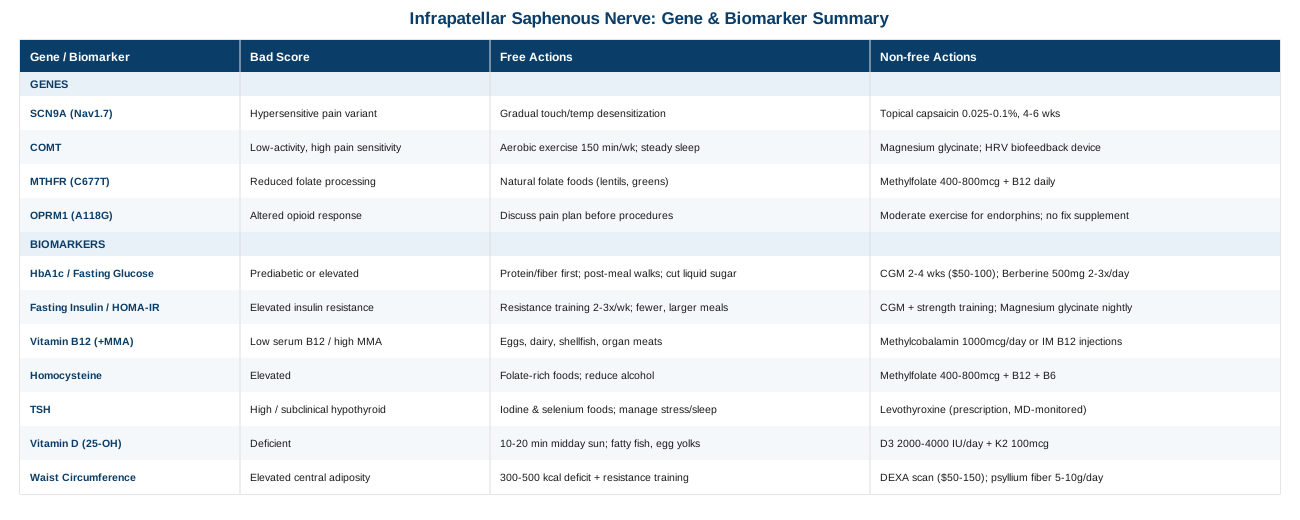
The Bottom Line
Persistent pain along the infrapatellar branch of the saphenous nerve is rarely explained by a single factor, which is exactly why a single generic treatment plan so often falls short. Glycemic control, insulin sensitivity, B12 and homocysteine status, thyroid function, vitamin D, and body composition each shape how vulnerable and how resilient that nerve is — and each is measurable, trackable, and at least partly modifiable. Layered on top, genetic tendencies in pain signaling and modulation explain why the same physical entrapment can feel very different from one person to the next, and a better understanding of how pain itself works can change the lived experience of it even before the mechanical problem is fully resolved.
The realistic next step isn't to overhaul everything at once. Pick two or three biomarkers from this list that you haven't checked recently, get them tested, and bring the results to a clinician who can interpret them alongside an actual examination of the entrapment itself. That combination — real data plus real evaluation — is a considerably stronger starting point than guessing.