This article contains AI generated content.
Intermittent Claudication - 5 Genes And 6 Biomarkers To Track
Introduction
If you have intermittent claudication, you already know the pattern better than any textbook describes it. You walk a familiar distance, and somewhere around the same point a tight, cramping ache builds in your calf, thigh, or buttock. You stop. Within a few minutes it fades. You walk again, and it returns at roughly the same spot. It is predictable, it is frustrating, and it quietly reshapes how far you are willing to park from a door.
Most advice you have heard probably sounds reasonable and still leaves you stuck: stop smoking, walk more, take your statin, come back in a year. None of that is wrong. The problem is that it is too broad to act on precisely. It treats claudication as a single problem when it is really the visible tip of a specific, measurable process — narrowing of the arteries feeding your legs, driven by a particular mix of lipids, inflammation, blood sugar, and blood-vessel biology that differs from person to person.
This article takes the opposite approach. Instead of general reassurance, it looks at the numbers that actually track what is happening inside your arteries, and at the genes that tilt the odds before symptoms ever start. For each one, you will find what it means, how it is measured, roughly what it costs, and a concrete plan to move it — first without supplements or equipment, then with them if needed, always with honest notes on frequency, cycling, and side effects.
None of this is a cure claim. Claudication is serious, and the smartest moves are still exercise, risk-factor control, and working with a good clinician. But better information genuinely leads to better decisions. We will start with the six biomarkers worth tracking, move to the five genes that shape your baseline risk, then summarize a book that is quietly changing how longevity doctors think, and close with complementary approaches that have real human evidence. Each layer is a different angle on the same goal: understanding your version of this condition well enough to push back on it.
Summary
Intermittent claudication is your legs reporting a supply problem, and the good news is that the supply chain is measurable. This article walks through six biomarkers that tell you how aggressive your arterial disease really is — starting with the one simple, cheap test that defines the condition itself, plus the lipid particle that matters far more than standard cholesterol, an inherited cholesterol most people have never been tested for, and the inflammation and blood-sugar markers that decide how fast things progress.
Then it turns to genetics: five genes — including the single most famous heart-disease locus in the human genome, and one that can silently double a hidden risk factor — with a practical plan for each, because a gene loads the gun but your habits still pull or lower the trigger. After that, you will find the ten most useful ideas from a longevity book that challenges the "wait and treat" model, and a clear-eyed look at complementary options from herbal medicine to light therapy, including where the evidence is strong and where it simply is not.
If you have ever wanted to know exactly which levers to pull — and in what order — this is the map.
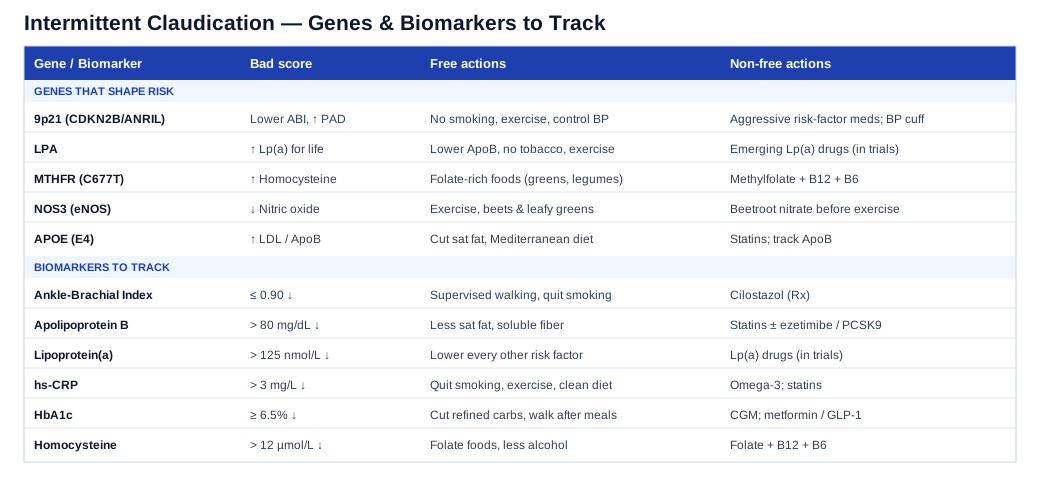
6 Biomarkers To Track For Intermittent Claudication
Claudication is a plumbing problem with a chemistry cause. The plumbing is your leg arteries; the chemistry is what is narrowing them. The biomarkers below are chosen because they either directly measure the plumbing or measure the forces damaging it — and because you can actually change most of them. This is the framework longevity-focused clinicians like Peter Attia, Thomas Dayspring, and Allan Sniderman have pushed for years: stop chasing symptoms and start measuring the drivers.
1. Ankle-Brachial Index (ABI): the number that defines the disease
The ABI compares blood pressure at your ankle to blood pressure at your arm. In healthy arteries the two are similar (a ratio of 1.0 to 1.4). When leg arteries are narrowed, ankle pressure drops and the ratio falls. An ABI of 0.90 or lower confirms peripheral artery disease, and a lower number generally means more severe narrowing. It is the single most important objective marker for claudication because it measures the actual blood-flow deficit causing your symptoms — and it independently predicts heart attack, stroke, and death, as shown in a large meta-analysis of over 48,000 people published in JAMA (Ankle Brachial Index Collaboration, 2008).
How to measure it
A basic ABI is done in most vascular clinics and many primary-care offices with a blood-pressure cuff and a handheld Doppler, typically costing between 40 and 150 US dollars, and often covered by insurance when symptoms are present. A more detailed version adds toe pressures and post-exercise measurement (a treadmill ABI), which catches disease that only shows up under exertion — useful when your resting ABI looks normal but your legs say otherwise.
If the score is bad, the plan without supplements
The most evidence-backed intervention here is structured walking. Supervised exercise therapy reliably improves pain-free and maximum walking distance and, in the CLEVER trial, beat stenting for treadmill walking time at six months (Murphy et al., 2012). A practical protocol: walk until the claudication pain reaches a moderate level (about 3–4 out of 5), rest until it clears, then repeat, for 30–50 minutes, 3–5 times per week, ideally for at least 12 weeks before judging results. The main "side effect" is the discomfort itself, which is expected and part of how the training stimulates collateral blood vessels. Absolute non-negotiable: complete smoking cessation, the single fastest way to slow ABI decline.
If the score is bad, the plan with supplements or equipment
The best-supported medication specifically for walking distance is cilostazol, which improves both maximum and pain-free walking distance across trials (network meta-analysis, 2022; Cochrane review, 2014). Typical dosing is 100 mg twice daily, taken 30 minutes before or 2 hours after meals; give it 3 months before judging benefit. Side effects include headache, palpitations, and diarrhea, and it is contraindicated in heart failure — this is a prescription decision, not a supplement. On the equipment side, a home treadmill or even a step counter turns the walking protocol into something you can measure. Cilostazol is used continuously rather than cycled; it should only be started and monitored by a clinician.
2. Apolipoprotein B (ApoB): the particle count that matters more than cholesterol
Every atherogenic particle — LDL, VLDL, and Lp(a) — carries exactly one ApoB molecule. So ApoB counts the actual number of artery-clogging particles in your blood, which is a better predictor of arterial disease than LDL-cholesterol (a measure of the fat inside those particles). Two people can have identical LDL-C and very different ApoB, and the higher-ApoB person is at higher risk. For claudication, driven by the same atherosclerosis as coronary disease, ApoB is the lipid number to anchor on.
How to measure it
ApoB is a simple, standardized blood test, usually 20 to 60 US dollars, and does not strictly require fasting. Most labs can add it to a standard panel on request. General targets used by lipidologists: below roughly 80 mg/dL for prevention, and below ~65 mg/dL if you already have established arterial disease like claudication.
If the score is bad, the plan without supplements
Reduce dietary saturated fat and replace it with unsaturated fats and fiber; add viscous soluble fiber from oats, legumes, and vegetables (this behaves like a food, not a supplement). Weight loss and consistent aerobic exercise lower ApoB modestly. Frequency: daily dietary pattern, not a cycled intervention. There is no meaningful downside beyond the effort of changing habits.
If the score is bad, the plan with supplements or equipment
For someone with claudication, the high-value tool is prescription lipid-lowering — statins first, with ezetimibe or a PCSK9 inhibitor added if needed. Statins in PAD reduce cardiovascular events regardless of walking symptoms and are standard of care. Side effects can include muscle aches and a small rise in blood sugar; these are usually manageable by switching agents or dose. Among true over-the-counter supplements, evidence is weaker: psyllium husk (5–10 g/day with water) modestly lowers ApoB, and bergamot extract has small supporting studies. Statins are taken continuously, not cycled. Do not attempt to replace prescribed therapy with supplements.
3. Lipoprotein(a) — Lp(a): the inherited risk almost no one tests
Lp(a) is an LDL-like particle with an extra protein that makes it both atherogenic and pro-clotting. Its level is roughly 80–90% genetically determined, so it barely moves with diet or exercise — but it matters a great deal. Genetic and clinical studies link high Lp(a) to substantially increased risk of peripheral artery disease and major adverse limb events (review, 2024). Everyone should know their number once; because it is largely fixed, a single test usually suffices.
How to measure it
A one-time blood test, typically 20 to 75 US dollars. Ask for results in nmol/L (the more modern unit); above ~125 nmol/L (roughly 50 mg/dL) is considered elevated.
If the score is bad, the plan without supplements
You cannot lower Lp(a) much through lifestyle, so the strategy is to drive every other risk factor as low as possible to compensate: aggressive ApoB lowering, blood-pressure control, zero smoking, and consistent exercise. Think of high Lp(a) as a reason to be stricter everywhere else. Frequency: this is a permanent posture, not a temporary push.
If the score is bad, the plan with supplements or equipment
No supplement reliably lowers Lp(a). High-dose niacin lowers it modestly but has not shown outcome benefit and carries flushing and glucose side effects, so it is no longer recommended for this purpose. Targeted Lp(a)-lowering drugs (such as pelacarsen and olpasiran) are in late-stage trials and not yet approved. The realistic move today is intensive management of your other biomarkers under a clinician, and asking whether you qualify for a clinical trial if your Lp(a) is very high.
4. High-sensitivity C-reactive protein (hs-CRP): the inflammation gauge
Atherosclerosis is an inflammatory process, and hs-CRP is a general marker of that inflammation. In apparently healthy men, higher baseline CRP predicted future symptomatic peripheral artery disease, with risk rising across quartiles (Ridker et al., 1998). It will not tell you where inflammation is coming from, but a persistently high value is a signal to look harder.
How to measure it
A blood test costing roughly 15 to 50 US dollars. Interpret it as: below 1 mg/L is low risk, 1–3 mg/L average, above 3 mg/L higher risk. Recheck when you are not fighting an acute infection, which can spike the number temporarily; retest every 6–12 months if elevated.
If the score is bad, the plan without supplements
The biggest levers are smoking cessation, weight loss, regular aerobic exercise, and a fiber-rich, less-processed diet; improving sleep and treating gum disease help too. These are daily, ongoing habits. There is no downside beyond effort, and they overlap perfectly with everything else on this list.
If the score is bad, the plan with supplements or equipment
Omega-3 (EPA/DHA) fish oil at ~1–2 g/day can modestly reduce inflammatory markers; the main side effects are fishy aftertaste and, at high doses, a slightly increased bleeding tendency. It is taken continuously. On the medical side, statins lower hs-CRP as a bonus effect, and for selected high-risk patients clinicians sometimes consider anti-inflammatory therapy — a prescription-only conversation. Avoid the temptation to stack many "anti-inflammatory" supplements; most have thin evidence and can interact with blood thinners.
5. HbA1c: how sugar is quietly narrowing your arteries
HbA1c reflects your average blood glucose over about three months. High blood sugar damages the arterial lining and accelerates PAD; in people with diabetes, higher HbA1c is associated with more peripheral artery disease and dramatically higher amputation risk (cohort study, 2019). Even in the pre-diabetic range, trending sugar matters for your legs.
How to measure it
A blood test, typically 10 to 40 US dollars, no fasting needed. Below 5.7% is normal, 5.7–6.4% is pre-diabetes, and 6.5% or above indicates diabetes. Retest every 3–6 months if elevated.
If the score is bad, the plan without supplements
Cut refined carbohydrates and sugary drinks, build meals around protein, fiber, and vegetables, and — powerfully — walk after meals, which blunts post-meal glucose spikes and doubles as your claudication training. Resistance exercise 2–3 times per week improves glucose handling. These are daily habits with only upside.
If the score is bad, the plan with supplements or equipment
A continuous glucose monitor (CGM) is the standout piece of equipment: worn for two weeks, it shows exactly which meals and habits spike your sugar, making changes concrete. Among supplements, evidence is modest — berberine (typically 500 mg two to three times daily) can lower glucose but commonly causes digestive upset and interacts with several medications, so it should be cleared with a clinician and is often cycled in blocks rather than taken indefinitely. Prescription options like metformin or GLP-1 agonists are far better proven and belong to your doctor's toolkit.
6. Homocysteine: the amino acid that irritates arteries
Homocysteine is an amino acid that, when elevated, is associated with blood-vessel damage and clotting. It is linked to peripheral artery disease, and elevated levels often reflect low folate or B-vitamin status or a common gene variant (more on that below). A meta-analysis found the MTHFR variant that raises homocysteine was associated with modestly increased PAD risk (Khandanpour et al., 2009). Note honestly: lowering homocysteine with vitamins reliably lowers the number but has not consistently reduced cardiovascular events, so treat it as a useful flag, not a proven target.
How to measure it
A blood test, roughly 30 to 90 US dollars, ideally fasting. Levels below about 10–12 µmol/L are generally considered fine; higher values warrant a look at B-vitamin intake.
If the score is bad, the plan without supplements
Eat more folate-rich foods — leafy greens, legumes, and citrus — alongside B12 sources, and moderate alcohol, which depletes B vitamins. This is a steady dietary pattern with no downside and broad benefits.
If the score is bad, the plan with supplements or equipment
A combination of folate (or methylfolate), vitamin B12, and B6 reliably lowers homocysteine, usually within 8–12 weeks. A common approach is folate ~400–800 µg, B12 ~500 µg, and B6 ~10–25 mg daily; methylfolate is preferred if you carry the MTHFR variant. Side effects are rare, but very high B6 over long periods can cause nerve tingling, so avoid megadoses and periodically recheck rather than taking high doses indefinitely. Because the outcome evidence is weak, keep expectations realistic: you are correcting a marker, not guaranteeing fewer events.
The Genetics Behind Claudication: 5 Genes Worth Knowing
Biomarkers tell you where you are now; genes tell you which way the wind has been blowing your whole life. You cannot edit these sequences, but knowing them tells you how hard to push on the levers you can control. Researchers such as Ali Torkamani have argued that genetic risk scores add real predictive value on top of standard factors — and the practical message is always the same: a risk gene raises the stakes on your habits, it does not seal your fate.
1. The 9p21 locus (CDKN2B / ANRIL): the famous one
The chromosome 9p21 region is the most replicated genetic signal in all of cardiovascular disease, and the same risk allele is associated with lower ABI and higher PAD prevalence in older adults (Cluett et al., 2009). It appears to act through a regulatory RNA (ANRIL) that influences how blood-vessel cells grow and repair, rather than through cholesterol.
If the gene is bad, the plan without supplements
Because 9p21 raises risk independently of lipids, the compensation is relentless attention to the modifiable basics: never smoke, keep blood pressure controlled, exercise most days, and keep weight and blood sugar in range. Think of it as a reason to start these habits earlier and hold them more strictly, for life.
If the score is bad, the plan with supplements or equipment
There is no supplement that targets 9p21. The equipment that helps is monitoring: a home blood-pressure cuff and periodic ABI and ApoB testing, so you catch drift early. The genuine intervention is earlier and more aggressive medical risk-factor control with your clinician.
2. LPA: the gene behind Lipoprotein(a)
The LPA gene sets your lifelong Lp(a) level, and variants here are among the strongest inherited risk factors for atherosclerotic and peripheral artery disease. This is the genetic root of biomarker number three above — which is why a single Lp(a) blood test effectively reads out this gene's practical effect.
If the gene is bad, the plan without supplements
As with high measured Lp(a), you compensate by being stricter everywhere else: lower ApoB hard, control blood pressure, avoid tobacco entirely, and exercise consistently. Also worth doing: mention it to first-degree relatives, since they may carry the same variant and benefit from testing.
If the score is bad, the plan with supplements or equipment
No supplement meaningfully changes LPA-driven Lp(a). The forward-looking option is the emerging class of Lp(a)-lowering drugs in trials; today, the realistic play is intensive control of every other risk factor under medical guidance.
3. MTHFR (C677T): the homocysteine gene
The MTHFR C677T variant reduces the efficiency of folate metabolism, raising homocysteine, and the TT genotype has been associated with modestly higher PAD risk (meta-analysis, 2009). It is very common, so carrying it is not rare or alarming.
If the gene is bad, the plan without supplements
Emphasize folate-rich foods — leafy greens, legumes, citrus — which supply the natural folate your enzymes still process. This is a simple, permanent dietary tilt with no downside.
If the score is bad, the plan with supplements or equipment
If your homocysteine is elevated, methylfolate (the pre-activated form, ~400–800 µg/day) plus B12 and B6 bypasses the sluggish enzyme and lowers the number. Recheck homocysteine after ~3 months rather than dosing blindly, and avoid chronic high-dose B6. Keep in mind the honest caveat: normalizing homocysteine has not reliably reduced events, so this is prudent housekeeping, not a proven cure.
4. NOS3 (eNOS): the blood-vessel dilation gene
NOS3 encodes the enzyme that makes nitric oxide, the molecule your arteries use to relax and widen. Common variants such as Glu298Asp reduce nitric-oxide availability and have been studied as cardiovascular risk factors (review of eNOS polymorphisms, 2019). For claudication, where the whole problem is inadequate flow, healthy nitric-oxide signaling matters.
If the gene is bad, the plan without supplements
Exercise is the most powerful natural nitric-oxide booster — the walking protocol above literally trains your arteries to dilate better and grow collaterals. Dietary nitrates from beets and leafy greens feed the same pathway. Do these consistently; there is no downside.
If the score is bad, the plan with supplements or equipment
Dietary nitrate (beetroot juice, ~300–500 mg nitrate) has small studies suggesting improved walking distance in PAD; it can cause harmless red urine or stool and a mild blood-pressure drop, so use caution if you take blood-pressure medication. It is typically used before exercise rather than cycled long-term. L-citrulline is sometimes used to support nitric oxide but has thinner evidence here. None of this substitutes for the exercise itself.
5. APOE: the lipid-handling gene
APOE influences how your body clears cholesterol, and certain variants (notably APOE4) tend to raise LDL and cardiovascular risk; the gene has been studied alongside NOS3 in vascular outcomes (gene-polymorphism study, 2009). Knowing your APOE status can explain why your lipids respond the way they do to diet.
If the gene is bad, the plan without supplements
APOE4 carriers often respond well to reducing saturated fat and increasing unsaturated fats and fiber, so a Mediterranean-style pattern is a sensible default. Keep it consistent rather than intermittent.
If the score is bad, the plan with supplements or equipment
Because APOE4 tends to push LDL and ApoB up, this is often a reason to be more willing to use prescription lipid-lowering under your clinician rather than relying on supplements. Track ApoB to confirm your diet-and-drug combination is actually working.
A Book That May Change How You See Your Arteries
If you want one resource that ties all of the above together, it is Peter Attia's Outlive: The Science and Art of Longevity. It is not a claudication book, but it is arguably the best popular explanation of why arteries narrow and how to act decades — or in your case, urgently — before it is too late. It draws on a large body of research and, importantly, challenges the "wait until something breaks, then treat it" model that leaves many claudication patients feeling stuck. Here are the ten ideas most worth taking from it.
1. Atherosclerosis starts far earlier than symptoms
Arterial plaque begins building in early adulthood, silently, for decades. Claudication is a late chapter, not the beginning — which is why measuring and acting early beats waiting for pain.
2. ApoB is the number to obsess over
Attia argues, alongside lipidologists like Sniderman, that ApoB (particle count) predicts disease better than LDL-cholesterol. It is the lipid metric he anchors on, and the one you should ask your doctor to measure.
3. Lower ApoB, earlier, is better
Because plaque accumulates over time, the "area under the curve" of exposure matters. Getting ApoB low and keeping it low for years does more than a late, brief correction.
4. Everyone should know their Lp(a)
He treats Lp(a) as a mandatory one-time test, precisely because it is common, inherited, dangerous, and routinely missed — exactly the case made in the biomarker section above.
5. Exercise is the most powerful longevity drug
Nothing else in the book gets the emphasis exercise does. For claudication specifically, this maps directly onto supervised walking as first-line therapy.
6. VO2 max and strength predict how long you stay mobile
Cardiorespiratory fitness and muscle are among the strongest predictors of lifespan and independence — motivating reasons to keep walking through the discomfort rather than avoiding it.
7. "Zone 2" aerobic training builds your engine
Easy, conversational-pace cardiovascular training improves mitochondrial and vascular function — the same adaptations that help leg muscles do more with limited blood flow.
8. Metabolic health is upstream of everything
Insulin resistance and high blood sugar accelerate vascular damage. Catching dysfunction early — with tools like a CGM — is a recurring theme, and it maps onto the HbA1c biomarker.
9. Smoking and blood pressure are non-negotiable
The book is blunt that tobacco and uncontrolled hypertension undo everything else. For legs already short on blood, this is the highest-yield message.
10. Be the CEO of your own risk
Perhaps the most useful shift: treat prevention as an active, data-driven project you lead, using your own numbers, rather than something you passively receive at annual checkups.
Complementary And Alternative Approaches
Beyond mainstream care, several complementary approaches come up for claudication. A few have real human data; most have far less than their marketing suggests. Here is an honest look at four, with the evidence stated plainly so you can decide what is worth your time and money.
Ginkgo biloba
Ginkgo biloba is a plant extract long promoted for circulation, and the theory — improved blood flow and reduced blood stickiness — sounds tailor-made for claudication. That is exactly why it has been studied specifically in this condition, making it more relevant to test than most herbal products.
The most rigorous evidence is a Cochrane systematic review pooling fourteen randomized trials of people with intermittent claudication (Nicolaï et al., 2013). Its conclusion is important and sobering: any improvement in walking distance was small and not clinically significant compared with placebo.
Realistically, ginkgo is unlikely to meaningfully change your walking distance, and it can increase bleeding risk, especially if you take aspirin or other blood thinners common in PAD. If you still want to try it, discuss it with your clinician first, and do not let it displace exercise or prescribed therapy.
Chinese herbal medicine
Traditional Chinese herbal formulas — often combinations such as Danshen (Salvia) and Gegen (Pueraria) — are used in parts of the world specifically for peripheral vascular symptoms, with proposed anti-inflammatory and vasodilating effects. Their direct use in claudication makes them more condition-specific than generic "circulation" supplements.
Some randomized trials and reviews exist, and a broader systematic review of complementary therapies for peripheral artery disease has examined this space (systematic review, 2005); a related overview discusses traditional Chinese medicine and vascular disease (review, 2015). The evidence is genuinely mixed and often limited by small samples and variable quality.
If you explore this, do it through a qualified practitioner, treat product quality and contamination as real concerns, and watch for interactions with blood thinners. Consider it an adjunct to — never a replacement for — walking therapy and risk-factor control.
Photobiomodulation (low-level laser / red light therapy)
Photobiomodulation uses red to near-infrared light to stimulate mitochondria and, intriguingly, to trigger nitric-oxide release that dilates blood vessels — a mechanism directly relevant to a condition defined by poor flow. This makes it biologically plausible for claudication rather than a random wellness trend.
The honest state of evidence, however, is early: much of the supportive data comes from animal models and small pilot studies, with a review specifically exploring its potential in cardiovascular disorders (review, 2023). There is not yet a large randomized trial showing it improves walking distance in people with claudication.
Practically, this is a "watch this space" option, not a proven therapy. If you are curious, treat any device claims skeptically, and do not spend meaningfully on equipment expecting it to replace the interventions that are actually proven to work.
Yoga
Yoga is not a claudication treatment, but it earns a place here because it reliably improves several of the biomarkers on this list — the forces damaging your arteries — even if it does not directly widen them. For a condition driven by blood pressure, inflammation, and metabolic health, that indirect benefit is real.
A meta-analysis of randomized trials found yoga meaningfully lowered blood pressure and improved other cardiovascular risk factors (meta-analysis, 2023). None of these trials were in claudication specifically, so this is supportive rather than condition-specific evidence — worth stating plainly.
The realistic role for yoga is as a low-risk complement: a way to manage blood pressure and stress and stay generally active on non-walking days. Choose gentle styles, avoid positions that trigger dizziness or strain, and keep your dedicated claudication walking as the main event.
Conclusion
Intermittent claudication can feel like a vague sentence — "your circulation is bad" — but underneath it is a set of specific, measurable, and largely modifiable numbers. Your ABI shows how narrowed your leg arteries are. Your ApoB, Lp(a), hs-CRP, HbA1c, and homocysteine show the forces narrowing them. Your genes explain your starting line without dictating the finish. And across every layer, the same short list keeps proving itself: don't smoke, walk with intention, control lipids and blood sugar, and measure so you can steer.
The most powerful idea in all of this is that you can stop guessing. Instead of accepting a symptom and waiting, you can turn claudication into a project with a dashboard — one where the trend line is something you influence week by week.
So take the next smart step, whatever is realistic for you right now: note how far you can walk before pain and track whether it improves, ask your doctor for an ABI and an ApoB and a one-time Lp(a), lace up for a structured walking session today, or bring this list to your next appointment and go through it together. Small, precise moves — repeated — are exactly how legs get their range back.
Cardiovascular: Heart Conditions Blood Vessel Conditions Vascular Conditions
Endocrine & Metabolic: Diabetes & Blood Sugar