This article contains AI generated content.
Kennedy Disease - 1 Gene And 7 Biomarkers To Track
Introduction
If you are reading this, there is a good chance you already know that Kennedy disease — also called spinal and bulbar muscular atrophy, or SBMA — is not something you can simply push through with willpower. You have probably noticed the slow, uneven progression: a hand that tires faster than it used to, muscle twitches that come and go, cramps after ordinary effort, or a voice and swallow that feel less reliable than before. That mixture of the visible and the invisible is exhausting, and it is rarely captured well in a rushed appointment.
Most general advice about "muscle-wasting conditions" is too broad to be useful here. Kennedy disease is its own specific story, driven by one gene and shaped by a surprising amount of metabolic and hormonal biology that standard neuromuscular advice tends to skip. Being told to "stay active and eat well" is not wrong, but it is nowhere near precise enough to help you make the trade-offs that actually matter month to month.
This article takes a deeper approach. Instead of vague reassurance, it focuses on things you can actually measure and act on: a small set of biomarkers that reflect what SBMA is doing to your muscles, liver, and metabolism, and the single gene that sits at the center of the whole picture. The goal is to turn a slow, frustrating condition into a set of numbers and levers you can watch over time.
None of this is a cure, and no honest article would promise one. But better information genuinely leads to better decisions. We will start with the biomarkers worth tracking and what to do when they drift, then look at the gene itself, a book that reframes how to protect muscle for the long haul, and a few careful complementary approaches. Each layer is meant to raise the odds that you and your clinician are steering with real data instead of guesswork.
Summary
Here is the short version, so you know what you are getting into. Kennedy disease comes down to one gene — the androgen receptor gene, AR — and a specific mutation inside it. That single fact explains why this condition behaves so differently from other motor neuron problems, and why testosterone, of all things, is part of the story rather than the solution.
The heart of this article is a set of seven biomarkers that are cheap-to-moderate in cost and genuinely informative in SBMA: creatine kinase, your metabolic panel (glucose, insulin, HbA1c), lipids and ApoB, liver enzymes, testosterone, vitamin D, and neurofilament light chain. For each one you will find why it matters, how it is measured and roughly what it costs, and two action plans — one without supplements or equipment, one with — including frequency, cycling, and honest notes on side effects.
After the biomarkers, we look at the AR gene itself and what can and cannot be "compensated for," a longevity book that changes how people think about protecting muscle and metabolism for decades, and a handful of complementary approaches with real human evidence in neuromuscular populations. Read on to see which numbers deserve a spot on your dashboard — and which single habit most people with SBMA get wrong.
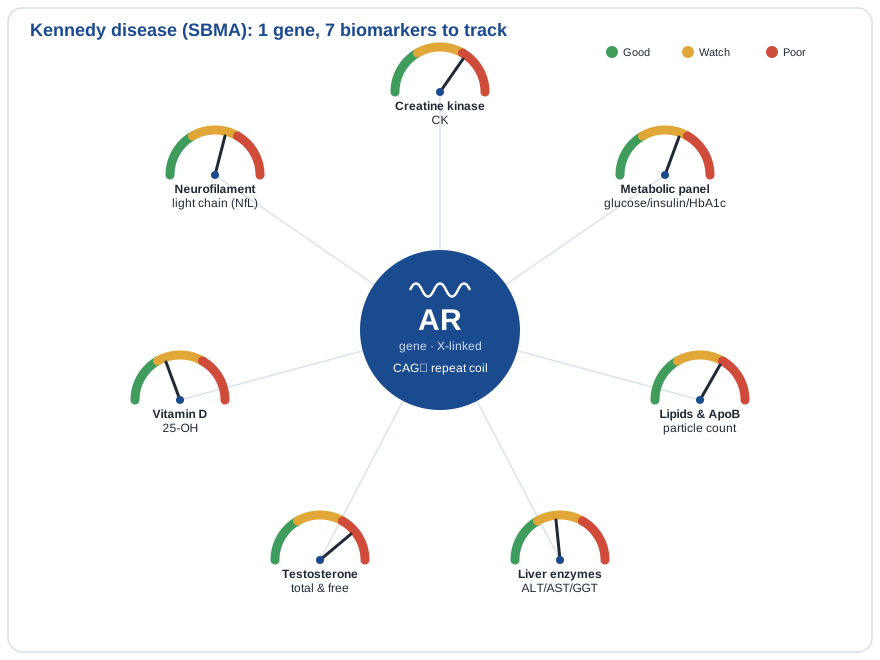
The 7 Biomarkers Worth Tracking in Kennedy Disease
Kennedy disease is often treated as a purely neurological condition, but the biology is broader than that. The same mutation that damages motor neurons also affects skeletal muscle directly and reaches into metabolism, hormones, and the liver. That is good news for tracking, because it means several accessible blood tests can tell you something real. None of these numbers replace a neurologist, and none of them "cure" anything — but watching them over time helps you catch drift early and judge whether a change in diet, activity, or medication is helping or hurting.
A quick word on interpretation: in SBMA, the aim is usually stability and gentle optimization, not chasing athletic-grade numbers. Overdoing exercise or supplementation can backfire in this specific disease, so "more" is rarely "better." Bring every plan below to your own clinician before acting on it.
1. Creatine Kinase (CK)
Why it matters: Creatine kinase leaks out of muscle fibers when they are stressed or breaking down. In Kennedy disease it is frequently elevated — sometimes markedly — because the muscle itself is affected, not only the nerve. Tracking CK helps you see how much muscle stress you are carrying and whether a burst of activity was too much.
How to measure it: A standard blood test, often bundled into routine panels. Cost is typically low, roughly 10–30 USD, or free where covered by insurance or a national health system. Avoid heavy exercise for 48–72 hours before the draw, since exertion alone can push CK up and confuse the reading.
If the score is bad, the plan without supplements: The most powerful lever is pacing. Unlike healthy muscle, SBMA muscle does not reliably reward hard training, and eccentric or exhausting exercise can raise CK and leave you weaker. Shift toward low-to-moderate activity, generous recovery days, and stopping well before failure. Stay well hydrated, prioritize sleep, and treat sudden CK spikes as a signal to rest, not to push harder.
If the score is bad, the plan with supplements or equipment: Some people use creatine monohydrate (commonly 3–5 g daily) to support muscle energy, though evidence in SBMA specifically is limited and it can modestly raise CK and creatinine readings. A heart-rate monitor is genuinely useful equipment here: keeping effort in a moderate zone prevents accidental overexertion. Frequency and cycling: retest CK every 3–6 months, and if you trial creatine, reassess after 8–12 weeks. Side effects are usually mild (water retention, occasional stomach upset), but anyone with kidney concerns should clear it with a doctor first.
2. Metabolic Panel: Fasting Glucose, Insulin, and HbA1c
Why it matters: Insulin resistance and impaired glucose handling are more common in Kennedy disease than in the general population, partly because muscle is a major glucose sink and partly because of altered androgen signaling. Metabolic drift quietly worsens fatigue and long-term health, and it is one of the most fixable parts of the picture.
How to measure it: Fasting glucose and HbA1c are inexpensive and widely available (often 10–40 USD combined). Fasting insulin costs a bit more (roughly 20–50 USD) but lets you calculate insulin resistance early, before glucose numbers rise. This is the kind of number Peter Attia and Thomas Dayspring emphasize watching years before it becomes "diabetes."
If the score is bad, the plan without supplements: Focus on protein-forward meals, fiber, and reducing refined carbohydrate and sugary drinks. Gentle movement after eating — even a 10–15 minute walk — meaningfully lowers post-meal glucose without stressing muscle. Protecting sleep and managing stress both improve insulin sensitivity for free.
If the score is bad, the plan with supplements or equipment: A continuous glucose monitor (worn in ~2-week cycles, a few times a year) is excellent equipment for learning which meals spike you. Some clinicians use metformin for insulin resistance — a medication, not a supplement, and one that should be discussed with your doctor. Magnesium may help those who are deficient. Frequency: HbA1c every 3–6 months; recheck fasting insulin every 6–12 months. Side effects: metformin can cause GI upset and, rarely, affects B12 over time; CGMs are very safe aside from minor skin irritation.
3. Lipids and ApoB
Why it matters: Dyslipidemia is common in SBMA, and cardiovascular risk does not pause because you have a neuromuscular disease — in some ways, reduced mobility raises it. ApoB counts the actual number of atherogenic particles and is a sharper risk marker than standard LDL cholesterol, a point Allan Sniderman has argued for years.
How to measure it: A standard lipid panel is cheap (10–30 USD). ApoB is a simple add-on blood test, usually 20–40 USD, and does not always require fasting. It is well worth requesting specifically, since many routine panels omit it.
If the score is bad, the plan without supplements: Emphasize soluble fiber (oats, legumes, vegetables), replace saturated fat with mono- and polyunsaturated sources, and reduce refined carbohydrate if triglycerides are high. Any tolerable activity that improves fitness helps, keeping SBMA pacing rules in mind.
If the score is bad, the plan with supplements or equipment: Omega-3 fatty acids (often 1–2 g EPA/DHA daily) can lower triglycerides; plant sterols and soluble-fiber supplements like psyllium modestly lower LDL. When ApoB stays high despite lifestyle work, statins or other lipid-lowering drugs are the evidence-based step — a medical decision, and one where you should mention SBMA, since muscle symptoms and CK need monitoring. Frequency: recheck lipids/ApoB every 3–6 months after a change, then yearly once stable. Side effects: fish oil can cause reflux or mild bleeding-time changes; report any new muscle pain on a statin promptly.
4. Liver Enzymes (ALT, AST, GGT)
Why it matters: Mildly elevated liver enzymes are a recognized feature of Kennedy disease, and non-alcoholic fatty liver often travels with the metabolic changes above. Because AST also rises from muscle, interpreting these enzymes in SBMA requires nuance — which is exactly why tracking them as a trend beats reading a single value.
How to measure it: A liver function panel is inexpensive (10–30 USD). If enzymes are persistently up, a liver ultrasound or a FibroScan (roughly 100–300 USD) can distinguish fat from fibrosis. Pairing ALT/GGT with CK helps separate muscle-derived enzymes from true liver signals.
If the score is bad, the plan without supplements: The core move is reducing liver fat: cut alcohol, reduce sugar and refined carbohydrate, and pursue gradual weight loss if you carry excess. Improving the metabolic markers in section 2 usually improves the liver in parallel.
If the score is bad, the plan with supplements or equipment: Evidence is strongest for omega-3 and, where deficient, vitamin E — though vitamin E should only be used under medical guidance because of dosing concerns. Coffee (2–3 cups daily) is associated with lower liver-fibrosis risk and is an easy, low-risk habit. Frequency: recheck enzymes every 3–6 months; repeat imaging yearly if abnormal. Side effects: high-dose vitamin E is not benign, so avoid self-prescribing it long-term.
5. Testosterone (Total and Free)
Why it matters: This is the counterintuitive one. In Kennedy disease the mutated androgen receptor becomes toxic when it binds testosterone — so higher androgen activity can actually drive the disease, while the body may show partial androgen insensitivity (mild breast tissue, reduced fertility). This is the opposite of the "boost your testosterone" messaging aimed at aging men, and getting it wrong can be harmful.
How to measure it: Total and free testosterone are standard blood tests (combined roughly 30–70 USD), ideally drawn in the morning. Track them alongside symptoms rather than chasing a "high-normal" target.
If the score is bad, the plan without supplements: The key rule is do not take testosterone or anabolic steroids to feel stronger — in SBMA this is a genuine hazard, not just unhelpful. Also be cautious with "testosterone-boosting" supplements marketed to men. If symptoms of low androgen bother you, that is a conversation for a specialist familiar with SBMA, not a reason to self-treat.
If the score is bad, the plan with supplements or equipment: There is no over-the-counter supplement fix here, and that is the point. Researchers have studied anti-androgen approaches (for example leuprorelin) precisely to lower androgen signaling; results on function have been mixed, so this remains a physician-directed, individualized decision. Frequency: measure at baseline and if symptoms change. Side effect note: any hormone-altering therapy has significant trade-offs (bone density, mood, libido) and must be managed medically.
6. Vitamin D (25-Hydroxyvitamin D)
Why it matters: Vitamin D supports muscle function and bone health, and people with reduced mobility are prone to deficiency and to falls-related fractures. It will not reverse SBMA, but correcting a low level removes an avoidable drag on strength and bone.
How to measure it: A simple blood test, roughly 20–50 USD, sometimes included in wellness panels. Most labs report a target range; many clinicians aim for a comfortably sufficient level rather than the bare minimum.
If the score is bad, the plan without supplements: Sensible sun exposure and vitamin-D-containing foods (fatty fish, fortified products, egg yolks) help, though diet alone rarely corrects a real deficiency.
If the score is bad, the plan with supplements or equipment: Vitamin D3 is inexpensive and effective; typical maintenance is around 1,000–2,000 IU daily, with higher short-term correction doses only under guidance. Pair it with adequate calcium from food and, if bone density is low, consider a DEXA scan (roughly 50–150 USD). Frequency: recheck 8–12 weeks after starting, then every 6–12 months. Side effects: excessive dosing can raise calcium dangerously, so avoid mega-doses without monitoring.
7. Neurofilament Light Chain (NfL)
Why it matters: Neurofilament light chain is released when nerve cells are damaged and has become one of the most promising blood markers of neurodegeneration. In SBMA it may help track how active the underlying nerve injury is over time — an advanced but increasingly available option for those who want a closer view than muscle-only markers give.
How to measure it: A specialized blood test (often 100–300 USD), not yet offered everywhere. Because it is newer, interpret it as a trend within the same lab rather than against a fixed cutoff, and discuss results with a neurologist.
If the score is bad, the plan without supplements: There is no lifestyle switch that directly lowers NfL, but the same fundamentals — avoiding overexertion, protecting sleep, controlling metabolic health, and steering clear of androgen boosting — support overall neuronal resilience.
If the score is bad, the plan with supplements or equipment: No supplement is proven to lower NfL in SBMA. Its best use is as a monitoring tool: a rising trend is a prompt to review your overall plan and, importantly, to ask whether you might qualify for a clinical trial, where NfL is increasingly used as an outcome measure. Frequency: yearly, or as your specialist advises. Side effect: essentially none beyond a blood draw — the main risk is over-interpreting a single value.
Taken together, these seven numbers turn an abstract diagnosis into a dashboard you can actually manage. The gene behind all of it deserves its own short look, because understanding it explains why several of the plans above are deliberately cautious.
The One Gene Behind Kennedy Disease: AR
Kennedy disease is unusual among neuromuscular conditions because it traces back to a single, well-defined genetic change. Understanding that one gene explains most of the disease's quirks — including why the biomarker plans above avoid the usual "build more muscle, raise your testosterone" playbook.
What the AR Gene Does
The AR gene sits on the X chromosome and codes for the androgen receptor, the protein that lets cells respond to testosterone and related hormones. In Kennedy disease, a stretch of DNA inside this gene — a repeated CAG sequence — is abnormally long. A typical AR gene has fewer than about 36 of these repeats; in SBMA the count is expanded well beyond that. Broadly, longer repeats tend to associate with earlier or more pronounced disease, which is why the CAG repeat number itself is sometimes treated as a genetic biomarker. For a reliable clinical overview, the GeneReviews entry on Spinal and Bulbar Muscular Atrophy hosted by the NIH is a solid reference.
Why It Causes Harm — and the Testosterone Paradox
The expanded receptor does not simply stop working; it becomes toxic when it binds androgens and gets transported into the cell nucleus, where it accumulates and damages motor neurons and muscle. This is the crucial insight: testosterone, usually framed as the hormone of strength, is what activates the damaging protein in SBMA. It also explains the mild signs of androgen insensitivity many men with the condition notice. Because Kennedy disease is X-linked recessive, it affects men clinically, while female carriers are typically only mildly affected or asymptomatic.
If the Gene Is Bad, the Plan Without Supplements
You cannot edit the AR gene at home, but you can avoid pouring fuel on the fire. The single most important habit is to never use testosterone therapy, anabolic steroids, or androgenic "T-booster" supplements — in SBMA these can accelerate the very mechanism that causes damage. Beyond that: practice careful exercise pacing rather than hard resistance training to failure, keep body weight and metabolism in a healthy range (which reduces mechanical and metabolic strain), and treat rest as an active part of the plan. Genetic counseling is also valuable for family members, since inheritance is predictable.
If the Gene Is Bad, the Plan With Supplements or Equipment
There is no supplement that shortens the CAG repeat, and you should be skeptical of anything claiming to. What legitimately exists is research: because the disease depends on androgen binding, scientists have tested anti-androgen strategies (such as leuprorelin) to reduce receptor activation, with mixed effects on function that remain under study. Supportive equipment matters more day to day — mobility aids, bracing, and respiratory or swallowing support preserve independence and safety. Frequency and cycling here means regular specialist review (often every 6–12 months) rather than a supplement schedule. The realistic side-effect note is that any hormone-lowering approach carries meaningful trade-offs and belongs firmly in a clinician's hands, ideally within a specialized center or clinical trial.
Strategy 3: The Longevity Playbook That Reframes Protecting Muscle
For a condition centered on muscle and metabolism, one of the most useful non-neurology resources is Peter Attia's book Outlive: The Science and Art of Longevity. It is not about Kennedy disease, and it makes no disease-specific claims — but it draws on a large body of research to argue that muscle, metabolic health, and stability are the pillars of a long, functional life. Read through an SBMA lens, several of its themes map directly onto the biomarkers above. Here are ten of its most impactful ideas, with the SBMA caveats that matter.
1. Play the Long Game
Attia's central argument is to plan decades ahead, not weeks. For SBMA, this reframes slow progression as a reason to protect function early rather than react late — exactly the logic behind tracking biomarkers before symptoms force the issue.
2. Muscle Mass Is a Survival Organ
He treats muscle as protective infrastructure, not vanity. In SBMA the twist is that you protect muscle through smart, sub-maximal work, not the brutal training the book sometimes celebrates for healthy people.
3. Strength and Stability Prevent the Falls That End Independence
Attia emphasizes that fractures and falls, not just diseases, break the trajectory of aging. For anyone with progressive weakness, balance and fall-prevention work is high-value and low-risk.
4. Metabolic Health Is Foundational
He argues that insulin resistance underlies much chronic disease. This validates putting glucose, insulin, and HbA1c near the top of your SBMA dashboard.
5. Measure ApoB, Not Just Cholesterol
The book echoes Sniderman and Dayspring in prioritizing particle count. It is a concrete, cheap upgrade to your lab requests.
6. VO2 Max Predicts Longevity
Attia calls cardiorespiratory fitness one of the strongest survival predictors. In SBMA, gentle aerobic conditioning within tolerance is the safe way to honor this idea.
7. Zone 2 Cardio Is the Underrated Base
Low-intensity, conversational-pace movement builds mitochondrial and metabolic health without the muscle stress that heavy exertion causes — a near-perfect fit for SBMA pacing.
8. Protein Intake Matters More With Age
Adequate, well-distributed protein supports muscle maintenance. This is a low-risk lever that complements the metabolic goals above.
9. Sleep Is a Non-Negotiable Multiplier
Attia treats sleep as central to metabolic and cognitive health. For a fatiguing condition, protecting sleep is one of the highest-return, zero-cost interventions available.
10. Emotional Health Is Part of the Plan
The book's final section insists that longevity without wellbeing is empty. Living with a progressive diagnosis makes mental health a legitimate, central part of care — not an afterthought.
The through-line for SBMA is simple: adopt the framework of protecting muscle and metabolism for the long run, but swap the high-intensity dogma for careful, sustainable effort. That same "gentle but consistent" principle carries into the complementary approaches below.
Complementary and Supportive Approaches
The therapies below will not alter the AR gene, and honest sourcing matters here: most evidence comes from broader neuromuscular, neurological, or general populations rather than SBMA-specific trials. That means these are supportive tools — worth trying cautiously for quality of life, breathing, balance, and stress — not disease-modifying treatments. Choose based on your specific symptoms, and clear anything strenuous with your care team first.
Breathing-Based Therapies (Respiratory Muscle Training)
Kennedy disease can weaken the muscles used for breathing and swallowing, so training those muscles is directly relevant. The idea is to strengthen the diaphragm and related muscles to preserve cough strength, speech, and safe swallowing for as long as possible.
A common protocol uses an inspiratory (and sometimes expiratory) muscle-training device, performing short daily sets of resisted breaths several times a week. Respiratory muscle training has shown benefits for respiratory muscle strength in several neuromuscular and neurological conditions, though high-quality SBMA-specific trials are limited, so results should be seen as supportive rather than guaranteed.
Practically, this is best started with a speech-language pathologist or respiratory therapist who can set resistance appropriately and watch for fatigue. Start light, progress slowly, and stop if you feel exhausted or lightheaded — in SBMA, overtraining any muscle group can backfire.
Tai Chi
Tai chi is a slow, low-impact practice that trains balance, weight-shifting, and controlled movement — precisely the skills that reduce falls when leg strength declines. For a condition where a single fracture can set you back for months, better balance has outsized value.
Randomized trials and meta-analyses in older adults and in neurological conditions such as Parkinson's disease have found that tai chi improves balance and reduces fall risk. That evidence is not SBMA-specific, but the mechanism (better postural control) transfers reasonably well to slowly progressive weakness.
Apply it gently: seated or supported versions exist for those with significant weakness, and a class or instructor experienced with disability is ideal. The goal is control and confidence, not intensity — a few short sessions per week is plenty.
Yoga
Adapted yoga can help maintain flexibility, joint range of motion, and gentle strength while also lowering stress. For people managing stiffness, cramps, and the emotional weight of a chronic diagnosis, that combination is genuinely useful.
Clinical studies in various chronic and neurological conditions report improvements in flexibility, mood, and quality of life from regular yoga, though again there is no large SBMA-specific trial. Chair-based and restorative styles make it accessible even with limited mobility.
The cautious application is to avoid deep strain, overstretching, or holding demanding poses to fatigue. A teacher trained in adaptive or therapeutic yoga can modify postures so you gain the mobility and relaxation benefits without stressing vulnerable muscles.
Mindfulness Meditation / MBSR
Living with progressive weakness carries a real psychological load, and mindfulness-based stress reduction (MBSR) is one of the best-studied ways to manage that load. It targets the anxiety, low mood, and rumination that often accompany a chronic, uncertain diagnosis.
Multiple randomized trials and meta-analyses show MBSR and related mindfulness programs reduce anxiety, depression, and stress across many chronic-illness populations. This is not a claim about muscle or nerve function — it is a well-supported claim about coping and quality of life, which matters enormously here.
In practice, an 8-week MBSR course, a reputable app, or a short daily breathing-and-attention practice are all reasonable entry points. There is essentially no physical risk, making it one of the safest complementary options to try alongside medical care.
Conclusion
Kennedy disease is defined by one gene, the androgen receptor, and that single fact reshapes everything — most surprisingly, it means the usual "boost testosterone, train hard" advice is not just unhelpful but potentially harmful. The more useful path is measurement: a compact dashboard of creatine kinase, metabolic markers, lipids and ApoB, liver enzymes, testosterone, vitamin D, and neurofilament light chain lets you see what the disease is doing and judge whether your choices are helping. Around that core, a long-game mindset about protecting muscle and metabolism, plus gentle supportive practices for breathing, balance, and stress, rounds out a plan you can actually sustain.
None of this promises reversal, and you deserve honesty about that. But steering with real numbers, avoiding the specific traps this disease sets, and pacing yourself for the decades ahead genuinely improves the odds of holding onto strength and independence longer.
The next smart step is small and concrete: pick two or three of these biomarkers, ask your clinician to add them at your next blood draw, and start a simple log of your symptoms and results over time. Bring this framework to a neurologist familiar with SBMA — ideally at a specialized center or one running clinical trials — and build your plan together, one measured decision at a time.
Men's Health Respiratory
Neurological: Nerve Conditions
Digestive: Liver & Gallbladder Conditions
Endocrine & Metabolic: Diabetes & Blood Sugar