This article contains AI generated content.
· UpdatedKlinefelter Syndrome Genes And Biomarkers: 5 Genes and 7 Biomarkers to Track
Introduction
If you were handed a Klinefelter syndrome (47,XXY) diagnosis and then a pamphlet that said "start testosterone therapy and follow up with your endocrinologist," you probably noticed the gap almost immediately. That advice isn't wrong, but it is thin. It doesn't explain why two men with the identical karyotype can look and feel completely different, why one man's bloodwork reads "normal" while his bones are quietly thinning, or why fertility conversations often arrive too late to matter.
Generic hypogonadism guidance is built for the much larger population of men with age-related or lifestyle-related low testosterone. Klinefelter syndrome is a different biological situation: it starts with an extra X chromosome present in essentially every cell, and it produces a hormonal signature — high FSH and LH alongside low or borderline testosterone — that standard "boost your T" advice was never designed to interpret. A single low testosterone reading gets treated the same way regardless of whether it comes from a 45-year-old with sleep apnea or a 22-year-old with primary testicular failure, and that flattening loses information that actually matters for decisions.
This article takes the more specific route. It walks through the biomarkers that reproductive endocrinology and metabolic research have repeatedly identified as informative in Klinefelter syndrome specifically — not just testosterone, but the gonadotropins, the fertility markers, the bone and metabolic indicators that this population is disproportionately exposed to. It also looks underneath the hormones, at the X-linked genes whose double dosage helps explain why the same karyotype produces such a wide range of outcomes.
None of this rewrites the karyotype, and no supplement or protocol reverses an extra X chromosome. But better tracking changes real decisions: when to start therapy, when to see a fertility specialist, when to order a bone scan instead of waiting for a fracture. That is a modest claim, and it is also the honest one. The sections ahead cover the biomarker panel worth building with your physician, the genetics that shape individual variation, a hormone-optimization podcast worth listening to with some KS-specific caveats, and a short, evidence-checked look at complementary approaches for the psychological side of the condition that guidelines tend to underweight.
Summary
Here's what the research actually shows once you get past the one-line advice: testosterone alone is a poor proxy for what's happening in Klinefelter syndrome, because sex hormone-binding globulin is often elevated, which can make total testosterone look deceptively acceptable while free testosterone tells a different story. Inhibin B, a marker most men never hear of, is usually undetectable by adulthood — but tracked early enough in adolescence, it can open a fertility window that closes permanently if missed. Bone density can decline for years with zero symptoms until a low-impact fracture reveals it. And underneath all of it, genes like AR, SHOX, and KDM6A — genes that escape the usual X-chromosome shutdown — appear to explain part of why height, bone strength, and cognitive profile vary so much between men who share the same 47,XXY karyotype. The sections below break down exactly which seven biomarkers are worth tracking, which five genetic and epigenetic factors are worth understanding, and where a widely respected hormone-optimization podcast gets useful — and where its advice needs adjusting for this specific condition.
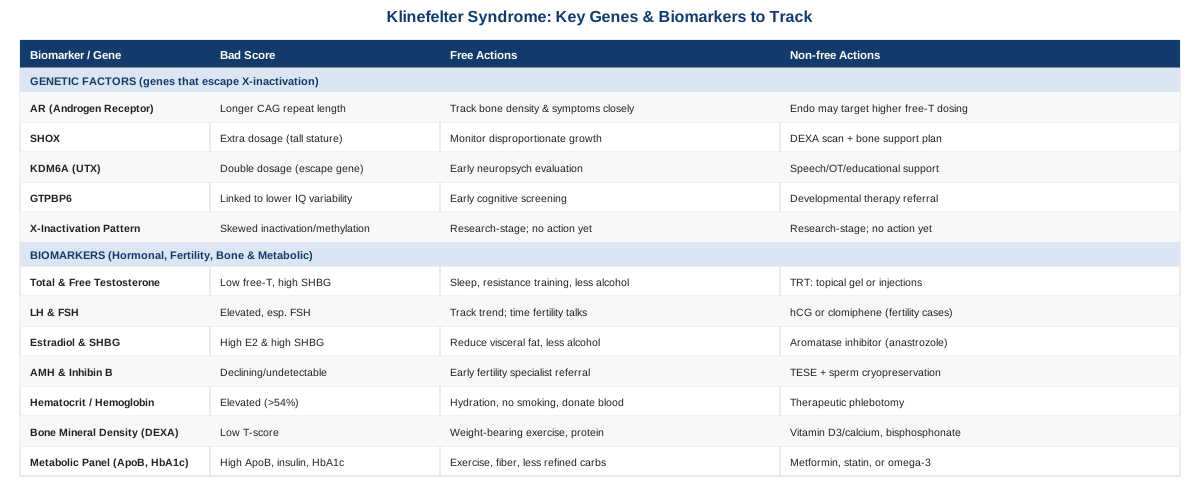
Tracking the Right Biomarkers in Klinefelter Syndrome
Klinefelter syndrome touches at least four physiological systems at once: the hypothalamic-pituitary-gonadal axis, bone metabolism, cardiometabolic health, and fertility. Following a single number — usually testosterone — misses the other three. The approach favored by metabolic researchers like Peter Attia and lipidologists like Thomas Dayspring and Allan Sniderman is to build a small panel of markers that each answer a distinct question, rather than leaning on one number to do all the work. Applied to Klinefelter syndrome, that means pairing the hormone panel with bone and metabolic markers from the start, because this population is measurably more exposed to osteoporosis, insulin resistance, and dyslipidemia than age-matched men with a normal karyotype, largely independent of testosterone status (Klinefelter Syndrome and Metabolic Disorder, Osteoporosis and bone metabolism in patients with Klinefelter syndrome).
The seven biomarkers below are the ones with the strongest, most consistent human evidence in Klinefelter syndrome specifically. Each entry explains why it matters, how it's actually measured, and two levels of response if the number comes back unfavorable — what can be adjusted without supplements or prescriptions, and what a supplement, equipment, or physician-directed medical option looks like, including realistic frequency and side effects.
1. Total and Free Testosterone
Testosterone is still the anchor marker, but in Klinefelter syndrome it needs to be read carefully. Sex hormone-binding globulin (SHBG) is frequently elevated in this population, which can keep total testosterone in a deceptively acceptable range while free (bioavailable) testosterone — the fraction that actually reaches tissue receptors — sits low. Most men with Klinefelter syndrome have testosterone concentrations that are low or low-normal by adolescence and adulthood (Klinefelter Syndrome — StatPearls).
How to measure it: A fasting morning blood draw (7–10 a.m., when testosterone peaks) for total testosterone runs roughly $20–50 out of pocket, and is usually covered when ordered by a physician. Free testosterone is best measured by equilibrium dialysis (around $60–100) rather than the commonly used calculated free testosterone, which becomes unreliable when SHBG is abnormal — a common situation here.
If the score is low, the plan without supplements: Prioritize 7–9 hours of sleep, since testosterone secretion is tightly sleep-dependent; add resistance training two to four times weekly; reduce visceral fat, which increases aromatization of testosterone into estradiol; and moderate alcohol intake, which raises SHBG and suppresses testicular output.
If the score is low, the plan with supplements or equipment: Testosterone replacement therapy (topical gel daily, or injectable testosterone cypionate/enanthate weekly to biweekly, or longer-acting undecanoate every 10–14 weeks) is the standard medical option, prescribed and monitored by an endocrinologist (Testosterone Therapy in Men with Klinefelter Syndrome). Bloodwork is typically repeated at 3 months, then every 6–12 months once stable. Side effects include erythrocytosis, acne, mood shifts, and — critically — suppression of the body's own sperm production, so fertility intentions should be discussed and sperm banking considered before starting. Vitamin D and zinc supplementation only meaningfully help testosterone when an actual deficiency exists, dosed to correct that deficiency rather than as a blanket add-on.
2. Luteinizing Hormone (LH) and Follicle-Stimulating Hormone (FSH)
Elevated LH and, especially, markedly elevated FSH are the signature of Klinefelter syndrome's hypergonadotropic hypogonadism — the pituitary is signaling harder because the testes aren't responding, which is the opposite pattern from garden-variety age-related low testosterone. A marked FSH rise is particularly characteristic and tends to track the degree of Sertoli cell decline (Klinefelter Syndrome: The Commonest Form of Hypogonadism, but Often Overlooked or Untreated).
How to measure it: Drawn from the same blood sample as testosterone, roughly $20–40 per hormone, usually bundled into a single hypogonadism panel.
If the score is abnormal, the plan without supplements: There isn't a lifestyle lever here — elevated gonadotropins reflect gonadal failure, not something reversible through diet or training. The useful action is interpretation and timing: in adolescents, a rising FSH trend signals it's time to discuss fertility preservation options before Sertoli cell function declines further.
If the score is abnormal, the plan with supplements or equipment: No supplement changes gonadotropin levels meaningfully. In select fertility-focused cases, a reproductive endocrinologist may trial hCG or clomiphene to support residual testicular function before attempting sperm retrieval, but this is a specialist-directed decision with its own monitoring schedule (typically monthly hormone recheck), not something to self-manage.
3. Estradiol and SHBG
Because SHBG runs high in Klinefelter syndrome, more circulating testosterone gets bound and unavailable, and aromatization can push estradiol proportionally higher — a combination that can worsen gynecomastia and blunt the benefit of otherwise "normal" total testosterone.
How to measure it: Estradiol should be run on a sensitive assay (LC-MS/MS, roughly $80–150) rather than a standard immunoassay, which is unreliable at the lower concentrations typical in men. SHBG runs about $30–50.
If the score is unfavorable, the plan without supplements: Weight management reduces adipose tissue's aromatase activity, directly lowering estradiol conversion; reducing alcohol intake helps normalize SHBG; resistance training supports both.
If the score is unfavorable, the plan with supplements or equipment: Aromatase inhibitors such as anastrozole are sometimes used off-label, at low doses two to three times weekly, specifically when the estradiol-to-testosterone ratio is unfavorable during testosterone therapy. This needs close monitoring — over-suppressing estradiol can worsen bone density, which is already a vulnerability in this population, and follow-up labs every 6–8 weeks are standard when adjusting this class of medication.
4. AMH and Inhibin B (Sertoli Cell Markers)
Anti-Müllerian hormone (AMH) and inhibin B reflect Sertoli cell health and correlate with spermatogenesis. In Klinefelter syndrome, both are typically normal before puberty, then decline through adolescence as Sertoli cells become progressively dysfunctional; by adulthood, inhibin B is usually undetectable and AMH is low (Klinefelter Syndrome — StatPearls). Inhibin B correlates strongly with sperm count, though it is a better indicator of spermatogenesis than of overall fertility outcome, since natural pregnancies have occurred even at low inhibin B levels (Inhibin-B and FSH Are Good Indicators of Spermatogenesis but Not the Best Indicators of Fertility).
How to measure it: A blood test, roughly $50–100, not part of a routine panel — it needs to be specifically requested through a pediatric or reproductive endocrinologist.
If the score is declining, the plan without supplements: There is no lifestyle intervention that preserves Sertoli cell function. The actionable step is timing: a referral to a fertility specialist while inhibin B and AMH are still measurable, ideally during adolescence or early adulthood, rather than waiting until values have already dropped to undetectable.
If the score is declining, the plan with equipment: Testicular sperm extraction (TESE) with cryopreservation is the relevant "equipment" pathway here — a minor surgical procedure done once, or occasionally repeated, while retrievable sperm may still be present. It is not a supplement-based fix, and success isn't guaranteed, but earlier timing measurably improves retrieval odds compared with waiting.
5. Hematocrit and Hemoglobin
This is a safety marker rather than a diagnostic one, but it's essential for anyone on testosterone therapy: testosterone stimulates red blood cell production, and excessive hematocrit increases the risk of clotting events.
How to measure it: A standard complete blood count (CBC), roughly $15–30, often bundled with other routine labs.
If the score is elevated, the plan without supplements: Stay well hydrated, avoid smoking, and be cautious with high-altitude exposure, which independently raises hematocrit. Routine blood donation can also help keep levels in range for some men.
If the score is elevated, the plan with supplements or equipment: Therapeutic phlebotomy is typically recommended when hematocrit exceeds roughly 54%, performed every 8–12 weeks as needed. Switching testosterone delivery — for instance from injections, which create hormone peaks, to daily topical application, which is smoother — can also reduce the problem at its source. Recheck hematocrit about 3 months after any dosing change.
6. Bone Mineral Density (DEXA)
Klinefelter syndrome carries a meaningfully elevated osteoporosis and fracture risk, driven by lifelong reduced testosterone exposure that often predates diagnosis. Bone mineral content can be impaired even when overall bone mass looks unremarkable on a quick read, and the deficit is frequently silent until a fracture occurs (Reproductive hormones, bone mineral content, body composition, and testosterone therapy in boys and adolescents with Klinefelter syndrome).
How to measure it: A DEXA scan of the lumbar spine and femoral neck, roughly $75–250 out of pocket (often covered by insurance once hypogonadism is documented). A baseline scan at diagnosis, repeated every 1–2 years, is a reasonable default.
If the score is low, the plan without supplements: Weight-bearing and resistance exercise, adequate dietary protein, avoiding smoking and heavy alcohol use, and basic fall-risk awareness all support bone density independent of hormone therapy.
If the score is low, the plan with supplements or equipment: Vitamin D3 (1,000–2,000 IU daily, adjusted and rechecked every 3–6 months if deficient) plus adequate calcium, ideally from food first, are baseline measures. Testosterone therapy itself tends to help spine bone density more consistently than hip density, with results varying between studies (Effect of Testosterone Replacement Therapy on Bone Mineral Density in Patients with Klinefelter Syndrome). For men at higher fracture risk, an endocrinologist may add a bisphosphonate (weekly or monthly oral dosing, or an annual infusion) or teriparatide; bisphosphonates are typically cycled with a drug holiday after roughly 5 years to reduce rare risks like atypical fractures or jaw osteonecrosis.
7. Metabolic Panel: Fasting Insulin/HOMA-IR, HbA1c, and Lipids (Including ApoB)
Even young, lean men with Klinefelter syndrome show measurable endothelial dysfunction and insulin resistance, and the population overall carries higher rates of obesity, low HDL cholesterol, and metabolic syndrome than age-matched controls (Increased Endothelial Dysfunction and Insulin Resistance in Patients with Klinefelter Syndrome, Triglyceride-glucose index levels in patients with Klinefelter syndrome). Peter Attia and lipid specialists like Thomas Dayspring and Allan Sniderman generally advocate tracking ApoB — the actual particle count driving atherosclerosis — rather than relying on LDL cholesterol alone, and that logic applies well here given the disproportionate cardiometabolic burden.
How to measure it: Fasting glucose and insulin for HOMA-IR (roughly $30–60 combined), or HbA1c alone ($15–30); a standard lipid panel ($20–50); and ApoB directly ($30–70), which is increasingly available through routine labs even though it's ordered less often than a standard panel.
If the scores are unfavorable, the plan without supplements: A combination of resistance and aerobic exercise, higher fiber intake, reduced refined carbohydrate and processed food intake, adequate sleep, and direct attention to visceral fat (waist circumference is a simple proxy) all move these markers in a favorable direction.
If the scores are unfavorable, the plan with supplements or equipment: Omega-3 fatty acids (roughly 1–2 g/day of combined EPA/DHA) have a modest, inconsistent effect on triglycerides and are reasonable to trial for 8–12 weeks with a recheck. If glucose markers indicate prediabetes, metformin may be appropriate under physician guidance. If ApoB or calculated cardiovascular risk is elevated, a statin is a physician-directed decision, generally dosed daily with lipid and liver enzyme rechecks at 6–12 weeks and then annually. A continuous glucose monitor (CGM) worn for 2–4 weeks can be a useful diagnostic tool to see individual glucose responses to specific foods — it's a short-term equipment-based experiment, not something that needs to be worn indefinitely.
Taken together, this seven-marker panel gives a far more complete picture than testosterone alone, and it maps onto the systems Klinefelter syndrome actually affects — hormonal, reproductive, skeletal, and metabolic. Where these numbers come from, though, traces back to biology that no blood draw directly measures: the extra X chromosome itself, and which of its genes stay active.
The Genes and Epigenetic Factors Behind the Numbers
Every cell in a man with Klinefelter syndrome carries two X chromosomes instead of one. In theory, the second X should be "switched off" through a process called X-inactivation, largely equalizing gene dosage with a typical XY male. In practice, roughly 15% of X-linked genes escape this shutdown to some degree, and most of them cluster on the short arm of the X chromosome. Because these escape genes end up expressed from both X chromosomes instead of one, they are present in a double dose — and that dosage imbalance is thought to drive much of the phenotypic variability seen across Klinefelter syndrome, even among men with the identical 47,XXY karyotype (Klinefelter syndrome (KS): genetics, clinical phenotype and hypogonadism).
It's worth being direct about what this section can and can't offer. Popular direct-to-consumer genetic and biomarker panels — the kind associated with researchers like Ali Torkamani or practitioners like Gary Brecka — have made single-nucleotide polymorphism testing and biological-age panels mainstream, but none of them currently screen for X-inactivation skewing or escape-gene dosage, because this is still a research-stage area specific to sex chromosome aneuploidies. None of the genes below can be "fixed" with a supplement, a repeat length can't be shortened, and a chromosome can't be un-duplicated. What understanding them buys you is better interpretation of your own numbers and better-timed conversations with specialists — which is a real, practical benefit even without a "fix."
1. AR (Androgen Receptor) — CAG Repeat Length
The androgen receptor gene contains a CAG trinucleotide repeat whose length is inversely correlated with receptor sensitivity: shorter repeats generally mean a more responsive receptor, while longer repeats mean cells respond less strongly to the same testosterone level. In Klinefelter syndrome cohorts, men with longer CAG repeats have tended to show more pronounced features — greater height, lower bone density, and in some studies, different social outcomes — although results across studies are not fully consistent (Klinefelter syndrome (KS): genetics, clinical phenotype and hypogonadism).
If this gene variant is unfavorable, the plan without supplements: CAG repeat length is fixed from conception and can't be shortened through diet, training, or behavior. The practical response is closer monitoring — men known to have longer repeats may benefit from tighter bone density and symptom tracking, since the same free testosterone number may be doing less biological work for them than for someone with shorter repeats.
If this gene variant is unfavorable, the plan with supplements or equipment: No supplement alters receptor sensitivity. The only realistic "equipment" lever is clinical: some endocrinologists factor known CAG length into testosterone dosing targets, aiming for higher-normal free testosterone in men with longer repeats, though this practice is not yet standardized and should be a specialist decision with the same monitoring cadence described in the testosterone section above.
2. SHOX (Short Stature Homeobox)
SHOX sits in the pseudoautosomal region of the X chromosome and escapes inactivation. Its dosage has an almost mirror-image effect across sex chromosome conditions: under-dosed in Turner syndrome, it contributes to short stature; over-dosed, as in Klinefelter syndrome, it contributes to the tall stature and long-limb proportions common in the condition (Klinefelter syndrome (KS): genetics, clinical phenotype and hypogonadism).
If this gene's dosage is driving symptoms, the plan without supplements: There's nothing to correct here directly — SHOX dosage isn't modifiable. Its main practical value is in interpreting a child's growth chart correctly and recognizing that a disproportionate growth pattern is expected biology, not a separate problem requiring its own workup.
If this gene's dosage is driving symptoms, the plan with supplements or equipment: There's no supplement target for SHOX itself. Because the same long-bone growth pattern this gene drives can coincide with reduced bone mineralization, the relevant response is the same bone-density monitoring and support described earlier — vitamin D, calcium, weight-bearing exercise, and periodic DEXA scans.
3. KDM6A (UTX) — An Epigenetic Modifier That Escapes Inactivation
KDM6A is not a hormone gene — it's an epigenetic enzyme that removes a repressive histone mark (H3K27me3), effectively acting as a volume control for other genes across the genome. It is among a small set of genes, alongside EIF2S3X, DDX3X, and KDM5C, that reliably escape X-inactivation in both humans and mouse models of Klinefelter syndrome, with expression patterns that vary by organ (Klinefelter syndrome (KS): genetics, clinical phenotype and hypogonadism). KDM6A's double dosage is an early, largely descriptive research finding — human functional studies in Klinefelter syndrome specifically are limited, and this should be read as a promising lead rather than settled evidence.
If this gene's dosage is a factor, the plan without supplements: Nothing modifies KDM6A dosage behaviorally. The value of knowing about it is reframing: some of the cognitive and behavioral variability seen in Klinefelter syndrome may trace in part to this kind of gene dosage rather than solely to environment or parenting, which supports earlier neuropsychological evaluation and school-based support rather than a wait-and-see approach.
If this gene's dosage is a factor, the plan with supplements or equipment: No supplement or device targets KDM6A. The actionable "equipment" here is developmental: speech therapy, occupational therapy, or educational support services, arranged based on an actual evaluation rather than assumptions, with frequency set by the treating therapist.
4. GTPBP6 and Cognitive Variability
GTPBP6 sits near the pseudoautosomal boundary of the X chromosome, and one study found its expression correlated with IQ variability among individuals with Klinefelter syndrome, moderated by X-inactivation pattern (Intelligence Quotient Variability in Klinefelter Syndrome Is Associated With GTPBP6 Expression Under Regulation of X-Chromosome Inactivation Pattern). This is a single study and needs replication before it should shape any individual decision — it's included here because it's a clear example of how gene-dosage research is starting to explain phenotype variability that used to be unexplained.
The plan, with or without supplements: Identical to KDM6A above — this is not an actionable target today. Its main use is supporting the case for earlier cognitive screening in children with Klinefelter syndrome, timed to developmental milestones rather than delayed until problems become obvious.
5. X-Chromosome Inactivation Pattern and Global DNA Methylation
Beyond individual genes, Klinefelter syndrome is associated with a distinct genome-wide DNA methylation signature — largely hypermethylation, with X-inactivation appearing measurably less complete than in typical female cells (DNA hypermethylation and differential gene expression associated with Klinefelter syndrome, DNA methylation signature in peripheral blood reveals distinct characteristics of human X chromosome numerical aberrations). The degree of "skewing" in this inactivation pattern — how balanced silencing is between the two X chromosomes — may help determine how many escape genes end up double-dosed in a given individual, which is one plausible mechanism behind the wide phenotypic range in Klinefelter syndrome.
The honest state of the evidence: this is a research-stage biomarker. Methylation panels that quantify X-inactivation skewing are not part of standard clinical care and aren't currently actionable for an individual patient. It's included here because it's the clearest epigenetic explanation currently on offer for why Klinefelter syndrome doesn't look the same in every man who has it — and because expecting a "fix" from something still confined to research cohorts would be misleading.
Genetics explains the why behind the variability; the biomarker panel above is still the tool for actually managing the condition day to day. With both pieces in view, it's worth looking at how a broader, non-KS-specific hormone-optimization framework holds up when applied to this population — including where it needs adjusting.
What a Leading Hormone Optimization Podcast Gets Right — and Where It Needs Adjusting
The Huberman Lab episode Dr. Kyle Gillett: Tools for Hormone Optimization in Males is one of the more evidence-grounded mainstream discussions of male hormone health, walking through behavioral, nutritional, supplement, and prescription-based levers for testosterone. It wasn't made with Klinefelter syndrome in mind — its target audience is the much larger population of men with lifestyle-driven or age-related low testosterone — but several of its core arguments translate usefully here, provided they're read with the right caveats. Below are the ten most important takeaways and how they apply, or don't, to a Klinefelter syndrome context.
1. Bloodwork Beats Guessing
The episode's central argument is that hormone decisions should start with actual lab values, not symptoms alone, because low energy or low libido can come from dozens of causes. This applies doubly in Klinefelter syndrome, where the specific pattern of high FSH and LH alongside variable testosterone is diagnostic information a symptom checklist simply can't provide.
2. Screening Questionnaires Are a Starting Point, Not a Diagnosis
Gillett discusses the ADAM (Androgen Deficiency in Aging Males) questionnaire as a useful screening tool for flagging when bloodwork is warranted. For men with Klinefelter syndrome, the diagnosis and hormone pattern are usually already established by karyotype and labs, so this tool is more relevant to family members or undiagnosed adults being screened for the first time than to ongoing management.
3. Diet and Exercise Are Foundational, Even Before Medication
The episode frames lifestyle fundamentals — diet, training, sleep, stress, social connection — as the base layer beneath any medical intervention. This holds directly for Klinefelter syndrome: given the elevated metabolic and bone risks documented earlier in this article, these fundamentals aren't optional extras alongside testosterone therapy, they're addressing risks that testosterone therapy alone does not fully resolve.
4. Consistent, Moderate Training Beats Daily Overtraining
Vigorous training three to four times weekly is described as sustainable and hormonally favorable, while training beyond an hour too frequently can become counterproductive. This is sound general guidance, though men with Klinefelter syndrome and confirmed low bone density should favor weight-bearing and resistance formats specifically, rather than high-volume endurance work alone, given the bone considerations discussed above.
5. Sleep and Stress Quietly Move the Needle
The episode emphasizes that testosterone is sensitive to both sleep duration and chronic stress. This is real and worth acting on, but it's important not to overweight it in Klinefelter syndrome: no amount of sleep optimization corrects testicular failure, so this is a genuine but modest lever, not a substitute for medical evaluation.
6. Not Everyone With Low-Normal Testosterone Needs Treatment
For the general population Gillett addresses, this is sensible caution against over-treating mild, lifestyle-reversible dips. It applies less directly to Klinefelter syndrome, where low testosterone usually reflects primary gonadal failure rather than a reversible lifestyle dip — meaning the calculus for starting therapy is generally different and should be driven by an endocrinologist familiar with the condition, not extrapolated from general population thresholds.
7. Common Supplements Have Modest, Specific Roles
Creatine, vitamin D, and boron are discussed as supplements with reasonably specific, modest evidence — vitamin D mainly in the context of correcting deficiency, creatine for strength and possibly cognition, boron with more limited human data. None of these meaningfully move testosterone in a man with primary testicular failure, but they remain reasonable general-health additions alongside, not instead of, the biomarker-driven plan above.
8. Herbal Compounds Need Caution and Cycling
Tongkat ali and fadogia agrestis are discussed with specific dosing and cycling considerations, reflecting real but preliminary human evidence and a lack of long-term safety data. Given that Klinefelter syndrome already involves hormone-sensitive tissue considerations (breast tissue, bone, lipids), any herbal compound with hormonal activity should be discussed with the treating endocrinologist before use, ideally with baseline and follow-up labs rather than self-directed cycling.
9. Behavioral Habits Can Distort the Perception of Low Libido
The episode raises high-frequency pornography use as a factor that can blunt real-world libido and motivation independent of actual hormone levels. This is a useful distinction for any man evaluating his own symptoms, including those with Klinefelter syndrome, since it prevents misattributing a behavioral pattern to a hormonal one and vice versa.
10. Testosterone Therapy Is a Long-Term Medical Commitment
Perhaps the most transferable point: testosterone replacement, once started, is generally a long-term commitment requiring ongoing monitoring, not a short course. This is especially true in Klinefelter syndrome, where the underlying gonadal failure doesn't resolve, and it reinforces why the fertility conversation described earlier in this article needs to happen before starting therapy, not after.
Optimization frameworks like this one are genuinely useful for the lifestyle layer, but they were built for a different population's baseline problem. The next section turns to something guidelines address even less consistently — the psychological and quality-of-life dimension of living with Klinefelter syndrome, and which complementary approaches have real, if still limited, evidence behind them.
Complementary Approaches Worth Considering
Guidelines for Klinefelter syndrome focus almost entirely on hormones, bones, and fertility, but the human data on quality of life tell a parallel story: men with Klinefelter syndrome report significantly worse psychological and social quality of life than the general population, along with a higher burden of anxiety, obsessive thinking, and emotion-focused coping strategies, including among those already on testosterone therapy (Update on Physical, Psychological, and Quality of Life Management in Klinefelter Syndrome, Quality of life in Klinefelter patients on testosterone replacement therapy compared to healthy controls, Quality of life in men with Klinefelter syndrome: a multicentre study). No complementary modality below has been tested in a Klinefelter syndrome-specific clinical trial — that gap should be stated plainly rather than glossed over. What follows is evidence from closely related populations (chronic illness, hormone-sensitive conditions, and general anxiety disorders), applied cautiously.
Mindfulness Meditation and MBSR
Mindfulness-Based Stress Reduction (MBSR) is a structured, secular meditation program originally developed for chronic illness populations, and it's relevant here because the documented psychological burden in Klinefelter syndrome — anxiety, obsessive thought patterns, reduced quality of life — is exactly the kind of outcome MBSR has been studied against, just not in this specific diagnosis.
The standard protocol is an 8-week course combining a weekly 2.5-hour group session with daily home practice of 20–45 minutes. A meta-analysis of MBSR across adults with chronic medical disease found small-to-moderate effects on anxiety and psychological distress, with the effect on anxiety shrinking once lower-quality studies were excluded — a real but modest benefit, not a dramatic one (The effects of mindfulness-based stress reduction therapy on mental health of adults with a chronic medical disease: a meta-analysis).
Realistically, this fits best as a low-cost, low-risk addition alongside medical care rather than a replacement for it — either a formal 8-week course (often available through hospital wellness programs) or a well-reviewed app-based version. It's not appropriate to expect it to move any biomarker in this article; its plausible benefit is specifically on the anxiety and coping side that hormone-focused care tends to leave unaddressed.
Progressive Muscle Relaxation and Breathing-Based Relaxation Training
Progressive muscle relaxation (PMR) involves systematically tensing and releasing muscle groups to trigger the body's relaxation response — slower breathing, lower blood pressure, reduced heart rate. It's one of the most extensively studied relaxation techniques and is relevant to Klinefelter syndrome primarily as a tool for the anxiety and stress burden documented in this population, rather than as a treatment for the underlying condition.
The National Center for Complementary and Integrative Health summarizes evidence showing relaxation techniques, including PMR, reduce anxiety and improve outcomes across a range of conditions, with a favorable safety profile for healthy adults (Relaxation Techniques: What You Need To Know — NCCIH). A typical protocol is 15–20 minutes daily for several weeks, working through muscle groups from feet to face.
This is inexpensive, requires no equipment, and carries minimal risk — occasional reports of increased anxiety or intrusive thoughts exist but are uncommon. It's a reasonable self-directed starting point before or alongside more structured therapy, particularly for men managing pre-appointment anxiety around ongoing endocrinology or fertility evaluations.
Music-Based Interventions
Music therapy uses structured listening or active musical participation, guided by a trained therapist, to reduce anxiety and physiological stress markers. Its relevance to Klinefelter syndrome is the same as the other modalities here — supporting the psychological burden around diagnosis, treatment, and fertility decisions — rather than any direct hormonal or metabolic effect.
A recent systematic review with multilevel meta-analyses found consistent anxiety-reducing effects of music therapy across a range of clinical and pre-procedural settings (Music therapy for the treatment of anxiety: a systematic review with multilevel meta-analyses). Sessions in the reviewed literature typically ran 20–30 minutes, several times weekly, either therapist-guided or through curated passive listening.
For most men, the practical version of this is simply a consistent, curated listening practice around stressful moments — before a clinic visit, during a fertility conversation — rather than formal therapist-led sessions, which are less widely accessible. It's a genuinely low-risk option with no meaningful side effects reported.
Heart Rate Variability Biofeedback
Biofeedback uses real-time physiological data — typically heart rate variability — displayed back to the user, paired with paced breathing, to train the nervous system toward a calmer baseline state. It's included here because it has one of the stronger general anxiety and stress evidence bases among the approved complementary modalities, even though it hasn't been tested in Klinefelter syndrome directly.
A meta-analysis of heart rate variability biofeedback found large effect sizes for reducing self-reported stress and anxiety compared to control conditions (A meta-analysis on heart rate variability biofeedback and depressive symptoms). Typical protocols involve 5–20 minutes of paced breathing (usually around 6 breaths per minute) daily, using a consumer HRV sensor or app, for several weeks.
This requires modest equipment — a chest strap or finger sensor and an app, generally under $100 — making it slightly more involved than PMR or music listening, but it gives the user objective feedback, which some people find more motivating than unguided relaxation. As with the other options here, it belongs alongside medical management of the biomarkers above, not in place of it.
Conclusion
Klinefelter syndrome can't be reversed at the chromosome level, and no gene, supplement, or biomarker changes that. What does change is how well the condition is managed — and that comes down to tracking the right things: free testosterone read correctly against SHBG, gonadotropins interpreted as gonadal-failure markers rather than simple "low T," inhibin B and AMH watched early enough to matter for fertility, and bone and metabolic markers checked before they become fractures or diagnoses. Understanding genes like AR, SHOX, and KDM6A won't change your karyotype, but it explains why your version of this condition may look different from someone else's, and it should inform how closely certain markers get watched.
The next useful step is a practical one: if you haven't had inhibin B, AMH, a DEXA scan, or an ApoB-inclusive metabolic panel, ask your endocrinologist which of these make sense to add at your next visit, and if fertility might ever matter to you, raise that conversation before testosterone therapy starts rather than after. Better information doesn't reverse an extra chromosome — but it consistently leads to earlier, better-timed decisions, and in this condition, timing is often the difference that matters most.