This article contains AI generated content.
Knee Adhesive Capsulitis: 5 Genes And 7 Biomarkers To Track
If your knee has gradually locked up — less bend, less extension, a deep ache that doesn't match what the imaging shows — you've probably already been told to "just do physical therapy" or "give it time." That advice isn't wrong, but it's incomplete. It treats every stiff, fibrotic knee as the same problem, when the truth is that the biology driving one person's capsule to thicken and scar down is often different from the next person's.
Generic advice exists because it has to work for the average patient. But you are not an average patient — you have a specific metabolic profile, a specific inflammatory baseline, and quite possibly a specific genetic tilt toward fibrotic tissue repair. None of that shows up on an X-ray or an MRI, and very little of it gets discussed in a 12-minute orthopedic follow-up appointment.
This article takes the deeper route. Instead of repeating "stretch more, be patient," it looks at the actual biomarkers and genetic patterns that recur in the research on capsular fibrosis — most of it studied in the shoulder, where adhesive capsulitis is best documented, but directly relevant to the knee, where the same fibrotic biology drives arthrofibrosis and post-surgical stiffness. Knowing which of these apply to you doesn't guarantee a faster recovery, but it does let you and your clinician stop guessing.
The goal here isn't false reassurance. It's a clearer map: which lab values are worth checking, which genetic patterns are worth understanding, and which additional strategies — from a well-documented mobility book to specific complementary therapies — have real evidence behind them for fibrotic joint conditions like this one.
Summary
Knee adhesive capsulitis and arthrofibrosis don't come out of nowhere — they tend to cluster around a recognizable metabolic and immunologic signature: elevated blood sugar, sluggish thyroid function, low-grade systemic inflammation, and sometimes a genetic tilt toward overactive fibrotic repair. Below, you'll find the seven biomarkers most worth checking if your knee has stiffened up without a clear mechanical cause, what each one is thought to reveal, and specific, realistic ways to move a bad number in the right direction — with and without supplements. After that comes a shorter look at the genes and gene loci (including one shared with Dupuytren's disease) that recent research has linked to fibrotic joint capsules, a breakdown of the ten most practical habits from a mobility book that's reshaping how clinicians think about joint stiffness, and finally the complementary approaches — laser therapy, biofeedback, tai chi, massage, and mindfulness — that have actual clinical trial data behind them for stiff, painful joints.
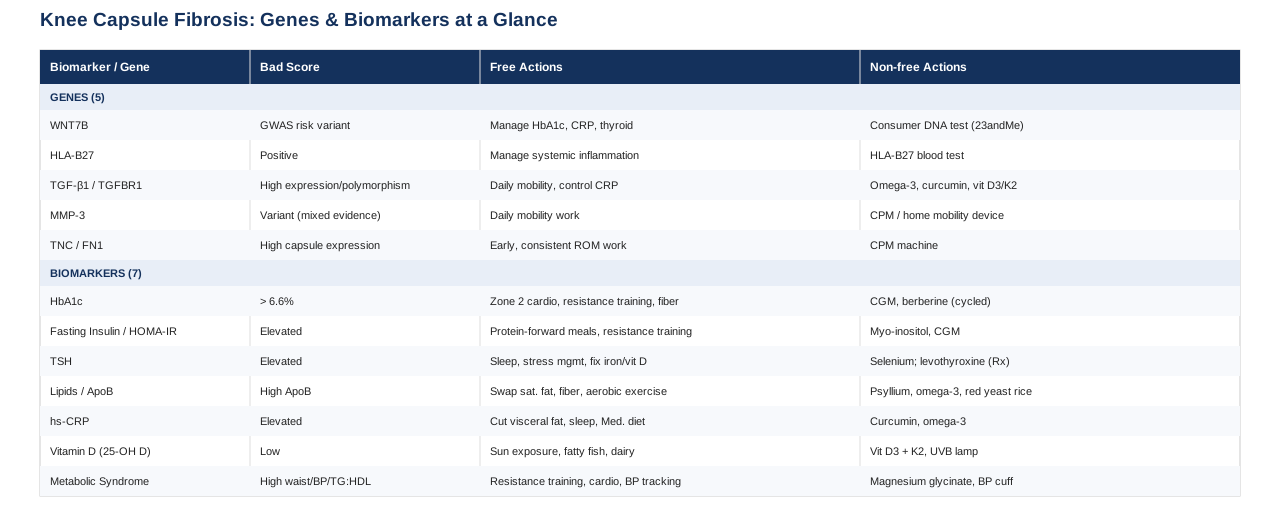
A Note on Terminology Before You Read Further
Almost all of the clinical research on "adhesive capsulitis" was conducted on the shoulder, where the condition is common enough to have its own diagnostic code and a large research base. The knee version — a capsule that thickens, scars down, and restricts flexion and extension, often after surgery like an ACL reconstruction or total knee arthroplasty, but sometimes without any clear trigger — is usually called arthrofibrosis or idiopathic post-surgical knee stiffness. The underlying biology overlaps substantially: excess fibroblast activity, dysregulated collagen turnover, and chronic low-grade inflammation inside the joint capsule. Throughout this article, findings from shoulder adhesive capsulitis research are used as the best available evidence and applied cautiously to the knee, with knee-specific studies cited directly wherever they exist.
The 7 Biomarkers Behind a Stiff, Fibrotic Knee
Before ordering an expensive panel or trying a supplement stack, it helps to understand why these particular seven markers keep showing up in the research. Longevity physicians like Peter Attia, lipidologists like Thomas Dayspring, and cardiovascular risk researchers like Allan Sniderman built their reputations on a simple premise: the number on the page only matters if you know what decision it should change. The same logic applies here. Each biomarker below is tied to a specific, plausible mechanism for why a knee capsule would stiffen and scar, not just a vague "inflammation is bad" story.
1. HbA1c (Glycated Hemoglobin)
Diabetes is one of the most consistently reproduced risk factors for adhesive capsulitis, with studies estimating a three-to-tenfold increase in prevalence among diabetics compared to non-diabetics, and a clear dose-response relationship with blood sugar control. In the knee specifically, elevated HbA1c has been linked directly to arthrofibrosis risk after ACL reconstruction: one study found that patients with an HbA1c above 6.6% had significantly higher rates of postoperative stiffness and complications requiring further surgery.
The proposed mechanism is glycation: chronically elevated glucose binds to collagen fibers, forming advanced glycation end-products (AGEs) that cross-link tissue, stiffen it mechanically, and make it more resistant to normal remodeling. That's a very literal way in which a metabolic number can make a joint capsule less flexible.
How to measure it
A standard HbA1c blood draw costs roughly $15 to $40 out of pocket (often fully covered by insurance as part of routine bloodwork). It reflects average blood sugar over the prior 2-3 months, unlike fasting glucose, which only captures a single moment.If the score is bad: the plan without supplements
The best-supported interventions are structural, not pharmacological: 150-180 minutes per week of zone 2 cardio (brisk walk, cycling, easy jog), 2-3 resistance training sessions weekly (muscle is the largest glucose sink in the body), a fiber-forward diet (25-35g/day) to blunt glucose spikes, and consistent sleep timing, since poor sleep alone raises next-day insulin resistance. Reassess HbA1c every 3 months, since it lags behind actual behavior change.If the score is bad: the plan with supplements or equipment
A continuous glucose monitor (CGM, roughly $50-100/month) lets you see which specific meals spike your glucose, turning generic dietary advice into personalized feedback. Berberine (500mg, two to three times daily with meals) has trial data showing glucose-lowering effects comparable to metformin in some studies; cycle it 8-12 weeks on, 2-4 weeks off, and expect possible GI upset (cramping, loose stools) as the main side effect — avoid combining with other glucose-lowering medications without medical supervision. If HbA1c remains elevated despite lifestyle change, this is a conversation for a physician about metformin, which is a medication, not a supplement, and should be managed clinically.2. Fasting Insulin and HOMA-IR
HbA1c can look normal for years while insulin resistance is already building — fasting insulin (and the derived HOMA-IR score) catches this earlier. Since insulin resistance and diabetes travel together with adhesive capsulitis risk, and since insulin itself has direct effects on fibroblast proliferation, this pair of markers gives an earlier warning than HbA1c alone.
How to measure it
Fasting insulin costs about $20-40 as a standalone test; HOMA-IR is simply calculated from fasting glucose and fasting insulin (free once you have both numbers). Draw it first thing in the morning after an 8-12 hour fast for an accurate baseline.If the score is bad: the plan without supplements
Protein-forward meals (25-40g at breakfast in particular) blunt the insulin response far more than carbohydrate-restriction alone. Resistance training remains the single best non-drug lever for insulin sensitivity, since contracting muscle takes up glucose independent of insulin signaling. Reducing ultra-processed carbohydrate frequency (not necessarily total carbohydrate) tends to move HOMA-IR faster than total calorie restriction.If the score is bad: the plan with supplements or equipment
Myo-inositol (2g twice daily) has reasonable trial support for improving insulin sensitivity, with minimal side effects beyond occasional mild nausea; there's no strong need to cycle it, though a 3-month reassessment is reasonable. A CGM, as above, doubles as feedback for this marker too, since the two are mechanistically linked.3. TSH and Thyroid Panel
Thyroid disease — particularly hypothyroidism and subclinical hypothyroidism — shows one of the strongest non-metabolic associations with adhesive capsulitis in the literature. A 2023 meta-analysis found thyroid disease was significantly more common in adhesive capsulitis patients (odds ratio 1.87), with hypothyroidism specifically carrying an odds ratio near 1.92, and higher TSH levels correlating with more severe, often bilateral, presentations.
The mechanism isn't fully settled, but thyroid hormone influences collagen turnover and connective tissue metabolism broadly, and an underactive thyroid may slow the normal clearance of excess collagen deposition inside a joint capsule.
How to measure it
A basic TSH test runs $20-45; a fuller panel including free T4 (and ideally free T3 and thyroid antibodies if TSH is abnormal) runs closer to $50-100. TSH alone is a reasonable first screen; an abnormal result warrants the fuller panel.If the score is bad: the plan without supplements
Adequate sleep and stress management measurably affect thyroid function over time, and correcting significant iron or vitamin D deficiency (both of which impair thyroid hormone conversion) can meaningfully help borderline cases. This is also a marker where "watchful waiting with a repeat test in 6-8 weeks" is often the medically correct answer rather than immediate intervention.If the score is bad: the plan with supplements or equipment
Selenium (200mcg/day) supports thyroid hormone conversion and has trial support in autoimmune thyroid conditions specifically; it doesn't need cycling but shouldn't be stacked with other selenium sources (multivitamins, Brazil nuts in large quantity) due to a narrow toxicity margin. If TSH is clearly elevated with low free T4, this is a case for levothyroxine prescribed and monitored by a physician — not a supplement decision.4. Lipid Panel, With ApoB
Multiple studies, including a large real-world analysis using Taiwan's national health insurance database, have identified hyperlipidemia as an independent risk factor for adhesive capsulitis, and dyslipidemia patterns differ further in patients who also have diabetes. Sniderman's long-standing argument — that particle number (ApoB) predicts risk better than LDL cholesterol concentration alone — applies just as usefully here as it does in cardiovascular risk: two people with identical LDL-C can carry very different numbers of atherogenic, pro-inflammatory lipoprotein particles.
How to measure it
A standard lipid panel (total cholesterol, LDL, HDL, triglycerides) costs $20-30 and is included in most routine panels. ApoB specifically costs an additional $30-50 and isn't always ordered by default — you may need to request it explicitly, something Dayspring has spent much of his career advocating for.If the score is bad: the plan without supplements
Replacing saturated fat with polyunsaturated and monounsaturated sources, adding soluble fiber, and increasing aerobic activity are the three interventions with the most consistent effect on both lipid particle number and triglycerides. Weight loss of even 5-10% of body weight, if applicable, tends to move triglycerides more than any single dietary tweak.If the score is bad: the plan with supplements or equipment
Psyllium husk (5g, once or twice daily with water) lowers LDL modestly and is well-tolerated long-term; the main side effect is bloating if introduced too quickly. Omega-3 (EPA/DHA, 2-4g/day) is the best-supported option specifically for elevated triglycerides; watch for a mild increased bleeding risk at high doses, especially alongside blood thinners. Red yeast rice is sometimes used for LDL but contains monacolin K, a compound pharmacologically similar to a statin — if used, it should be cycled with periodic liver enzyme checks and not combined with a prescribed statin without medical guidance.5. High-Sensitivity CRP (hs-CRP)
Elevated hs-CRP has been directly observed in patients with idiopathic adhesive capsulitis, consistent with tissue-level findings showing chronic inflammatory cells (T cells, macrophages, mast cells) and dysregulated cytokines (IL-1β, IL-6, TNF-α) inside fibrotic joint capsules. hs-CRP is a blunt, systemic marker — it won't tell you inflammation is specifically in your knee — but a persistently elevated result is a signal that something is keeping your baseline inflammatory tone higher than it should be, which plausibly feeds a fibrotic capsule's inability to settle down.
How to measure it
hs-CRP costs $15-30 as a standalone test and is frequently bundled into more comprehensive metabolic or cardiovascular panels.If the score is bad: the plan without supplements
Reducing visceral fat, improving sleep consistency, and eliminating smoking are the three interventions with the largest documented effect on hs-CRP. A Mediterranean-pattern diet (vegetables, olive oil, fish, minimal ultra-processed food) has repeatedly outperformed low-fat diets specifically on inflammatory markers, independent of weight change.If the score is bad: the plan with supplements or equipment
Curcumin with piperine (500-1000mg twice daily) has reasonable trial support for lowering inflammatory markers; cycle it 8-12 weeks, then reassess, since long-term data is thinner. Side effects are usually mild GI upset, though curcumin can mildly increase bleeding risk and interacts with some medications metabolized by the liver — check with a pharmacist if you're on other prescriptions. Omega-3, already mentioned above for lipids, does double duty here.6. Vitamin D (25-OH D)
Vitamin D deficiency shows up repeatedly in adhesive capsulitis case series, and separately, a systematic review found vitamin D deficiency associated with worse complication rates after shoulder joint surgery — relevant given how much knee arthrofibrosis follows surgical procedures like ACL reconstruction or knee replacement. The proposed mechanism involves vitamin D's role in restraining myofibroblast activity, the cell type most directly responsible for excess scar contraction.
How to measure it
A 25-OH vitamin D test costs $40-80 and is not always included in a standard panel by default — request it specifically, particularly if you had joint surgery scheduled or recent.If the score is bad: the plan without supplements
15-20 minutes of midday sun exposure on exposed skin several times a week, and dietary sources like fatty fish and fortified dairy, can meaningfully move borderline-low levels, though this is seasonally and geographically limited for many people.If the score is bad: the plan with supplements or equipment
Vitamin D3, 2000-4000 IU/day, paired with vitamin K2 (to direct calcium appropriately), is the standard approach; retest after 3 months rather than guessing, since individual absorption varies widely. Side effects are rare at these doses but hypercalcemia is possible at much higher, unsupervised doses over long periods — this is a marker worth re-checking rather than mega-dosing indefinitely. A UVB lamp is a reasonable equipment option in low-sunlight climates or seasons, used per manufacturer guidance to avoid skin burns.7. Metabolic Syndrome Composite (Waist Circumference, Blood Pressure, Triglyceride:HDL Ratio)
Rather than one lab value, this is a cluster: several studies have linked the broader metabolic syndrome — not just isolated diabetes or dyslipidemia — to adhesive capsulitis risk, suggesting the pattern of insulin resistance, central adiposity, and elevated blood pressure together matters more than any single piece in isolation.
How to measure it
Waist circumference only requires a tape measure (under $5); blood pressure can be tracked with a validated home cuff ($30-50); triglyceride:HDL ratio is calculated from the lipid panel above at no extra cost. Together, these three give a fast, cheap composite picture that a single lab value can't.If the score is bad: the plan without supplements
This composite responds best to the same fundamentals as HbA1c and lipids above: resistance training, zone 2 cardio, and modest, sustained caloric deficit if central adiposity is significant. Home blood pressure tracking twice weekly, at the same time of day, gives a more reliable trend than occasional clinic readings.If the score is bad: the plan with supplements or equipment
Magnesium glycinate (200-400mg nightly) has modest support for blood pressure and insulin sensitivity, with the main side effect being loose stools at higher doses — start low and titrate. Beyond that, this composite is best moved by the lifestyle levers already described for the other six markers rather than a separate supplement stack; it exists on this list because it's the cheapest, fastest way to see if you're trending in the right direction between formal lab draws.Together, these seven markers give a far more specific picture than "your knee is stiff, keep stretching." A knee that isn't loosening despite consistent physical therapy is worth investigating metabolically — not instead of physical therapy, but alongside it.
What Your Genes May Be Telling You
Biomarkers describe your current physiological state — genes describe a longer-standing tendency. Researchers like Ali Torkamani, whose work on genomic risk prediction has pushed consumer genetics toward more clinically meaningful interpretation, and Gary Brecka, known for popularizing accessible genetic and biomarker panels, have both argued that most people are sitting on genetic data (from consumer tests like 23andMe) that goes almost entirely unused. Fibrotic joint conditions are a good example of where that data could actually matter, even though the field is still young.
WNT7B
The largest genetic study of adhesive capsulitis to date, a genome-wide association study using UK Biobank data on more than 10,000 cases, identified five genome-wide significant loci, the strongest centered on WNT7B — a gene active in the WNT signaling pathway, which governs fibroblast proliferation and tissue patterning. Notably, this same genomic region has also been linked to Dupuytren's disease, a separate fibrotic condition of the hand, and a follow-up study confirmed substantial genetic overlap between the two conditions, suggesting a shared fibrotic mechanism rather than two unrelated diseases. This is population-level human evidence, not a small pilot study, which makes it one of the more credible genetic findings in this space — though it explains only part of overall risk, and there's no direct clinical test yet that turns "you carry this variant" into an individualized action plan.
HLA-B27
Older but consistently replicated research has found HLA-B27 positivity significantly more common in frozen shoulder patients than in matched controls, part of a broader meta-analysis estimating adhesive capsulitis's heritability at roughly 42%. HLA-B27 is best known for its association with inflammatory autoimmune conditions like ankylosing spondylitis, so its appearance here supports an immune-mediated component to some cases of capsular fibrosis, separate from the purely metabolic picture described in the biomarker section above.
TGF-β1 and TGFBR1
Transforming growth factor-beta is one of the most well-established drivers of fibrosis in medicine generally, and it shows up directly in adhesive capsulitis tissue studies: one gene-expression analysis of capsule biopsies found that TGF-β1 receptor expression correlated directly with how long a patient had been symptomatic, implicating this pathway in ongoing capsule thickening rather than just the initial trigger. A separate polymorphism study in a Chinese Han population looked at TGF-β1 alongside IL-1β, MMP-3, and GDF5 variants, and found IL-1β polymorphisms specifically associated with frozen shoulder susceptibility. Experimental work targeting TGFBR1 directly (via gene-silencing delivery in animal models) has shown promise for reducing capsule fibrosis, though this remains preclinical and is not an available human treatment.
MMP-3 and Related Matrix-Remodeling Genes
Matrix metalloproteinases like MMP-3 regulate how connective tissue is broken down and remodeled; imbalance in this system is a plausible reason why some capsules over-accumulate collagen instead of turning it over normally. Evidence here is more mixed than for WNT7B — the Chinese Han population study above found no significant association for the specific MMP-3 variant tested, while other work has implicated MMP14 as one of several genes near GWAS-significant loci. This is a case where the human evidence is real but still early and somewhat inconsistent, and it's worth saying so plainly rather than overstating it.
TNC (Tenascin-C) and FN1 (Fibronectin 1)
Rather than inherited variants, these two genes are notable for how differently they're expressed in fibrotic capsule tissue compared to healthy tissue — a pilot study found significantly higher TNC and FN1 expression in adhesive capsulitis capsule samples than in controls. This points toward an epigenetic and tissue-level story as much as a purely inherited one: local gene expression in the joint capsule itself appears to shift toward a more fibrotic program once the process starts, regardless of what a person's baseline DNA sequence says.
If Your Genetic Profile Leans Fibrotic: What Helps Without Supplements
None of these variants are destiny, and there is no approved gene therapy for any of them in humans. What the genetic picture mainly does is raise the stakes on the modifiable factors already covered above — someone with a WNT7B or HLA-B27 signal has more reason, not less, to keep HbA1c, hs-CRP, and thyroid function tightly controlled, since those seem to be the levers that actually determine whether a genetic tendency expresses itself. Consistent, structured joint mobility work — daily, not sporadic — matters more for someone with a fibrotic genetic tilt, since the tissue may have a lower threshold for scarring down during periods of immobility (after surgery, after a flare, after an injury).
If Your Genetic Profile Leans Fibrotic: What Helps With Supplements or Equipment
There's no supplement that reliably "corrects" a WNT7B or TGF-β1 variant, and any product claiming to do so should be treated skeptically. The more honest approach is upstream: the same anti-inflammatory and metabolic supplements discussed in the biomarker section (omega-3, curcumin, vitamin D3/K2) target the same TGF-β and cytokine pathways these genes operate through, just from the environmental side rather than the genetic side. A continuous passive motion (CPM) machine or a structured home mobility device, used consistently in the early weeks after knee surgery, is a reasonable equipment investment specifically for someone who knows they carry a fibrotic genetic tendency, since early, consistent range-of-motion appears to matter more than intensity.
The Built to Move Habits Worth Borrowing
If one recent resource has reshaped how clinicians and patients think about joint stiffness, it's Built to Move: The Ten Essential Habits to Help You Move Freely and Live Fully by Kelly Starrett and Juliet Starrett, discussed at length in Starrett's appearance on the Huberman Lab episode on mobility, posture, and flexibility. Starrett's core argument challenges a common assumption in orthopedic rehab: that stiffness is mainly a local, structural problem to be stretched away, rather than a whole-body signal that current movement inputs aren't sufficient to maintain tissue quality. For a knee capsule stiffening after surgery or without a clear trigger, this reframing has real practical value.
1. Ten Physical Tests Predict More Than They Seem To
The book opens with ten simple self-assessments — including a floor sit-to-stand test and a hip hinge screen — as a baseline. For a stiff knee, tracking your own version of these (full unsupported squat depth, ability to kneel without pain) gives an objective baseline that a single MRI can't.2. Range of Motion Is a "Use It or Lose It" Resource
Starrett's central claim is that joint range of motion behaves like a skill: it degrades quickly with disuse and responds to daily, not weekly, practice. For a fibrotic knee capsule, this supports daily short mobility sessions over occasional long physical therapy visits.3. Ten Minutes a Day Beats One Long Session a Week
Frequency is emphasized over duration throughout the book — brief, consistent mobility work is framed as more effective than infrequent intense stretching, which matches what's known about fibroblast response to mechanical loading over time.4. Nasal Breathing and Position Affect Movement Quality
Starrett connects breathing mechanics to postural and joint position, arguing that shallow, mouth-dominant breathing correlates with poorer movement patterns generally — a less obvious factor worth considering during knee rehab when guarding and altered gait patterns are common.5. Foam Rolling Works, But Not for the Reason Most People Think
Rather than "breaking up adhesions" (a claim not well supported mechanically), Starrett frames foam rolling's benefit as a temporary neurological down-regulation of tissue guarding, useful before mobility work, not as a standalone fix.6. Heat Beats Ice for Chronic Stiffness
For long-standing stiffness (as opposed to acute post-surgical swelling), the book favors heat to improve tissue extensibility before movement, reserving ice mainly for acute flares — a nuance many patients never hear explicitly.7. Your Default Posture Matters More Than Your Workout
Starrett argues that the 23 hours a day spent outside structured exercise — how you sit, stand, and position your knee at rest — shape tissue adaptation more than a single daily session, which reframes "rehab" as an all-day practice rather than a scheduled event.8. Grip Strength and Distant Measures Predict Whole-Body Resilience
Somewhat counterintuitively, the book highlights grip strength as a marker of broader physiological robustness — a reminder that a stiff knee often exists inside a broader picture of physical capacity worth tracking, not an isolated joint problem.9. Pelvic Floor and Hip Function Influence Knee Mechanics
The book spends real time on pelvic floor and hip mobility, arguing that poor hip mechanics upstream change loading patterns at the knee — directly relevant for anyone whose knee stiffness followed a period of altered gait or compensation.10. Consistency Beats Intensity, Every Time
The book's closing argument, and arguably its most important: sustainable, daily, moderate mobility input outperforms sporadic aggressive stretching or manipulation, both for adherence and for actual tissue outcomes — a principle directly transferable to a fibrotic knee capsule that responds poorly to occasional, forceful range-of-motion attempts.Complementary Approaches With Real Evidence
Beyond biomarkers, genetics, and daily mobility habits, a handful of complementary therapies have actual clinical trial data behind them for stiff, painful joints specifically — not just general wellness claims. The five below were chosen because they have condition-relevant human evidence, not because they're popular.
Low-Level Laser Therapy (Photobiomodulation)
Low-level laser therapy (LLLT), also called photobiomodulation, uses specific wavelengths of red or near-infrared light believed to stimulate mitochondrial ATP production and fibroblast activity, which may help resolve the chronic inflammatory and fibrotic tissue state seen in adhesive capsulitis. Because the biology of shoulder adhesive capsulitis and knee arthrofibrosis overlaps substantially, this is one of the more directly transferable therapies on this list.
A two-year follow-up study of low-level laser therapy in elderly patients with painful adhesive capsulitis found meaningful, durable improvements in pain and range of motion when LLLT was combined with standard exercise therapy, compared to exercise alone. Protocols in the literature generally use low-dose sessions two to three times weekly for several weeks.
Realistically, this means seeking out a physical therapy clinic that already has LLLT equipment rather than purchasing a device yourself, since dosing (wavelength, power, duration) varies by study and matters for effectiveness. Treat it as an adjunct to, not a replacement for, structured mobility work, and expect mild warmth as the only common side effect.
Biofeedback (EMG)
Electromyographic (EMG) biofeedback gives real-time visual or audio feedback on muscle activation, most commonly used around the knee to help patients re-engage the quadriceps (particularly the vastus medialis) after surgery, when pain and swelling often cause the muscle to "shut off" reflexively — a phenomenon that indirectly worsens stiffness by reducing active joint movement.
A randomized controlled trial on EMG biofeedback after ACL reconstruction found that adding biofeedback in the first six weeks post-surgery significantly improved knee extension compared to standard rehabilitation alone, with the effect attributed to better vastus medialis activation. A separate randomized trial in total knee arthroplasty patients found similar functional benefits when EMG biofeedback was added two months after surgery.
This is one of the more accessible options here: portable EMG biofeedback units are available for home use, and many outpatient physical therapy clinics already incorporate it into post-surgical protocols. It's best used early in a structured rehab window (the first 6-8 weeks after surgery or flare) rather than indefinitely, and has essentially no side-effect profile beyond mild skin irritation from electrode adhesive.
Tai Chi
Tai chi combines slow, controlled range-of-motion movement with balance training and mindful attention, and has one of the stronger evidence bases of any mind-body practice for knee joint conditions specifically — most of it in knee osteoarthritis rather than arthrofibrosis, but directly relevant given the shared emphasis on regaining controlled, comfortable range of motion in a stiff knee.
A well-known randomized trial published in Annals of Internal Medicine compared tai chi to standard physical therapy in patients with knee osteoarthritis and found tai chi produced equivalent improvements in pain and function over 12 weeks of twice-weekly group sessions, with better long-term adherence in some analyses.
For a stiff or fibrotic knee, tai chi is best approached as a complement to targeted rehab rather than a substitute, since it builds general control and confidence in movement rather than isolating specific range-of-motion deficits. Twice-weekly group or online classes, sustained over 12+ weeks, matches the trial protocol most closely, and the main caution is simply avoiding positions that provoke sharp pain in early, more acute stiffness.
Massage Therapy
Massage therapy is often dismissed as purely relaxing rather than therapeutic, but for knee joint conditions specifically, it has a reasonably serious trial record, mostly conducted for knee osteoarthritis rather than arthrofibrosis directly, though the mechanisms (reducing surrounding muscle guarding, improving local circulation, and modestly reducing pain-related central sensitization) plausibly apply to a stiff post-surgical knee as well.
A dose-finding randomized controlled trial of Swedish massage for knee osteoarthritis tested several weekly and biweekly regimens and found that a 60-minute weekly session over eight weeks produced the clearest improvements in pain, function, and range of motion, though benefits faded once frequency dropped below weekly.
Applied to a stiff or fibrotic knee, weekly full-leg massage sessions (not just spot work on the knee itself) for at least eight weeks is the protocol most consistent with the evidence, ideally scheduled around, not instead of, structured physical therapy. There are no meaningful side effects beyond temporary soreness, though deep pressure should be avoided directly over a recent surgical incision until fully healed.
Mindfulness Meditation / MBSR
Mindfulness-Based Stress Reduction (MBSR) doesn't change joint mechanics directly, but chronic joint pain and stiffness carry a real psychological load — guarding, fear of movement, and stress-driven muscle tension all worsen functional stiffness independent of the tissue itself, and MBSR has trial data addressing exactly that layer in knee conditions.
A pilot randomized controlled trial of MBSR in symptomatic knee and hip osteoarthritis found a significant reduction in pain (measured by visual analog scale) at six months in the MBSR group compared to controls, although the trial did not find a significant difference in the WOMAC functional score, suggesting the benefit is more clearly on pain and coping than on joint mechanics themselves — worth stating plainly rather than overselling.
For a knee that has been stiff and painful for months, an 8-week MBSR course (the standard format, roughly 2.5 hours weekly) is a reasonable, low-risk addition, best framed as support for the pain and guarding component of recovery rather than a treatment for the fibrosis itself. There are no physical side effects, though some people find early sessions bring frustration to the surface before it eases.
Conclusion
A stiff, fibrotic knee is rarely just a local mechanical problem — it's usually sitting downstream of a metabolic, inflammatory, and sometimes genetic pattern that generic rehab advice doesn't address. The seven biomarkers covered here — HbA1c, fasting insulin/HOMA-IR, thyroid function, lipids with ApoB, hs-CRP, vitamin D, and the metabolic syndrome composite — give a concrete, testable starting point, each with a clear reason it matters and a realistic plan to move it. The genetic patterns, the mobility habits from Built to Move, and the complementary therapies with real trial data round out a fuller picture than "wait it out" ever could.
None of this replaces a qualified orthopedic or physical therapy evaluation — it's meant to make that conversation sharper. A reasonable next step: get the core panel (HbA1c, TSH, lipid panel with ApoB, hs-CRP, vitamin D) drawn if you haven't already, track your knee's range of motion weekly rather than relying on memory, and bring both sets of numbers to your next appointment. Better information, applied consistently, is still the most reliable path to a knee that moves the way it should.
Musculoskeletal: Sports Injuries
Endocrine & Metabolic: Diabetes & Blood Sugar Thyroid Conditions Metabolic Syndrome
Autoimmune: Inflammatory Conditions Connective Tissue Conditions