This article contains AI generated content.
Knee Periarticular Fibromatosis: 6 Genes and 6 Biomarkers to Track
Introduction
A mass near the knee that doesn't behave like a normal lump — firm, slow-growing, not clearly cancerous but not exactly harmless either — tends to come with more questions than answers. Periarticular fibromatosis (a form of desmoid-type fibromatosis occurring around a joint) is one of those diagnoses where the standard explanation, "it's benign but locally aggressive, we'll watch it," is technically accurate and still deeply unsatisfying if you're the one living with it.
Generic advice struggles here because this condition doesn't follow one script. Some knee-area fibromatosis lesions shrink on their own over a few years. Others grow steadily, invade tendons and neurovascular structures, and come back within months of surgical removal. That variability isn't random — it's largely encoded in the specific mutation driving the tumor and in a handful of measurable biological signals around it. Telling every patient to "manage stress and wait" ignores the fact that two people with the same diagnosis can have meaningfully different underlying biology and, therefore, different realistic paths forward.
This article takes the more specific route. Instead of general reassurance, it walks through the genes most consistently implicated in desmoid-type fibromatosis, what current human research actually shows about each one, and the biomarkers clinicians and researchers use to track how active a given lesion is. It also looks at a book that reframes how this kind of tumor biology should be understood, and at complementary approaches with genuine (if modest) supporting evidence.
None of this replaces a surgical oncologist or a sarcoma-specialized treatment team, and nothing here promises regression or cure — spontaneous behavior in this disease is well documented precisely because it's unpredictable. But knowing which mutation is present, what it tends to mean for recurrence risk, and which biomarkers are worth tracking turns a vague "wait and see" into a more grounded, better-informed version of the same plan.
Summary
Knee periarticular fibromatosis is driven, in the overwhelming majority of sporadic cases, by a mutation in a single gene — CTNNB1 — that locks a growth-signaling protein called beta-catenin in the "on" position inside fibroblasts. Which exact mutation is present (there are three common ones) changes recurrence risk enough that it now shapes real treatment decisions, from active surveillance to systemic therapy. A smaller subset of cases trace back to inherited APC mutations tied to Gardner syndrome, which carries entirely different screening implications. Around these core genetic drivers sit a set of supporting genes and pathways — hormone receptors, TGF-beta signaling, collagen genes, matrix-remodeling enzymes — that help explain why fibromatosis can flare during pregnancy, respond partially to anti-estrogen therapy, or feel unusually dense and fibrous to the touch.
Below, each gene is explained in plain terms: what it does, how strong the human evidence is, and two realistic tracks to consider — one built around monitoring, physical precautions, and physician-directed medical options, and one that adds supplements or supportive equipment where the evidence, however preliminary, supports it. After that, six biomarkers worth tracking alongside the genetics are laid out, followed by a look at what a Pulitzer-winning history of cancer biology gets right about mutation-driven tumors like this one, and a review of complementary therapies with real (if limited) supporting data. The diagram below maps how the core mutations connect to the biomarkers used to track disease activity.
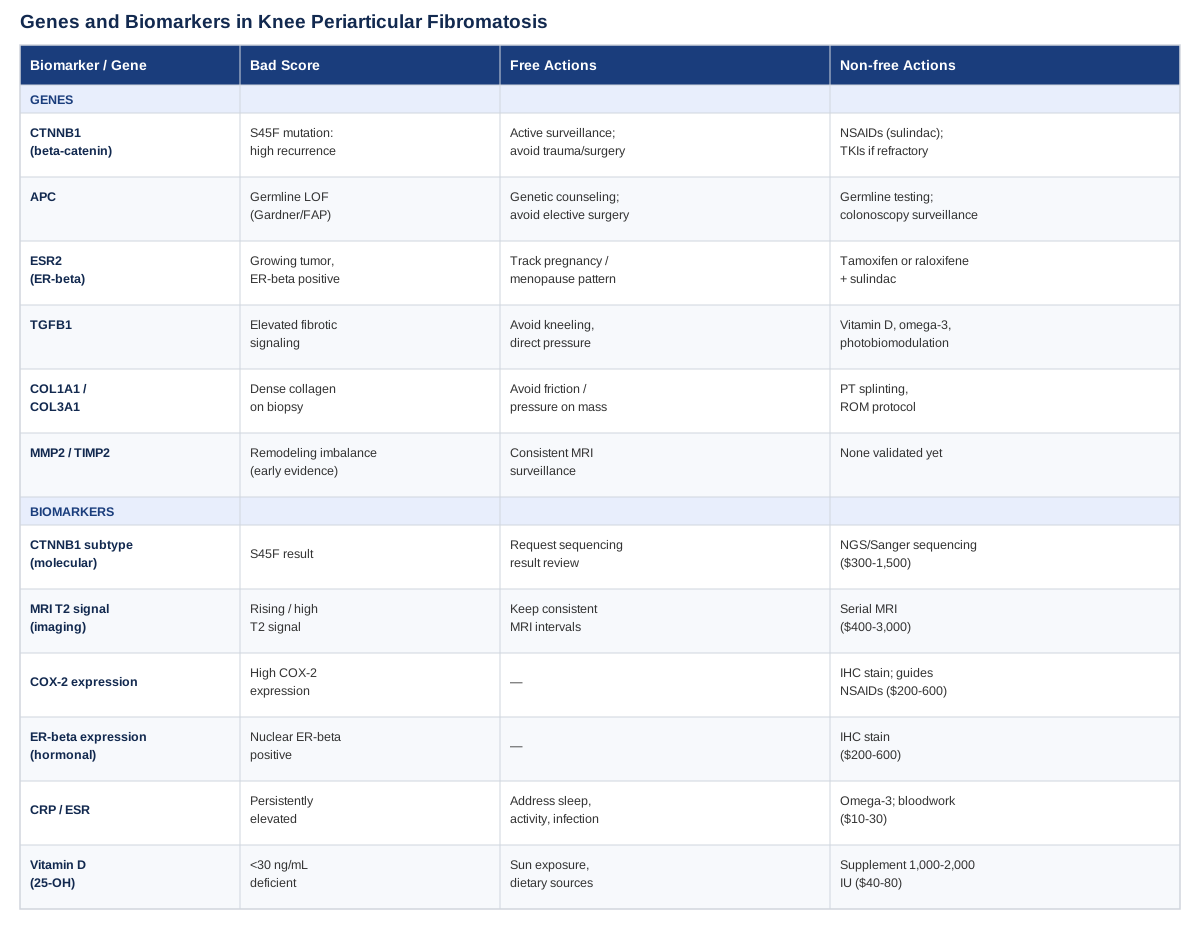
What the Genetics of Knee Periarticular Fibromatosis Actually Show
Desmoid-type fibromatosis (the tissue diagnosis behind most cases of knee periarticular fibromatosis) is unusual among soft-tissue conditions in that its genetics have been mapped in real detail. This isn't a condition with dozens of loosely associated risk SNPs — it's one largely built around a single dysregulated pathway, the Wnt/beta-catenin signaling axis, with a handful of supporting genes shaping how aggressively any given tumor behaves. That specificity is what makes a gene-by-gene walkthrough genuinely useful here, rather than a marketing exercise dressed up as science.
A note before going further: unlike inherited SNPs that affect nutrient metabolism (the kind covered in typical consumer genetic reports), the primary mutation behind this disease is usually somatic — acquired within the tumor tissue itself, not inherited and not present in the rest of your cells. That distinction matters. It means the "plan" for a gene like CTNNB1 isn't about correcting a lifelong genetic variant; it's about using the mutation status to guide monitoring and treatment decisions, and about supporting the same fibrotic and inflammatory pathways the mutation activates. Where genetics researchers like Ali Torkamani have pushed for more precision-based interpretation of genetic data, and clinicians like Gary Brecka have popularized the idea that "bad genes" can often be worked around with targeted lifestyle and supplement strategies, that framework applies here with an important caveat: some of what follows supports the body's broader anti-fibrotic capacity rather than reversing the mutation itself.
CTNNB1 (beta-catenin): the central driver
CTNNB1 encodes beta-catenin, a protein that, when unregulated, tells fibroblasts to keep proliferating and depositing collagen instead of stopping. In desmoid-type fibromatosis, three specific mutations account for the vast majority of cases: T41A, S45F, and S45P. Each locks beta-catenin in place by preventing its normal degradation, but they are not interchangeable in terms of behavior.
The evidence here is unusually strong for a soft-tissue condition. A landmark study found CTNNB1 mutations in about 85% of sporadic desmoid tumors, and five-year recurrence-free survival differed sharply by mutation type: roughly 23% for S45F-mutated tumors versus 57% for T41A and 65% for tumors without a detectable mutation (Lazar et al., Am J Pathol). This was independently confirmed in a multicenter validation study (validation cohort, 2013), and a later meta-analysis of individual patient data refined the picture further, suggesting tumor size also interacts with mutation type in determining recurrence risk (individual patient data meta-analysis).
If this mutation is active: the plan without supplements
The single most evidence-based response to a confirmed CTNNB1 mutation is matching the intensity of monitoring and treatment to the specific variant. For T41A or wild-type tumors, many sarcoma centers now favor active surveillance — serial MRI, typically every 3 to 4 months for the first one to two years, then spaced out to every 6 to 12 months if the lesion is stable or shrinking — because spontaneous regression is well documented and unnecessary surgery carries real recurrence risk of its own. For S45F-mutated tumors, given the higher recurrence rate, physicians more often discuss earlier systemic therapy: NSAIDs such as sulindac, sometimes combined with an anti-estrogen (covered further below), and in refractory or growing cases, tyrosine kinase inhibitors such as sorafenib or pazopanib, which have shown real activity in this disease (real-life sorafenib outcomes). Alongside any of this, avoiding elective surgery or biopsy trauma to the area matters more than it sounds — trauma and surgical wound healing are documented triggers for new or recurrent desmoid growth in a meaningful minority of cases (trauma and sporadic desmoid tumor development), which is part of why "just cut it out" is no longer the reflexive first move it once was.
If this mutation is active: the plan with supplements or equipment
Nothing here reverses the mutation, but a few adjuncts have plausible mechanistic support. Green tea catechin extract (standardized to 300–500 mg EGCG daily) has shown anti-fibrotic, anti-proliferative effects on fibroblasts from other fibrotic conditions such as keloids and uterine fibroids (EGCG and keloid fibroblasts, EGCG and uterine fibroids) — not desmoid-specific, but mechanistically relevant. A reasonable approach is an 8-to-12-week cycle with a break, paired with a liver panel at baseline and after the first cycle, since high-dose EGCG has rare hepatotoxicity risk. Photobiomodulation (low-level laser therapy) devices, discussed further in the complementary section below, have shown anti-fibrotic effects on cultured fibroblasts and may be worth discussing with a physical therapist as a low-risk adjunct, typically 2–3 sessions weekly. None of this substitutes for MRI-based monitoring or physician-directed pharmacological therapy.
APC: the inherited counterpart
APC is a tumor suppressor gene that normally helps degrade beta-catenin. Germline (inherited) loss-of-function mutations in APC cause familial adenomatous polyposis (FAP) and its variant, Gardner syndrome — and roughly 10–15% of people with FAP develop desmoid tumors, sometimes at extra-abdominal sites including the extremities. Genotype-phenotype studies show that mutations in specific regions of the APC gene correlate with a higher desmoid burden (APC mutation region and Gardner syndrome severity).
This is important to get right: most sporadic knee periarticular fibromatosis is not APC-driven — it's the somatic CTNNB1 mutation described above. APC becomes relevant mainly if there's a personal or family history of colon polyps, multiple desmoid tumors, or osteomas, which raises the question of an inherited syndrome rather than an isolated sporadic lesion.
If this gene is implicated: the plan without supplements
The actionable step is genetic counseling and germline APC testing when the personal or family history suggests it — not routine testing for an isolated, sporadic knee mass. If APC-positive, the plan without supplements centers on colonoscopy surveillance beginning in the teenage years per standard FAP protocols, and on avoiding unnecessary abdominal or orthopedic surgery, since surgical trauma is a recognized trigger for new desmoid growth in this population specifically (trauma and desmoid development).
If this gene is implicated: the plan with supplements or equipment
There is no strong supplement evidence specific to APC-driven desmoid risk. A generally anti-inflammatory dietary pattern (higher fiber, omega-3 intake, limited ultra-processed food) is reasonable given the broader colorectal cancer risk that comes with FAP, but this should be framed honestly as general supportive health practice rather than a fibromatosis-specific intervention.
ESR2 and the hormonal pathway
ESR2 encodes estrogen receptor beta, which is expressed in the nuclei of fibroblasts within most desmoid tumors. This helps explain long-observed clinical patterns: desmoid tumors often appear or grow during pregnancy and can regress after menopause. It's also the rationale behind anti-estrogen therapy. The evidence is genuinely mixed, though — nuclear estrogen receptor beta expression is close to universal in these tumors, yet only a small subset of patients actually respond to anti-hormonal treatment (receptor expression and treatment response).
If this pathway is active: the plan without supplements
For growing tumors, particularly in women, oncologists sometimes trial tamoxifen or raloxifene combined with sulindac — commonly dosed at 120 mg of tamoxifen or raloxifene with 300 mg of sulindac daily (high-dose tamoxifen and sulindac as first-line treatment, sulindac and tamoxifen in FAP-associated desmoids). Response is delayed, often taking many months to appear on imaging, and side effects matter: tamoxifen carries a small but real thromboembolism risk and menopausal-type symptoms; sulindac carries GI ulcer risk with long-term use, so periodic GI symptom checks and, in some cases, a proton-pump inhibitor are used alongside it. This is a physician-directed decision, not a self-directed trial.
If this pathway is active: the plan with supplements or equipment
Cruciferous vegetables (broccoli, cauliflower, Brussels sprouts) are sometimes proposed to modulate estrogen metabolism via indole-3-carbinol, but the evidence for this specifically affecting fibromatosis behavior is essentially absent — worth including as a generally healthy dietary pattern, not a targeted fix. If already on tamoxifen, any supplement affecting estrogen metabolism should be cleared with the prescribing physician first, since interactions are plausible even if unstudied in this specific context.
TGFB1: the fibrosis amplifier
TGF-beta 1 is one of the most consistently implicated fibrosis-promoting signals across many tissue types, driving fibroblasts to differentiate into collagen-producing myofibroblasts. It appears to interact with the Wnt/beta-catenin pathway in fibromatosis tissue, amplifying the fibrotic response, though most of the direct evidence for TGF-beta's role comes from other fibrotic diseases (pulmonary, hepatic, renal, and scleroderma-related fibrosis) rather than desmoid-specific trials — worth stating plainly rather than overselling.
If this pathway is elevated: the plan without supplements
Because mechanical stress on fibrotic tissue can upregulate TGF-beta signaling in tissue models, activity modification around the knee mass is reasonable: avoiding repetitive kneeling, tight bracing directly over the lesion, or unnecessary needle procedures (biopsies aside) into the area. Physical therapy focused on maintaining range of motion without direct pressure on the mass is the practical version of this advice.
If this pathway is elevated: the plan with supplements or equipment
Vitamin D has a documented inhibitory effect on TGF-beta-driven fibroblast activation in other fibrotic conditions, including systemic sclerosis (vitamin D receptor and TGF-beta signaling). A reasonable, low-risk approach is testing serum 25-hydroxyvitamin D and supplementing to reach sufficiency (roughly 30–50 ng/mL) if deficient, typically 1,000–2,000 IU daily with a recheck at 3 months — this is a general anti-fibrotic supportive measure, not a desmoid-specific cure. Omega-3 fatty acids (1–2 g daily) have a similar, modest, general anti-inflammatory rationale. Photobiomodulation combined with anti-fibrotic compounds has shown fibrosis-inhibiting effects in controlled studies (LLLT and fibrosis inhibition), typically delivered 2–3 times weekly for several weeks under professional guidance.
Collagen genes (COL1A1/COL3A1): what gives the mass its texture
These genes encode type I and III collagen, the structural proteins that make fibromatosis tissue feel dense and rubbery rather than soft. This is well documented histologically — biopsies routinely show excessive collagen matrix deposition — though evidence for germline variation in these genes predicting individual risk (as opposed to describing tumor tissue itself) is much thinner. Some families show clustering of multiple fibromatosis-type conditions (plantar fibromatosis, Dupuytren's contracture, and desmoid tumors together), suggesting a shared connective-tissue predisposition in a subset of patients, though this remains an area of ongoing research rather than settled science.
If collagen deposition is prominent: the plan without supplements
Avoiding repetitive direct pressure or friction over the mass (certain occupational kneeling, tight equipment) is sensible given that mechanical loading promotes collagen deposition in fibrotic tissue models generally. Post-surgical or post-biopsy soft tissue mobilization guided by a physical therapist can help manage scar tissue quality, a topic covered further in the complementary approaches section.
If collagen deposition is prominent: the plan with supplements or equipment
There's no evidence that restricting collagen-building nutrients (protein, vitamin C, copper) meaningfully slows pathological collagen deposition in fibromatosis, and doing so would risk normal tissue healing without a clear benefit — this is worth stating clearly since it's a common but unsupported assumption. Where equipment genuinely helps is post-surgical: static or dynamic splinting and structured range-of-motion protocols, similar to those used after Dupuytren's contracture release, can help preserve knee function during healing, typically worn several hours daily per a hand or physical therapist's specific protocol.
MMP2/TIMP2: the remodeling balance, and where epigenetics fits in
Matrix metalloproteinases (MMPs) break down extracellular matrix, while their tissue inhibitors (TIMPs) restrain that breakdown. An imbalance favoring inhibition over breakdown is thought to contribute to the persistent, non-resolving fibrous tissue seen in fibromatosis. This is genuinely early-stage evidence, drawn mostly from tumor proteomic studies rather than large human outcome trials — there is no validated clinical test or supplement strategy targeting this balance specifically in fibromatosis today, and it would be misleading to suggest otherwise.
Epigenetic research adds another early layer: some studies have found altered DNA methylation patterns affecting Wnt pathway genes within desmoid tumor tissue, potentially influencing how aggressively a given mutation behaves. This is a promising research direction but not yet something with validated clinical biomarkers or interventions — worth knowing about, not worth acting on yet.
If remodeling imbalance is suspected: the plan without supplements
The most defensible response today is consistent imaging surveillance — same MRI protocol, same intervals — since serial size and signal changes remain the most reliable way to know whether a given lesion is in a growth or quiescent phase, regardless of the underlying molecular remodeling balance.
If remodeling imbalance is suspected: the plan with supplements or equipment
Honestly: there isn't a substantiated supplement or equipment intervention here yet. Monitoring, not intervention, is the current evidence-based stance for this specific pathway.
Taken together, this genetic picture explains why two people with what looks like the same knee mass can have very different trajectories — and why the mutation subtype, more than almost anything else, should shape the conversation about surveillance versus treatment. That same logic extends naturally into biomarker tracking, which turns these genetic findings into something you can actually monitor over time.
Biomarkers Worth Tracking Alongside the Genetics
Genetics tells you what's driving the tumor; biomarkers tell you what it's currently doing. Mainstream biomarker-tracking philosophy — the kind Peter Attia, Thomas Dayspring, and Allan Sniderman have popularized for cardiometabolic risk — centers on measuring what's actually actionable rather than everything that's measurable. Applied to knee periarticular fibromatosis, that means prioritizing a handful of markers with real clinical utility over a long list that sounds impressive but changes nothing.
CTNNB1 mutation subtype (molecular biomarker)
How to measure it
This requires tissue from a biopsy, sent for targeted sequencing (Sanger sequencing or a targeted next-generation sequencing panel) at a pathology lab experienced with sarcoma or soft-tissue tumors. Cost typically ranges from $300 to $1,500 depending on the institution and whether it's bundled with the initial diagnostic biopsy or ordered separately.
Why it matters
As detailed above, this single result — T41A, S45F, S45P, or wild-type — is currently the most clinically predictive biomarker available for this disease, shaping the choice between active surveillance and earlier systemic treatment.
MRI T2-weighted signal intensity (imaging biomarker)
How to measure it
Serial MRI of the knee, typically with and without contrast depending on the protocol. Cost ranges widely, from roughly $400 to over $3,000 depending on region, imaging center, and insurance coverage.
Why it matters
Higher T2 signal generally reflects higher cellularity and water content — a more biologically active lesion. Falling T2 signal over serial scans often precedes measurable shrinkage and has been used as a response marker in treatment studies; in one sorafenib cohort, the large majority of evaluable patients showed a substantial T2 signal decrease even before tumor size changed on standard measurements (real-life sorafenib and pazopanib experience).
If the trend is worsening: the plan without supplements
A rising T2 signal or clear interval growth is generally the trigger point where surveillance shifts toward active treatment discussion — NSAID therapy, anti-estrogen combination, or systemic therapy depending on mutation status and location, as outlined above.
If the trend is worsening: the plan with supplements or equipment
None of the supplement-level interventions discussed in the genetics section (EGCG, vitamin D, omega-3, photobiomodulation) have been shown to reverse a worsening MRI trend on their own — they're reasonable adjuncts alongside medical management, not a substitute for escalating care when imaging clearly shows progression.
COX-2 tissue expression (guides NSAID therapy)
How to measure it
An immunohistochemistry stain performed on the same biopsy tissue used for diagnosis, usually adding $200–$600 to the pathology bill if ordered.
Why it matters
COX-2 is thought to play a role in desmoid tumor pathogenesis, which is the biological rationale for NSAID therapies like sulindac showing roughly a 50% response rate in published series, albeit with a slow, delayed response averaging around two years (recent advances in desmoid tumor therapy).
Estrogen receptor beta expression (hormonal biomarker)
How to measure it
Also an immunohistochemistry stain on biopsy tissue, similarly priced to the COX-2 stain, often ordered together.
Why it matters
Near-universal expression across desmoid tumors makes this less useful as a yes/no predictor of anti-estrogen response than researchers initially hoped, but its presence remains part of the rationale for trialing tamoxifen or raloxifene in growing or symptomatic tumors, particularly in women of reproductive age.
CRP or ESR (systemic inflammation biomarker)
How to measure it
A standard blood draw, widely available and inexpensive — roughly $10 to $30, often covered by insurance as part of routine bloodwork.
Why it matters
Not specific to fibromatosis, but a useful general trend marker, especially when pain or swelling around the knee fluctuates. Persistently elevated inflammatory markers warrant a broader workup rather than being attributed automatically to the tumor itself.
If elevated: the plan without supplements
Address obvious contributors first — sleep, activity load on the joint, any concurrent infection or inflammatory condition — before assuming the fibromatosis itself is the sole driver.
If elevated: the plan with supplements or equipment
Omega-3 fatty acids (1–2 g daily, cycling with periodic reassessment) have general anti-inflammatory evidence across many conditions and are reasonable here as a supportive, low-risk measure — not a fibromatosis-specific treatment.
Vitamin D (25-hydroxyvitamin D)
How to measure it
A simple blood test, typically $40–$80 out of pocket or covered by insurance as part of a metabolic panel.
Why it matters
As discussed under the TGFB1 gene section, vitamin D sufficiency is linked to reduced TGF-beta-driven fibroblast activation in other fibrotic diseases. It's inexpensive, easy to correct, and reasonable to check every 3–6 months if supplementing.
If low: the plan without supplements
Sensible sun exposure where feasible and dietary sources (fatty fish, fortified foods) as a first step, with retesting before assuming supplementation is necessary.
If low: the plan with supplements or equipment
Standard supplementation of 1,000–2,000 IU daily, adjusted by retested blood levels, is low-risk; very high doses (over 4,000 IU daily long-term without monitoring) carry a small risk of hypercalcemia, so periodic blood calcium checks are reasonable if supplementing at the higher end.
With the genetic drivers and the biomarkers that track them both laid out, it's worth stepping back to a broader question: how should any of this change the way a patient — or their doctor — actually thinks about a mutation-driven, locally aggressive tumor? That's where a specific piece of writing on cancer genetics is unusually useful.
What a Pulitzer-Winning History of Cancer Genetics Gets Right About Tumors Like This One
Siddhartha Mukherjee's The Emperor of All Maladies: A Biography of Cancer isn't written about desmoid-type fibromatosis specifically, but its central argument — that most tumors are the product of a small number of accumulated genetic hits acting through a handful of shared pathways — maps directly onto what's now understood about CTNNB1 and APC-driven fibromatosis. The book is worth reading less for facts about this particular condition and more for the mental model it builds around mutation-driven disease, one that still runs against a lot of default clinical instinct toward "just remove it."
1. Cancer is not one disease, and neither is fibromatosis
The book's opening reframing — that "cancer" is really thousands of distinct diseases sharing a name — applies almost exactly to fibromatosis. A T41A-mutated tumor and an S45F-mutated tumor share a diagnosis code but behave differently enough to warrant different management.
2. The multistep genetic model changed how tumors are understood
Mukherjee traces Bert Vogelstein's model of colorectal cancer arising through a sequence of specific mutational hits, not a single random event. That same logic — mutation in a specific pathway node, not general cellular chaos — is exactly what CTNNB1's role in fibromatosis reflects.
3. The discovery of APC reshaped an entire field
The book covers how identifying APC's role in Wnt signaling didn't just explain familial polyposis — it revealed the pathway later found to be dysregulated, via beta-catenin, in sporadic desmoid tumors decades later. Understanding one gene often illuminates diseases far outside its original context.
4. "Benign" is a description of metastatic potential, not of harm
A recurring theme is that tumors can be locally destructive without ever being able to spread — precisely the situation with fibromatosis, which never metastasizes but can still invade tendons, nerves, and joints aggressively enough to threaten limb function.
5. The tumor microenvironment matters as much as the mutation
Mukherjee revisits the old "seed and soil" hypothesis — that a mutated cell's behavior depends heavily on its surrounding tissue signals. This lines up with why trauma and surgical wound healing can trigger fibromatosis growth: the "soil" around the mutated fibroblasts is temporarily flooded with the exact growth factors that activate them.
6. Watchful waiting has a real scientific basis, not just caution
The book documents how oncology's historical reflex toward maximal, immediate intervention gave way, with better biological understanding, to more selective treatment timing. Active surveillance for fibromatosis is a modern expression of that same shift.
7. Hormonal influence on tumor growth isn't a fringe idea
Extensive material on hormone-receptor-positive breast cancer and anti-estrogen therapy provides useful context for why a fibrous, non-glandular tumor like fibromatosis can still respond, partially, to tamoxifen — hormone sensitivity isn't limited to classically "hormonal" tissues.
8. Targeted therapy's origin story is instructive
The book's account of imatinib (Gleevec) — a drug designed to block a single aberrant kinase in chronic myeloid leukemia — is directly relevant background for understanding why kinase inhibitors like sorafenib and pazopanib now have a role in refractory desmoid tumors: the underlying logic of blocking a specific dysregulated signal is the same.
9. Recurrence risk is often written into the tumor from the start
Mukherjee repeatedly returns to the idea that a tumor's future behavior is frequently determined by its founding mutations, not primarily by how it's treated. The S45F-versus-T41A recurrence data is a clean, modern confirmation of that older observation.
10. Better biology, not more aggressive treatment, is usually the real advance
The book's throughline is that progress in oncology has come less from escalating treatment intensity and more from understanding disease biology precisely enough to know when to treat, when to wait, and when to target a specific pathway instead of the whole tissue. That's the exact shift now happening in fibromatosis management.
Understanding the biology this well is only half the picture — day-to-day, physical and psychological approaches also play a real role in living with a condition like this, particularly one centered on a joint used constantly for movement and weight-bearing.
Complementary and Supportive Approaches
None of the following modalities treat the tumor itself, and the evidence for most is drawn from related fibrotic or musculoskeletal pain conditions rather than desmoid-type fibromatosis specifically — that limitation is worth stating upfront rather than glossing over.
Massage therapy
Massage-based scar and soft-tissue mobilization is commonly used after fibromatosis surgery or biopsy, and separately for managing the dense, sometimes tender quality of the fibrous tissue itself. It's relevant here because periarticular fibromatosis often coexists with post-surgical scar tissue that restricts knee mobility, and manual therapy is one of the few interventions aimed directly at tissue pliability rather than tumor biology.
A systematic review and meta-analysis of scar massage found consistent improvement in scar pliability and itch, though evidence for reducing scar thickness itself was inconclusive (scar massage systematic review), and a separate review of manual scar therapy techniques reinforces that structured, consistent application matters more than any single technique (manual scar therapy effectiveness review).
Realistically, this means working with a physical therapist trained in scar and soft-tissue mobilization, typically starting once any surgical incision is fully healed, with sessions 2–3 times weekly for several weeks, adjusted based on pain response — and stopping if it increases swelling or discomfort over the mass itself.
Photobiomodulation (low-level laser therapy)
Photobiomodulation uses specific light wavelengths to modulate cellular activity in fibroblasts and surrounding tissue, and has a growing, if still early, evidence base in fibrotic conditions — making it one of the more mechanistically plausible complementary options for a fibroblast-driven mass.
A controlled study combining low-level laser therapy with an anti-fibrotic compound showed meaningful fibrosis inhibition in treated tissue (LLLT and fibrosis inhibition study), though this evidence comes from fibrotic models generally rather than desmoid-type fibromatosis specifically, and results shouldn't be over-extrapolated.
In practice, this means a supervised protocol through a physical therapist or physician's office using an appropriate wavelength device, typically 2–3 sessions weekly over several weeks, used as an adjunct to (never a replacement for) MRI-monitored disease management.
Mindfulness meditation / MBSR
Living with an unpredictable, slow-moving joint mass — one that might need surgery, might not, might recur, might not — carries a real chronic-uncertainty burden. Mindfulness-based stress reduction has the strongest general evidence base of any complementary approach discussed here for exactly that kind of chronic condition-related distress.
A systematic review and meta-analysis of mindfulness meditation for chronic pain found consistent, moderate improvements in pain-related outcomes across multiple trial types (mindfulness meditation for chronic pain meta-analysis).
A standard 8-week structured MBSR course, typically involving weekly group sessions plus daily home practice of 20–30 minutes, is the most studied format and a reasonable starting point; it carries essentially no physical risk and can be layered onto any medical treatment plan without interaction concerns.
Biofeedback
Biofeedback trains awareness and control over physiological signals like muscle tension, which is relevant here given that guarding around a painful or restricted knee joint can compound stiffness and discomfort beyond what the mass itself causes.
A systematic review and meta-analysis of biofeedback for neck pain found a moderate effect on short-term disability, with more modest effects on pain directly (biofeedback for pain and disability meta-analysis) — evidence drawn from a different joint region, applied here by extension rather than direct study.
A realistic approach is working with a physical therapist offering EMG biofeedback for the muscles surrounding the knee, typically 1–2 sessions weekly for 6–8 weeks, useful mainly for reducing compensatory muscle guarding rather than affecting the fibromatosis mass directly.
Progressive muscle relaxation
Progressive muscle relaxation — systematically tensing and releasing muscle groups — has solid evidence specifically in orthopedic and post-surgical contexts, making it one of the more directly transferable complementary approaches for someone facing knee surgery or recovery.
A randomized controlled trial in hip fracture patients found that a structured progressive muscle relaxation protocol reduced post-operative pain and anxiety while improving sleep quality (progressive muscle relaxation RCT in hip fracture patients) — a comparable orthopedic surgical context to fibromatosis resection.
This is easy to self-administer: 15–20 minute sessions once or twice daily in the days surrounding surgery, following a recorded or therapist-taught sequence, with no meaningful downside beyond the time investment.
Conclusion
Knee periarticular fibromatosis is, at its core, a mutation-driven condition — most often a specific change in CTNNB1, occasionally tied to inherited APC mutations — and the exact mutation present has a real, measurable relationship with how the tumor is likely to behave. That single piece of information, combined with a small set of biomarkers tracking hormonal, inflammatory, and imaging activity, gives a far more precise picture than generic reassurance ever could. None of it guarantees a particular outcome, and the honest evidence gaps — around collagen and matrix-remodeling genes especially — deserve to stay visible rather than papered over.
The practical next step is straightforward: if a diagnosis is already in hand, ask whether the specific CTNNB1 mutation subtype has been identified, and if not, whether it's worth requesting. Track vitamin D and inflammatory markers with routine bloodwork already being done. Keep MRI intervals consistent so trends are actually comparable over time. And bring this specific information — not just the diagnosis, but the mutation and the biomarker trends — into the conversation with a sarcoma-experienced surgeon or oncologist before deciding between continued surveillance and active treatment.
Musculoskeletal: Tendon & Ligament Conditions
Autoimmune: Inflammatory Conditions Connective Tissue Conditions