This article contains AI generated content.
Knee Synovial Hypertrophy: 5 Genes And 7 Biomarkers To Track
Introduction
If you've been told your knee shows "synovial hypertrophy" or "synovitis" on an ultrasound or MRI report, you've probably also been handed a short list of generic advice: lose weight, take an anti-inflammatory, do some physical therapy, come back in three months. None of that is wrong, exactly, but it rarely explains why the lining of your joint thickened in the first place, or why it seems to flare on some weeks and settle on others.
Synovial hypertrophy is a description, not a diagnosis. It can show up in early osteoarthritis, in inflammatory arthritis, after an old meniscus injury, or as a low-grade reaction to mechanical stress that never fully resolves. That's exactly why generic advice tends to fall short: it treats every thickened synovium the same way, when the underlying biology driving the inflammation can differ a great deal from one person to the next.
This article takes a more specific approach. Instead of another list of "anti-inflammatory foods," it looks at the actual bloodwork and imaging markers that reflect what's happening inside the joint, and at the genetic variants that help explain why some knees are more prone to synovial inflammation and slower cartilage repair than others. Neither of these gives you a crystal ball, but together they give you something more useful than a generic pamphlet: a way to track whether what you're doing is actually working.
None of this is about miracle fixes. Thickened synovium doesn't reverse overnight, and no supplement erases a genetic predisposition. But better information changes decisions — which tests are worth repeating, which lifestyle changes are worth prioritizing, and which symptoms are worth flagging to a rheumatologist or orthopedist sooner rather than later. This article walks through the biomarkers most worth tracking, the genetic factors most worth understanding, a set of research-backed lessons on joint longevity, and a short set of complementary approaches with real evidence behind them for knee-joint inflammation.
Summary
Here's the short version of what follows. Synovial hypertrophy in the knee is driven by a mix of mechanical stress, low-grade inflammation, and — for a meaningful share of people — genetic variants that quietly shape how aggressively the joint lining reacts to wear and tear. Blood tests like hs-CRP, IL-6, MMP-3, COMP, and serum hyaluronic acid can pick up signals of active synovial inflammation and cartilage turnover well before symptoms clearly worsen, and RF/anti-CCP testing helps rule in or out an autoimmune driver that changes the entire treatment path. On the genetic side, variants in GDF5, IL6, IL1B, MMP3, and HLA-DRB1 each nudge joint biology in a specific direction — some toward weaker cartilage matrix, some toward a hotter inflammatory response — and each has a reasonably specific way to compensate, with or without supplements.
Beyond the bloodwork and the genetics, there's a longevity-research angle worth knowing: recent thinking from longevity medicine reframes knee health not as something to manage reactively after damage appears, but as a structural priority worth training for decades in advance. And for the days when the joint is simply inflamed and cranky, a short set of complementary approaches — tai chi, yoga, photobiomodulation, and massage therapy — have real, knee-specific clinical trial data behind them, not just tradition.
Read on for the specific numbers to ask your doctor for, the genetic patterns worth knowing about, and what to actually do about a knee that keeps swelling more than it should.
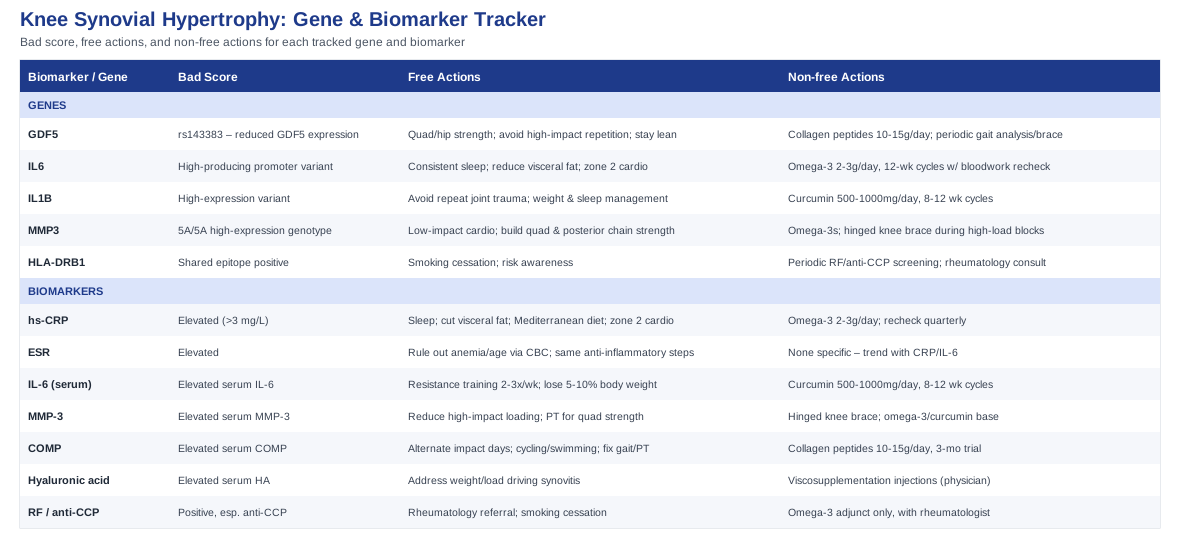
7 Biomarkers That Reveal What's Happening Inside Your Knee
Imaging tells you that the synovium is thickened. Bloodwork tells you something imaging can't: whether that thickening reflects active, ongoing inflammation, slow mechanical cartilage wear, or an autoimmune process that needs an entirely different treatment plan. The following seven markers are the ones most worth tracking together, rather than in isolation, because each one answers a slightly different question.
High-Sensitivity CRP (hs-CRP)
hs-CRP is a general marker of systemic low-grade inflammation produced by the liver in response to interleukin-6 signaling. In knee osteoarthritis, even modest elevations in CRP have been associated with more synovial inflammation and faster radiographic progression, which makes it a useful, cheap early signal rather than a diagnostic tool on its own Spector et al., Arthritis Rheum 1997.
How to measure it: A standard hs-CRP blood draw, available through any primary care provider or direct-to-consumer lab service. Cost typically runs $15 to $40 out of pocket, or is bundled into a metabolic panel by insurance. Fasting is not required.
If it's elevated, the plan without supplements: Prioritize sleep consistency and reduce visceral fat, since adipose tissue is itself a source of inflammatory cytokines that feed into CRP. Shifting toward a Mediterranean-style eating pattern, cutting refined sugar and ultra-processed food, and adding two to three weekly sessions of zone 2 cardio tend to lower CRP over 8 to 12 weeks in people whose elevation is metabolically driven rather than autoimmune.
If it's elevated, the plan with supplements or equipment: Omega-3 fatty acids (2 to 3 grams EPA/DHA daily with food) have the most consistent evidence for modestly lowering CRP over 12 weeks; reassess levels quarterly rather than monthly, since CRP is noisy week to week. Side effects are mild and mostly gastrointestinal; fish-oil supplements can mildly increase bleeding risk at high doses, so people on anticoagulants should check with their prescriber first.
Erythrocyte Sedimentation Rate (ESR)
ESR is an older, less specific marker than CRP, but it moves more slowly and can capture a different time window of inflammation, which is why rheumatologists often order both together rather than either alone. A normal CRP with an elevated ESR (or vice versa) is itself a useful clue that prompts a closer look rather than a reason to ignore either result.
How to measure it: A basic blood draw, almost always run alongside CRP for $10 to $25.
If it's elevated, the plan without supplements: Because ESR rises with age, anemia, and pregnancy independent of joint disease, the first step is ruling out those confounders with a basic complete blood count, not adjusting your knee routine. If joint-related, the same anti-inflammatory lifestyle steps described for CRP apply.
If it's elevated, the plan with supplements or equipment: There's no supplement that reliably targets ESR specifically; it should be treated as a companion number to CRP and IL-6, not optimized on its own.
Interleukin-6 (IL-6)
IL-6 is one of the more direct drivers of synovial inflammation and is upstream of CRP production. Population studies have found IL-6 to be a significant independent predictor of radiographic knee osteoarthritis, suggesting it reflects joint-specific biology more precisely than CRP alone Livshits et al., the Chingford Study, Arthritis Rheum 2009.
How to measure it: Serum IL-6 is a specialty test, typically $50 to $150, and not always available through standard commercial labs; a physician referral or a longevity-focused lab panel is usually the easiest route.
If it's elevated, the plan without supplements: Resistance training two to three times weekly has one of the better evidence bases for lowering circulating IL-6 over months, likely through improved insulin sensitivity and reduced visceral fat. Weight loss of even 5 to 10% of body weight in people carrying excess weight tends to move IL-6 meaningfully.
If it's elevated, the plan with supplements or equipment: Curcumin (500 to 1000 mg daily, taken with piperine or a phospholipid formulation for absorption) has trial evidence for reducing inflammatory markers and knee pain scores in osteoarthritis; cycle for 8 to 12 weeks, then reassess, since long-term safety data beyond a year is limited. Mild GI upset is the most common side effect; curcumin can also interact with anticoagulants and should be paused before surgery.
Matrix Metalloproteinase-3 (MMP-3 / Stromelysin-1)
MMP-3 is produced by synovial cells and chondrocytes and directly degrades cartilage matrix components. Elevated synovial fluid and serum MMP-3 has been documented in both osteoarthritis and rheumatoid arthritis, making it a fairly direct readout of active joint tissue breakdown rather than general systemic inflammation Tchetverikov et al., Ann Rheum Dis 2005.
How to measure it: A specialty serum test, generally $80 to $200, most commonly ordered by a rheumatologist rather than a primary care physician.
If it's elevated, the plan without supplements: Reducing high-impact loading (running on hard surfaces, deep repetitive squatting under heavy load) while maintaining low-impact strength work protects cartilage from further mechanical breakdown without deconditioning the joint. Physical therapy focused on quadriceps strength has been shown to reduce joint loading forces during gait.
If it's elevated, the plan with supplements or equipment: There's no supplement with strong evidence for directly lowering MMP-3, though the same omega-3 and curcumin protocols above have some mechanistic rationale. A hinged knee brace during high-load activity can reduce shear forces on the synovium and cartilage in the short term; this is a situational tool, not a daily requirement, and prolonged bracing without strengthening work can lead to quadriceps deconditioning.
Cartilage Oligomeric Matrix Protein (COMP)
COMP is a structural cartilage protein released into circulation as cartilage turns over. Elevated serum COMP has been studied as a marker of cartilage matrix degradation and disease progression risk in knee osteoarthritis Verma & Dalal, J Orthop Res 2011.
How to measure it: A specialty test, roughly $100 to $250, generally used in research or specialist settings rather than routine primary care.
If it's elevated, the plan without supplements: Load management is again central — alternating higher and lower impact training days, prioritizing cycling or swimming over running when COMP trends upward, and addressing biomechanical issues like quadriceps weakness or gait asymmetry with a physical therapist.
If it's elevated, the plan with supplements or equipment: Collagen peptides (10 to 15 grams daily, typically hydrolyzed type II or undenatured type II collagen) have modest trial support for cartilage-related symptom improvement, though effects on COMP levels specifically are less well established; a reasonable trial period is 3 months before judging effect. Side effects are minimal; people with fish or bovine allergies should check the collagen source.
Serum Hyaluronic Acid (HA)
Hyaluronic acid is a major component of both cartilage matrix and synovial fluid. Higher serum HA has been associated with radiographic progression of knee osteoarthritis, likely reflecting increased synovial turnover and permeability during active inflammation Sharif et al., Arthritis Rheum 1995.
How to measure it: A specialty serum test, $75 to $180, most useful when trended over time rather than interpreted as a single snapshot.
If it's elevated, the plan without supplements: Since elevated serum HA tracks with active synovitis rather than a fixable risk factor per se, the priority is addressing the underlying inflammatory driver — often the same weight, load, and metabolic factors described above — rather than trying to lower HA directly.
If it's elevated, the plan with supplements or equipment: Intra-articular hyaluronic acid injections (viscosupplementation) are a clinical option for symptomatic relief in some knee osteoarthritis patients, typically administered as a series of 1 to 5 weekly injections by a physician; evidence for meaningful benefit is mixed and effect sizes are generally modest, so this is worth a specific conversation with an orthopedist about whether it fits your case rather than a self-directed step.
Rheumatoid Factor (RF) and Anti-CCP Antibodies
This pairing matters because it changes the entire management path. RF and anti-CCP (anti-cyclic citrullinated peptide) antibodies help distinguish autoimmune-driven synovitis, such as rheumatoid arthritis, from mechanical or osteoarthritic synovial hypertrophy. Anti-CCP in particular carries high specificity for rheumatoid arthritis, making it a more reliable rule-in test than RF alone Nishimura et al., Ann Intern Med 2007.
How to measure it: A standard blood panel, $40 to $120 depending on whether both markers are ordered together, usually through a primary care or rheumatology referral.
If it's positive, the plan without supplements: A positive result, especially anti-CCP, warrants a rheumatology referral rather than a self-managed lifestyle plan, since autoimmune synovitis typically requires disease-modifying treatment to prevent joint damage. Lifestyle steps like smoking cessation are still relevant, since smoking is a known amplifier of anti-CCP-positive rheumatoid arthritis risk and severity.
If it's positive, the plan with supplements or equipment: Supplements are not a substitute for disease-modifying therapy in confirmed autoimmune synovitis. Omega-3s have some evidence as an adjunct to reduce inflammatory symptoms alongside standard treatment, not in place of it, and should be discussed with the treating rheumatologist rather than self-prescribed.
What Your Genes May Be Telling You
Bloodwork shows what's happening now. Genetics helps explain why some knees are more prone to synovial inflammation in the first place, and researchers like Ali Torkamani, who has written extensively on genetic risk prediction, and Gary Brecka, known for popularizing accessible genetic panel interpretation, have helped bring this kind of variant-level thinking to a broader audience. The evidence quality varies considerably by gene, and that's worth being upfront about rather than glossing over.
GDF5
GDF5 (growth differentiation factor 5) is involved in cartilage and joint tissue formation. A specific promoter variant (rs143383) reduces GDF5 expression and has been repeatedly associated with osteoarthritis susceptibility across multiple populations, making it one of the better-replicated osteoarthritis risk genes identified through genome-wide studies Miyamoto et al., Nature Genetics 2007.
If the gene is unfavorable, the plan without supplements centers on protecting cartilage that starts with a structural disadvantage: prioritizing quadriceps and hip strength to reduce joint loading, avoiding prolonged high-impact repetitive stress, and maintaining a lean body composition, since every extra kilogram meaningfully multiplies force across the knee during gait.
If the gene is unfavorable, the plan with supplements or equipment involves collagen peptides (10 to 15 grams daily, 3-month trial blocks) and, for those with access, periodic gait analysis or a knee brace during high-load sports seasons. There's no way to change GDF5 expression directly with a supplement; the goal here is compensating for a cartilage-formation disadvantage through mechanical protection, not correcting the gene itself.
IL6
Variants in the IL6 gene promoter region influence how much interleukin-6 is produced in response to inflammatory triggers, and higher-producing variants have been studied in relation to osteoarthritis severity and systemic inflammatory tone. Evidence here is more mixed across populations than for GDF5, so this should be read as a contributing factor rather than a determinative one.
If the gene is unfavorable, the plan without supplements leans on the same anti-inflammatory lifestyle foundation described for elevated IL-6 bloodwork: consistent sleep, reduced visceral fat, and regular zone 2 cardio, since these levers influence cytokine production regardless of genetic baseline.
If the gene is unfavorable, the plan with supplements or equipment adds omega-3 fatty acids (2 to 3 grams daily) as the best-evidenced option, cycling 12 weeks on with bloodwork reassessment before continuing, since chronic high-dose fish oil use should be periodically reviewed with a physician, particularly regarding bleeding risk.
IL1B
IL1B encodes interleukin-1 beta, a cytokine that plays a central role in triggering synovial inflammation and cartilage-degrading enzyme production, including MMP-3. Variants affecting IL1B expression have been studied as modifiers of osteoarthritis risk and inflammatory arthritis severity, though again with more heterogeneity across studies than headline reporting sometimes suggests.
If the gene is unfavorable, the plan without supplements emphasizes minimizing repeated joint trauma (a single significant knee injury dramatically raises later osteoarthritis risk on its own, and this effect appears to compound with an IL1B-driven inflammatory tendency), along with weight management and sleep quality, both of which modulate IL-1 pathway activity indirectly.
If the gene is unfavorable, the plan with supplements or equipment includes curcumin (500 to 1000 mg daily with an absorption enhancer, 8 to 12 week cycles) given its mechanistic action on the same inflammatory pathways IL1B feeds into. Side effects remain mild GI symptoms and anticoagulant interactions at higher doses.
MMP3
A promoter polymorphism in MMP3 (the 5A/6A variant) affects how much stromelysin-1 enzyme is produced, directly influencing the rate of cartilage and synovial matrix breakdown described earlier in the biomarker section. This creates a useful gene-to-biomarker link: people carrying the higher-expression variant may be more prone to elevated serum MMP-3 under joint stress.
If the gene is unfavorable, the plan without supplements is essentially a load-management strategy — favoring lower-impact cardio modalities, building quadriceps and posterior chain strength to absorb force before it reaches cartilage, and avoiding sudden spikes in training volume or intensity that outpace tissue adaptation.
If the gene is unfavorable, the plan with supplements or equipment mirrors the MMP-3 biomarker protocol: omega-3s as a general anti-inflammatory base, and situational use of a hinged knee brace during high-load activity blocks rather than as a permanent daily device, since continuous bracing without accompanying strength work can weaken the muscles that would otherwise protect the joint.
HLA-DRB1
HLA-DRB1, specifically the "shared epitope" variants, is the strongest known genetic risk factor for rheumatoid arthritis, an autoimmune condition that can present as knee synovial hypertrophy well before other joints are affected. This is a case where genetic risk should prompt closer monitoring of the RF and anti-CCP biomarkers above rather than an attempt at lifestyle compensation.
If the gene is unfavorable, the plan without supplements is primarily about risk awareness and smoking cessation, since smoking has a well-documented interaction effect with the shared epitope that substantially raises rheumatoid arthritis risk and severity, more so than almost any other modifiable factor identified for this condition.
If the gene is unfavorable, the plan with supplements or equipment is limited: there is no supplement protocol that offsets HLA-DRB1-associated autoimmune risk, and appropriate management here is periodic RF/anti-CCP screening combined with a rheumatology consult if joint swelling becomes persistent or symmetric, not a self-directed regimen.
The Book That Reframes How We Think About Aging Joints
Peter Attia's Outlive: The Science and Art of Longevity isn't a knee-specific book, but its central argument directly challenges how most people, and many doctors, think about joint health: rather than waiting for pain or imaging findings to force a reaction, Attia argues joints should be trained proactively, years before problems appear, as part of what he calls the "marginal decade." Here are ten of its most relevant points for anyone dealing with knee synovial inflammation.
1. The "Centenarian Decathlon" Concept
Attia proposes working backward from the physical tasks you want to be able to do in your 80s and 90s — carrying groceries, getting up off the floor, hiking — and training for those specific capacities decades in advance, rather than waiting until decline forces a reaction.
2. Medicine 3.0 vs. Reactive Medicine
He draws a sharp distinction between "Medicine 2.0," which waits for disease markers to cross a threshold before acting, and "Medicine 3.0," which treats risk markers — including inflammatory and structural joint markers — as early signals worth acting on years before a diagnosis is formalized.
3. Stability as a Fourth Pillar of Exercise
Alongside strength, cardiorespiratory fitness, and stability training, Attia elevates joint stability to equal importance with the other three, arguing that poor stability around joints like the knee is an underappreciated driver of long-term degeneration and injury recurrence.
4. Muscle Mass Is Structural Insurance
He frames muscle, particularly around the hips and quadriceps, as direct mechanical protection for the knee joint, not merely an aesthetic or metabolic asset — a reframing that pushes back against advice that treats strength training as optional for joint-limited patients.
5. VO2 Max as a Longevity Lever
While not knee-specific, Attia's emphasis on VO2 max training (including zone 2 and interval work) matters here because sustained aerobic capacity supports the metabolic and anti-inflammatory environment that keeps synovial tissue healthier over decades.
6. Avoiding the "Injury Spiral"
He describes how a single injury-driven period of inactivity can trigger a cascading loss of strength and stability that raises the risk of the next injury, arguing that rehabilitation should aggressively prioritize returning to loaded movement rather than prolonged rest.
7. Emotional Health as a Modifiable Risk Factor
Attia connects chronic stress and poor emotional health to worse physical outcomes generally, including adherence to the very training and recovery habits that protect joints over time.
8. Nutritional Framing Over Rigid Diets
Rather than prescribing one diet, he frames nutrition around protein sufficiency (particularly important for maintaining the muscle mass discussed above) and metabolic health markers, which loops back directly into the inflammatory biomarkers discussed earlier in this article.
9. Sleep as a Recovery Non-Negotiable
He treats sleep quality as a foundational recovery input on par with training itself, directly relevant to synovial tissue given the role of sleep in regulating systemic inflammatory tone.
10. Start the Marginal Decade Decisions Now, Not Later
Perhaps the book's most challenging idea for conventional medical thinking: the decisions that determine knee function in your 80s are made through training and monitoring choices in your 40s and 50s, not through treatment choices made after damage is already visible on imaging.
Complementary Approaches With Real Evidence Behind Them
Beyond bloodwork, genetics, and structured training, a handful of complementary modalities have specific clinical trial evidence in knee osteoarthritis and synovial inflammation, rather than general wellness claims. The following four have the clearest condition-specific support.
Tai Chi
Tai chi is a slow, low-impact movement practice combining weight shifting, controlled balance, and breath coordination, which makes it particularly well suited to a joint that needs loading without high-impact stress. For knee osteoarthritis specifically, it addresses both the strength and proprioceptive deficits that accompany synovial inflammation without aggravating the joint further.
A well-designed comparative trial found tai chi to be at least as effective as standard physical therapy for reducing knee osteoarthritis pain and improving function over 12 weeks Wang et al., Annals of Internal Medicine 2016.
A realistic approach is two structured 60-minute classes per week for at least 12 weeks before judging effect, ideally through an instructor experienced with osteoarthritis populations rather than a general class, since pacing and range of motion should be adapted around a swollen or stiff knee.
Yoga
Yoga combines gentle joint loading through supported postures with a strong stretching and flexibility component, which can help address the stiffness and limited range of motion that often accompanies synovial hypertrophy alongside pain itself.
A trial of Iyengar-style yoga, which uses props to support and modify poses for people with joint limitations, found meaningful improvements in knee osteoarthritis symptoms over an 8-week program Kolasinski et al., Journal of Alternative and Complementary Medicine 2005.
For a knee with active swelling, a prop-supported style like Iyengar or a therapeutic yoga class specifically marketed for joint conditions is a safer starting point than a general vinyasa class, and poses that involve deep unsupported knee flexion should be modified or avoided during active flares.
Low-Level Laser Therapy (Photobiomodulation)
Low-level laser therapy applies specific wavelengths of light to tissue with the aim of modulating local inflammation and cellular repair processes, and it has been studied specifically as a non-drug option for knee osteoarthritis pain and function.
A systematic review found low-level laser therapy delivered at appropriate doses produced meaningful reductions in knee osteoarthritis pain compared to placebo, though effect size varied by device parameters and treatment protocol Bjordal et al., Australian Journal of Physiotherapy 2007.
In practice, this generally means a series of in-clinic sessions (commonly two to three times weekly for several weeks) delivered by a physical therapist or chiropractor with a clinical-grade device, since consumer-grade devices vary widely in the wavelength and dose parameters that the supporting evidence is based on.
Massage Therapy
Massage therapy applies manual pressure to the muscles surrounding the knee, which may reduce protective muscle guarding, improve local circulation, and modestly reduce pain perception associated with synovial inflammation, without directly acting on the joint capsule itself.
A dose-finding randomized trial found a 60-minute weekly massage protocol produced meaningful improvements in knee osteoarthritis pain and function over an 8-week course, with shorter or less frequent sessions showing smaller effects Perlman et al., PLoS One 2012.
A reasonable starting protocol is a weekly 60-minute session for 8 weeks with a therapist experienced in orthopedic or sports massage, tapering to biweekly maintenance sessions if symptoms improve, and pausing during any period of acute joint swelling or suspected infection, when direct massage over the joint is not appropriate.
The Bottom Line
A thickened, inflamed synovium in the knee isn't one condition with one fix — it's a signal that can come from mechanical wear, low-grade metabolic inflammation, a genetic predisposition toward weaker cartilage or a hotter immune response, or in some cases an autoimmune process that needs its own treatment path entirely. The seven biomarkers covered here give you a way to tell those apart and to track whether specific changes are actually moving the needle, rather than guessing. The genetic variants add context for why your knee might respond differently to the same inputs as someone else's, without changing the fact that load management, strength, and sleep remain the foundation regardless of genotype.
The next smart step is a concrete one: get a baseline hs-CRP, IL-6, and RF/anti-CCP panel if you haven't already, track how your symptoms move alongside those numbers over the next few months, and bring both the results and this framework to a conversation with your physician or a rheumatologist if RF, anti-CCP, or persistent swelling are in the picture. That conversation, grounded in your actual numbers rather than general advice, is where a real plan starts.