This article contains AI generated content.
· UpdatedLambert-Eaton Myasthenic Syndrome: 4 Genes And 6 Biomarkers To Track
If you or someone you love has been told "it's probably just fatigue" or "your reflexes are a little slow, let's watch it," while proximal weakness quietly gets worse through the day and then oddly improves after a few seconds of effort, you already know that Lambert-Eaton myasthenic syndrome (LEMS) does not behave like ordinary tiredness. It is a rare, antibody-driven disease, and the people living with it are usually more informed than the average clinician they first meet, simply because so few clinicians see more than one or two cases in a career.
Generic advice about "supporting the immune system" or "managing autoimmune fatigue" is not wrong, exactly — it is just built for a much broader population and misses what makes LEMS specific: an autoantibody attack on a particular calcium channel at the nerve terminal, a strong statistical link to small-cell lung cancer, and a small but real genetic susceptibility signature in people who do not have a tumor. Advice that does not distinguish between these mechanisms cannot tell you which lab test actually matters this year, or why your neurologist keeps ordering chest imaging even though your main complaint is leg weakness.
This article takes the more specific route. It walks through the antibodies, the electrodiagnostic pattern, and the imaging that together form the real biomarker picture of LEMS, and it looks honestly at the genetic and immune-susceptibility research — including where the evidence is solid and where it is still early. None of this replaces a neurologist or oncologist, and nothing here promises to reverse the underlying autoimmunity. But knowing exactly which markers exist, what they can and cannot tell you, and which questions to bring to your next appointment is a concrete form of progress. The sections ahead cover the six biomarkers worth tracking, the four genetic and immune-susceptibility factors with meaningful human evidence, a set of ideas from immune-nervous system research worth knowing about, and a short, honest look at complementary approaches that may support quality of life alongside — never instead of — standard treatment.
Summary
Lambert-Eaton myasthenic syndrome comes down to one core event: antibodies block P/Q-type voltage-gated calcium channels at the nerve terminal, so less acetylcholine gets released and muscles fire weaker than they should. Everything useful for tracking this disease flows from that single fact — which antibodies are present, how the nerve responds to repeated stimulation, and whether a hidden small-cell lung cancer is driving the whole process. Below, you will find the six biomarkers clinicians and researchers actually use to diagnose LEMS, monitor its course, and screen for the cancer that accompanies roughly half of all cases, each with realistic detail on cost, meaning, and what may improve it. You will also find the four genetic and immune-susceptibility factors — HLA haplotypes, the CACNA1A channel gene itself, the SOX1 gene tied to the paraneoplastic form, and the autoimmunity gene PTPN22 — with an honest read on how strong that evidence actually is. Beyond the lab work, there is a look at what nervous-system-immune research suggests about supporting overall resilience, and a review of complementary approaches with real, if limited, human evidence for neuromuscular and autoimmune conditions like this one.
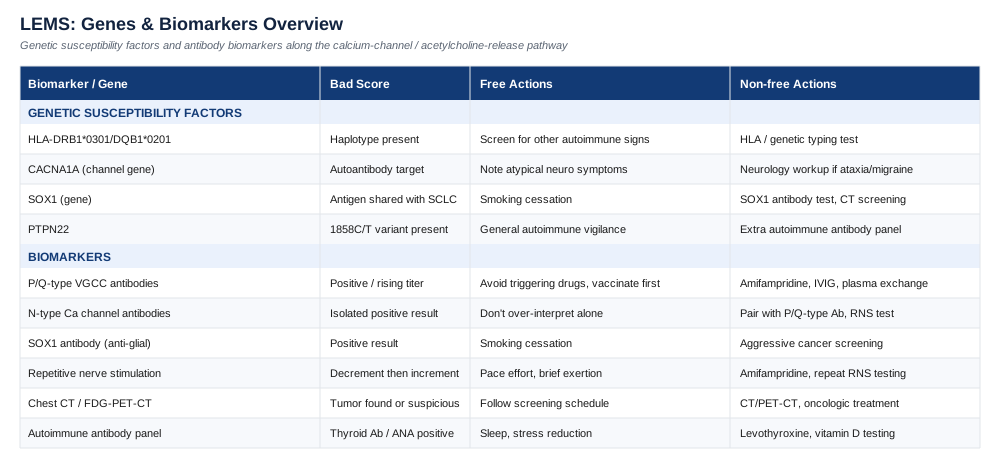
6 Biomarkers Worth Tracking In Lambert-Eaton Myasthenic Syndrome
LEMS is fundamentally a disease you track with antibodies, electrical signals, and imaging rather than with routine bloodwork. That makes the biomarker list shorter and more specialized than for conditions like cardiovascular disease, but each one carries real diagnostic and monitoring weight. Below are the six that matter most, roughly in the order a neurologist would use them.
1. P/Q-Type Voltage-Gated Calcium Channel (VGCC) Antibodies
This is the defining biomarker of LEMS. The P/Q-type VGCC sits on the presynaptic nerve terminal and controls calcium influx that triggers acetylcholine release; antibodies against it are detectable in roughly 85 to 90 percent of people with LEMS, and in nearly all cases where small-cell lung cancer (SCLC) is also present, according to the StatPearls clinical review of LEMS. A positive result in the right clinical context is close to diagnostic; a negative result does not rule LEMS out, since a meaningful minority of clinically confirmed cases remain seronegative.
How to measure it
This is a blood draw sent to a specialized neuroimmunology or reference laboratory (for example, Mayo Clinic Laboratories or Athena Diagnostics in the US), usually ordered as part of a paraneoplastic or myasthenic antibody panel. Cost through insurance is typically a standard specialty lab copay; self-pay pricing for the full panel generally runs in the $200 to $500 range depending on the lab and whether it is bundled with other autoantibodies. Turnaround is usually one to two weeks.If the score is bad, the plan without supplements
A positive or rising titer is not something lifestyle changes reverse — the antibody is produced by autoreactive B cells and, in the paraneoplastic form, driven by the tumor itself. The non-pharmacological, non-supplement steps that matter are indirect: prompt cancer screening and treatment when SCLC is found (tumor treatment often reduces antibody-driven symptoms), avoidance of medications that worsen neuromuscular transmission (certain calcium channel blockers, aminoglycoside antibiotics, magnesium infusions, and some anesthetic agents), and staying current with vaccinations before any immunosuppression is started, since immune-modulating therapy makes some vaccines less effective or contraindicated afterward.If the score is bad, the plan with supplements or equipment
There is no supplement that lowers VGCC antibody titers. Medical management is drug-based: 3,4-diaminopyridine (amifampridine) improves neuromuscular transmission by blocking potassion channels and prolonging depolarization, and a meta-analysis of randomized trials found it measurably improves compound muscle action potential amplitude and quantitative myasthenia gravis scores compared with placebo, per the 2021 meta-analysis of amifampridine trials. For antibody-driven disease that does not respond adequately, immunosuppression (prednisone, azathioprine), IVIG, or plasma exchange are used under specialist supervision — these are prescription and procedural interventions, not something to self-manage, and each carries its own monitoring schedule and side-effect profile that your neurologist will set.2. N-Type Calcium Channel Antibodies
N-type channel antibodies show up in roughly half of LEMS patients and represent an immune response related to, but distinct from, the P/Q-type response. For years these were tested alongside P/Q antibodies on the assumption that a broader panel would catch more cases, but recent evidence has questioned that logic.
How to measure it
Same blood draw, usually bundled into the same paraneoplastic antibody panel as the P/Q-type test, so there is rarely an additional cost if ordered together. Recent data suggests this test adds limited diagnostic value on its own — one 2024 analysis found isolated N-type positivity was actually more common in controls than in confirmed LEMS patients, per this PubMed-indexed study on N-type VGCC antibody utility. It is worth tracking anyway when it is already part of the panel, since longitudinal research on calcium channel antibody evolution suggests its trajectory can add context during follow-up, even if it should not be used alone to confirm or exclude a diagnosis.If the score is bad, the plan without supplements
Treat this result as supporting context rather than an independent target. If P/Q-type antibodies are negative but N-type is positive, the sensible non-drug step is simply not to over-interpret it — push for repetitive nerve stimulation testing and clinical follow-up rather than chasing this number in isolation.If the score is bad, the plan with supplements or equipment
No specific treatment targets N-type antibodies separately from the broader immunomodulatory approach used for P/Q-type disease (described above). There is no equipment or supplement protocol tied to this marker specifically.3. SOX1 (Anti-Glial Nuclear) Antibodies
SOX1 antibodies target a transcription factor expressed in cerebellar tissue and, importantly, in small-cell lung cancer tissue. They are found almost exclusively in the paraneoplastic (cancer-associated) form of LEMS, which makes this one of the more clinically actionable markers on this list: a positive result should prompt aggressive cancer screening even before imaging finds anything.
How to measure it
Blood test, typically part of the same specialized paraneoplastic panel discussed above, adding roughly $100 to $200 if billed separately. The original study establishing SOX1 as a screening marker for SCLC in LEMS found high specificity for underlying malignancy, and case reports such as this documented case of SOX1-positive LEMS with occult small-cell lung cancer illustrate why this marker changes clinical management, not just diagnostic confidence.If the score is bad, the plan without supplements
A positive SOX1 result is an instruction to intensify cancer surveillance, not a target for lifestyle intervention. The non-drug plan is entirely about screening cadence: smoking cessation if applicable (SCLC is overwhelmingly a smoking-related cancer), and committing to the imaging schedule described under biomarker 5 below.If the score is bad, the plan with supplements or equipment
There is no supplement or device that changes a SOX1 result. If a tumor is identified, oncologic treatment (chemotherapy, radiation, or surgery depending on stage) is the intervention, and successful tumor treatment is associated with improvement in the neurological syndrome in many cases.4. Repetitive Nerve Stimulation (RNS) Pattern
This is the single most useful non-blood biomarker in LEMS and, in many centers, the test that actually confirms the diagnosis when antibody testing is ambiguous. The classic pattern is a low resting compound muscle action potential (CMAP) that decrements with low-frequency stimulation (2 to 5 Hz) and then increments sharply — often by 60 to 100 percent or more — after brief maximal voluntary contraction or high-frequency stimulation (20 to 50 Hz). A formal review of electrophysiological diagnostic criteria found this increment pattern present in roughly 97 percent of confirmed cases when standard thresholds were used, and more recent work on lowering the diagnostic increment cutoff has improved sensitivity further.
How to measure it
This is an in-clinic electrodiagnostic study performed by a neurologist or neurophysiologist, generally taking 30 to 60 minutes. Cost through insurance is usually a standard specialist procedure copay; self-pay pricing typically falls between $300 and $800 depending on region and whether it is combined with a nerve conduction study. Brief maximal voluntary contraction is now often preferred over high-frequency electrical stimulation for the post-exercise portion, since it is at least as sensitive and considerably less painful.If the score is bad, the plan without supplements
An abnormal RNS pattern reflects the underlying calcium-channel block directly, so it will not normalize through diet, sleep, or exercise changes on their own. The realistic non-drug step is pacing: spreading physical effort across the day, since the paradoxical post-exercise facilitation in LEMS means brief, low-intensity movement can transiently improve strength, while sustained exertion tends to worsen fatigue afterward.If the score is bad, the plan with supplements or equipment
The same medical treatments that address VGCC antibodies (amifampridine, pyridostigmine as an adjunct, or immunosuppression) are what improve this electrophysiological pattern over time; repeat RNS testing is sometimes used to gauge treatment response.5. Chest CT / FDG-PET-CT Imaging For Small-Cell Lung Cancer
Because roughly half of LEMS cases are paraneoplastic and driven by SCLC, and because the cancer is found within a year of the neurological diagnosis in the large majority of cases, imaging functions as a critical biomarker in its own right — not an afterthought. The landmark Dutch follow-up study of LEMS patients screened for SCLC found CT of the thorax detected 93 percent of tumors, far outperforming chest X-ray at 51 percent, and found that 92 percent of cancers appeared within three months and 96 percent within one year of the LEMS diagnosis. FDG-PET adds value in select cases where CT is negative but suspicion remains high, and current oncology guidance, summarized in the NCCN small-cell lung cancer practice guidelines, recommends a full paraneoplastic antibody workup whenever a paraneoplastic neurological syndrome is suspected.
How to measure it
CT chest is widely available; self-pay cost typically runs $300 to $1,200 depending on contrast use and region. FDG-PET-CT is considerably more expensive, often $1,500 to $5,000 self-pay, and is generally reserved for cases where CT is inconclusive. The recommended protocol after a new LEMS diagnosis is CT chest at diagnosis, repeated every 3 to 6 months for the first year if initially negative, since this is the window in which most occult tumors surface, as documented in the review of paraneoplastic syndromes in small-cell lung cancer.If the score is bad, the plan without supplements
If imaging is negative, the non-drug commitment is simply adherence to the repeat screening schedule for at least a year, plus smoking cessation, since active smoking is the dominant modifiable risk factor for the cancer this screening is designed to catch.If the score is bad, the plan with supplements or equipment
If a tumor is found, treatment is oncologic, not nutritional or supplement-based, and is coordinated by an oncology team. No equipment or supplement protocol substitutes for this.6. Comorbid Autoimmune Antibody Panel
Non-tumor LEMS clusters with other autoimmune conditions — autoimmune thyroid disease, type 1 diabetes, vitiligo, and pernicious anemia among them — more often than chance would predict, which is part of why the HLA associations discussed in the genetics section exist at all. A broader autoimmune screen (thyroid peroxidase antibodies, TSH, antinuclear antibody, and intrinsic factor or parietal cell antibodies where indicated) is useful less as a LEMS-specific marker and more as a way of catching overlapping, treatable conditions early.
How to measure it
Standard blood panel available through any primary care or endocrinology visit. Self-pay cost for a basic thyroid antibody and ANA panel is typically $50 to $150. This is far cheaper and more accessible than the specialized neuroimmunology panels above, and is a reasonable annual check for anyone with confirmed non-tumor LEMS.If the score is bad, the plan without supplements
If thyroid antibodies or ANA come back positive, the non-drug steps mirror standard autoimmune disease management: adequate sleep, stress reduction (chronic stress measurably shifts immune signaling), and avoidance of known triggers such as excess iodine intake in autoimmune thyroiditis. These do not resolve antibody positivity but support overall regulation.If the score is bad, the plan with supplements or equipment
Management follows the specific comorbid condition — levothyroxine for hypothyroid autoimmune thyroiditis, for instance — prescribed and monitored by the relevant specialist. Vitamin D sufficiency (testing 25-hydroxyvitamin D, generally $40 to $80 self-pay, and supplementing to a normal range if deficient) is a reasonable, low-risk adjunct given its broad role in immune regulation, typically dosed at 1,000 to 2,000 IU daily and retested every 3 to 6 months, with the main side effect risk being hypercalcemia at excessive doses over prolonged periods.Taken together, these six markers tell a coherent story: two antibody tests establish the core mechanism, one antibody test flags cancer risk specifically, one electrical test confirms the physiological pattern, one imaging protocol hunts for the tumor that often drives everything, and one broader panel catches the autoimmune company LEMS sometimes keeps. That same underlying mechanism — antibodies against the P/Q-type channel — is also where the genetic story starts.
4 Genes And Immune-Susceptibility Factors Behind Lambert-Eaton Myasthenic Syndrome
LEMS is not a classic inherited disease the way cystic fibrosis or Huntington's disease is — nobody inherits LEMS itself. What does have real, if modest, genetic backing is susceptibility: certain gene variants make it statistically more likely that a person's immune system will misfire against the calcium channel in the first place, particularly in the non-tumor form of the disease. People who explore consumer genomic data the way researchers like Ali Torkamani have written about, or the way Gary Brecka discusses in his functional-genomics interviews, are usually looking for exactly this kind of susceptibility signal rather than a deterministic diagnosis — and that framing fits LEMS well. Below are the four factors with the most credible human evidence.
1. HLA-DRB1*0301 / DQB1*0201 (The DR3-DQ2 Haplotype)
This is the strongest genetic signal in LEMS, and it is specific to the non-tumor form of the disease. A study of HLA class II alleles in non-cancer LEMS found a significantly increased frequency of DRB1*0301 and DQB1*0201 compared with controls, and a related analysis of HLA class I and II in tumor-free LEMS confirmed the association extends to roughly two-thirds of non-tumor patients carrying this extended haplotype, compared to about a third of the general population. Carriers also tend to have younger age of onset and a higher proportion of women. Critically, this association is not seen in paraneoplastic LEMS, which reinforces that the two forms of the disease, while symptomatically similar, have different root drivers.
2. CACNA1A (The P/Q-Type Calcium Channel Gene Itself)
CACNA1A encodes the alpha-1A subunit of the very channel that LEMS antibodies attack. This is not a susceptibility gene in the classic sense — it is the target, not the trigger — but it matters for two reasons. First, research using patient-derived antibodies confirmed that IgG from LEMS patients causes a dose-dependent reduction in current specifically through cell lines expressing the alpha-1A subunit, directly implicating this gene product as the autoimmune target, as shown in this human antibody study on alpha-1A calcium channel function. Second, rare inherited CACNA1A mutations independently cause episodic ataxia type 2 and familial hemiplegic migraine, and there is at least one documented case of LEMS-like presentation associated with structural chromosomal variation near this region, which is why neurologists occasionally consider CACNA1A-related channelopathies in the differential when a presentation is atypical.
3. SOX1
The gene encoding SOX1 — the same transcription factor targeted by the antibody biomarker discussed above — is expressed in cerebellar Purkinje cells and, notably, in small-cell lung cancer tissue. This shared expression is thought to be the mechanistic reason SOX1 antibodies arise in paraneoplastic LEMS at all: the tumor aberrantly expresses a neural antigen, the immune system mounts a response against it, and that response cross-reacts with healthy neural tissue. This is molecular mimicry rather than inherited susceptibility, but it is worth understanding because it explains why SOX1 positivity is a cancer signal rather than a general autoimmune-risk marker the way the HLA haplotype is.
4. PTPN22
PTPN22 encodes a lymphoid tyrosine phosphatase that regulates T-cell receptor signaling, and its 1858C/T variant is one of the most consistently replicated non-HLA autoimmunity risk genes across multiple conditions, as described in this review calling PTPN22 the archetypal non-HLA autoimmunity gene. It has been specifically linked to myasthenia gravis, the neuromuscular junction disease most often confused with LEMS, and a broader comprehensive review of PTPN22 polymorphisms in autoimmune disease situates it as a general risk-amplifying variant rather than a disease-specific one. Direct human data linking PTPN22 to LEMS specifically is thin — this is an area of early, extrapolated evidence rather than LEMS-confirmed research, and it should be read that way. It is included here because it is the kind of variant that shows up on consumer genetic panels and prompts exactly the reasonable question this article is trying to answer: does having it mean anything actionable?
If The Gene Or Haplotype Looks Unfavorable: The Plan Without Supplements
None of these four factors are modifiable — you cannot change your HLA type, your CACNA1A sequence, or your PTPN22 genotype through diet or behavior. What a concerning genetic profile actually changes is vigilance, not biology. For someone who carries the DR3-DQ2 haplotype and has other autoimmune diagnoses in the family, the practical non-drug response is earlier and more frequent screening for autoimmune thyroid disease, type 1 diabetes markers, and other conditions in that cluster, plus general anti-inflammatory habits — adequate sleep, regular moderate movement, smoking avoidance, and stress management — that influence the broader autoimmune "threshold" rather than any single gene. Research into alternative autoimmune targets and compensatory mechanisms in LEMS also suggests the nervous system has some capacity to partially compensate for reduced calcium channel function through other calcium-handling pathways at the nerve terminal — which is a biological reason post-exercise facilitation exists, not something a person can train or enhance directly.
If The Score Is Bad: The Plan With Supplements Or Equipment
There is no supplement or device that corrects an HLA haplotype, silences PTPN22, or protects CACNA1A-encoded channels from autoimmune attack. Where equipment does play a legitimate, evidence-backed role is downstream of the genetics — in managing the actual disease once it is present — which loops back to the amifampridine, immunosuppression, and monitoring protocols described in the biomarker section above. Vitamin D testing and correction, as noted earlier, is the one broadly reasonable, low-cost, low-risk addition for anyone with a documented autoimmune-susceptibility genotype, given its role in T-cell regulation, dosed conservatively and rechecked periodically rather than taken indefinitely at high doses.
The genetic and biomarker pictures connect at exactly one point: both ultimately describe why and how the immune system decides to attack a calcium channel it normally ignores. Understanding that connection is also where broader nervous-system and immune research becomes genuinely useful, not just academically interesting.
What Nervous-System And Immune Research Suggests
Stanford neuroscientist Andrew Huberman's podcast episode "Using Your Nervous System to Enhance Your Immune System" is not about LEMS, and it should not be treated as LEMS-specific guidance. But it is unusually relevant background reading for anyone with an antibody-driven neuromuscular condition, because it lays out, with citations, how directly the nervous system and immune system talk to each other — and LEMS sits precisely at that intersection, since the disease itself is an immune attack on a nerve terminal's ability to release the neurotransmitter acetylcholine. Here are the ten points from that body of research most worth understanding, translated into what they mean (and do not mean) for someone tracking an autoimmune neuromuscular condition.
1. The Nervous System And Immune System Are Bidirectionally Wired
The vagus nerve and sympathetic pathways carry signals both ways between the brain and immune organs (spleen, gut-associated lymphoid tissue, bone marrow). This is the basic premise for why stress, sleep, and breathing state measurably shift immune activity — not a claim that they treat autoimmune disease, but a mechanistic reason they are not irrelevant to it either.2. Catecholamines Modulate Immune Cell Behavior
Adrenaline and noradrenaline, released during stress, exercise, cold exposure, and certain breathing patterns, directly influence how immune cells traffic and respond. For someone with an antibody-driven condition, this is a reason to avoid both chronic under-arousal and chronic overstimulation — the goal is regulation, not maximal activation.3. Sleep Is An Active Immune-Regulating State, Not Passive Rest
Deep sleep is when much of adaptive immune consolidation happens. For LEMS patients specifically, disrupted sleep from nocturnal dry mouth, autonomic symptoms, or discomfort deserves direct attention, not dismissal as a secondary complaint.4. Chronic Stress Shifts The Immune System Toward Dysregulation
Sustained cortisol elevation can blunt some immune functions while permitting others, including autoimmune activity, to persist. This is general immunology, not LEMS-specific evidence, but it is a reasonable argument for taking stress management seriously as an adjunct, not a treatment.5. Cold Exposure Raises Catecholamines — But Caution Applies Here
The podcast discusses brief cold exposure as a catecholamine-raising tool. For LEMS patients, many of whom have autonomic dysfunction (blood pressure changes, temperature regulation issues), this specific protocol should only be considered with a physician's clearance, since autonomic instability is a known feature of the disease.6. Breathing Patterns Can Shift Autonomic Balance In Minutes
Slow, extended-exhale breathing shifts the system toward parasympathetic dominance; faster, cyclic breathing raises sympathetic tone. This is a genuinely low-risk tool, and it overlaps directly with the respiratory training discussed in the complementary approaches section below.7. The Gut Microbiome Has A Measurable Immune Role
A meaningful portion of immune tissue resides in the gut, and microbiome composition influences systemic inflammatory tone. This is an active, evolving research area, and its relevance to LEMS specifically has not been directly studied — worth watching, not worth over-acting on yet.8. Light Exposure Timing Anchors Circadian Immune Rhythms
Morning light exposure helps set the cortisol and melatonin rhythms that partly govern daily immune fluctuation. This is a free, low-effort habit with no meaningful downside for a LEMS patient.9. Moderate, Not Maximal, Exercise Supports Immune Regulation
General immunology research favors moderate, consistent activity over exhaustive exertion, which can transiently suppress immune function. For LEMS, this dovetails with the clinical reality that brief, submaximal effort produces the paradoxical strength facilitation described earlier, while sustained maximal exertion tends to worsen post-exercise fatigue.10. None Of This Replaces Immunologic Or Oncologic Treatment
The episode itself is framed as general physiological education, not disease treatment — and that distinction matters more for LEMS than for almost any other condition on this list, given that a meaningful share of cases are driven by an underlying cancer that these lifestyle levers cannot address. Use this information to support overall regulation and quality of life alongside, never in place of, the antibody testing, imaging, and pharmacologic treatment described earlier.These nervous-system and immune concepts set up a natural bridge to the complementary practices that actually have some direct, if limited, human evidence in neuromuscular and autoimmune populations.
Complementary Approaches Worth Knowing About
None of the following treat LEMS or alter antibody levels, and none should replace amifampridine, immunosuppression, or oncologic care when indicated. They are included because each has some real human evidence in autoimmune disease or in the neuromuscular junction disorders closest to LEMS, and because quality of life — fatigue, breathing comfort, autonomic symptoms, and the psychological weight of a rare diagnosis — is a legitimate target even when the underlying disease itself is being managed medically elsewhere.
Breathing-Based Therapies (Inspiratory And Expiratory Muscle Training)
Respiratory muscle weakness and fatigue are common across neuromuscular junction disorders, and LEMS shares enough of the underlying acetylcholine-release deficit with myasthenia gravis that structured respiratory training is a reasonable, low-risk extrapolation, even though dedicated LEMS trials are lacking. The specific and best-supported protocol is interval-based inspiratory muscle training combined with breathing retraining, which a controlled study in generalized myasthenia gravis found feasible and effective for improving respiratory strength and reducing dyspnea, described in this trial of interval-based inspiratory muscle training, with broader support from a review of respiratory muscle training across neuromuscular disease. In practice, this means working with a pulmonologist or physical therapist to set an individualized inspiratory threshold load, training in short daily intervals rather than one long session, and stopping immediately if breathlessness or unusual fatigue develops — this should be introduced gradually and only with medical clearance given LEMS' respiratory involvement risk.
Biofeedback For Autonomic Symptoms
Autonomic dysfunction — dry mouth, constipation, orthostatic lightheadedness, and abnormal sweating — is a recognized feature of LEMS because the same acetylcholine-release deficit affects autonomic as well as motor nerve terminals. Heart-rate-variability biofeedback has shown measurable benefit for related autonomic complaints in other populations; a pilot trial in older adults with orthostatic hypotension found a 12-week biofeedback-based program improved quality of life, mood, and fall-related confidence, as reported in this study of biofeedback for orthostatic hypotension. This evidence is not LEMS-specific and the effect sizes are modest, but the practice itself — typically 10 to 20 minutes daily using a consumer HRV sensor and paced breathing app, sustained for 8 to 12 weeks before reassessing — carries essentially no physical risk and can be a reasonable adjunct for someone whose autonomic symptoms are bothersome day to day.
Mindfulness Meditation And MBSR For Fatigue
Central fatigue — the sense of exhaustion disproportionate to physical exertion — is well documented in myasthenia gravis and, by mechanistic overlap, plausible in LEMS as well, though dedicated trials in either LEMS or MG specifically remain sparse. A broad systematic review of randomized controlled trials found mindfulness-based and related meditation interventions produced a positive effect on fatigue outcomes in roughly two-thirds of trials across various chronic conditions, per this systematic review of meditation in randomized controlled trials. A realistic starting protocol is a standard 8-week MBSR course or app-guided program, 10 to 20 minutes daily, which carries no physical exertion risk and can be paused or shortened on high-fatigue days without losing the cumulative benefit.
The Autoimmune Protocol (AIP)
LEMS, particularly the non-tumor form, is an autoimmune disease in the fullest sense, and the elimination-and-reintroduction framework popularized by Sarah Ballantyne — removing grains, legumes, dairy, nightshades, eggs, nuts, seeds, and processed additives for a defined period before methodically reintroducing them — has the most direct human evidence in inflammatory bowel disease rather than in neuromuscular autoimmunity specifically. A prospective study found that a 6-week elimination phase followed by reintroduction produced significant improvements in fecal calprotectin and quality-of-life scores in Crohn's disease and ulcerative colitis, detailed in this efficacy study of the autoimmune protocol diet, with quality-of-life gains confirmed in a follow-up study on patient-reported outcomes. There is no direct trial of AIP in LEMS, and it should never be used in place of amifampridine or immunosuppressive therapy — but for someone managing LEMS alongside a second autoimmune diagnosis (thyroid disease is the most common overlap, as noted in the biomarker section), a supervised 4- to 6-week elimination trial, ideally with a dietitian involved given the weight-management concerns common in neuromuscular disease, is a reasonable, low-risk experiment.
Progressive Muscle Relaxation And Guided Imagery
For general stress and sleep-quality support without any risk of overexertion — a real concern in a disease defined by fatigable weakness — gentle progressive muscle relaxation (using light, brief tension rather than forceful contraction) or purely passive guided imagery are reasonable, zero-cost options with general evidence for reducing perceived stress and improving sleep onset across chronic illness populations. Evidence specific to LEMS or myasthenic conditions is essentially absent, so this belongs firmly in the "may help general well-being" category rather than the "affects disease course" category; a sensible approach is a 10-minute session before bed, several nights a week, discontinuing the tension component entirely (using only the imagery and breathing elements) on days when muscles feel unusually fatigued.
Conclusion
Lambert-Eaton myasthenic syndrome comes down to a handful of trackable facts: which calcium channel antibodies are present, how the nerve responds to repeated stimulation, whether a hidden lung cancer is present, and — for a meaningful subset of patients — which inherited immune-susceptibility markers made the initial autoimmune event more likely. The six biomarkers covered here give you and your care team a concrete framework for diagnosis and monitoring; the four genetic factors explain some of the "why," even where the evidence is still developing; and the nervous-system research and complementary approaches offer reasonable, low-risk ways to support quality of life around the edges of standard medical treatment, without ever substituting for it.
The most useful next step is rarely dramatic. It is usually a specific conversation: asking whether your full antibody panel (P/Q-type, N-type, and SOX1) has been run, confirming your chest imaging screening schedule if you have non-tumor status still to rule out, and tracking your own symptom pattern — including the paradoxical post-exercise strength window — closely enough to describe it precisely at your next appointment. Better information does not change the underlying biology, but it changes how well you and your neurologist can manage it together.