This article contains AI generated content.
Langerhans Cell Histiocytosis: 4 Genes And 7 Biomarkers To Track
Introduction
A diagnosis of Langerhans cell histiocytosis (LCH) rarely arrives with a tidy explanation. One person hears it after a single bone lesion shows up on an X-ray taken for something unrelated. Another hears it after months of unexplained skin rash, ear drainage, or unquenchable thirst that turned out to be diabetes insipidus. The label is the same, but the biology underneath it, and the road ahead, can look very different from one patient to the next. That gap between "you have LCH" and "here is what is actually driving your disease and how we will watch it" is where most people feel left without solid footing.
Generic advice does not close that gap. Telling someone to "eat well and manage stress" is not wrong, but it does not answer the two questions that actually matter clinically: which mutation is driving the abnormal cells, and which lab values will tell your care team whether the disease is quiet, active, or coming back. LCH is not one disease mechanically — it is a spectrum, from a single bone lesion that may resolve on its own to multisystem disease involving the liver, spleen, or bone marrow that requires immediate treatment. The right next step depends entirely on where a given case falls on that spectrum, and that requires specific data, not general reassurance.
This article takes the more useful route: it walks through the molecular drivers that oncology teams actually test for, and then goes deeper into the biomarkers used to stage, monitor, and gauge treatment response over time. It also looks at what a well-known cancer biology book got right about this kind of disease years before the field caught up, and at which supportive, evidence-informed practices can realistically sit alongside — never instead of — specialist care.
None of this replaces a hematologist-oncologist or a histiocytosis specialist, and nothing here promises to reverse or cure the disease. What better information can do is help you ask sharper questions, understand your own test results, and recognize when something needs attention sooner rather than later. The sections ahead cover the biomarkers worth tracking in detail, the genetic drivers behind them, a book that reframes how mutation-driven cancers like this one get treated, and a short set of supportive therapies with real evidence behind them.
Summary
Langerhans cell histiocytosis turns out to be simpler at the molecular level than its unpredictable clinical behavior suggests: in the large majority of cases, one abnormal signal — an overactive MAPK-ERK pathway — is switched on inside myeloid cells, most often by a single BRAF mutation. That single fact reshapes almost everything about modern management, from which drug a patient might qualify for to which blood test can catch a relapse months before it becomes visible on a scan. Below, you will find the seven biomarkers that hematology teams actually use to stage disease, track treatment response, and catch complications like liver involvement or diabetes insipidus early — including realistic cost ranges and what can and cannot be done about an abnormal result. You'll also find the four genes behind those biomarkers, a book that predicted this style of mutation-targeted treatment before it existed for this disease, and a short, honestly-scoped look at which supportive therapies have real evidence in pediatric and adolescent cancer care. Read on for the specifics — starting with the lab values worth understanding first.
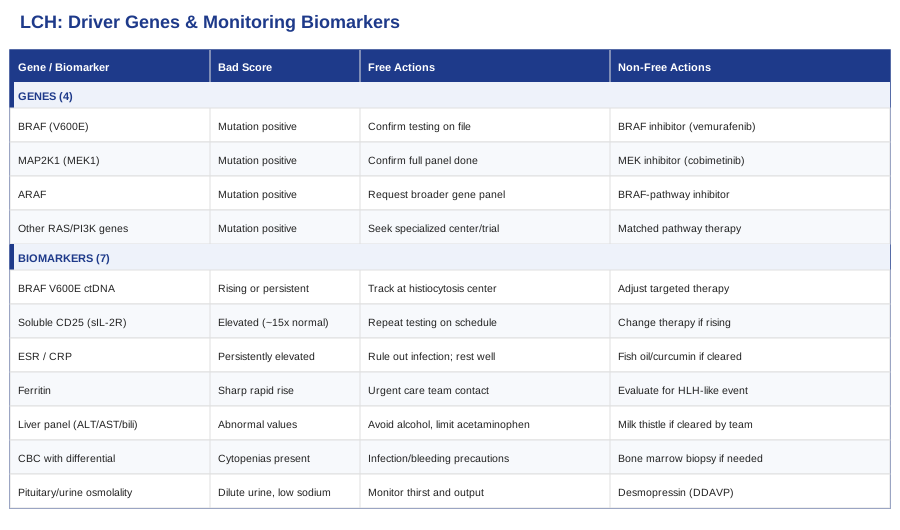
7 Biomarkers To Track In Langerhans Cell Histiocytosis
LCH management is unusually data-driven for a rare disease. The Histiocyte Society's international trials (LCH-III, LCH-IV) standardized a specific panel of tests used at diagnosis and at every follow-up visit, because they correlate with organ involvement, treatment response, and long-term outcome. The seven below are the ones worth understanding in depth, whether you are a patient, a parent, or someone trying to make sense of a relative's chart.
1. BRAF V600E mutation status and circulating cell-free DNA
This is the single most important biomarker in LCH today. Roughly 50 to 60 percent of LCH lesions carry the BRAF V600E mutation, first identified in a landmark 2010 study of paraffin-embedded LCH biopsies published in Blood. Knowing whether a patient's lesion carries this mutation determines eligibility for BRAF-inhibitor therapy (vemurafenib or dabrafenib) if the disease is refractory to standard chemotherapy.
Beyond the initial biopsy, the same mutation can now be tracked in blood over time. Circulating cell-free BRAF V600E DNA (ctDNA), measured by droplet digital PCR (ddPCR) through assays such as HistioTrak, correlates with disease burden and treatment response, and rising levels during or after therapy can flag relapse before it is visible on imaging, as shown in studies of adult and pediatric patients tracked longitudinally with cell-free BRAF V600E as a biomarker.
How it is measured: an initial biopsy is sent for mutation testing (PCR or next-generation sequencing) at diagnosis — essentially mandatory for any multisystem or high-risk case. Follow-up ctDNA testing uses a blood draw. Tissue mutation testing typically runs several hundred to over a thousand dollars depending on the panel and country; specialized ctDNA/ddPCR monitoring, where available, is usually only offered through specialized histiocytosis centers or research protocols, and cost varies widely by institution and insurance coverage.
If the result is unfavorable: a positive BRAF V600E result, or persistent/rising ctDNA during treatment, is not something a patient or parent can act on directly. There is no dietary, supplement, or lifestyle intervention that suppresses a somatic driver mutation. The plan without extra tools is to make sure the case is being followed by a center experienced in histiocytosis, since eligibility for targeted therapy and clinical trials depends on having this data on file. The plan involving specific tools/equipment is targeted therapy itself — a BRAF inhibitor, typically dosed daily and continued for months, prescribed only by an oncology team, with required monitoring for skin reactions, joint pain, and secondary skin lesions, which are known class side effects. This is a prescription decision, never a self-directed one.
2. Soluble CD25 (soluble interleukin-2 receptor, sIL-2R)
sCD25 is shed from activated T cells and correlates strongly with both the extent and activity of LCH. In one of the original studies, pretreatment sIL-2R levels were roughly fifteen times higher in LCH patients than in controls, and levels tracked with disease extent in a pediatric cohort study. More recent work confirms that higher sCD25 at diagnosis is associated with multisystem disease, risk-organ involvement, and worse prognosis in a dedicated clinical-impact analysis.
How it is measured: a standard blood draw, processed by ELISA in a specialized or reference lab. It is not part of routine primary-care bloodwork, so it typically needs to be ordered through the treating hematology-oncology team; standalone cost, when billed outside a clinical trial, is usually in the range of 50 to 150 dollars, though it is most often bundled into a broader trial or hospital panel rather than ordered a la carte.
If the score is elevated: there is no supplement or over-the-counter approach that lowers sCD25 in a meaningful or safe way, because the elevation reflects active immune/T-cell activation driven by the underlying disease process, not a nutrient deficiency. The plan without supplements is close clinical follow-up and repeat testing on the schedule your care team sets, since a falling sCD25 over the first weeks of chemotherapy is a reassuring sign of response, while a plateau or rise flags the need for a treatment change. The plan with tools/equipment is simply making sure sCD25 is drawn at the intervals your treatment protocol specifies (often at diagnosis, 6 weeks, and at defined follow-up points) — this is a monitoring tool, not something to "improve" independently.
3. Erythrocyte sedimentation rate (ESR) and C-reactive protein (CRP)
These two general inflammatory markers are part of every standard LCH work-up. They are nonspecific — many things raise ESR and CRP — but a persistently elevated ESR/CRP in someone already diagnosed with LCH is used alongside imaging and organ-specific labs to gauge overall inflammatory burden and response to treatment.
How it is measured: both are simple, widely available blood tests, usually costing 10 to 30 dollars each without insurance, and are typically ordered together as part of routine bloodwork at diagnosis and follow-up visits.
If the score is elevated: outside of active disease, elevated ESR/CRP can also reflect infection, other inflammation, or even recent vaccination, so the first step is always ruling out confounders with your clinician rather than assuming disease activity. The plan without supplements centers on general anti-inflammatory habits that support overall health during treatment — adequate sleep, avoiding smoking exposure, and treating intercurrent infections promptly, none of which will move these markers dramatically on their own. The plan with supplements is limited and should be discussed with the treating team first, since fish oil or curcumin are sometimes used generally for inflammation but have not been studied specifically for lowering ESR/CRP in LCH, and high-dose fish oil can increase bleeding risk in patients who may need procedures or have low platelet counts — a real consideration in multisystem LCH.
4. Ferritin
Ferritin is checked in LCH partly because very high, rapidly rising ferritin — especially alongside fever, cytopenias, and organ enlargement — can signal a hemophagocytic lymphohistiocytosis (HLH)-like hyperinflammatory complication, which needs urgent recognition and a different treatment approach than LCH alone.
How it is measured: a standard blood draw, typically 15 to 40 dollars out of pocket, commonly bundled with a complete blood count and metabolic panel at follow-up visits.
If the score is elevated: a sharply rising ferritin in a person with known LCH is not something to try to manage at home — it warrants prompt medical evaluation, since it may indicate a hyperinflammatory complication rather than routine disease activity. The plan without supplements is urgent communication with the care team rather than waiting for the next scheduled visit. Iron supplementation is not the fix here — ferritin elevation in this context reflects inflammation, not iron deficiency, so untargeted iron supplements would be both useless and potentially harmful; any supplement decision belongs with the hematology team managing the underlying process.
5. Liver function panel (ALT, AST, bilirubin, albumin)
The liver is one of the designated "risk organs" in LCH, and its involvement changes prognosis meaningfully. Multisystem disease involving the liver, spleen, or bone marrow carries a lower five-year survival than disease without risk-organ involvement, which is why the Histiocyte Society explicitly stratifies patients by these organ groups.
How it is measured: a standard liver panel (ALT, AST, total bilirubin, albumin, sometimes GGT and coagulation studies) — inexpensive, typically 20 to 60 dollars, and drawn at every treatment visit for anyone with known or suspected liver involvement, along with abdominal ultrasound or MRI when levels are abnormal.
If the score is abnormal: low albumin, rising bilirubin, or persistently elevated transaminases in someone with LCH point toward active hepatic infiltration and should be escalated to the treating specialist rather than managed independently. The plan without supplements involves protecting the liver from additional stress — avoiding unnecessary acetaminophen at high doses, limiting alcohol entirely, and keeping vaccination and infection-prevention measures current, since infections can compound liver strain during chemotherapy. The plan with supplements is minimal and should be cleared with the oncology team first: milk thistle (silymarin) has some general supportive evidence in other liver conditions but has not been tested in LCH-related hepatic involvement, and several herbal "liver support" products can actually interact with chemotherapy metabolism, so this is a conversation to have before adding anything, not a default.
6. Complete blood count (CBC) with differential
Cytopenias — a low platelet count, low white count, or anemia — signal possible bone marrow infiltration, another designated risk organ. A 2022 analysis found that a risk model combining CBC findings with BRAF V600E and MAP2K1 mutation status predicted which children with LCH were more likely to have a worse clinical course in a dedicated prognostic study, and bone marrow infiltration itself is an important, sometimes under-recognized, determinant of staging described in a focused review.
How it is measured: one of the most affordable and widely available tests in medicine, usually 10 to 25 dollars, drawn at essentially every visit during active treatment.
If the score is abnormal: unexplained cytopenias require prompt medical assessment (sometimes including bone marrow biopsy), not a wait-and-see approach at home. The plan without supplements focuses on infection precautions when white counts are low (careful hand hygiene, avoiding sick contacts, prompt fever reporting) and bleeding precautions when platelets are low (avoiding contact sports, being cautious with NSAIDs like ibuprofen, which further impair platelet function). The plan with supplements is essentially not applicable here in a self-directed sense — iron, B12, or folate supplementation only makes sense if a specific deficiency is confirmed by additional labs, and blindly supplementing in the setting of marrow infiltration will not correct the underlying cause and can mask other findings.
7. Posterior pituitary function and urine osmolality (diabetes insipidus screening)
Central diabetes insipidus is one of the most common and clinically significant complications of LCH, arising when the disease infiltrates the pituitary stalk. MRI studies show a thickened, enhancing pituitary stalk in the large majority of patients at the time diabetes insipidus is diagnosed, and stalk thickening can even precede the onset of symptoms by months according to longitudinal imaging research. This matters because diabetes insipidus and other pituitary hormone deficits can be permanent even after the underlying LCH is treated, so early detection changes management.
How it is measured: simple screening starts with urine specific gravity or osmolality alongside serum sodium and osmolality — inexpensive tests (typically under 50 dollars combined) that can flag concentrating problems. Confirmatory testing, when needed, is a formal water deprivation test or desmopressin stimulation test performed in a monitored clinical setting, and pituitary MRI (several hundred to over a thousand dollars depending on region and insurance) is used to assess stalk thickening directly.
If the result is abnormal: excessive thirst, high urine output, or dilute urine in someone with known or suspected LCH should prompt endocrinology referral rather than simply increasing fluid intake and hoping it resolves. The plan without supplements or equipment is straightforward monitoring of thirst, fluid intake, and urine output, and reporting changes promptly, since catching this early can prevent dangerous dehydration or sodium imbalance. The plan with equipment, once central diabetes insipidus is confirmed, is desmopressin (DDAVP) replacement — a prescription hormone, not a supplement, dosed by a physician and adjusted based on urine output and sodium levels, with the main practical side effect being low sodium if fluid intake is not balanced against the dose, which is why ongoing lab monitoring accompanies treatment rather than a "set and forget" approach.
4 Genes Behind The Biomarkers
Every biomarker above exists because of what is happening upstream, inside the abnormal cells themselves. LCH is now understood as a clonal disorder of myeloid dendritic cells in which a single signaling pathway — MAPK-ERK — gets switched on and stays on, almost always because of a somatic mutation acquired in that cell lineage rather than something inherited from a parent as detailed in a molecular pathogenesis review. This distinction matters enormously: these are not germline variants like the ones reported on a consumer genetic test, and no amount of diet, sleep optimization, or supplementation silences them, because they are not present in every cell of the body — only in the diseased clone. Any framework built around "compensating" for a genetic variant through lifestyle does not apply here; the realistic options are monitoring, targeted drugs, and standard chemotherapy, all directed by an oncology or hematology specialist.
BRAF (V600E)
BRAF V600E is the most common driver, present in roughly half to 60 percent of LCH cases, first identified in the disease in 2010 in a study of LCH biopsies. It locks the BRAF kinase into a permanently active state, which keeps pushing the ERK signaling pathway forward regardless of normal regulatory signals. Its clinical relevance is direct: patients with this mutation, if their disease is refractory to standard chemotherapy, may be candidates for BRAF-inhibitor drugs like vemurafenib, which produced a 94 percent overall response rate in a multinational study of children with refractory multisystem disease published in the Journal of Clinical Oncology. If the gene is "bad" — meaning the mutation is present — the plan without supplements is ensuring molecular testing results are on file with the treating team so eligibility for targeted therapy is never in question. The plan with equipment is the BRAF inhibitor itself: an oral, typically daily medication, continued for a defined period under oncology supervision, with regular skin checks (secondary skin lesions are a known class effect) and joint-pain monitoring, and a taper or discontinuation plan rather than indefinite unsupervised use.
MAP2K1 (MEK1)
In a meaningful share of BRAF-wild-type cases, the same downstream pathway gets activated through mutations in MAP2K1 instead, identified in a 2015 sequencing study of LCH samples published in Genes, Chromosomes and Cancer. Some MAP2K1 variants are resistant to certain MEK inhibitors in laboratory testing, which is one reason full molecular profiling — not just a single BRAF test — matters before choosing a targeted drug. The MEK inhibitor cobimetinib has shown an 89 percent overall response rate across histiocytic neoplasms regardless of the exact upstream mutation in a phase 2 trial. As with BRAF, there is no supplement-based plan for a MAP2K1 mutation; the equipment-based plan is a MEK inhibitor, dosed and monitored by an oncology specialist, with diarrhea, elevated creatine kinase, and eye or retinal changes among the known side effects that require scheduled monitoring (including periodic ophthalmologic exams) during treatment.
ARAF
A smaller subset of BRAF-wild-type cases carry activating mutations in ARAF, a related kinase in the same RAF family, first described in 2014 in a functional and genetic study. Laboratory testing showed that mutant ARAF activity could still be inhibited by vemurafenib, meaning some patients with this rarer mutation may respond to BRAF-pathway-targeted drugs even though the mutation is technically in a different gene. Available data suggest ARAF-mutated LCH can behave less predictably, partly because clinical experience with it remains limited. Again, there is no supplement plan for this mutation; the practical takeaway is that comprehensive genetic panel testing (rather than a BRAF-only test) is worth requesting when initial testing comes back negative, since it can reveal an actionable alternative target.
Other MAPK-ERK pathway drivers (NRAS, KRAS, PIK3CA, and rare fusions)
The remaining cases without BRAF, MAP2K1, or ARAF mutations are not mutation-free — they typically carry other, rarer alterations in the same broad signaling network, including NRAS, KRAS, PIK3CA, or occasional gene fusions involving ERBB3 or BRAF itself, all of which converge on the same overactive ERK signaling seen throughout LCH. This heterogeneity is exactly why the Histiocyte Society and major treatment centers increasingly favor broad next-generation sequencing panels over single-gene testing at diagnosis. There is, again, no dietary or supplement route to silencing any of these alterations. The realistic path when one of these rarer variants is identified is enrollment in a specialized histiocytosis center or clinical trial where matched or pathway-targeted therapy can be considered, since treatment experience with these rarer drivers is still accumulating one case series at a time.
10 Lessons From The Emperor Of All Maladies That Explain Modern LCH Care
Siddhartha Mukherjee's Pulitzer-winning The Emperor of All Maladies: A Biography of Cancer was published in 2010, the same year BRAF V600E was first linked to LCH, so it does not mention this disease directly. What it does do is lay out, in vivid detail, the exact conceptual shift that later made vemurafenib and cobimetinib possible in LCH: the idea that a cancer's behavior is dictated by specific, identifiable mutations, and that matching a drug to the mutation — rather than treating every case of a given cancer the same way — can change outcomes dramatically. Reading it alongside an LCH diagnosis reframes a lot of what modern treatment protocols are actually trying to do.
1. Cancer is not one disease, it is thousands of diseases wearing the same name
Mukherjee's central argument is that grouping cancers by the organ they arise in was always a crude approximation. LCH illustrates this precisely: two patients with "the same" diagnosis can have entirely different underlying drivers (BRAF vs. MAP2K1 vs. no known mutation) and, increasingly, different treatments as a result.
2. The oncogene concept changed everything, decades before it reached the clinic
The book traces the slow, decades-long path from the discovery that normal genes could be mutated into cancer-driving oncogenes to the point where that knowledge translated into an actual drug. LCH's own timeline — mutation discovered in 2010, targeted drug data mature by the late 2010s — is a compressed version of that same arc.
3. Gleevec proved that one mutation, one drug, could work — and set the expectation others chased
The book's account of imatinib (Gleevec) transforming chronic myeloid leukemia from a near-uniformly fatal disease into a manageable chronic condition became the template every subsequent targeted-therapy story, including BRAF inhibitors in LCH, has been measured against.
4. Targeted therapy is not gentler by default
Mukherjee is careful not to romanticize targeted drugs as inherently safer than chemotherapy. The same caution applies directly to BRAF and MEK inhibitors in LCH, which carry their own distinct side-effect profiles — skin toxicity, joint pain, eye changes — requiring just as much monitoring as older regimens.
5. Resistance is the rule, not the exception
A recurring theme is that cancers adapt to targeted drugs over time. This is directly relevant to LCH: ctDNA studies have shown that vemurafenib can produce a rapid clinical response while leaving low-level minimal residual disease detectable in blood, meaning the mutation is suppressed, not necessarily eliminated.
6. Diagnosis precision is not a luxury, it is the whole strategy
The book repeatedly shows how earlier, more precise diagnostic tools reshaped treatment decisions. In LCH, this plays out as the shift from a single BRAF test to comprehensive panel sequencing, since missing a MAP2K1 or ARAF mutation could mean missing an eligible targeted therapy.
7. Rare cancers benefit enormously from data borrowed across diseases
Mukherjee describes how insights from one cancer type repeatedly unlocked progress in another. LCH is a direct beneficiary of this pattern: BRAF inhibitors and MEK inhibitors were developed first for melanoma and other more common cancers, then repurposed for LCH once the shared mutation was identified.
8. Patient advocacy and organized data collection accelerate everything
The book credits patient registries and coordinated trial networks with compressing timelines that would otherwise take much longer. The Histiocyte Society's international LCH trials are a direct real-world example of this same mechanism at work in a rare disease.
9. A cancer's biology can look calm and still require full attention
Mukherjee is careful to describe indolent as well as aggressive disease courses. This mirrors LCH's own spectrum, from single-lesion disease that may need only observation to multisystem, risk-organ-positive disease requiring immediate treatment — the same word, very different urgency.
10. Hope, in oncology, is built from evidence, not sentiment
The book's closing message is that real progress in cancer care came from painstaking, incremental, evidence-based work, not from optimism alone. That is the same standard this article has tried to hold to throughout: track the data, understand what it means, and let it guide the next conversation with a specialist.
Complementary Approaches Worth Knowing About
None of the following treats LCH or its underlying mutations. What they have real, human evidence for is reducing the anxiety, pain, and distress that come with procedures, hospitalization, and chemotherapy in pediatric and adolescent cancer populations — the same population that includes most LCH patients. Evidence below comes from pediatric/adolescent oncology broadly rather than LCH-specific trials, since dedicated LCH studies of these approaches do not yet exist; that limitation is worth being upfront about.
Music therapy
Music-based interventions are relevant here because children and adolescents undergoing LCH treatment face the same recurring procedures — line placements, bone marrow evaluations, infusions — that drive anxiety and distress in any pediatric oncology setting, and music is one of the best-studied ways to reduce that distress without medication. A systematic review of music-based interventions in pediatric and adolescent oncology patients found consistent reductions in anxiety, perceived pain, and depressive symptoms, along with improved quality of life and reduced heart rate, respiratory rate, and blood pressure during interventions in a dedicated systematic review. In practice, this can mean a child listening to a preferred playlist or working with a trained music therapist (many pediatric hospitals have one on staff) specifically during infusions, dressing changes, or line-access procedures — a low-risk, low-cost addition with no known interaction with chemotherapy or targeted drugs.
Mindfulness meditation / MBSR
Mindfulness-based approaches are relevant for LCH patients and their families because the uncertainty of a rare, variable-course disease is itself a source of chronic stress, separate from any single procedure. A brief, structured mindfulness intervention delivered to parents and children before pediatric venipuncture showed measurable benefit in a randomized controlled trial conducted in a pediatric procedural setting, and a broader mindfulness-based intervention protocol for adolescents with cancer was designed specifically to address the stress and quality-of-life burden of active treatment described in its published trial protocol. Realistically, this looks like a short, guided five-to-ten-minute breathing or body-scan practice before a known stressful appointment, ideally introduced by a child life specialist or trained facilitator rather than self-taught from scratch during an already stressful period; evidence in this specific population is still described as preliminary, so it is a genuine complement, not a replacement for anxiety management strategies your care team already offers.
Guided imagery
Guided imagery is relevant because it directly targets procedural pain and anxiety, two of the most consistently reported quality-of-life burdens in pediatric cancer care, LCH included. A systematic review of integrative approaches to pain and anxiety in children and adolescents with cancer identified guided imagery as one of the more consistently supported non-pharmacological tools, alongside hypnosis and biofeedback in a dedicated review, and randomized comparisons have found lower pain scores and heart rate during procedures like venipuncture when guided imagery was used. Applied practically, this means a short, scripted mental-imagery exercise (often led by a recorded audio track or a child life specialist) used specifically around needle sticks or line access — something worth asking your treatment center's child life or psychosocial team whether they already offer, since many pediatric oncology programs do.
Massage therapy
Massage is relevant for LCH patients undergoing chemotherapy or hospitalization because symptom burden — pain, fatigue, sleep disruption — is common regardless of which mutation is driving the disease. A pilot randomized trial combining massage and acupressure in children undergoing hematopoietic cell transplantation found fewer days of mucositis, lower overall symptom burden, and less pain and fatigue in the intervention group in a controlled pilot study, and a separate pilot study of children with cancer in palliative care found reduced pain and worry after just one or two sessions in a dedicated pilot trial. In practice, this means requesting a hospital-affiliated pediatric oncology massage therapist (many larger cancer centers have one, given how established this practice has become) rather than a general spa massage, since therapists trained in oncology settings know to avoid areas with active bone lesions, low platelet counts, or central lines — a real safety consideration in LCH given how often bone and blood counts are affected.
Taken together, these four practices share a common thread: they address the lived experience of LCH and its treatment — fear, pain, disrupted sleep — without making any claim on the disease itself. Used that way, alongside rather than instead of monitoring and specialist-directed treatment, they are a reasonable, low-risk addition for most patients and families.
Conclusion
The most useful thing to take from all of this is that LCH is, at its core, a mutation-driven disease with a well-defined set of lab values that track its behavior — and both of those facts are now well within reach for patients and families to understand, not just specialists. Knowing that BRAF V600E, MAP2K1, ARAF, or another MAPK-pathway alteration is likely behind a given case reframes treatment decisions; knowing what sCD25, ferritin, liver function, blood counts, and pituitary function are actually telling the care team turns follow-up visits from a source of anxiety into a source of information.
None of this replaces the judgment of a hematologist-oncologist or histiocytosis specialist, and no supplement, diet, or lifestyle change alters the underlying somatic mutation driving the disease. What does help is showing up informed: knowing which tests should be on file, asking whether comprehensive mutation panel testing has been done if a single BRAF test came back negative, and tracking trends in the biomarkers above rather than single data points in isolation.
If you or someone you're caring for has an LCH diagnosis, the next concrete step is a direct conversation with the treating specialist about which of these seven biomarkers are already being tracked, whether full molecular panel testing has been completed, and whether a specialized histiocytosis center or clinical trial might be relevant to the specific mutation involved. That conversation, grounded in the right questions, is worth more than any general wellness advice could offer.