This article contains AI generated content.
Lateral Head Gastrocnemius Tear: 5 Genes and 7 Biomarkers to Track
A strain in the lateral head of the gastrocnemius, the muscle that gives the calf its diamond shape, is a strange injury to live with. It rarely announces itself with the drama of a full rupture. There is often just a sudden pull, a bruise that shows up two days later on the outside of the calf, and then weeks of a leg that feels almost normal until you push off hard, jump, or sprint. Many people move through the standard sequence, rest, ice, gentle stretching, a graded return to walking, then running, and still end up with a calf that tightens, re-strains, or simply never regains the same trust it had before.
That gap between "should be healed" and "still doesn't feel right" is exactly where generic advice runs out of road. Rest and gradual loading are correct in principle, but they say nothing about why one person rebuilds tendon and muscle collagen quickly while another stays fragile for months. They don't account for the fact that inflammation, iron status, vitamin D, and the genes that build type I and type V collagen all vary enormously between individuals, and that variation can be a large part of why recovery timelines diverge so much from the textbook.
This article looks at the injury from that angle. Instead of repeating generic rehab timelines, it walks through the blood biomarkers that give the clearest signal about muscle damage, inflammation, and repair capacity, and it looks at the genetic variants that are most consistently linked, in real human studies, to connective tissue strength and soft-tissue injury risk. Neither is a crystal ball. But together they give a more precise picture of what might be slowing a specific person's recovery, and what is realistic to change.
None of this replaces a clinical exam, an ultrasound or MRI when one is warranted, or the judgment of a physical therapist or sports medicine physician. What it can do is turn a vague sense of "I should feel better by now" into a short list of measurable, checkable things, so that the next decision, whether it's a supplement, a loading protocol, or simply a longer rest period, is based on data rather than guesswork.
Summary
This article is built around two complementary lists. The main one covers seven blood biomarkers, including creatine kinase, vitamin D, hs-CRP, IGF-1, ferritin, magnesium, and homocysteine/B12, that reflect how well a calf strain is actually healing beneath the surface, with real cost ranges, testing frequency, and specific fix-it plans for each. A shorter section then looks at five genes tied to collagen structure and tissue remodeling, ACTN3, COL5A1, COL1A1, MMP3, and GDF5, and what current human research says about how they may raise injury or re-injury risk, and how to work around an unfavorable variant. Beyond that, there's a distillation of a Huberman Lab episode on muscle recovery worth knowing even if you never listen to it, and a look at which complementary therapies, like massage, photobiomodulation, and EMG biofeedback, actually have decent human evidence behind them for muscle injury recovery. The goal throughout is to replace "wait and see" with a short list of numbers and habits you can actually track.
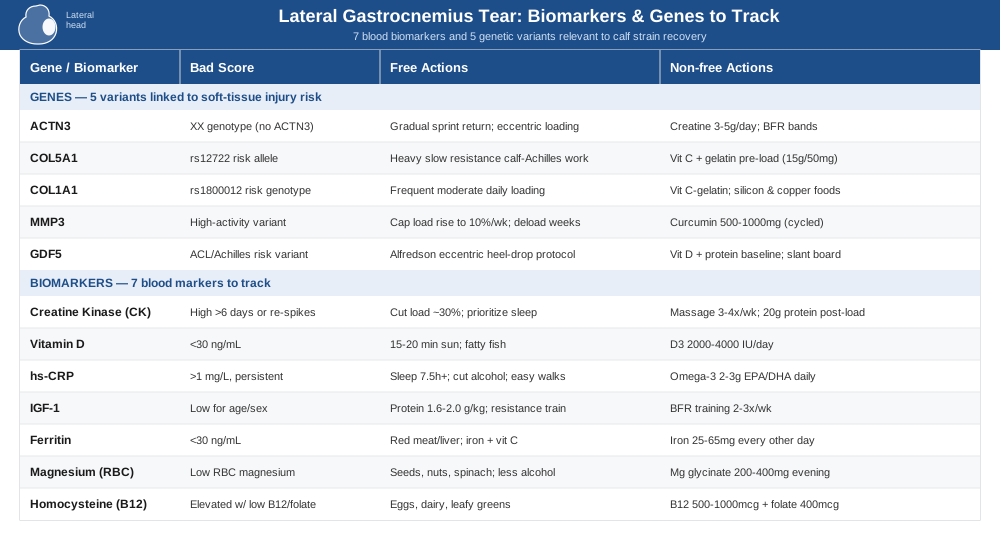
7 Biomarkers That Explain How Your Calf Is Actually Healing
Blood work will not show a tear directly, but it reflects the biological environment the tear is trying to heal in. A calf strain repairs through a fairly predictable sequence: an acute inflammatory phase, a repair phase where satellite cells and fibroblasts rebuild fibers and collagen, and a remodeling phase where the new tissue matures and regains strength. Each of the markers below maps onto one of those phases, and each one is something you can realistically test, track over time, and, in most cases, improve.
1. Creatine Kinase (CK)
Creatine kinase is released from damaged muscle fibers and is the most widely used marker of muscle damage in sports medicine. After an acute strain, CK typically rises and peaks somewhere between two and six days later, then falls as the tissue stabilizes. A CK that stays elevated well past the expected window, or that spikes again after you resume training, is a reasonably reliable sign that the muscle is still under more mechanical stress than it can currently handle, according to a recent literature review on post-exercise CK variability published in Biochemia Medica. The catch is that CK varies a great deal between individuals based on muscle mass, training history, and even ancestry, so it's most useful compared against your own baseline rather than a generic reference range.
How to measure it
A basic serum CK test is inexpensive, typically 10 to 30 dollars out of pocket in the US, or included free in a broader metabolic panel through many direct-to-consumer lab services. It requires no special preparation beyond avoiding hard exercise for 48 hours before the draw, since a workout alone can push CK into the hundreds or thousands.If the number is off: the plan without supplements
Persistently high CK after a calf strain usually means the loading program is outpacing tissue tolerance. The fix is mechanical, not nutritional: drop back one stage in the rehab progression, reduce total weekly volume of calf-loading activity by roughly a third, and prioritize sleep, since most muscle protein synthesis and repair happens during deep sleep. Re-test CK after 10 to 14 days at the reduced load before advancing again.If the number is off: the plan with supplements or equipment
A systematic review and meta-analysis of post-exercise recovery techniques found that massage measurably lowers serum CK levels after muscle-damaging exercise, alongside modest benefits from some nutritional strategies, as summarized in this evidence-based review of recovery methods. A practical approach is 15 to 20 minutes of light massage or a percussion massage device to the calf, three to four times per week, alongside 20g of a fast-digesting protein source within an hour of any loading session to support repair. There are no meaningful side effects at these doses beyond mild post-massage soreness in an already tender area, so keep pressure light on a recently strained muscle.2. Vitamin D (25-hydroxyvitamin D)
Vitamin D receptors are present in skeletal muscle tissue, and low levels are consistently linked to slower recovery of muscle strength after damage. A review on vitamin D in athletes notes that low vitamin D status is associated with reduced muscle strength and power and with a higher rate of musculoskeletal injury, as described in this review on vitamin D and athletic performance. More directly relevant to a healing strain, higher circulating 25(OH)D is associated with faster recovery of muscle strength after damaging exercise, a relationship explored in this paper on vitamin D and recovery from muscular damage.
How to measure it
A 25-hydroxyvitamin D blood test costs roughly 30 to 60 dollars if paid out of pocket, and is one of the most commonly bundled tests in annual physicals. Testing twice a year, once in late winter and once in late summer, captures the seasonal swing that matters most for anyone recovering from a soft-tissue injury during darker months.If the number is off: the plan without supplements
Fifteen to twenty minutes of midday sun exposure on bare arms and legs, several times a week, meaningfully raises vitamin D synthesis in most skin types, though this becomes unreliable in winter at higher latitudes. Fatty fish, egg yolks, and fortified dairy add smaller but real amounts.If the number is off: the plan with supplements or equipment
For levels below 30 ng/mL, a common and well-studied approach is 2,000 to 4,000 IU of vitamin D3 daily with a fat-containing meal, re-tested after 8 to 12 weeks, targeting a range of roughly 40 to 60 ng/mL rather than pushing toward the very top of the reference range. This does not need to be cycled, but blood levels should be re-checked every 6 months since dosing needs shift with season and body weight. Side effects are rare at these doses but include, in excess, elevated blood calcium; anyone taking more than 4,000 IU/day for an extended period should confirm levels by blood test rather than dosing blind.3. High-Sensitivity C-Reactive Protein (hs-CRP)
hs-CRP is a systemic marker of low-grade inflammation. While some inflammation is a necessary and healthy part of the early repair phase after a strain, persistently elevated hs-CRP weeks into recovery suggests the tissue, or the body more broadly, is stuck in an inflammatory state rather than progressing into repair and remodeling. In tendon and soft-tissue research specifically, elevated hs-CRP has been associated with tendon tearing, as shown in a study linking hs-CRP above 1 mg/L to biceps tendon tears, described in this paper on hs-CRP and tendon injury. The broader relationship between inflammation and muscle damage recovery is reviewed in this paper on muscle damage and inflammation during exercise recovery.
How to measure it
An hs-CRP test costs around 15 to 40 dollars and is widely available through standard labs or direct-to-consumer panels. Because hs-CRP reacts to any inflammatory trigger, including a cold or a bad night of sleep, it's worth re-testing if a single result seems unexpectedly high rather than acting on one number alone.If the number is off: the plan without supplements
Sleep quality, alcohol intake, and total training stress all move hs-CRP more than most people expect. Cutting alcohol during the active healing phase, targeting 7.5 or more hours of sleep, and adding two to three low-intensity walking sessions per week, without loading the calf, tends to bring inflammation down within a few weeks in people whose elevation is lifestyle-driven rather than injury-driven.If the number is off: the plan with supplements or equipment
Omega-3 fish oil, in the range of 2 to 3 grams of combined EPA/DHA daily, is one of the better-studied options for lowering hs-CRP over 8 to 12 weeks, alongside adequate dietary fiber and reduced ultra-processed food intake. It doesn't need cycling, but a fish oil source should be checked for oxidation and taken with food to reduce reflux, which is the most common mild side effect at these doses. Anyone on blood thinners should discuss dosing with a physician first, since fish oil has a mild anticoagulant effect.4. Insulin-Like Growth Factor 1 (IGF-1)
IGF-1 drives satellite cell proliferation, the process by which muscle stem cells activate and rebuild damaged fibers. Research on exercise-induced muscle damage in humans shows a rapid, transient rise in local IGF-1 isoforms within the injured muscle itself, followed by a more sustained systemic increase that supports the repair phase, detailed in this study on IGF-1 isoforms after exercise-induced muscle damage. Broader review work on IGF-1's role in skeletal muscle physiology, including its relationship to atrophy versus hypertrophy, is available in this review of IGF-1 in skeletal muscle. Low circulating IGF-1 doesn't cause a tear, but it can slow the rebuilding phase that follows one.
How to measure it
A serum IGF-1 test runs roughly 60 to 120 dollars and is less commonly bundled into routine panels, so it typically needs to be ordered specifically. It's most informative when interpreted alongside age- and sex-adjusted reference ranges, since IGF-1 declines steadily after the mid-20s regardless of injury status.If the number is off: the plan without supplements
Total protein intake and resistance training are the two strongest natural levers on IGF-1. Aiming for roughly 1.6 to 2.0 grams of protein per kilogram of body weight daily, and maintaining light resistance work for uninjured muscle groups during calf recovery, supports systemic IGF-1 without loading the healing tissue directly.If the number is off: the plan with supplements or equipment
There is no well-supported supplement that safely and directly raises IGF-1 in healthy adults; most products marketed this way (colostrum extracts, certain amino acid blends) have thin evidence. A more defensible equipment-based option is blood flow restriction (BFR) training, using proper BFR bands under professional guidance, which allows low-load exercise of the surrounding musculature to stimulate a systemic growth factor response while keeping mechanical stress on the healing calf very low. This is typically done two to three times weekly for 15 to 20 minutes, with a qualified therapist supervising the first sessions; side effects when done incorrectly include excessive numbness or bruising, so band pressure should always be set conservatively.5. Ferritin and Iron Status
Ferritin reflects the body's iron stores, and iron is required for oxygen delivery to healing tissue and for several enzymes involved in collagen synthesis. Research on iron status in athletes shows that low ferritin alters the body's hepcidin response after exercise, which in turn affects how efficiently iron is made available for recovery, described in this study on iron status and post-exercise hepcidin response. Even without frank anemia, a ferritin under roughly 30 ng/mL is commonly associated with blunted recovery and reduced aerobic capacity, which matters directly for someone trying to maintain fitness on an injured leg while rehabbing a calf strain.
How to measure it
A ferritin test, ideally paired with a full iron panel (serum iron, TIBC, transferrin saturation), costs around 20 to 50 dollars. It's best drawn 48 to 72 hours after the last hard training session, since acute exercise temporarily shifts iron markers.If the number is off: the plan without supplements
Iron-rich foods, particularly red meat, liver, and shellfish, are far more bioavailable than plant iron sources. Pairing plant-based iron (lentils, spinach) with vitamin C-rich foods at the same meal improves absorption, while avoiding coffee or tea within an hour of iron-containing meals prevents the tannins from blocking uptake.If the number is off: the plan with supplements or equipment
For confirmed low ferritin, 25 to 65 mg of elemental iron every other day (rather than daily) has been shown to improve absorption compared with daily dosing, because it works with the body's natural regulation of iron transporters. This should be cycled: supplement for 8 to 12 weeks, then re-test ferritin before continuing, since iron overload is a real risk and unnecessary supplementation in someone with normal stores can cause harm. Common side effects include constipation and nausea, which are usually reduced by taking iron with food, despite a small trade-off in absorption. Iron supplementation should not be started without a confirmed low ferritin result.6. Magnesium (RBC Magnesium)
Magnesium regulates calcium flow in and out of muscle cells, which governs how well a muscle contracts and, just as importantly, relaxes. Athletes frequently run low on magnesium due to losses in sweat and urine, and a review of magnesium supplementation trials found reduced muscle soreness and improved perceived recovery in supplemented groups compared with placebo, detailed in this study on magnesium supplementation and muscle soreness. The evidence for magnesium directly preventing cramps is weaker and more mixed, so it's best framed as a recovery and soreness lever rather than a cramp cure.
How to measure it
Standard serum magnesium tests are cheap, around 15 to 25 dollars, but are a poor reflection of whole-body stores since under 1% of total body magnesium circulates in serum. A red blood cell (RBC) magnesium test, around 40 to 70 dollars, is a meaningfully better proxy and worth requesting specifically if magnesium status is a real question.If the number is off: the plan without supplements
Pumpkin seeds, almonds, spinach, and dark chocolate are all magnesium-dense and easy to add to a daily diet without any tracking effort. Reducing alcohol also helps, since alcohol increases magnesium excretion through the kidneys.If the number is off: the plan with supplements or equipment
Magnesium glycinate or magnesium citrate, 200 to 400 mg elemental magnesium in the evening, is a reasonable and well-tolerated starting point, taken daily rather than cycled, since magnesium doesn't accumulate to toxic levels in people with normal kidney function. The main side effect at higher doses is loose stools, which typically resolves by lowering the dose or switching from citrate to glycinate, a form that is gentler on the gut.7. Homocysteine (with Vitamin B12 and Folate)
Homocysteine is a byproduct of methionine metabolism, and it rises when B12 or folate is insufficient to keep the methylation cycle running smoothly. This matters for connective tissue because elevated homocysteine interferes with lysyl oxidase, the enzyme responsible for cross-linking collagen fibers, weakening the structural integrity of the tissue being rebuilt, a mechanism reviewed in this paper on B vitamins, homocysteine, and connective tissue health. While most of this research comes from bone and cartilage studies rather than gastrocnemius tears specifically, the underlying collagen cross-linking chemistry is the same tissue biology relevant to healing calf muscle and its surrounding fascia.
How to measure it
A homocysteine test costs around 30 to 60 dollars, ideally ordered alongside serum B12 and folate to identify which nutrient, if either, is driving an elevated result.If the number is off: the plan without supplements
Eggs, dairy, and animal protein supply B12 directly, while leafy greens and legumes supply folate; anyone eating a largely plant-based diet without fortified foods is at meaningfully higher risk of low B12 specifically, regardless of injury status.If the number is off: the plan with supplements or equipment
A B-complex supplement supplying roughly 500 to 1,000 mcg of B12 (methylcobalamin) and 400 mcg of folate daily for 8 to 12 weeks typically normalizes mild elevations, followed by a re-test. This doesn't require cycling for most people, though very high-dose B12 has essentially no established toxicity ceiling, which is not the same as saying more is better; stick to studied doses. Side effects are minimal, though B12 can occasionally cause mild acne in sensitive individuals.Taken together, these seven markers give a reasonably complete picture of where a stalled recovery is actually coming from, whether that's ongoing tissue damage (CK), unresolved inflammation (hs-CRP), a repair-limiting nutrient deficiency (vitamin D, iron, B12/folate), or a shortage of the biological signal that drives rebuilding in the first place (IGF-1). From there, it's worth understanding what role genetics plays in why some people need more margin on these numbers than others.
5 Genes That Shape How Well Your Calf Rebuilds
Genetics doesn't determine whether a calf strain heals well, but it does shape the raw materials and remodeling machinery the body has to work with. Researchers such as Ali Torkamani, whose work on genomic risk prediction has pushed consumer genetics toward more clinically meaningful interpretation, and Gary Brecka, who has popularized practical protocols built around common gene variants, both make a similar point: a gene variant is a tendency, not a verdict, and it becomes far more useful once paired with an actual biomarker showing whether that tendency is playing out in your body. The genes below are the ones with the most consistent human evidence for soft-tissue and tendon-ligament injury risk, though it's worth being upfront that this field is still young. A 2023 paper specifically asked whether commercial genetic injury tests are premature, and concluded that replication across studies remains too limited to support individualized clinical predictions, a caution worth keeping in mind, outlined in this paper on commercial genetic injury testing.
1. ACTN3 (Alpha-Actinin-3)
ACTN3 encodes a protein found in fast-twitch (type II) muscle fibers. The R577X variant, in its XX form, means a complete absence of functional alpha-actinin-3. A systematic review found the XX genotype is associated with a higher likelihood of non-contact soft tissue injuries, including muscle strains, compared with the RR or RX genotypes, as described in this systematic review of ACTN3 and injury risk. A separate preliminary study in an elite soccer team also found the XX genotype associated with a longer recovery time from non-contact muscle injuries, detailed in this study on ACTN3 deficiency and recovery from muscle injury. Practically, this variant may mean less structural reinforcement in fast-twitch fibers, the type most involved in the explosive push-off and sprinting actions that commonly strain the gastrocnemius.
If the gene is unfavorable: the plan without supplements
Because the XX genotype is linked to fibers that may be less structurally resilient under high-speed, high-force loading, the most effective countermeasure is a longer, more graded return-to-sprint progression than standard protocols suggest, adding an extra 1 to 2 weeks at each stage before introducing plyometrics or full-speed sprinting. Isometric calf holds and slow eccentric loading, three sessions weekly, build tolerance without the ballistic stress that this genotype may handle less well.If the gene is unfavorable: the plan with supplements or equipment
Creatine monohydrate, 3 to 5 g daily, has reasonably strong evidence for supporting power-oriented, fast-twitch-dependent performance and may be a sensible daily addition for someone with the XX genotype returning to explosive sport; it does not need cycling and is one of the most-studied supplements in sports science. Blood flow restriction bands, used two to three times weekly for low-load calf work, are a useful equipment option to rebuild capacity while limiting mechanical stress on fast-twitch tissue during the return-to-sport phase. The main side effect of creatine is mild water retention in the first weeks, which is not a safety concern for most healthy adults.2. COL5A1
COL5A1 encodes type V collagen, which regulates the diameter and assembly of the larger type I collagen fibers that give tendons and connective tissue their tensile strength. A meta-analysis of tendon-ligament injury risk found certain COL5A1 variants, including rs12722, associated with elevated injury susceptibility, particularly in Caucasian populations, summarized in this meta-analysis of COL5A1 and tendon-ligament injury. Since the gastrocnemius attaches via a substantial aponeurosis and the Achilles-calf complex shares much of this collagen architecture, this variant is relevant even though most of the underlying research comes from tendon and ligament injuries specifically rather than muscle belly tears.
If the gene is unfavorable: the plan without supplements
Heavy, slow resistance training for the calf-Achilles complex, progressing gradually in load over many weeks, is the best-supported way to build tendon and connective tissue stiffness regardless of underlying genotype. This means calf raises progressed from bodyweight to loaded, performed with a 3-second lowering phase, two to three times weekly.If the gene is unfavorable: the plan with supplements or equipment
The vitamin C-gelatin protocol developed by researchers studying collagen synthesis, 15 g of gelatin or hydrolyzed collagen with roughly 50 mg of vitamin C, taken 45 to 60 minutes before a loading session, has been shown to meaningfully increase markers of collagen synthesis compared with placebo, detailed in this study on vitamin C-enriched gelatin and collagen synthesis. This is best used on training days only, 3 to 4 times weekly, rather than daily, since the synthesis benefit is tied specifically to the loading session that follows it. Side effects are minimal; some people notice mild gut heaviness from a large gelatin dose on an empty stomach.3. COL1A1
COL1A1 encodes the main chain of type I collagen, the dominant structural collagen in tendon, fascia, and the aponeurosis surrounding the gastrocnemius. A meta-analysis of the rs1800012 polymorphism found it associated with altered risk of sports-related tendon and ligament injury, with certain genotype combinations linked to a higher chance of injury, described in this meta-analysis of COL1A1 and tendon-ligament injuries. Because COL1A1 variants affect collagen fiber quality broadly rather than one specific tissue, this gene is relevant both to the initial strain risk and to the quality of the scar tissue and remodeled fascia that forms during healing.
If the gene is unfavorable: the plan without supplements
Since collagen remodels in response to mechanical signal, consistent, moderate daily loading, rather than sporadic intense sessions, gives type I collagen the steady stimulus it needs to reorganize along lines of stress. Walking, calf raises, and gentle stair work, spread across most days rather than concentrated into one or two hard sessions weekly, tend to produce better-organized tissue.If the gene is unfavorable: the plan with supplements or equipment
The same vitamin C-gelatin approach described above applies here, since it targets type I collagen synthesis directly. Silicon-containing foods (oats, bananas, green beans) and adequate copper intake, a cofactor for collagen cross-linking, are reasonable dietary additions; supplement forms of either are rarely necessary and copper in particular should not be supplemented without bloodwork, since excess copper is not benign.4. MMP3
MMP3 encodes a matrix metalloproteinase, an enzyme that breaks down and remodels extracellular matrix, including collagen, as part of normal tissue turnover. A meta-analysis of MMP3 polymorphisms and tendon-ligament injuries found associations in some but not all studies, reflecting real biological variability in how aggressively different people's tissue turns over, summarized in this meta-analysis of MMP3 gene variants and tendon injury. A variant linked to higher MMP3 activity may mean connective tissue is broken down faster than it's rebuilt under high training loads, a mismatch that can show up as recurring strains rather than a single clean injury.
If the gene is unfavorable: the plan without supplements
The most direct countermeasure is disciplined load management: capping week-to-week increases in training volume or intensity to roughly 10%, and building in a lighter recovery week every third or fourth week. This matters more for an MMP3 risk variant than for almost any other genetic factor on this list, since the core issue is a faster breakdown-to-rebuild ratio under load spikes specifically.If the gene is unfavorable: the plan with supplements or equipment
Curcumin, 500 to 1,000 mg daily with piperine or a phospholipid formulation for absorption, has preliminary evidence for modulating inflammatory MMP activity, though this evidence is considerably earlier-stage than the vitamin D or magnesium research above, so it should be viewed as a reasonable adjunct rather than a core fix. If used, cycle it 8 to 12 weeks on, 2 to 4 weeks off, since long-term human safety data at high doses is still limited. Mild GI upset is the most common side effect, and curcumin can interact with blood thinners, so it should be discussed with a physician if you're on anticoagulant medication.5. GDF5
GDF5 (growth differentiation factor 5) is involved in the formation and repair of tendon, ligament, and cartilage tissue. A specific GDF5 variant has been associated with anterior cruciate ligament injury risk in genetic association research, detailed in this study on the GDF5 gene and ACL rupture, and separate work has linked GDF5 variants to Achilles tendon pathology and stress fracture risk, suggesting a broader role in connective tissue durability under repetitive load, relevant to the tendinous portions of the gastrocnemius-Achilles complex.
If the gene is unfavorable: the plan without supplements
Since GDF5 relates to the tendon's own repair signaling rather than muscle fiber quality, a structured eccentric loading protocol modeled on the Alfredson heel-drop program, historically used for Achilles tendinopathy, is a reasonable and well-evidenced framework once the acute muscle strain has settled enough to tolerate tendon-specific loading, shown effective at 5-year follow-up in this long-term study of the Alfredson heel-drop protocol. This is typically introduced gradually rather than at the full 180 reps/day historically prescribed for chronic tendinopathy, especially in the weeks right after a muscle tear.If the gene is unfavorable: the plan with supplements or equipment
There's no supplement that directly targets GDF5 signaling, but ensuring vitamin D and adequate protein intake, both of which support the broader tissue remodeling environment GDF5 operates within, is a sensible baseline. A more relevant equipment addition is a simple slant board or wedge, used for calf stretching and eccentric loading with the knee both bent and straight, which allows more precise control over tendon loading angle than floor-based heel drops alone, typically used 3 to 4 times weekly during the rebuilding phase.Genetics rarely gets simpler than "good" or "bad" variants; it's closer to a set of leanings that matter more or less depending on training load, nutrition, and how closely those numbers above are tracked. That's part of why a well-known podcast on muscle recovery is worth summarizing here, since it reframes several of these same mechanisms in a way that's stuck with a lot of people rehabbing soft tissue injuries.
The Huberman Lab Episode Worth Knowing for Muscle Recovery
Andrew Huberman's episode on the science of muscle growth, strength, and recovery pulls together a large body of exercise physiology research into a practical framework, and several of its points run directly counter to the "just rest it" advice most people get after a calf strain. Below are the ten most useful takeaways for someone specifically rebuilding a gastrocnemius tear, drawn from the episode available here: Science of Muscle Growth, Increasing Strength & Muscular Recovery.
1. Local, not just systemic, repair signals matter
Muscle repair is driven heavily by signals released directly at the injury site, not only by whatever is circulating in the bloodstream. This is part of why gentle, pain-free local movement of the healing calf, rather than total immobilization, tends to support better remodeling than strict rest alone.2. Satellite cells need a stimulus to activate
Satellite cells, the muscle's resident repair cells, largely stay dormant without some mechanical or metabolic stimulus. Complete rest past the acute inflammatory phase can leave repair machinery underused rather than protected.3. Inflammation is necessary early, but not indefinitely
The early inflammatory response clears damaged tissue and signals repair, but chronically suppressing it too early with heavy anti-inflammatory use can blunt this process, while letting it run unchecked for too long stalls remodeling, which lines up directly with tracking hs-CRP rather than guessing.4. Heat has a stronger recovery case than most people assume
Contrary to the reflexive advice to ice everything, heat exposure, once the acute swelling phase has passed, is discussed as supportive of blood flow and tissue recovery, while ice's main proven benefit is pain reduction rather than accelerated healing.5. Sleep is the single largest recovery lever
Growth hormone release and the bulk of tissue repair processes are tied closely to deep sleep stages. Cutting sleep short during a rehab period is described as one of the most common, and most avoidable, ways people slow their own recovery.6. Protein timing matters less than total daily intake
While pre- and post-exercise protein timing gets a lot of attention, total daily protein intake is framed as the dominant variable for supporting repair, which simplifies the practical advice considerably for someone already managing enough variables during rehab.7. Blood flow restriction training has a legitimate rehab use case
Low-load training with blood flow restriction is presented as a way to stimulate a disproportionately large growth and repair signal without high mechanical load, which maps directly onto safely maintaining calf and lower-leg conditioning during the weeks when full loading isn't yet appropriate.8. Nervous system readiness precedes full strength return
Strength returning to an injured limb depends not just on tissue healing but on the nervous system relearning to fully activate the muscle, which is part of why EMG biofeedback and neuromuscular re-education can outperform strength work alone in the later rehab stages.9. Cortisol management affects tissue repair capacity
Chronically elevated stress hormones are discussed as working against tissue repair by shifting the body's resources toward a catabolic state, reinforcing why stress and sleep management aren't soft, secondary advice during an injury but a real physiological lever.10. Consistency beats intensity during a rebuilding phase
Frequent, moderate stimulus is repeatedly favored over sporadic, intense sessions for building durable tissue, which is the same principle behind the load-management advice given above for the MMP3 and COL1A1 variants.These ideas don't replace a rehab plan built with a physical therapist, but they do explain the "why" behind several pieces of advice, like moderate heat, steady loading, and prioritizing sleep, that often get mentioned without the underlying mechanism. From here, it's worth looking at which complementary approaches actually have decent evidence behind them for muscle injury recovery specifically, rather than being generically recommended for almost anything.
Complementary Approaches Worth Considering
Most complementary and alternative therapies marketed for injury recovery have thin or no condition-specific evidence. A few, however, have real human data behind them for exactly this kind of muscle injury, and are worth understanding rather than dismissing outright.
Massage Therapy
Massage is one of the more consistently studied recovery modalities for exercise-induced muscle damage, and it's directly relevant to a healing gastrocnemius because it targets both the perceived soreness and, to a measurable degree, the underlying biochemical markers of damage. A systematic review and meta-analysis of 11 studies and over 500 participants found that massage significantly reduced soreness ratings at 24, 48, and 72 hours after muscle-damaging exercise, and also reduced circulating CK levels compared with no intervention, detailed in this meta-analysis of massage and delayed-onset muscle soreness. The technique that has the clearest support is light-to-moderate effleurage and kneading applied 24 to 72 hours after the injury, avoiding direct deep pressure on the acute tear site in the first week. For a calf strain specifically, this means having a therapist, or a partner following simple guidance, work the surrounding gastrocnemius and soleus tissue rather than pressing directly into the injured fibers, two to three times weekly, tapering as soreness resolves. Evidence for massage accelerating actual tissue healing time, rather than just reducing soreness and improving perceived recovery, remains more limited, so it's best framed as a comfort and adjunct tool rather than a primary treatment.
Photobiomodulation (Low-Level Laser Therapy)
Photobiomodulation uses specific wavelengths of red or near-infrared light to influence cellular metabolism in damaged tissue, and it has a reasonable body of human and animal evidence specifically for muscle injury and exercise-induced damage, making it more directly relevant here than many other light-based therapies. A review on phototherapy and exercise-induced muscle damage found favorable effects on markers of muscle repair and inflammation, along with improved recovery of muscle function in several trials, summarized in this review of phototherapy for exercise-induced muscle damage. The most evidence-backed protocol uses a device delivering red or near-infrared light (roughly 630 to 850 nm) directly to the calf for 5 to 10 minutes per session, typically applied both shortly after the initial injury and again before rehab loading sessions. A realistic approach for a gastrocnemius tear is 3 to 4 sessions weekly for the first 2 to 3 weeks, tapering as function returns, using either a clinic-based device or a home unit with published irradiance specifications. It's worth noting that the evidence is notably stronger for exercise-induced soreness and superficial tissue than for deep, acute traumatic injury, so this is best treated as a supportive addition rather than a replacement for graded loading.
EMG Biofeedback
Electromyographic (EMG) biofeedback gives real-time visual or auditory feedback on muscle activation, helping retrain a muscle that has been partially "switched off" by pain or disuse following injury, a phenomenon well documented in other lower-limb injuries and highly relevant to a calf that feels weak or hesitant well after tissue healing should be complete. A study on EMG biofeedback following knee injury in soccer players found it produced better recovery of muscle strength and activation than a rehab program without biofeedback, described in this study on EMG biofeedback in muscle recovery after knee injury. The core technique involves placing surface EMG sensors over the gastrocnemius during light contraction exercises, such as seated calf raises, allowing the person doing rehab to see whether the muscle is firing symmetrically compared with the uninjured side. For a gastrocnemius tear, this is most useful in the later rehab stages, once pain has largely resolved but strength or activation still lags, typically for 15 to 20 minutes per session, two to three times weekly, under the guidance of a physical therapist who has access to the equipment. There are no meaningful side effects, though the main limitation is accessibility, since EMG biofeedback units are less commonly available outside of sports medicine or physical therapy clinics.
Bringing It Together
A lateral gastrocnemius tear that heals on the standard timeline doesn't need any of this. But for the calf that stays tight, reinjures, or simply won't return to full trust, the useful move isn't more rest or more waiting, it's checking whether creatine kinase, vitamin D, hs-CRP, IGF-1, ferritin, magnesium, or homocysteine point to something specific and fixable, and understanding whether genes like ACTN3, COL5A1, COL1A1, MMP3, or GDF5 mean the tissue simply needs a longer, more conservative loading progression than average. None of these numbers or variants override clinical judgment, but together they turn a frustrating, ambiguous recovery into a shorter list of concrete things to test, track, and adjust.
The most useful next step is usually the simplest one: pull the blood panel above, even just three or four of the markers if cost is a factor, share the results with a physical therapist or sports medicine physician, and use them to decide whether to keep progressing the current rehab plan, add a specific nutrient or recovery tool, or simply give the tissue more time before pushing harder.