This article contains AI generated content.
Lateral Knee Capsule Sprain: 5 Genes And 7 Biomarkers To Track
Introduction
A lateral knee capsule sprain rarely behaves the way generic recovery timelines suggest. Two people can walk out of the same clinic with the same grade of sprain, follow the same physical therapy handout, and still end up on completely different healing curves — one back to full loading in six weeks, the other still guarding the joint three months later. If you have felt that gap between what you were told to expect and what your knee is actually doing, you are not imagining it, and you are not doing something obviously wrong.
Generic advice exists because it has to apply to everyone, which means it is calibrated to an average person who does not exist. "Rest, ice, and gradually reintroduce activity" says nothing about whether your body currently has the raw materials to rebuild collagen, whether your background inflammation is quietly slowing tissue remodeling, or whether the structural proteins in your capsule and ligaments were built slightly differently from birth. Those details do not show up on an X-ray or an MRI grading scale, but they show up in how long recovery actually takes.
This article takes the deeper route: it looks at the specific biomarkers that reflect your body's current capacity to repair connective tissue, and at the genetic variants that have been studied in relation to ligament and capsule integrity. Neither is a diagnosis, and neither replaces an orthopedic evaluation — but both give you something generic advice cannot: a way to see which part of the healing process is actually the bottleneck for you.
That is grounded hope, not a promise. Better information about your inflammatory status, your micronutrient cofactors, and your connective tissue genetics will not heal a sprain by itself, but it can help you and your clinician make sharper decisions about what to fix first. The rest of this article walks through the biomarkers worth tracking, what current genetics research suggests about lateral knee capsule resilience, a challenging perspective from tendon and ligament research on how collagen actually rebuilds, and a short set of complementary approaches with real supporting evidence.
Summary
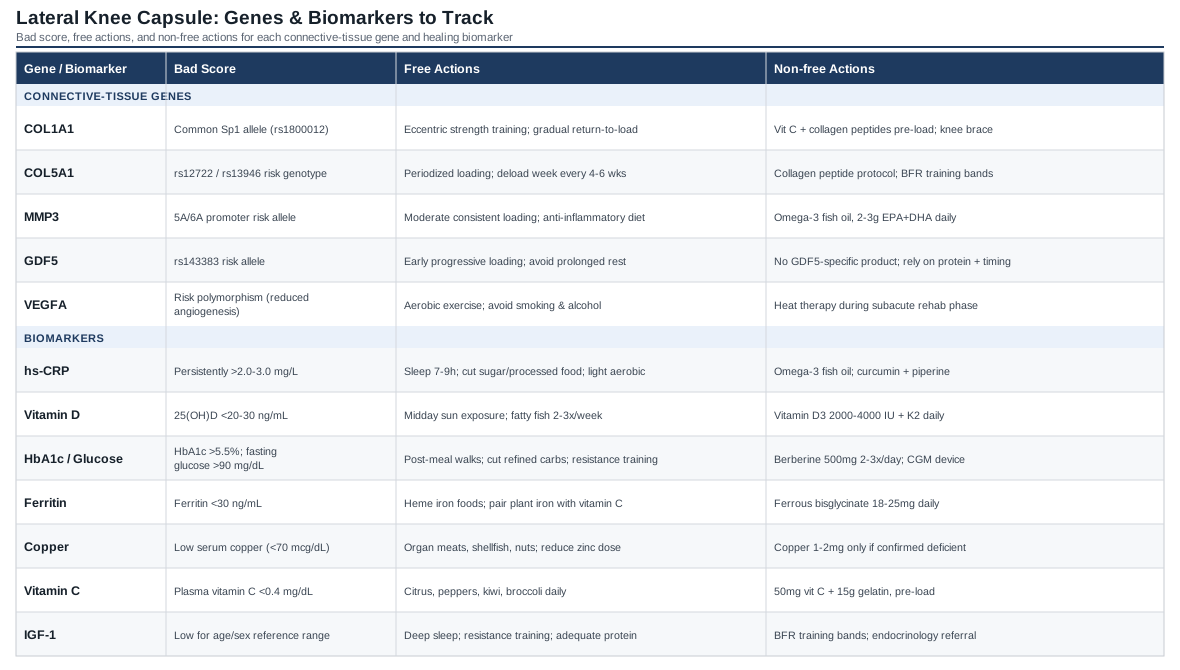
Before going deep, here is the shape of what follows. The core of this article tracks seven biomarkers — from hs-CRP to IGF-1 — that reflect the inflammatory, nutritional, and hormonal environment your lateral knee capsule needs in order to rebuild collagen efficiently, including how each is measured, what a poor result usually means, and specific non-supplement and supplement-based ways to correct it. Beyond that, you will find what current research says about five genes tied to collagen structure and ligament injury risk, a research-backed and slightly contrarian look at the timing of collagen synthesis popularized by tendon researcher Keith Baar, and a short review of complementary approaches — from EMG biofeedback to tai chi — that have actual clinical data behind them for knee joint recovery. Read together, these sections are meant to answer one practical question: out of everything that could be slowing your capsule's healing, what is actually worth testing, tracking, and adjusting first.
7 Biomarkers That Reveal How Well Your Knee Capsule Will Heal
The lateral knee capsule is dense connective tissue — mostly type I and type III collagen — with a modest blood supply compared to muscle. That means its healing rate depends heavily on three systemic factors: how much background inflammation is competing for the same repair resources, whether the cofactors needed for collagen synthesis are actually present in your blood, and whether your hormonal environment is favoring tissue building or tissue breakdown. The seven biomarkers below map directly onto those three factors. None of them are exotic — most can be ordered through a standard blood panel — but very few clinicians check them specifically in the context of a soft tissue sprain, which is exactly why tracking them yourself adds value.
High-Sensitivity C-Reactive Protein (hs-CRP)
hs-CRP is the most sensitive routine marker of systemic inflammation, and it matters here because the same inflammatory signaling that shows up after an acute sprain also responds to your baseline inflammatory load. A capsule healing on top of chronically elevated inflammation is competing with a body that is already busy elsewhere. Recent work on CRP's biology in tissue injury and repair shows the protein is not just a passive marker — it actively participates in the inflammatory and remodeling phases of healing, which is part of why persistently elevated levels are worth paying attention to during recovery, as reviewed in this 2025 analysis of CRP in tissue injury and repair.
How To Measure It
hs-CRP is a standard blood draw available through almost any lab, typically 15 to 40 US dollars out of pocket if not covered by insurance, or bundled into most direct-to-consumer panels (Function Health, Marek Health, LabCorp OnDemand) for little extra cost. A result under 1.0 mg/L is considered low risk, 1.0 to 3.0 mg/L average, and above 3.0 mg/L elevated; Peter Attia's clinical practice generally treats anything persistently above 2.0 mg/L, outside of an acute injury window, as worth investigating.
If The Score Is Bad: The Plan Without Supplements
Prioritize sleep consistency (7 to 9 hours, stable wake time) since even two nights of restricted sleep measurably raises CRP; reduce ultra-processed food and added sugar, which are the two dietary levers with the most consistent CRP-lowering effect in trials; and add two to three low-intensity aerobic sessions per week (walking, cycling) once your capsule can tolerate load, since chronic low-grade inflammation responds well to regular moderate movement. Recheck hs-CRP after 8 to 12 weeks rather than sooner — it moves slowly.
If The Score Is Bad: The Plan With Supplements Or Equipment
Omega-3 fish oil (2 to 3 g EPA+DHA daily, taken with food) has the most consistent trial evidence for modestly lowering CRP over 8 to 12 weeks; cycle it continuously rather than on-and-off, and expect mild fish-oil burps or loose stool at higher doses. Curcumin with piperine (500 to 1000 mg daily) is a reasonable adjunct with weaker but positive evidence; avoid combining high-dose curcumin with blood thinners without medical clearance. Retest hs-CRP at 12 weeks before deciding whether either is worth continuing.
25-Hydroxyvitamin D [25(OH)D]
Vitamin D status is one of the more actionable markers for connective tissue and bone-adjacent healing. Roughly half of fracture patients are found to be deficient at presentation, and low serum 25(OH)D has been associated with slower healing and a higher non-union rate in bone injuries, with plausible relevance to capsule and ligament attachment sites where bone and soft tissue interface, according to this systematic review of vitamin D's role in human fracture healing.
How To Measure It
A 25(OH)D blood test costs roughly 20 to 60 US dollars standalone, or is included in nearly every comprehensive wellness panel. Most labs flag anything under 20 ng/mL as deficient and 20 to 30 ng/mL as insufficient; Attia and most bone-health researchers target 30 to 50 ng/mL rather than simply "in range."
If The Score Is Bad: The Plan Without Supplements
Fifteen to twenty minutes of midday sun exposure on bare arms and legs, several times a week, is the baseline non-supplement lever, though it is unreliable in winter months or northern latitudes. Include fatty fish (salmon, mackerel, sardines) two to three times weekly, which provides a meaningful dietary contribution. Retest after 8 to 12 weeks, since sun and diet alone often are not enough to correct a true deficiency.
If The Score Is Bad: The Plan With Supplements Or Equipment
Vitamin D3 at 2000 to 4000 IU daily with a fat-containing meal is the standard correction dose for mild-to-moderate deficiency; more severe deficiency is sometimes bridged with a higher weekly dose under physician supervision. Pair with vitamin K2 (MK-7, 90 to 180 mcg daily) to support proper calcium utilization. This is a continuous, not cyclical, supplement — retest 25(OH)D every 3 months until stable, then twice yearly. Side effects are rare at these doses but hypercalcemia can occur with excessive, unsupervised high-dose protocols, so avoid megadosing without bloodwork.
HbA1c And Fasting Glucose
Chronic hyperglycemia changes connective tissue at the molecular level. Elevated glucose promotes the formation of advanced glycation end-products (AGEs) that stiffen collagen cross-links and interfere with the tissue's normal remodeling process, and it also reduces proteoglycan content in tendons and ligaments, both of which are directly relevant to how well a healing capsule reorganizes its collagen. This mechanism is explored in a recent narrative review on serum advanced glycation end-products and tendon outcomes in diabetes, and in earlier work showing hyperglycemia reduces proteoglycan levels in tendons.
How To Measure It
HbA1c and fasting glucose are both included in nearly any basic metabolic panel, typically 10 to 30 US dollars combined if ordered outside insurance. A HbA1c under 5.5% is optimal for tissue healing purposes (even though the clinical "normal" cutoff is 5.7%), and fasting glucose ideally sits between 70 and 90 mg/dL.
If The Score Is Bad: The Plan Without Supplements
Walking for 10 to 15 minutes after meals is one of the most reliably effective, zero-cost interventions for post-meal glucose control. Reducing refined carbohydrate and added sugar intake, prioritizing protein and fiber at each meal, and adding resistance training two to three times per week (as tolerated by the healing capsule) all improve insulin sensitivity within weeks. Recheck fasting glucose monthly and HbA1c every 3 months, since HbA1c reflects a 90-day average and will not move faster than that.
If The Score Is Bad: The Plan With Supplements Or Equipment
Berberine (500 mg, two to three times daily with meals) has trial evidence comparable to some first-line glucose-lowering medications, but should be cycled (for example, 8 to 12 weeks on, 2 to 4 weeks off) and can cause gastrointestinal upset; it should not be combined with diabetes medications without medical supervision. A continuous glucose monitor (roughly 50 to 100 US dollars per two-week sensor) is a useful equipment-based option for seeing exactly which foods and activities spike your glucose, which is often more actionable than a single lab value.
Ferritin And Iron Studies
Iron is a required cofactor, alongside oxygen and vitamin C, for prolyl hydroxylase — the enzyme that stabilizes the collagen triple helix during synthesis. Without adequate iron, this hydroxylation step is impaired, which directly limits how efficiently new, structurally sound collagen can be laid down in a healing capsule, a mechanism described in the NCBI Bookshelf overview of collagen synthesis biochemistry.
How To Measure It
A full iron panel (ferritin, serum iron, TIBC, transferrin saturation) runs roughly 30 to 70 US dollars. Ferritin between 50 and 150 ng/mL is generally considered favorable for tissue repair purposes; levels under 30 ng/mL are worth addressing even if technically "in range," since ferritin is also an acute-phase reactant and can be falsely elevated by inflammation, which is why it should be interpreted alongside hs-CRP.
If The Score Is Bad: The Plan Without Supplements
Increase heme iron sources (red meat, poultry, seafood) which absorb far more efficiently than plant-based iron, and pair any plant iron sources (lentils, spinach) with vitamin C-rich foods to improve absorption. Avoid drinking tea or coffee within an hour of iron-containing meals, since tannins reduce absorption meaningfully.
If The Score Is Bad: The Plan With Supplements Or Equipment
Ferrous bisglycinate (18 to 25 mg elemental iron daily, or every other day, which recent absorption research suggests may work as well as daily dosing with less gastrointestinal upset) is a reasonably well-tolerated option. Take it away from calcium and dairy, which block absorption. Constipation and nausea are the most common side effects. Iron should not be supplemented without a confirmed deficiency — retest ferritin after 8 to 12 weeks, and stop once levels normalize, since chronic unnecessary iron supplementation carries its own oxidative stress risk.
Copper And Ceruloplasmin
Copper is the essential cofactor for lysyl oxidase, the enzyme that cross-links collagen and elastin fibers and gives connective tissue its tensile strength. In copper deficiency, lysyl oxidase activity drops and connective tissue becomes structurally weaker, an effect documented in classic work on copper's role in the synthesis of elastin and collagen. This marker is far less commonly checked than vitamin D or iron, but it is directly relevant to how well cross-linked and durable your rebuilt capsule tissue will be.
How To Measure It
Serum copper and ceruloplasmin together cost roughly 40 to 80 US dollars and are not part of most standard panels, so they usually need to be specifically requested. Serum copper of 70 to 140 mcg/dL is typical, though true deficiency is uncommon outside of malabsorption, excessive zinc supplementation, or bariatric surgery history — worth checking specifically if you supplement zinc regularly, since high-dose zinc depletes copper.
If The Score Is Bad: The Plan Without Supplements
Include organ meats, shellfish (especially oysters), nuts, seeds, and dark chocolate, all of which are naturally copper-dense. If you are taking zinc supplements for another reason, reduce the dose or pause it, since excess zinc is one of the most common drivers of acquired copper deficiency.
If The Score Is Bad: The Plan With Supplements Or Equipment
Copper supplementation (1 to 2 mg daily) is only appropriate with a confirmed low level, ideally alongside a practitioner familiar with trace mineral balance, since the therapeutic window between correcting deficiency and causing copper excess is narrow. It should be taken separately from zinc and iron supplements, which compete for absorption, and retested after 8 to 12 weeks rather than continued indefinitely without follow-up.
Plasma Vitamin C
Vitamin C is the second essential cofactor, alongside iron, for prolyl and lysyl hydroxylase, and it is also the ingredient that made a well-known collagen synthesis study work at all — gelatin alone did not meaningfully raise collagen synthesis markers, but vitamin C-enriched gelatin did, roughly doubling a marker of new collagen formation when timed correctly before loading, as shown in this randomized crossover study on vitamin C-enriched gelatin and collagen synthesis (more on the timing detail in the section below on collagen-loading research).
How To Measure It
Plasma vitamin C is a less commonly ordered test, typically 30 to 60 US dollars through a specialty or functional-medicine lab, since it is not part of standard panels. Levels below 0.4 mg/dL are considered deficient and above 0.6 mg/dL adequate; because vitamin C is water-soluble and cleared quickly, values reflect only the last day or two of intake, so consider it more of a habit check than a stable trait marker.
If The Score Is Bad: The Plan Without Supplements
Citrus fruit, bell peppers, kiwi, broccoli, and strawberries all provide substantial vitamin C, and two to three servings daily is generally enough to keep plasma levels adequate without supplementation. Vitamin C is heat-sensitive, so lightly cooked or raw preparation preserves more of it than prolonged cooking.
If The Score Is Bad: The Plan With Supplements Or Equipment
A standard 500 to 1000 mg vitamin C dose is sufficient for general repletion; the specific collagen-timing protocol from the research above uses roughly 50 mg of vitamin C combined with 15 g of gelatin or hydrolyzed collagen peptides, taken about 60 minutes before a loading or rehab session. This is a pre-training ritual rather than a daily supplement, so cycling is naturally built in (used on training days only). High-dose vitamin C (above 2000 mg) can cause diarrhea and, in people prone to kidney stones, may increase oxalate load, so stay within standard dosing unless following a specific studied protocol.
Insulin-Like Growth Factor 1 (IGF-1)
IGF-1 acts as a central signaling molecule across nearly every phase of tendon and ligament repair — it reduces excess inflammation, stimulates fibroblast activity, and enhances collagen synthesis during remodeling, functions summarized in this 2025 review of IGF-1 in tendon regenerative therapies. Low IGF-1 does not mean healing stops, but it does suggest the hormonal environment is less favorable for efficient tissue remodeling.
How To Measure It
Serum IGF-1 costs roughly 40 to 90 US dollars and is included in many comprehensive hormone panels. Reference ranges are age- and sex-dependent, so results should be interpreted against your specific age bracket rather than a single universal number; most functional practitioners look for a result in the upper-middle portion of the age-adjusted range rather than simply "in range."
If The Score Is Bad: The Plan Without Supplements
Prioritize deep sleep, since growth hormone (and downstream IGF-1) release is concentrated in the first few hours of sleep; a consistent bedtime and dark, cool sleep environment matter more here than almost any supplement. Resistance training, sufficient total protein intake (roughly 1.6 to 2.2 g per kg bodyweight daily, adjusted for injury status), and avoiding chronic caloric deficit all support healthier IGF-1 levels.
If The Score Is Bad: The Plan With Supplements Or Equipment
There is no well-supported over-the-counter supplement that reliably and safely raises IGF-1 in someone without a deficiency, and this is a marker where more is not automatically better — chronically elevated IGF-1 has its own long-term risk considerations, so the goal is correcting genuine insufficiency, not maximizing the number. If a true deficiency is confirmed, this is a hormone-axis issue that belongs with an endocrinologist rather than a self-directed supplement plan; equipment-based approaches like blood flow restriction (BFR) training bands, used under guidance during rehab, can locally stimulate the growth-factor signaling relevant to healing without needing to change systemic IGF-1 levels at all.
Taken together, these seven markers describe a fairly complete picture of whether your body currently has the inflammatory control, the raw material cofactors, and the hormonal signaling to rebuild a lateral knee capsule efficiently. From here, it is worth stepping back to a different layer of the question: not what your blood looks like right now, but what your genes suggest about your baseline connective tissue resilience.
What Genetics Research Suggests About Lateral Capsule And Ligament Resilience
Genetic research into connective tissue injury has grown quickly, partly driven by sports medicine's interest in predicting ACL and Achilles injury risk, and partly by broader interest in personalized health popularized by researchers like Ali Torkamani, whose work on interpreting genomic data has pushed consumer genetics toward more rigorous, evidence-graded conclusions, and Gary Brecka, who has popularized practical protocols built around common gene variants. The honest caveat up front: most of the following associations come from moderate-sized human cohort studies and meta-analyses, not large-scale genome-wide studies with independent replication, and no professional body currently endorses using these variants for individual injury prediction. They are useful as context, not as a verdict.
COL1A1
COL1A1 encodes a chain of type I collagen, the dominant structural protein in ligaments and the joint capsule. A regulatory variant near the gene's Sp1 binding site (rs1800012) has been studied extensively; the less common allele has been associated with a reduced risk of cruciate ligament rupture in several cohorts, suggesting the more common variant may produce a slightly more pliable, injury-prone collagen matrix, as reviewed in this study of COL1A1 and related gene variants in elite Australian Football League players.
If The Gene Variant Is Unfavorable: The Plan Without Supplements
Since COL1A1 variants are associated with more elastic, less stiff connective tissue, the practical compensation is building surrounding muscular support rather than trying to change tissue stiffness directly. Structured eccentric strengthening for the quadriceps, hamstrings, and hip abductors two to three times per week reduces the mechanical load the capsule itself has to absorb. Prioritize a longer, more gradual return-to-load timeline after any sprain rather than the standard timeline, since more elastic collagen may need more repetitions to reach the same mechanical stiffness.
If The Gene Variant Is Unfavorable: The Plan With Supplements Or Equipment
The same vitamin C plus collagen peptide pre-loading protocol described in the biomarker section (roughly 15 g hydrolyzed collagen with 50 mg vitamin C, 60 minutes before training, on training days only) is the best-studied nutritional lever here, since it directly targets collagen synthesis rate rather than trying to alter the gene's expression. A knee sleeve or brace during early return-to-sport phases is a reasonable low-risk equipment option while confidence in the joint rebuilds; there are no meaningful side effects to either approach beyond standard collagen-peptide tolerance (mild digestive upset in some people at higher doses).
COL5A1
COL5A1 encodes a minor but structurally important collagen chain that regulates the diameter and organization of type I collagen fibrils. The rs12722 and rs13946 variants have been the most studied, with meta-analyses in Caucasian cohorts showing a reduced-risk association between certain genotypes and tendon-ligament injury, though effect sizes are modest and not consistent across all ethnic groups, per this meta-analysis of COL5A1 polymorphisms and tendon-ligament injury risk.
If The Gene Variant Is Unfavorable: The Plan Without Supplements
Because COL5A1 affects fibril diameter and tissue stiffness, a gradual, well-periodized loading program is again the primary lever — sudden increases in training volume or intensity are the most common trigger for capsule and ligament injury in people with less favorable fibril organization. Building in a deload week every four to six weeks during return-to-sport training reduces cumulative strain on tissue that may already be structurally more injury-prone.
If The Gene Variant Is Unfavorable: The Plan With Supplements Or Equipment
There is no supplement that changes fibril diameter directly, but adequate total protein intake and the same timed collagen-peptide protocol support the raw material side of the equation. Blood flow restriction (BFR) training equipment, used under supervision, allows meaningful tissue loading stimulus at lower absolute joint stress during early rehab, which may be particularly useful if you know your connective tissue genetics lean toward higher injury risk.
MMP3
MMP3 (matrix metalloproteinase 3) encodes an enzyme responsible for breaking down and remodeling extracellular matrix components, including collagen and proteoglycans, as part of normal tissue turnover. Variants in the MMP3 promoter region (commonly the 5A/6A polymorphism) have been studied for their association with ACL rupture and Achilles tendinopathy, generally in combination with COL5A1 genotype rather than alone, with associations summarized in this systematic review and meta-analysis of genes and sports injuries.
If The Gene Variant Is Unfavorable: The Plan Without Supplements
Because MMP3 affects matrix turnover rate, tissue may remodel either too slowly or with less organized structure after injury; consistent, moderate mechanical loading (rather than either complete rest or aggressive early loading) gives the remodeling process the mechanical signal it needs without overwhelming it. Anti-inflammatory dietary patterns (reducing seed oils and ultra-processed foods, emphasizing omega-3-rich foods) may help since MMP3 activity is partly inflammation-driven.
If The Gene Variant Is Unfavorable: The Plan With Supplements Or Equipment
Omega-3 fish oil (2 to 3 g daily) has modest evidence for moderating inflammatory matrix metalloproteinase activity broadly, and can be used continuously rather than cycled; expect mild digestive side effects at higher doses. There is no targeted MMP3-specific supplement with human injury evidence, so this variant is best compensated for through training structure rather than supplementation.
GDF5
GDF5 (growth differentiation factor 5) plays a direct functional role in tendon and ligament development and repair signaling. The rs143383 variant in the gene's regulatory region has shown associations with Achilles tendon pathology and, less consistently, with ACL injury risk, though the evidence for cruciate ligament injury specifically remains mixed across studies, as discussed in this analysis of the GDF5 gene and anterior cruciate ligament rupture.
If The Gene Variant Is Unfavorable: The Plan Without Supplements
Since GDF5 is involved in the signaling that initiates repair, the most relevant compensation is ensuring the mechanical stimulus for repair is actually present early and consistently — controlled, progressive loading starting as soon as it is medically appropriate, rather than prolonged immobilization, gives whatever GDF5 signaling capacity you have the best chance to work.
If The Gene Variant Is Unfavorable: The Plan With Supplements Or Equipment
No supplement directly increases GDF5 signaling in humans with reliable evidence. Practically, this means leaning more heavily on the mechanical and nutritional levers described elsewhere in this article (collagen-peptide timing, adequate protein, progressive loading) rather than seeking a GDF5-specific product, since none currently exists outside of experimental and animal research.
VEGFA
VEGFA (vascular endothelial growth factor A) governs angiogenesis — the formation of new blood vessels — which matters directly for a structure like the lateral capsule that already has relatively limited blood supply. Certain VEGFA polymorphisms have been associated with altered tendon and ligament injury risk, plausibly through their effect on how well the injured area can be resupplied with the blood flow needed for repair, according to this systematic review and meta-analysis on VEGFA polymorphisms and tendon-ligament injury risk.
If The Gene Variant Is Unfavorable: The Plan Without Supplements
Regular low-to-moderate intensity aerobic exercise is one of the most reliable non-pharmacological ways to support healthy angiogenesis and capillary density system-wide; three to four sessions per week of walking, cycling, or swimming (as tolerated by the injury) supports this pathway even while the knee itself is still restricted. Avoiding smoking and excessive alcohol is particularly relevant here, since both measurably impair angiogenic capacity.
If The Gene Variant Is Unfavorable: The Plan With Supplements Or Equipment
There is no well-validated supplement proven to safely enhance VEGFA-driven angiogenesis in humans for injury recovery, and this is an area where caution is warranted, since some substances marketed as "angiogenesis boosters" have no rigorous human injury data behind them. Localized heat therapy (heating pad, 15 to 20 minutes, once tissue is past the acute inflammatory phase) is a low-risk, low-cost way to support regional blood flow, and can be used a few times per week during the subacute rehab phase, with no meaningful side effects beyond standard heat-therapy precautions around active inflammation.
Genetics context aside, one of the more practically useful shifts in recent tendon and ligament research is not about genes at all — it is about timing. The next section covers a body of work that challenges the standard "rest first, load later" instinct most people still follow after a soft tissue injury.
The Collagen-Timing Research That Challenges The Standard Rest-First Approach
Much of the most practically useful recent thinking on ligament and capsule healing comes not from a single book but from the tendon and ligament research of Dr. Keith Baar, a physiologist whose work has been discussed at length on the Huberman Lab podcast in episodes covering tendon, ligament, and connective tissue health. The throughline of this research is a genuine challenge to a common assumption: that rest is the safest default after a soft tissue injury, and that loading should wait until pain is fully gone. Baar's collagen synthesis research suggests a more nuanced and, in some ways, more actionable picture.
Collagen Tissue Heals On A Different Clock Than Muscle
Ligaments and joint capsules have far lower blood flow and a lower density of repair-capable cells than skeletal muscle, which is why the same "two weeks and you're fine" recovery mentality that works for a muscle strain routinely fails for a capsule or ligament sprain. Recovery timelines need to be set by tissue type, not by how the pain feels day to day.
Complete Immobilization Slows Healing More Than Controlled Loading Does
Fully resting a healing capsule removes the mechanical signal that tells fibroblasts to align new collagen fibers along the lines of stress the tissue will actually need to withstand. Without that signal, collagen is laid down in a more disorganized, weaker pattern — which is part of why capsules that are immobilized too long often feel stiff and unstable even after pain resolves.
There Is A Genuine Post-Loading Window For Collagen Synthesis
Collagen synthesis markers rise noticeably in the hour or so following a loading stimulus, then taper. This is the biological basis for timing nutrition and rehab loading close together rather than treating them as unrelated parts of the day.
Gelatin Or Collagen Peptides Alone Are Not Enough
In the randomized, double-blinded, crossover study described earlier, gelatin without added vitamin C did not meaningfully move the needle on collagen synthesis markers. The vitamin C was not incidental — it is the enzymatic cofactor that makes the raw amino acids usable for building stable collagen.
The Effective Dose Was Surprisingly Specific
Fifteen grams of vitamin C-enriched gelatin, taken about one hour before intermittent loading activity, roughly doubled a blood marker of new type I collagen formation compared to placebo — a dose-dependent effect that was not seen at the lower 5 g dose tested in the same study.
Timing Relative To Training, Not Just Total Daily Intake, Appears To Matter
Taking the same nutrients at a different time of day, disconnected from a loading stimulus, is a fundamentally different intervention than timing them beforehand. This is a genuine departure from the "just hit your daily total" framing common in general nutrition advice.
Engineered Ligament Tissue Confirmed The Mechanism, Not Just The Blood Marker
The same research group tested serum collected from supplemented subjects on lab-grown ligament tissue and found that the serum taken after loading with vitamin C-enriched gelatin produced measurably stronger, more collagen-dense engineered tissue than serum from the placebo condition — evidence that the blood marker change reflects a real structural effect, not just a lab curiosity.
This Reframes "Prehab" Nutrition As A Repeatable Ritual, Not A One-Time Fix
Because the collagen synthesis window is tied to each individual loading session, the practical takeaway is a repeatable pre-rehab or pre-training ritual (on training days, not daily) rather than a single supplement decision made once and forgotten.
None Of This Replaces Graded Clinical Rehab
Baar's research is about optimizing the biological environment for collagen synthesis around loading sessions that a physical therapist or sports medicine physician should still be designing and progressing; it is a nutritional and timing lever layered onto clinical rehab, not a substitute for it.
The Broader Challenge To Standard Practice
Taken as a whole, this research pushes back on two long-standing defaults — that rest is always safer than controlled loading, and that nutrition timing does not matter as long as totals are met — and replaces them with a more specific, testable protocol that is now used in some elite sports medicine settings, even though it has not yet become standard advice in general orthopedic care.
Nutrition and loading timing address the biological environment for healing; the following approaches address the nervous system and movement-quality side of recovery, which matters just as much for a joint capsule that depends on proprioceptive feedback to reload safely.
Complementary Approaches Worth Considering
The four approaches below were chosen because each has actual human clinical data connected to knee joint rehabilitation, proprioception, or pain modulation — not because they are popular. Several commonly recommended complementary options for soft tissue injuries (including low-level laser therapy for ligament sprains) were left out deliberately, since the strongest available randomized trial data for that specific application has actually shown no benefit, or in one large trial, worse outcomes than placebo. The four included here have a more favorable evidence base.
EMG Biofeedback
EMG (electromyographic) biofeedback uses surface sensors to give real-time visual or audio feedback on muscle activation, which is directly useful after a knee capsule sprain because pain and swelling often cause the surrounding muscles, especially the quadriceps, to under-activate reflexively (arthrogenic muscle inhibition) even once the tissue itself is capable of more.
A randomized controlled trial in patients recovering from anterior cruciate ligament reconstruction found that adding EMG biofeedback targeting the vastus medialis during the first postoperative weeks improved knee extension and strength compared to standard rehabilitation alone, as reported in this randomized controlled trial of EMG biofeedback after ACL reconstruction.
For a lateral capsule sprain, a realistic application is working with a physical therapist who has EMG biofeedback equipment during the early-to-mid rehab phase, focused specifically on restoring full quadriceps activation before progressing to more dynamic loading; home EMG units exist but are best used under initial guidance so electrode placement and interpretation are accurate.
Tai Chi
Tai chi is a slow, weight-shifting movement practice that places continuous, low-load demand on joint position sense, which makes it relevant to capsule injuries specifically because the joint capsule itself contains mechanoreceptors responsible for proprioceptive feedback that can be disrupted after a sprain.
A pilot randomized controlled trial in adults with knee osteoarthritis found that a 12-week, twice-weekly modified Yang-style tai chi program produced measurable improvements in knee-joint proprioceptive accuracy compared to an attention-control group, as shown in this pilot RCT on tai chi and knee proprioception. The evidence base here is specific to osteoarthritis rather than acute capsule sprains, so the extrapolation is reasonable but not condition-specific.
Once cleared for weight-bearing movement, two sessions per week of a beginner tai chi routine focused on slow single-leg weight shifts can be a low-impact way to rebuild the proprioceptive side of capsule healing, ideally introduced after the acute swelling phase has resolved and under a clinician's clearance for the specific movements involved.
Mindfulness Meditation
Mindfulness practice does not change tissue biology, but chronic pain and the anxiety around reinjuring a joint both measurably influence how pain is perceived and how willing someone is to reload a joint appropriately, which makes pain-focused mindfulness relevant to the later, more psychological phase of capsule sprain recovery.
A systematic review and meta-analysis of randomized controlled trials found mindfulness meditation associated with a small but consistent reduction in chronic pain intensity compared to control conditions, as summarized in this meta-analysis of mindfulness meditation for chronic pain; the effect size is modest, and evidence specific to acute knee capsule injury is limited, so this is best framed as a supportive tool rather than a primary treatment.
A realistic starting point is a 10-minute guided body-scan or breath-focused practice, four to five times per week, particularly useful during the phase when pain has mostly resolved but hesitation to load the knee fully remains — this is often where fear of reinjury, more than tissue status, is the actual limiting factor.
Massage Therapy
Manual massage around a healing joint can reduce localized muscle guarding, support lymphatic drainage of post-injury swelling, and improve the subjective sense of mobility, all of which are relevant to a capsule sprain where surrounding muscle tightness often outlasts the tissue injury itself.
A systematic review and meta-analysis of randomized controlled trials evaluating massage therapy after total knee arthroplasty found it produced meaningful improvements in pain and functional recovery measures compared to standard care, as reported in this meta-analysis of massage therapy for knee joint rehabilitation; the evidence is from a surgical knee population rather than isolated capsule sprains specifically, so results should be viewed as suggestive rather than definitive for this exact injury.
A practical approach is scheduling massage focused on the quadriceps, IT band, and hamstrings (avoiding direct pressure on the acutely inflamed capsule itself) once or twice weekly during the subacute phase, shifting to as-needed maintenance sessions once normal activity resumes.
Conclusion
A lateral knee capsule sprain heals at the intersection of mechanics, biochemistry, and time, and the standard rest-and-wait advice only really addresses the first of those three. The biomarkers in this article — hs-CRP, vitamin D, HbA1c, ferritin, copper, vitamin C, and IGF-1 — give you a concrete way to check whether your body currently has the inflammatory control and raw materials needed for efficient collagen repair, while the genetics research on COL1A1, COL5A1, MMP3, GDF5, and VEGFA offers useful, if still early-stage, context on your baseline connective tissue tendencies. None of it replaces a proper clinical diagnosis or a structured rehab program, but together it turns a vague recovery timeline into a set of specific, checkable variables.
The most useful next step is a practical one: get the biomarker panel drawn, bring the results to whoever is managing your rehab, and use them to decide what actually needs adjusting, rather than guessing. If a sprain is not progressing the way it should, that conversation, backed by real numbers, is worth more than another few weeks of waiting to see.