This article contains AI generated content.
Löfgren's Syndrome Genes And Biomarkers: 5 Genes And 7 Biomarkers To Track
If you've just been told you have Löfgren's syndrome, you've probably already heard the short version: painful red bumps on your shins, swollen ankles, a chest X-ray that surprised everyone by showing enlarged lymph nodes, and a doctor who said some version of "it usually goes away on its own." That last part is true for most people. But "usually" is doing a lot of work in that sentence, and if you're the kind of person who wants to understand what's actually happening in your body rather than just wait it out, that sentence isn't enough.
Generic advice — rest, take an anti-inflammatory, come back if it doesn't improve — is built for the average case, not your case. It doesn't explain why some people clear the whole episode in eight weeks while others drift into a slower, more persistent form of sarcoidosis. It doesn't tell you which lab values are worth asking for, which ones are noise, or why your genetics might already predict a lot of your outcome before any treatment even starts.
This article takes a more specific approach. It walks through the blood biomarkers that pulmonologists and rheumatologists actually use to track Löfgren's syndrome and sarcoidosis activity — what each one measures, what it costs, and what a reasonable response looks like when a value comes back abnormal. It also covers the genetic markers, led by one with unusually strong evidence, that shape how this condition behaves in your particular body. Neither of these will cure anything by themselves. But they change a vague waiting period into something you can actually track and reason about.
Better information doesn't guarantee a better outcome, but it consistently leads to better decisions — about what to ask your doctor, what to monitor, and what to leave alone. The sections ahead move from the most immediately practical (biomarkers you can request this month) to the most explanatory (genes that help you understand why your course looks the way it does), then to a research-backed podcast breakdown and a short review of complementary approaches with real evidence behind them.
Summary
Löfgren's syndrome is the "good" version of sarcoidosis — but good is relative, and the difference between a clean resolution in a few months and a drawn-out course over years often comes down to specific, measurable things. One genetic marker in particular, HLA-DRB1*03, is one of the strongest disease-course predictors found in any rheumatic or granulomatous condition: carriers have roughly a 95% chance of full resolution within two years, while non-carriers face a much higher risk of chronic, non-resolving disease.
This article covers seven blood biomarkers worth tracking — from the familiar (serum ACE, calcium) to the underused (soluble IL-2 receptor, adenosine deaminase) — with real cost ranges and realistic plans for when a value is out of range. It also covers five genes tied to sarcoidosis susceptibility and course, a research-backed breakdown of a recent immune-system podcast worth your time, and a short review of complementary approaches that actually have human evidence behind them for this condition. One of the more counterintuitive findings ahead: for this specific disease, more vitamin D and calcium is sometimes the wrong instinct. Read on before you reach for a supplement bottle.
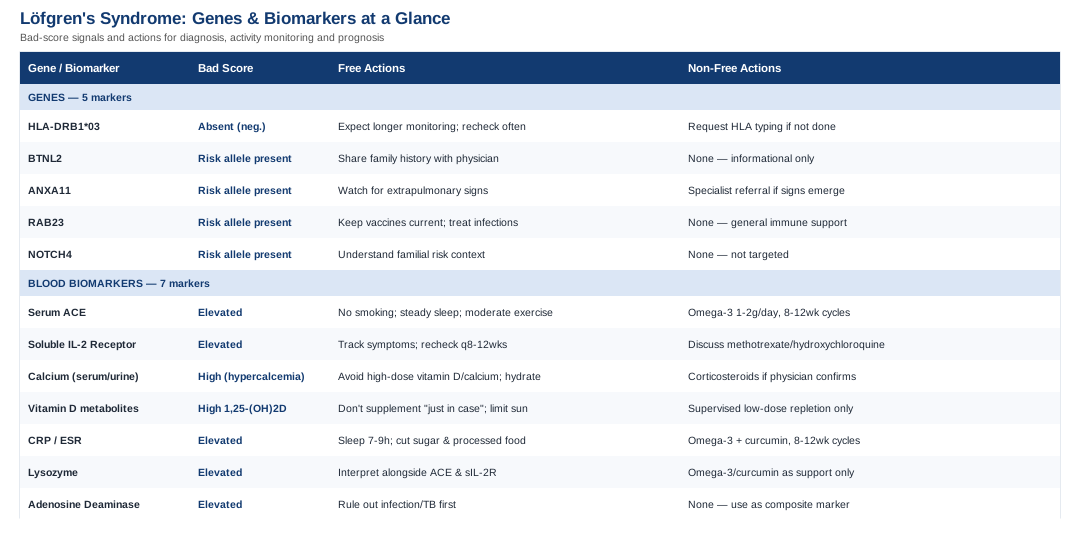
7 Blood Biomarkers Worth Tracking In Löfgren's Syndrome
Löfgren's syndrome is diagnosed clinically — the combination of erythema nodosum, bilateral hilar lymphadenopathy, and ankle periarthritis is specific enough that biopsy usually isn't needed, according to NCBI's clinical review of the condition. But diagnosis is only the starting point. The biomarkers below aren't used to confirm what you already know — they're used to answer the more useful question: how active is this right now, and is it heading toward resolution or toward a more chronic course? None of these are typically ordered automatically at a general checkup, so it's worth being specific with your physician about which ones you want tracked and how often.
Serum ACE (sACE)
Angiotensin-converting enzyme is produced by the epithelioid and giant cells that make up sarcoid granulomas, which is why it rises when granulomatous inflammation is active. It's the most historically used sarcoidosis biomarker and the only one referenced in international WASOG guidelines for diagnosis and follow-up. Its main limitation is modest sensitivity and specificity — a meta-analysis found it useful for tracking activity but imperfect as a standalone diagnostic tool, and a separate reassessment confirmed it still has a high negative predictive value, meaning a normal result is more useful for ruling things out than an elevated one is for ruling things in (meta-analysis on ACE performance in sarcoidosis, re-evaluation of serum ACE in sarcoidosis).
How to measure it
A simple blood draw, available through most major labs (Quest, LabCorp, or hospital labs), typically costing $50–$150 out of pocket if not covered by insurance. No fasting required.If it's elevated: the plan without supplements
Avoid smoking and vaping, since both worsen pulmonary inflammation independent of sarcoidosis activity. Prioritize consistent sleep and moderate, non-exhausting movement rather than intense training during an active flare — overtraining adds inflammatory load your body is already managing. Recheck the marker in 6–8 weeks rather than daily; ACE moves slowly and short-term fluctuation isn't meaningful.If it's elevated: the plan with supplements or equipment
Omega-3 fish oil (roughly 1–2g combined EPA/DHA daily, taken with food) has general anti-inflammatory support in the broader literature, though it hasn't been studied specifically for lowering ACE in sarcoidosis. Cycle it in 8–12 week blocks with a recheck of your lipid panel, since high doses can mildly increase bleeding risk — avoid combining with anticoagulants without medical guidance. This is a supportive measure, not a substitute for the NSAID, colchicine, or short corticosteroid course your physician may prescribe if the disease is genuinely active rather than resolving.Soluble IL-2 Receptor (sIL-2R)
sIL-2R reflects T-cell activation, which makes it a more sensitive activity marker than ACE in most direct comparisons. A systematic review and meta-analysis found pooled sensitivity around 88% and specificity around 87%, notably better than ACE's roughly 62%/76%. It's also been shown to track especially well with multi-organ involvement, making it useful if your case seems to be extending beyond the classic triad (diagnostic accuracy of sIL-2R in sarcoidosis, sIL-2R versus ACE and lysozyme for multi-organ disease).
How to measure it
This is a send-out specialty test, not part of routine panels, typically costing $150–$300. Ask specifically for "soluble IL-2 receptor" or "soluble CD25" — some labs list it under immunology rather than standard chemistry panels.If it's elevated: the plan without supplements
Track it alongside symptoms rather than in isolation — joint pain, fatigue, and new organ-specific symptoms (eye redness, skin changes, breathlessness) matter more than the number alone. Space rechecks 8–12 weeks apart during a watch-and-wait period, since this marker also changes slowly.If it's elevated: the plan with supplements or equipment
There's no supplement shown to directly lower sIL-2R in sarcoidosis, so this is one marker where the honest answer is: don't reach for a bottle. If it stays persistently high alongside worsening symptoms, that's a signal to discuss immunomodulating treatment (methotrexate, hydroxychloroquine) with your physician rather than a signal to self-treat.Serum And 24-Hour Urine Calcium
This is arguably the most important — and most counterintuitive — biomarker on this list. Granulomas in sarcoidosis contain activated macrophages that produce their own 1-alpha-hydroxylase enzyme, converting vitamin D into its active form outside of normal kidney control. This can drive hypercalcemia in roughly 6–18% of sarcoidosis cases, occasionally severe enough to cause kidney stones or kidney injury if unrecognized.
How to measure it
Serum calcium is part of any basic metabolic panel, roughly $10–$25. A 24-hour urine calcium collection, used when serum calcium is borderline or hypercalciuria is suspected, runs about $30–$70.If it's elevated: the plan without supplements
Reduce prolonged, intense sun exposure and avoid high-dose vitamin D and calcium supplements entirely until your physician confirms your levels are stable — this is the opposite of the usual "get more sun and vitamin D" advice, and it exists specifically because of how this disease behaves. Stay well hydrated, since adequate fluid intake helps the kidneys manage excess calcium load, and moderate dietary calcium is fine, but supplemental megadoses are not.If it's elevated: the plan with supplements or equipment
This is the one marker where the honest supplement plan is to avoid supplementing. If hypercalcemia is confirmed and symptomatic, treatment is medical (corticosteroids reduce the abnormal 1-alpha-hydroxylase activity), not nutraceutical. Equipment-wise, a home BP cuff and simple hydration tracking are more useful here than any device marketed for "detox" or mineral balance.Vitamin D Metabolites (25-OH D vs. 1,25-(OH)2D)
This pairs directly with the calcium marker above. In most people, checking 25-hydroxyvitamin D (the standard "vitamin D level") is enough. In sarcoidosis, it's often more informative to also check 1,25-dihydroxyvitamin D (calcitriol), the active hormone form — because it's this one, not the storage form, that granulomas overproduce. A normal or even low 25-OH D alongside an elevated 1,25-(OH)2D is a distinctly sarcoidosis-flavored pattern documented in the literature (review of vitamin D physiology in sarcoidosis).
How to measure it
25-OH D is routine, $40–$90. 1,25-(OH)2D is a specialty order that many labs don't run by default — you'll likely need to ask for it explicitly — and typically costs $100–$250.If 1,25-(OH)2D is elevated: the plan without supplements
Do not supplement vitamin D "just in case," even if your 25-OH D looks low — that's the exact scenario that misleads people into worsening hypercalcemia. Limit prolonged midday sun exposure during an active flare, and mention this pattern explicitly if any provider suggests standard vitamin D repletion without knowing your sarcoidosis history.If 1,25-(OH)2D is elevated: the plan with supplements or equipment
Again, no equipment or supplement protocol applies here beyond avoidance. If your case is genuinely vitamin D deficient by the storage marker and asymptomatic on the active marker, any repletion should be low-dose, physician-supervised, and rechecked within 4–6 weeks rather than the standard "take 2000 IU indefinitely" approach used in the general population.CRP And ESR
C-reactive protein and erythrocyte sedimentation rate are the cheapest, most accessible general inflammation markers, and they're reasonable to track for a rough sense of overall inflammatory load. Their limitation is specificity — one comparison study found that among several activity markers tested in sarcoidosis, CRP was less consistently tied to disease activity than more sarcoidosis-specific markers, with serum amyloid A performing better as an activity signal in that analysis (comparison of sarcoidosis activity markers). If your lab offers it, serum amyloid A (SAA) is worth adding as a more advanced companion test, though it's less widely available.
How to measure it
CRP and ESR together typically run $15–$40 and are included in most basic inflammatory panels. SAA is a specialty add-on, roughly $50–$100 where available.If it's elevated: the plan without supplements
Prioritize sleep consistency (7–9 hours, stable wake time), since poor sleep independently raises CRP in the general population. Reduce ultra-processed food and added sugar, which are reliably associated with higher CRP across many conditions, and keep alcohol minimal during an active flare.If it's elevated: the plan with supplements or equipment
Omega-3s (1–2g/day EPA/DHA) and curcumin (500–1000mg of a standardized, piperine- or phospholipid-enhanced extract, taken with food) both have general evidence for modestly lowering CRP in inflammatory conditions broadly. Cycle curcumin in 8–12 week blocks with a break, since long-term high-dose use can cause GI upset and isn't well studied beyond that window; avoid it if you have gallstones or are on blood thinners. These are supportive measures for general inflammatory load, not sarcoidosis-specific treatments.Lysozyme
Lysozyme is released by the same activated macrophages that drive granuloma formation, making it a legitimate, if older and less sensitive, activity marker. Direct comparison studies have found it less sensitive than sIL-2R, but it remains useful as part of a fuller picture, particularly when tracked alongside ACE (sIL-2R compared with ACE and lysozyme).
How to measure it
A specialty send-out test, roughly $40–$90, not part of standard panels.If it's elevated: the plan without supplements
Treat it as confirmatory rather than decisive — an elevated lysozyme alongside elevated sIL-2R and ACE is a more meaningful pattern than any single value. Recheck in step with your other activity markers rather than on its own schedule.If it's elevated: the plan with supplements or equipment
No supplement has direct evidence for lowering lysozyme in sarcoidosis. The same general anti-inflammatory adjuncts listed under CRP (omega-3s, curcumin) apply as supportive measures, on the same cycling and caution notes.Adenosine Deaminase (ADA)
ADA is an enzyme released by activated lymphocytes and macrophages, elevated across granulomatous conditions including sarcoidosis and tuberculosis. It's most established in fluid samples (pleural or CSF) but can also be checked in serum, and appears in several comparative panels of sarcoidosis activity markers alongside ACE and sIL-2R (comparison of granulomatous disease activity markers).
How to measure it
Roughly $40–$80 for serum ADA; more expensive if drawn from pleural fluid via a separate procedure, which is only relevant if you have a pleural effusion.If it's elevated: the plan without supplements
Because ADA also rises in tuberculosis and other infections, an elevated result deserves a conversation about ruling out infectious causes before attributing it purely to sarcoidosis — don't self-interpret this one.If it's elevated: the plan with supplements or equipment
No direct supplement protocol applies. This marker is best used as part of the composite picture (alongside ACE, sIL-2R, and lysozyme) rather than something to individually target.Taken together, these seven values give you and your physician a genuinely useful activity dashboard — far more informative than "how are you feeling" alone, and specific enough to catch a slow drift toward chronic disease before it becomes obvious clinically.
What Your Genes May Already Be Telling You
Biomarkers tell you what's happening right now. Genetics helps explain why your particular case is likely to behave the way it does — and in Löfgren's syndrome, one genetic marker in particular is unusually predictive, more so than in most conditions covered by mainstream genetics content from researchers like Ali Torkamani or public figures like Gary Brecka, who tend to focus on more general longevity-related variants. Sarcoidosis genetics is a case where the research is specific, human, and directly clinically relevant.
HLA-DRB1*03
This is the single most important genetic marker in Löfgren's syndrome. In a large, well-cited cohort study, only 1% of HLA-DRB1*03-positive patients had non-resolving disease and 4% relapsed, while 49% of DRB1*03-negative patients had non-resolving disease. Carriers also tend to have a more classic, self-limited presentation, while non-carriers more often show higher ACE levels, extrapulmonary involvement, and a more chronic course (Grunewald and Eklund, HLA and disease course in Löfgren's syndrome).
If the gene result is unfavorable: the plan without supplements
Being HLA-DRB1*03-negative doesn't mean a worse fate is guaranteed — it means your disease course is statistically more likely to need closer follow-up. Set a realistic expectation with your physician for longer or repeated monitoring (the biomarker panel above, checked quarterly rather than assumed resolved after a few months), and don't be discouraged if resolution takes longer than the "textbook" case.If the gene result is unfavorable: the plan with supplements or equipment
There's nothing here to "fix" with a supplement — this is a case where the genuinely useful action is informational, not interventional. What it does justify is being proactive about requesting HLA typing in the first place if it wasn't part of your initial workup, since it's not always ordered by default despite its strong prognostic value.BTNL2
BTNL2 sits in the MHC region on chromosome 6 and functions as a T-cell costimulatory molecule. A truncating splice-site variant and the associated SNP rs2076530 have been repeatedly linked to sarcoidosis susceptibility across a meta-analysis spanning over 3,000 cases, and separately to differences in clinical course (BTNL2 meta-analysis, BTNL2 and ANXA11 associations with clinical course).
If the gene result is unfavorable: the plan without supplements
Susceptibility variants like this explain why sarcoidosis runs more often in some families than others — they don't change your management day to day. The practical response is awareness: if you have first-degree relatives with sarcoidosis, mention it to your physician, since shared susceptibility loci are part of why the condition clusters in families.If the gene result is unfavorable: the plan with supplements or equipment
No supplement or device compensates for a costimulatory gene variant. This is squarely a "know it, don't chase it" category.ANXA11
ANXA11 was identified through the first genome-wide association study in sarcoidosis, with the nonsynonymous variant rs1049550 (R230C) showing one of the strongest replicated signals in the field. Annexin A11 is involved in calcium-dependent membrane and apoptotic processes, which ties plausibly into sarcoidosis's granuloma-forming, apoptosis-resistant macrophage biology (genome-wide association study identifying ANXA11).
If the gene result is unfavorable: the plan without supplements
As with BTNL2, this is a susceptibility marker rather than an actionable lever. The useful move is contextual — if you carry this variant and also show early signs of extrapulmonary involvement, that combination is a reasonable prompt for closer specialist follow-up rather than a primary-care-only approach.If the gene result is unfavorable: the plan with supplements or equipment
None indicated by current evidence. Resist any product marketed as "supporting annexin function" — this isn't a pathway with a supplement-based intervention in humans.RAB23
Fine-mapping of a genome-wide signal at chromosome 6p12.1 (rs10484410) narrowed the most likely causal gene to RAB23, involved in antibacterial defense and sonic hedgehog signaling regulation (GWAS evidence for sarcoidosis association at 6p12.1).
If the gene result is unfavorable: the plan without supplements
This variant's proposed link to antibacterial defense processes adds weight to general infection-prevention basics — staying current on recommended vaccinations and treating respiratory infections promptly, since infections are one plausible environmental trigger interacting with genetic susceptibility in sarcoidosis.If the gene result is unfavorable: the plan with supplements or equipment
No targeted supplement protocol exists for this variant. General immune-supportive basics (adequate sleep, moderate exercise) apply, but nothing RAB23-specific.NOTCH4
A NOTCH4 variant (rs715299) reached genome-wide significance for sarcoidosis association independently of other MHC-region signals, notably replicated across both African American and European cohorts (genome-wide association study across African and European American cohorts).
If the gene result is unfavorable: the plan without supplements
Notch signaling is broadly involved in immune cell differentiation, but there's no consumer-actionable lifestyle lever tied specifically to this variant. Its main value is explanatory — understanding that your risk isn't random helps make sense of a family history of the condition.If the gene result is unfavorable: the plan with supplements or equipment
None supported by current evidence. As with the other susceptibility genes here, the honest answer is that this is a marker to understand, not one to try to override with a product.Understanding these five genes won't change your DNA, but it reframes the entire experience: HLA-DRB1*03 status in particular is worth knowing early, since it's one of the few genetic findings in any common condition that maps this cleanly onto a real-world prognosis conversation.
The Immune System Podcast Episode Worth Your Time
If you want a single piece of media to deepen your understanding of the immune and inflammatory side of this condition, the Huberman Lab episode featuring Dr. Roger Seheult, a pulmonary and critical care physician, titled "How to Enhance Your Immune System", is a genuinely useful listen. It's worth a caveat up front: in Löfgren's syndrome and sarcoidosis, the goal usually isn't blind immune stimulation — the underlying problem is an already overactive, misdirected immune response forming granulomas, not immune weakness. So treat the takeaways below as general physiological literacy and supportive habits, not sarcoidosis-specific treatment.
1. Morning light exposure sets your entire immune rhythm
Circadian alignment through consistent morning light exposure supports normal immune cell trafficking and cortisol timing. For anyone managing a chronic or recurring inflammatory condition, a stable sleep-wake rhythm is one of the lowest-cost, highest-leverage habits available.2. Sunlight and infrared exposure may support mitochondrial function
The episode discusses how a modest daily amount of natural light — around 15–20 minutes, more important in winter months — may support mitochondrial health broadly. In sarcoidosis specifically, this needs the calcium/vitamin D caveat from earlier in this article: enthusiasm for sunlight should be balanced against the real risk of triggering hypercalcemia through excess active vitamin D production.3. Hydrotherapy (contrast temperature exposure) has a plausible immune-signaling role
Brief hot-cold exposure is discussed as a way to stimulate circulation and immune cell mobilization. This is reasonable for general wellness but should be approached cautiously during an active inflammatory flare, when the body is already under load — moderate, not extreme, exposure is the sensible interpretation.4. Nasal breathing supports first-line respiratory defense
Nasal breathing (as opposed to mouth breathing) filters and humidifies air more effectively, which is relevant given that sarcoidosis frequently involves the lungs and upper respiratory tract.5. N-acetylcysteine (NAC) is discussed as a mucolytic and antioxidant precursor
NAC supports glutathione production and has mucus-thinning properties. Anyone considering it alongside a granulomatous lung condition should discuss dosing and appropriateness with their pulmonologist first, since airway-active supplements deserve individualized judgment in structural lung disease.6. Sleep is described as the single most powerful lever discussed
Consistent, sufficient sleep is repeatedly framed as foundational to immune regulation — more impactful than most supplement-based interventions discussed in the episode.7. Chronic stress dysregulates immune signaling over time
Sustained cortisol elevation from chronic stress is discussed as a disruptor of balanced immune function, relevant to anyone managing a long, uncertain disease course emotionally as well as physically.8. Overtraining suppresses rather than boosts immune function
Intense, poorly recovered exercise can transiently suppress immune function, which is a useful nuance for anyone tempted to "push through" a flare with hard training.9. Hand hygiene and mucosal barriers matter more than they're given credit for
Basic barrier hygiene remains a meaningfully effective, low-tech intervention against respiratory illness — directly relevant if you're trying to avoid infections that could complicate an already active inflammatory episode.10. Long-term outcomes depend more on consistent basics than on any single supplement
The episode's overall framing — that foundational habits (light, sleep, movement, stress management) outperform any single "immune-boosting" product — is the most transferable takeaway for a condition like Löfgren's syndrome, where patience and consistency matter more than any single intervention.Complementary Approaches Worth Considering
None of the following replace medical monitoring or treatment, and evidence specific to Löfgren's syndrome itself is limited — most research covers sarcoidosis more broadly. Still, a few approaches have real, condition-relevant human evidence worth knowing about.
Mindfulness Meditation / MBSR
Mindfulness-based approaches are structured programs that train attention and non-reactive awareness of physical and emotional sensations, and they're relevant here because fatigue — not the visible skin or joint symptoms — is often the most persistent complaint in sarcoidosis, reported in up to 90% of patients in some cohorts.The strongest evidence is the TIRED trial, a multicentre randomized controlled trial (n=99) testing a 12-week online mindfulness-based cognitive therapy program specifically in sarcoidosis patients with significant fatigue. It found a meaningful reduction in fatigue scores compared to control, along with improvements in anxiety, depression, and general health status, published in The Lancet Respiratory Medicine in 2023.
Realistically, this is one of the more accessible options here: many MBSR or mindfulness-based cognitive therapy programs are available online, self-paced, and require no equipment. If fatigue is a dominant symptom for you, this is worth prioritizing over more exotic options, ideally as a structured 8–12 week program rather than occasional casual meditation.
Breathing-Based Therapies (Pulmonary Rehabilitation)
Structured breathing and exercise-based pulmonary rehabilitation programs are relevant given that dyspnea and exercise intolerance are common in sarcoidosis, particularly when lung involvement extends beyond the acute Löfgren presentation.A systematic review and meta-analysis of pulmonary rehabilitation in sarcoidosis (five studies, 184 patients) found meaningful improvements in exercise capacity and dyspnea, though effects on fatigue and quality of life showed only a trend toward improvement rather than statistical significance (systematic review and meta-analysis of pulmonary rehabilitation in sarcoidosis). European Respiratory Society guidance has suggested 6–12 week structured programs for sarcoidosis patients with fatigue.
Apply this cautiously and gradually: a supervised program (through pulmonology or physical therapy referral) is preferable to self-directed intense breathing work, especially during an active flare, since the evidence supports steady, moderate programs rather than aggressive ones.
Yoga
Yoga combines movement, breath regulation, and relaxation, plausibly relevant to both the joint stiffness of Löfgren's arthritis and the breathlessness of pulmonary involvement.Evidence specific to sarcoidosis is still preliminary — a registered clinical trial directly comparing yoga to conventional physiotherapy in sarcoidosis patients is currently active but not yet reporting results, and broader interstitial lung disease research (e.g., in idiopathic pulmonary fibrosis) suggests quality-of-life benefit without yet establishing strong sarcoidosis-specific outcomes.
Given the preliminary state of direct evidence, a sensible approach is gentle, joint-friendly yoga (avoiding deep pressure on inflamed ankle joints during active erythema nodosum or arthritis) two to three times weekly, treated as a general wellness adjunct rather than a targeted therapy until more sarcoidosis-specific results are published.
Autoimmune Protocol (Sarah Ballantyne)
The autoimmune protocol is an elimination-and-reintroduction dietary framework designed to reduce potential food-related immune triggers, developed and popularized by Sarah Ballantyne. It's relevant to mention here because sarcoidosis shares immune dysregulation patterns with recognized autoimmune diseases and frequently co-occurs with them, per a review on sarcoidosis and autoimmunity.That said, direct clinical evidence for AIP in sarcoidosis specifically does not currently exist — a recent review of the autoimmune protocol diet across autoimmune conditions broadly notes it remains a "low evidence" approach even for its established target conditions (review of the autoimmune protocol diet).
If you choose to try it, do so as a time-limited trial (typically 4–6 weeks of elimination followed by structured reintroduction) under the guidance of a dietitian, and track it against your actual biomarkers above rather than symptoms alone — that's the only way to know whether it's doing anything measurable for you specifically.
Conclusion
Löfgren's syndrome is genuinely one of the more favorable presentations of sarcoidosis, and for most people it resolves without lasting consequence. But "most people" isn't a plan — tracking the right biomarkers, understanding what your genetics (especially HLA-DRB1*03 status) suggest about your likely course, and being selective about complementary approaches with real evidence behind them gives you something far more useful than reassurance: an actual way to follow your own case over time.
The single most practical next step is a short conversation with your physician about which of the seven biomarkers above are already in your chart and which aren't — particularly the calcium and active vitamin D pairing, since that's the one place where common wellness instincts can work against you in this specific condition. From there, a simple recheck schedule, a documented HLA status if you don't already have one, and one well-chosen complementary practice like structured mindfulness for fatigue are enough to turn a vague waiting period into an informed one.