This article contains AI generated content.
Low-Grade Central Osteosarcoma: 6 Genes and 7 Biomarkers to Track
Getting a diagnosis of low-grade central osteosarcoma tends to produce a strange mix of relief and confusion. Relief, because this is the least aggressive form of osteosarcoma, with a much better prognosis than the classic high-grade version most people picture when they hear "bone cancer." Confusion, because almost everything written about osteosarcoma online is about the high-grade, chemotherapy-treated disease — and it doesn't map cleanly onto what you're actually dealing with.
Generic cancer content isn't built for this. It either talks about osteosarcoma as one uniform disease, which it isn't, or it talks about "cancer genetics" in broad strokes that skip over the one or two molecular findings that actually determine how your case is classified, followed, and managed. Neither version answers the question most patients and families actually have: what should I be watching, and why.
This article takes a narrower, more mechanical approach. It walks through the specific genes and molecular markers that pathologists use to diagnose and distinguish low-grade central osteosarcoma from its mimics, the biomarkers that show up in surveillance and survivorship care, and where legitimate lifestyle and supportive measures fit in — and where they don't. It also draws on frameworks from longevity-focused medicine, including Peter Attia's writing on cancer screening, to put individual risk factors into a bigger-picture context.
None of this replaces an oncologist, a sarcoma pathologist, or a orthopedic oncology team. But understanding the actual biology — what MDM2 amplification means, why GNAS testing matters, what alkaline phosphatase can and can't tell you — turns a diagnosis full of unfamiliar acronyms into something you can ask informed questions about.
Summary
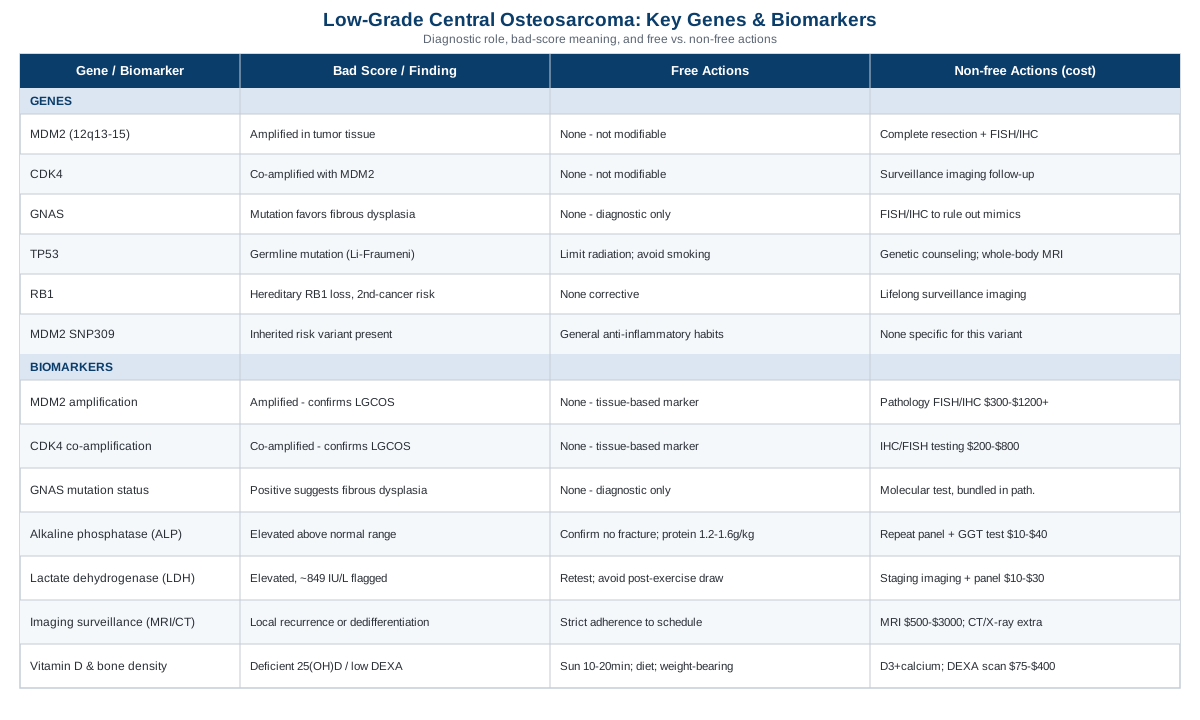
Low-grade central osteosarcoma is defined almost entirely by a handful of molecular findings rather than by symptoms — which is exactly why understanding the genetics and biomarkers behind it matters more here than in most conditions. This article breaks down the genes that drive diagnosis and risk stratification, from the MDM2/CDK4 amplification that confirms the diagnosis to the TP53 and RB1 mutations tied to hereditary predisposition, and explains what — realistically — can and cannot be influenced by lifestyle or supplementation for each one. It then covers seven biomarkers worth tracking through diagnosis, treatment, and survivorship, including two that are frequently misunderstood (alkaline phosphatase and LDH), with cost ranges and honest limits on what they reveal. A summary of key ideas from Peter Attia's Outlive connects individual risk to a broader screening philosophy, and a final section reviews which complementary therapies actually have supporting evidence in cancer care — and which don't. Read on for the specifics behind each marker, what "abnormal" actually means in context, and what a sensible, non-magical action plan looks like.
7 Biomarkers Worth Tracking Through Diagnosis and Follow-Up
Low-grade central osteosarcoma (LGCOS) is unusual among cancers in that its diagnosis leans heavily on a small set of molecular and biochemical markers rather than on symptoms alone. It's a rare tumor — roughly 1 to 2 percent of all osteosarcomas — that arises in the metaphysis of long bones, most often around the knee, and can look deceptively bland under the microscope, closely resembling benign conditions like fibrous dysplasia or desmoplastic fibroma. That resemblance is precisely why the biomarkers below matter so much: they are what separates a slow-growing, surgically curable tumor from either a benign lesion that's been over-treated, or a tumor that has quietly progressed toward a higher-grade, more dangerous form.
1. MDM2 Gene Amplification
MDM2 amplification, on chromosome 12q13-15, is the single most important molecular finding in LGCOS. It shows up in effectively all confirmed cases, and its presence is what distinguishes true low-grade osteosarcoma from benign fibro-osseous lesions that can look nearly identical on imaging and biopsy a genetic study of 22 cases found MDM2 amplification in all of them. It's tested via fluorescence in situ hybridization (FISH) or immunohistochemistry (IHC) on tumor tissue, typically as part of the original biopsy or resection workup, and costs are usually bundled into pathology fees rather than billed separately — expect anywhere from a few hundred to over a thousand dollars depending on whether FISH confirmation is needed alongside IHC.
Because MDM2 amplification is a somatic change confined to tumor cells, not a modifiable trait, there is no "plan without supplements" or "plan with supplements" that changes this marker — it isn't a lifestyle-responsive biomarker like cholesterol or blood glucose. What is actionable is what happens after the finding: confirmation at a center with sarcoma pathology experience, complete surgical excision with clear margins, and long-term imaging follow-up, since MDM2/CDK4-amplified tumors can occasionally acquire additional changes over time and dedifferentiate into higher-grade disease.
2. CDK4 Co-Amplification
CDK4 sits immediately next to MDM2 on chromosome 12 and is amplified alongside it in most cases, which is why the two are almost always tested together. IHC for MDM2 and CDK4 combined has been shown to be a sensitive and specific tool for confirming LGCOS and ruling out benign mimics MDM2 and CDK4 immunohistochemistry is a valuable diagnostic tool in distinguishing low-grade osteosarcoma from fibro-osseous lesions. As with MDM2, this is a tissue-based diagnostic marker, not something influenced by diet, supplements, or exercise.
The practical "plan" here is procedural rather than biochemical: if CDK4/MDM2 status is ambiguous on initial biopsy, ask whether FISH confirmation was performed, since IHC alone can occasionally give false negatives in fibrous dysplasia-like variants. Getting this right early avoids both under-treatment of a true osteosarcoma and over-treatment of a benign lesion.
3. GNAS Mutation Status
GNAS is technically a "negative" marker for LGCOS — it's the gene that's activated in fibrous dysplasia, one of the main lookalike conditions, but it is not typically found in low-grade central osteosarcoma itself. An early report suggested GNAS mutations might also occur in some parosteal osteosarcomas activating GNAS mutations were identified in a subset of parosteal osteosarcoma cases, but a larger confirmatory study across dozens of parosteal and low-grade central osteosarcomas from two institutions did not detect GNAS mutations in any of them, reinforcing that GNAS testing is mainly useful for ruling fibrous dysplasia in or out, not for confirming LGCOS.
Again, this is a diagnostic classification tool, not a modifiable score. Its value to you as a patient is indirect: a clean GNAS-negative, MDM2/CDK4-positive result is what gives pathologists confidence they're looking at a true low-grade osteosarcoma rather than a benign bone lesion that would be managed very differently.
4. Serum Alkaline Phosphatase (ALP)
Alkaline phosphatase is produced by active osteoblasts, so it tends to rise when bone-forming tumor tissue is present, and higher levels at diagnosis have been associated with greater tumor burden and worse outcomes in osteosarcoma broadly serum ALP has been reassessed as a tumor marker with high specificity in osteosarcoma. It's measured with a standard blood test, typically $10–$40 out of pocket or bundled into a metabolic panel, and it's one of the few numbers you'll see repeated at nearly every oncology visit.
How to Measure It
A basic or comprehensive metabolic panel from any lab includes ALP; no special preparation is required, though results should always be interpreted alongside age (children and adolescents have naturally higher ALP from normal bone growth) and any recent fractures or surgery, both of which raise it independent of tumor activity.
If the Score Is Bad: the Plan Without Supplements
An elevated ALP in someone with a known LGCOS is a signal to revisit imaging and pathology, not a lifestyle problem to self-correct — it usually reflects either normal post-surgical bone remodeling or, less commonly, residual or recurrent tumor activity. The non-supplement "plan" is clinical: repeat imaging, closer follow-up intervals, and confirming the result isn't confounded by a recent fracture, growth spurt, or unrelated liver source (ALP also comes from the liver, so a GGT test is often paired with it to localize the source).
If the Score Is Bad: the Plan With Supplements or Equipment
There is no supplement that lowers tumor-driven ALP, and taking one to "normalize the number" would mask rather than fix anything — this is a case where the honest answer is that no over-the-counter intervention applies. What does help general bone remodeling and post-surgical recovery is adequate protein intake (roughly 1.2–1.6 g/kg/day during healing) and, if levels are confirmed low, vitamin D repletion (see biomarker 7 below), but neither is a treatment for the underlying tumor marker.
5. Serum Lactate Dehydrogenase (LDH)
LDH is a nonspecific enzyme released by rapidly dividing or damaged cells, and in osteosarcoma, elevated pretreatment LDH has been linked to a higher likelihood of metastasis and relapse, with one study identifying roughly 849 IU/L as a meaningful breakpoint for skeletal metastasis risk pre-treatment serum LDH and ALP were predictors of metastases in extremity osteosarcoma. It costs about the same as ALP testing ($10–$30) and is drawn from the same blood sample.
How to Measure It
LDH is part of most standard chemistry panels; because it's elevated by muscle exertion, hemolysis during the blood draw, and many unrelated conditions, an isolated high reading should always be repeated before it's treated as meaningful.
If the Score Is Bad: the Plan Without Supplements
As with ALP, an elevated LDH in the context of LGCOS calls for clinical reassessment — repeat testing, staging imaging, and correlation with symptoms — rather than a home remedy. LDH is a downstream signal of what tissue is doing, not a lever you pull directly.
If the Score Is Bad: the Plan With Supplements or Equipment
No supplement meaningfully or safely lowers cancer-associated LDH, and it's worth being skeptical of anything marketed to do so. The one legitimate, low-risk adjunct is making sure the test wasn't drawn immediately after heavy exercise or a difficult venipuncture, both common and harmless causes of a falsely elevated result.
6. Post-Surgical Imaging Surveillance
Because LGCOS can locally recur or, in a minority of cases, dedifferentiate into a higher-grade tumor, periodic MRI of the surgical site plus chest imaging functions as a "biomarker" in its own right — arguably the most important one for long-term outcomes. Dedifferentiated recurrences carry a materially worse prognosis than the original low-grade tumor a documented case of dedifferentiated low-grade central osteosarcoma illustrates this progression risk, which is why surveillance intervals matter more here than for many other low-grade cancers. MRI runs roughly $500–$3,000 depending on region and insurance; chest CT or X-ray adds a few hundred more.
There's no supplement equivalent for this one — the entire "plan" is adherence. Typical protocols involve imaging every 3–6 months for the first two to three years post-resection, then spacing out if stable, though exact intervals should come from your surgical oncology team based on margin status and tumor size.
7. Vitamin D and Bone Mineral Density
Vitamin D deficiency is common in orthopedic surgical patients generally and has been tied to higher infection rates and slower bone healing vitamin D status influences immune modulation, fracture healing, and infection outcomes after orthopedic surgery. Serum 25-hydroxyvitamin D testing costs $40–$100, and a DEXA bone density scan, useful after large resections or reconstructions, runs $75–$400.
How to Measure It
A single blood draw for 25(OH)D, ideally checked before elective surgery and again 2–3 months after starting supplementation if levels were low; DEXA is typically ordered once post-recovery and repeated every 1–2 years if bone density is a concern.
If the Score Is Bad: the Plan Without Supplements
Regular sun exposure (roughly 10–20 minutes of midday skin exposure several times a week, adjusted for skin tone and climate), weight-bearing activity as cleared by your surgical team, and adequate dietary intake from fatty fish, egg yolks, and fortified foods can meaningfully move vitamin D status without pills, though it's often not enough alone in deficient patients, especially post-surgery when mobility is limited.
If the Score Is Bad: the Plan With Supplements or Equipment
For confirmed deficiency, 800–2,000 IU of vitamin D3 daily is a standard, well-tolerated starting dose, with some protocols using a higher loading dose (e.g., 50,000 IU weekly for 6–8 weeks) under medical supervision for more severe deficiency, then dropping to a maintenance dose. Pair with 1,000–1,200 mg of calcium daily from diet or supplement if intake is low. Recheck blood levels every 3 months until stable, then every 6–12 months. Side effects are rare at these doses but include, at excessive intake (generally above 4,000 IU/day sustained without monitoring), hypercalcemia, nausea, and kidney stones — this is a supplement worth monitoring with bloodwork, not dosing indefinitely without recheck.
What the Underlying Genetics Actually Show
The molecular markers above are how LGCOS is diagnosed and followed day to day. But a smaller set of genes also explains why some people develop bone sarcomas in the first place, and why certain families need lifelong, heightened surveillance rather than standard population screening. This is where frameworks popularized by researchers like Ali Torkamani, who has written extensively on translating genomic findings into actionable risk stratification, and clinicians like Gary Brecka, known for pushing patients toward more comprehensive baseline testing, are genuinely useful — not because supplements can override these mutations, but because knowing your genetic risk should change how aggressively you screen.
MDM2 (12q13-15 Amplicon)
As covered above, MDM2 amplification in tumor tissue is the defining molecular lesion of LGCOS. MDM2's normal job is to keep the p53 tumor-suppressor pathway in check; when amplified, it suppresses p53 excessively, letting damaged cells survive and divide when they shouldn't. This is a somatic (tumor-only) change in the vast majority of cases, not something inherited or present in your normal cells.
If the gene is bad — the plan without supplements: there is no lifestyle intervention that reverses tumor MDM2 amplification. The actionable step is ensuring complete surgical resection and staying on the recommended imaging surveillance schedule, since this is what actually addresses the biological consequence of the amplification.
If the score is bad — the plan with supplements or equipment: none exist that meaningfully counteract MDM2 amplification in tumor tissue, and it would be inaccurate to suggest otherwise. Broad p53-pathway-supportive habits — adequate sleep, limiting unnecessary radiation exposure, avoiding known carcinogens like tobacco — support general genomic stability but don't reverse an established amplicon.
CDK4
Co-amplified with MDM2 in nearly all cases, CDK4 drives cell cycle progression past a checkpoint that would normally pause division for DNA repair. CDK4/6 inhibitor drugs exist and are used in some other cancers (like certain breast cancers), but their role in LGCOS specifically is not established, and this is a discussion for a sarcoma oncologist, not a supplement plan.
If the gene is bad — the plan without supplements: same as MDM2 — complete resection and surveillance are the interventions that matter. If the score is bad — the plan with supplements or equipment: none are supported by evidence for this specific amplification; avoid any product marketed as a "CDK4 inhibitor supplement," as this is a prescription drug class requiring oncology supervision, not an over-the-counter category.
TP53
TP53 is different from the two above because it can be a germline (inherited) finding, not just a tumor-specific one. Osteosarcoma is one of the five core cancers of Li-Fraumeni syndrome, caused by inherited TP53 mutations, and carries one of the highest hazard ratios of any cancer type in TP53 carriers a National Cancer Institute cohort study quantified cancer risks among TP53 mutation carriers, with osteosarcoma among the most elevated. Features that should raise suspicion of an underlying germline TP53 mutation include young age at diagnosis, multifocal or synchronous tumors, and a personal or family history of early breast cancer, sarcomas, brain tumors, or adrenocortical carcinoma Li-Fraumeni syndrome is characterized by this specific pattern of early-onset, multiple primary cancers.
If the gene is bad — the plan without supplements: genetic counseling and confirmatory germline testing, followed by a structured surveillance protocol (often including whole-body MRI and organ-specific screening) rather than standard-risk follow-up. This is the single highest-value action for anyone with a suspicious personal or family pattern, and it costs nothing extra beyond the testing and counseling itself.
If the score is bad — the plan with supplements or equipment: there is no supplement that repairs or compensates for a germline TP53 mutation, and framing it that way would be misleading. What's reasonable is minimizing unnecessary ionizing radiation exposure (including being selective about elective CT scans over the years) since TP53 carriers may be more radiation-sensitive, and maintaining the metabolic and inflammatory health habits — regular exercise, limiting excess alcohol, avoiding smoking — that support genomic stability generally, understanding these are supportive, not corrective.
RB1
RB1, the retinoblastoma gene, is best known for hereditary retinoblastoma, but survivors of the hereditary form carry a substantially elevated lifetime risk of second cancers, with osteosarcoma being the most frequent sarcomas, including osteosarcoma, are the most common second malignancy in hereditary retinoblastoma survivors. This risk is driven both by the underlying RB1 loss and, in many older cohorts, by prior radiotherapy.
If the gene is bad — the plan without supplements: lifelong second-cancer surveillance rather than five-year "all clear" thinking, since risk in this population persists for decades. Discuss imaging surveillance frequency explicitly with your oncology team, as protocols vary. If the score is bad — the plan with supplements or equipment: no supplement compensates for RB1 loss; the highest-value intervention remains structured, long-term surveillance, not a biochemical fix.
GNAS
Covered above as a diagnostic marker, GNAS is worth including here because its absence is itself informative — a GNAS-negative result helps rule out fibrous dysplasia and, combined with MDM2/CDK4 positivity, strengthens confidence in an LGCOS diagnosis. It is not a modifiable gene in this context; its value is purely diagnostic clarity.
MDM2 SNP309
Separate from tumor amplification, SNP309 is a common inherited variant in the MDM2 promoter region that increases baseline MDM2 expression and dampens p53 activity slightly across the population, with meta-analyses linking the variant to modestly elevated risk across several cancer types a combined analysis found MDM2 SNP309 associated with altered cancer risk across multiple studies. This is the kind of variant that shows up on consumer genomic reports and generates outsized anxiety relative to its actual effect size — it's a small modifier of baseline risk, not a diagnosis or a deterministic driver.
If the gene is bad — the plan without supplements: don't overweight a single common polymorphism; focus on the concrete, well-established risk factors (family history, prior radiation, known syndromes) instead. If the score is bad — the plan with supplements or equipment: no supplement changes SNP309 genotype or its downstream expression effect; general anti-inflammatory lifestyle habits are reasonable on their own merits but shouldn't be marketed as "fixing" this variant.
The Book That Reframes How to Think About Cancer Screening
Peter Attia's Outlive: The Science and Art of Longevity devotes a substantial section to cancer as one of the "Four Horsemen" of premature death, and while much of his focus is on common epithelial cancers with strong metabolic links, his broader framework for thinking about individual risk and screening intensity translates directly to rarer, genetically-driven cancers like LGCOS — arguably even more so, since the stakes of getting surveillance intervals wrong are higher in hereditary cases. Here are the ten ideas from the book most relevant to genetically-driven cancer risk.
1. Cancer Behaves Like an Evolutionary Process, Not a Single Event
Attia frames tumors as populations of cells under selective pressure, where early lesions can already contain the seeds of treatment resistance. This reframes why complete surgical margins matter so much in LGCOS — leaving even microscopic residual disease gives a resistant subclone room to persist.
2. Screening Should Be Matched to Actual Risk, Not Population Averages
The book argues against one-size-fits-all screening intervals, pushing instead for protocols calibrated to a person's specific risk profile. For someone with a confirmed TP53 or RB1 mutation, this means surveillance well beyond standard-risk guidelines, not the same schedule as the general population.
3. Early Detection Changes Outcomes More Than Almost Any Single Treatment Advance
Attia is emphatic that catching disease earlier, when it's more treatable, often outweighs incremental improvements in treatment itself. For LGCOS, this translates concretely into not skipping follow-up imaging once you feel fine.
4. Liquid Biopsies Are a Complement, Not a Replacement, for Imaging
Multi-cancer early detection blood tests are discussed as a promising emerging tool, but Attia is careful to frame them as additive to, not a substitute for, established imaging surveillance — an important caveat, since these tests are not yet validated specifically for sarcoma surveillance.
5. Genetic Risk Carries Different Obligations Than Average Risk
A recurring theme is that carriers of known cancer-predisposition genes need individualized surveillance plans developed with a specialist, not generic advice pulled from population-level guidelines.
6. Metabolic Health Plausibly Influences Tumor Growth — With Caveats
Attia discusses insulin and IGF-1 signaling as potential growth drivers for some cancers. The evidence here is considerably stronger for common epithelial cancers than for pediatric-onset bone sarcomas like LGCOS, and it would be overreaching to claim metabolic optimization prevents or treats this specific tumor type — but general metabolic health remains a reasonable, low-risk habit regardless.
7. Exercise Capacity (VO2 Max) Predicts Outcomes Across Serious Diagnoses
Higher cardiorespiratory fitness is associated with better tolerance of surgery and treatment across many conditions. For LGCOS patients, this is most relevant during post-surgical rehabilitation, where fitness supports recovery capacity.
8. Muscle Mass Matters for Surviving Treatment, Not Just Longevity
Attia emphasizes resistance training and muscle preservation as protective during illness and recovery — directly applicable after limb-sparing surgery or reconstruction, where maintaining strength around the affected limb speeds functional recovery.
9. Survivorship Surveillance Should Be Lifelong for Hereditary Cases
The book pushes back on the idea that five years of clean scans means the risk conversation is over, particularly for hereditary syndromes — directly relevant to RB1 and TP53 carriers, whose second-cancer risk persists for decades.
10. The Real Question Is How to Structure Decisions Around Your Specific Risk
Attia's central argument isn't "here's how to avoid cancer" — it's that decisions about screening frequency, specialist selection, and lifestyle should be built around your individual risk profile rather than generic advice. That's precisely the approach this article has tried to take with LGCOS specifically.
Supportive Therapies With Real Evidence Behind Them
Beyond monitoring the biology, quality of life during diagnosis, surgery, and recovery matters, and a handful of complementary approaches have genuine clinical evidence in oncology settings — though it's worth being clear upfront that none of these treat the tumor itself; they support the person going through treatment.
Mindfulness Meditation and MBSR
Mindfulness-Based Stress Reduction (MBSR) is an eight-week structured program combining meditation, gentle movement, and body awareness training, originally developed for chronic pain and adapted widely for oncology. It's relevant to LGCOS patients facing surgery and uncertain follow-up because the psychological burden of "watchful waiting" between scans is real and underdiscussed.
Research in breast cancer populations has found consistent benefits for anxiety, depression, and biological stress markers mindfulness interventions showed measurable psychological and biological benefits in women with breast cancer. Evidence specific to bone sarcoma populations is limited, but the mechanism — reducing anticipatory anxiety around surveillance imaging — applies regardless of cancer type.
A realistic approach is enrolling in a certified eight-week MBSR course (in person or via reputable telehealth programs), practicing 20–30 minutes daily, and treating it as a tool specifically for the weeks surrounding follow-up scans, when anxiety tends to spike.
Massage Therapy
Oncology massage — a modified form accounting for surgical sites, fragile bone, and treatment side effects — has reasonable evidence for reducing post-surgical pain and anxiety in cancer patients. This is particularly relevant after the wide resection and reconstruction surgeries typical for LGCOS, where post-operative pain and limb guarding are common.
A systematic review and meta-analysis found massage therapy effective for reducing pain, anxiety, and fatigue compared with usual care or active comparators in cancer patients a meta-analysis found massage therapy effective for cancer-related pain, quality of life, and anxiety, though recommendations remain "weak" pending more high-quality trials.
Practically, this means working only with a therapist trained in oncology massage (standard deep tissue work should be avoided near surgical sites or areas of reduced bone integrity), starting once a surgeon has cleared soft-tissue work, and scheduling sessions around post-operative milestones rather than as a substitute for physical therapy.
Music Therapy
Music therapy delivered by trained therapists — distinct from simply listening to music — has one of the larger evidence bases among complementary oncology interventions, with a Cochrane-affiliated review covering over 5,500 participants across 81 studies finding consistent benefits for anxiety, pain, and fatigue, albeit with generally low-certainty evidence due to study design limitations music interventions showed beneficial effects on psychological and physical outcomes in people with cancer.
For LGCOS patients, this is most practically useful during the perioperative period (before and after surgery) and during the waiting periods around scan results, when anxiety is typically highest.
A reasonable approach is requesting a certified music therapist through your treatment center's supportive care or child life program (many pediatric and adolescent oncology units, relevant given LGCOS's occurrence in younger patients, have this built in), rather than assuming passive playlist listening delivers the same effect studied in trials.
Tai Chi and Qigong
These gentle, low-impact mind-body movement practices have a growing evidence base for cancer-related fatigue, a major and often underestimated symptom during recovery from major orthopedic cancer surgery. An umbrella review and meta-analysis found qigong and tai chi improved quality of life, physical functioning, fatigue, sleep, and psychological measures across cancer populations an umbrella review found qigong and tai chi effective for quality of life in cancer patients.
Because LGCOS surgery often involves the lower extremities, standard tai chi forms may need modification; seated or adapted qigong forms exist and should be guided by a physical therapist familiar with your specific mobility restrictions post-surgery, especially in the first several months after limb-sparing procedures.
A practical starting point is a modified, seated or partial-weight-bearing qigong sequence twice weekly, building toward standing forms only once a surgical team confirms adequate bone healing and weight-bearing clearance.
The Bottom Line
Low-grade central osteosarcoma is, in a real sense, defined by its biomarkers — MDM2 and CDK4 amplification confirm what it is, GNAS status helps rule out what it isn't, and ALP, LDH, and imaging surveillance track what happens next. None of these are lifestyle dials you can turn to change the underlying tumor biology, and being honest about that distinction matters more than offering false reassurance. Where genuine agency exists, it's in the surrounding decisions: making sure surgical margins and pathology confirmation are thorough, understanding whether a hereditary pattern (TP53, RB1) changes your surveillance obligations, staying consistent with follow-up imaging, and using well-supported supportive therapies to manage the real physical and psychological toll of surgery and recovery.
If you're navigating a new or existing LGCOS diagnosis, the most useful next step is a direct conversation with your sarcoma oncology team about which of these markers were tested, what your specific surveillance schedule looks like, and whether your personal or family history warrants genetic counseling. That conversation, grounded in the specifics of your case rather than general cancer advice, is where better decisions actually start.
Musculoskeletal Cancer & Oncology
Musculoskeletal: Bone Conditions